
Sacred Groves and Sulphurous Springs: Volcanoes and Spiritual Practice

Welcome to Volcano Explorers.
Imagine, if you will, a world where molten rock meets the divine. Beyond their fiery breath and destructive power, volcanoes hold a profound spiritual significance for cultures across the globe. Are you ready to uncover the ancient rituals and beliefs that intertwine with these geological giants? Dive into our latest article, " Sacred Groves and Sulphurous Springs: Volcanoes and Spiritual Practice," and discover how volcanoes in spiritual practices have shaped our understanding of the world and our place within it. The earth whispers secrets... are you listening?
- Volcanoes in Spiritual Practices: An Introduction
- The Sacred Groves: Volcanic Landscapes as Sanctuaries
- Sulphurous Springs: Healing Waters and Spiritual Cleansing
- Volcano Deities and Mythologies: Gods of Fire and Earth
- Volcanic Landscapes and Contemporary Spiritual Practices
- Living with Volcanoes: Balancing Respect and Fear
- Conclusion: Volcanoes in Spiritual Practices - A Deep Connection
-
Frequently Asked Questions
- What role have volcanoes played in shaping spiritual beliefs across different cultures?
- How are volcanoes incorporated into spiritual practices in specific regions of the world?
- What is the significance of sulphurous springs associated with volcanoes in spiritual practices?
- How do volcanoes symbolize concepts such as destruction and rebirth in spiritual practices?
- Are there any modern spiritual practices that still incorporate elements related to volcanoes?
- Final Reflection: The Fiery Heart of Faith
Volcanoes in Spiritual Practices: An Introduction
Exploring the Intertwined Worlds of Volcanic Landscapes and Spirituality
For millennia, volcanoes have held a profound and multifaceted significance in human cultures worldwide. Beyond their geological impact, these towering formations, capable of both creation and destruction, have deeply intertwined with spiritual practices across diverse societies. The sheer power emanating from the Earth's depths, manifested in fiery eruptions and steaming fumaroles, has inspired awe, fear, and reverence, positioning volcanoes as potent symbols in human spirituality.
From ancient civilizations to modern earth-based religions, the dramatic landscapes forged by volcanic activity have become focal points for rituals, mythology, and the quest for understanding the forces that shape our world. This enduring relationship between humanity and volcanoes reveals a fascinating tapestry of beliefs and customs that continue to resonate today.
The allure of volcanoes in spiritual practices stems from their inherent duality. They are simultaneously destroyers and creators. Volcanic eruptions can obliterate existing landscapes, yet they also enrich the soil, giving rise to fertile lands and new beginnings.
This cycle of destruction and rebirth is a powerful metaphor for spiritual transformation and renewal, resonating deeply with human experiences of loss, change, and hope. The raw, untamed energy of a volcano is often perceived as a direct connection to primal forces, making volcanic regions natural sanctuaries for spiritual introspection and engagement with the profound mysteries of life and death. The very ground beneath our feet in volcanic areas seems alive, breathing with the Earth’s internal fire, fostering a sense of the sacred and the sublime.
Cultural Significance of Volcanoes: A Global Perspective
The cultural significance of volcanoes is remarkably diverse, reflecting the unique environments and belief systems of communities living in volcanic regions around the globe. In Japan, Mount Fuji, a majestic stratovolcano, is not only a national symbol but also a sacred mountain, revered in Shinto and Buddhism. Pilgrims have ascended its slopes for centuries, seeking spiritual enlightenment and purification.
Similarly, in Hawaii, the volcanic landscape is deeply interwoven with Polynesian mythology, with Pele, the goddess of fire and volcanoes, holding a central position in their spiritual worldview. Eruptions are interpreted as manifestations of her power and emotions, demanding respect and careful interaction with the volcanic environment.
Across the Pacific Ring of Fire, from Indonesia to South America, similar patterns emerge. In Indonesia, Mount Merapi is considered sacred, with annual offerings and rituals performed to appease the spirits believed to inhabit the volcano and ensure the well-being of the surrounding communities. In Andean cultures, volcanoes like Cotopaxi in Ecuador have been revered as apus, or mountain deities, playing crucial roles in cosmology and agricultural cycles.
These examples highlight a global phenomenon: volcanoes are not merely geological features but are deeply embedded within the spiritual and cultural fabric of societies, shaping rituals, mythologies, and daily life in profound ways. The concept of "Volcanoes in Spiritual Practices" is therefore a rich and varied field of study, reflecting humanity's diverse responses to these powerful natural phenomena.
The Sacred Groves: Volcanic Landscapes as Sanctuaries
Ancient Beliefs and Volcanic Forests: A Connection to the Divine
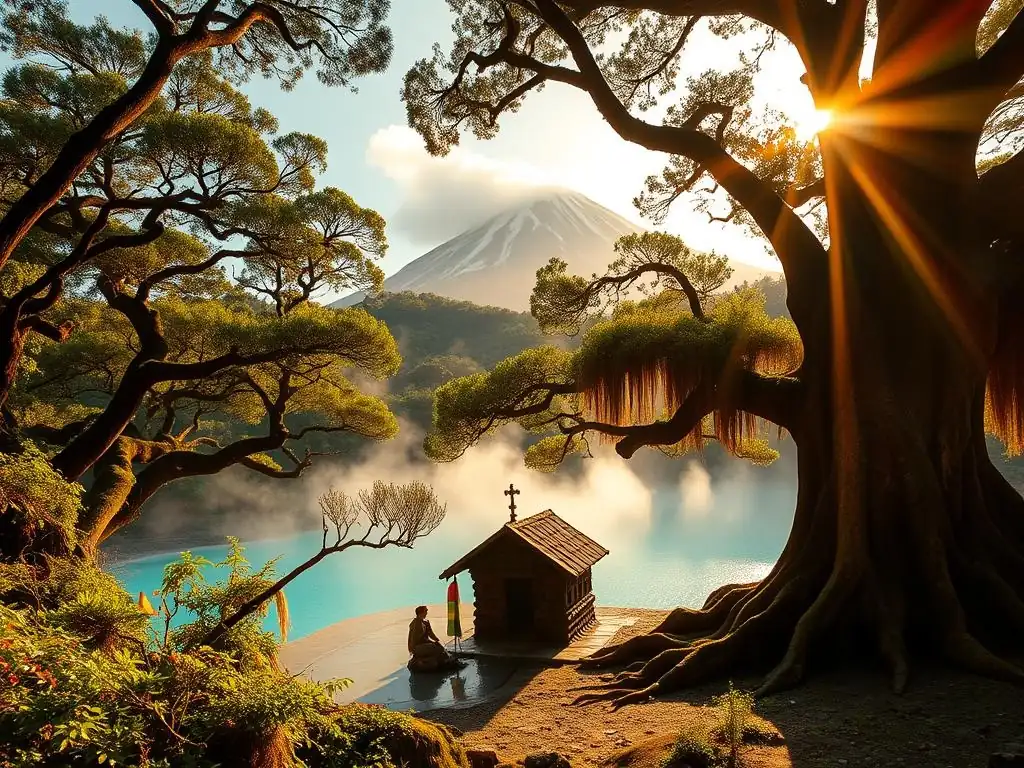
Within the shadow of many volcanoes, one finds not only barren lava fields but also surprisingly vibrant ecosystems, including forests that have adapted to the mineral-rich volcanic soil. These volcanic forests, often characterized by unique flora and fauna, have frequently been designated as sacred groves in various cultures. Ancient beliefs often associated these groves with a heightened connection to the divine, perceiving them as liminal spaces where the earthly and spiritual realms intertwine. The very act of entering a grove near a volcano could be seen as stepping into a sanctuary blessed by the potent energies of the Earth.
The association of volcanic forests with the divine might stem from several factors. Firstly, the resilience of life in these environments, flourishing amidst the potential for volcanic devastation, could be interpreted as a sign of divine favor or protection. Secondly, the unique ecological characteristics of these forests, often fostering biodiversity and harboring medicinal plants, could further enhance their perceived sacredness.
Furthermore, the quietude and seclusion offered by dense forests, juxtaposed with the often dramatic and exposed volcanic landscape, may have created an atmosphere conducive to spiritual contemplation and ritualistic practices. These volcanic groves became natural temples, spaces where communities could engage with the spiritual power they perceived emanating from the volcanoes themselves.
Examples of Sacred Groves Near Volcanoes
Numerous examples of sacred groves near volcanoes exist across the world, demonstrating the widespread practice of designating these areas as spiritually significant. In Japan, many ancient shrines and temples are nestled within forests on the slopes of volcanoes like Mount Asama or Mount Ontake. These groves, often composed of cedar and cypress trees, are considered sacred spaces ( chinju no mori) protecting the enshrined deities and offering a connection to the kami (spirits) believed to inhabit the natural world, including the volcanoes themselves. These are not merely forests, but carefully cultivated and revered landscapes integrated into Shinto spiritual practices.
Similarly, in parts of West Africa, especially around volcanic formations like Mount Cameroon, certain forests are considered sacred groves, protected by local communities and associated with ancestral spirits and earth deities. Access to these groves may be restricted to specific individuals or during particular times, and rituals are often performed within them to ensure the well-being of the community and maintain harmony with the natural and spiritual worlds.
While precise documentation of every volcanic sacred grove is challenging, anthropological studies and local traditions consistently point to the recurring phenomenon of forests near volcanoes being recognized as spaces of heightened spiritual significance and reverence across diverse cultures.
Rituals and Offerings within Volcanic Groves: Honoring the Earth's Power
Rituals and offerings performed within volcanic groves are diverse and often deeply rooted in local traditions, but they generally share a common purpose: to honor the perceived earth power emanating from the volcano and maintain balance between the human community and the natural forces. Offerings can range from simple gestures like placing flowers or stones at the base of trees to more elaborate ceremonies involving food, drink, or symbolic objects. The act of offering is often seen as a way to express gratitude, seek blessings, or appease potentially volatile volcanic forces.
In some cultures, rituals within volcanic groves might be timed to coincide with specific astronomical events or agricultural cycles, further emphasizing the connection between the natural world, spiritual beliefs, and the rhythms of life. For instance, communities near Mount Agung in Bali perform elaborate ceremonies within sacred groves on the volcano's slopes, offering dances, music, and animal sacrifices to maintain harmony with the mountain deities and ensure fertile harvests.
These rituals are not simply acts of appeasement but are integral parts of a complex spiritual system that sees the volcanic landscape as a living entity deserving of respect and veneration. The groves themselves become stages for enacting these beliefs, reinforcing the spiritual significance of "Volcanoes in Spiritual Practices".
Sulphurous Springs: Healing Waters and Spiritual Cleansing
Geothermal Activity and Traditional Medicine: The Power of Sulphur
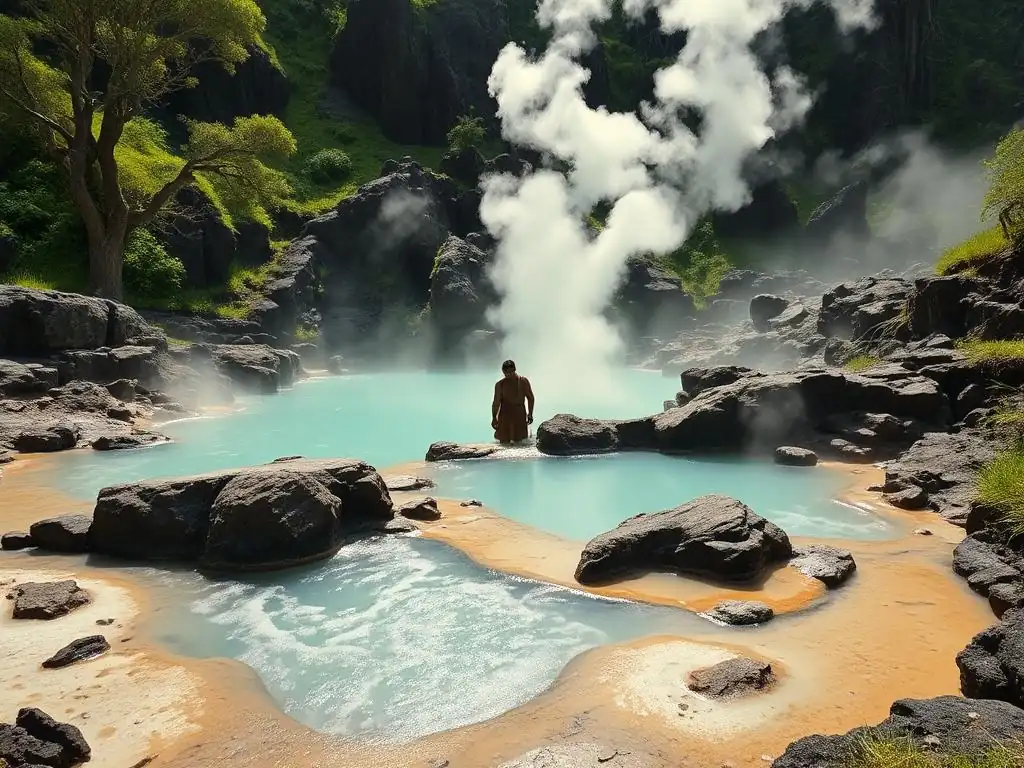
Volcanic regions are renowned for their geothermal activity, manifesting in the form of hot springs, fumaroles, and sulphurous springs. Among these, sulphurous springs, characterized by their distinctive odor and mineral-rich waters, have held particular significance in traditional medicine and spiritual practices. The presence of sulphur and other minerals in these waters is often associated with healing properties, leading to their utilization in therapeutic bathing and various traditional remedies for centuries. The perceived "power" of sulphur springs extends beyond the purely physical, often incorporating spiritual dimensions of cleansing and purification.
Traditional medicinal systems across volcanic regions, from Japan's onsen culture to indigenous practices in the Andes, have long recognized the therapeutic benefits of sulphurous waters. The sulphur content is believed to possess anti-inflammatory and antiseptic properties, beneficial for skin conditions, muscle ailments, and respiratory issues. Beyond the tangible health benefits, the act of immersing oneself in these geothermal waters is often imbued with spiritual significance.
The warmth and mineral content are seen as gifts from the Earth, capable of not only healing the body but also purifying the spirit and restoring inner balance. This dual aspect, physical and spiritual healing, is a key element in the enduring appeal of sulphurous springs in "Volcanoes in Spiritual Practices".
Volcanic Hot Springs as Sites of Pilgrimage and Rebirth
Volcanic hot springs, especially those with sulphurous content, frequently become sites of pilgrimage, attracting individuals seeking both physical healing and spiritual renewal. The journey to these springs is often considered as important as the destination itself, representing a commitment to personal transformation and a quest for connection with the Earth’s healing energies. The act of bathing in these waters can be seen as a ritualistic immersion, symbolizing purification, rebirth, and a shedding of old burdens, both physical and spiritual.
Examples of volcanic hot spring pilgrimage sites are abundant globally. Beppu, Japan, a city situated in a highly volcanic region, is famous for its numerous onsen, many of which are sulphurous. For centuries, people have traveled to Beppu to experience the healing waters, viewing the act of bathing as not just therapeutic but also spiritually rejuvenating.
Similarly, in Iceland, geothermal areas like the Blue Lagoon, while more modern in their development, draw inspiration from a long tradition of utilizing geothermal waters for health and well-being, attracting visitors seeking a connection with the island's volcanic heart and a sense of natural revitalization. The hot springs become liminal spaces, where the mundane world is left behind, and the potential for physical and spiritual rebirth is embraced within the embrace of the Earth's warmth.
The Spiritual Significance of Water in Volcanic Regions
The spiritual significance of water in volcanic regions extends beyond just hot springs. In many cultures, water in volcanic landscapes is viewed as possessing unique properties, often seen as a conduit for both life-giving and destructive forces, mirroring the duality of volcanoes themselves. Freshwater sources emerging from volcanic aquifers may be considered particularly pure and sacred, representing the life-sustaining aspect of the volcanic environment, contrasting with the fiery, destructive potential of eruptions.
Rivers and lakes in volcanic areas are frequently incorporated into local mythologies and spiritual practices. For instance, Crater Lake in Oregon, formed within a volcanic caldera, is considered a sacred site by indigenous Klamath tribes, who believe it to be a place of powerful spirits and maintain traditions of respectful interaction with the lake and its surrounding environment.
The clarity and depth of the water, juxtaposed with the volcanic origins of the caldera, contribute to its perceived spiritual potency. Water in volcanic regions, therefore, is not just a resource but a spiritually charged element, reflecting the complex interplay of fire and water, creation and destruction, that defines "Volcanoes in Spiritual Practices".
Volcano Deities and Mythologies: Gods of Fire and Earth
Prominent Volcano Deities in Different Cultures
The awe-inspiring power of volcanoes has naturally led to their personification as deities in numerous cultures around the world. These volcano deities are often complex figures, embodying both the destructive and creative aspects of volcanic activity. They are frequently associated with fire, earth, and the underworld, reflecting the deep connection between volcanoes and the primordial forces of nature. Understanding these deities provides insight into how different cultures have interpreted and related to the power of volcanoes through their spiritual frameworks.
Perhaps one of the most well-known volcano deities is Pele, the Hawaiian goddess of fire, lightning, wind, and volcanoes. Pele is a dynamic and powerful figure, often depicted as both beautiful and wrathful, embodying the unpredictable nature of volcanic eruptions. In Japanese Shinto tradition, while not a singular volcano deity in the same way as Pele, Mount Fuji itself is considered a sacred entity, a dwelling place of spirits and revered as a divine presence.
Similarly, in Roman mythology, Vulcan was the god of fire, volcanoes, metalworking, and the forge, reflecting the association of volcanic fire with transformative power. These examples, and many others from cultures in Indonesia, the Philippines, and South America, demonstrate the widespread tendency to anthropomorphize volcanoes and integrate them into pantheons of gods and goddesses, reflecting the profound impact of "Volcanoes in Spiritual Practices" on religious beliefs.
Myths and Legends Surrounding Volcanic Eruptions: Divine Wrath or Creation?
Myths and legends surrounding volcanic eruptions offer rich narratives that attempt to explain these dramatic natural events through a spiritual lens. These stories often interpret eruptions as acts of divine agency, ranging from expressions of wrath and punishment to demonstrations of creative power and renewal. The specific interpretation often reflects the cultural context, the perceived relationship between the community and the volcano deity, and the immediate impact of the eruption itself.
In some traditions, volcanic eruptions are seen as signs of divine displeasure or punishment for human transgressions. For instance, in some interpretations of Hawaiian mythology, Pele's eruptions can be triggered by disrespect or disharmony in the human realm, serving as a reminder of her power and the need for proper reverence. Conversely, other myths emphasize the creative aspect of volcanic eruptions.
In certain Polynesian narratives, volcanic activity is linked to the creation of islands and the emergence of new land, highlighting the role of volcanoes in shaping the world and bringing forth new life. Across cultures, these myths and legends surrounding volcanic eruptions serve to make sense of these powerful events, integrating them into a larger spiritual worldview and shaping human responses to the ever-present potential for volcanic activity, a core aspect of "Volcanoes in Spiritual Practices".
Volcanoes as Manifestations of Divine Power: A Global Perspective
Across diverse cultures, volcanoes are consistently perceived as manifestations of divine power, regardless of the specific deities or mythologies involved. This perception stems from the sheer scale and intensity of volcanic phenomena, which dwarf human capabilities and evoke a sense of awe and wonder. The raw energy released during eruptions, the earth-shaking tremors, and the dramatic reshaping of landscapes all contribute to the understanding of volcanoes as forces beyond human control, originating from a deeper, perhaps divine, source.
From the ancient Greeks who saw volcanoes as the forges of Hephaestus to indigenous communities in Central America who view volcanic eruptions as the breath of earth spirits, the idea of volcanoes embodying divine power is a recurring theme. This is not simply about fear or superstition; it is a recognition of the immense forces at play within the Earth, forces that can be both destructive and generative.
Volcanoes, in this view, are not just geological formations but are living, breathing entities, conduits for the Earth's power to manifest in the visible world. This global perspective underscores the enduring spiritual significance of volcanoes, solidifying their place as potent symbols in human spirituality and highlighting the pervasive influence of "Volcanoes in Spiritual Practices" across cultures and time.
Volcanic Landscapes and Contemporary Spiritual Practices
Modern Interpretations of Volcanoes in Spirituality and Wellness
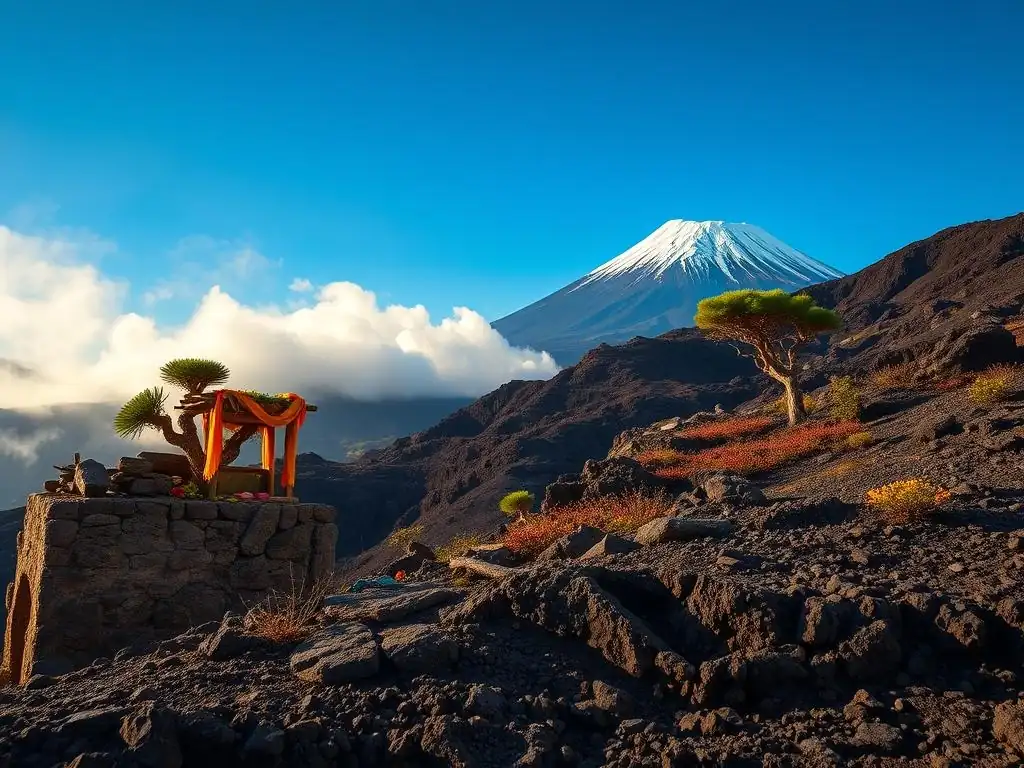
In contemporary spirituality and wellness movements, volcanic landscapes continue to hold a significant draw, albeit often interpreted through a more secular or nature-based lens. While traditional religious frameworks may still be relevant, modern interpretations often emphasize the energetic and transformative qualities of volcanoes, aligning them with concepts of personal growth, grounding, and connection to the Earth's energies. Volcanic regions are increasingly seen as power places, locations imbued with unique vibrational frequencies that can facilitate healing, meditation, and spiritual awakening.
Wellness retreats and spiritual tourism destinations are increasingly emerging in volcanic areas, capitalizing on the perceived benefits of volcanic landscapes. These retreats often incorporate activities like geothermal bathing, volcanic mud treatments, and guided meditations in volcanic environments, promoting a sense of rejuvenation and connection with nature.
The focus shifts from appeasing deities to harnessing the perceived energetic properties of the volcanic environment for personal well-being and spiritual exploration. This modern interpretation of "Volcanoes in Spiritual Practices" reflects a broader trend of seeking spiritual experiences outside of traditional religious institutions, finding them instead in the power and beauty of the natural world.
Volcano Tourism and Spiritual Journeys: Seeking Connection with Nature's Force
Volcano tourism has become a significant global phenomenon, attracting millions of visitors each year to witness these awe-inspiring geological wonders. While many tourists are drawn by the scientific and scenic appeal of volcanoes, for others, the experience takes on a distinctly spiritual dimension.
Volcano tourism can become a form of spiritual journey, a pilgrimage to encounter the raw power of nature and seek a deeper connection with the Earth’s forces. The act of standing at the rim of a volcanic crater or witnessing an eruption can be a profoundly moving and transformative experience, fostering a sense of awe, humility, and connection to something larger than oneself.
For many, visiting a volcano transcends mere sightseeing; it becomes a quest for inspiration, a desire to witness the sublime, and an opportunity for introspection. The dramatic landscapes, the palpable energy of the Earth, and the sense of being in the presence of powerful natural forces can trigger profound emotional and spiritual responses.
Volcano tourism, in this context, is not simply about ticking off destinations on a travel list but about seeking out experiences that resonate on a deeper level, tapping into a primal human fascination with volcanoes and their enduring spiritual significance. This intersection of tourism and spirituality highlights the continued relevance of "Volcanoes in Spiritual Practices" in the modern world.
The Role of Volcanoes in Earth-Based Religions and Neopaganism
Earth-based religions and Neopaganism, with their focus on nature reverence and the interconnectedness of all things, often hold volcanoes in high esteem. In these spiritual frameworks, volcanoes are seen as powerful expressions of the Earth’s energy, embodying both creative and destructive forces that are integral to the planet's cycles of life, death, and rebirth. Volcanoes can be incorporated into rituals, seasonal celebrations, and personal spiritual practices, serving as potent symbols of transformation, passion, and the raw power of the natural world.
For practitioners of Earth-based religions, volcanoes are not just geological features but are living entities, deserving of respect and reverence. Their volcanic landscapes can become sacred sites for ritualistic practices, connecting individuals with the Earth’s energy and facilitating a deeper understanding of natural cycles.
The element of fire, central to volcanic activity, is often revered as a purifying and transformative force in Neopagan traditions. Volcanoes, therefore, hold a significant place in these contemporary spiritual movements, providing a tangible link to the Earth's power and serving as potent symbols within their evolving systems of belief and practice, further demonstrating the enduring relevance of "Volcanoes in Spiritual Practices" in contemporary spirituality.
Living with Volcanoes: Balancing Respect and Fear
Cultural Traditions for Coexisting with Active Volcanoes
Communities living in close proximity to active volcanoes have developed a rich tapestry of cultural traditions aimed at coexisting with these powerful natural forces. These traditions often blend practical strategies for safety and survival with spiritual beliefs and practices designed to foster a respectful and harmonious relationship with the volcano. Understanding these traditions offers insights into how human societies have adapted to and learned to live alongside potentially hazardous yet also life-giving volcanic environments.
These cultural traditions often include elaborate warning systems based on observing natural signs, such as changes in fumarole activity, seismic tremors, or animal behavior. Oral histories and intergenerational knowledge play a crucial role in transmitting vital information about past eruptions and effective responses.
Beyond practical measures, spiritual practices, such as offerings, rituals, and ceremonies, are often integrated into daily life, aimed at maintaining balance and appeasing the perceived spirits or deities associated with the volcano. These traditions represent a complex and nuanced approach to living with volcanic risk, blending pragmatic preparedness with deep-seated spiritual beliefs, reflecting a long history of "Volcanoes in Spiritual Practices" shaping daily life.
Safety Measures and Spiritual Beliefs: A Symbiotic Relationship
The relationship between safety measures and spiritual beliefs in volcanic communities is often symbiotic, rather than mutually exclusive. While modern scientific approaches to volcanic hazard mitigation are crucial, spiritual beliefs can play a complementary role in shaping community responses to volcanic risk, influencing preparedness, evacuation behaviors, and post-eruption recovery. In some cases, spiritual beliefs can even enhance the effectiveness of safety measures by fostering a sense of community cohesion and shared responsibility.
For example, in communities where volcanic eruptions are seen as divine messages or tests, spiritual leaders may play a role in interpreting these signs and guiding community responses, sometimes in conjunction with scientific warnings. Rituals and ceremonies conducted before, during, and after volcanic events can provide psychological support, reduce anxiety, and reinforce a sense of collective resilience.
Furthermore, beliefs about the sacredness of the volcanic landscape can encourage responsible land use and sustainable practices, reducing vulnerability to volcanic hazards in the long term. This interplay between practical safety measures and deeply held spiritual beliefs highlights the complex and multifaceted ways in which "Volcanoes in Spiritual Practices" shape human responses to living with volcanic risk.
The Future of Spiritual Practices in Volcanic Communities: Preservation and Adaptation
The future of spiritual practices in volcanic communities faces both challenges and opportunities in a rapidly changing world. Globalization, modernization, and shifts in religious landscapes can impact traditional beliefs and practices. However, there is also a growing recognition of the value of indigenous knowledge and cultural heritage in disaster risk reduction and community resilience. Preserving and adapting these spiritual practices is crucial not only for maintaining cultural identity but also for fostering sustainable and culturally appropriate approaches to living with volcanoes.
Efforts to document and revitalize traditional knowledge, including spiritual practices related to volcanoes, are increasingly important. This can involve community-based initiatives, collaborations between scientists and local communities, and integration of cultural perspectives into disaster preparedness planning.
Furthermore, exploring the potential for adapting and evolving these spiritual practices to address contemporary challenges, such as climate change and increasing urbanization in volcanic regions, can ensure their continued relevance and contribution to community well-being. The future of "Volcanoes in Spiritual Practices" lies in finding a balance between preserving valuable traditions and adapting them to the evolving needs and realities of volcanic communities in the 21st century.
Conclusion: Volcanoes in Spiritual Practices - A Deep Connection
The Enduring Power of Volcanoes in Human Spirituality
The journey through the intertwined worlds of volcanoes and spiritual practice reveals a deep and enduring connection between humanity and these powerful geological forces. From ancient sacred groves and sulphurous springs to volcano deities and contemporary spiritual journeys, volcanoes have consistently held a profound significance in human cultures across the globe. Their dramatic landscapes, their capacity for both destruction and creation, and their raw energetic power have inspired awe, fear, and reverence, shaping spiritual beliefs, rituals, and daily life for communities living in their shadow.
The enduring power of volcanoes in human spirituality lies in their ability to evoke a sense of the sublime, to connect us with the primal forces of nature, and to remind us of our place within the larger cosmic order. Whether viewed as divine manifestations, sources of healing energy, or sacred landscapes for contemplation, volcanoes continue to captivate our imaginations and deepen our understanding of the complex relationship between humanity and the Earth.
The exploration of "Volcanoes in Spiritual Practices" offers a rich and multifaceted perspective on human culture, demonstrating the enduring power of nature to shape our spiritual lives and the profound ways in which we seek meaning and connection in a world shaped by volcanic forces.
Frequently Asked Questions
What role have volcanoes played in shaping spiritual beliefs across different cultures?
Volcanoes, with their powerful displays of nature, have often been seen as gateways to the underworld or manifestations of divine power, influencing creation myths and religious rituals.
How are volcanoes incorporated into spiritual practices in specific regions of the world?
Many cultures near active volcanoes offer sacrifices and prayers to appease the volcanic deities, believing this will prevent eruptions or ensure fertile land after volcanic activity.
What is the significance of sulphurous springs associated with volcanoes in spiritual practices?
Sulphurous springs are often considered sacred or healing waters, used in purification rituals or believed to possess medicinal properties due to their volcanic origins.
How do volcanoes symbolize concepts such as destruction and rebirth in spiritual practices?
The destructive power of volcanic eruptions is often interpreted as a cleansing force, making way for new beginnings and renewal, symbolizing the cyclical nature of life and death.
Yes, some modern spiritual groups incorporate volcanic imagery and symbolism into their practices, viewing volcanoes as symbols of transformation, inner strength, and the raw power of the Earth.
Final Reflection: The Fiery Heart of Faith
The journey through sacred groves and sulphurous springs reveals a profound truth: the raw power of volcanoes continues to shape our spiritual understanding. From ancient rituals to modern interpretations, the earth's fiery heart beats in rhythm with our deepest beliefs, reminding us of the forces that both create and destroy. This connection, explored throughout this article, is not merely historical; it's a living testament to the enduring human need to find meaning in the face of overwhelming natural phenomena.
The influence of volcanoes on the cultural and social landscape is undeniable. The stories, myths, and practices surrounding these geological giants have woven themselves into the fabric of countless societies, shaping their art, their architecture, and their very identities. This connection transcends geographical boundaries, uniting disparate cultures through a shared awe and respect for the earth's power. We are all children of the volcano, born from the ashes and destined to return to the earth.
This sentiment, echoed across diverse traditions, underscores the fundamental link between humanity and the volcanic forces that have shaped our world.
Now, as you reflect on the sacred groves and sulphurous springs we've explored, consider the volcanoes in your own life. What forces, both destructive and creative, shape your beliefs and your path? Embrace the power of transformation, learn from the lessons of the earth, and find your own spiritual connection to the fiery heart that beats within us all. Let the lessons of the volcano inspire you to build resilience, embrace change, and find meaning in the face of life's inevitable eruptions.
I'm ready. Please provide the article text so I can create a compelling call to action.