
Inside Lava Tubes: Exploring Underground Rivers of Fire

Welcome to Volcano Explorers!
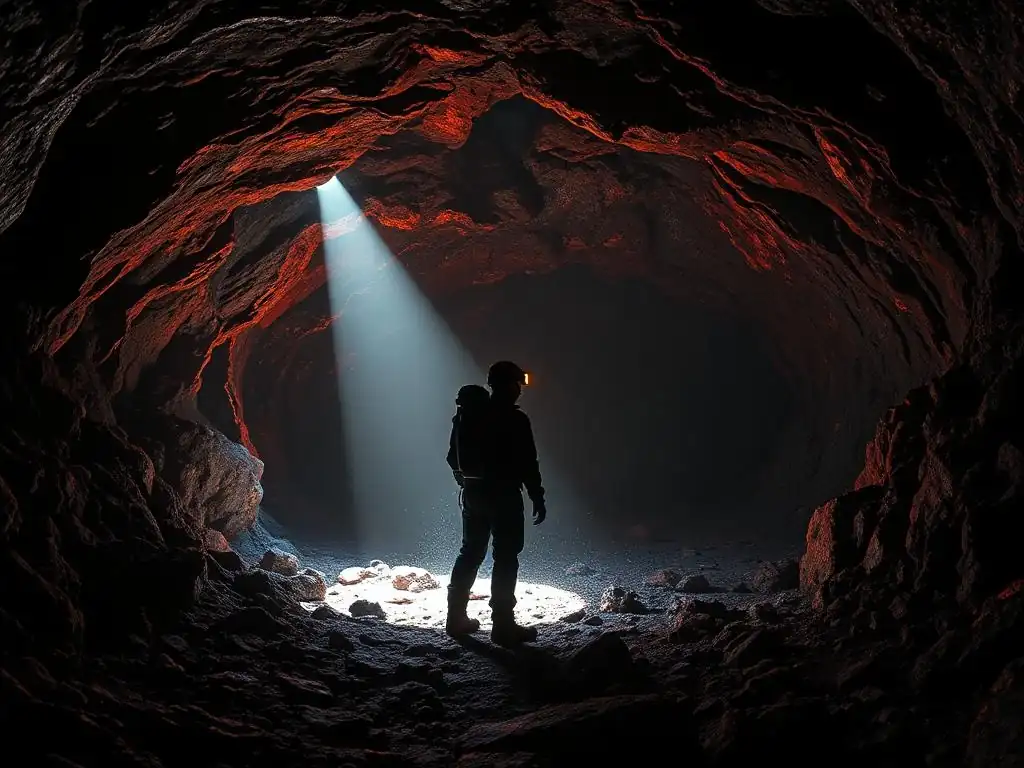
Ever wondered what secrets lie hidden beneath the fiery surface of volcanoes? We invite you to descend into a world of molten rock and geological wonders. Today, we're plunging into the fascinating realm of lava tube exploration techniques. Prepare to uncover the methods and marvels of navigating these subterranean rivers of fire, and discover why these unique formations are so critical to understanding volcanic activity. The journey begins now...
- Understanding Lava Tubes: Formation and Characteristics
- Lava Tube Exploration Techniques: A Detailed Guide
- Lava Tube Exploration Techniques: Navigation and Orientation
- Scientific Research in Lava Tubes: Discoveries and Insights
- The Challenges and Dangers of Lava Tube Exploration
- Preserving and Protecting Lava Tubes: Conservation Efforts
- Famous Lava Tube Systems Around the World
-
Frequently Asked Questions
- What exactly is a lava tube?
- What are some essential safety precautions for lava tube exploration?
- What equipment is typically used for lava tube exploration?
- What are some of the unique geological features that can be found inside lava tubes?
- What impact does lava tube exploration have on the environment?
- Final Reflection: Echoes of Fire, Whispers of Discovery
- Unearth Your Inner Explorer: Ignite Your Lava Tube Journey!
Understanding Lava Tubes: Formation and Characteristics
What are Lava Tubes and How Do They Form?
Lava tubes are natural conduits formed by flowing lava during volcanic eruptions. Imagine a river of molten rock coursing across the landscape. As the surface of this lava flow is exposed to the air, it begins to cool and solidify, forming a crust.
Beneath this hardening crust, the molten lava continues to flow, insulated by the solidified outer layer. This process is similar to how ice forms on a pond in winter, starting at the surface while the water underneath remains liquid. Over time, as the eruption subsides or the lava source is diverted, the molten lava drains away, leaving behind a hollow tunnel – the lava tube.
The formation of extensive lava tube systems depends on several factors, including the type of lava, the eruption rate, and the topography of the land. Basaltic lava, which is less viscous and flows more easily than other types, is particularly conducive to lava tube formation. High eruption rates and sustained lava flow volumes are also crucial, as they ensure a continuous supply of molten rock to carve out and maintain the tube.
The slope of the terrain also plays a significant role; gently sloping surfaces allow lava to flow smoothly over longer distances, promoting the development of longer and more complex tube systems. For instance, the vast lava tube systems found in Hawaii are a testament to the ideal conditions provided by its basaltic lava flows and gently sloping volcanic landscapes.
The Geology of Lava Tubes: A Subterranean World
The geological characteristics of lava tubes reveal a fascinating subterranean world shaped by intense heat and fluid dynamics. The walls of lava tubes often exhibit distinct features that tell the story of their formation. You can observe flow marks and benches along the walls, which indicate different levels of lava flow and pauses in the drainage process.
These features are essentially 'high water marks' of the molten river that once flowed through the tunnel. The ceilings can showcase lava stalactites formed by dripping lava that solidified as it cooled, while the floors might display lava pillars where the roof partially collapsed and fused with the floor.
The rock type comprising lava tubes is primarily solidified volcanic rock, typically basalt or andesite, depending on the type of volcano and eruption. The interior surfaces can vary greatly in texture, from smooth and glassy where the lava cooled quickly, to rough and vesicular, filled with gas bubbles that were trapped as the lava solidified.
In some lava tubes, mineral deposits can be found lining the walls, precipitated from volcanic gases or groundwater that has percolated through the rock over time. These mineral deposits can add vibrant colors and intricate patterns to the otherwise dark and monolithic environment of a lava tube, creating a unique geological canvas for explorers to witness.
Unique Ecosystems Within Lava Tubes: Life in the Dark
Lava tubes, despite their seemingly barren and volcanic origins, can harbor surprisingly diverse and unique ecosystems. These subterranean environments are characterized by perpetual darkness, high humidity, and stable temperatures, conditions that have fostered the evolution of specialized life forms. Cave ecosystems, in general, are often referred to as "troglobitic," meaning they are inhabited by organisms adapted to living in caves. In lava tubes, this can include a variety of invertebrates such as spiders, insects, and crustaceans that have adapted to the absence of sunlight and the limited food resources.
One of the most fascinating aspects of lava tube ecosystems is the presence of chemotrophic bacteria. These microorganisms obtain energy not from sunlight through photosynthesis, but from chemical reactions, often involving minerals and gases present in the volcanic environment. They form the base of the food web in these dark ecosystems, supporting other organisms that feed on them or on each other.
Scientists have discovered novel species of bacteria and other microbes in lava tubes around the world, highlighting the potential for these environments to yield new insights into life's adaptability and the biodiversity hidden beneath our feet. The study of these ecosystems is crucial not only for understanding life in extreme environments on Earth, but also for informing the search for life on other planets, such as Mars, where lava tubes are also believed to exist.
Lava Tube Exploration Techniques: A Detailed Guide
Essential Gear for Safe Lava Tube Exploration
Venturing into lava tubes demands careful preparation and the right equipment to ensure safety and effective exploration. Essential gear for lava tube exploration begins with robust personal protective equipment (PPE). A sturdy helmet is paramount to protect against head injuries from low ceilings or falling rocks.
Knee and elbow pads are crucial for navigating uneven terrain and crawling through narrow passages, significantly reducing scrapes and bruises. Durable, abrasion-resistant clothing, such as long pants and long-sleeved shirts made of tough fabrics like canvas or Cordura, is vital to protect against sharp lava rocks and rough surfaces. Gloves are also necessary to protect hands from cuts and abrasions.
Beyond PPE, proper lighting is indispensable in the complete darkness of lava tubes. A reliable headlamp with a long battery life is the primary light source, allowing hands-free navigation. It’s wise to carry at least two backup light sources, such as handheld flashlights or secondary headlamps, in case the primary light fails.
Sturdy hiking boots or caving boots with good ankle support and slip-resistant soles are essential for traversing the often uneven and slippery floors of lava tubes. A well-stocked backpack should contain water, high-energy snacks, a first-aid kit for minor injuries, a map of the lava tube if available, a compass or GPS device, and communication devices like a whistle or two-way radio, especially if exploring with a team. Depending on the specific exploration objectives and the characteristics of the lava tube, additional gear such as ropes, harnesses, and specialized surveying equipment may be necessary.
Mapping and Surveying Lava Tubes: Advanced Techniques
Mapping and surveying lava tubes are critical components of exploration, providing valuable data for scientific research, conservation efforts, and safe navigation. Traditional methods of lava tube mapping involve the use of compasses, clinometers, and measuring tapes to manually record the dimensions and orientations of passages. Explorers meticulously take compass bearings and inclination angles along the tube's centerline, and measure distances between survey stations.
These manual measurements are then used to create two-dimensional and three-dimensional maps of the lava tube system. While this method is relatively straightforward and requires minimal equipment, it can be time-consuming and prone to human error, especially in complex and extensive lava tube systems.
To enhance accuracy and efficiency, advanced techniques are increasingly employed in lava tube surveying. Laser distance meters, for example, provide precise distance measurements, significantly reducing errors associated with manual tape measurements. Electronic compasses and clinometers offer digital readings, improving accuracy and speed.
Cave surveying software allows for real-time data entry and map generation in the field, streamlining the mapping process. For complex lava tube networks, closed-loop traverses are often conducted, where the survey returns to the starting point, allowing for error checking and adjustments. These advanced techniques not only improve the quality of lava tube maps but also facilitate the creation of detailed 3D models, which are invaluable for scientific analysis and visualization.
LiDAR and Photogrammetry for Lava Tube Mapping
For highly detailed and comprehensive mapping of lava tubes, LiDAR (Light Detection and Ranging) and photogrammetry are powerful technologies. LiDAR utilizes laser pulses to measure distances to surfaces, creating a dense point cloud of 3D data representing the lava tube's interior. Specialized LiDAR scanners, designed for cave environments, can be deployed to rapidly and accurately capture the geometry of lava tube passages, including complex features and inaccessible areas. The resulting point cloud data can be processed to generate highly accurate 3D models of the lava tube, revealing intricate details that might be missed by traditional surveying methods.
Photogrammetry, another advanced technique, involves creating 3D models from overlapping photographs. High-resolution cameras are used to capture images of the lava tube walls and ceilings from multiple viewpoints. Specialized software then processes these images, identifying common points and reconstructing a 3D model based on parallax.
Photogrammetry can capture not only the geometry but also the texture and color of the lava tube surfaces, providing visually rich and detailed models. When combined with LiDAR data, photogrammetry can enhance the visual realism of the 3D models and provide complementary information. Both LiDAR and photogrammetry are increasingly becoming essential tools for lava tube exploration and research, enabling scientists to study these subterranean environments with unprecedented detail and accuracy.
Safety Protocols for Lava Tube Exploration: Minimizing Risks
Safety protocols are paramount in lava tube exploration due to the inherent risks associated with these underground environments. Prior to any exploration, a thorough risk assessment should be conducted to identify potential hazards specific to the lava tube being explored, such as unstable rock, hazardous gases, or vertical drops. A detailed exploration plan should be developed, including the objectives, route, emergency procedures, and communication protocols.
It is crucial to explore lava tubes in teams of at least three people, ensuring that help is readily available in case of an emergency. Each team member should be briefed on the exploration plan, safety procedures, and emergency signals.
During exploration, constant vigilance is essential. Regularly check for loose rocks and unstable ceilings, and avoid lingering under potentially hazardous areas. Monitor for signs of hazardous gases, such as hydrogen sulfide (H2S) or carbon dioxide (CO2), which can accumulate in lava tubes. If gas detectors are not available, be aware of warning signs like a rotten egg smell (H2S) or symptoms of carbon dioxide poisoning, such as headache, dizziness, or rapid breathing.
Maintain clear communication within the team, using pre-arranged signals or communication devices. In vertical sections or areas with potential fall hazards, employ appropriate rope and anchor techniques. Always leave a detailed trip plan with a responsible person above ground, including the expected return time and emergency contact information. Adhering to these safety protocols significantly minimizes the risks associated with lava tube exploration and ensures a safer and more enjoyable experience.
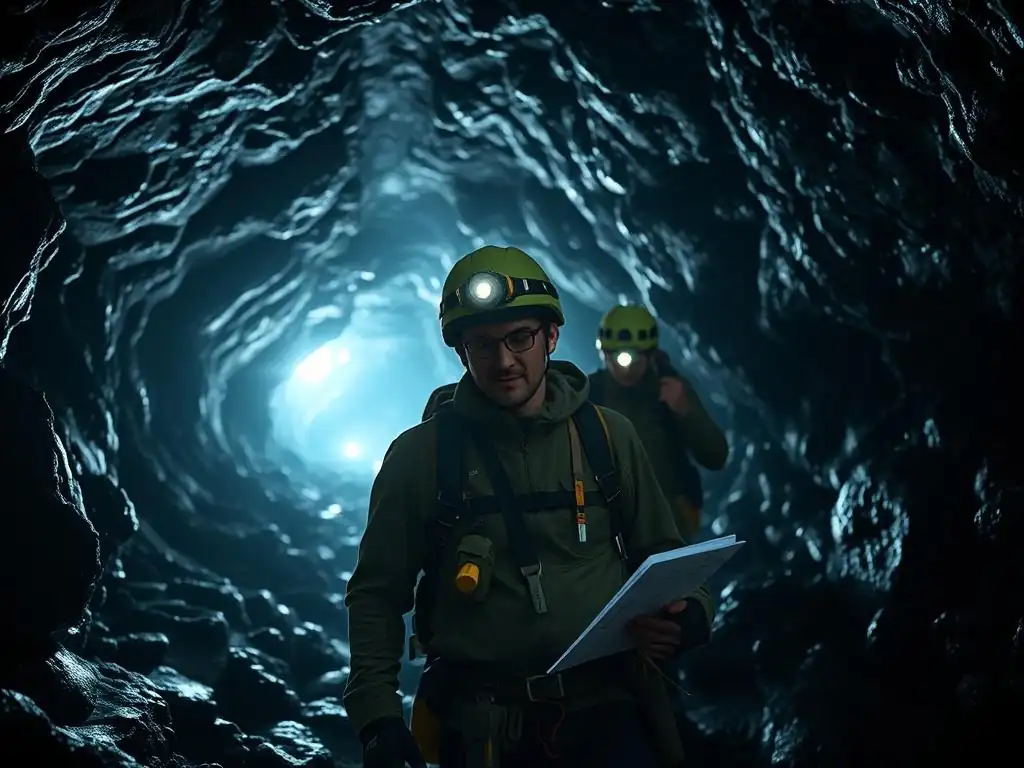
Navigating the intricate and often maze-like passages of lava tube systems requires strong orientation skills and effective navigation techniques. Lava tubes can branch and intersect in complex patterns, making it easy to become disoriented, especially in larger systems. Before entering a lava tube, studying available maps and understanding the general layout is crucial.
If no map exists, creating a sketch map as you explore, noting key features and passage directions, can be invaluable. Pay close attention to distinctive landmarks within the lava tube, such as unique rock formations, changes in passage size, or junctions. Mentally noting these landmarks and their relative positions helps in building a cognitive map of the explored area.
Maintaining a sense of direction is essential for avoiding getting lost. Regularly checking your compass bearing and correlating it with your map or sketch map helps maintain orientation. Using trail markers, such as small flags or reflective tape, can be helpful in marking your path, especially in complex sections or when retracing your steps. However, it is crucial to remove all trail markers upon exiting to minimize impact on the lava tube environment.
Communication within the exploration team is key. Regularly confirming your location and intended route with team members ensures everyone stays on track. In situations where disorientation occurs, remaining calm and systematically retracing your steps, using your map or sketch map and landmarks, is the safest approach to regain orientation and find your way back.
Using Compasses and GPS in Underground Environments
Compasses are fundamental tools for navigation in lava tubes, providing directional information even in the absence of external cues. Traditional magnetic compasses are reliable in most lava tube environments, although local magnetic anomalies caused by volcanic rocks can sometimes introduce minor deviations. It is advisable to check for local magnetic variations and adjust compass readings accordingly if necessary. When using a compass, ensure it is properly calibrated and that you understand how to take accurate bearings. Practice taking bearings and following compass directions in a familiar environment before venturing into lava tubes.
GPS (Global Positioning System) technology, while primarily designed for outdoor navigation, can also be useful in lava tube exploration, particularly at entrances and in sections close to the surface. While GPS signals cannot penetrate deep underground, they can often be received at lava tube entrances and in shallower sections. GPS devices can be used to mark entrance locations, record tracks, and provide coordinates for mapping purposes.
Some specialized GPS devices are designed for use in challenging environments and may offer better signal reception in caves. However, it is important to remember that GPS should not be solely relied upon for navigation within lava tubes. Compasses remain the primary and most reliable tool for underground orientation, complemented by GPS for surface-level referencing and mapping at entrances.
Rope and Anchor Techniques for Vertical Passages
Navigating vertical passages in lava tubes requires specialized rope and anchor techniques to ensure safe ascent and descent. Before attempting any vertical passage, carefully assess the stability of the rock and identify suitable anchor points. Natural anchors, such as sturdy rock protrusions or constrictions in the passage, can be used, but their reliability must be thoroughly evaluated.
Artificial anchors, such as bolts or slings placed around solid rock formations, may be necessary in the absence of reliable natural anchors. Always use high-quality, static ropes specifically designed for caving or climbing, and ensure they are of sufficient length for the passage.
For simple descents, a rappel device, such as a rack or figure-eight descender, is used in conjunction with a harness. Ascending vertical passages typically involves the use of ascenders, also known as jumars, which allow climbers to move upwards along a fixed rope. Proper rigging techniques, including knot tying and rope management, are crucial for safety.
Learn and practice essential knots, such as the figure-eight knot, clove hitch, and prusik knot, from experienced cavers or climbers. Always use backup systems, such as a prusik knot or mechanical ascender below the primary descender or ascender, to prevent falls in case of equipment failure. Vertical rope work in lava tubes should only be undertaken by individuals with proper training and experience in caving or climbing techniques.
Scientific Research in Lava Tubes: Discoveries and Insights
Studying Volcanic Processes Through Lava Tube Analysis
Lava tubes serve as natural laboratories for studying volcanic processes, offering unique insights into lava flow dynamics, cooling mechanisms, and eruption history. By analyzing the morphology and features of lava tubes, volcanologists can reconstruct the flow paths, velocities, and volumes of past lava flows. The dimensions and shapes of lava tube passages, along with features like flow marks and benches, provide valuable data for modeling lava flow behavior and understanding the factors that control tube formation. Studies of lava tube networks can help to map out subsurface lava flow pathways and assess volcanic hazards associated with future eruptions.
The mineralogy and petrology of lava tube walls and floors provide information about the composition and cooling history of the lava. Analyzing the textures and crystal sizes of the solidified lava can reveal cooling rates and temperature gradients within the lava flow. The presence of secondary mineral deposits within lava tubes, such as carbonates or sulfates, can indicate hydrothermal activity and the interaction of volcanic gases with groundwater.
Dating lava tube formations using radiometric dating techniques helps to establish the chronology of volcanic eruptions and the age of the surrounding volcanic landscape. Lava tube research contributes significantly to our understanding of volcanic processes and the evolution of volcanic terrains on Earth and other planets.
The Role of Lava Tubes in Planetary Exploration: Mars and Beyond
Lava tubes are of significant interest in planetary exploration, particularly in the search for extraterrestrial life and potential habitats on other planets and moons. Evidence suggests that lava tubes exist on Mars, the Moon, and possibly other rocky bodies in our solar system. On Mars, collapsed lava tube skylights and sinuous rilles, which are surface channels associated with lava flows, provide strong evidence for the presence of subsurface lava tubes. These Martian lava tubes are considered potential refuges for microbial life, shielding organisms from harsh surface conditions such as radiation, extreme temperature variations, and low atmospheric pressure.
The stable temperature, protection from radiation, and potential presence of water ice or subsurface water within lava tubes make them promising environments for sustaining life. Future robotic and human missions to Mars and the Moon may target lava tubes for exploration, seeking evidence of past or present life and assessing their potential as habitats for future human settlements.
Lava tubes could offer natural shielding for habitats, protecting astronauts from radiation and micrometeorite impacts. Exploring lava tubes on other planets could provide invaluable insights into the geological history and potential for life beyond Earth, furthering our understanding of planetary evolution and astrobiology.
Microbial Life and Biosignatures in Lava Tubes
The discovery of diverse microbial communities in terrestrial lava tubes has fueled interest in their potential role as havens for life in extreme environments and as analogues for extraterrestrial habitats. Studies of lava tube ecosystems have revealed a wide range of microorganisms, including bacteria, archaea, and fungi, adapted to the unique conditions of these subterranean environments. Chemotrophic bacteria, which derive energy from chemical reactions rather than sunlight, are often dominant in lava tube ecosystems, forming the base of the food web. These microorganisms play crucial roles in nutrient cycling and mineral weathering within lava tubes.
Researchers are investigating the biosignatures produced by lava tube microbes, which are chemical or physical traces that indicate the presence of life. These biosignatures could include specific organic molecules, isotopic ratios, or microbial fossils. Identifying and characterizing biosignatures in terrestrial lava tubes is essential for developing strategies to detect life in similar environments on other planets, such as Mars.
Lava tube microbial communities are also being studied for their potential biotechnological applications, such as the production of novel enzymes or antibiotics. The exploration of microbial life in lava tubes is not only expanding our understanding of biodiversity and adaptation on Earth but also informing the search for life beyond our planet.
The Challenges and Dangers of Lava Tube Exploration
Assessing Structural Instability and Collapse Risks
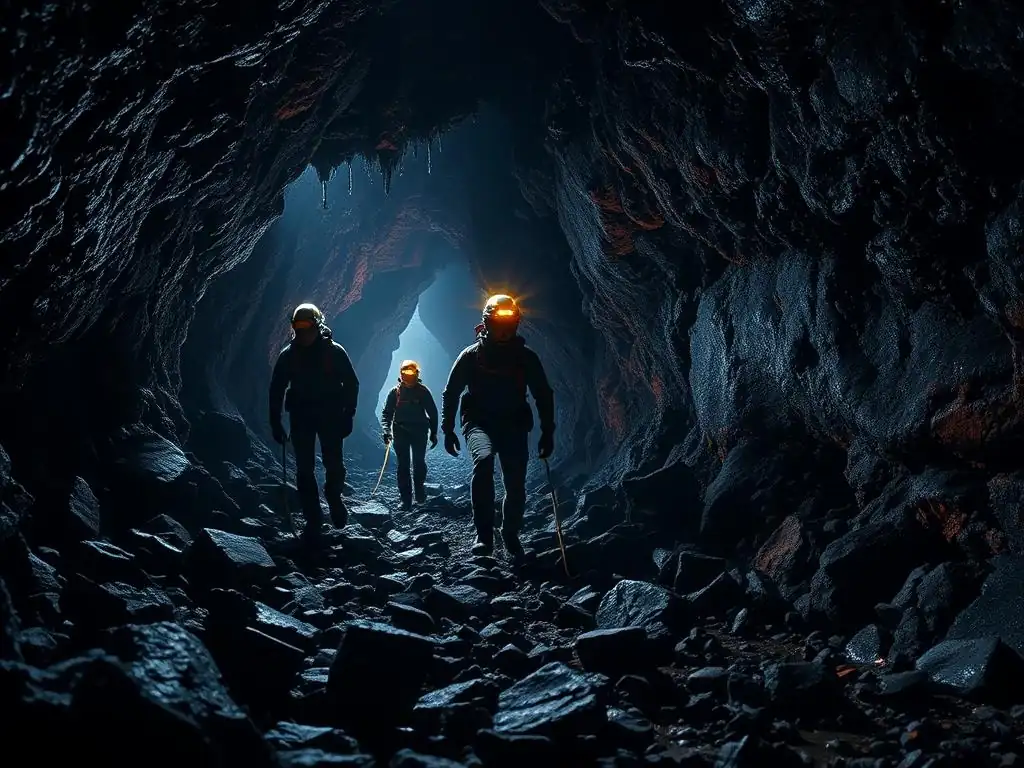
Lava tubes, while fascinating geological formations, pose inherent risks due to their potential for structural instability and collapse. The roofs and walls of lava tubes can be composed of fractured or weakened rock, making them susceptible to collapse, especially in areas with thin ceilings or extensive fracturing. Seismic activity, heavy rainfall, or even the vibrations from explorers walking on the surface above can trigger collapses.
Assessing structural stability is a crucial aspect of safe lava tube exploration. Before entering a lava tube, carefully examine the entrance area and surrounding terrain for signs of instability, such as cracks, loose rocks, or previous collapses.
Inside the lava tube, continuously monitor the ceiling and walls for potential hazards. Listen for sounds of cracking or shifting rock, and be cautious of areas with loose or overhanging rocks. Avoid traversing directly beneath areas with obvious signs of instability. In sections with thin ceilings, distribute weight evenly and move cautiously to minimize stress on the structure.
Mapping and surveying lava tubes can help identify areas with structural weaknesses, allowing explorers to avoid or reinforce those sections. Using ground-penetrating radar (GPR) or other geophysical techniques can help assess roof thickness and identify potential collapse zones from the surface. Proper training in recognizing signs of structural instability and implementing safe exploration practices is essential for minimizing collapse risks in lava tubes.
Identifying and Mitigating Hazardous Gases in Lava Tubes
Hazardous gases are a significant danger in lava tube exploration, as volcanic gases and gases produced by microbial activity can accumulate in these enclosed environments. Carbon dioxide (CO2), hydrogen sulfide (H2S), radon, and methane are among the gases that can be present in lava tubes, often in invisible and odorless concentrations. Carbon dioxide is a common hazard, as it is denser than air and can displace oxygen, leading to asphyxiation.
Hydrogen sulfide is toxic and has a characteristic rotten egg smell even at low concentrations, but at higher levels, it can paralyze the olfactory nerves, making it undetectable. Radon is a radioactive gas that can accumulate in caves and pose long-term health risks through inhalation.
Mitigating gas hazards requires careful planning and the use of appropriate detection and ventilation techniques. Gas detectors designed to measure concentrations of CO2, H2S, and other hazardous gases should be used during lava tube exploration, especially in deeper or poorly ventilated sections. Ventilation can be improved by opening multiple entrances or using portable fans to circulate air.
In areas with known gas hazards, limit exploration time and ensure adequate air circulation. If gas detectors indicate dangerous levels, evacuate the lava tube immediately. Proper training in gas detection, ventilation techniques, and emergency procedures is crucial for minimizing the risks associated with hazardous gases in lava tube exploration.
Accidents Involving Falls and Loss of Orientation
Accidents involving falls and loss of orientation are common hazards in lava tube exploration, often resulting from the challenging terrain and disorienting nature of these environments. Uneven floors, steep slopes, and vertical passages create numerous fall hazards within lava tubes. Slippery surfaces, loose rocks, and poor visibility due to darkness further increase the risk of slips, trips, and falls. Loss of orientation is another significant risk, particularly in complex lava tube systems with multiple branches and intersections. The lack of natural light and the repetitive nature of lava tube passages can quickly lead to disorientation and getting lost.
Preventing falls requires the use of appropriate protective gear, such as helmets, knee pads, and sturdy boots with good traction. Moving slowly and deliberately, especially in uneven or slippery areas, minimizes the risk of falls. Using ropes and anchor techniques for vertical sections and steep slopes is essential for safe ascent and descent. To prevent loss of orientation, employ effective navigation techniques, such as compass and map use, trail marking, and regular communication within the exploration team.
Before entering a lava tube, ensure everyone in the team is aware of the potential hazards and safety procedures. In case of a fall or loss of orientation, remain calm, assess the situation, and utilize emergency procedures, such as signaling for help or retracing steps systematically. Proper preparation, training, and adherence to safety protocols are crucial for minimizing accidents related to falls and loss of orientation in lava tube exploration.
Preserving and Protecting Lava Tubes: Conservation Efforts
The Importance of Responsible Lava Tube Exploration
Responsible lava tube exploration is crucial for preserving these unique geological and biological treasures for future generations. Lava tubes are fragile environments that can be easily damaged by irresponsible exploration practices. Vandalism, such as graffiti and rock breaking, can permanently deface lava tube walls and formations. Disturbance of cave ecosystems, including trampling delicate cave formations and disturbing cave-dwelling wildlife, can have long-lasting negative impacts. Pollution from litter, human waste, and introduced contaminants can degrade water quality and harm cave ecosystems.
Responsible exploration involves minimizing human impact on lava tubes. Adhering to Leave No Trace principles is fundamental, including packing out all trash, avoiding disturbing vegetation or wildlife, and minimizing trampling. Staying on established trails or designated routes, when available, helps to concentrate impact and protect more sensitive areas.
Avoiding touching or collecting cave formations, such as stalactites and stalagmites, preserves their natural beauty and scientific value. Respecting cave wildlife by observing from a distance and avoiding disturbance is essential for protecting cave ecosystems. Educating oneself about responsible caving practices and promoting ethical exploration among fellow explorers contributes significantly to lava tube conservation.
Minimizing Human Impact on Lava Tube Environments
Minimizing human impact on lava tube environments requires implementing specific practices to reduce disturbance and protect these fragile ecosystems. Control access to lava tubes, especially those that are particularly sensitive or heavily visited. Designate specific trails or routes for exploration to concentrate impact and protect undisturbed areas. Educate visitors about the importance of lava tube conservation and responsible exploration practices through signage, brochures, and guided tours. Implement regulations to prohibit vandalism, littering, and disturbance of cave formations and wildlife.
Manage visitor traffic to prevent overcrowding and excessive impact. Consider limiting the number of visitors allowed in a lava tube at any given time, especially during peak seasons. Monitor lava tube environments for signs of human impact, such as erosion, vandalism, or changes in cave ecosystems. Implement restoration measures to mitigate existing damage, such as removing graffiti or restoring damaged trails. Support scientific research to better understand lava tube ecosystems and the impacts of human activities. Collaborate with land managers, conservation organizations, and local communities to develop and implement effective lava tube conservation strategies.
Lava Beds National Monument Conservation Efforts
Lava Beds National Monument in California exemplifies proactive conservation efforts aimed at protecting and managing lava tube resources. The monument encompasses a vast volcanic landscape with hundreds of lava tubes, many of which are open to public exploration under managed access. The National Park Service (NPS) at Lava Beds implements a comprehensive cave management plan that focuses on resource protection, visitor safety, and education. Access to some lava tubes is restricted to protect sensitive resources or manage visitor traffic. Designated trails and marked routes guide visitors through accessible lava tubes, minimizing impact on off-trail areas.
The NPS conducts regular monitoring of lava tubes to assess resource conditions, track visitor use, and identify potential threats. Restoration projects are undertaken to address existing damage, such as removing graffiti or stabilizing unstable areas. Interpretive programs, guided tours, and educational materials are provided to educate visitors about lava tube geology, ecology, and conservation.
The monument collaborates with researchers to conduct scientific studies on lava tube ecosystems and volcanic processes. Lava Beds National Monument serves as a model for responsible lava tube management, demonstrating how conservation efforts can balance public access with resource protection, ensuring the long-term preservation of these remarkable subterranean environments.
Famous Lava Tube Systems Around the World
Exploring the Kazumura Cave in Hawaii: A Volcanic Wonder
Kazumura Cave, located on the Big Island of Hawaii, is one of the longest and deepest lava tubes in the world, stretching over 65 kilometers (40 miles) in length and reaching depths of over 1,100 meters (3,600 feet). Formed from a massive basaltic lava flow from the Mauna Loa volcano, Kazumura Cave showcases an incredible diversity of lava tube features, including large chambers, narrow passages, lava falls, and intricate lava formations. Exploration of Kazumura Cave is a challenging and rewarding experience, requiring advanced caving skills and specialized equipment due to its length, depth, and complex passages.
The cave is home to a unique ecosystem, including endemic cave-adapted invertebrates and microbial communities. Scientists have studied Kazumura Cave extensively, investigating its geology, hydrology, and biology, gaining valuable insights into lava tube formation processes and subterranean ecosystems. Sections of Kazumura Cave are accessible to guided tours, allowing visitors to experience the wonder of this volcanic marvel while ensuring responsible exploration and conservation. The sheer scale and complexity of Kazumura Cave make it a premier destination for lava tube exploration and a significant site for scientific research, highlighting the extraordinary volcanic landscapes of Hawaii.
The Undara Lava Tubes of Australia: A Geological Marvel
The Undara Lava Tubes, located in Queensland, Australia, are renowned for being among the longest lava tubes formed from a single volcanic eruption. These tubes were created approximately 190,000 years ago by the eruption of the Undara volcano, with lava flowing for over 90 kilometers (56 miles), forming an extensive network of interconnected tubes. The Undara Lava Tubes are unique in their geological history and the surrounding savanna landscape, offering a contrasting environment compared to lava tubes found in volcanic regions with different climates and vegetation.
The tubes are characterized by large, spacious chambers, some reaching up to 20 meters (65 feet) wide and 10 meters (33 feet) high, making them relatively easy to navigate compared to narrower tubes. The Undara Experience, a tourism operator, offers guided tours of the lava tubes, providing insights into their formation, geology, and ecology.
The area surrounding the lava tubes is also rich in wildlife, including bats that roost in the caves and various bird species that inhabit the savanna woodlands. The Undara Lava Tubes are a significant geological and ecological attraction in Australia, showcasing the impressive scale of volcanic processes and the adaptation of life to unique subterranean environments.
Cueva de los Verdes, Lanzarote, Canary Islands
Cueva de los Verdes, situated on the volcanic island of Lanzarote in the Canary Islands, is a remarkable lava tube system formed by the eruption of the La Corona volcano approximately 3,000 to 4,500 years ago. The lava tube extends for over 7 kilometers (4.3 miles), with a section of about 1 kilometer (0.6 miles) open to the public as a tourist attraction.
Cueva de los Verdes is notable for its stunning geological formations, including lava stalactites, lava flows, and a hidden auditorium located within a large chamber. The cave's name, "Cave of the Greens," originates from the Haria family, "Verdes," who used it as a refuge from pirate attacks in the 16th and 17th centuries.
The interior of Cueva de los Verdes has been artistically illuminated, enhancing the visual experience of the cave's geological features and creating a unique subterranean atmosphere. The hidden auditorium within the cave is used for concerts and cultural events, taking advantage of the natural acoustics of the volcanic chamber.
Cueva de los Verdes is an integral part of Lanzarote's UNESCO Biosphere Reserve status, highlighting the island's commitment to sustainable tourism and the preservation of its volcanic heritage. The cave offers a fascinating glimpse into the geological processes that shaped the Canary Islands and the ingenious ways in which humans have interacted with and utilized these volcanic landscapes.
Frequently Asked Questions
What exactly is a lava tube?
A lava tube is a natural tunnel formed by flowing lava during a volcanic eruption. The outer surface of the lava flow cools and hardens, forming a crust, while the molten lava continues to flow beneath, eventually leaving behind a hollow tube.
What are some essential safety precautions for lava tube exploration?
Safety is paramount! Always wear a helmet and sturdy footwear. Be aware of potential hazards like falling rocks, uneven terrain, and limited visibility. Never explore alone and inform someone of your plans.
What equipment is typically used for lava tube exploration?
Essential equipment includes a reliable light source (headlamp and flashlight), sturdy hiking boots, a helmet, and a first-aid kit. Depending on the length and complexity of the tube, you may also need rope, mapping tools, and communication devices.
What are some of the unique geological features that can be found inside lava tubes?
Lava tubes often exhibit fascinating geological formations such as lava stalactites, lava benches, and lava flow patterns. They also provide a unique glimpse into the cooling and solidification processes of lava.
What impact does lava tube exploration have on the environment?
Responsible lava tube exploration minimizes environmental impact by staying on designated paths, avoiding disturbing fragile formations, and packing out all trash. It's crucial to respect the delicate ecosystem and preserve these unique geological features.
Final Reflection: Echoes of Fire, Whispers of Discovery
The journey into lava tubes, as we've explored, isn't merely a descent into darkness; it's a venture into the heart of geological history, a tangible connection to the Earth's fiery past. The refined lava tube exploration techniques discussed are not just academic exercises, but crucial tools for understanding our planet's formation and potential for harboring life, both past and present. These subterranean landscapes, once forged by molten rock, now offer invaluable insights into volcanism, astrobiology, and even future human habitation on other planets.
The allure of lava tubes extends beyond scientific curiosity; it touches something primal within us, a fascination with the unknown and a desire to uncover hidden worlds. This exploration, both literal and metaphorical, reminds us of the importance of venturing beyond the surface, of seeking knowledge in the most unexpected places. The important thing is not to stop questioning. Curiosity has its own reason for existing.
- Albert Einstein. This quote perfectly encapsulates the spirit of lava tube exploration, a relentless pursuit of understanding driven by an insatiable curiosity.
As we conclude this exploration of lava tube exploration techniques, I invite you to consider the lessons learned. The meticulous planning, the innovative technology, and the unwavering dedication required to navigate these subterranean realms are qualities applicable to any challenge we face. Embrace the spirit of discovery, cultivate your curiosity, and dare to explore the hidden depths within yourself and the world around you. The echoes of fire may fade, but the whispers of discovery will continue to resonate, guiding us towards a deeper understanding of ourselves and the universe we inhabit.
Unearth Your Inner Explorer: Ignite Your Lava Tube Journey!
Thank you for diving deep into the fascinating world of lava tubes with Volcano Explorers! We hope you've gained a newfound appreciation for these incredible geological formations and the unique ecosystems they harbor. Now, it's time to turn that knowledge into action and fuel your own exploration.
Here's how you can continue your adventure:
- Plan a Virtual Lava Tube Expedition: Using online resources, create a detailed itinerary for a hypothetical lava tube exploration, including potential hazards, equipment needs, and scientific objectives. Imagine you're leading a research team and document your findings! This is the primary action related to exploring lava tubes.
- Share your newfound knowledge! Educate your friends and family about the wonders of lava tubes and their importance in understanding volcanic activity on Earth and beyond.
- Browse Volcano Explorers' website for additional articles, photos, and interactive content related to volcanology and geological exploration.
What unique adaptations do you think lifeforms within lava tubes might develop over extended periods of isolation? Share your theories in the comments below!