
From Molten to Solid Spine: A Visual Journey of Dome Creation

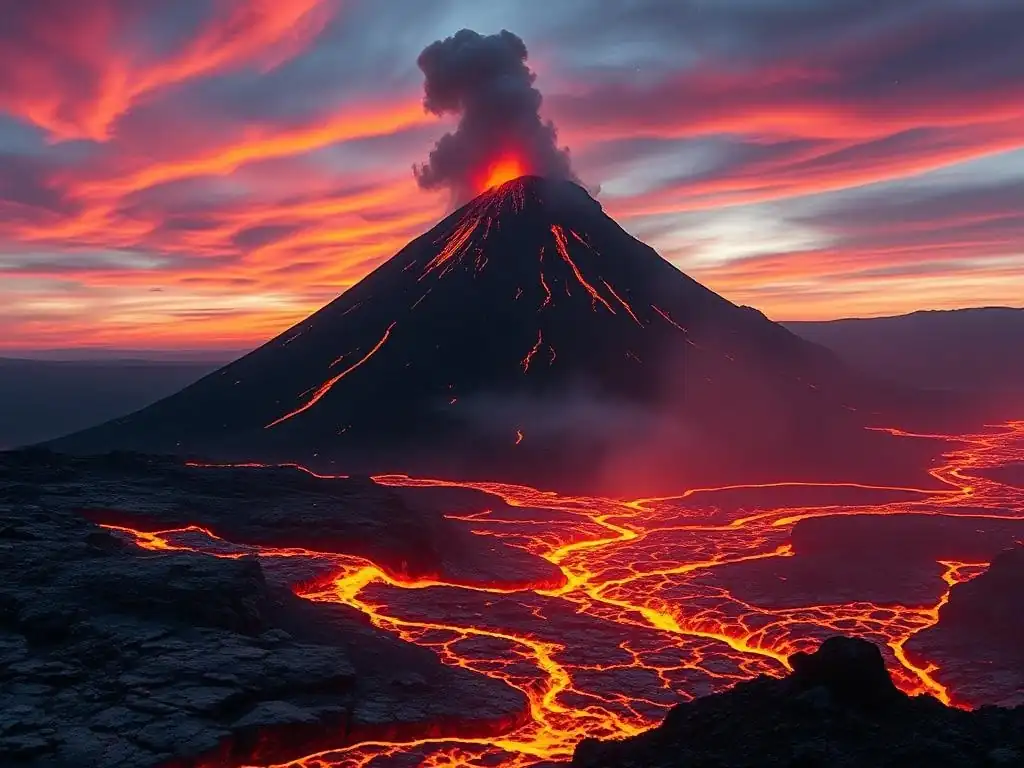
Welcome to Volcano Explorers, where the Earth breathes fire and the landscape rewrites itself. Ever wondered how a mountain grows from within? Dive into the heart of our latest exploration and uncover the secrets behind Volcano Dome Formation Explained. Prepare to witness the mesmerizing process of molten rock solidifying into a formidable spine, and discover the science that fuels this dramatic transformation. What forces shape these geological titans? Let's ignite your curiosity and begin the journey!
- Understanding Volcano Dome Formation
- The Molten Beginnings: Magma Ascent and Degassing
- Visual Stages of Volcano Dome Development
- Visual Evidence: Case Studies of Dome-Forming Volcanoes
- The Solid Spine: Cooling and Crystallization of Lava
- Hazards Associated with Volcanic Domes
- Monitoring and Predicting Dome Activity
- Volcano Dome Formation: A Continuous Cycle
- Frequently Asked Questions
- Final Reflection: The Enduring Power of Creation
- Unearth Your Inner Volcanologist!
Understanding Volcano Dome Formation
What is a Volcanic Dome?
Volcanic domes are steep-sided, bulbous mounds that form from viscous lava erupted effusively from a volcanic vent. Unlike the fluid lava flows that characterize shield volcanoes, the lava that builds domes is too sticky to flow far. Instead, it piles up around the vent, growing outwards and upwards. Think of it like toothpaste being squeezed onto a surface – it doesn't spread easily but forms a mound where it's extruded.
This viscous nature is primarily due to the high silica content of the lava, making it resistant to flow. Volcanic domes are frequently found within the summit craters or on the flanks of stratovolcanoes, often following a major explosive eruption that has cleared the conduit. They are dynamic features, constantly changing as new lava is added and existing dome material collapses.
The formation of volcanic domes is a significant aspect of volcanic activity and understanding them is crucial for hazard assessment. These structures are not simply piles of solidified lava; they are complex geological formations that can exhibit a range of behaviors, from slow, steady growth to rapid, explosive destruction. The shape and size of a volcanic dome are influenced by several factors, including the lava's viscosity, the rate of lava supply, and the surrounding topography.
Domes can range in size from tens of meters to over a kilometer in diameter and hundreds of meters in height. Their presence is often a sign of ongoing volcanic unrest and potential for further eruptions, making the study of volcano dome formation explained here essential for volcanologists and communities living near active volcanoes.
The Science Behind Volcano Dome Growth
The growth of a volcanic dome is a fascinating interplay of physics and chemistry. The key driver is the ascent of magma from deep within the Earth. This magma, rich in silica and dissolved gases, rises through the volcanic conduit due to buoyancy. As the magma ascends, the pressure decreases, causing dissolved gases to exsolve or come out of solution, similar to how carbon dioxide bubbles out of a soda bottle when opened. However, in viscous, dome-forming magma, these gases are often trapped, contributing to the magma's explosive potential, even though dome formation itself is considered an effusive process.
The viscosity of the magma is paramount in controlling dome formation. High silica content leads to a highly viscous magma because silica tetrahedra link together to form complex chains and networks, hindering flow. Temperature also plays a role; cooler magmas are more viscous than hotter ones.
As viscous magma reaches the surface and encounters cooler temperatures and atmospheric pressure, it degasses further and solidifies rapidly. This rapid solidification on the surface creates a crust that further impedes flow, causing the newly erupted lava to accumulate and build the dome. The process of volcano dome formation explained scientifically involves understanding these intricate relationships between magma composition, gas content, temperature, and pressure, all working together to shape these intriguing volcanic features.
The Molten Beginnings: Magma Ascent and Degassing
Magma Composition and Viscosity
The journey of a volcanic dome begins deep beneath the Earth's surface with the generation of magma. Magma composition is the fundamental control on its viscosity, and consequently, its ability to form domes. Magmas that form volcanic domes are typically rich in silica (SiO2), often classified as andesitic to rhyolitic in composition.
Andesitic magmas contain around 52-63% silica, while rhyolitic magmas can have over 69% silica. This high silica content is what makes these magmas so viscous. In contrast, basaltic magmas, which are lower in silica (around 45-52%), are much more fluid and tend to form lava flows and shield volcanoes rather than domes.
The high viscosity of dome-forming magmas is due to the polymerization of silica tetrahedra. In silica-rich magmas, these tetrahedra link together to form complex chains and networks, increasing the internal friction and resistance to flow. Imagine trying to stir honey versus water; honey, being more viscous, is much harder to stir. Similarly, the high silica content in dome-forming magma makes it behave like honey compared to the more fluid basaltic magma which would be closer to water in consistency. Understanding magma composition and its resulting viscosity is key to comprehending why and how volcano dome formation explained here occurs.
The Role of Gas in Magma
While viscosity dictates the shape and flow characteristics of lava, dissolved gases within the magma play a critical, often underestimated, role in volcano dome formation. Magma at depth contains dissolved gases like water vapor (H2O), carbon dioxide (CO2), sulfur dioxide (SO2), and others under immense pressure. As magma ascends towards the surface, the pressure decreases, causing these dissolved gases to exsolve, or separate out of the melt, forming bubbles. In low-viscosity basaltic magmas, these gas bubbles can easily escape, leading to relatively gentle effusive eruptions or fire fountains.
However, in the highly viscous magmas that form domes, gas bubbles struggle to escape. The sticky nature of the magma traps the gas, leading to a buildup of pressure. This trapped gas can contribute to both effusive dome growth and explosive activity. During dome formation, some gas escapes gradually, allowing for the slow extrusion of lava.
But, if the pressure from trapped gas builds up sufficiently, it can overcome the strength of the surrounding rock and magma, leading to explosive eruptions. Therefore, the role of gas in magma is complex and dualistic; it can drive both the relatively gentle process of dome extrusion and the potentially violent explosions associated with dome instability. This delicate balance highlights the importance of considering gas content when volcano dome formation is explained and analyzed for hazard assessment.
Visual Stages of Volcano Dome Development
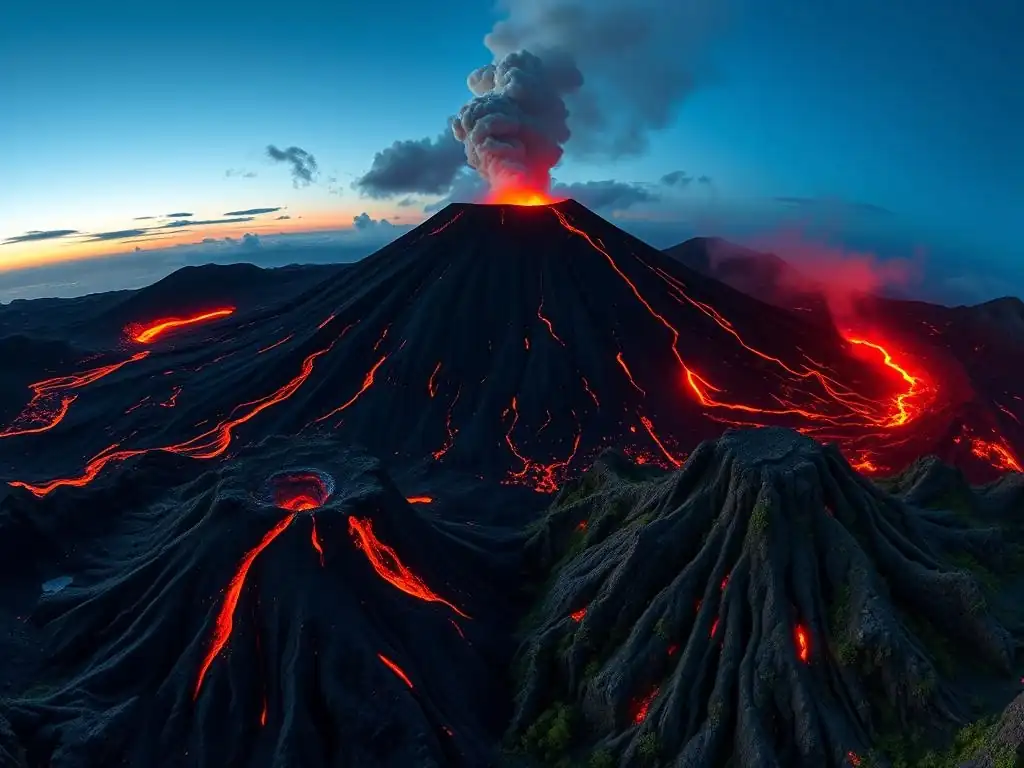
Stage 1: Initial Extrusion
The initial stage of volcano dome formation begins with the effusive eruption of viscous lava onto the surface. This lava, unlike the fast-flowing kind, oozes out slowly, often within a pre-existing volcanic crater or vent. The extrusion rate can vary significantly, from a few cubic meters per day to thousands of cubic meters per day, depending on the magma supply rate from depth and the conduit geometry.
Visually, this stage might appear as a slow bulging or inflation of the ground around the vent area, followed by the appearance of pasty, often rubbly lava at the surface. The newly extruded lava is typically hot, glowing orange or red, contrasting starkly with the surrounding cooler rock.
This early phase of dome growth is crucial as it sets the foundation for the dome's subsequent evolution. The first lava extruded often forms a small, roughly circular or irregular mound around the vent. As more lava is supplied, this mound starts to grow in height and diameter.
The surface of the early dome is typically fractured and blocky due to the cooling and solidification of the viscous lava. Understanding this initial extrusion phase is vital for monitoring volcanic activity, as it signals a shift towards dome-building eruptions and potential future hazards. The process of volcano dome formation explained visually starts right here, with the first molten material emerging at the surface.
Early Dome Morphology
The morphology, or shape, of a volcanic dome in its early stages is largely dictated by the viscosity of the lava and the extrusion rate. Due to the high viscosity, the lava doesn't flow far, resulting in a steep-sided, often pancake-like shape initially. The surface texture is typically rough and blocky, composed of solidified lava fragments called clasts. These clasts are formed by the fracturing and fragmentation of the cooling lava as it is extruded. The early dome might also exhibit flow banding, visible as layers or streaks within the solidifying lava, indicating the direction of flow during extrusion.
Observing the early dome morphology provides valuable insights into the eruption dynamics. A rapidly growing dome might exhibit radial fractures and a more chaotic surface texture, suggesting a high extrusion rate and potential instability. Conversely, a slowly growing dome might appear smoother with more defined flow bands, indicating a steadier, less vigorous extrusion.
The initial shape can also be influenced by the topography of the surrounding area; domes forming on steep slopes might be elongated or asymmetric. Studying the early dome morphology is essential for volcanologists as it offers clues about the magma properties and the future trajectory of dome growth. This detailed observation of the early shape is a key part of volcano dome formation explained through visual characteristics.
Stage 2: Dome Growth and Expansion
Following the initial extrusion, Stage 2 of volcano dome formation is characterized by significant growth and expansion. As lava continues to be supplied from below, the dome increases in both height and diameter. This growth can occur through two primary mechanisms: endogenous growth and exogenous growth.
Endogenous growth involves the inflation of the dome from within as new magma is injected into its core, causing the dome to swell outwards. Exogenous growth, on the other hand, involves the addition of new lava lobes onto the surface of the existing dome, causing it to expand outwards and upwards. Often, both processes occur simultaneously, contributing to the complex and dynamic evolution of the dome.
During this stage, the dome's surface continues to be fractured and blocky, but new features might emerge. Pressure ridges, formed by the buckling of the dome's surface due to internal pressure, can develop. Lava spines, tall, pillar-like structures of solidified lava, can also extrude from the dome's summit.
The rate of dome growth can fluctuate significantly, with periods of rapid expansion followed by slower phases or even temporary pauses. Monitoring these changes in growth rate is crucial for assessing the stability of the dome and the potential for hazardous events. Stage 2 is a visually dynamic period in volcano dome formation explained by the continuous addition and reshaping of the volcanic structure.
Inflation and Deflation Cycles
A hallmark of Stage 2 dome growth is the occurrence of inflation and deflation cycles. These cycles reflect changes in the magma supply rate and internal pressure within the dome. Inflation occurs when magma supply exceeds the extrusion rate, causing the dome to swell and its surface to uplift.
This inflation is often accompanied by increased fracturing and cracking of the dome's crust as it stretches to accommodate the expanding volume. Deflation, conversely, occurs when the magma supply decreases or when magma is erupted or intruded elsewhere, leading to a decrease in internal pressure and a subsidence of the dome's surface.
These inflation and deflation cycles can be detected using various monitoring techniques, such as ground deformation measurements (using GPS or tiltmeters) and satellite radar interferometry. The amplitude and frequency of these cycles can provide valuable insights into the magma plumbing system beneath the volcano and the dynamics of dome growth. Large and rapid inflation events may indicate a buildup of pressure and an increased risk of explosive activity or dome collapse. Understanding these cycles is critical for volcano dome formation explained in terms of internal processes and for forecasting potential hazards associated with dome-building eruptions.
Stage 3: Stabilization and Potential Collapse
Stage 3 represents a later phase in volcano dome formation where the rate of lava extrusion typically slows down significantly, or even ceases altogether. The dome may appear to stabilize, with less noticeable growth or deformation. However, this apparent stability can be deceptive, as volcanic domes remain inherently unstable structures even after lava supply diminishes. The solidified lava dome is prone to collapse due to gravity, hydrothermal alteration weakening the rock, or renewed magma input from below.
During this stage, the dome's surface may become increasingly altered by hydrothermal activity, with fumaroles (gas vents) and areas of sulfur deposition becoming more prominent. Weathering and erosion also begin to play a more significant role in shaping the dome's morphology. While the immediate threat of rapid dome growth may subside in Stage 3, the potential for dome collapse and associated hazards like pyroclastic flows and lahars remains a serious concern. Therefore, even in this seemingly quiescent stage, continued monitoring and hazard assessment are crucial for volcano dome formation explained in its long-term evolution and associated risks.
The Fragility of Volcanic Domes
Volcanic domes, even when seemingly stable, are inherently fragile structures. Their steep sides and accumulation of poorly consolidated volcanic material make them susceptible to collapse. Several factors contribute to dome fragility. Firstly, the viscous lava that forms domes solidifies rapidly on the surface, creating a brittle outer crust. Beneath this crust, the dome's interior may still be hot and partially molten, creating a weak and unstable core. Secondly, hydrothermal alteration, caused by hot volcanic gases circulating through the dome, can weaken the rock, making it more prone to failure.
External factors, such as heavy rainfall or earthquakes, can also trigger dome collapse. The steep slopes of domes are inherently unstable under gravity, and any perturbation can initiate a landslide or sector collapse. Dome collapses can range in size from small rockfalls to massive sector collapses involving millions of cubic meters of material.
These collapses can generate dangerous pyroclastic flows, which are hot, fast-moving avalanches of rock, gas, and ash, and lahars, which are volcanic mudflows. The inherent fragility of volcanic domes is a critical aspect of volcano dome formation explained in terms of hazard potential, emphasizing the need for careful monitoring and risk mitigation strategies.
Visual Evidence: Case Studies of Dome-Forming Volcanoes
Mount St. Helens: Dome Evolution
Mount St. Helens, in Washington State, USA, provides a classic example of volcano dome formation following a major explosive eruption. The catastrophic eruption of May 18, 1980, removed the volcano's summit and triggered a massive landslide. Following this eruption, a series of dome-building eruptions began in October 1980 and continued intermittently until 1986. The dome grew within the newly formed crater, exhibiting periods of rapid growth and slower expansion. Visual observations and photographs documented the dome's evolution, showing its increasing size and changing morphology over time.
The Mount St. Helens dome was characterized by its blocky surface and the extrusion of lava spines. Growth occurred primarily through exogenous growth, with new lava lobes being added to the dome's flanks. Scientists meticulously monitored the dome's growth using aerial photography, ground-based surveys, and remote sensing techniques. The dome's evolution at Mount St. Helens provided valuable insights into the processes of volcano dome formation explained through a real-world example, contributing significantly to our understanding of dome dynamics and associated hazards. The post-1980 dome is no longer actively growing, but serves as a compelling case study.
Soufrière Hills Volcano, Montserrat: Dome Growth and Collapse
The Soufrière Hills Volcano on the Caribbean island of Montserrat is another prime example of long-lived volcano dome formation, but with a more dramatic history of dome collapses. Eruptions began in 1995, marked by the growth of a lava dome in the summit crater.
Unlike the relatively stable dome at Mount St. Helens, the Soufrière Hills dome has experienced numerous episodes of partial and complete collapse, generating devastating pyroclastic flows that have repeatedly impacted populated areas. Visual records, including time-lapse photography and video footage, vividly illustrate the dynamic and often destructive nature of dome growth and collapse at this volcano.
The Soufrière Hills dome has exhibited both endogenous and exogenous growth, with periods of rapid inflation and deflation. The dome's unstable nature is attributed to factors such as high extrusion rates, steep dome slopes, and hydrothermal weakening. Dome collapses have occurred due to gravitational instability, explosive eruptions, and magma pressure build-up. The ongoing eruption at Soufrière Hills provides a stark reminder of the hazards associated with volcano dome formation explained through a continuously evolving and often dangerous case study. The frequent dome collapses underscore the fragility of these structures and the importance of robust monitoring and hazard mitigation strategies.
Other Notable Dome-Forming Volcanoes
Beyond Mount St. Helens and Soufrière Hills, many other volcanoes around the world have exhibited dome-forming eruptions. Examples include:
- Unzen Volcano, Japan: Experienced a significant dome-building eruption in the early 1990s, which produced pyroclastic flows that claimed lives. The dome growth and collapses were extensively documented and studied, contributing to our understanding of dome instability.
- Popocatépetl Volcano, Mexico: Has been actively growing domes in its summit crater since the mid-1990s. Dome growth is often punctuated by explosive eruptions that destroy the dome and generate ashfall hazards for nearby Mexico City.
- Merapi Volcano, Indonesia: Known for its frequent dome-building eruptions and pyroclastic flows. The rapid growth and collapse of domes at Merapi pose a constant threat to surrounding communities.
These examples, among many others, highlight the global prevalence of volcano dome formation and the diverse range of behaviors exhibited by dome-forming volcanoes. Studying these various cases allows volcanologists to refine their understanding of volcano dome formation explained across different geological settings and eruption styles, leading to improved hazard assessments and mitigation strategies worldwide.
The Solid Spine: Cooling and Crystallization of Lava
From Molten Rock to Solid Structure
The transformation from molten lava to a solid volcanic dome is a process of cooling and crystallization. As viscous lava is extruded onto the surface, it begins to lose heat to the atmosphere and surrounding rocks. This cooling process is initially rapid at the surface, forming a solidified crust. However, the interior of a large dome can remain hot and partially molten for extended periods, sometimes years or even decades, depending on the dome's size, extrusion rate, and surrounding environment.
As the lava cools, minerals begin to crystallize out of the melt. The minerals that crystallize first are typically those with higher melting points, such as feldspars and quartz in silica-rich magmas. The process of crystallization releases latent heat, which can slow down the cooling rate.
The final texture and strength of the solidified dome rock depend on factors such as the cooling rate, the composition of the magma, and the degree of crystallization. Understanding the transition from molten rock to solid structure is crucial for volcano dome formation explained from a material science perspective, affecting the dome's stability and resistance to erosion.
Formation of a Volcanic Spine
A particularly striking feature sometimes associated with volcano dome formation is the development of a volcanic spine. A volcanic spine is a steep, pillar-like extrusion of solid lava that rises from the summit of a dome. Spines form when highly viscous, degassed lava is squeezed upwards through a vent or fracture in the dome's crust. Because the lava is already largely solidified, it doesn't flow outwards but instead is pushed upwards as a solid or semi-solid mass.
Volcanic spines can grow to impressive heights, sometimes reaching tens or even hundreds of meters tall. They are often unstable and prone to collapse due to their steep sides and the ongoing deformation of the underlying dome. The formation of a volcanic spine is a testament to the immense pressures involved in dome-building eruptions and the extreme viscosity of the lava. Spines are visually dramatic features that represent a specific type of volcano dome formation explained by the forceful extrusion of solidified or partially solidified lava. They are also hazardous features, often preceding or accompanying dome collapses.
Hazards Associated with Volcanic Domes
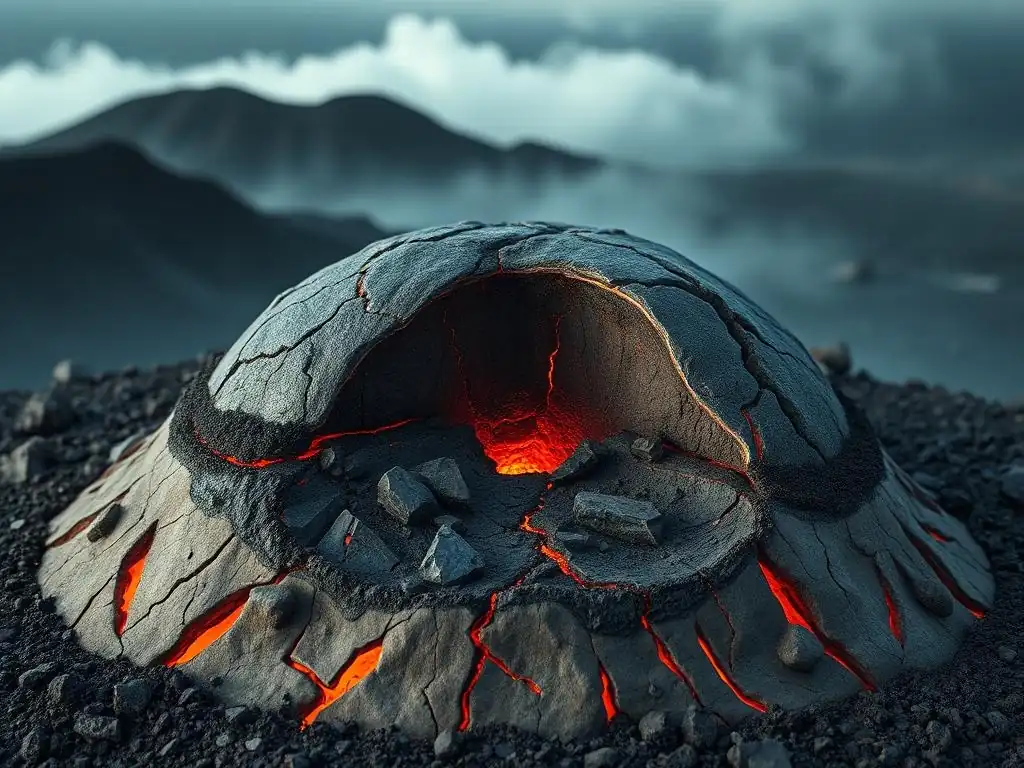
Pyroclastic Flows and Explosions
Volcanic domes, while formed by effusive eruptions, are often associated with significant explosive hazards. One of the most dangerous hazards linked to dome formation is the generation of pyroclastic flows. Pyroclastic flows are hot, fast-moving avalanches of volcanic rock fragments, gas, and ash. They can be triggered by several mechanisms related to dome instability, including dome collapse, explosive eruptions that fragment the dome, and even directed blasts from within the dome.
Dome collapses are a common trigger for pyroclastic flows. As domes grow and steepen, they become gravitationally unstable. Partial or complete collapses of the dome can release large volumes of hot rock debris that rapidly accelerate downslope, forming devastating pyroclastic flows.
Explosive eruptions, even from seemingly effusive domes, can also generate pyroclastic flows by fragmenting the dome material and propelling it outwards in a hot, turbulent cloud. Pyroclastic flows are extremely hazardous due to their high temperatures (ranging from hundreds to over 1000 degrees Celsius) and high speeds (often exceeding 100 km/h), capable of causing complete destruction and loss of life in their path. Understanding the relationship between volcano dome formation explained and pyroclastic flow generation is crucial for hazard assessment and mitigation.
Lahars and Debris Flows
In addition to pyroclastic flows, volcanic domes are also associated with the hazard of lahars, or volcanic mudflows, and debris flows. Lahars are mixtures of volcanic debris, rock fragments, ash, and water that flow down volcanic slopes, resembling rapidly flowing concrete. They can be triggered by several factors related to dome activity. Rainfall, especially heavy rainfall, can erode loose volcanic material from the dome and surrounding slopes, mobilizing it into lahars. Melting snow and ice on volcanic summits can also generate large volumes of water that mix with volcanic debris to form lahars.
Dome collapses and pyroclastic flows can also contribute to lahar generation. Pyroclastic flow deposits are often unconsolidated and easily eroded, providing a readily available source of material for lahars, especially during rainfall events. Debris flows are similar to lahars but typically contain less water and more rock fragments. They are also common hazards associated with volcanic domes, often triggered by heavy rainfall or dome collapses.
Lahars and debris flows can travel long distances from the volcano, following river valleys and inundating populated areas. They are highly destructive due to their density and erosive power, posing a significant threat to infrastructure and communities downstream from dome-forming volcanoes. The process of volcano dome formation explained also includes understanding the secondary hazards like lahars that can arise from these structures.
Monitoring and Predicting Dome Activity
Techniques Used to Observe Dome Growth and Deformation
Monitoring volcanic domes is crucial for assessing hazards and providing timely warnings of potential dome collapses or explosive eruptions. Volcanologists employ a variety of sophisticated techniques to observe dome growth and deformation. Ground deformation measurements are fundamental, using instruments like GPS receivers and tiltmeters to detect subtle changes in the shape of the volcano and dome. GPS measures horizontal and vertical movements, while tiltmeters measure changes in ground slope, both indicating inflation or deflation of the dome.
Satellite radar interferometry (InSAR) is a powerful remote sensing technique that uses radar images from satellites to map ground deformation over large areas with high precision. InSAR can detect dome inflation and deflation patterns, even in remote or inaccessible areas. Thermal monitoring using infrared cameras and satellite thermal sensors tracks changes in the dome's temperature, which can indicate magma supply rate and areas of gas emission.
Gas monitoring measures the composition and flux of volcanic gases emitted from fumaroles and vents on the dome, providing insights into magma degassing processes and potential changes in volcanic activity. Visual observations from ground-based cameras, webcams, and aerial surveys provide direct information on dome morphology, growth rate, and surface features like fractures and rockfalls. These diverse monitoring techniques provide a comprehensive picture of volcano dome formation explained through observable parameters, allowing for better hazard assessment.
Predicting Dome Collapse
Predicting dome collapse is a major challenge in volcanology, but advancements in monitoring and modeling techniques are improving our ability to forecast these events. While a precise prediction of when a dome collapse will occur remains difficult, scientists can identify conditions that increase the likelihood of collapse. Rapid dome growth rates, especially when accompanied by inflation, are often precursors to collapse. Increased fracturing and cracking of the dome surface, observed visually or through deformation measurements, indicate weakening and instability. Changes in gas emission rates or composition can also signal changes in magma pressure and potential for dome destabilization.
Statistical models and empirical relationships based on past dome collapses are used to assess the probability of collapse based on monitored parameters. Numerical models that simulate dome growth and stability are also being developed to improve predictive capabilities. While these models are becoming increasingly sophisticated, uncertainties remain due to the complex and dynamic nature of volcanic systems.
Despite these challenges, continuous monitoring and integrated analysis of various data streams are essential for improving our ability to forecast dome collapses and mitigate the associated hazards. Predicting dome collapse is a key aspect of volcano dome formation explained in terms of risk management, striving to protect communities living near dome-building volcanoes.
Volcano Dome Formation: A Continuous Cycle
The Dynamic Nature of Volcanic Domes
Volcanic domes are not static landforms; they are dynamic features that are constantly evolving over time. Even after active growth ceases, domes remain subject to change due to erosion, weathering, hydrothermal alteration, and potential future eruptive activity. The lifespan of a volcanic dome can vary greatly, from months to decades or even centuries. Some domes are short-lived, collapsing or being destroyed by explosive eruptions relatively quickly. Others can persist for long periods, undergoing slow degradation and modification.
The dynamic nature of volcanic domes means that hazard assessments must be regularly updated. Even domes that appear dormant can become reactivated, either through renewed dome growth or through collapse due to ongoing instability. The surrounding environment also plays a role in dome evolution. Erosion by rainfall and rivers can reshape the dome over time, while vegetation can colonize older, stable dome surfaces. Understanding the dynamic nature of volcanic domes is crucial for volcano dome formation explained in its full temporal context, recognizing that these features are part of a continuous cycle of growth, change, and potential destruction.
Further Exploration
The world of volcanic domes is a fascinating and complex area of volcanology. Further exploration into this topic can delve into the specific petrology and geochemistry of dome-forming lavas, examining the detailed mineralogy and chemical composition to better understand their viscous behavior. Research into the mechanics of dome collapse continues to advance, seeking to improve our ability to predict these hazardous events through refined monitoring and modeling techniques. The interaction between volcanic domes and their surrounding environment, including hydrothermal systems and erosional processes, is another area of ongoing investigation.
For those interested in volcano dome formation explained in greater depth, exploring scientific literature on specific dome-forming volcanoes around the world provides valuable insights into the diverse range of dome behaviors and associated hazards. Websites and resources from volcano observatories, such as the USGS Volcano Hazards Program and similar organizations globally, offer up-to-date information on volcanic activity and research related to volcanic domes. The study of volcano dome formation remains a vibrant and essential field, contributing to our understanding of volcanic processes and our ability to live safely in volcanic regions.
Frequently Asked Questions
What exactly is a volcano dome, and how does it form?
A volcano dome is a mound-shaped structure formed by the slow extrusion of highly viscous lava from a volcanic vent. The lava is too thick to flow easily, causing it to pile up around the vent.
What type of lava is most commonly associated with volcano dome formation?
Volcano domes are typically formed by silica-rich lava, such as dacite and rhyolite. These lavas have high viscosity, making them very sticky and resistant to flow.
Are volcano domes dangerous, and why?
Yes, volcano domes can be extremely dangerous. They are prone to sudden collapses, which can generate pyroclastic flows and surges capable of causing widespread destruction.
How do volcanologists monitor volcano dome growth?
Volcanologists use a variety of techniques, including satellite imagery, ground deformation measurements (using GPS and tiltmeters), and gas emission monitoring. These methods help them track the rate of dome growth and identify potential hazards.
What happens to a volcano dome over time?
Volcano domes can undergo various changes. They can grow, collapse, or stabilize. Over long periods, weathering and erosion may also break them down, eventually leaving behind a characteristic dome-shaped feature.
Final Reflection: The Enduring Power of Creation
The journey from molten rock to a solid volcanic dome, as we've explored, is more than just a geological process; it's a powerful metaphor for creation itself. The raw energy and transformative power inherent in volcano dome formation mirror the creative forces that shape our world and our lives. Understanding these processes allows us to appreciate the dynamic nature of our planet and the constant cycle of destruction and renewal.
This understanding extends beyond scientific curiosity. The resilience and slow, deliberate growth of a volcano dome, even amidst immense pressure, resonate deeply. Witnessing this process, even through images and explanations, fosters a sense of awe and reminds us of the potential for growth and stability, even in the face of adversity. The mountains are calling and I must go.
- John Muir. This quote encapsulates the primal draw we feel towards these powerful geological formations, a draw rooted in the recognition of their enduring strength and the lessons they hold.
Now, consider the lessons learned from this visual journey. How can the slow, persistent growth of a volcano dome inspire your own creative endeavors? How can the resilience of these formations inform your approach to challenges? Let the image of molten rock solidifying into a lasting structure serve as a reminder that even the most daunting tasks can be accomplished with patience, persistence, and a deep understanding of the underlying forces at play. Embrace the power of creation within you, and build your own enduring "domes" of achievement.
Okay, I'm ready to craft a compelling Call to Action (CTA) for an article titled "From Molten to Solid Spine: A Visual Journey of Dome Creation" on the website "Volcano Explorers" with the domain volcanoexplorers.org. Here's the CTA:
Unearth Your Inner Volcanologist!
Thanks for joining us on this fiery journey! We hope you enjoyed this visual exploration of how volcanic domes are born. Now, it's time to take your newfound knowledge and ignite your passion for volcanology even further.
Here's how you can keep the lava flowing:
- Share your favorite image from this article with your friends and family! Let them witness the raw power and beauty of volcanic dome formation.
- Explore our interactive map of active volcanoes worldwide. Discover if there's a volcanic wonder near you!
- Consider submitting your own photos or videos of volcanic activity for a chance to be featured on Volcano Explorers!
What's the most surprising thing you learned about volcanic dome formation today? Share your thoughts in the comments below!