
Beyond Cones: The Astonishing World of Linear Volcanic Vents

Welcome to Volcano Explorers, where the Earth's fiery secrets are brought to light! Ever wondered if volcanoes always build towering cones? Prepare to have your understanding of volcanic landscapes redefined. This journey starts with a deep dive into the fascinating world of linear volcanic vents explained – a geological phenomenon far more intriguing than you might imagine. Ready to uncover the hidden power simmering beneath the surface?
- Introduction to Linear Volcanic Vents: A Unique Volcanic Feature
- What are Linear Volcanic Vents? Understanding Fissure Eruptions
- Formation of Linear Volcanic Vents: Tectonic Forces at Play
- Types of Eruptions from Linear Volcanic Vents: From Effusive to Explosive
- Examples of Notable Linear Volcanic Vent Systems Around the World
- Geological Features Associated with Linear Volcanic Vents
- The Environmental Impact of Linear Volcanic Vent Eruptions
- Studying Linear Volcanic Vents: Methods and Technologies
- The Future of Linear Volcanic Vent Research and Monitoring
- Conclusion: Appreciating the Power and Complexity of Linear Volcanic Vents
- Frequently Asked Questions
- Final Reflection: Unearthing Earth's Hidden Lines
- Unearth Your Inner Volcanologist!
Introduction to Linear Volcanic Vents: A Unique Volcanic Feature
Volcanoes often conjure images of steep, conical mountains dramatically erupting from a central point. While iconic, this image represents only one facet of volcanic activity. The Earth's volcanic landscape is far more diverse, encompassing a range of features born from different geological processes.
Among these fascinating formations are linear volcanic vents, also known as fissure vents. These elongated fractures in the Earth's crust offer a stark contrast to the classic cone volcano, representing a fundamentally different style of eruption and geological story. Understanding linear volcanic vents is crucial to grasping the full spectrum of volcanic phenomena and the dynamic forces shaping our planet.
This article will delve into the world of linear volcanic vents, exploring their definition, formation, eruption styles, and global examples. We will move beyond the typical image of a volcano to uncover the geological processes behind these remarkable features. From the vast lava plains created by fissure eruptions to the dramatic rift valleys where they are commonly found, we will examine the science and the spectacle of linear volcanic vents, offering a comprehensive look at these often-overlooked volcanic wonders.
What are Linear Volcanic Vents? Understanding Fissure Eruptions
Defining Linear Volcanic Vents: More Than Just Cracks
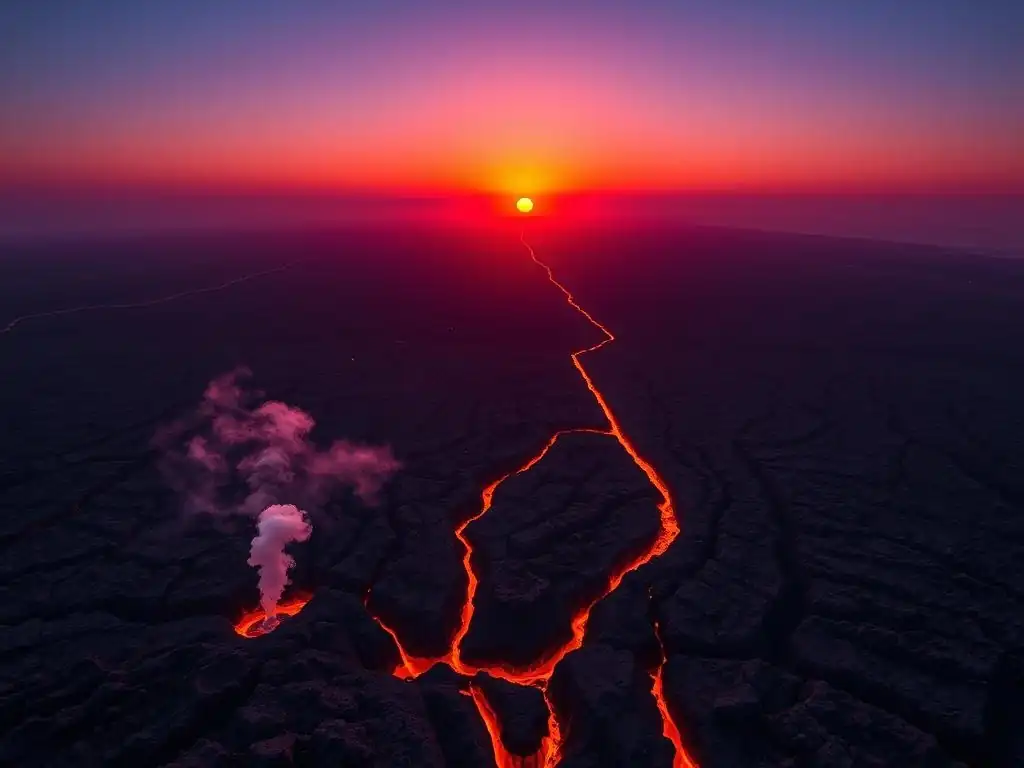
Linear volcanic vents, or fissure vents, are essentially cracks or fractures in the Earth's surface through which magma erupts. Unlike central vent volcanoes that expel magma from a single, focused conduit, linear vents release magma along an extended line. Imagine a tear in the Earth's crust, and instead of a single point of eruption, molten rock emerges along the entire length of this tear.
This linear nature is the defining characteristic of these volcanic features, distinguishing them from the more familiar cone-shaped volcanoes. The length of these vents can vary dramatically, from a few meters to tens of kilometers, influencing the scale and style of the eruptions they produce.
These vents are not simply passive cracks; they are dynamic pathways forged by tectonic stresses within the Earth's lithosphere. The formation of linear vents is intimately linked to the stretching and pulling apart of the Earth's crust, a process known as extensional tectonics. This tectonic activity creates weaknesses that allow magma to ascend from the mantle. When magma reaches the surface through these fissures, it can result in spectacular displays of volcanic power, ranging from slow, effusive lava flows to more energetic, though generally less violently explosive, eruptions compared to some central vent eruptions.
The Key Difference: Linear Vents vs. Central Vent Volcanoes
The fundamental difference between linear vents and central vent volcanoes lies in the geometry of their magma pathways and eruption points. Central vent volcanoes, such as stratovolcanoes like Mount Fuji or shield volcanoes like Mauna Loa, are characterized by a single, centralized conduit that channels magma to a summit vent. Eruptions from these volcanoes are typically focused around this central point, building up the classic cone shape over time through successive eruptions of lava and pyroclastic material.
In contrast, linear vents lack a single dominant conduit and erupt along elongated fissures. This difference in magma delivery has significant implications for eruption style, volcanic landforms, and the overall geological impact. Linear vent eruptions tend to be more widespread geographically, distributing lava over broader areas, leading to the formation of lava plains and plateaus rather than concentrated volcanic cones.
While central vent volcanoes are often associated with explosive eruptions due to gas build-up in a confined conduit, linear vent eruptions are often, though not exclusively, more effusive, characterized by the outpouring of large volumes of lava. However, it's crucial to note that linear vents can also exhibit explosive activity under certain conditions, especially when interacting with groundwater or surface water.
Formation of Linear Volcanic Vents: Tectonic Forces at Play
Tectonic Plates and Fissure Development: The Geological Context
The formation of linear volcanic vents is intrinsically linked to the movement and interaction of Earth's tectonic plates. These massive plates, which make up the lithosphere, are constantly in motion, driven by convection currents in the Earth's mantle. Linear vents predominantly form in regions where tectonic plates are diverging or pulling apart, a process known as rifting. These are areas of extensional tectonic stress, where the crust is being stretched and thinned. Classic examples of such regions include mid-ocean ridges, where new oceanic crust is created, and continental rift valleys, like the East African Rift Valley.
As the crust is stretched, it fractures, creating zones of weakness. These fractures can extend deep into the Earth's crust, providing pathways for magma to ascend from the asthenosphere, the partially molten upper mantle. The orientation of these fractures, and thus the linear vents that form along them, is typically perpendicular to the direction of the extensional forces. Therefore, understanding the regional tectonic setting is key to predicting the location and orientation of linear volcanic vent systems.
Magma Pathways: How Magma Rises to the Surface Through Linear Vents
The ascent of magma through linear volcanic vents is a complex process driven by buoyancy and pressure gradients. Magma, being less dense than the surrounding solid rock, naturally tends to rise towards the surface. In regions of extensional tectonics, the fracturing of the crust creates pathways of reduced pressure, further facilitating magma ascent. These fractures act as conduits, allowing magma to migrate upwards from the mantle or magma chambers within the crust.
Unlike central vent systems where magma often accumulates in a magma chamber beneath a single vent, in linear vent systems, magma can rise along extensive networks of interconnected fractures. This distributed magma supply can lead to eruptions occurring along various points of the fissure simultaneously or sequentially.
The depth of magma origin, the rate of magma ascent, and the composition of the magma all play crucial roles in determining the characteristics of the eruption from a linear volcanic vent. The efficiency of magma transport through these linear pathways is a key factor in the large volumes of lava often associated with fissure eruptions.
The Role of Stress and Fault Lines in Linear Vent Formation
Stress and fault lines are critical factors in dictating the location, orientation, and longevity of linear volcanic vent systems. Tectonic stresses, whether extensional, compressional, or shear, accumulate within the Earth's crust. When these stresses exceed the strength of the rocks, fractures and faults develop. Fault lines, representing zones of crustal weakness and displacement, often become preferred pathways for magma ascent. Linear vents frequently align along pre-existing fault lines or zones of intense fracturing, exploiting these zones of weakness.
The type of stress regime significantly influences the characteristics of linear vents. Extensional stress, as mentioned before, is directly responsible for creating the tensile fractures that become fissure vents. However, even in other stress regimes, pre-existing faults can be reactivated or exploited by magma pressure, leading to linear volcanic features.
The interaction between regional stress fields and local geological structures is a complex interplay that volcanologists study to understand the distribution and behavior of linear volcanic vents. For example, the orientation of the Iceland rift zones, which host numerous linear vents, is directly related to the spreading direction of the Mid-Atlantic Ridge and the regional tectonic stress field.
Types of Eruptions from Linear Volcanic Vents: From Effusive to Explosive
Effusive Eruptions: Lava Flows from Linear Vents
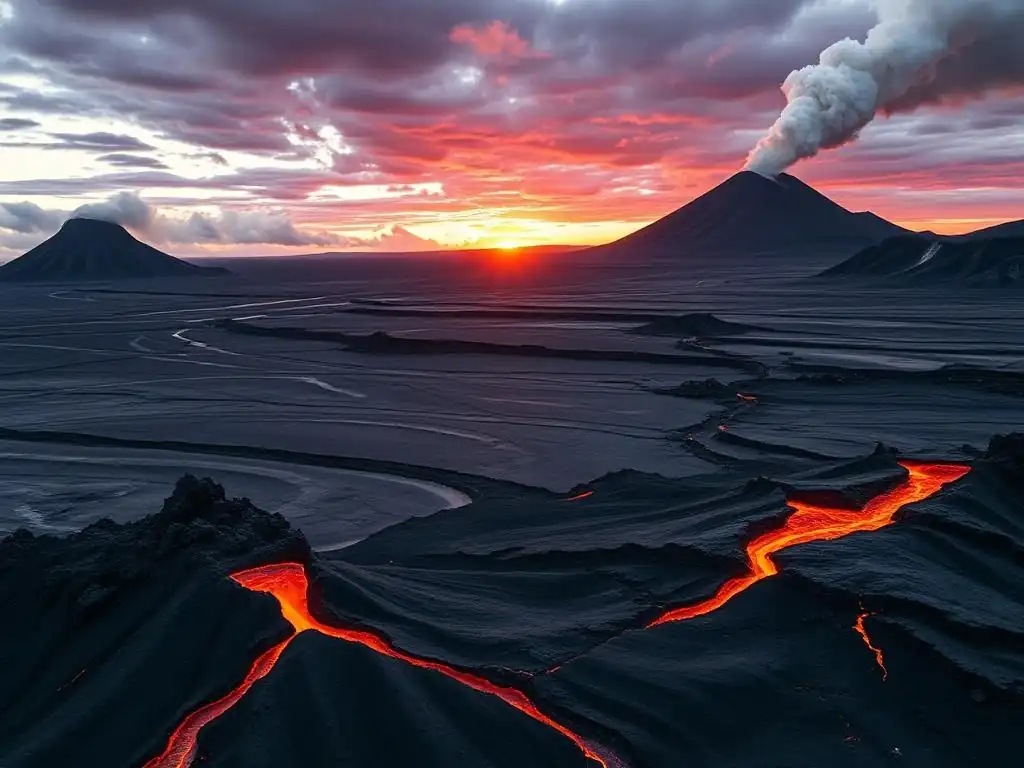
Effusive eruptions are the most common type of activity associated with linear volcanic vents. These eruptions are characterized by the relatively quiet outpouring of lava onto the Earth's surface. Due to the linear nature of the vent, effusive eruptions from fissures can produce vast lava flows that spread over extensive areas. The viscosity of the lava plays a crucial role in determining the flow characteristics. Basaltic lavas, which are typically less viscous due to their lower silica content and higher temperatures, are common in fissure eruptions and can travel long distances, forming lava plains or flood basalts.
The 1783-1784 Laki eruption in Iceland is a prime example of a large-scale effusive fissure eruption. Over a period of eight months, an estimated 14.7 cubic kilometers of basaltic lava erupted from a 27-kilometer-long fissure, creating a vast lava field that significantly altered the Icelandic landscape. These effusive eruptions, while not as immediately destructive as explosive eruptions, can have profound long-term impacts by reshaping landscapes, burying infrastructure, and influencing ecosystems.
Explosive Eruptions: Phreatomagmatic Activity and Linear Vents
While linear vents are predominantly associated with effusive eruptions, they can also exhibit explosive activity, particularly when magma interacts with water. Phreatomagmatic eruptions occur when hot magma comes into contact with groundwater, surface water (lakes, rivers, or oceans), or ice. This interaction causes rapid vaporization of water, leading to explosive bursts of steam, ash, and volcanic debris. The linear geometry of fissure vents can facilitate widespread phreatomagmatic activity if the fissure intersects water-saturated ground or extends beneath a body of water.
Explosive eruptions from linear vents are generally less violent and less vertically focused compared to the powerful Plinian eruptions of stratovolcanoes. However, they can still pose significant hazards, especially in areas with shallow groundwater or near bodies of water. The eruption style can range from mild steam explosions to more energetic bursts that eject ash and volcanic bombs. The depth and volume of water interaction are key factors in determining the explosivity of phreatomagmatic eruptions from linear vents.
The Variability of Eruption Styles in Fissure Volcanoes
Fissure volcanoes are not monolithic in their eruptive behavior; they exhibit a range of eruption styles depending on factors such as magma composition, gas content, eruption rate, and interaction with external water. A single fissure system can even display both effusive and explosive activity along different segments or at different times during an eruption. For instance, some portions of a fissure might quietly effuse lava, while other parts, especially those encountering groundwater, might exhibit phreatomagmatic explosions.
This variability highlights the dynamic nature of linear volcanic vents. The eruption style can evolve over time, influenced by changes in magma supply, degassing processes, and environmental conditions. Understanding this variability is crucial for accurate hazard assessment in areas prone to fissure eruptions. Monitoring volcanic activity along fissure systems requires a comprehensive approach, considering both effusive and potential explosive eruption scenarios.
Examples of Notable Linear Volcanic Vent Systems Around the World
Iceland's Laki Fissure: A Historical Linear Vent Eruption
The Laki fissure eruption, which occurred in Iceland from 1783 to 1784, stands as one of the most significant and impactful linear vent eruptions in recorded history. This eruption, also known as the Skaftáreldar (fires of Skaftá), emanated from a 27-kilometer-long fissure within the Grímsvötn volcanic system. Over eight months, it unleashed an astonishing volume of basaltic lava, estimated at 14.7 cubic kilometers, covering an area of approximately 600 square kilometers.
Beyond the massive lava flows, the Laki eruption released enormous quantities of volcanic gases, including sulfur dioxide and hydrogen fluoride, into the atmosphere. These gases had devastating environmental and societal consequences, not only in Iceland but across Europe. The "Laki haze" caused widespread crop failures, livestock deaths, and respiratory problems, leading to famine and an estimated death toll of thousands in Iceland alone, and contributing to harsh winters and societal disruption across Europe. The Laki eruption serves as a stark reminder of the far-reaching impact of large-scale fissure eruptions.
The East African Rift Valley: An Active Zone of Linear Volcanic Vents
The East African Rift Valley is a prime example of an active continental rift zone where linear volcanic vents are a dominant feature. This vast geological feature stretches thousands of kilometers, from the Afar region in the north to Mozambique in the south, representing a region where the African plate is slowly splitting apart. Extensional tectonics along the rift valley have created numerous fissures and fault systems that serve as pathways for magma ascent, resulting in a high concentration of volcanic activity, largely from linear vents.
The rift valley hosts a diverse array of volcanic features, including shield volcanoes, stratovolcanoes, and caldera complexes, but linear vents are particularly prevalent. Many of the volcanic fields within the rift, such as those in Ethiopia, Kenya, and Tanzania, are characterized by extensive fissure systems and associated lava flows. Active volcanoes like Erta Ale in Ethiopia and Oldoinyo Lengai in Tanzania are associated with rift-related linear vent systems. The ongoing rifting process ensures that the East African Rift Valley will remain a significant zone of linear volcanic vent activity for millions of years to come.
Eldgjá, Iceland: A Large Icelandic Fissure System
Eldgjá, meaning "Fire Canyon" in Icelandic, is another remarkable fissure system in Iceland, located within the Katla volcanic system. While less voluminous than the Laki eruption, Eldgjá represents one of the largest fissure eruptions in terms of the area covered by its lava flows during the Holocene epoch. The fissure system is approximately 40 kilometers long and produced a vast outpouring of basaltic lava around 939 AD.
The Eldgjá eruption is estimated to have erupted around 18 cubic kilometers of magma, slightly more than Laki in volume, though erupted over a potentially shorter timeframe. The eruption created a prominent volcanic canyon, also named Eldgjá, and significantly contributed to the landscape of southern Iceland. Like Laki, Eldgjá also released substantial amounts of volcanic gases, though the climatic and societal impacts are less well-documented compared to the 1783 eruption. Eldgjá stands as another testament to the scale and impact of linear vent eruptions in Iceland.
Tolbachik, Kamchatka: A Region of Active Fissure Eruptions
The Tolbachik volcanic field in Kamchatka, Russia, is known for its frequent and diverse volcanic activity, including notable fissure eruptions. Kamchatka, located in the Russian Far East, is a highly volcanic peninsula situated at the junction of the Pacific Plate and the Okhotsk Plate. The region's complex tectonic setting results in a high density of volcanoes, including numerous linear vent systems. The Tolbachik volcanic field, in particular, has experienced several significant fissure eruptions in historical times.
The Great Tolbachik Fissure Eruption (GTFE) of 1975-1976 was a major event, involving both effusive and explosive phases from a fissure system extending tens of kilometers. The eruption produced large volumes of basaltic lava, creating new cinder cones and lava flows that significantly altered the landscape. More recently, the 2012-2013 Tolbachik fissure eruption also showcased the ongoing activity of linear vents in this region, producing lava flows and ash plumes. Tolbachik serves as a modern example of an active fissure volcanic system in a tectonically complex setting.
Geological Features Associated with Linear Volcanic Vents
Lava Plains: The Result of Extensive Fissure Eruptions
Lava plains are extensive, flat or gently undulating volcanic landscapes formed by the accumulation of vast amounts of basaltic lava erupted from linear volcanic vents. These plains are a direct consequence of the effusive eruption style characteristic of fissure volcanoes, where large volumes of low-viscosity lava flow over wide areas, solidifying into broad, flat sheets. Over time, successive eruptions can build up thick sequences of lava flows, creating immense lava plateaus.
The Columbia River Basalt Group in the northwestern United States and the Deccan Traps in India are prime examples of large igneous provinces formed by massive fissure eruptions that created extensive lava plains. These formations, covering hundreds of thousands of square kilometers and reaching thicknesses of kilometers, represent some of the largest volcanic events in Earth's history. Lava plains are a distinctive geological feature associated with linear volcanic vents and testify to the immense scale of fissure volcanism.
Rift Zones: Areas of Intense Volcanic and Tectonic Activity
Rift zones are geologically active regions where the Earth's lithosphere is being pulled apart, leading to crustal extension, faulting, and volcanism. Linear volcanic vents are a hallmark feature of rift zones, as the extensional forces create fractures that facilitate magma ascent. Rift zones can be either continental, like the East African Rift Valley, or oceanic, like mid-ocean ridges. Both types are characterized by significant linear vent volcanism.
Continental rift zones often display a complex interplay between tectonic faulting and volcanic activity. The faults created by rifting provide pathways for magma to reach the surface, resulting in chains of volcanoes and fissure systems aligned along the rift axis. Oceanic rift zones, such as the Mid-Atlantic Ridge, are where new oceanic crust is generated through continuous fissure eruptions along the ridge crest. Rift zones are fundamental geological features associated with linear volcanic vents and represent zones of intense crustal deformation and magma generation.
Volcanic Dikes and Sills: Evidence of Magma Intrusion
Volcanic dikes and sills are intrusive igneous features that provide subsurface evidence of magma pathways related to linear volcanic vents. Dikes are vertical or near-vertical sheet-like intrusions of magma that cut across existing rock layers, representing conduits through which magma ascends towards the surface. Sills, on the other hand, are horizontal or near-horizontal sheet-like intrusions that are emplaced between existing rock layers.
In areas dominated by linear volcanic vents, dikes often represent the subsurface extensions of fissures, providing the plumbing system for magma transport. Exposed dikes in eroded volcanic terrains reveal the orientation and distribution of magma pathways beneath fissure systems. Sills can also be associated with fissure volcanism, representing magma that has spread laterally beneath the surface before potentially erupting at a linear vent. Studying dikes and sills provides valuable insights into the subsurface architecture and magma dynamics of linear volcanic vent systems.
The Environmental Impact of Linear Volcanic Vent Eruptions
Atmospheric Effects: Gases and Aerosols Released
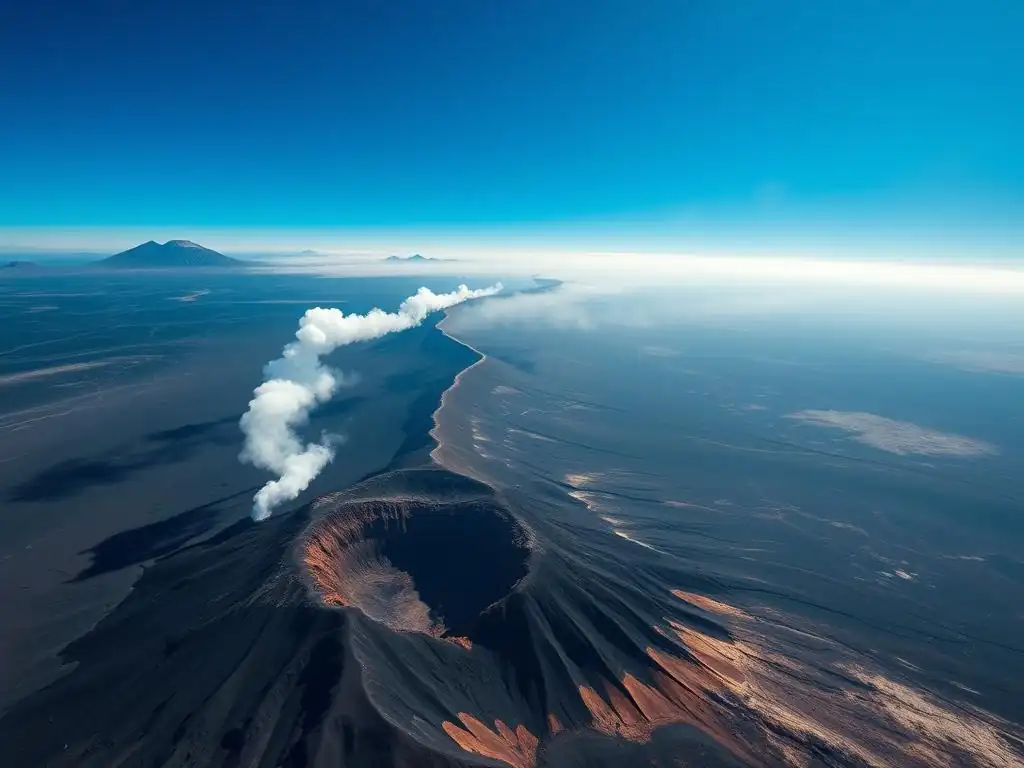
Linear volcanic vent eruptions, especially large-scale events, can have significant and far-reaching atmospheric impacts. Volcanic eruptions release substantial quantities of gases, including sulfur dioxide (SO2), carbon dioxide (CO2), and water vapor (H2O), as well as volcanic ash and aerosols into the atmosphere. Sulfur dioxide is particularly important as it reacts in the atmosphere to form sulfate aerosols, which can reflect sunlight back into space, leading to a cooling effect on global climate.
Large fissure eruptions like Laki in Iceland released massive amounts of SO2, causing a notable decrease in global temperatures and contributing to unusual weather patterns across the Northern Hemisphere. While CO2 is also released, the short-term climate impact of SO2 from large eruptions is typically more pronounced. Volcanic ash can also have atmospheric effects, though its residence time is generally shorter than that of sulfate aerosols. The atmospheric effects of linear vent eruptions can influence weather patterns, agricultural productivity, and even human health on a regional and global scale.
Ground Deformation: Changes in the Earth's Surface
Eruptions from linear volcanic vents can cause significant ground deformation, altering the Earth's surface both during and after the eruption. Magma intrusion and eruption processes can lead to inflation and deflation of the ground surface. During magma ascent and accumulation beneath the surface, the ground can uplift or swell. Conversely, during an eruption, as magma is erupted, the ground can subside or deflate.
In the vicinity of linear vents, ground deformation can manifest as tilting, faulting, and cracking of the surface. Large effusive eruptions can cause subsidence over broad areas as magma is removed from beneath. The magnitude and pattern of ground deformation provide valuable information about subsurface magma movements and the dynamics of linear volcanic systems. Monitoring ground deformation using techniques like GPS and satellite interferometry is crucial for tracking volcanic activity and assessing potential hazards associated with fissure eruptions.
Impact on Local Ecosystems: The Rebirth of Life After Eruptions
While volcanic eruptions, including those from linear vents, can be initially destructive to local ecosystems, they also play a vital role in long-term ecological renewal and soil enrichment. The immediate impact of lava flows and ashfall can be devastating, burying vegetation and disrupting habitats. However, volcanic materials weather over time, releasing essential nutrients into the soil, enriching it and creating fertile ground for plant growth.
Volcanic landscapes, including those formed by fissure eruptions, often exhibit unique and resilient ecosystems. Pioneer species, such as certain types of mosses, lichens, and hardy plants, are among the first to colonize newly formed volcanic terrain. Over time, succession processes lead to the development of more complex and diverse ecosystems. The long-term ecological impact of linear vent eruptions is a cycle of destruction followed by renewal, contributing to biodiversity and shaping unique volcanic landscapes.
Studying Linear Volcanic Vents: Methods and Technologies
Remote Sensing Techniques: Monitoring Volcanic Activity from Space
Remote sensing technologies, particularly satellite-based instruments, are invaluable tools for studying and monitoring linear volcanic vents, especially in remote or inaccessible regions. Satellites equipped with various sensors can detect thermal anomalies, measure ground deformation, track volcanic gas plumes, and map lava flows associated with fissure eruptions. Thermal infrared sensors can detect heat emitted by active lava flows and fumaroles, allowing for the identification of erupting fissures and the tracking of lava flow extent.
Satellite radar interferometry (InSAR) is a powerful technique for measuring subtle ground deformation patterns associated with magma movements beneath linear vents. By comparing radar images acquired at different times, InSAR can detect ground uplift or subsidence with millimeter-level precision. Spectroscopic instruments can measure the composition and concentration of volcanic gases, such as SO2, released from fissures, providing insights into magma degassing and eruption dynamics. Remote sensing provides a synoptic and continuous view of volcanic activity, crucial for monitoring linear vent systems on a regional and global scale.
Fieldwork and Geological Mapping: Understanding the Vent's Structure
Fieldwork and geological mapping remain essential components in the study of linear volcanic vents, providing detailed ground-based observations and samples that complement remote sensing data. Geologists conduct field surveys to map the distribution of lava flows, volcanic vents, and associated geological structures along fissure systems. Detailed geological mapping helps to understand the geometry, orientation, and segmentation of linear vents, as well as the stratigraphy of erupted materials.
Fieldwork also involves collecting rock samples for laboratory analysis, including petrological and geochemical studies. Direct observation of volcanic features in the field provides crucial context for interpreting remote sensing data and developing geological models of linear vent systems. Ground-based geophysical surveys, such as seismic monitoring and gravity measurements, can also be conducted in conjunction with fieldwork to investigate the subsurface structure and magmatic processes beneath linear vents.
Geochemical Analysis: Examining Lava Composition and Magma Sources
Geochemical analysis of lava samples erupted from linear volcanic vents provides critical information about magma sources, magma evolution processes, and eruption triggers. Analyzing the major and trace element composition, as well as isotopic ratios, of volcanic rocks can reveal the origin of the magma in the Earth's mantle, the extent of crustal contamination, and the processes of magma differentiation and storage before eruption.
Comparing the geochemical signatures of lavas erupted from different segments of a linear vent system or from successive eruptions can shed light on the magma plumbing system and the dynamics of magma supply. Geochemical data, combined with petrological studies of mineral assemblages in volcanic rocks, helps to reconstruct the temperature, pressure, and volatile content of magmas, providing insights into the physical conditions that control fissure eruptions. Geochemical analysis is a powerful tool for understanding the deep-seated processes driving linear volcanism.
The Future of Linear Volcanic Vent Research and Monitoring
Predicting Future Eruptions: Challenges and Opportunities
Predicting future eruptions from linear volcanic vents presents unique challenges and opportunities for volcanological research. While significant progress has been made in understanding the processes leading to central vent eruptions, predicting fissure eruptions is often more complex due to the distributed nature of magma pathways and the potentially rapid onset of activity along extensive fissures. Challenges include accurately forecasting the location, timing, and style of eruptions along linear vent systems.
However, advancements in monitoring technologies, coupled with improved understanding of tectonic controls on fissure volcanism, offer opportunities for enhancing eruption forecasting capabilities. Integrating remote sensing data, ground-based geophysical monitoring, and geological mapping with sophisticated numerical models can improve our ability to assess volcanic hazards associated with linear vents. Focusing research on understanding pre-eruptive deformation patterns, gas emission trends, and seismic activity along known fissure systems is crucial for developing more effective eruption forecasting strategies.
Improving Hazard Assessments: Protecting Communities Near Fissure Volcanoes
Improving hazard assessments for linear volcanic vent eruptions is essential for protecting communities living in volcanically active regions. Traditional volcanic hazard assessments often focus on central vent volcanoes, but the distinct characteristics of fissure eruptions require specific considerations. Hazard mapping for linear vents needs to account for the potential for widespread lava flows, phreatomagmatic explosions, and volcanic gas dispersal along extensive fissures.
Developing probabilistic hazard assessments that quantify the likelihood of eruptions at different locations along fissure systems is crucial. Integrating hazard maps with land-use planning and infrastructure development is essential for mitigating risks in areas prone to fissure volcanism. Public education and preparedness programs are also vital for informing communities about the specific hazards associated with linear vent eruptions and promoting effective emergency response strategies.
Understanding Magma Dynamics: Insights from Geochemical and Geophysical Data
Further research into magma dynamics beneath linear volcanic vents is crucial for advancing our fundamental understanding of volcanism and improving eruption forecasting capabilities. Integrating geochemical data on lava compositions with geophysical data on subsurface structure and magma movements can provide unprecedented insights into the processes controlling magma generation, ascent, storage, and eruption in fissure systems. High-resolution seismic imaging, magnetotelluric surveys, and gravity measurements can help to delineate magma pathways and magma chambers beneath linear vents.
Developing advanced numerical models that simulate magma flow, heat transfer, and volatile transport in fissure systems is essential for understanding eruption dynamics. Combining laboratory experiments on magma properties with field observations and numerical simulations can lead to a more comprehensive understanding of the complex interplay of factors governing linear volcanism. Continued research in this area will not only enhance our scientific knowledge but also contribute to improved volcanic hazard mitigation and community resilience in volcanically active regions.
Conclusion: Appreciating the Power and Complexity of Linear Volcanic Vents
Linear volcanic vents, often overshadowed by the iconic image of cone-shaped volcanoes, represent a fascinating and significant aspect of Earth's volcanism. These elongated fractures in the Earth's crust are pathways to the planet's molten interior, giving rise to a diverse range of eruptions and shaping landscapes in profound ways. From the vast lava plains of Iceland to the active rift valleys of East Africa and the volcanic fields of Kamchatka, linear vents demonstrate the immense power and geological creativity of fissure volcanism.
Understanding linear volcanic vents is not only crucial for comprehending the full spectrum of volcanic phenomena but also for assessing and mitigating volcanic hazards in regions prone to fissure eruptions. Continued research, utilizing advanced monitoring technologies and integrated geological and geophysical studies, is essential for improving our ability to predict and prepare for future eruptions from these remarkable volcanic features. Linear volcanic vents are more than just cracks in the ground; they are dynamic windows into the Earth's internal processes, revealing the intricate interplay of tectonic forces and magmatic energy that continually reshape our planet.
Frequently Asked Questions
What exactly are linear volcanic vents?
Linear volcanic vents, unlike traditional cone-shaped volcanoes, are elongated fractures in the Earth's crust from which lava erupts. They often form in areas with tectonic rifting or intense faulting, creating a chain of volcanic activity.
How do linear volcanic vents differ from stratovolcanoes?
Stratovolcanoes are built from layers of ash, lava, and rock, creating a conical shape from a central vent. Linear vents, conversely, lack a central cone and erupt from a linear fissure or series of fissures.
Where are linear volcanic vents typically found?
Linear volcanic vents are commonly found in regions experiencing tectonic plate divergence or areas with significant crustal extension. Examples include Iceland's volcanic zones and parts of the East African Rift Valley.
What type of eruptions are characteristic of linear volcanic vents?
Eruptions from linear vents can range from effusive lava flows, creating extensive lava fields, to more explosive events, depending on the magma composition and gas content.
What safety measures should people take if they live near a linear volcanic vent?
Residents should be aware of evacuation routes and monitor official warnings from volcanology authorities. Understanding the potential for lava flows and ashfall is crucial for safety.
The exploration of linear volcanic vents, as we've seen, isn't just about understanding geological formations; it's about understanding the very pulse of our planet. The ongoing discovery and study of these linear features are crucial for predicting volcanic activity and mitigating potential hazards in densely populated regions. This knowledge empowers us to better prepare for the Earth's dynamic processes and safeguard communities living near these geological wonders.
The impact of understanding linear volcanic vents extends beyond scientific circles. It reminds us of the interconnectedness of our world and the powerful forces shaping it. The Earth is not a static entity, but a living, breathing organism constantly evolving. The Earth does not belong to us: we belong to the Earth.
- Chief Seattle. This quote resonates deeply when considering the scale and power of volcanic activity, urging us to approach our planet with respect and understanding.
Now, as we conclude this journey into the astonishing world of linear volcanic vents, I invite you to reflect on your own connection to the Earth. Consider how these hidden lines, these subtle scars on the landscape, remind us of the immense power that lies beneath our feet. Let this newfound knowledge inspire you to become a more informed and responsible steward of our planet, advocating for sustainable practices and supporting scientific endeavors that help us understand and protect our shared home.
Unearth Your Inner Volcanologist!
Thank you for exploring the fascinating world of linear volcanic vents. We hope you've gained a new appreciation for these geological wonders and the powerful forces that shape our planet. Ready to delve deeper?
Here are a few ways to continue your exploration:
- Share this article and spark a conversation about linear volcanic vents with fellow geology enthusiasts. Help us spread awareness and appreciation for these incredible formations.
- Explore stunning locations known for linear volcanic vents, such as Iceland or the East African Rift Valley, using online mapping tools. Visualize the immense forces that created them.
- Expand your knowledge by researching current academic papers on linear volcanism. Discover the latest discoveries and contribute to our understanding of these remarkable geological features.
What surprised you most about linear volcanic vents, and how will you share that knowledge?