
Lava Flow Gases: The Silent Killer in Volcanic Eruptions

Welcome to Volcano Explorers, where the Earth's fiery secrets are unearthed! Ever wondered about the invisible dangers lurking within a seemingly slow-moving lava flow? Prepare to be captivated as we delve into the often-overlooked, yet deadly, hazards of lava flow gases. Discover how these silent killers pose a significant threat during volcanic eruptions and why understanding them is crucial for survival. Intrigued? Then read on to unravel the science behind this hidden danger...
- Understanding the Dangers: Volcanic Gases and Lava Flows
- Common Gases Emitted by Lava Flows and Their Effects
- How Lava Flow Gases Spread and Accumulate
- Case Studies: Historical Impacts of Lava Flow Gas Emissions
- Monitoring and Predicting Lava Flow Gas Emissions
- Safety Measures and Mitigation Strategies for Lava Flow Gas Hazards
- The Future of Lava Flow Gas Research and Mitigation
- Conclusion: Staying Safe Around Lava Flows - Respecting the Invisible Danger
-
Frequently Asked Questions
- What are the primary hazards associated with lava flow gases?
- Why are lava flow gases considered a "silent killer"?
- What specific gases are commonly found in lava flows, and which are the most dangerous?
- How far away from a lava flow can the gases pose a threat?
- What precautions should people take when visiting or living near active volcanoes to protect themselves from lava flow gases?
- Final Reflection: The Unseen Threat of Volcanic Gases
- Uncover the Secrets of Volcanic Safety!
Understanding the Dangers: Volcanic Gases and Lava Flows
Introduction to Lava Flow Hazards Beyond the Molten Rock
When we think of the dangers posed by lava flows, the immediate image is often that of a river of molten rock incinerating everything in its path. While the destructive power of lava is undeniable, there's a less visible, yet equally perilous hazard associated with these volcanic events: the emission of volcanic gases.
These gases, released directly from the magma and carried within and around lava flows, can pose significant risks to human health, agriculture, and even the global climate. Understanding the hazards of lava flow gases is crucial for anyone living in or visiting volcanic regions, as these invisible components of eruptions can be just as, if not more, dangerous than the fiery lava itself.
Often overshadowed by the dramatic visuals of flowing lava and explosive eruptions, volcanic gases are a constant companion to volcanic activity. They are not merely byproducts; they are integral components of the volcanic system, driving eruptions and influencing the behavior of lava flows. The composition and concentration of these gases can vary greatly depending on the type of volcano, the magma source, and the style of eruption. This variability adds to the complexity of assessing and mitigating the hazards of lava flow gases, making continuous monitoring and public education paramount for ensuring safety in volcanic areas.
The Invisible Threat: Why Volcanic Gases Are So Dangerous
The insidious danger of volcanic gases stems from their invisibility and often odorless nature at lower concentrations, making them a silent threat. Unlike the obvious and immediate danger of a fast-moving lava flow, the presence of hazardous gases can be easily underestimated until symptoms of exposure begin to manifest. Many of these gases, such as carbon dioxide (CO2), are heavier than air and can accumulate in low-lying areas, creating invisible pools of deadly air that displace oxygen. This phenomenon is particularly dangerous in valleys, depressions, and even basements of buildings situated near active lava flows.
Furthermore, volcanic gases can travel considerable distances from their source, carried by wind and influenced by topography. This means that the hazards are not confined to the immediate vicinity of the lava flow. Depending on weather conditions and the volume of gas released, communities several kilometers downwind can be affected.
The persistent release of gases, even from slow-moving or cooling lava flows, means that the threat can linger for days, weeks, or even months after the initial eruption, necessitating ongoing vigilance and monitoring in affected areas. The subtle and pervasive nature of these hazards requires a heightened awareness and understanding to ensure effective safety measures are implemented.
Common Gases Emitted by Lava Flows and Their Effects
Sulfur Dioxide (SO2): Irritation and Respiratory Problems
Sulfur dioxide (SO2) is one of the most abundant volcanic gases and is readily detectable due to its pungent, irritating odor, often described as similar to burnt matches. Even at relatively low concentrations, SO2 can cause irritation to the eyes, nose, throat, and respiratory tract.
Individuals with pre-existing respiratory conditions like asthma are particularly vulnerable to SO2 exposure, which can trigger asthma attacks and exacerbate breathing difficulties. Studies following eruptions at Kilauea in Hawaii, a volcano known for its effusive eruptions and significant SO2 emissions, have shown a clear correlation between increased SO2 levels and hospital admissions for respiratory illnesses in downwind communities.
At higher concentrations, SO2 can cause more severe health effects, including pulmonary edema (fluid in the lungs) and even death. Beyond direct health impacts, SO2 reacts with water vapor in the atmosphere to form sulfuric acid aerosol, contributing to acid rain and volcanic smog, known as "vog" in Hawaii. Vog can further irritate the respiratory system and cause visibility issues, impacting air quality and daily life. Moreover, acid rain damages vegetation, corrodes buildings, and acidifies lakes and streams, causing broader environmental damage. The pervasive effects of SO2 highlight its significance as a major volcanic gas hazard.
Carbon Dioxide (CO2): Asphyxiation and Ground-Level Accumulation
Carbon dioxide (CO2) is another major component of volcanic gas emissions, and while it is odorless and colorless, making it undetectable to human senses, it poses a significant asphyxiation hazard. CO2 is heavier than air and tends to accumulate in low-lying areas, depressions, and poorly ventilated spaces. As CO2 concentration increases, it displaces oxygen, leading to hypoxia – a deficiency in the amount of oxygen reaching the tissues. Even at relatively low concentrations, elevated CO2 levels can cause headaches, dizziness, and increased heart rate.
At higher concentrations, CO2 can rapidly lead to unconsciousness and death due to asphyxiation. A tragic example of this hazard occurred at Lake Nyos in Cameroon in 1986, where a massive release of CO2 from the lake bottom suffocated over 1,700 people and thousands of animals in nearby villages. While the Lake Nyos event was a lake overturn rather than a lava flow event, it starkly illustrates the lethal potential of CO2 accumulation.
In volcanic areas with lava flows, similar CO2 accumulation can occur in valleys, ravines, and even within buildings if ventilation is poor, creating invisible and deadly traps. Monitoring CO2 levels in these areas is crucial for preventing asphyxiation incidents.
Hydrogen Sulfide (H2S): Toxicity and "Rotten Egg" Smell
Hydrogen sulfide (H2S) is a toxic gas characterized by its distinctive "rotten egg" smell, even at very low concentrations. While the smell can serve as a warning sign, it's important to note that at higher concentrations, H2S can paralyze the olfactory nerve, causing the sense of smell to disappear, thus removing this natural warning. H2S is highly toxic and can cause irritation to the eyes, nose, and throat at low concentrations. Exposure to higher levels of H2S can lead to more severe health effects, including respiratory distress, pulmonary edema, and nervous system damage.
In extreme cases, high concentrations of H2S can cause rapid unconsciousness, respiratory arrest, and death, similar to cyanide poisoning. The toxicity of H2S is due to its interference with cellular respiration, disrupting the body's ability to use oxygen. While H2S is often present in lower concentrations compared to SO2 or CO2 in volcanic emissions, its high toxicity makes it a significant hazard. Furthermore, H2S is flammable and can contribute to explosions in confined spaces if ignited. The combination of its toxicity and flammability underscores the dangers associated with H2S release from lava flows.
Other Hazardous Gases: Hydrogen Fluoride (HF), Hydrogen Chloride (HCl)
In addition to SO2, CO2, and H2S, lava flows can release other hazardous gases, including hydrogen fluoride (HF) and hydrogen chloride (HCl). Hydrogen fluoride is particularly dangerous due to its extreme corrosiveness and high toxicity. Even in small concentrations, HF can cause severe burns upon contact with skin, eyes, and mucous membranes. Inhalation of HF can lead to respiratory damage, pulmonary edema, and fluorosis – a condition affecting bones and teeth due to fluoride accumulation in the body. HF is also readily absorbed into the bloodstream, causing systemic poisoning and potentially life-threatening complications.
Hydrogen chloride (HCl) is another corrosive and irritating gas released by volcanoes. It forms hydrochloric acid when it comes into contact with moisture, causing irritation and burns to the skin, eyes, and respiratory tract. Inhalation of HCl can lead to coughing, choking, and pulmonary edema. Like HF, HCl contributes to acid rain and can damage infrastructure, agriculture, and ecosystems. While HF and HCl may be present in lower overall volumes compared to SO2 and CO2, their extreme corrosiveness and toxicity make them significant hazards associated with lava flow gas emissions, requiring specific safety precautions and monitoring.
How Lava Flow Gases Spread and Accumulate
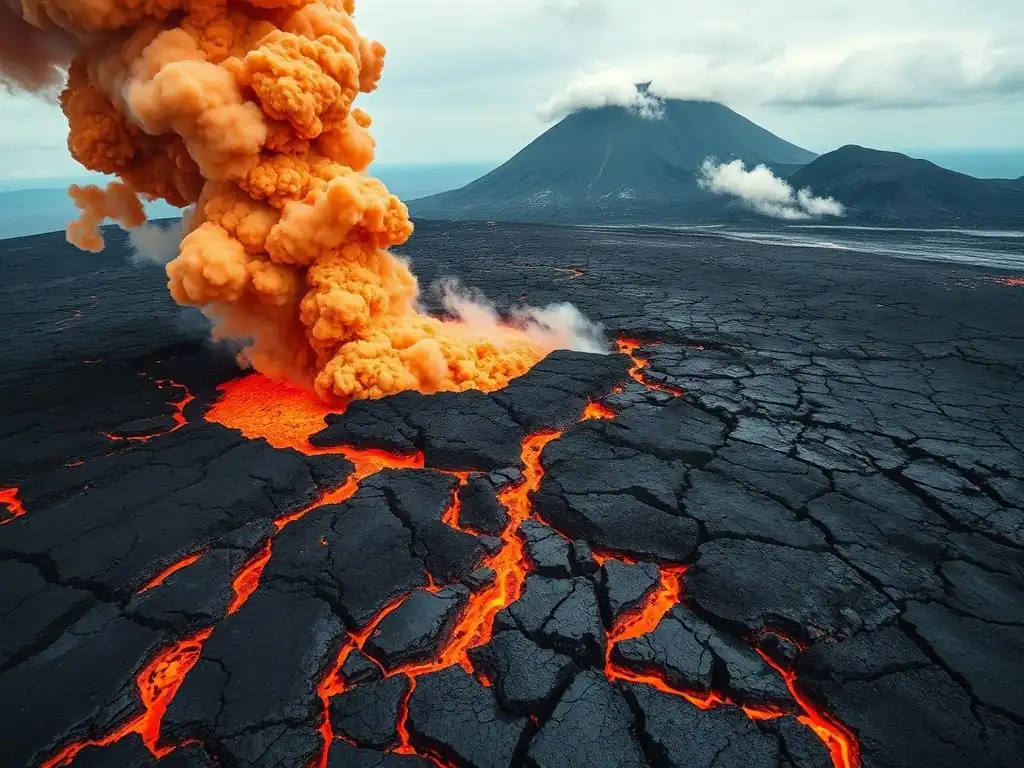
Factors Influencing Gas Dispersion: Wind Speed, Topography, and Atmospheric Stability
The way volcanic gases spread and disperse from lava flows is heavily influenced by several environmental factors. Wind speed is a primary factor, as stronger winds tend to dilute and disperse gases more effectively, carrying them downwind and reducing concentrations in the immediate vicinity of the lava flow. Conversely, calm winds or stagnant air can lead to gas accumulation, particularly in areas sheltered from wind.
Topography also plays a crucial role; valleys, canyons, and depressions can act as natural traps for heavier-than-air gases like CO2 and H2S, allowing them to pool and concentrate in these low-lying areas. Even gentle slopes can channel gas flow, directing it towards specific locations.
Atmospheric stability, which refers to the resistance of the atmosphere to vertical motion, is another critical factor. Stable atmospheric conditions, often characterized by temperature inversions (where warmer air overlies cooler air), can inhibit vertical mixing and prevent gases from dispersing upwards. This can lead to the trapping of gases near the ground, increasing concentrations and expanding the area affected by hazardous gas levels.
Unstable atmospheric conditions, on the other hand, promote vertical mixing and dilution, facilitating gas dispersal. Understanding these meteorological and topographical influences is essential for predicting gas dispersion patterns and identifying areas at higher risk of gas accumulation.
The Risk of Gas Pockets: Confined Spaces and Low-Lying Areas
The combination of gas properties and environmental factors leads to a significant risk of gas pocket formation, especially in confined spaces and low-lying areas. Heavier-than-air gases like CO2 and H2S naturally sink and accumulate in depressions, valleys, and unventilated spaces. This creates "gas pockets" where concentrations can reach dangerous or even lethal levels, even if the overall gas concentration in the surrounding area is relatively low. Natural depressions in the terrain, such as ravines, gullies, and lava tubes, can act as natural traps for these gases.
Human-made confined spaces, such as basements, cellars, and poorly ventilated buildings, are also particularly vulnerable to gas accumulation. If these structures are located downwind or downslope from a lava flow emitting gases, CO2 or H2S can seep into these spaces and build up to hazardous concentrations. The lack of natural ventilation in these confined areas prevents the gases from dispersing, creating a hidden and potentially deadly hazard. Therefore, it is crucial to avoid entering low-lying areas and confined spaces near lava flows, and to ensure proper ventilation in buildings located in areas potentially affected by volcanic gas emissions.
Identifying Danger Zones: Recognizing the Signs of Gas Accumulation
Recognizing the signs of gas accumulation is crucial for avoiding hazardous exposure. While some gases like SO2 have a distinctive odor, others like CO2 are odorless and require vigilance for other indicators. One of the most straightforward signs is the smell of rotten eggs, indicative of H2S, though remember that the smell may disappear at high concentrations.
Visible haze or smog near the ground, especially in valleys or depressions, can suggest the presence of concentrated volcanic gases. Changes in vegetation, such as wilting or browning leaves, particularly in low-lying areas, can also be an indicator of gas exposure, especially from acid gases like SO2 and HCl.
Animal behavior can also provide clues. Birds and small animals are often more sensitive to gas exposure than humans. Observing dead or distressed animals in a particular area, especially in low-lying spots, can be a warning sign of gas accumulation. In areas known to be susceptible to CO2 accumulation, a simple and readily available method is to observe the flame of a lighter or candle held near the ground.
If the flame extinguishes, it indicates oxygen displacement and potentially dangerous CO2 levels. However, it's crucial to prioritize official monitoring and warnings over relying solely on these rudimentary methods. If any of these signs are observed, it is essential to evacuate the area immediately and alert authorities.
Case Studies: Historical Impacts of Lava Flow Gas Emissions
Laki Eruption (1783-1784): Widespread Famine and Climate Impact
The Laki fissure eruption in Iceland, which lasted from 1783 to 1784, stands as a stark example of the devastating impact of volcanic gas emissions on a massive scale. This eruption was characterized by the prolonged effusion of basaltic lava and the release of enormous quantities of sulfur dioxide (SO2) and other gases. It is estimated that Laki released approximately 8 million tons of hydrogen fluoride and 120 million tons of sulfur dioxide.
The immediate consequence in Iceland was the poisoning of pastures and water sources by fluorine and acid rain derived from the volcanic gases. This led to the death of over 80% of Iceland's sheep, 50% of its cattle, and 50% of its horses, resulting in a catastrophic famine known as the "Mist Hardship" that killed approximately 25% of the Icelandic population.
The impact of Laki's gas emissions extended far beyond Iceland. The massive SO2 release formed a dense haze that spread across Europe, significantly reducing sunlight and lowering temperatures. This "Laki haze" is believed to have contributed to crop failures across Europe, exacerbating existing food shortages and contributing to widespread famine and social unrest.
Furthermore, the eruption is thought to have had global climate consequences, with some studies linking it to changes in monsoon patterns and even contributing to the harsh winter of 1783-1784 in North America. The Laki eruption vividly illustrates the far-reaching and long-lasting impacts that volcanic gas emissions, particularly SO2, can have on human societies and the global environment.
Mount Nyiragongo (2002): Carbon Dioxide Asphyxiation in Goma
The 2002 eruption of Mount Nyiragongo in the Democratic Republic of Congo, while primarily known for its fast-moving lava flows that devastated the city of Goma, also highlighted the significant hazard of volcanic gas emissions, particularly carbon dioxide (CO2). While the lava flows caused widespread destruction and displacement, the eruption also released large volumes of CO2, which, being heavier than air, accumulated in low-lying areas of Goma. This resulted in numerous cases of CO2 asphyxiation, particularly in areas where lava flows had blocked natural drainage and created topographic depressions.
Reports indicate that dozens of people in Goma died from CO2 asphyxiation following the eruption, often in their homes or workplaces located in areas where CO2 had pooled. The odorless and invisible nature of CO2 made it particularly dangerous, as people were unaware of the accumulating gas until they began experiencing symptoms of hypoxia.
This event underscored the importance of considering gas hazards in volcanic crisis response, even during eruptions primarily characterized by lava flows. The Nyiragongo eruption serves as a sobering reminder that volcanic gas hazards can be a silent and deadly consequence of volcanic activity, even in urban environments directly impacted by lava flows.
Monitoring and Predicting Lava Flow Gas Emissions
Volcanological Tools: Gas Sensors, Remote Sensing, and Modeling
Volcanologists employ a range of sophisticated tools to monitor and predict lava flow gas emissions, aiming to provide timely warnings and mitigate hazards. Direct gas measurements are taken using portable gas sensors deployed in the field, allowing scientists to measure the concentrations of various gases like SO2, CO2, and H2S in volcanic plumes and near lava flows. These sensors provide real-time data on gas composition and emission rates.
Remote sensing techniques, including satellite-based instruments and airborne spectrometers, are also crucial for monitoring gas emissions over broader areas and in inaccessible regions. These techniques can detect SO2 plumes and other gas signatures from space, providing a synoptic view of volcanic gas activity.
In addition to direct measurements and remote sensing, numerical modeling plays an increasingly important role in predicting gas dispersion and accumulation. Atmospheric dispersion models, coupled with volcano gas emission data and meteorological forecasts, can simulate how gases will spread based on wind patterns, topography, and atmospheric stability. These models help to identify areas at higher risk of gas accumulation and can be used to create hazard maps and inform evacuation strategies. The integration of these diverse tools – ground-based sensors, remote sensing, and numerical modeling – provides a comprehensive approach to monitoring and predicting volcanic gas hazards.
Challenges in Predicting Gas Behavior: Variable Emission Rates and Atmospheric Conditions
Despite advancements in monitoring and modeling, predicting volcanic gas behavior remains a significant challenge due to the inherent variability of volcanic systems and atmospheric conditions. Volcanic gas emission rates are not constant; they can fluctuate rapidly depending on changes in magma supply, degassing processes within the volcano, and even external factors like atmospheric pressure. These variable emission rates make it difficult to precisely forecast the volume of gas that will be released at any given time. Furthermore, the composition of volcanic gases can also change over time, requiring continuous monitoring to adapt hazard assessments.
Atmospheric conditions, which are crucial for gas dispersion, are inherently dynamic and difficult to predict with perfect accuracy. Wind patterns, temperature inversions, and rainfall can all significantly influence gas dispersal, and these factors can change rapidly and unexpectedly. The complex interaction between variable gas emission rates and dynamic atmospheric conditions makes precise prediction of gas behavior a complex task. While models are constantly improving, uncertainties remain, highlighting the need for continuous monitoring, real-time data analysis, and adaptive hazard management strategies to effectively mitigate the risks associated with lava flow gas emissions.
Safety Measures and Mitigation Strategies for Lava Flow Gas Hazards
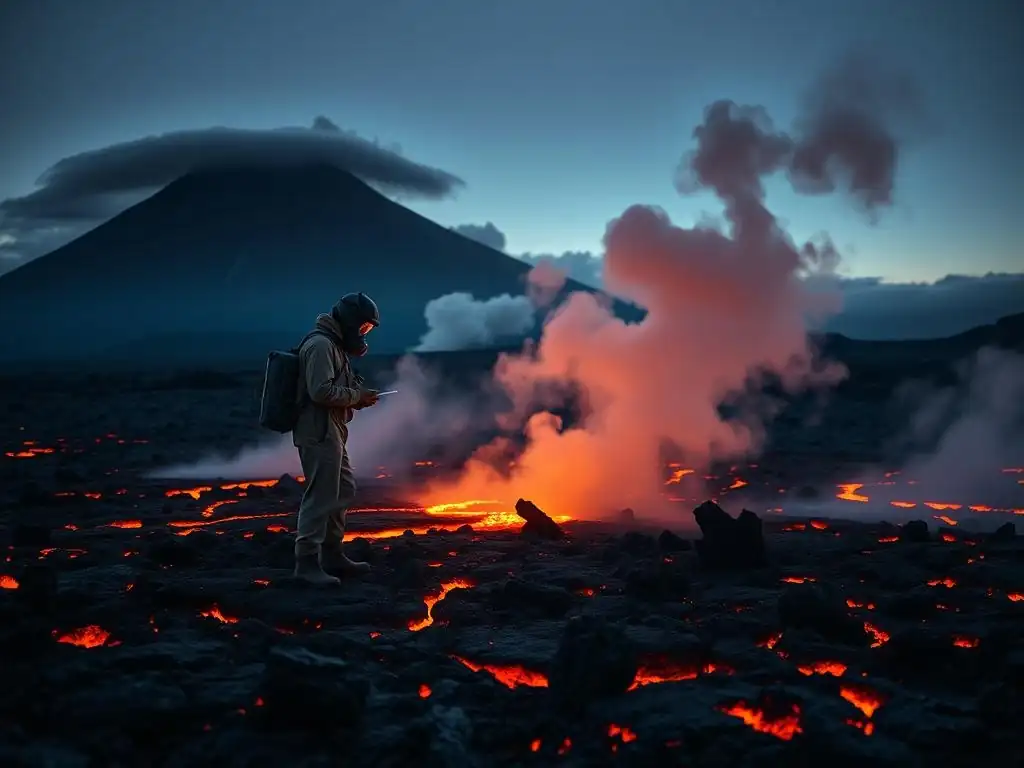
Personal Protective Equipment (PPE): Gas Masks and Respirators
When working or residing in areas potentially affected by lava flow gas emissions, personal protective equipment (PPE) is crucial for minimizing exposure and preventing health impacts. Gas masks and respirators are essential components of PPE for volcanic gas hazards. For SO2 and other acidic gases, respirators equipped with acid gas cartridges are effective in filtering out these harmful substances. For environments where oxygen displacement is a concern, such as areas with potential CO2 accumulation, self-contained breathing apparatus (SCBA) provides a supply of breathable air, ensuring protection even in oxygen-deficient atmospheres.
In addition to respiratory protection, eye protection, such as goggles or face shields, is important to prevent eye irritation from volcanic gases like SO2 and HCl. Skin protection, including long sleeves, pants, and gloves, can help minimize skin exposure to corrosive gases and volcanic ash that may be contaminated with acidic substances. The specific type of PPE required will depend on the anticipated gas concentrations and the activities being undertaken.
It is essential to use certified and properly fitted PPE and to receive training on its correct use and maintenance. Regular monitoring of gas levels and risk assessments should guide the selection and use of appropriate PPE in volcanic gas hazard zones.
Evacuation Procedures: When and How to Evacuate Safely
Evacuation is the most effective way to avoid the hazards of lava flow gases when gas concentrations reach dangerous levels or when there is a significant risk of gas accumulation. Evacuation procedures should be based on real-time monitoring data, official warnings from volcanological agencies, and pre-established emergency response plans. When evacuation orders are issued due to gas hazards, it is crucial to evacuate promptly and follow designated evacuation routes. Prioritize evacuating downwind and uphill from the lava flow and gas source, as gases tend to be carried downwind and accumulate in low-lying areas.
During evacuation, use vehicles if possible, but be aware of potential traffic congestion. If evacuating on foot, move quickly and avoid low-lying areas and confined spaces where gases may accumulate. If possible, wear respiratory protection during evacuation, especially if gas odors are noticeable or if symptoms of gas exposure are present.
Before evacuating, secure homes and businesses if time permits, but prioritize personal safety over property. Stay informed about the evolving situation through official channels and follow instructions from emergency responders. Evacuation plans should be regularly reviewed and practiced by communities living in volcanic areas to ensure a swift and safe response to gas hazard emergencies.
Community Awareness and Education: Informing Residents about the Risks
Effective mitigation of lava flow gas hazards relies heavily on community awareness and education. Residents living in volcanic areas need to be informed about the specific gas hazards in their region, the potential health effects, and the warning signs of gas accumulation. Public education campaigns should utilize various channels, including community meetings, brochures, websites, and social media, to disseminate information about volcanic gas risks and safety measures. Educational materials should be culturally sensitive and accessible to all segments of the community.
Schools and community centers should incorporate volcanic gas hazard education into their curricula and programs, ensuring that residents of all ages are aware of the risks and how to respond. Regular drills and exercises, simulating gas hazard emergencies and evacuation procedures, can help communities prepare and improve their response capabilities. Collaboration between volcanological agencies, emergency management authorities, and community leaders is essential to develop and implement effective public education and awareness programs. Empowering communities with knowledge and preparedness is crucial for building resilience and minimizing the impacts of lava flow gas hazards.
The Future of Lava Flow Gas Research and Mitigation
Advancements in Gas Detection Technology
The future of lava flow gas hazard mitigation is closely linked to advancements in gas detection technology. Ongoing research and development are focused on creating more sensitive, reliable, and cost-effective gas sensors for volcanic environments. Miniaturization and wireless communication technologies are leading to the development of smaller, more portable, and easily deployable gas sensors that can be integrated into monitoring networks. Improved sensor technologies are also enabling the detection of a wider range of volcanic gases with greater accuracy and precision.
Spectroscopic techniques, such as infrared and ultraviolet spectroscopy, are becoming increasingly sophisticated and are being used in both ground-based and remote sensing applications to identify and quantify volcanic gases. Developments in drone technology are allowing for the deployment of gas sensors into hazardous and inaccessible areas near lava flows, providing valuable data from previously unreachable locations.
The integration of artificial intelligence and machine learning algorithms into gas monitoring systems is also enhancing data analysis capabilities, allowing for more rapid and accurate identification of gas plumes and changes in emission patterns. These technological advancements are paving the way for more comprehensive and real-time monitoring of volcanic gas hazards.
Improving Risk Assessments and Emergency Response Plans
Future improvements in lava flow gas hazard mitigation will also focus on refining risk assessments and emergency response plans. Enhanced numerical models, incorporating more detailed atmospheric data and volcanic source parameters, will lead to more accurate predictions of gas dispersion and accumulation patterns. Probabilistic hazard assessments, which quantify the likelihood of different gas hazard scenarios, are becoming increasingly sophisticated, providing a more nuanced understanding of risk levels in different areas. These improved risk assessments can be used to develop more targeted and effective emergency response plans.
Emergency response plans are being enhanced through the integration of real-time monitoring data, improved communication technologies, and community-based preparedness initiatives. Early warning systems that automatically trigger alerts based on gas sensor data and model predictions are being developed to provide timely warnings to affected communities. Geographic information systems (GIS) and mapping technologies are being used to create detailed hazard maps and evacuation routes, facilitating more efficient emergency response. Continued research and development in risk assessment methodologies and emergency response planning are essential for reducing the vulnerability of communities to lava flow gas hazards in the future.
Conclusion: Staying Safe Around Lava Flows - Respecting the Invisible Danger
Lava flows are undeniably spectacular natural phenomena, but they are also associated with significant, often invisible, dangers. While the molten rock itself poses an obvious threat, the gases emitted from lava flows represent a silent killer that can be just as, if not more, hazardous.
Understanding the hazards of lava flow gases, including sulfur dioxide, carbon dioxide, hydrogen sulfide, and other toxic compounds, is paramount for anyone living in or visiting volcanic regions. These gases can cause a range of health effects, from respiratory irritation to asphyxiation, and their dispersion is influenced by factors like wind, topography, and atmospheric stability, leading to the formation of dangerous gas pockets.
Historical events like the Laki eruption and the Nyiragongo eruption serve as stark reminders of the devastating potential of volcanic gas emissions. Ongoing monitoring and research are crucial for improving our ability to predict and mitigate these hazards. Safety measures, including the use of personal protective equipment, effective evacuation procedures, and comprehensive community education, are essential for minimizing risks.
Living safely near volcanoes requires respecting not only the visible power of lava flows but also the invisible danger of volcanic gases. By staying informed, prepared, and vigilant, we can coexist more safely with these awe-inspiring yet potentially hazardous natural wonders.
Frequently Asked Questions
What are the primary hazards associated with lava flow gases?
The primary hazards include asphyxiation due to the displacement of oxygen, poisoning from toxic gases like sulfur dioxide, and irritation of the eyes, skin, and respiratory system.
Why are lava flow gases considered a "silent killer"?
Lava flow gases are often invisible and odorless, making them difficult to detect without specialized equipment. This lack of warning means people can be exposed to dangerous concentrations without realizing it, leading to sudden incapacitation.
What specific gases are commonly found in lava flows, and which are the most dangerous?
Common gases include water vapor, carbon dioxide, sulfur dioxide, and hydrogen sulfide. Sulfur dioxide and carbon dioxide are particularly dangerous due to their toxicity and potential to displace oxygen.
How far away from a lava flow can the gases pose a threat?
The distance depends on wind conditions and the volume of gas released, but dangerous concentrations can extend several hundred meters or even a few kilometers downwind from the active lava flow.
What precautions should people take when visiting or living near active volcanoes to protect themselves from lava flow gases?
People should monitor volcanic activity reports, be aware of wind direction, carry gas masks or respirators, and evacuate if advised by authorities to avoid harmful exposure.
Final Reflection: The Unseen Threat of Volcanic Gases
The dangers of volcanic eruptions are often visualized as fiery rivers of lava and explosive ash clouds, but the insidious threat of lava flow gases remains a tragically underestimated hazard. Understanding the composition, behavior, and potential impact of these gases is not merely an academic exercise; it's a matter of life and death for communities living near active volcanoes, and a crucial element in effective disaster preparedness strategies worldwide.
The persistent presence of these gases, often invisible and odorless, underscores the complexity of volcanic hazards and their far-reaching consequences. My own research into this area has solidified my belief that greater public awareness and improved monitoring technologies are essential to mitigating the risks. Nature, to be commanded, must be obeyed,
a quote often attributed to Francis Bacon, reminds us that respecting the power of volcanic activity, including its gaseous emissions, is paramount to ensuring human safety.
Let us not forget the lessons learned from past tragedies. Consider the information presented here, and ask yourself: what can I do to better understand the risks associated with volcanic gases, and how can I contribute to a more informed and prepared community? The silent killer demands our attention; let us respond with knowledge, vigilance, and a commitment to safeguarding lives.
Uncover the Secrets of Volcanic Safety!
Thank you for exploring the hidden dangers of volcanic gases with us. We hope you now have a better understanding of these silent threats and how to stay safe near volcanoes. Let's put that knowledge to good use!
Here are a few things you can do to become a more informed volcano enthusiast:
- Review Volcano Explorer's detailed guide on gas detection and protection for crucial safety information. This is your first step to preparedness.
- Share this article with others to spread awareness about the invisible risks associated with volcanic eruptions. Knowledge truly is power.
- Join the discussion in the comments: what subtle signs of dangerous gas levels should every visitor be aware of?
Ready to share your insights and help others stay safe?