
Submarine Volcanoes of the Ring of Fire: Hidden Worlds of Eruption Beneath the Waves

Welcome to Volcano Explorers!
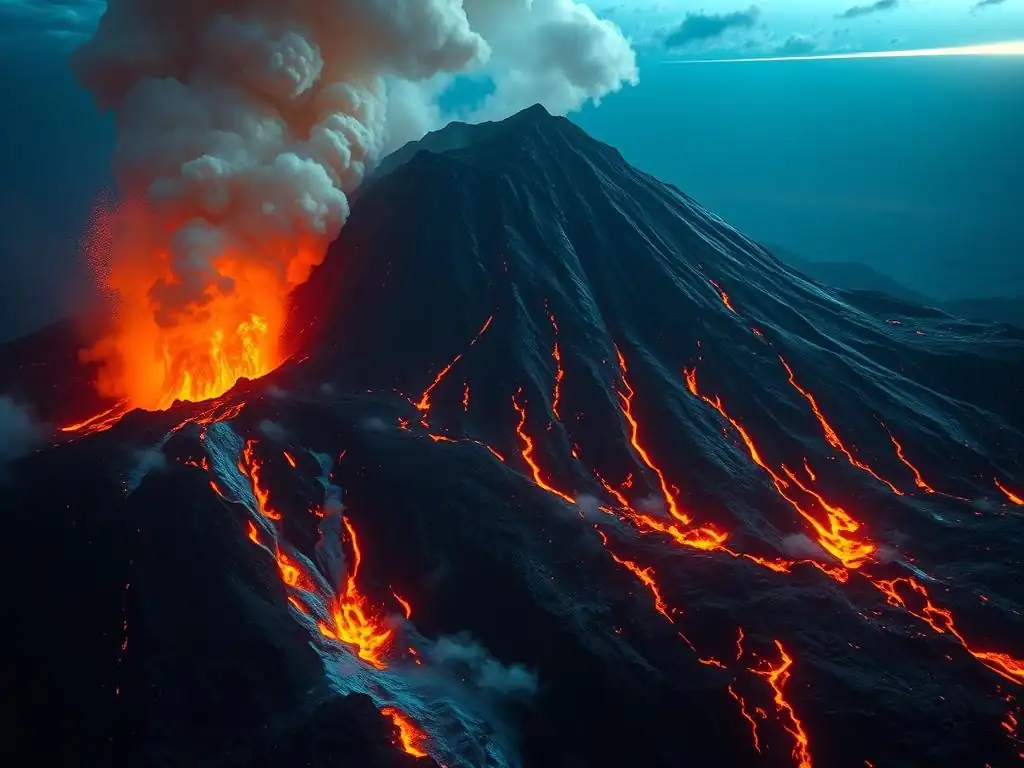
Prepare to plunge into the hidden depths, where fire meets water in the most spectacular displays of geological power. Are you ready to uncover the secrets of the Submarine Volcanoes lurking within the Ring of Fire? Imagine the immense pressure, the silent explosions, and the bizarre life thriving in these extreme environments. Dive in and begin your exploration of these underwater giants—the adventure awaits!
- Introduction to Submarine Volcanism in the Ring of Fire
- Geological Context: The Ring of Fire's Tectonic Setting
- Characteristics of Submarine Volcanoes
- Notable Submarine Volcanoes in the Ring of Fire
- Eruption Styles of Underwater Volcanoes
- The Impact of Submarine Volcanoes on the Marine Environment
- Monitoring and Research of Submarine Volcanoes
- The Connection Between Submarine Volcanoes and Global Climate
- Submarine Volcanoes: A Source of Mineral Resources
- Conclusion: Appreciating the Hidden Power of Submarine Volcanoes
-
Frequently Asked Questions
- What are submarine volcanoes and where are they typically found?
- Why is the Ring of Fire significant regarding submarine volcanoes?
- What kind of eruptions do submarine volcanoes in the Ring of Fire typically produce?
- How do volcanologists study submarine volcanoes, especially in the remote Ring of Fire?
- Are there any specific dangers associated with submarine volcanoes in the Ring of Fire?
- Final Reflection: Unveiling the Ring of Fire's Secrets
- Unearth Your Inner Volcanologist!
Introduction to Submarine Volcanism in the Ring of Fire
Unveiling the Underwater Volcanoes of the Pacific
The vast expanse of the Pacific Ocean hides a world of intense geological activity, largely unseen by human eyes. Beneath the waves, along the infamous Ring of Fire, lies a colossal network of submarine volcanoes. These underwater giants are far more numerous than their terrestrial counterparts, and their eruptions, though often less immediately visible, play a crucial role in shaping our planet.
While volcanoes on land capture our immediate attention with dramatic ash plumes and lava flows, submarine volcanoes silently vent heat and chemicals into the ocean, fostering unique ecosystems and influencing global ocean chemistry. Exploring these hidden worlds is essential to fully understanding the Earth's volcanic processes and their far-reaching impacts.
The underwater volcanoes of the Pacific are not just geological curiosities; they are active participants in the Earth's dynamic systems. Imagine a landscape dotted with volcanic peaks, valleys carved by underwater flows, and hydrothermal vents spewing superheated, mineral-rich water – all existing miles beneath the ocean surface.
These environments are challenging to study, yet increasingly, scientists are developing technologies to peer into these abyssal depths and unravel the mysteries of submarine volcanism. From remotely operated vehicles (ROVs) to sophisticated sonar mapping, our ability to explore and understand these underwater volcanoes in the Ring of Fire is rapidly expanding, revealing a hidden realm of volcanic power and ecological wonder.
The Ring of Fire: A Hotspot for Submarine Volcanic Activity
The Pacific Ring of Fire, a horseshoe-shaped region encircling the Pacific Ocean, is renowned for its intense seismic and volcanic activity. This zone is not just a collection of isolated volcanoes; it's a continuous belt where the Earth's tectonic plates collide and interact. Approximately 75% of the world's active and dormant volcanoes are located within this Ring of Fire, and a significant portion of these are submarine volcanoes. The sheer density of volcanic activity here is unmatched, making it a prime location to study the processes that drive both subaerial and submarine volcanism.
The concentration of submarine volcanoes in the Ring of Fire is directly linked to the underlying plate tectonics. Along this ring, several tectonic plates, including the massive Pacific Plate, are subducting, or sliding beneath, other plates like the North American, Eurasian, and Indo-Australian plates. This subduction process is the engine that fuels the majority of volcanic activity in the region.
As one plate descends into the Earth's mantle, it melts, generating magma that rises to the surface – or in this case, the ocean floor – to erupt and form submarine volcanoes. The Ring of Fire, therefore, is not just a name, but a geographical manifestation of intense geological forces constantly at work, particularly in the realm of submarine volcanism.
Geological Context: The Ring of Fire's Tectonic Setting
Plate Tectonics and the Formation of Submarine Volcanoes
The Earth's lithosphere, its rigid outer shell, is broken into several large and smaller pieces called tectonic plates. These plates are in constant motion, albeit very slow, driven by convection currents in the Earth's mantle. Where these plates interact – at their boundaries – a variety of geological phenomena occur, including the formation of volcanoes. Specifically, submarine volcanoes are predominantly formed at two types of plate boundaries: divergent boundaries and convergent boundaries, both of which are abundantly found within the Ring of Fire.
At divergent boundaries, plates move apart, allowing magma from the mantle to rise and fill the gap, creating new oceanic crust and often forming mid-ocean ridges with extensive submarine volcanic activity. While the Ring of Fire is primarily known for its convergent plate boundaries, these divergent zones contribute to the overall volcanic landscape of the Pacific basin.
However, it is the convergent boundaries, particularly subduction zones, that are most responsible for the dramatic concentration of submarine volcanoes in the Ring of Fire. The process of one plate sliding beneath another at subduction zones generates immense pressure and heat, leading to the melting of the subducting plate and the subsequent ascent of magma to form volcanic arcs, many of which are submerged beneath the ocean.
Subduction Zones: The Driving Force Behind Underwater Eruptions
Subduction zones are the key geological feature responsible for the prolific submarine volcanism in the Ring of Fire. These zones occur where two tectonic plates collide, and one, typically the denser oceanic plate, is forced beneath the other, often a continental or another oceanic plate. As the subducting plate descends into the Earth's mantle, it encounters increasing temperatures and pressures. This intense heat and pressure cause hydrous minerals within the subducting plate to release water. This released water lowers the melting point of the mantle rock above, causing it to partially melt and generate magma.
This newly formed magma, being less dense than the surrounding solid rock, begins to rise buoyantly towards the surface. In the Ring of Fire, this ascent often occurs beneath the ocean floor. As the magma rises, it can accumulate in magma chambers beneath the seabed.
When the pressure within these chambers exceeds the strength of the overlying crust, or when pathways are created by tectonic stresses, eruptions occur. Because this process happens extensively along the Ring of Fire's subduction zones – such as the Pacific Plate subducting under the Philippine Sea Plate, or the Nazca Plate subducting under the South American Plate – it results in a high concentration of submarine volcanoes, making the Ring of Fire the most volcanically active region on Earth, especially in terms of underwater volcanism.
Characteristics of Submarine Volcanoes
Differences Between Subaerial and Submarine Volcanic Eruptions
While the fundamental processes of magma generation and ascent are similar for both subaerial (on land) and submarine volcanoes, the environment in which they erupt profoundly impacts the nature of their eruptions and the resulting volcanic formations. One of the most significant differences is the immense hydrostatic pressure exerted by the overlying water column in submarine settings. This pressure significantly influences the explosivity of eruptions, the dispersal of volcanic materials, and the formation of volcanic structures.
For instance, the high pressure at depth can suppress the release of dissolved gases in magma, leading to less explosive eruptions compared to subaerial volcanoes where gases can expand more freely. However, this doesn't mean submarine eruptions are always gentle. When magma interacts with seawater, it can still lead to explosive events, particularly in shallower submarine environments.
Furthermore, the rapid cooling of lava by water results in characteristic volcanic formations like pillow lava, which are rarely observed in subaerial settings. The interaction of hot magma with cold seawater also generates hydrothermal vents, unique features of submarine volcanism that are absent on land.
The Role of Water Pressure in Submarine Volcanic Activity
Water pressure is arguably the most critical factor differentiating submarine volcanic activity from its subaerial counterpart. At depths of just 1000 meters, the pressure is approximately 100 times greater than at sea level. This immense pressure has several key effects on submarine volcanic eruptions. Firstly, it increases the boiling point of water significantly, meaning that water in contact with hot magma can become superheated without boiling, leading to different types of explosive interactions when boiling does occur. Secondly, high pressure compresses gases dissolved in magma, reducing their volume and thus potentially suppressing explosive eruptions.
However, the pressure also affects the fragmentation and dispersal of volcanic materials. While it can reduce the overall explosivity by hindering gas expansion, when explosions do occur, the rapid expansion of steam within the confined space of the water can still generate powerful bursts. Furthermore, the pressure influences the buoyancy of erupted materials and the behavior of volcanic plumes in the water column.
Understanding the precise role of water pressure is crucial for interpreting the characteristics of submarine volcanic eruptions and predicting potential hazards associated with them. Studies suggest that at very great depths (below approximately 2000 meters), pressure may become so high that purely explosive eruptions become less common, with effusive eruptions and lava flows dominating.
Formation of Pillow Lava and Hydrothermal Vents
Two of the most distinctive features associated with submarine volcanoes are pillow lava and hydrothermal vents. Pillow lava forms when basaltic lava erupts underwater. The cold seawater rapidly chills the surface of the lava flow, forming a glassy crust.
As the molten lava continues to flow from beneath this crust, it inflates the newly formed skin, creating lobe-like or pillow-shaped structures. These pillows typically range in size from a few centimeters to a meter in diameter and stack together like toothpaste squeezed from a tube, forming extensive pillow lava fields on the ocean floor. The glassy outer crust of pillow lava is a result of the rapid quenching and provides valuable information about the eruption conditions and magma composition.
Hydrothermal vents, on the other hand, are fissures in the seabed from which geothermally heated water is discharged. These vents are often found near active submarine volcanoes and along mid-ocean ridges where magma is close to the surface. Seawater percolates down through cracks in the oceanic crust, gets heated by the underlying magma, and becomes superheated and enriched with dissolved minerals leached from the surrounding rocks.
This hot, mineral-rich water then rises back to the seafloor and vents out, often forming spectacular "black smoker" or "white smoker" chimneys depending on the composition of the minerals precipitating out of the hydrothermal fluid. Hydrothermal vents are not only geological features but also the foundation for unique and thriving ecosystems, demonstrating the profound interconnectedness of submarine volcanism with the marine environment.
Notable Submarine Volcanoes in the Ring of Fire
Monowai Seamount: An Overview
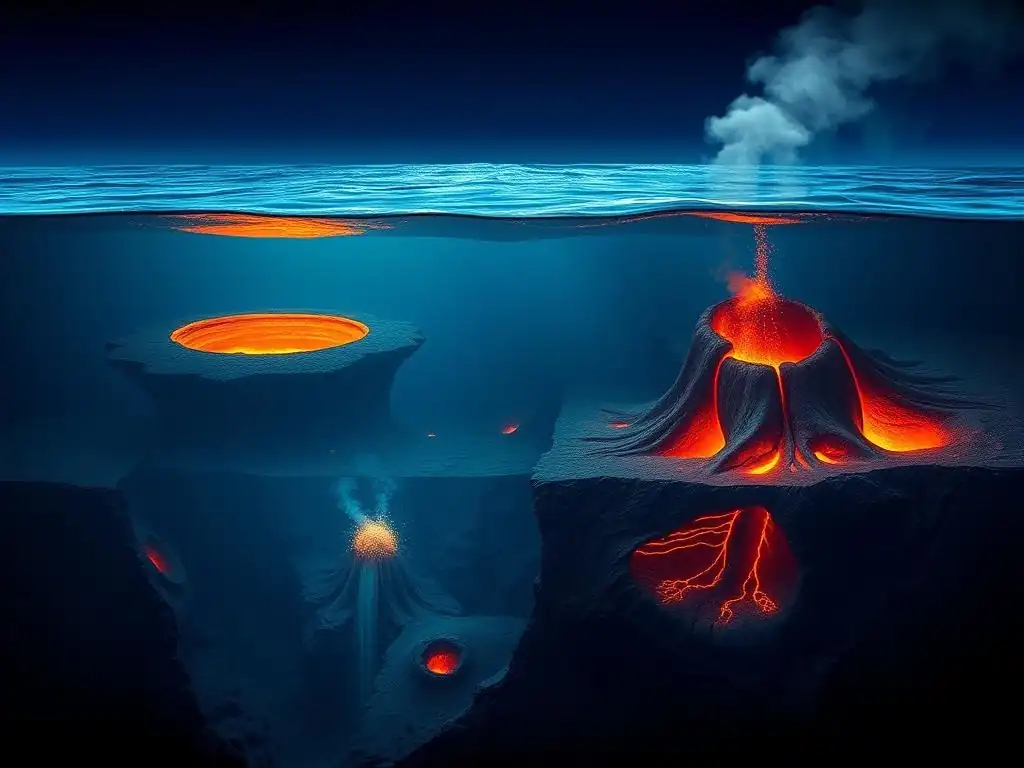
Monowai Seamount, located in the Kermadec Arc within the Ring of Fire, is one of the most actively erupting submarine volcanoes in the world. Situated approximately 1500 kilometers northeast of New Zealand, Monowai is a relatively shallow seamount, with its summit reaching depths of only around 100 meters below sea level. Its frequent eruptions, often detected by hydroacoustic sensors, make it a prime location for studying submarine volcanic processes in near real-time. The volcano's activity is characterized by both effusive lava flows and explosive eruptions, contributing to a complex and dynamic underwater landscape.
Monowai's eruptive history is well-documented through decades of monitoring and research. Studies have shown that it frequently produces plumes of volcanic ash and gas that rise hundreds of meters into the water column. These eruptions can sometimes be powerful enough to be detected by satellites, observing changes in sea surface temperature and color.
Scientists have also directly observed lava flows and vent activity using remotely operated vehicles, providing valuable insights into the morphology and evolution of submarine volcanoes. Monowai serves as a crucial natural laboratory for understanding the short-term and long-term impacts of submarine volcanism on the surrounding ocean environment.
NW Rota-1: A Case Study
NW Rota-1, located in the Mariana Arc of the Ring of Fire, is a remarkable submarine volcano that has been directly observed erupting repeatedly since 2004. What sets NW Rota-1 apart is its sustained explosive eruption of molten sulfur, a phenomenon rarely witnessed in nature, either subaerial or submarine. Located at a depth of approximately 550 meters, NW Rota-1's eruptions have been documented through submersible dives and remotely operated vehicles, providing unprecedented visual and chemical data on submarine explosive volcanism.
The eruptions at NW Rota-1 are characterized by the vigorous venting of molten sulfur, which forms shimmering pools and flows on the seafloor. This molten sulfur interacts with seawater, creating unique chemosynthetic ecosystems that thrive on the chemical energy released from the volcanic activity. The volcano also emits significant amounts of volcanic gases, including sulfur dioxide, which contribute to the acidification of the surrounding seawater. NW Rota-1 serves as an exceptional case study for understanding the diverse styles of submarine eruptions and their biogeochemical impacts, highlighting the unexpected and fascinating processes that can occur in these hidden volcanic realms.
Daikoku Seamount: Exploring its Unique Features
Daikoku Seamount, situated in the Izu-Bonin Arc, also within the Ring of Fire, is known for its exceptional hydrothermal activity, particularly its "Champagne Vent." This unique vent emits nearly pure liquid carbon dioxide, a phenomenon rarely observed in hydrothermal systems globally. Located at a depth of around 400 meters, Daikoku Seamount provides a window into the deep carbon cycle and the role of submarine volcanoes in releasing greenhouse gases into the ocean and potentially the atmosphere.
The Champagne Vent at Daikoku Seamount releases carbon dioxide at rates estimated to be among the highest known for any submarine hydrothermal system. The emitted CO2 forms liquid pools on the seafloor, creating a distinctive and chemically extreme environment. Studies of Daikoku Seamount have provided valuable insights into the sources of carbon dioxide in volcanic arcs and the potential for submarine volcanoes to influence global climate over geological timescales. Furthermore, the unique chemical environment around the Champagne Vent supports specialized microbial communities adapted to high CO2 concentrations, further emphasizing the diverse ecological niches created by submarine volcanic activity.
Eruption Styles of Underwater Volcanoes
Effusive vs. Explosive Submarine Eruptions
Submarine volcanoes, like their terrestrial counterparts, exhibit a range of eruption styles, broadly categorized as effusive and explosive. Effusive eruptions are characterized by the relatively quiet outpouring of lava flows. In a submarine setting, these lava flows often form pillow lava as described earlier, slowly building up volcanic structures over time. Effusive eruptions are generally less hazardous in terms of immediate widespread impact, but they contribute significantly to the construction of the seafloor and the long-term geological evolution of submarine volcanic regions.
Explosive submarine eruptions, on the other hand, involve the rapid fragmentation of magma and the ejection of volcanic materials into the surrounding water. While the high hydrostatic pressure generally tends to suppress explosivity, several mechanisms can still lead to significant submarine explosions.
These include rapid decompression of magma as it ascends quickly, interaction of magma with seawater leading to steam explosions, and the build-up and sudden release of volcanic gases. Explosive submarine eruptions can generate powerful shockwaves, displace large volumes of water, and eject ash and pumice into the water column, potentially impacting marine life and even posing hazards like tsunamis in certain circumstances.
Surtseyan Eruptions in Submarine Environments
Surtseyan eruptions are a specific type of explosive volcanic eruption that occurs when magma interacts vigorously with shallow water or wet sediments. Named after the island of Surtsey, which formed off the coast of Iceland in 1963 through such eruptions, Surtseyan activity can also occur in submarine environments, particularly in shallow submarine volcanoes or during the initial stages of the emergence of a submarine volcano above sea level. These eruptions are characterized by the violent fragmentation of magma due to the rapid vaporization of water.
In a submarine Surtseyan eruption, as hot magma encounters seawater, the water flashes to steam, expanding rapidly and causing powerful explosions. These explosions eject fragmented volcanic material, including ash, lapilli, and blocks, along with steam and gases, into the water column and potentially into the atmosphere if the eruption breaks the sea surface.
Surtseyan eruptions are often episodic and can build up cones and islands rapidly, although these newly formed features can also be easily eroded by wave action, especially in highly energetic marine environments. Understanding Surtseyan eruption dynamics is crucial for assessing the hazards associated with shallow submarine volcanoes and the formation of new volcanic islands.
Formation of Volcanic Islands from Submarine Volcanoes
Submarine volcanoes, through repeated eruptions over time, can grow tall enough to eventually breach the sea surface and form volcanic islands. This process is a fundamental way in which new land is created in oceanic regions. The formation of volcanic islands typically begins with sustained effusive and explosive eruptions of a submarine volcano. As lava flows and pyroclastic materials accumulate, the volcanic edifice gradually builds upwards from the seafloor. The rate at which a submarine volcano grows into an island depends on factors such as the eruption frequency, magma supply rate, and the erosive forces of waves and currents.
Once a submarine volcano reaches sea level, it becomes subject to subaerial erosion processes in addition to submarine processes. However, continued eruptions can lead to the further growth and stabilization of the island. Classic examples of volcanic islands formed by submarine volcanoes in the Ring of Fire include islands in the Japanese archipelago, the Philippines, and the Aleutian Islands. The formation of volcanic islands is not just a geological process; it also has profound ecological and societal implications, creating new habitats for colonization by plants and animals and providing land for human settlement and activity.
The Impact of Submarine Volcanoes on the Marine Environment
Hydrothermal Vent Ecosystems: Oases of Life
Perhaps one of the most fascinating discoveries related to submarine volcanoes is the existence of hydrothermal vent ecosystems. These ecosystems thrive in the deep sea around hydrothermal vents, which are essentially underwater hot springs associated with volcanic activity. Hydrothermal vents release chemically rich fluids from the Earth's interior into the cold, dark ocean depths, creating unique habitats that support dense and diverse communities of life in an otherwise sparsely populated environment. These ecosystems are independent of sunlight and based on chemosynthesis, where microorganisms derive energy from chemical compounds in the vent fluids, rather than photosynthesis.
The base of the food web in hydrothermal vent ecosystems is formed by chemosynthetic bacteria and archaea. These microorganisms oxidize chemicals like hydrogen sulfide, methane, and hydrogen present in the vent fluids to produce energy. They, in turn, support a variety of larger organisms, including tubeworms, clams, mussels, shrimp, and crabs, many of which have symbiotic relationships with chemosynthetic microbes.
Hydrothermal vent ecosystems are biodiversity hotspots in the deep sea and provide valuable insights into the limits of life and the potential for life in other extreme environments, even beyond Earth. Submarine volcanoes, therefore, not only shape the geological landscape but also foster unique biological realms.
The Release of Chemicals and Gases into the Ocean
Submarine volcanoes are significant sources of chemical and gas input into the ocean. During eruptions and through hydrothermal venting, they release a variety of substances, including water vapor, carbon dioxide, sulfur dioxide, hydrogen sulfide, methane, and various trace metals and minerals. These volcanic emissions can have a profound impact on ocean chemistry, influencing factors such as ocean acidity, nutrient availability, and trace element concentrations. The scale of this input, particularly from the numerous submarine volcanoes in the Ring of Fire, is substantial and plays a role in global biogeochemical cycles.
For instance, the release of carbon dioxide from submarine volcanoes contributes to the overall carbon cycle and can influence ocean acidification, although the magnitude of this contribution compared to anthropogenic CO2 emissions is still under investigation. Sulfur compounds released from volcanoes can affect ocean sulfur chemistry and potentially influence cloud formation and climate.
Hydrothermal vents also release essential nutrients like iron and manganese, which can stimulate primary productivity in certain ocean regions. The complex interplay of chemical inputs from submarine volcanoes and their effects on marine biogeochemistry is an active area of research, highlighting the interconnectedness of volcanic processes with the broader Earth system.
Potential Hazards: Tsunamis and Submarine Landslides
While submarine volcanoes are hidden beneath the waves, their activity can still pose hazards, particularly in the form of tsunamis and submarine landslides. Large explosive submarine eruptions can displace vast amounts of water rapidly, generating tsunamis that can propagate across ocean basins and cause devastation to coastal communities. The eruption of Krakatoa in 1883, although partially subaerial, demonstrated the immense tsunami-generating potential of volcanic explosions in a marine setting, and similar, purely submarine eruptions could also trigger significant tsunamis.
Submarine landslides are another hazard associated with submarine volcanoes. The steep slopes of volcanic edifices built on the seafloor can become unstable, especially during or after volcanic eruptions or earthquakes. Large submarine landslides can also displace massive volumes of water, generating tsunamis. Furthermore, submarine landslides can damage underwater infrastructure, such as cables and pipelines. While the frequency of tsunami-generating submarine volcanic eruptions and landslides is relatively low compared to earthquakes, their potential impact can be very significant, making it crucial to understand and monitor submarine volcanic activity and slope stability in tectonically active regions like the Ring of Fire.
Monitoring and Research of Submarine Volcanoes
Challenges in Studying Underwater Volcanic Activity
Studying submarine volcanoes presents significant challenges due to their remote and inaccessible location beneath the ocean surface. The deep sea environment is characterized by extreme pressure, darkness, and cold temperatures, making direct observation and sampling difficult and costly. Traditional methods used to study subaerial volcanoes, such as ground-based monitoring networks and direct sampling of lava flows, are not readily applicable to submarine volcanoes. Researchers must rely on specialized technologies and indirect methods to investigate these hidden volcanic systems.
Another challenge is the vastness of the ocean and the sheer number of submarine volcanoes, many of which remain undiscovered or poorly characterized. Detecting and locating submarine eruptions can also be difficult, especially in remote areas. While hydroacoustic sensors can detect underwater explosions, pinpointing the exact location and characteristics of the eruption requires further investigation. Furthermore, long-term monitoring of submarine volcanoes is logistically complex and requires sustained funding and international collaboration. Overcoming these challenges is essential for improving our understanding of submarine volcanism and mitigating potential hazards.
Advanced Technologies for Submarine Volcano Monitoring
Despite the challenges, significant advancements in technology have revolutionized the study of submarine volcanoes. Remotely operated vehicles (ROVs) and autonomous underwater vehicles (AUVs) are now routinely used to explore the seafloor, collect samples, and deploy instruments near submarine volcanoes. These robotic platforms can operate at great depths and for extended periods, providing valuable visual and chemical data. Deep-sea submersibles, both manned and unmanned, also allow for direct observation and sampling of submarine volcanic features and hydrothermal vents.
Hydroacoustic monitoring networks, deployed globally, can detect underwater volcanic explosions and earthquakes, providing early warnings of potential volcanic unrest. Satellite-based techniques, such as sea surface temperature and color anomaly detection, can also provide clues about submarine volcanic activity, particularly in shallower waters. Ocean bottom seismometers are deployed to monitor seismic activity associated with submarine volcanoes, providing insights into magma movement and eruption precursors. The integration of these advanced technologies is continuously enhancing our ability to monitor and understand submarine volcanic processes.
The Future of Submarine Volcanology Research in the Ring of Fire
The future of submarine volcanology research in the Ring of Fire is poised for exciting advancements. Continued development and deployment of advanced underwater technologies, such as more sophisticated ROVs, AUVs, and long-term seafloor observatories, will enable more detailed and sustained monitoring of submarine volcanoes. Improvements in sensor technology will allow for more precise measurements of volcanic gases, hydrothermal fluids, and seismic activity. Integration of data from multiple sources, including satellite observations, hydroacoustic networks, and seafloor instruments, will provide a more comprehensive understanding of submarine volcanic systems.
Furthermore, increased international collaboration and data sharing are crucial for advancing submarine volcanology research. Initiatives to map the global ocean floor in detail, such as the Seabed 2030 project, will help identify and characterize more submarine volcanoes.
Future research will likely focus on understanding the triggers and dynamics of submarine eruptions, the long-term impacts of submarine volcanism on ocean chemistry and ecosystems, and the potential hazards associated with submarine volcanic activity. The Ring of Fire, with its high concentration of submarine volcanoes, will remain a key focus area for these research efforts, promising to reveal even more hidden wonders and geological secrets beneath the waves.
The Connection Between Submarine Volcanoes and Global Climate
The Influence of Submarine Volcanic Gases on the Atmosphere
While subaerial volcanoes are well-known for their influence on climate through the release of volcanic gases into the atmosphere, the role of submarine volcanoes is less well understood but increasingly recognized as potentially significant. Submarine volcanoes also release gases, including carbon dioxide, sulfur dioxide, and water vapor, among others. The extent to which these gases reach the atmosphere and impact global climate is complex and depends on various factors, including the depth of the eruption, the intensity of the eruption, and the solubility of the gases in seawater.
For submarine volcanoes at great depths, much of the released gas may dissolve in the surrounding seawater and not directly reach the atmosphere. However, in shallower submarine eruptions, or in regions with vigorous hydrothermal venting, some volcanic gases can escape into the atmosphere.
The impact of submarine volcanic CO2 on long-term climate is an area of ongoing research, with some studies suggesting that submarine volcanism contributes to the natural carbon cycle and may have played a role in past climate changes. Sulfur gases released by submarine volcanoes can also potentially influence atmospheric aerosols and cloud formation, although the magnitude of this effect is still being investigated.
Long-term Effects of Underwater Eruptions on Ocean Chemistry
The long-term effects of underwater eruptions on ocean chemistry are substantial and multifaceted. Submarine volcanoes are continuous sources of chemical input into the ocean over geological timescales. The cumulative effect of these inputs from numerous submarine volcanoes, particularly in volcanically active regions like the Ring of Fire, can significantly alter ocean composition over millions of years. This includes changes in salinity, pH, trace element concentrations, and nutrient distributions.
For example, the continuous release of hydrothermal fluids from submarine volcanoes contributes to the overall geochemical budget of the oceans, influencing the cycling of elements like iron, manganese, copper, and zinc, which are essential nutrients for marine life. Submarine volcanism also plays a role in regulating ocean acidity through the release of alkaline elements and the consumption of acidity during hydrothermal alteration of oceanic crust. Understanding these long-term geochemical impacts is crucial for comprehending the evolution of ocean chemistry and its influence on marine ecosystems and global climate regulation over geological time.
Submarine Volcanoes: A Source of Mineral Resources
Potential for Mineral Extraction from Underwater Volcanoes
Submarine volcanoes and associated hydrothermal vents are increasingly recognized as potential sources of valuable mineral resources. Hydrothermal vent fluids are rich in dissolved metals, such as copper, gold, silver, zinc, and lead, which precipitate out as sulfide minerals when the hot vent fluids mix with cold seawater. Over time, these mineral deposits can accumulate on the seafloor around hydrothermal vents, forming seafloor massive sulfide (SMS) deposits. These SMS deposits are considered a potentially significant source of strategic metals for future mineral extraction.
The Ring of Fire, with its abundant submarine volcanic and hydrothermal activity, is a prime area for the formation of SMS deposits. Several regions within the Ring of Fire, such as the western Pacific island arcs, have been identified as having high potential for economically viable SMS deposits. Exploration and preliminary resource assessments are underway in some areas, investigating the feasibility of deep-sea mining of these volcanic-related mineral resources. The potential for mineral extraction from submarine volcanoes represents a new frontier in resource exploration and exploitation.
The Ethics of Deep-Sea Mining in Volcanic Regions
The prospect of deep-sea mining in volcanic regions raises significant ethical and environmental concerns. Hydrothermal vent ecosystems, which often host SMS deposits, are unique and fragile deep-sea habitats that support specialized communities of life. Mining activities in these areas could cause significant habitat destruction, disrupt vent ecosystems, and potentially impact wider deep-sea biodiversity. The long-term ecological consequences of deep-sea mining are not fully understood, and there are concerns about the potential for irreversible damage to these vulnerable environments.
Ethical considerations also arise regarding the equitable distribution of benefits from deep-sea mining and the potential impacts on developing nations and future generations. International regulations and governance frameworks for deep-sea mining are still evolving, and there is ongoing debate about the need for stronger environmental safeguards and ethical guidelines to ensure responsible and sustainable deep-sea resource management. Balancing the potential economic benefits of mineral extraction from submarine volcanoes with the need to protect these unique and valuable marine environments is a critical challenge for the future.
The Importance of Understanding Submarine Volcanic Activity
Submarine volcanoes, hidden beneath the ocean waves, represent a powerful and largely unexplored force shaping our planet. Understanding their activity is of paramount importance for several reasons. Firstly, submarine volcanoes are a fundamental component of the Earth's geological processes, contributing to plate tectonics, crustal formation, and the cycling of heat and chemicals from the Earth's interior. Secondly, they play a significant role in shaping ocean chemistry, influencing nutrient cycles, and potentially affecting global climate over geological timescales. Thirdly, submarine volcanoes foster unique and fragile deep-sea ecosystems, highlighting the interconnectedness of life and geological processes.
Furthermore, submarine volcanic activity can pose hazards, including tsunamis and submarine landslides, which can impact coastal communities and underwater infrastructure. Finally, submarine volcanoes are a potential source of valuable mineral resources, raising both economic opportunities and ethical challenges related to deep-sea mining and environmental protection. A comprehensive understanding of submarine volcanism is therefore essential for advancing Earth science knowledge, mitigating potential hazards, managing marine resources sustainably, and appreciating the hidden power and complexity of our planet.
Further Exploration of the Underwater World of Volcanoes
The underwater world of volcanoes remains largely unexplored, offering vast opportunities for future research and discovery. Continued exploration and monitoring efforts are crucial for unraveling the mysteries of submarine volcanism and its impacts on the Earth system. This includes mapping undiscovered submarine volcanoes, deploying advanced technologies for long-term monitoring, and conducting interdisciplinary studies to investigate the geological, chemical, and biological processes associated with submarine volcanic activity.
Future research should focus on improving our understanding of submarine eruption dynamics, the long-term effects of submarine volcanism on ocean chemistry and climate, the biodiversity and resilience of hydrothermal vent ecosystems, and the sustainable management of potential mineral resources in volcanic regions. International collaboration, technological innovation, and a commitment to responsible exploration are key to unlocking the secrets of the underwater world of volcanoes and appreciating their hidden power and significance in the Earth system.
Frequently Asked Questions
What are submarine volcanoes and where are they typically found?
Submarine volcanoes are underwater volcanoes found primarily along tectonic plate boundaries. The Ring of Fire, a major area in the Pacific Ocean, is particularly known for its high concentration of these volcanoes.
Why is the Ring of Fire significant regarding submarine volcanoes?
The Ring of Fire is a zone of intense seismic and volcanic activity, home to a large percentage of the world's submarine volcanoes. This is due to the subduction of tectonic plates, leading to magma formation and eruptions.
What kind of eruptions do submarine volcanoes in the Ring of Fire typically produce?
Eruptions from submarine volcanoes in the Ring of Fire can range from effusive lava flows to explosive events. The depth of the water influences the type of eruption, often resulting in pillow lavas.
How do volcanologists study submarine volcanoes, especially in the remote Ring of Fire?
Volcanologists use various techniques, including sonar mapping, remotely operated vehicles (ROVs), and seismic monitoring. They gather data to understand the volcanic activity and potential hazards.
Are there any specific dangers associated with submarine volcanoes in the Ring of Fire?
Submarine volcanic eruptions can trigger undersea landslides, tsunamis, and the release of toxic gases. These pose risks to marine life and coastal communities, highlighting the need for monitoring and preparedness.
Final Reflection: Unveiling the Ring of Fire's Secrets
The exploration of submarine volcanoes within the Ring of Fire, as we've seen, is not just an academic exercise; it's a critical endeavor for understanding our planet's dynamic processes. The Ring of Fire's underwater volcanic activity directly impacts global ocean chemistry, marine ecosystems, and even long-term climate patterns, making its study profoundly relevant in our era of increasing environmental awareness and concern.
The sheer scale and hidden nature of these underwater eruptions continue to captivate and humble us. The realization that so much of our planet's volcanic activity remains unseen and largely unstudied underscores the vastness of what we still need to learn. The sea, once it casts its spell, holds one in its net of wonder forever.
- Jacques Cousteau. This quote perfectly captures the allure and importance of exploring these submerged landscapes, not just for scientific advancement, but also for fostering a deeper appreciation for the interconnectedness of our world.
Now, consider the implications of what we've uncovered. How can you, as an individual, contribute to a greater understanding and appreciation of our planet's hidden wonders? Reflect on the power of knowledge and the responsibility we share to protect these fragile ecosystems. Let the mysteries of the submarine volcanoes of the Ring of Fire inspire you to become an advocate for ocean exploration and environmental stewardship, ensuring that these hidden worlds are understood and preserved for generations to come.
Unearth Your Inner Volcanologist!
Thanks for exploring the fascinating world of submarine volcanoes with us! We hope you've gained a new appreciation for the powerful forces shaping our planet, even beneath the waves. Now, it's time to take that knowledge further and become a true Volcano Explorer.
- Dive deeper by researching a specific submarine volcano in the Kermadec or Mariana arcs, and document your findings.
- Share this article with a friend or family member who loves geology or the ocean—help spread the word about these hidden wonders.
- Explore our site, VolcanoExplorers.org, and suggest a topic for a future article—what aspects of volcanology intrigue you most?
What mysteries of the deep will we uncover next, and which unexplored region of the Ring of Fire should we investigate? Share your thoughts in the comments below!