
Volcanic Prophecies: Eruptions as Omens in Ancient Texts

Welcome to Volcano Explorers, where the Earth roars and molten rock rewrites history!
Dare to unravel the secrets whispered from the heart of the planet? What if the fiery breath of volcanoes wasn't just a geological event, but a harbinger of things to come? Prepare to journey back in time as we delve into " Volcanic Prophecies: Eruptions as Omens in Ancient Texts." Explore how ancient civilizations interpreted these cataclysmic events, finding meaning and warnings in the ash and fire. Were they just superstitions, or did these cultures possess an understanding of volcanic power we're only beginning to grasp? The answers await... if you're brave enough to dig deep.
- Introduction: Volcanoes as Divine Messengers in Antiquity
- Volcanic Eruptions in Ancient Mesopotamian Records
- Volcanic Eruptions in Ancient Egyptian Mythology and Texts
- Volcanic Eruptions in Ancient Greek and Roman Writings
- Volcanic Eruptions in Ancient Asian Traditions
- Interpreting Ancient Volcanic Prophecies: A Modern Perspective
- Conclusion: The Legacy of Volcanic Omens
-
Frequently Asked Questions
- What role did volcanic eruptions play in ancient cultures' understanding of the world?
- How did ancient texts describe volcanic eruptions?
- Were there specific volcanoes that were particularly associated with prophecies or omens?
- Did ancient societies develop any strategies to predict or mitigate the effects of volcanic eruptions?
- How does the interpretation of volcanic eruptions in ancient texts differ from modern scientific understanding?
- Final Reflection: Echoes of Fire and Fate
- Unearth Your Inner Seer!
Introduction: Volcanoes as Divine Messengers in Antiquity
- Exploring the intersection of volcanic eruptions and ancient beliefs.
- The role of natural disasters as omens and signs in early civilizations.
- Focusing on how volcanic activity was interpreted in ancient texts.
Since the dawn of civilization, natural phenomena exceeding human comprehension have been imbued with profound meaning. Ancient societies, lacking the scientific frameworks of today, often interpreted events like earthquakes, floods, and volcanic eruptions not as purely geological processes, but as messages from the divine realm.
These dramatic displays of nature's power were seen as omens, prophecies, or signs of displeasure from gods and spirits, directly impacting the fate of communities and empires. Volcanic eruptions, with their earth-shattering explosions, skies darkened by ash, and rivers of fire, were particularly potent symbols, inspiring awe, terror, and a deep-seated need to decipher their meaning within the cosmic order.
This article delves into the fascinating intersection of volcanic eruptions and ancient beliefs, exploring how different cultures across the globe interpreted these awe-inspiring events as omens. We will journey through ancient texts from Mesopotamia, Egypt, Greece, Rome, China, and Japan, examining how volcanic activity was woven into their mythologies, histories, and prophecies. By analyzing these ancient interpretations, we can gain a deeper understanding of humanity's enduring relationship with volcanoes, not just as geological forces, but as powerful symbols that have shaped our cultural and spiritual landscapes for millennia.
Volcanic Eruptions in Ancient Mesopotamian Records
Earliest Accounts of Volcanic Phenomena and Their Interpretations
- Analyzing Mesopotamian cuneiform tablets for mentions of volcanic events.
- Connecting volcanic activity to divine wrath and royal power.
Mesopotamia, the cradle of civilization, boasts some of the earliest written records in human history, inscribed on durable clay tablets in cuneiform script. While direct and explicit mentions of volcanic eruptions are scarce in these texts, possibly due to the region's geographical distance from active volcanoes, the pervasive theme of divine wrath manifested through natural disasters suggests an understanding and interpretation of such events within their religious and political framework.
Mesopotamian mythology is replete with stories of floods, storms, and earthquakes unleashed by angered gods, often as punishment for human transgressions or as harbingers of significant societal changes. These calamities were not viewed as random occurrences but as purposeful acts of divine intervention, directly linked to the actions and moral standing of both rulers and their people.
Scholars suggest that events resembling volcanic phenomena, even if not explicitly named as such, might have been incorporated into Mesopotamian narratives through allegorical descriptions. The "darkness" and "fire" that frequently accompany divine punishments in Mesopotamian texts could be interpreted as allusions to volcanic ash clouds and lava flows. Furthermore, the concept of royal power in Mesopotamia was deeply intertwined with the idea of maintaining cosmic order.
Natural disasters, including events that could be interpreted as volcanic in nature, were seen as disruptions to this order, potentially weakening the king's authority and signaling a need for appeasement of the divine forces. Thus, even without explicit volcanic descriptions, Mesopotamian texts provide a crucial window into how ancient societies interpreted powerful natural events as omens and linked them to divine will and the socio-political landscape.
The Legend of Atrahasis and Possible Volcanic Allusions
- Examining potential allegorical references to volcanic events within the flood myth.
- Scholarly interpretations linking the darkness and chaos to volcanic ash and disruption.
The Epic of Atrahasis, a foundational Mesopotamian flood myth predating the Epic of Gilgamesh, offers a compelling narrative rich with potential allusions to volcanic events. The myth recounts how the gods, disturbed by the noise and overpopulation of humanity, decide to unleash a series of calamities, including plagues, famines, and ultimately, a great flood, to reduce the human population.
While the flood is the central catastrophe, the preceding punishments, and even aspects of the flood narrative itself, bear striking resemblance to the effects of a large-scale volcanic eruption. Specifically, the descriptions of widespread disease and crop failure preceding the flood could be linked to the environmental consequences of volcanic ashfall, which can contaminate water sources, disrupt agriculture, and lead to respiratory problems.
Furthermore, certain interpretations of the flood narrative itself suggest volcanic undertones. The chaotic darkness and tumultuous conditions described during the flood could be allegorically linked to the ash clouds and atmospheric disruptions associated with major volcanic eruptions.
Some scholars propose that the Mesopotamian flood myth, like similar flood narratives found globally, might have been partly inspired by collective memories of climate-altering events, including significant volcanic eruptions that caused widespread environmental upheaval. While the Atrahasis Epic is primarily a flood myth, examining it through the lens of potential volcanic allusions reveals how ancient Mesopotamians might have integrated the memory and understanding of such events into their broader mythological and cosmological narratives, interpreting them as divine interventions shaping human destiny.
Volcanic Eruptions in Ancient Egyptian Mythology and Texts
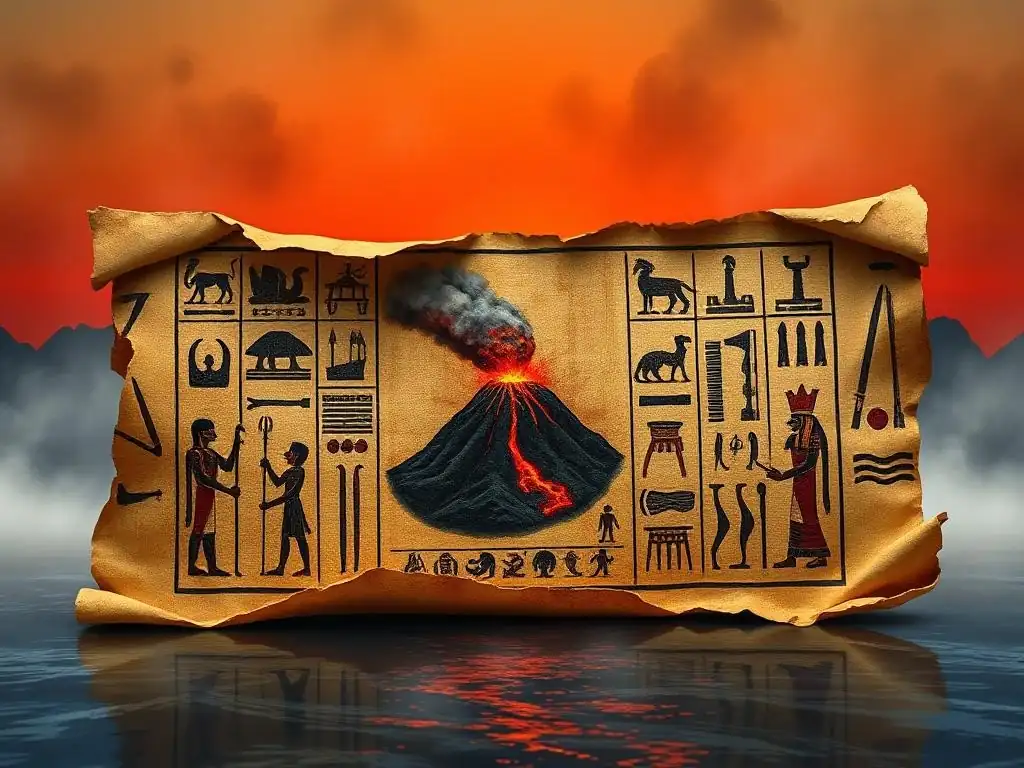
Volcanoes and the Egyptian Pantheon: Gods of Fire and Destruction
- Exploring the association of deities like Sekhmet with destructive forces.
- Analyzing Egyptian myths for symbolic representations of catastrophic events.
Ancient Egypt, geographically shielded from frequent volcanic activity compared to regions like the Mediterranean or Japan, still incorporated the concept of destructive fire and powerful natural forces into its rich mythology and religious beliefs. While Egypt itself lacks active volcanoes, the ancient Egyptians were likely aware of volcanic phenomena through trade, travel, or even distant observations. Their pantheon, populated by a diverse array of gods and goddesses embodying various aspects of nature and human experience, included deities associated with fire, destruction, and transformative power, which could be linked, albeit indirectly, to the awe-inspiring and terrifying aspects of volcanic eruptions.
Sekhmet, the lioness-headed goddess of healing and warfare, stands out as a prominent example of a deity embodying destructive potential. Often depicted as the "Eye of Ra," Sekhmet was associated with both the scorching heat of the sun and the fiery wrath of the gods.
Myths recount how Ra unleashed Sekhmet to punish humanity for their disobedience, causing widespread carnage. This narrative, while not explicitly volcanic, reflects the Egyptian understanding of divine retribution manifested through overwhelming, destructive forces that could dramatically alter the landscape and human lives.
Furthermore, the Egyptian concept of Apophis, the serpent of chaos who constantly threatened to engulf the world in darkness, could be seen as another symbolic representation of the unpredictable and destructive forces of nature, potentially including the kind of widespread environmental disruption associated with major volcanic events. Though direct volcanic descriptions are rare in ancient Egyptian texts, the symbolic language of their mythology reveals an awareness and integration of powerful, destructive forces, akin to volcanic eruptions, into their worldview and religious narratives.
The Tempest Stela and Its Potential Depiction of a Climate-Altering Eruption
- Discussion of the Tempest Stela's potential description of a distant volcanic event.
- Interpreting the stela's descriptions within the context of Egyptian royal power and maintaining order.
The Tempest Stela, discovered in Karnak and dating back to the reign of Pharaoh Ahmose I (c. 1550-1525 BCE), presents a compelling case for an ancient Egyptian record potentially describing the aftermath of a distant, but impactful, volcanic eruption. The stela recounts a period of intense darkness, storms, and upheaval that afflicted Egypt, described in dramatic terms: "The sky was in storm, in the west, south, east, and north… louder than the cries of the ibis, stronger than what is in the marshes… No torches could function in the storm."
This period of chaos is attributed to divine displeasure and caused widespread devastation, disrupting religious rituals and social order.
Intriguingly, geological and archaeological evidence increasingly points towards a massive volcanic eruption on the island of Thera (modern Santorini) around the same time period as the Tempest Stela. This eruption, one of the largest volcanic events in recorded history, would have ejected vast quantities of ash and volcanic gases into the atmosphere, potentially causing global climate anomalies, including darkened skies, unusual weather patterns, and even tsunamis reaching Egypt.
Scholars have proposed that the Tempest Stela might be a record of the environmental and social fallout from the Thera eruption, even though the eruption itself occurred hundreds of kilometers away. The stela's emphasis on royal restoration of order following this period of chaos underscores the pharaoh's role as the guarantor of Ma'at (cosmic order) in Egyptian society.
By attributing the disruption to divine will and then showcasing the pharaoh's ability to restore balance, the Tempest Stela reinforces royal legitimacy and power in the face of overwhelming natural forces, potentially linked to the far-reaching consequences of a major volcanic eruption.
Volcanic Eruptions in Ancient Greek and Roman Writings
Classical Views on Volcanic Activity: Science and Superstition
- Comparing scientific observations (e.g., Pliny the Elder) with mythological explanations.
- The impact of volcanic eruptions on Greek and Roman society and culture.
Ancient Greece and Rome, civilizations flourishing in a volcanically active region of the Mediterranean, developed a more nuanced understanding of volcanic phenomena, blending scientific observation with mythological and superstitious interpretations. Classical writers like Pliny the Elder, known for his encyclopedic "Natural History," documented volcanic activity with a keen eye for detail, attempting to explain eruptions through natural processes rather than solely attributing them to divine intervention.
Pliny's observation of Mount Vesuvius leading up to its catastrophic eruption in 79 AD, and his subsequent demise while attempting to rescue people, stand as a testament to early scientific curiosity and the dangers posed by volcanoes. He described the pre-eruption seismic activity and the initial ash plume, demonstrating an effort to understand these events within a naturalistic framework.
However, alongside these nascent scientific approaches, mythological and superstitious interpretations of volcanic eruptions persisted in Greco-Roman culture. Volcanoes were often seen as the forges of Vulcan (Hephaestus in Greek), the god of fire and metalworking, located deep within the earth. Eruptions were interpreted as signs of Vulcan's activity, sometimes linked to divine displeasure or portents of future events.
Figures like Sibyls and oracles were consulted to decipher the meaning of volcanic events, further highlighting the intertwining of natural observation and supernatural belief. The impact of volcanic eruptions on Greco-Roman society was significant, shaping not only their mythology and religious beliefs but also their practical considerations regarding settlement, agriculture, and infrastructure in volcanically active areas. The fertile volcanic soils were recognized for their agricultural benefits, while the destructive potential of eruptions necessitated strategies for mitigation and adaptation, resulting in a complex and multifaceted relationship with these powerful natural forces.
Mount Etna and Vesuvius: Volcanic Prophecies in Greco-Roman Literature
- Analyzing literary works (e.g., Virgil's Aeneid) for volcanic imagery and prophecies.
- The eruption of Mount Vesuvius in 79 AD as a pivotal event shaping Roman perceptions.
Mount Etna in Sicily and Mount Vesuvius near Naples held particular significance in Greco-Roman literature and imagination, becoming focal points for volcanic prophecies and symbolic representations of nature's power. Virgil's "Aeneid," the epic poem narrating the legendary journey of Aeneas, vividly depicts Mount Etna as a monstrous entity, its eruptions described in terrifying and awe-inspiring terms. Virgil portrays Etna as a place of divine punishment, with the giant Enceladus buried beneath it, his fiery breath causing the eruptions.
This literary depiction reflects the prevailing mythological interpretation of volcanoes as manifestations of divine power and cosmic struggles. Volcanic imagery in the Aeneid serves to heighten the sense of drama and the overwhelming forces of nature that Aeneas and his companions must confront on their journey.
The catastrophic eruption of Mount Vesuvius in 79 AD, burying the Roman cities of Pompeii and Herculaneum, became a pivotal event that profoundly shaped Roman perceptions of volcanic eruptions. While Pliny the Younger's letters provide a detailed eyewitness account of the eruption from a naturalistic perspective, the event was also widely interpreted as a divine omen and a punishment for Roman decadence and moral decline.
Writers and philosophers debated the meaning of the disaster, with some viewing it as a sign of the gods' displeasure and others seeking more philosophical explanations. The sudden and devastating nature of the eruption, preserving the cities in ash and freezing a moment in time, cemented Vesuvius’s place in history and collective memory as a potent symbol of nature's destructive power and the fragility of human civilization in the face of such forces.
The event served as a stark reminder of the unpredictable and potentially catastrophic nature of volcanoes, influencing both scientific inquiry and superstitious interpretations for centuries to come.
Volcanic Eruptions in Ancient Asian Traditions
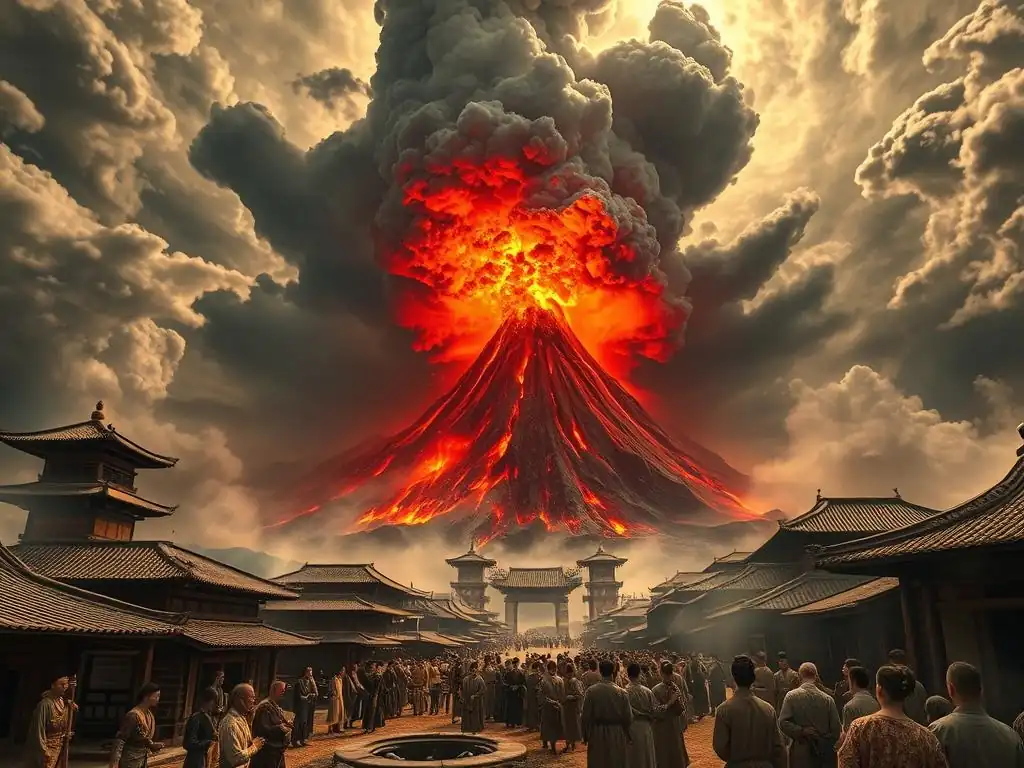
Volcanic Omens in Ancient Chinese Dynasties
- Examining historical records for mentions of volcanic events and their political ramifications.
Ancient China, while not as volcanically active as some other regions discussed, still experienced volcanic events, particularly in regions that are now part of modern China, and integrated these phenomena into their understanding of cosmic order and dynastic cycles. Imperial Chinese historical records, meticulously maintained over centuries, document a wide range of natural phenomena, including earthquakes, droughts, floods, and celestial events, often interpreted as signs from Heaven reflecting the virtue or lack thereof of the ruling dynasty.
While explicit and unambiguous mentions of volcanic eruptions are less frequent compared to earthquakes or floods, scholars are increasingly examining historical texts for descriptions of events that could potentially be attributed to volcanic activity. These descriptions might include accounts of "mountains emitting fire," "darkness and ash falling from the sky," or "unusual weather phenomena," which, when cross-referenced with geological data, might reveal previously unrecognized volcanic events.
When natural disasters, including events potentially volcanic in nature, occurred during a dynasty's reign, they were often interpreted as signs of Heaven's displeasure with the emperor and his administration. Such events could be seen as omens foretelling dynastic decline, social unrest, or even the loss of the Mandate of Heaven, the divine right to rule. Conversely, periods of peace and prosperity, free from major natural calamities, were seen as evidence of a virtuous and divinely favored ruler.
Therefore, the interpretation of natural events, including potential volcanic eruptions, played a significant role in the political discourse and legitimation of power in ancient China. Further research into historical records and geological data is crucial for a more comprehensive understanding of how volcanic events were perceived and interpreted within the context of ancient Chinese dynastic history and cosmology.
Volcanic Activity and Prophecy in Ancient Japanese Mythology
- Exploring the role of volcanoes in Shinto beliefs and Japanese folklore.
- Analysis of specific myths featuring volcanic deities like Konohanasakuya-hime.
Japan, an archipelago situated along the Pacific Ring of Fire, is profoundly shaped by volcanic activity. Volcanoes are not merely geological features in Japan; they are deeply ingrained in the nation's cultural, spiritual, and mythological landscape. Shinto, the indigenous religion of Japan, venerates kami, spirits or deities, inhabiting natural elements and places, including mountains, forests, and, significantly, volcanoes.
Volcanoes in Japanese mythology are often considered sacred mountains, shintai (objects of worship), and are associated with powerful kami, both benevolent and wrathful. Volcanic eruptions were, and to some extent still are, interpreted within this Shinto framework, seen as manifestations of divine will, warnings, or even purifications.
Konohanasakuya-hime, the "Princess Blossom-of-Trees," is a prominent Shinto deity strongly associated with Mount Fuji, Japan's iconic volcano. She is often depicted as a beautiful and fiery goddess, embodying both the ephemeral beauty of cherry blossoms (sakura) and the powerful, sometimes destructive, nature of volcanic fire. Myths surrounding Konohanasakuya-hime often link her to volcanic eruptions and the cyclical nature of life, death, and rebirth, mirroring the volcanic landscape that can be both fertile and destructive.
Japanese folklore is replete with stories of volcanic deities and spirits, volcanic eruptions as omens, and rituals performed to appease volcanic forces and ensure the well-being of communities living near these active mountains. Analyzing these myths and folklore provides valuable insights into how ancient Japanese societies understood and interpreted volcanic activity within their unique spiritual and cultural context, highlighting the enduring power of volcanoes in shaping Japanese identity and worldview.
Interpreting Ancient Volcanic Prophecies: A Modern Perspective
The Challenge of Deciphering Ancient Symbolism
- Acknowledging the limitations of interpreting ancient texts through a modern lens.
- The importance of considering cultural context and historical knowledge.
Interpreting ancient texts that describe volcanic eruptions as omens or prophecies presents significant challenges for modern researchers. We must acknowledge the inherent limitations of viewing past cultures through a contemporary lens, shaped by scientific understanding and different cultural frameworks. Ancient societies lacked the scientific vocabulary and geological knowledge we possess today. Their interpretations of natural phenomena were deeply embedded in their religious beliefs, mythological narratives, and socio-political structures. Therefore, deciphering ancient symbolism requires a careful and nuanced approach, avoiding simplistic translations or imposing modern scientific categories onto ancient worldviews.
Understanding the cultural context is paramount. What were the prevailing religious beliefs and mythological narratives of the society in question? How did they understand the relationship between humans, gods, and nature? What were the social and political implications of interpreting natural events as omens?
Historical knowledge is equally crucial. What was the specific historical period, and what were the known environmental conditions and social dynamics of that time? Were there documented natural disasters or social upheavals that might have influenced the interpretation of volcanic events? By meticulously considering both cultural context and historical knowledge, we can move beyond superficial readings and strive for a more nuanced and historically informed understanding of how ancient societies perceived and interpreted volcanic eruptions as meaningful omens and prophecies.
The Enduring Power of Volcanoes in Human Imagination
- Reflecting on why volcanic eruptions continue to inspire awe and fear.
- Discussion on how understanding ancient beliefs can inform our present-day relationship with volcanoes.
Volcanic eruptions, even in our modern, scientifically advanced world, continue to hold a profound power over the human imagination. They are spectacular displays of Earth's raw power, capable of reshaping landscapes, altering climates, and reminding us of the forces that lie beneath our feet.
The awe and fear they inspire are deeply rooted in our evolutionary history, a primal recognition of nature's capacity for both creation and destruction. This enduring power explains why volcanic eruptions, throughout history and across cultures, have been imbued with such potent symbolic meaning, serving as metaphors for divine wrath, transformative change, and the unpredictable nature of existence.
Understanding how ancient cultures interpreted volcanic eruptions as omens offers valuable insights into humanity's long-standing relationship with these dramatic natural phenomena. It reminds us that our current scientific understanding is just one way of engaging with the world, and that different cultures have developed rich and meaningful frameworks for interpreting and responding to the power of nature.
By studying these ancient beliefs, we can gain a broader perspective on our own relationship with volcanoes, moving beyond purely scientific or risk-assessment approaches. We can appreciate the cultural significance of volcanoes, recognize their power to inspire awe and wonder, and foster a more holistic and respectful understanding of these dynamic and awe-inspiring forces of nature.
Conclusion: The Legacy of Volcanic Omens
- Summarizing the different ways ancient cultures interpreted volcanic eruptions.
- The lasting impact of these interpretations on art, literature, and society.
- Volcanoes as reminders of the Earth's power and the human search for meaning.
Across diverse ancient cultures, volcanic eruptions were consistently interpreted as powerful omens, divine messages, or manifestations of supernatural forces. From the potential volcanic allusions in Mesopotamian flood myths to the Tempest Stela's possible depiction of a climate-altering eruption in ancient Egypt, and from the Greco-Roman mythological interpretations of Etna and Vesuvius to the Shinto veneration of volcanic deities in Japan, the pattern is clear: volcanic activity was rarely seen as a purely natural phenomenon.
Instead, it was woven into the fabric of religious beliefs, mythological narratives, and socio-political interpretations, shaping how societies understood their place in the cosmos and their relationship with the divine.
The legacy of these ancient interpretations extends far beyond the texts and myths we have examined. Volcanic imagery and symbolism continue to resonate in art, literature, and popular culture. The fiery power of volcanoes has served as a metaphor for passion, destruction, and transformation in countless creative works throughout history. Moreover, the ancient understanding of volcanoes as powerful forces beyond human control has contributed to a lasting sense of awe and respect for nature's power, influencing our environmental consciousness and our approach to living in volcanically active regions today.
Ultimately, volcanoes, whether viewed through the lens of ancient prophecy or modern science, remain potent reminders of Earth's immense power and dynamism. They challenge our sense of control and compel us to confront the unpredictable forces that shape our planet. The enduring human fascination with volcanoes, reflected in both ancient texts and contemporary society, underscores our ongoing search for meaning in the face of overwhelming natural phenomena and our continuous effort to understand our place within the grand and often turbulent story of Earth.
Frequently Asked Questions
What role did volcanic eruptions play in ancient cultures' understanding of the world?
Ancient cultures often interpreted volcanic eruptions as divine messages or omens of significant events. They believed these eruptions were caused by angry gods or spirits, and linked them to political upheaval or natural disasters.
How did ancient texts describe volcanic eruptions?
Ancient texts described volcanic eruptions with vivid imagery, often using metaphors to convey the scale of the destruction and supernatural power displayed. These descriptions often included references to fire, smoke, and the ground shaking.
Were there specific volcanoes that were particularly associated with prophecies or omens?
Yes, certain volcanoes, such as Mount Etna in Sicily and Mount Vesuvius in Italy, were particularly associated with prophecies and omens due to their frequent eruptions and proximity to major civilizations. Their activity was often interpreted as a sign of impending doom or divine intervention.
Did ancient societies develop any strategies to predict or mitigate the effects of volcanic eruptions?
While they lacked modern scientific understanding, some ancient societies developed observational skills, noting patterns in pre-eruption activity such as increased seismic activity or gas emissions. These observations may have informed early warning systems or evacuation strategies.
How does the interpretation of volcanic eruptions in ancient texts differ from modern scientific understanding?
Modern science explains volcanic eruptions through geological processes, focusing on magma composition, plate tectonics, and eruption dynamics. Ancient texts, however, attribute eruptions to supernatural forces and interpret them as symbolic messages, reflecting a pre-scientific worldview.
Final Reflection: Echoes of Fire and Fate
The exploration of volcanic eruptions in ancient texts reveals more than just historical accounts; it unveils a profound human tendency to imbue natural disasters with spiritual significance. The narratives we've examined, spanning diverse cultures and eras, demonstrate a consistent effort to understand, and often control, the unpredictable power of the earth through the lens of prophecy and divine judgment. This enduring fascination speaks to our fundamental need to find meaning in chaos, a need that persists even in our modern, scientifically advanced world.
The enduring power of these ancient interpretations lies in their ability to connect us to a shared human experience – the awe and terror inspired by the raw power of nature. This connection, for me, underscores the importance of understanding not just the scientific mechanisms behind volcanic activity, but also the cultural and psychological impact these events have had on shaping human societies. The only constant is change,
Heraclitus famously stated, and perhaps no force embodies this truth more dramatically than a volcanic eruption, forever altering landscapes and challenging our understanding of the world.
As we close this exploration of volcanic prophecies, I invite you to consider the stories we tell ourselves about the world around us. How do we interpret the events that shape our lives, both large and small? Are we open to learning from the past, or are we doomed to repeat the same patterns of fear and misunderstanding? Let the echoes of fire and fate resonate within you, prompting a deeper appreciation for the power of nature and the enduring human spirit that seeks to understand it.
Okay, here's a CTA designed for the end of a web article titled "Volcanic Prophecies: Eruptions as Omens in Ancient Texts" on the website "Volcano Explorers" (volcanoexplorers.org):
Unearth Your Inner Seer!
Thank you for delving into the fascinating world of volcanic prophecies! Now that you've explored how ancient civilizations interpreted eruptions, it's time to connect with these powerful forces in your own way. Here are a few paths you can take to continue your journey:
- Dive Deeper: Research a specific volcanic eruption mentioned in the article and compare the ancient interpretation with modern scientific understanding. What similarities and differences do you find?
- Explore Further: Share this article with your friends and fellow volcano enthusiasts on social media. Spark a conversation about the enduring power of nature and human interpretation!
- Engage and Discover: Leave a comment below sharing your favorite ancient prophecy related to volcanoes or natural disasters. Let's learn from each other!
What unique interpretations or personal connections to volcanic events have you experienced or pondered?