
Quartz in Volcanoes? Unraveling the Surprising Presence of Silica Crystals

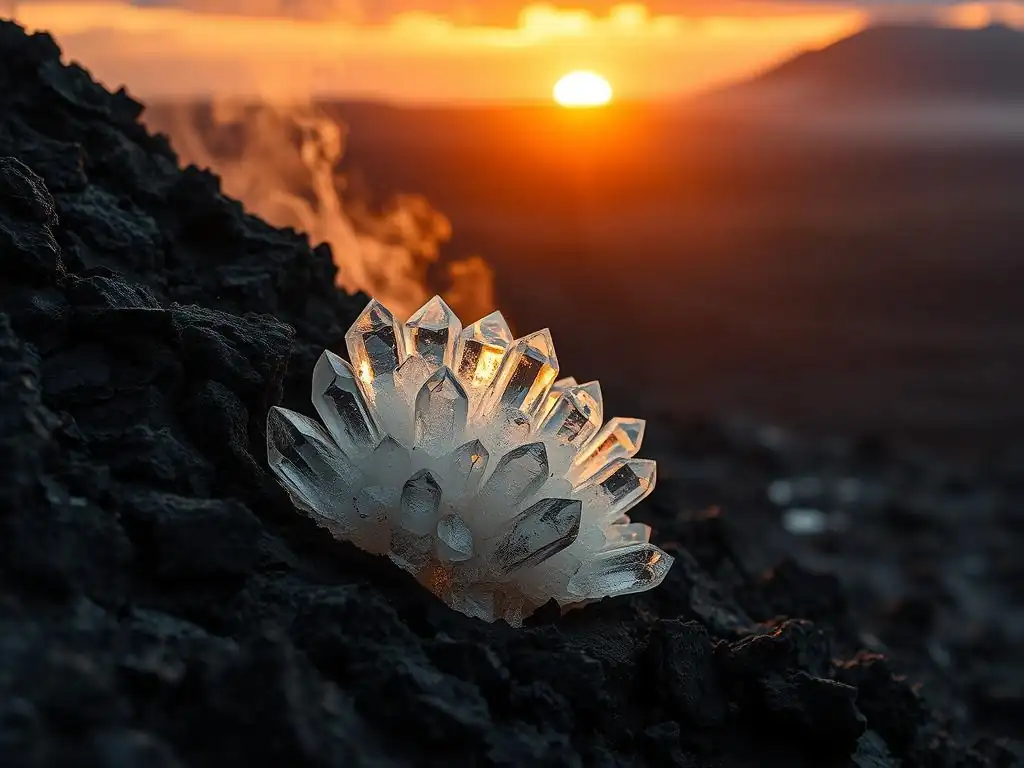
Welcome to Volcano Explorers, where fiery landscapes meet scientific inquiry. Ever wondered how something as seemingly fragile as quartz crystals could form amidst the inferno of a volcano? Prepare to uncover the surprising truth about the presence of silica crystals in volcanoes, and discover how these geological gems offer crucial insights into the heart of Earth's most powerful forces. The story of their formation is more explosive than you might imagine... and it's just getting started.
- Introduction: The Unexpected Beauty of Silica Crystals in Volcanic Environments
- Understanding Silica and Silica Crystals: The Building Blocks of Volcanic Rocks
- The Formation of Quartz Crystals in Volcanic Settings: A Closer Look
- Types of Volcanic Rocks Where Quartz Crystals are Commonly Found
- Identifying Quartz Crystals in Volcanic Rocks: A Practical Guide for Volcano Enthusiasts
- The Significance of Quartz Crystals in Volcanic Studies
- The Economic Importance of Quartz Crystals Found in Volcanic Regions
- Conclusion: Appreciating the Intricate Relationship Between Quartz and Volcanoes
-
Frequently Asked Questions
- What are silica crystals, and why are they relevant to volcanoes?
- How does quartz, a type of silica crystal, form in volcanoes?
- What can the presence of silica crystals tell us about a volcano's eruption style?
- Where can I find silica crystals in volcanic areas?
- Are silica crystals dangerous to humans near volcanoes?
- Final Reflection: The Enduring Spark of Volcanic Silica
- Discover the Hidden World of Volcanic Crystals!
Introduction: The Unexpected Beauty of Silica Crystals in Volcanic Environments
VolcanoExplorers.org: Unveiling the Secrets of Volcanic Rocks and Minerals
Welcome to VolcanoExplorers.org, your portal to the captivating realm of volcanoes. Here, we embark on a journey to decode the geological wonders hidden within these fiery giants. Beyond the dramatic eruptions and lava flows, volcanoes are treasure troves of geological information, holding secrets within their rocks and minerals. Among these geological enigmas is the often-overlooked presence of quartz, a mineral composed of silica crystals, in volcanic environments. While volcanoes are often associated with dark, mafic rocks, the story of silica crystals in volcanoes is a fascinating one, revealing complex geological processes at play beneath the Earth's surface.
At VolcanoExplorers.org, we aim to demystify these complexities, making the science of volcanology accessible and engaging for everyone. Our exploration into volcanic rocks and minerals delves into the very building blocks of volcanic landscapes. From the formation of intricate crystal structures to the clues they offer about volcanic history, we uncover the hidden narratives within these geological formations. Join us as we unravel the surprising presence of silica crystals in volcanoes, shedding light on the processes that shape our planet.
Why Quartz in Volcanoes Seems Counterintuitive
The presence of quartz, a silica-rich mineral, in volcanoes might initially seem paradoxical. Volcanoes are often envisioned as erupting molten rock directly from the Earth's mantle. Mantle rocks are typically composed of minerals low in silica, such as olivine and pyroxene. These rocks, when molten, form basaltic magmas, which are relatively low in silica content and are responsible for the dark-colored volcanic rocks common in shield volcanoes and oceanic ridges. Therefore, the expectation might be to find silica-poor minerals in volcanic settings.
However, the Earth's crust, particularly the continental crust, is significantly richer in silica than the mantle. As magma ascends through the crust, it can interact with and incorporate crustal materials. Furthermore, the processes of magma differentiation and fractional crystallization can alter the composition of magma over time, leading to an increase in silica concentration in certain types of volcanic rocks. This enrichment in silica, under specific conditions, allows for the formation of silica crystals like quartz within volcanic environments, challenging the initial perception of volcanoes as solely basaltic realms.
Understanding Silica and Silica Crystals: The Building Blocks of Volcanic Rocks
The Chemical Composition of Silica: SiO2 Explained
Silica, also known as silicon dioxide, is a chemical compound with the formula SiO2. It is composed of one silicon atom and two oxygen atoms, covalently bonded together. Silicon is the second most abundant element in the Earth's crust (after oxygen), making silica an incredibly common and important component of rocks and minerals. The fundamental building block of silica is the silica tetrahedron, where a silicon atom is surrounded by four oxygen atoms. These tetrahedra can link together in various arrangements, forming different structures and minerals.
The simplicity of the SiO2 formula belies the complexity and diversity of minerals it can form. The arrangement of these silica tetrahedra determines the physical and chemical properties of silica minerals. For instance, in quartz, the tetrahedra are linked in a three-dimensional framework structure, resulting in a hard, resistant, and crystalline mineral. Understanding this basic chemical composition is crucial for appreciating the role of silica in the formation of volcanic rocks and the presence of silica crystals within them.
Different Forms of Silica: Quartz, Cristobalite, and Tridymite
Silica exists in several different crystalline forms, known as polymorphs, each stable under specific temperature and pressure conditions. The most common and stable form at the Earth's surface is quartz. Quartz is characterized by its hexagonal crystal structure and is a relatively hard and durable mineral. It is found in a wide variety of geological environments, including many volcanic rocks.
At higher temperatures, other polymorphs of silica become stable. Cristobalite and tridymite are two high-temperature silica minerals often found in volcanic rocks, particularly in volcanic rocks that have cooled rapidly from high temperatures. These minerals have different crystal structures compared to quartz and are typically less stable at surface conditions, sometimes transforming into quartz over geological time. The presence of these different silica minerals in volcanic rocks provides valuable information about the temperature history and cooling conditions of the magma.
How Silica Content Affects Magma Viscosity and Eruption Style
The silica content of magma is a primary control on its viscosity, which in turn significantly influences eruption style. Magmas with high silica content, such as rhyolitic magmas, are highly viscous. This high viscosity is due to the complex network structure formed by silica tetrahedra in the melt, making it difficult for the magma to flow. Think of honey compared to water; honey is more viscous due to its complex molecular structure.
High viscosity magmas tend to trap gases, leading to a buildup of pressure. When this pressure overcomes the strength of the surrounding rocks, explosive eruptions can occur, characterized by ash plumes, pyroclastic flows, and the ejection of volcanic bombs and blocks. In contrast, low-silica magmas, like basaltic magmas, are less viscous and allow gases to escape more easily. This results in effusive eruptions, characterized by lava flows that can travel long distances. The presence of silica crystals, especially in more evolved magmas, further contributes to the viscosity and eruptive behavior of volcanoes.
The Formation of Quartz Crystals in Volcanic Settings: A Closer Look
The Role of Magma Composition and Cooling Rates
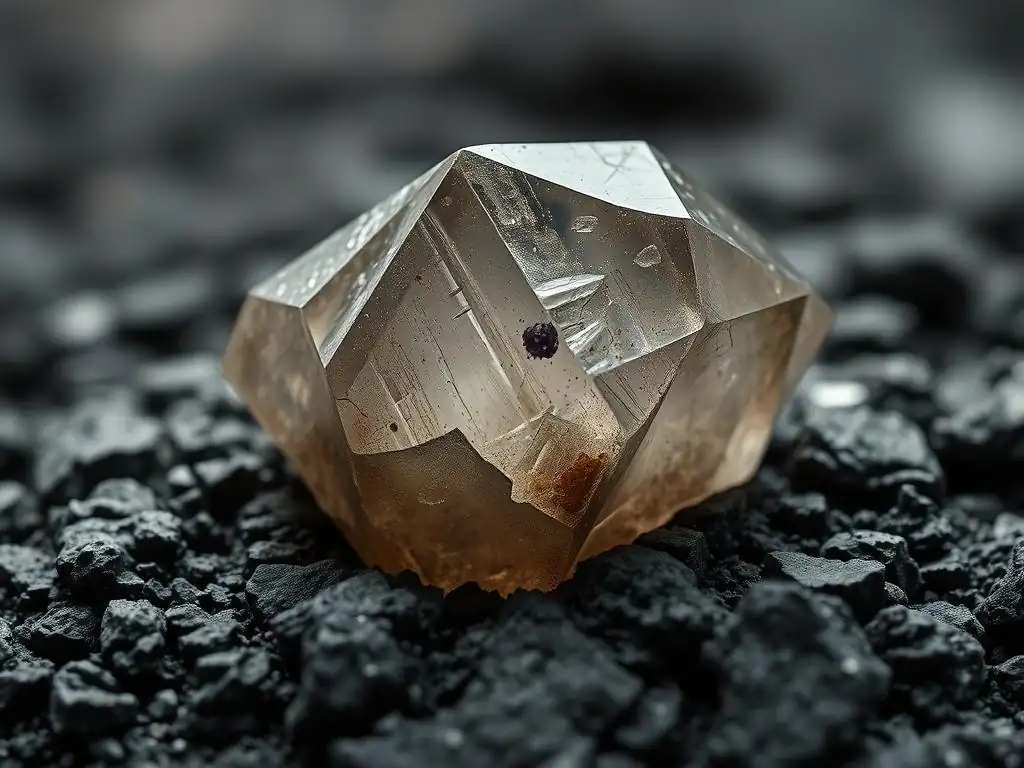
The formation of quartz crystals in volcanic rocks is primarily governed by two key factors: magma composition and cooling rates. For quartz to crystallize, the magma must be sufficiently enriched in silica. This typically occurs in magmas that have undergone differentiation, a process where the composition of magma changes as it cools and crystallizes. During differentiation, minerals with lower silica content crystallize first and are removed from the melt, leaving the remaining magma relatively enriched in silica.
Cooling rates also play a crucial role. Slow cooling allows for larger, well-formed quartz crystals to grow. In contrast, rapid cooling, such as during volcanic eruptions, often results in smaller crystals or even volcanic glass, where silica does not have time to organize into crystalline structures. Therefore, quartz crystals are more likely to form in volcanic rocks that cooled relatively slowly beneath the surface, such as in volcanic intrusions or within thick lava flows.
Hydrothermal Activity and the Precipitation of Silica
Hydrothermal activity, involving hot, water-rich fluids circulating through volcanic rocks, is another significant mechanism for quartz crystal formation in volcanic environments. These hydrothermal fluids, often heated by underlying magma bodies, can leach silica from existing volcanic rocks. As these fluids cool or encounter changes in pressure or chemistry, the dissolved silica can precipitate out of solution, forming quartz crystals within fractures, cavities, and veins in the volcanic rocks.
Hydrothermal quartz veins are common features in many volcanic regions. These veins can host impressive quartz crystals, sometimes of gem quality. The hydrothermal environment can also lead to the formation of other silica minerals alongside quartz, such as chalcedony and agate, further enriching the mineral diversity of volcanic areas. This process highlights how water interacting with volcanic heat can create unique geological formations and mineral deposits.
Case Studies: Volcanic Regions Known for Quartz Crystal Formation [Mount Saint Helens, USA]
The Mount Saint Helens volcanic region in Washington State, USA, provides a compelling example of quartz crystal formation in a volcanic setting. The volcanic rocks around Mount Saint Helens, particularly the dacites and rhyodacites associated with past eruptions, are known to contain quartz crystals. These crystals are often found as phenocrysts, larger crystals embedded within a finer-grained volcanic rock matrix, indicating they crystallized within the magma chamber before eruption.
Studies of the volcanic rocks from Mount Saint Helens have revealed that the magma system beneath the volcano has undergone significant differentiation, leading to silica-rich magmas capable of crystallizing quartz. Furthermore, hydrothermal activity is prevalent in the region, evidenced by hot springs and fumaroles.
This hydrothermal activity has also contributed to the formation of quartz veins and pockets within the volcanic edifice, making Mount Saint Helens and the surrounding Cascade Range a notable area for observing and studying quartz crystals in a volcanic context. Other regions in the Cascade Range, like Crater Lake National Park, also exhibit similar quartz-bearing volcanic rocks.
Types of Volcanic Rocks Where Quartz Crystals are Commonly Found
Rhyolite: A Silica-Rich Volcanic Rock
Rhyolite is an extrusive volcanic rock with a very high silica content, typically exceeding 69% SiO2. This high silica concentration makes rhyolite the volcanic equivalent of granite, an intrusive igneous rock also rich in silica. Due to its silica-rich composition, rhyolite is one of the most common volcanic rock types to host quartz crystals. In rhyolites, quartz can occur as phenocrysts, visible crystals within the fine-grained volcanic matrix, or as groundmass minerals, tiny crystals that make up the bulk of the rock.
Rhyolitic magmas are highly viscous and often erupt explosively, forming features like caldera volcanoes and extensive ash flows. The slow cooling of rhyolitic lava flows or intrusions allows ample time for quartz crystals to grow to a considerable size, sometimes reaching several millimeters or even centimeters in diameter. The distinctive light color of rhyolite, often ranging from white to pink or gray, can be attributed to its high silica and feldspar content, further emphasizing the link between silica and this quartz-bearing volcanic rock.
Dacite: Intermediate Silica Content and Quartz Formation
Dacite is a volcanic rock with an intermediate silica content, typically ranging from 63% to 68% SiO2. It is compositionally between rhyolite and andesite, with andesite being less silica-rich. While dacite has less silica than rhyolite, it still possesses sufficient silica to commonly crystallize quartz. In dacites, quartz is often found as phenocrysts, similar to rhyolites, indicating crystallization from the magma before eruption.
Dacitic magmas are also viscous, although generally less viscous than rhyolitic magmas, and can produce both effusive and explosive eruptions. The cooling of dacitic lavas and pyroclastic flows can lead to the formation of quartz crystals. Dacite is a common volcanic rock type found in stratovolcanoes and volcanic domes, and its intermediate silica content makes it a frequent host for quartz crystals in volcanic terrains. The presence of quartz in dacite helps geologists understand the evolution of magmas and the conditions under which these volcanic rocks formed.
Ignimbrite: Quartz Crystals in Pyroclastic Flows
Ignimbrite is a volcanic rock formed from pyroclastic flows, which are fast-moving, hot mixtures of gas, ash, and volcanic rock fragments erupted explosively from volcanoes. Ignimbrites are often associated with caldera-forming eruptions and can cover vast areas. Due to the nature of their formation, ignimbrites can incorporate a diverse range of volcanic rock fragments and minerals, including quartz crystals.
Quartz crystals in ignimbrites can originate from several sources. They can be phenocrysts that were already present in the magma before the eruption and were incorporated into the pyroclastic flow. They can also be fragments of pre-existing volcanic rocks that were ripped up and transported by the flow. Additionally, some quartz crystals may form within the ignimbrite deposit after deposition, through processes like devitrification or hydrothermal alteration. The presence of quartz in ignimbrites provides insights into the composition of the magma source, the eruption dynamics, and the post-depositional processes affecting these widespread volcanic deposits.
Identifying Quartz Crystals in Volcanic Rocks: A Practical Guide for Volcano Enthusiasts
Visual Characteristics: Distinguishing Quartz from Other Minerals
Identifying quartz crystals in volcanic rocks can be a rewarding experience for volcano enthusiasts. Quartz possesses several distinctive visual characteristics that aid in its identification. One key feature is its hardness. Quartz is relatively hard, ranking 7 on the Mohs hardness scale. This means it can scratch glass and steel, a useful field test. Visually, quartz often exhibits a glassy luster and can be transparent to translucent.
Quartz crystals typically have a hexagonal (six-sided) prismatic shape, often terminating in pyramid-like points. However, in volcanic rocks, quartz crystals may be fractured, irregular, or anhedral (lacking well-defined crystal faces). Color is not always a reliable indicator, as quartz can occur in various colors, including clear (rock crystal), white (milky quartz), smoky gray, pink (rose quartz), and purple (amethyst). However, in volcanic rocks, quartz is commonly colorless, white, or smoky gray. Distinguishing quartz from other minerals like feldspar, which can also be present in volcanic rocks, requires careful observation of these visual properties.
Using a Hand Lens for Mineral Identification
A hand lens, a small magnifying glass, is an invaluable tool for volcano enthusiasts and amateur geologists for identifying minerals in volcanic rocks, including quartz crystals. A 10x magnification hand lens is typically sufficient for examining mineral characteristics in detail. When using a hand lens to identify quartz, focus on the crystal shape, fracture, and luster. Look for the hexagonal crystal shapes, even if imperfectly formed. Quartz exhibits conchoidal fracture, meaning it breaks with smooth, curved surfaces, like broken glass.
Examine the luster under different lighting conditions. Quartz has a vitreous or glassy luster. A hand lens can also help in distinguishing quartz from similar-looking minerals. For example, feldspar, another common mineral in volcanic rocks, often exhibits cleavage planes (flat, smooth surfaces along which it breaks preferentially), which quartz lacks. By carefully observing these features under magnification, you can improve your accuracy in identifying quartz crystals in volcanic rocks in the field.
Laboratory Techniques for Analyzing Silica Crystal Composition [X-ray Diffraction]
For precise identification and analysis of silica crystals in volcanic rocks, laboratory techniques are essential. X-ray Diffraction (XRD) is a powerful and widely used method for determining the mineral composition of rocks and identifying specific crystalline phases, including quartz and other silica minerals like cristobalite and tridymite. XRD works by bombarding a powdered sample of the volcanic rock with X-rays. The X-rays are diffracted (bent) by the crystalline structure of the minerals in the sample.
Each mineral has a unique crystal structure and therefore a unique diffraction pattern. By analyzing the angles and intensities of the diffracted X-rays, scientists can identify the minerals present in the sample. For quartz, XRD provides a definitive identification based on its characteristic diffraction pattern.
Furthermore, XRD can be used to quantify the amount of quartz and other silica minerals present in the volcanic rock. Other laboratory techniques like electron microscopy and microprobe analysis can provide even more detailed information about the composition and structure of quartz crystals at a microscopic scale, contributing to a deeper understanding of their formation and history within volcanic environments.
The Significance of Quartz Crystals in Volcanic Studies
Using Silica Crystals to Determine Magma History and Source
Quartz crystals in volcanic rocks are not just beautiful mineral specimens; they are valuable tools for volcanologists to unravel magma history and source. The presence or absence of quartz, along with its abundance and composition, provides crucial clues about the type of magma that generated a volcanic eruption. For instance, the presence of quartz phenocrysts indicates that the magma was silica-rich and likely evolved through processes of differentiation within the Earth's crust.
The chemical composition of quartz crystals, including trace element concentrations and isotopic ratios, can further pinpoint the magma source. By analyzing these geochemical signatures, scientists can distinguish between magmas derived from different parts of the mantle or crust, and trace the pathways of magma ascent and evolution. For example, the oxygen isotopic composition of quartz can help determine if the magma interacted with crustal materials during its journey to the surface. Therefore, quartz crystals act as geochemical archives, preserving information about the deep-seated processes that drive volcanic activity.
Quartz Inclusions as Time Capsules: Capturing Volcanic Processes
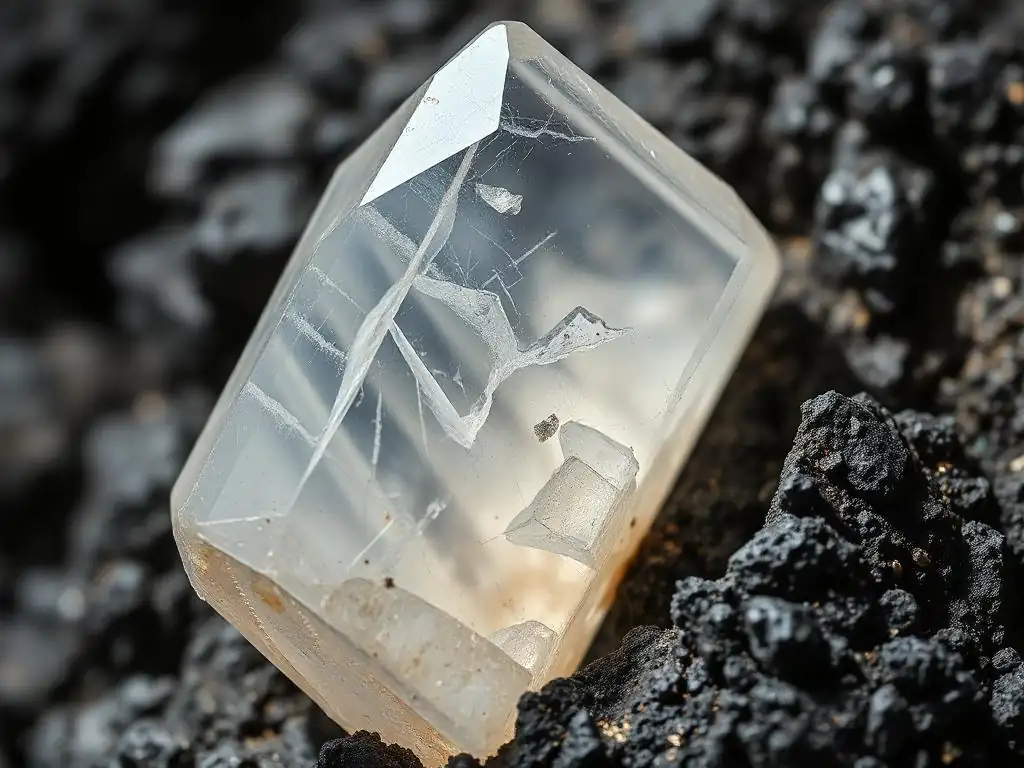
Quartz crystals, like other minerals, can contain microscopic inclusions, tiny pockets of fluids, gases, or other minerals trapped within the crystal during its growth. These inclusions act as time capsules, preserving samples of the magma or hydrothermal fluids from which the quartz crystallized. Analyzing these inclusions provides invaluable insights into the physical and chemical conditions prevailing during quartz formation and volcanic processes.
Fluid inclusions, for example, can reveal the composition, temperature, and pressure of the fluids present during quartz crystallization. This information is crucial for understanding hydrothermal activity associated with volcanoes and the processes of ore deposit formation. Mineral inclusions, tiny crystals of other minerals trapped within quartz, can provide information about the crystallization sequence of minerals from the magma and the evolution of magma composition over time. By studying these microscopic time capsules within quartz crystals, volcanologists can reconstruct past volcanic events and gain a more comprehensive understanding of volcanic systems.
The Role of Quartz in Geothermal Systems Associated with Volcanoes
Quartz plays a significant role in geothermal systems associated with volcanoes. Geothermal systems are characterized by elevated heat flow and the circulation of hot water within the Earth's crust. Volcanic regions are often sites of intense geothermal activity due to the presence of underlying magma bodies that provide heat. Quartz is a common mineral precipitated from hydrothermal fluids in these geothermal systems.
As hot, silica-rich fluids circulate through volcanic rocks, they can deposit quartz in veins, fractures, and open spaces. These quartz veins are characteristic features of many geothermal areas and can host other valuable minerals, including ore deposits. Furthermore, the precipitation of quartz and other silica minerals in geothermal systems can influence the permeability and fluid flow pathways within the volcanic rocks, impacting the dynamics of the geothermal system itself. Understanding the role of quartz in geothermal systems is crucial for both geothermal energy exploration and for assessing the hydrothermal alteration processes that affect volcanic landscapes.
The Economic Importance of Quartz Crystals Found in Volcanic Regions
Gemstones and Jewelry: Quartz as a Valuable Resource
Quartz crystals found in volcanic regions can have significant economic value, particularly as gemstones and for use in jewelry. Certain varieties of quartz, such as amethyst (purple quartz), citrine (yellow quartz), smoky quartz (gray to brown quartz), and rose quartz (pink quartz), are highly prized for their beauty and are used in jewelry making. Volcanic regions, especially those with hydrothermal activity, can be sources of these gem-quality quartz crystals.
Amethyst, for example, often forms in volcanic cavities and veins associated with hydrothermal systems. Brazil and Uruguay, both with significant volcanic terrains, are major producers of amethyst. Smoky quartz is also commonly found in volcanic and granite pegmatite environments. The coloration in these gem varieties is often due to trace impurities within the quartz crystal structure. The beauty and durability of quartz gemstones, coupled with their relative abundance in some volcanic regions, make them a valuable economic resource.
Industrial Applications: Using Volcanic Quartz in Manufacturing
Beyond gemstones, quartz crystals from volcanic regions also have important industrial applications due to their unique physical and chemical properties. Quartz is highly resistant to heat and chemicals, and it is piezoelectric, meaning it can generate an electric charge when subjected to mechanical stress. These properties make quartz essential in various manufacturing processes.
High-purity quartz is used in the production of semiconductors, solar panels, and optical fibers. It is also used in the manufacturing of glass, ceramics, and abrasives. The piezoelectric property of quartz is utilized in electronic devices, such as oscillators and resonators, which are critical components in watches, radios, and computers. While not all volcanic quartz is of sufficient purity for high-tech applications, volcanic regions can be sources of quartz suitable for a range of industrial uses, contributing to local and regional economies.
Sustainable Mining Practices for Volcanic Quartz
Given the economic value of quartz crystals found in volcanic regions, sustainable mining practices are crucial to ensure responsible resource extraction and minimize environmental impact. Traditional mining methods can have significant environmental consequences, including habitat destruction, soil erosion, and water pollution. Sustainable mining aims to reduce these impacts through various strategies.
These strategies include minimizing land disturbance by using less invasive mining techniques, restoring mined areas through reclamation and revegetation, and implementing water management plans to prevent water pollution. Furthermore, sustainable mining practices emphasize responsible waste management, energy efficiency, and community engagement. For volcanic quartz mining, particularly in environmentally sensitive volcanic regions, adopting sustainable practices is essential to balance economic benefits with environmental protection and long-term ecological health. This also includes ensuring fair labor practices and contributing to the local communities where mining operations are located.
Conclusion: Appreciating the Intricate Relationship Between Quartz and Volcanoes
Further Exploration: Resources for Learning More About Volcanic Minerals
The journey into the world of quartz in volcanoes reveals an intricate relationship between these silica crystals and volcanic processes. From understanding the chemical composition of silica to exploring the diverse volcanic rocks where quartz is found, we have uncovered the surprising presence and significance of these minerals in volcanic environments. For those eager to delve deeper into the fascinating realm of volcanic minerals, numerous resources are available.
Geological surveys and museums often have extensive collections and educational materials on volcanic rocks and minerals. Online resources like the United States Geological Survey (USGS) website and university geology departments offer a wealth of information, articles, and databases on mineralogy and volcanology. Books on mineralogy, petrology, and volcanology provide in-depth knowledge for both beginners and advanced learners.
Field guides to rocks and minerals can be invaluable for identifying volcanic minerals in the field. By utilizing these resources, volcano enthusiasts and aspiring geologists can continue their exploration of the captivating world of volcanic minerals and expand their understanding of Earth's dynamic processes.
The Future of Volcanic Mineral Research at VolcanoExplorers.org
At VolcanoExplorers.org, our commitment to unveiling the secrets of volcanoes extends to the ongoing research and exploration of volcanic minerals. We aim to be a leading platform for disseminating knowledge and fostering curiosity about volcanic science. Future endeavors at VolcanoExplorers.org will include expanding our content on volcanic rocks and minerals, featuring new discoveries and research findings in the field.
We plan to incorporate interactive maps showcasing volcanic regions known for specific mineral occurrences, including quartz. Virtual field trips and 3D models of volcanic rocks will provide immersive learning experiences. We will also collaborate with researchers and volcanologists to bring cutting-edge research to our audience, making complex scientific concepts accessible and engaging. VolcanoExplorers.org will continue to be your go-to resource for exploring the dramatic and awe-inspiring world of volcanoes, from their explosive eruptions to the hidden beauty of silica crystals within their rocks.
Frequently Asked Questions
What are silica crystals, and why are they relevant to volcanoes?
Silica crystals, like quartz, are minerals composed of silicon and oxygen. Their presence in volcanic rocks provides clues about the magma's composition and the volcanic processes involved.
How does quartz, a type of silica crystal, form in volcanoes?
Quartz typically forms during the cooling and crystallization of silica-rich magma. The specific conditions, like temperature and pressure, influence the size and abundance of quartz crystals in volcanic rocks.
What can the presence of silica crystals tell us about a volcano's eruption style?
A high silica content, indicated by the presence of quartz, often suggests a more viscous magma. This can lead to explosive eruptions because the gas bubbles cannot easily escape.
Where can I find silica crystals in volcanic areas?
Silica crystals like quartz can be found in various volcanic rocks, such as rhyolite and obsidian. They are often visible as distinct crystals within the rock matrix or in volcanic ash deposits.
Are silica crystals dangerous to humans near volcanoes?
While the crystals themselves aren't directly dangerous, the silica dust formed during volcanic eruptions can be a respiratory hazard. Prolonged exposure can lead to silicosis, a lung disease.
Final Reflection: The Enduring Spark of Volcanic Silica
The journey into understanding the presence of silica crystals in volcanoes reveals more than just geological processes; it illuminates the dynamic interplay between Earth's fiery heart and the delicate beauty of crystalline structures. This exploration underscores the ongoing relevance of geological research in deciphering our planet's history and predicting its future behavior, reminding us that even seemingly inert minerals hold profound secrets.
This intricate dance between fire and crystal has profoundly shaped landscapes and continues to influence our understanding of volcanic activity. Personally, the realization that such exquisite formations can arise from such destructive forces is a constant source of awe and a reminder of nature's paradoxical beauty. The mountains are fountains of men as well as of rivers, of glaciers, of fertile soil. The great poets, philosophers, prophets, men of science, have all come from the mountains.
- John Muir. This quote resonates deeply, highlighting how even the most seemingly barren environments can be sources of profound inspiration and knowledge.
As we conclude this exploration, let us carry forward a renewed appreciation for the hidden wonders that lie beneath our feet. Consider how the seemingly simple silica crystal, forged in the crucible of volcanic fire, can offer invaluable insights into the complex workings of our planet. Let this knowledge inspire you to look closer at the world around you, to question the ordinary, and to seek out the extraordinary stories hidden within the rocks and landscapes that shape our lives.
Here's a CTA designed for the end of the "Quartz in Volcanoes? Unraveling the Surprising Presence of Silica Crystals" article on Volcano Explorers:
Thank you for delving into the fascinating world of quartz in volcanoes. We hope you've gained a newfound appreciation for the unexpected beauty hidden within these geological giants. Now, let's put that knowledge to use!
Here's how you can continue your exploration:
- Venture into your local geology museum or rock and mineral show to identify different types of silica crystals and their volcanic origins. See if you can spot signs of their formation!
- Share this article with fellow geology enthusiasts or on social media. Help spread awareness of the surprising presence of quartz in volcanoes!
- Participate in our online forum dedicated to Volcano Explorers to share your experience or insights.
What unexpected mineral or volcanic feature are you most curious to explore further?