
The Volcanic Risk Premium: Why Insurance Costs Skyrocket Near Active Volcanoes

Welcome to Volcano Explorers, where the Earth's fiery heart comes to life! Ever wondered why your neighbor's insurance costs skyrocket when they live in the shadow of a majestic, yet volatile, peak? Prepare to uncover the secrets behind the volcanic risk premium and discover the financial realities of living near these awe-inspiring giants. Dive in to explore "The Volcanic Risk Premium: Why Insurance Costs Skyrocket Near Active Volcanoes" and find out if the price of paradise is steeper than you thought...
- Understanding Insurance Costs in Volcanic Zones
- Factors Driving Up Insurance Rates Near Volcanoes
- How Insurance Companies Calculate Volcanic Risk
- The Impact of Volcanic Risk on Homeowners and Businesses
- Strategies for Managing Insurance Costs in Volcanic Regions
- Case Studies: Insurance Challenges and Solutions in Volcanic Areas
- Future Trends in Volcanic Risk Insurance
-
Frequently Asked Questions
- How significantly do insurance costs increase near active volcanoes?
- What specific volcanic hazards are considered when calculating insurance premiums?
- Does homeowner's insurance typically cover damage caused by volcanic eruptions?
- What factors, besides proximity, affect insurance rates in volcanic zones?
- Where can individuals find specialized insurance coverage for volcanic risks?
- Final Reflection: Embracing Uncertainty in the Shadow of Giants
- Secure Your Future Near Volcanoes: Understanding and Managing Insurance Costs
Understanding Insurance Costs in Volcanic Zones
Insurance costs are not uniform across geographical areas. They are intrinsically linked to the concept of risk, and in areas prone to natural disasters, these costs can significantly escalate. When considering volcanic zones, the proximity to an active or potentially active volcano becomes a paramount factor in determining insurance premiums.
Regions nestled within the shadow of volcanoes, often characterized by fertile lands and unique ecosystems that attract communities, face a heightened risk profile. This heightened risk is directly translated into higher insurance costs for homeowners, businesses, and even infrastructure projects. Essentially, the closer you are to a volcano, the steeper the insurance premium incline becomes.
The geographical distribution of active volcanoes is not random; they are concentrated along tectonic plate boundaries, particularly in the Pacific Ring of Fire, which encompasses regions like Japan, Indonesia, the Philippines, and the western coasts of North and South America. Within these volcanic regions, insurance companies delineate risk zones based on factors like distance from known vents, historical eruption patterns, geological assessments, and potential pathways of volcanic hazards such as lava flows, ashfall, and pyroclastic flows.
Areas classified as high-risk zones, often located within a specific radius of an active volcano or in valleys prone to lahar flows, experience the most substantial increases in insurance premiums reflecting the elevated probability of volcanic-related damages.
The term "volcanic risk premium" refers to the additional cost component added to standard insurance premiums to account for the specific risks associated with living, operating a business, or owning property in a volcanically active area. This premium is not arbitrarily assigned; it is meticulously calculated by insurance companies based on a comprehensive assessment of potential volcanic hazards and their likely impact on insured assets.
It essentially quantifies the increased probability of loss and the potential magnitude of damage specifically attributable to volcanic activity. Understanding this premium is crucial for residents and businesses in volcanic zones to grasp why their insurance costs are significantly higher than those in non-volcanic regions.
The volcanic risk premium is not a fixed percentage; it varies significantly depending on a multitude of factors. These factors include the volcano's activity level (dormant, active, or erupting), the type of volcano (stratovolcano, shield volcano, etc., each with different eruption styles), the frequency and intensity of past eruptions, the specific volcanic hazards prevalent in the area (ashfall, lava flow, pyroclastic flow, lahar), and the vulnerability of the insured property to these hazards.
For instance, a property located in a valley directly downstream from a volcano known for producing lahars will face a considerably higher volcanic risk premium compared to a property on higher ground further away, even if both are technically within a volcanic zone. The premium essentially acts as a financial buffer for insurance companies to manage the potentially catastrophic and unpredictable nature of volcanic events.
Factors Driving Up Insurance Rates Near Volcanoes
Volcanic Hazards and Property Damage: A Direct Correlation
The primary driver behind elevated insurance rates in volcanic areas is the direct correlation between volcanic hazards and potential property damage. Volcanoes are capable of unleashing a range of destructive forces, each posing a unique threat to buildings, infrastructure, and human life. Insurance companies meticulously assess the likelihood and potential impact of these hazards when calculating premiums, understanding that the more severe and probable the hazard, the higher the potential for costly payouts. This direct relationship between volcanic hazards and property damage is the bedrock upon which the volcanic risk premium is built.
The types of volcanic hazards vary significantly, each with its own damage profile. Ashfall, while often perceived as less dramatic than lava flows, can cause widespread damage through roof collapse due to weight accumulation, disruption of infrastructure like power lines and transportation, and agricultural losses. Lava flows, though typically slow-moving, are virtually unstoppable and can incinerate or bury everything in their path.
Pyroclastic flows are superheated gas and rock avalanches capable of obliterating entire landscapes and causing instant devastation. Lahars, or volcanic mudflows, can travel far distances from the volcano along river valleys, carrying debris and causing widespread flooding and burial. Each of these hazards presents a distinct and significant threat, directly contributing to the increased insurance costs near active volcanoes.
Ashfall: The Silent Threat to Structures and Infrastructure
Volcanic ash, composed of fine particles of rock, mineral, and volcanic glass, is a deceptively damaging volcanic hazard. While seemingly innocuous, even a moderate accumulation of ash can pose a significant threat to structures, particularly roofs.
When wet, ash becomes surprisingly heavy; a mere few inches of wet ash can weigh several pounds per square foot, placing immense stress on roofs and potentially leading to collapse, especially for older or poorly constructed buildings. In areas downwind of volcanoes like Mount Rainier in Washington State, USA, even minor eruptions could deposit significant ashfall on populated areas like Seattle and Tacoma, necessitating robust building codes and potentially impacting insurance costs.
Beyond structural damage, ashfall can wreak havoc on infrastructure. The abrasive nature of ash can damage machinery, including vehicles and aircraft engines. Ash clouds can disrupt air travel for thousands of kilometers, as demonstrated by the 2010 Eyjafjallajökull eruption in Iceland, which grounded flights across Europe for days, impacting travel insurance claims significantly. Power grids and communication networks can be disabled by ash accumulation on insulators and equipment. Furthermore, ash contamination of water supplies and agricultural lands can lead to long-term economic and health consequences, all of which factor into the complex equation of insurance costs near active volcanoes.
Lava Flows: The Unstoppable Destructive Force
Lava flows represent one of the most visually dramatic and undeniably destructive volcanic hazards. Molten rock erupting onto the Earth's surface can vary in viscosity and speed, but even slow-moving flows are virtually unstoppable forces of nature. When lava flows encounter buildings or infrastructure, they can incinerate, crush, or bury them completely.
The intense heat alone can ignite structures long before the lava physically reaches them. Regions like the Island of Hawaii, where Kilauea volcano is continuously active, have experienced numerous instances of lava flows destroying homes and communities, as seen in the 2018 Lower Puna eruption. Insurance in these areas must account for the very real possibility of total property loss due to lava inundation.
While lava flows are often slow enough to allow for evacuation, their path is difficult to predict with pinpoint accuracy, and diverting them is generally impractical on a large scale. The sheer volume of lava erupted in some events, like the flood basalts of the Columbia River Plateau in the prehistoric past, or even smaller but still substantial eruptions like those in Hawaii, demonstrates the immense scale of potential destruction.
For insurance companies, lava flows represent a high-severity, albeit potentially lower-probability (depending on the specific volcano) risk, necessitating careful assessment and contributing significantly to the "insurance costs near active volcanoes".
Pyroclastic Flows: The Most Dangerous Volcanic Hazard
Pyroclastic flows are widely considered the most dangerous and devastating of all volcanic hazards. These are fast-moving currents of hot gas and volcanic debris that can travel at speeds exceeding 700 km/h (450 mph) and reach temperatures of up to 1,000°C (1,830°F). They are generated during explosive eruptions or the collapse of lava domes and volcanic columns.
The sheer speed, temperature, and density of pyroclastic flows mean that they are virtually unsurvivable and can obliterate everything in their path with incredible force. The 79 AD eruption of Mount Vesuvius, which buried Pompeii and Herculaneum, is a stark historical example of the devastating power of pyroclastic flows.
Insurance companies recognize pyroclastic flows as a catastrophic risk, capable of causing total destruction across a wide area in a matter of minutes. Areas within potential pyroclastic flow pathways, typically valleys and slopes radiating from a volcano's vent, face exceptionally high insurance premiums or may even be deemed uninsurable. Risk modeling for pyroclastic flows is complex, considering factors like eruption style, volcano topography, and potential flow paths. The potential for sudden, large-scale loss from pyroclastic flows is a significant contributor to the elevated "insurance costs near active volcanoes," particularly for properties located close to steep-sided, explosive volcanoes.
Volcanic Mudflows (Lahars): The Risk of Secondary Eruptions
Volcanic mudflows, or lahars, are mixtures of volcanic debris, rock, and water that flow down volcanic slopes, often resembling fast-moving rivers of concrete. Lahars can be triggered by various mechanisms, including heavy rainfall or snowmelt during or after an eruption, glacial meltwater mixing with volcanic debris, or even the breaching of crater lakes.
Crucially, lahars can occur even without an ongoing eruption, representing a significant secondary hazard that can persist for years after volcanic activity ceases. The 1985 Nevado del Ruiz eruption in Colombia triggered lahars that devastated the town of Armero, causing over 25,000 fatalities, highlighting the destructive potential of these flows.
Lahars are particularly dangerous because they can travel long distances along river valleys, impacting communities far removed from the volcano's summit. They can bury towns, destroy infrastructure, and cause widespread flooding and erosion. Insurance assessments in lahar-prone areas must consider not only the immediate eruption risk but also the long-term lahar hazard.
Valleys and drainage systems originating from volcanoes with snow or ice cover, or those prone to heavy rainfall, are at increased lahar risk. The unpredictability of lahar timing and pathways, combined with their destructive power, contributes to the higher "insurance costs near active volcanoes", especially in regions with significant lahar vulnerability.
Assessing the Likelihood of Eruption: Probability and Prediction Challenges
A critical factor in determining insurance costs near volcanoes is the assessed likelihood of an eruption. Insurance companies rely on volcanologists and geological data to estimate the probability of volcanic events within specific timeframes. However, volcanic eruptions are inherently complex and, despite advancements in monitoring technology, precise prediction remains a significant challenge. Volcano monitoring provides valuable insights into a volcano's state, tracking parameters like ground deformation, gas emissions, and seismic activity. Increased activity can signal an elevated risk of eruption, prompting adjustments in insurance premiums in the affected areas.
Volcanic eruption probabilities are often expressed as annual probabilities or probabilities within a certain timeframe (e.g., 10, 50, or 100 years). These probabilities are based on historical eruption records, geological studies of past volcanic activity, and current monitoring data. For example, the US Geological Survey (USGS) provides volcanic hazard assessments for volcanoes in the United States, which include probabilistic eruption forecasts.
However, it's crucial to understand that these are probabilities, not guarantees. A volcano with a low annual eruption probability could still erupt unexpectedly, and conversely, a volcano with a higher probability might remain dormant for an extended period. This inherent uncertainty in volcanic eruption prediction adds a layer of complexity to insurance risk assessment and contributes to the "insurance costs near active volcanoes".
Reinsurance plays a crucial, though often unseen, role in shaping insurance costs near active volcanoes. Reinsurance is essentially insurance for insurance companies. To manage the risk of large-scale payouts from catastrophic events like volcanic eruptions, primary insurance companies purchase reinsurance policies from larger, often global, reinsurance firms. This allows them to spread their risk and ensure they can meet their financial obligations even after a major volcanic disaster. However, the cost of reinsurance is ultimately passed down, at least in part, to policyholders in the form of premiums.
Global reinsurance markets are highly sensitive to natural disaster risks worldwide. Major volcanic eruptions, like the 2010 Eyjafjallajökull eruption which disrupted global air travel, or large earthquakes and hurricanes, can impact reinsurance rates globally. If reinsurers perceive an increased risk of volcanic events, or if recent volcanic disasters have resulted in significant payouts, they will increase their reinsurance premiums.
These increased reinsurance costs are then reflected in the premiums charged by local insurance companies to homeowners and businesses in volcanic zones, contributing to the overall "insurance costs near active volcanoes". Therefore, global trends in natural disaster risk and reinsurance market dynamics have a direct and tangible impact on local insurance premiums in volcanically active regions.
How Insurance Companies Calculate Volcanic Risk
Risk Modeling and Simulation for Volcanic Events
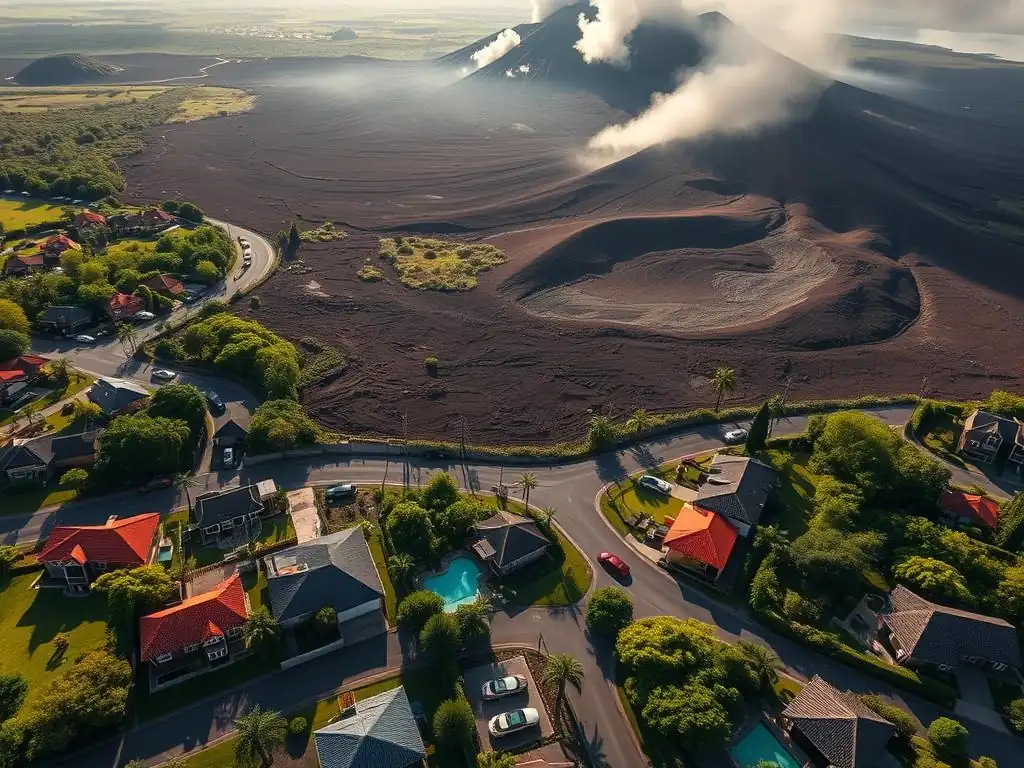
Insurance companies employ sophisticated risk modeling and simulation techniques to quantify volcanic risk and determine appropriate premiums. These models go beyond simple geographical proximity to a volcano and delve into a detailed analysis of potential volcanic hazards, their intensity, and the vulnerability of insured assets. Volcanic risk models utilize a combination of geological data, historical eruption records, topographic information, and building vulnerability assessments to simulate potential eruption scenarios and estimate potential losses. These simulations help insurance companies understand the range of possible outcomes from a volcanic event, from minor ashfall to catastrophic pyroclastic flows or lahars.
Risk modeling for volcanic events often involves probabilistic approaches, considering the likelihood of different eruption scenarios and the associated damage. For example, a model might simulate thousands of potential eruptions, varying eruption size, style, and location, and then assess the resulting damage to properties within the modeled area. These simulations can generate probabilistic loss estimates, such as the probable maximum loss (PML) for different return periods (e.g., 1-in-100 year loss, 1-in-250 year loss).
These PML figures are crucial for insurance companies in setting premiums and determining the amount of reinsurance coverage needed. The complexity and sophistication of these volcanic risk models directly contribute to the accuracy and, consequently, the level of "insurance costs near active volcanoes".
Data Analysis: Using Historical Eruptions to Predict Future Losses
Historical eruption records are invaluable data sources for insurance companies assessing volcanic risk. By analyzing past eruptions of a specific volcano or similar volcanoes in the region, insurers can gain insights into eruption frequency, magnitude, style, and the spatial extent of volcanic hazards. This historical data provides a basis for estimating future eruption probabilities and potential loss scenarios. For instance, if a volcano has a history of large explosive eruptions producing pyroclastic flows that have reached certain distances in the past, insurance companies will factor this historical precedent into their risk assessments for properties in those areas.
Data analysis extends beyond just eruption history. It includes studying the geological record to understand long-term volcanic activity patterns, including periods of increased and decreased activity. Analyzing the frequency and intensity of past ashfalls, lava flows, pyroclastic flows, and lahars provides crucial information for hazard zonation and risk assessment.
Furthermore, studying the impact of past eruptions on infrastructure, property damage patterns, and economic losses helps insurers refine their loss estimation models and improve the accuracy of their premium calculations. This reliance on historical data, combined with scientific understanding of volcanic processes, is fundamental to determining "insurance costs near active volcanoes".
Property Valuation and Vulnerability Assessments in Volcanic Areas
Accurate property valuation and vulnerability assessments are essential components of calculating insurance costs near volcanoes. The value of the property at risk directly influences the potential financial loss in the event of volcanic damage. Properties in volcanic zones may require specialized valuation that considers the inherent volcanic risk, potentially impacting market value compared to similar properties in non-volcanic areas.
Furthermore, the vulnerability of a property to specific volcanic hazards is a crucial determinant of insurance premiums. Buildings constructed with materials and designs that are more resistant to ashfall, lava flows, or lahars will generally be considered less risky and may attract slightly lower premiums.
Vulnerability assessments involve evaluating factors like building materials, roof type and strength (important for ashfall resistance), foundation type, location relative to potential lava flow paths or lahar channels, and proximity to the volcano vent. Insurance companies may conduct on-site inspections or utilize remote sensing data and geographical information systems (GIS) to assess property vulnerability.
Properties located in areas with high volcanic hazard exposure and low vulnerability (e.g., reinforced concrete buildings on high ground) will still face higher premiums due to the inherent volcanic risk, but properties with high vulnerability (e.g., wooden structures in lahar pathways) will face even steeper "insurance costs near active volcanoes" or may even be deemed uninsurable due to excessive risk.
The Impact of Volcanic Risk on Homeowners and Businesses
The most direct and visible impact of volcanic risk is the significantly higher insurance premiums faced by homeowners and businesses in volcanic zones. As detailed previously, these elevated premiums are a direct reflection of the increased probability of property damage and potential financial losses due to volcanic hazards. For residents and business owners, these higher insurance costs represent an ongoing financial burden associated with living or operating in a volcanically active area. This can strain household budgets and impact business profitability, particularly for those on fixed incomes or with limited financial resources.
The magnitude of premium increases can vary significantly depending on the location, the specific volcano, and the level of coverage. In high-risk zones close to active volcanoes, premiums for homeowners insurance can be several times higher than for comparable properties in non-volcanic regions. For businesses, particularly those with substantial assets or critical infrastructure, the insurance costs can be a significant operational expense. This financial burden is a tangible consequence of living with volcanic risk and contributes to the overall "insurance costs near active volcanoes" being a critical consideration for communities in these areas.
Limited Coverage Options: Difficulties in Obtaining Comprehensive Insurance
Beyond higher premiums, residents and businesses in volcanic zones may also face limited coverage options and difficulties in obtaining comprehensive insurance. Insurance companies, when assessing high volcanic risk, may restrict the types of coverage offered, exclude certain volcanic hazards from coverage, or impose higher deductibles. In extreme cases, properties in very high-risk areas may become effectively uninsurable in the private market, meaning that standard insurance companies are unwilling to provide coverage at any price due to the perceived unacceptable level of risk.
Limited coverage can manifest in various ways. For example, policies might exclude damage from lava flows or pyroclastic flows, focusing coverage primarily on ashfall or lahar damage. Deductibles, the amount the policyholder must pay out-of-pocket before insurance coverage kicks in, may be significantly higher in volcanic zones.
In areas deemed extremely high-risk, individuals and businesses may need to resort to specialized, often more expensive, "surplus lines" insurance or government-backed insurance programs, if available. This reduced availability of comprehensive insurance and the potential need for alternative, costly options further underscores the impact of volcanic risk on "insurance costs near active volcanoes".
The Impact on Property Values: Perceptions of Risk and Market Dynamics
Volcanic risk, and the associated higher insurance costs, can also influence property values in volcanic zones. Perceptions of volcanic risk, both real and perceived, can affect buyer demand and consequently, property prices. In areas with a history of recent volcanic activity or those perceived as being at high risk of future eruptions, property values may be lower compared to similar properties in safer locations. This is due to the combination of potential physical risk to the property itself and the ongoing financial burden of higher insurance premiums.
However, the impact on property values is not always straightforward. Volcanic areas often possess unique natural beauty, fertile lands, and geothermal resources, which can be attractive factors for residents and businesses. In some cases, the perceived risk may be offset by these other amenities, and property values may remain relatively stable or even appreciate, particularly if volcanic risk is considered to be well-managed or infrequent.
Market dynamics are complex, and factors like tourism, economic development, and community resilience also play a role. Nevertheless, the perception of volcanic risk and the associated "insurance costs near active volcanoes" are undeniably factors that can influence property values and real estate markets in these regions.
Strategies for Managing Insurance Costs in Volcanic Regions
Mitigation Measures: Reducing Property Vulnerability to Volcanic Hazards
One of the most effective strategies for managing insurance costs in volcanic regions is to implement mitigation measures that reduce property vulnerability to volcanic hazards. By proactively reducing the potential for damage, homeowners and businesses can demonstrate to insurance companies that they are taking steps to minimize risk, potentially leading to lower premiums or improved coverage options. Mitigation measures can range from relatively simple and cost-effective actions to more substantial structural modifications.
Reinforcing Structures Against Ashfall Accumulation
Reinforcing structures, particularly roofs, against ashfall accumulation is a key mitigation measure in many volcanic areas. Strengthening roof supports, using steeper roof slopes to reduce ash accumulation, and employing durable roofing materials can significantly reduce the risk of roof collapse from heavy ash loads. For example, in areas prone to heavy ashfall, building codes may require specific roof load capacities. Homeowners can retrofit existing structures by adding roof supports or reinforcing roof joists. These measures demonstrate a proactive approach to risk reduction and can be positively viewed by insurance companies, potentially influencing "insurance costs near active volcanoes" favorably.
Implementing Early Warning Systems and Evacuation Plans
Implementing effective early warning systems and well-defined evacuation plans is another crucial mitigation strategy. While these measures primarily focus on protecting lives, they also indirectly contribute to reducing property damage and associated insurance costs. Timely warnings and efficient evacuations can minimize the number of people and assets exposed to volcanic hazards, reducing the overall potential for loss.
Communities with robust early warning systems and well-rehearsed evacuation plans demonstrate preparedness and resilience, which can be viewed positively by insurance underwriters when assessing risk and setting premiums. Investing in and maintaining these systems is a vital component of managing overall volcanic risk and its financial implications, including "insurance costs near active volcanoes".
Government Initiatives and Subsidies for Volcanic Insurance
Government initiatives and subsidies can play a significant role in making insurance more affordable and accessible in volcanic regions. Recognizing the societal importance of insurance coverage in disaster-prone areas, governments may implement various programs to support insurance markets and assist residents and businesses. These initiatives can include direct subsidies to reduce insurance premiums, government-backed reinsurance schemes to stabilize insurance markets, or the creation of state-run insurance funds to provide coverage in areas where private insurers are reluctant to operate.
For example, in some countries, governments may offer partial subsidies on homeowners insurance premiums in designated volcanic hazard zones. Government-backed reinsurance pools can help to share the risk of large volcanic events across a broader base, potentially reducing reinsurance costs for primary insurers and ultimately lowering premiums for policyholders.
In cases where private insurance markets fail to provide adequate coverage, government-run insurance funds can act as insurers of last resort, ensuring that essential insurance protection is available. These government interventions are critical for managing the social and economic impacts of volcanic risk and addressing the issue of high "insurance costs near active volcanoes" for vulnerable communities.
Exploring Alternative Insurance Options: Pooling and Parametric Insurance
Exploring alternative insurance options beyond traditional indemnity-based insurance can also be beneficial in managing volcanic risk and "insurance costs near active volcanoes". Two such options are insurance pooling and parametric insurance. Insurance pooling involves groups of individuals or businesses in a volcanic region collectively pooling their resources to create a mutual insurance fund. This approach can reduce reliance on external insurance companies and potentially lower costs through collective risk management.
Parametric insurance, also known as index-based insurance, is a different approach where payouts are triggered by pre-defined parameters or indices related to a volcanic event, rather than traditional assessments of actual damage. For example, a parametric policy could trigger a payout if ashfall thickness exceeds a certain threshold, or if a lahar reaches a specific location.
Parametric insurance can offer faster payouts and reduced administrative costs compared to traditional insurance, and it can be particularly useful for covering specific, easily measurable volcanic hazards. Exploring these alternative insurance models can provide additional tools for managing volcanic risk and potentially mitigating the financial burden of high insurance costs.
Case Studies: Insurance Challenges and Solutions in Volcanic Areas
Case Study 1: Iceland - The 2010 Eyjafjallajökull Eruption and Air Travel Insurance
Iceland, a volcanically active island nation, provides a compelling case study for examining insurance challenges in volcanic areas. The 2010 eruption of Eyjafjallajökull, while relatively small in terms of lava volume and direct ground damage, had a massive global impact due to the extensive ash cloud it produced. This ash cloud grounded air travel across Europe for several days, affecting millions of passengers and causing significant economic disruption to the airline industry and related sectors. This event highlighted the vulnerability of globalized systems to volcanic ash hazards and the importance of air travel insurance.
The Eyjafjallajökull eruption led to a surge in claims related to travel disruptions, including trip cancellations, delays, and additional expenses for stranded passengers. Insurance companies faced challenges in processing the large volume of claims and in interpreting policy wordings regarding volcanic ash disruptions.
The event prompted a re-evaluation of air travel insurance policies and a greater awareness of volcanic ash risk within the insurance industry. It also underscored the need for clear policy language and standardized procedures for handling volcanic ash-related claims in travel insurance, directly impacting the understanding and management of "insurance costs near active volcanoes" in the context of global travel.
Case Study 2: Hawaii - Kilauea's 2018 Eruption and Residential Property Insurance
Hawaii, particularly the Big Island where Kilauea volcano is located, offers another valuable case study, focusing on residential property insurance in a persistently volcanic environment. Kilauea's 2018 Lower Puna eruption was a significant event, characterized by extensive lava flows that destroyed hundreds of homes and infrastructure in the Leilani Estates and surrounding areas. This eruption exemplified the direct threat of lava flows to residential properties and the challenges for insurance in covering such events.
In Hawaii, standard homeowners insurance policies typically cover damage from volcanic eruptions, including lava flows, ashfall, and volcanic gases. However, the 2018 eruption highlighted the potential for catastrophic losses and the importance of adequate coverage limits. Following the eruption, some homeowners found themselves underinsured, facing significant financial shortfalls even with insurance coverage.
The event prompted discussions about the adequacy of coverage levels, the affordability of premiums in high-risk lava zones, and the role of government-backed disaster assistance in supplementing private insurance. The Kilauea eruption serves as a real-world example of the complexities of "insurance costs near active volcanoes" and the need for both robust insurance coverage and effective risk mitigation strategies in residential areas.
Future Trends in Volcanic Risk Insurance
Technological Advancements in Risk Assessment and Monitoring
The future of volcanic risk insurance is likely to be shaped by technological advancements in risk assessment and monitoring. Improved volcano monitoring technologies, such as advanced seismic networks, satellite-based deformation measurements (InSAR), and sophisticated gas sensing instruments, are providing increasingly detailed and real-time data on volcanic activity. This enhanced monitoring allows for more accurate assessment of eruption probabilities and hazard zones, leading to more refined risk models and potentially more tailored insurance premiums.
Furthermore, advancements in remote sensing, GIS, and data analytics are enabling more detailed and efficient vulnerability assessments of properties in volcanic areas. Machine learning and artificial intelligence (AI) are being applied to volcanic risk modeling, allowing for the analysis of vast datasets and the development of more sophisticated predictive models. These technological advancements are expected to improve the accuracy and granularity of volcanic risk assessments, potentially leading to more risk-based and equitable "insurance costs near active volcanoes" in the future.
The Role of Climate Change in Volcanic Activity and Insurance
The role of climate change in influencing volcanic activity and insurance risks is an emerging area of research and concern. While climate change is not expected to directly cause more volcanic eruptions, it can potentially influence certain volcanic hazards. For example, changes in precipitation patterns and glacial meltwater can affect the frequency and magnitude of lahars. Melting glaciers can also destabilize volcanoes and potentially influence eruption styles in some cases.
Climate change is also exacerbating other natural hazards, such as extreme weather events, which can compound the impacts of volcanic eruptions. The insurance industry is already grappling with the increasing frequency and severity of climate-related disasters, and the potential interplay between climate change and volcanic hazards adds another layer of complexity. Future trends in volcanic risk insurance will need to consider the potential influence of climate change on volcanic hazards and adapt risk models and pricing strategies accordingly, further impacting the dynamics of "insurance costs near active volcanoes".
Building Resilience: Sustainable Insurance Solutions for Volcanic Communities
The long-term trend in volcanic risk insurance should focus on building resilience within volcanic communities. This means moving beyond simply paying out claims after a disaster to proactively promoting risk reduction, community preparedness, and sustainable development in volcanic zones. Sustainable insurance solutions will likely involve a combination of risk-based pricing, incentives for mitigation measures, community-based risk pooling, and government-private sector partnerships.
Emphasis on pre-disaster risk reduction, through building codes, land-use planning, and public awareness campaigns, can reduce overall vulnerability and lower long-term insurance costs. Insurance products that incentivize mitigation measures, such as discounts for ashfall-resistant roofs, can encourage proactive risk management. Community-based insurance schemes can empower local communities to manage their own risks collectively. Ultimately, building resilience requires a holistic approach that integrates insurance with broader disaster risk reduction strategies and promotes sustainable living in volcanically active regions, ensuring that "insurance costs near active volcanoes" are managed in a way that supports community well-being and long-term sustainability.
Frequently Asked Questions
How significantly do insurance costs increase near active volcanoes?
Insurance costs near active volcanoes can skyrocket due to the increased risk of property damage or loss from eruptions and related hazards. The exact increase depends on several factors, including the volcano's activity level and proximity to the insured property.
Insurers consider a range of volcanic hazards, including lava flows, ashfall, pyroclastic flows, and lahars (mudflows). The potential impact of each hazard on a specific property significantly influences the insurance premium.
Does homeowner's insurance typically cover damage caused by volcanic eruptions?
Standard homeowner's insurance policies often do not cover damage from volcanic eruptions directly. You may need to purchase specific riders or specialized policies to cover such events, increasing the overall cost.
What factors, besides proximity, affect insurance rates in volcanic zones?
Besides distance, factors like the construction type of the building, the age of the property, and the historical eruption patterns of the nearby volcano all influence insurance rates. Mitigation efforts, such as ashfall protection, can also play a role.
Where can individuals find specialized insurance coverage for volcanic risks?
Contacting specialized insurance providers experienced in covering natural disasters is crucial. Brokers specializing in high-risk areas can help find policies tailored to volcanic hazards, though these policies often come with a higher premium.
Final Reflection: Embracing Uncertainty in the Shadow of Giants
The preceding analysis clearly demonstrates that insurance costs near active volcanoes are not merely a matter of chance, but a direct reflection of the quantifiable risk premium associated with living in such dynamic environments. This premium, driven by the potential for catastrophic loss, underscores the complex interplay between natural forces, human habitation, and the financial mechanisms designed to mitigate disaster. The stark reality is that proximity to volcanic activity translates directly into higher costs for those seeking to protect their homes and livelihoods.
The enduring influence of volcanic landscapes on both the physical and economic terrain is undeniable. Living near a volcano is a constant negotiation with uncertainty, a dance between the allure of fertile land and the ever-present threat of eruption. This delicate balance shapes not only individual decisions but also entire community structures. The earth is always speaking to us, though often we don't listen.
– Linda Hogan. This quote perfectly encapsulates the need to be aware of the natural world and the risks it presents.
As you consider the implications of the "volcanic risk premium," I invite you to reflect on your own relationship with risk and resilience. How do you assess and manage the uncertainties in your own life? What steps can you take, both individually and collectively, to build more resilient communities in the face of unpredictable forces? Let us strive to understand and respect the power of nature, and to create a future where both human lives and financial stability can thrive, even in the shadow of giants.
Secure Your Future Near Volcanoes: Understanding and Managing Insurance Costs
Understanding the high insurance premiums associated with living near active volcanoes can be daunting. Now that you've learned about the volcanic risk premium, let's explore how to protect your investment and peace of mind.
Here's how to take control:
- Get a Personalized Risk Assessment: Contact your insurance provider for a detailed breakdown of your volcanic risk exposure. This will help you understand your premium and potentially negotiate lower costs.
- Explore Risk Mitigation Strategies: Investigate ways to minimize volcanic risks to your property, such as using specialized building materials or developing comprehensive emergency preparedness plans. These improvements can often significantly reduce your insurance premiums.
- Join the Volcano Explorers Community: Connect with other homeowners in volcanically active areas on our forums at volcanoexplorers.org. Share experiences, insights, and strategies to advocate for fairer insurance practices.
What strategies are you considering to protect your home and lower your insurance premiums in a volcanic zone? Share your ideas in the comments below!