
The Role of Water in Volcanic Gas Release: Steam Explosions and More

Welcome to Volcano Explorers!
Prepare to be amazed by the raw power and hidden complexities of volcanoes. Did you know that something as seemingly benign as water can dramatically alter the course of an eruption? Uncover the secrets behind water's impact on volcanic activity, from the violent fury of steam explosions to its subtle influence on volcanic gas release. What happens when fire meets water deep within the Earth? Dive in and discover the explosive truth!
- Understanding Water's Impact on Volcanic Activity
- Steam Explosions: Phreatic and Phreatomagmatic Eruptions Explained
- Water and Volcanic Gas Composition: A Complex Relationship
- Different Sources of Water Interaction with Magma
- Monitoring Water-Related Volcanic Activity
- The Hazards Associated with Water-Induced Volcanic Eruptions
-
Frequently Asked Questions
- How does water contribute to steam explosions in volcanoes?
- What are the different ways water can interact with magma during a volcanic eruption?
- How does the presence of water affect the gas content of volcanic eruptions?
- What is a phreatomagmatic eruption, and how is water involved?
- How do volcanologists study the role of water in volcanic activity?
- Final Reflection: The Unseen Power of Water
- Unleash Your Inner Volcanologist: Dive Deeper!
Understanding Water's Impact on Volcanic Activity
Water plays a pivotal, yet often underestimated, role in the fascinating and sometimes hazardous world of volcanoes. While we often associate volcanic eruptions with molten rock and fiery lava flows, the presence of water significantly shapes the dynamics of these events, from the composition of magma to the style of eruption. Understanding water's impact on volcanic activity is crucial for comprehending volcanic processes and assessing potential hazards in volcanically active regions. This article delves into the multifaceted relationship between water and volcanoes, exploring steam explosions, gas release, and the diverse ways water influences these geological powerhouses.
The interaction of water with magma and volcanic systems is a complex interplay of physical and chemical processes. Water, in its various forms—be it groundwater, surface water, or seawater—can dramatically alter the behavior of volcanoes. It influences magma viscosity, the explosivity of eruptions, and the composition of volcanic gases released into the atmosphere. By examining these interactions, we gain valuable insights into the mechanisms driving volcanic eruptions and the broader implications for our planet's environment and the communities living near these dynamic landscapes.
The Significance of Water in Magma Composition
Magma, the molten rock beneath the Earth's surface, is not simply a melt of silicate minerals. It's a complex mixture containing dissolved gases, including water vapor (H₂O), carbon dioxide (CO₂), sulfur dioxide (SO₂), and others. Water is a significant volatile component of magma, often originating from hydrated minerals in the Earth's mantle and crust that are incorporated into the melt during magma generation. The amount of water in magma can vary widely, from less than 1% in some types of basaltic magma to as much as 6-8% in certain types of rhyolitic magma.
The presence of water in magma profoundly affects its physical and chemical properties. Water acts as a flux, lowering the melting point of rocks and facilitating magma formation at lower temperatures than in dry conditions. Furthermore, water influences the density and viscosity of magma.
For instance, water dissolved in magma reduces its viscosity, making it less resistant to flow. However, as magma rises to the surface and pressure decreases, water exsolves as vapor, leading to changes in viscosity and potentially influencing the style of eruption. The initial water content in magma is thus a key factor in determining the overall behavior of a volcanic system.
Water's Influence on Magma Viscosity and Eruptive Style
The viscosity of magma, its resistance to flow, is a critical factor controlling the style of volcanic eruptions. Magma with low viscosity, like basaltic magma with relatively low water content, tends to produce effusive eruptions, characterized by lava flows. In contrast, magma with high viscosity, often associated with higher water content and higher silica content (like rhyolitic magma), tends to produce explosive eruptions. This difference is largely due to the way dissolved gases, particularly water vapor, behave as magma ascends.
As magma rises towards the surface, the pressure surrounding it decreases. This pressure reduction causes dissolved water and other gases to exsolve, forming bubbles within the magma. In low-viscosity magma, these bubbles can readily escape, allowing for a relatively gentle degassing and effusive eruption. However, in high-viscosity magma, the bubbles are trapped.
The increasing pressure from the trapped gas bubbles can eventually overcome the strength of the surrounding magma, leading to a violent, explosive eruption. The higher the initial water content in a viscous magma, the greater the potential for a powerful explosive eruption due to the increased volume of gas released upon decompression. This crucial role of water in modulating magma viscosity and gas exsolution directly dictates the eruptive style and intensity of volcanic activity.
Steam Explosions: Phreatic and Phreatomagmatic Eruptions Explained
Steam explosions, also known as hydrovolcanic eruptions, represent a distinct category of volcanic activity where water plays a dominant role in driving the eruption. These eruptions occur when water is rapidly heated and vaporized, leading to a sudden and forceful expansion that can fragment surrounding rocks and eject volcanic material. There are two main types of steam explosions: phreatic and phreatomagmatic eruptions, differentiated by whether magma is directly involved in the explosive interaction. Both types highlight the significant impact of water on volcanic hazards and landscape formation.
Phreatic and phreatomagmatic eruptions, while sharing the common element of water-driven explosions, differ in their fundamental mechanisms and characteristics. Phreatic eruptions are purely steam-driven explosions resulting from the heating of groundwater or surface water by hot volcanic rocks. They do not involve the direct eruption of magma.
Phreatomagmatic eruptions, on the other hand, are more complex and energetic events that occur when magma directly interacts with water, leading to a far more violent explosion due to the rapid and efficient heat transfer from magma to water. Understanding these distinctions is crucial for hazard assessment and mitigation in volcanic regions where water sources are abundant.
What are Phreatic Eruptions? Water-Steam Explosions
Phreatic eruptions are steam explosions that result from the non-magmatic discharge of steam and pre-existing rock fragments. The term "phreatic" originates from the Greek word "phrear," meaning well, aptly describing eruptions driven by groundwater. These eruptions are characterized by the absence of fresh lava; instead, they eject fragments of older rocks, ash, and steam. Phreatic eruptions can range in size from small, localized bursts to more significant explosions capable of creating craters and dispersing ash over considerable distances.
While often less powerful than magmatic eruptions, phreatic explosions can still pose significant hazards. They can occur unexpectedly, even at volcanoes not currently showing signs of magmatic activity. The rapid expansion of steam can generate shockwaves, propel rock fragments at high velocities, and produce ash clouds that can disrupt air travel and impact nearby communities. Because they don't require new magma ascent, phreatic eruptions can be particularly challenging to predict, emphasizing the importance of monitoring for changes in hydrothermal systems and ground deformation in volcanic areas.
The Mechanism Behind Phreatic Explosions: Rapid Heating and Expansion
The fundamental mechanism behind phreatic explosions is the rapid heating and vaporization of water upon contact with hot volcanic rocks. This process typically occurs when groundwater or surface water infiltrates into the subsurface and encounters hot rocks heated by a shallow magma body or residual heat from previous volcanic activity. The heat source can be at temperatures far exceeding the boiling point of water at depth.
When water comes into contact with these extremely hot rocks, it is instantaneously heated to temperatures far above its boiling point, leading to a phase change from liquid to steam. This rapid vaporization causes a dramatic increase in volume – water expands approximately 1,700 times when it turns into steam at atmospheric pressure. This sudden and enormous volume expansion generates a powerful explosion.
The expanding steam fractures and fragments the surrounding rocks, propelling rock debris, ash, and steam into the atmosphere. The efficiency of this heat transfer and the confinement of the heated water within the subsurface contribute to the explosive nature of phreatic eruptions.
Examples of Phreatic Eruptions: Taal Volcano (Philippines, 2020)
A notable example of a recent phreatic eruption is the January 2020 eruption of Taal Volcano in the Philippines. Taal Volcano is a complex volcano system located within a lake-filled caldera, making it highly susceptible to water-rock interactions. Prior to the major eruption, Taal had been exhibiting increased steam emissions and minor seismic activity. On January 12, 2020, a sudden and powerful phreatic eruption commenced from the main crater lake.
This eruption was characterized by a towering plume of steam and ash that reached several kilometers into the atmosphere. While the eruption initially lacked juvenile magmatic material, indicating it was primarily phreatic, it demonstrated the significant hazard posed by even purely steam-driven explosions.
The Taal eruption ejected ash and rock fragments over a wide area, prompting mass evacuations and causing significant disruption. Later, the eruption evolved into a phreatomagmatic phase, but the initial phreatic phase underscored the potential for powerful explosions solely from the interaction of water and the volcano's hydrothermal system, highlighting the water's impact on volcanic activity even without direct magma involvement at the surface initially.
Phreatomagmatic Eruptions: When Magma Meets Water
Phreatomagmatic eruptions represent a more energetic and complex type of steam explosion that occurs when magma directly interacts with external water sources. Unlike phreatic eruptions, which are driven by heated rocks, phreatomagmatic eruptions involve the direct contact of magma with water, leading to a far more efficient and rapid heat transfer. This interaction results in extremely violent explosions capable of producing widespread tephra deposits and distinct volcanic landforms.
The defining characteristic of phreatomagmatic eruptions is the direct mixing of magma and water. This interaction can occur in various settings, such as when magma erupts beneath a body of water (lake, sea, or ice), or when magma intrudes into water-saturated ground. The intensity of phreatomagmatic eruptions is significantly higher than that of phreatic eruptions due to the vastly greater thermal energy contained within magma compared to hot rocks. This increased energy input leads to more rapid and extensive steam generation and more violent fragmentation of both water and magma.
The Violent Interaction: Magma Fragmentation and Steam Generation
The interaction between magma and water in phreatomagmatic eruptions is incredibly violent due to the extreme temperature difference and the rapid heat transfer between the two substances. Magma, typically at temperatures between 700°C and 1300°C, is significantly hotter than any natural water source. When magma comes into contact with water, the water is instantaneously superheated far beyond its boiling point, resulting in explosive vaporization.
This rapid vaporization is accompanied by a phenomenon called fuel-coolant interaction (FCI). In FCI, a hot material (magma) mixes with a cooler, volatile liquid (water). The rapid heat transfer leads to explosive boiling and fragmentation of the hot material. In the case of phreatomagmatic eruptions, FCI causes the magma itself to fragment into very fine particles, increasing the surface area for further heat transfer and steam generation. This chain reaction amplifies the explosivity of the eruption, resulting in powerful bursts and widespread dispersal of volcanic material.
Characteristics of Phreatomagmatic Eruptions: Fine Ash, Base Surges, Tuff Rings
Phreatomagmatic eruptions produce distinctive volcanic deposits and landforms that reflect the violent magma-water interaction. One key characteristic is the production of very fine-grained ash. The efficient fragmentation of magma during the eruption process results in a high proportion of fine ash particles in the erupted material. This fine ash can travel long distances and have significant impacts on air quality and infrastructure.
Another characteristic feature is the formation of base surges. Base surges are ground-hugging clouds of gas, steam, ash, and rock fragments that spread radially outward from the eruption vent at high speeds, similar to pyroclastic flows but typically less hot and more dilute. They are a direct result of the lateral expansion of the explosion cloud at ground level.
Furthermore, phreatomagmatic eruptions often create tuff rings and maars. Tuff rings are low-profile, broad volcanic craters surrounded by rings of ash and tuff (consolidated volcanic ash) deposited from base surges. Maars are broader, lower-relief volcanic craters formed by explosive eruptions, often filled with water, resulting from phreatomagmatic activity interacting with shallow groundwater.
Examples of Phreatomagmatic Eruptions: Surtsey (Iceland, 1963-1967)
A classic and well-studied example of a phreatomagmatic eruption is the formation of the island of Surtsey off the coast of Iceland between 1963 and 1967. The Surtsey eruption began as a submarine eruption on the seafloor. As magma erupted into the cold seawater, the intense interaction generated powerful phreatomagmatic explosions. These explosions built up a volcanic cone from fragmented tephra and ash.
Initially, the eruption was highly explosive and characterized by dark, cauliflower-shaped eruption columns rich in fine ash and steam, typical of phreatomagmatic activity. As the volcanic cone grew above sea level, the interaction with seawater lessened, and the eruption style gradually transitioned to more Strombolian and effusive phases. Surtsey provides an excellent example of how phreatomagmatic eruptions can create new land and how the style of eruption can evolve as the interaction between magma and water changes over time. The island has become a natural laboratory for studying volcanic island formation and ecological succession.
Water and Volcanic Gas Composition: A Complex Relationship
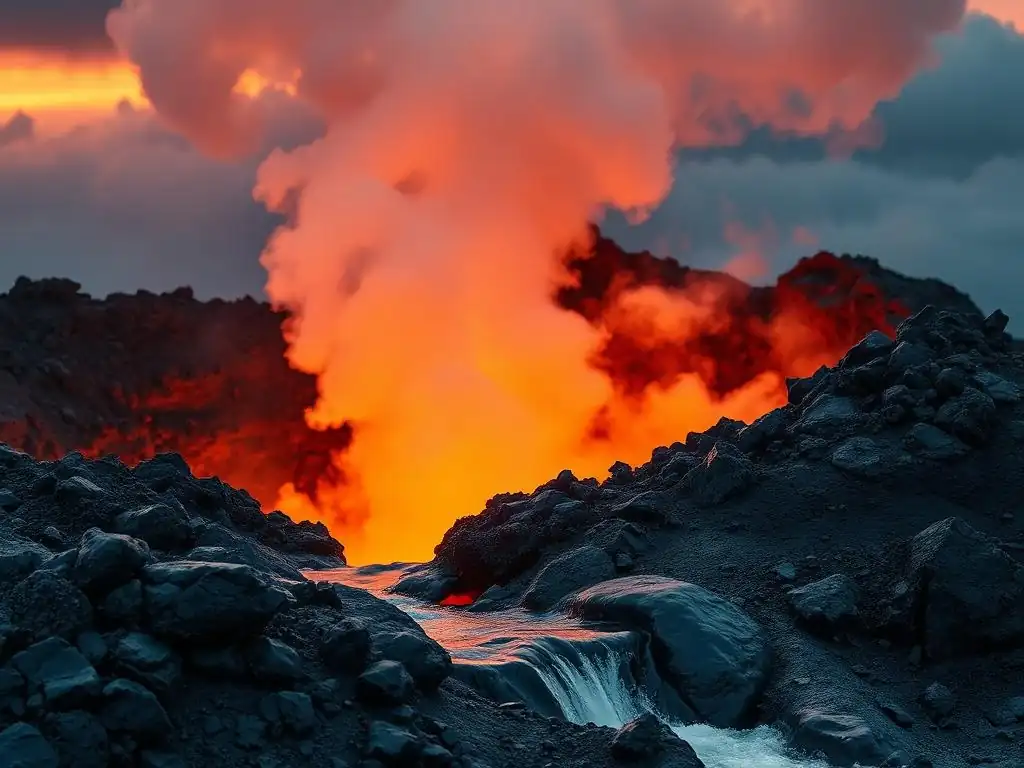
The relationship between water and volcanic gas composition is complex and multifaceted. Water itself is a major volcanic gas, typically the most abundant volatile species released during volcanic eruptions. However, water also plays a crucial role in influencing the emission rates and composition of other volcanic gases, such as carbon dioxide (CO₂), sulfur dioxide (SO₂), and hydrogen sulfide (H₂S). Understanding this complex interplay is essential for interpreting volcanic gas emissions and their implications for both volcanic processes and atmospheric impacts.
Water's influence on volcanic gas composition is not limited to its own presence as water vapor. It affects the solubility of other gases in magma, the transport of volatile elements, and the overall degassing behavior of volcanic systems. Changes in water content and its interaction with magma can lead to variations in the ratios of different volcanic gases emitted, providing valuable insights into subsurface magma processes and potential eruption precursors. The study of water's role in volcanic gas release is therefore critical for both fundamental volcanology and volcanic hazard monitoring.
How Water Vapor Affects Volcanic Gas Emission Rates
Water vapor is typically the most abundant component of volcanic gas emissions, often comprising over 70% of the total gas volume. The amount of water vapor released during an eruption can significantly influence the overall gas emission rates and the dynamics of the eruption plume. High water vapor content can contribute to larger and more buoyant eruption plumes, affecting ash dispersal and atmospheric impacts.
The presence of water vapor also affects the measurement and interpretation of other volcanic gases. For example, spectroscopic measurements of volcanic gas plumes often need to account for the strong absorption of infrared radiation by water vapor. Furthermore, the condensation of water vapor in the atmosphere can lead to acid rain and volcanic smog (vog), impacting air quality and ecosystems downwind of volcanoes. Therefore, understanding the factors controlling water vapor emission rates is crucial for assessing the broader environmental impacts of volcanic degassing.
The Role of Water in Transporting Volatile Elements
Water in magma acts as a carrier for other volatile elements, facilitating their transport from the Earth's interior to the surface during volcanic eruptions and degassing. Many volatile elements, such as sulfur, chlorine, and fluorine, are more soluble in hydrous magmas (magmas rich in water) than in anhydrous magmas. This increased solubility means that water-rich magmas can carry higher concentrations of these elements.
As magma ascends and depressurizes, water exsolves as vapor, and these volatile elements partition into the vapor phase along with water. The water-rich volcanic gas then becomes the primary vehicle for transporting these elements into the atmosphere. This process is particularly important for sulfur, which is released primarily as sulfur dioxide (SO₂) and hydrogen sulfide (H₂S). These sulfur gases can have significant environmental impacts, including acid rain formation and, in large quantities, short-term cooling effects on global climate. Water, therefore, plays an indirect but crucial role in the atmospheric cycling of various volatile elements released by volcanoes.
Water's influence on the Solubility of Gases in Magma
The solubility of other volcanic gases, such as CO₂ and SO₂, in magma is strongly influenced by the presence of water. Water dissolved in magma increases the solubility of these gases. This effect is due to the changes in the structure and properties of the silicate melt caused by the incorporation of water. Hydrous magmas can therefore hold higher concentrations of CO₂ and SO₂ at a given pressure compared to anhydrous magmas.
This influence on gas solubility has significant implications for volcanic degassing and eruption dynamics. Magmas with higher water content can retain more dissolved CO₂ and SO₂ at depth, leading to potentially more explosive eruptions when these gases are suddenly released upon decompression during magma ascent. Conversely, the presence of water can also affect the timing and style of degassing. Understanding how water affects gas solubility is therefore crucial for modeling volcanic degassing processes and predicting eruption behavior, as water's impact on volcanic activity extends to the very nature of gas release from magmatic systems.
Different Sources of Water Interaction with Magma
Water interaction with magma can occur from various sources, each contributing to different types of volcanic activity and hazards. These sources include groundwater, surface water bodies like lakes and rivers, and seawater. The specific type of water source and the nature of its interaction with magma significantly influence the style and intensity of volcanic eruptions, ranging from steam explosions in hydrothermal areas to powerful submarine eruptions.
Understanding the different sources of water interacting with volcanic systems is crucial for assessing volcanic hazards in diverse geological settings. Volcanoes located near coastlines, beneath lakes, or in areas with high groundwater tables exhibit distinct eruption characteristics and pose unique challenges for monitoring and hazard mitigation. The location and availability of water sources are therefore key factors in determining the potential for water-induced volcanic activity and the associated risks.
Groundwater and Volcanic Activity: Subsurface Interactions
Groundwater is a ubiquitous subsurface water source that can interact with volcanic systems in various ways. Groundwater can be heated by geothermal activity, leading to hydrothermal systems with hot springs and fumaroles. It can also directly interact with magma intrusions or shallow magma bodies, resulting in phreatic or phreatomagmatic eruptions if the interaction is sufficiently energetic.
The depth and permeability of groundwater aquifers play a significant role in controlling the nature of groundwater-volcano interactions. Shallow aquifers can contribute to steam explosions and hydrothermal activity, while deeper groundwater systems can influence magma ascent pathways and the overall stability of volcanic edifices. Changes in groundwater levels and chemistry can also serve as indicators of volcanic unrest, making groundwater monitoring a valuable tool in volcanic hazard assessment.
Surface Water (Lakes and Rivers) and Volcanic Hazards
Surface water bodies, such as lakes and rivers located on or near volcanoes, represent a significant source of water for potential magma interaction. Volcanoes located within caldera lakes, like Taal Volcano in the Philippines or Crater Lake in the United States, are particularly susceptible to phreatomagmatic eruptions due to the direct proximity of a large water body to the volcanic vent. Rivers flowing through volcanic areas can also interact with lava flows or pyroclastic density currents, leading to steam explosions and flash floods.
The presence of surface water can significantly amplify the hazards associated with volcanic eruptions. Phreatomagmatic eruptions involving large volumes of surface water can be highly explosive and generate widespread base surges and ash dispersal. Furthermore, lava flows or pyroclastic flows entering lakes or rivers can cause secondary explosions and lahars (volcanic mudflows), increasing the overall destructive potential of volcanic events. The topography and drainage patterns around volcanoes, therefore, play a critical role in determining the potential for surface water-related volcanic hazards.
Seawater and Submarine Volcanic Eruptions: Hydrovolcanism
Seawater is the most extensive source of water interacting with volcanic activity, particularly in the context of submarine volcanism. Approximately 70% of Earth's volcanic activity occurs underwater at mid-ocean ridges and submarine volcanoes. When magma erupts on the seafloor, it interacts directly with seawater, leading to a specific type of phreatomagmatic activity known as hydrovolcanism.
Submarine volcanic eruptions are characterized by rapid cooling of lava by seawater, formation of pillow lavas, and often, explosive phreatomagmatic activity. The high pressure at depth can suppress boiling to some extent, but the intense heat transfer from magma to seawater still results in significant steam generation and fragmentation of magma.
Submarine hydrovolcanic eruptions can build up volcanic islands, as exemplified by Surtsey, and contribute to the global cycling of volcanic gases and hydrothermal fluids in the ocean. The study of submarine volcanism and hydrovolcanism is crucial for understanding the Earth's overall volcanic activity and its impact on ocean chemistry and marine ecosystems.
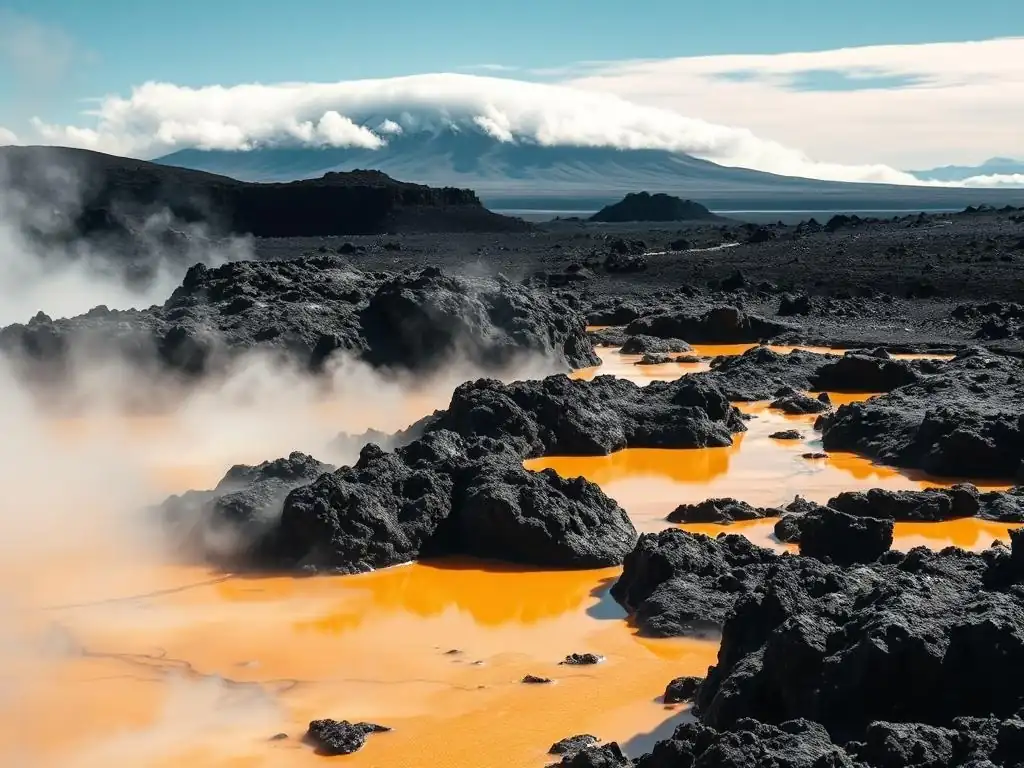
Monitoring water-related volcanic activity is crucial for early detection of potential steam explosions and phreatomagmatic eruptions, allowing for timely warnings and mitigation efforts. Various techniques are employed to monitor changes in groundwater levels, steam emissions, fumarole activity, and thermal anomalies that may indicate water-magma interactions. These monitoring methods provide valuable data for assessing volcanic unrest and forecasting potential water-induced volcanic hazards.
Effective monitoring of water-related volcanic activity requires a multi-faceted approach, integrating different types of data and monitoring techniques. Continuous monitoring of groundwater parameters, steam and gas emissions, and thermal activity, combined with seismic and deformation monitoring, provides a comprehensive picture of volcanic system behavior and enhances the ability to detect subtle changes that may precede water-driven eruptions. The integration of real-time monitoring data with advanced analytical tools and modeling techniques is essential for improving eruption forecasting and reducing the risks associated with water's impact on volcanic activity.
Techniques for Detecting Changes in Groundwater Levels
Monitoring groundwater levels is a key technique for detecting changes in hydrothermal systems and potential volcanic unrest. Changes in groundwater levels can indicate magma intrusion, pressurization of hydrothermal reservoirs, or changes in permeability within the volcanic edifice. Groundwater level monitoring is typically conducted using networks of wells equipped with pressure sensors or water level recorders that continuously measure the depth to the water table.
Analyzing trends in groundwater levels can reveal patterns associated with volcanic activity. For example, a rapid rise in groundwater levels might indicate increased pressurization due to magma intrusion or hydrothermal fluid accumulation, while a sudden drop in groundwater levels could suggest increased steam discharge or changes in aquifer permeability. Combining groundwater level data with other monitoring parameters, such as seismic activity and gas emissions, provides a more robust assessment of volcanic status and potential hazards.
Monitoring Steam Emissions and Fumarole Activity
Steam emissions and fumarole activity are direct manifestations of hydrothermal processes and water-rock interactions within volcanic systems. Monitoring changes in steam emissions, fumarole gas composition, and temperature can provide valuable insights into the state of the hydrothermal system and potential volcanic unrest. Techniques for monitoring steam and fumarole activity include visual observations, gas sampling and analysis, and thermal measurements.
Changes in the intensity, location, and composition of steam emissions and fumaroles can indicate changes in the heat flux, fluid pathways, and degassing processes within the volcano. For instance, an increase in steam discharge or a change in the ratio of different gases in fumarole emissions (e.g., an increase in magmatic gases like SO₂) may suggest magma ascent or increased magmatic input into the hydrothermal system. Continuous monitoring of steam and fumarole activity is therefore an important component of volcanic surveillance, particularly for volcanoes with active hydrothermal systems.
Using Thermal Imaging to Identify Water-Magma Interactions
Thermal imaging, using infrared cameras, is a powerful tool for detecting and mapping thermal anomalies associated with water-magma interactions and hydrothermal activity. Thermal infrared radiation emitted by the Earth's surface is sensitive to temperature variations. Volcanic areas with active hydrothermal systems or shallow magma bodies often exhibit elevated surface temperatures that can be detected by thermal cameras.
Thermal imaging surveys can be conducted from the ground, from aircraft, or from satellites. They allow for the rapid and synoptic mapping of thermal features across large volcanic areas. Changes in thermal patterns over time can indicate changes in hydrothermal activity, magma intrusion, or the onset of volcanic unrest. Thermal anomalies associated with fumaroles, hot springs, and areas of enhanced steam discharge are readily detectable with thermal imaging, providing valuable information for monitoring water-related volcanic activity and identifying areas of potential hazard.
The Hazards Associated with Water-Induced Volcanic Eruptions
Water-induced volcanic eruptions, including phreatic and phreatomagmatic eruptions, pose significant hazards in volcanic regions. These hazards range from localized steam explosions and ballistic projectiles to more widespread ashfall, base surges, and lahars. Assessing the risk of these hazards is crucial for developing effective mitigation strategies and protecting communities living near volcanoes.
The hazards associated with water's impact on volcanic activity are often underestimated because these eruptions may not always involve the eruption of fresh lava and can occur unexpectedly, even at volcanoes considered to be dormant or in a state of low activity. Therefore, understanding the specific hazards associated with steam explosions and water-magma interactions is essential for comprehensive volcanic hazard assessments and risk management in volcanically active areas with abundant water sources.
Assessing the Risk of Steam Explosions in Volcanic Regions
Assessing the risk of steam explosions in volcanic regions involves identifying areas susceptible to water-rock or water-magma interactions and evaluating the potential intensity and frequency of such eruptions. Risk assessment typically involves geological mapping to identify hydrothermal areas, volcanic vents, and potential water sources (groundwater, lakes, rivers). It also includes monitoring volcanic activity for signs of unrest, such as increased seismicity, gas emissions, and ground deformation, which may precede steam explosions.
Historical records of past phreatic and phreatomagmatic eruptions in a region are valuable for understanding the typical style and scale of water-induced eruptions. Volcanic hazard maps are often developed to delineate areas at risk from different types of volcanic hazards, including steam explosions and associated phenomena like ballistic projectiles and ashfall. Risk assessments also consider the vulnerability of populations and infrastructure in areas potentially affected by water-induced volcanic eruptions, informing land-use planning and emergency preparedness efforts.
Mitigation strategies for water-related volcanic hazards focus on reducing the risks associated with steam explosions, ashfall, base surges, and lahars. Effective mitigation requires a combination of monitoring, early warning systems, land-use planning, and community education. Volcano monitoring is crucial for detecting signs of volcanic unrest that may lead to water-induced eruptions, allowing for timely warnings and evacuations.
Early warning systems, based on real-time monitoring data and hazard assessments, are essential for alerting communities at risk. Land-use planning can restrict development in high-hazard zones, minimizing exposure to volcanic hazards. Community education and preparedness programs are vital for raising awareness about volcanic risks and ensuring that residents know how to respond during a volcanic crisis. Physical mitigation measures, such as constructing barriers to divert lahars or implementing drainage controls in hydrothermal areas, may also be considered in specific locations.
Future Research Directions: Improving Eruption Forecasting Models
Future research directions in understanding water's impact on volcanic activity are focused on improving eruption forecasting models and enhancing our ability to predict steam explosions and phreatomagmatic eruptions. This includes developing more sophisticated models of magma-water interaction, hydrothermal processes, and the dynamics of steam explosions. Improved models need to incorporate the complex interplay of heat transfer, fluid flow, and mechanical fragmentation during water-induced eruptions.
Research efforts are also directed towards integrating diverse monitoring data streams (seismic, geodetic, gas, thermal, hydrological) into comprehensive eruption forecasting frameworks. Machine learning and artificial intelligence techniques are increasingly being applied to volcanic monitoring data to identify subtle patterns and precursors that may indicate impending water-related eruptions. Furthermore, experimental studies and numerical simulations are crucial for gaining a better understanding of the fundamental physical processes governing water-magma interactions and steam explosions, ultimately leading to more accurate and reliable eruption forecasts and improved volcanic hazard mitigation.
Frequently Asked Questions
How does water contribute to steam explosions in volcanoes?
Water, when heated rapidly by magma, flashes into steam. This sudden expansion creates immense pressure, leading to powerful steam explosions that can eject rock and ash violently.
What are the different ways water can interact with magma during a volcanic eruption?
Water can interact with magma in several ways, including entering magma chambers, flowing over lava flows, or mixing with volcanic ash to form destructive lahars. Each interaction drastically alters the eruption's behavior.
How does the presence of water affect the gas content of volcanic eruptions?
Water dissolved in magma influences the amount and type of gases released during an eruption. It can increase the overall gas pressure, leading to more explosive events.
What is a phreatomagmatic eruption, and how is water involved?
A phreatomagmatic eruption occurs when magma interacts directly with a body of water (e.g., a lake or groundwater). This interaction causes intense steam explosions due to rapid heating and vaporization.
How do volcanologists study the role of water in volcanic activity?
Volcanologists use various methods, including monitoring groundwater levels, analyzing gas emissions, and studying eruption deposits to understand the complex interactions between water and magma.
Final Reflection: The Unseen Power of Water
The intricate dance between water and magma, as explored throughout this article, reveals a profound truth: water's impact on volcanic activity extends far beyond a simple presence. It is a catalyst, a modulator, and at times, a violent instigator, shaping the very nature of eruptions and influencing the landscapes they create. Understanding this dynamic is not merely an academic exercise; it is crucial for mitigating the risks posed by these powerful natural phenomena in a world increasingly vulnerable to their effects.
The ongoing influence of water on volcanic activity is undeniable, shaping not only the immediate environment around volcanoes but also impacting global climate patterns and even the availability of geothermal energy. This understanding, born from scientific inquiry, compels us to reconsider our relationship with the Earth and its volatile processes. The earth is a living organism and water is its blood.
This quote, though perhaps metaphorical, captures the essential role water plays in the planet's dynamic systems, including the dramatic displays of volcanic power.
As we conclude this exploration of water's impact on volcanic activity, I invite you to reflect on the interconnectedness of our planet. Consider how seemingly simple substances, like water, can wield such immense power. Let this knowledge inspire you to appreciate the delicate balance of nature and to support efforts to better understand and mitigate the risks associated with volcanic eruptions. By embracing a deeper understanding of these processes, we can work towards a safer and more sustainable future for all.
Here's a CTA for your "The Role of Water in Volcanic Gas Release: Steam Explosions and More" article, designed for Volcano Explorers:
Unleash Your Inner Volcanologist: Dive Deeper!
Thank you for exploring the fascinating relationship between water and volcanic gas with us! We hope you've gained valuable insights into the explosive power of steam and its impact on volcanic eruptions. Now, let's put that knowledge to practical use:
- Simulate a (Safe!) Steam Explosion: Carefully observe how water interacting with heat creates pressure, using a small-scale, controlled experiment like dropping a few drops of water on a hot pan (adult supervision required, of course! ).
- Share your favorite fact from this article with fellow volcano enthusiasts on social media using #VolcanoExplorers.
- Brainstorm: What other natural phenomena are driven by the interaction of water and extreme heat?
What new question about volcanoes has this article sparked in your mind? Share your thoughts in the comments below!