
The Future of Infrastructure: Learning from Volcanoes to Build Stronger Everywhere

Welcome to Volcano Explorers!
Ever wondered how the raw power of a volcano could inspire the future of our cities? Prepare to be amazed! This article delves into volcano-inspired infrastructure solutions, revealing how we can learn from Earth's most formidable forces to build stronger, more resilient structures everywhere. But what if these innovations could also enhance our safety in volcanically active regions? Keep reading to uncover the surprising connection...
- The Future of Infrastructure: Learning from Volcanic Regions to Build More Resilient Cities
- Infrastructure Solutions for Volcanic Regions: Building a Resilient Future
- Understanding Volcanic Forces: Lessons for Civil Engineering
- Biomimicry in Construction: Applying Nature's Designs to Infrastructure
- Innovative Materials Inspired by Volcanic Processes
- Case Studies: Implementing Infrastructure Solutions in Volcanic Regions
- Future Directions: Research and Development in Volcanic Region Infrastructure
- Building Codes and Infrastructure in Volcanic Zones: A New Era of Resilience
- Conclusion: Embracing Innovative Design for Safer and More Resilient Cities
-
Frequently Asked Questions
- How can studying volcanoes inspire better infrastructure design?
- What specific volcanic processes can inform infrastructure solutions?
- What are some examples of "volcano-inspired infrastructure solutions"?
- How does VolcanoExplorers.org contribute to the development of volcano-inspired infrastructure?
- What makes "volcano-inspired infrastructure solutions" important for communities living near volcanoes?
- Final Reflection: Building Resilience from Volcanic Lessons
- Unleash Your Inner Builder: Fortify Our World!
The Future of Infrastructure: Learning from Volcanic Regions to Build More Resilient Cities
Infrastructure Solutions for Volcanic Regions: Building a Resilient Future
Volcanic regions, characterized by dynamic geological activity, present unique and formidable challenges to infrastructure development. These areas are not only susceptible to dramatic eruptions but also experience a range of secondary hazards such as earthquakes, lahars (volcanic mudflows), pyroclastic flows, and ashfall, all of which can severely damage or destroy buildings, transportation networks, and essential services. However, necessity is the mother of invention, and communities living near volcanoes have historically developed ingenious solutions to mitigate these risks.
By studying these adaptations and the underlying volcanic forces, civil engineering can glean valuable insights to create more resilient infrastructure not just in volcanic zones, but globally. This knowledge is becoming increasingly critical as climate change intensifies extreme weather events and natural disasters worldwide, demanding innovative and robust infrastructure solutions everywhere.
The exploration of volcano-inspired infrastructure solutions is not merely about reacting to threats; it's about proactively designing for resilience. It involves understanding the fundamental forces at play in volcanic environments and translating these insights into architectural and engineering principles. This approach encompasses everything from material selection and structural design to urban planning and community preparedness.
The aim is to move beyond conventional building practices and adopt strategies that are inherently adaptable and robust, drawing inspiration from both natural volcanic processes and the long-standing resilience strategies developed by communities living in these challenging landscapes. This forward-thinking approach promises to revolutionize how we build, ensuring greater safety and sustainability for future generations, regardless of geographical location.
Understanding Volcanic Forces: Lessons for Civil Engineering
The Destructive Power of Volcanoes: The 1980 Mount St. Helens Eruption
The eruption of Mount St. Helens on May 18, 1980, serves as a stark reminder of the immense destructive power of volcanoes and the vulnerability of infrastructure in their path. This cataclysmic event, triggered by a magnitude 5.1 earthquake, resulted in a massive landslide, a lateral blast, and a towering vertical eruption plume. The lateral blast alone, traveling at supersonic speeds, flattened forests for miles, demonstrating the sheer force that volcanic events can unleash.
Infrastructure within a 230-square-mile area was obliterated. Roads and bridges were completely destroyed, power lines were ripped apart, and communication networks were severed. The eruption also triggered massive lahars that flowed down river valleys, burying homes and further damaging infrastructure far beyond the immediate blast zone.
The economic impact of the Mount St. Helens eruption on infrastructure was substantial and long-lasting. Beyond the immediate cost of repair and reconstruction, the event disrupted industries reliant on the affected region, such as logging and tourism. The eruption highlighted the critical need for infrastructure to be designed not just to withstand static loads but also to resist dynamic forces like blasts, lahars, and heavy ashfall.
The experience underscored the importance of land-use planning in volcanic zones, emphasizing the need to limit infrastructure development in high-risk areas and to design essential infrastructure with significant redundancy and resilience to ensure rapid recovery after a volcanic event. The lessons learned from the 1980 eruption have since informed volcano hazard mitigation strategies and infrastructure planning in volcanic regions worldwide.
Adapting to Volcanic Hazards: Designing for Earthquakes, Lahars, and Ashfall
Designing infrastructure in volcanic regions requires a multifaceted approach that addresses the diverse range of hazards associated with volcanic activity. Earthquakes, often precursors to or concurrent with eruptions, necessitate earthquake-resistant design principles. Buildings and bridges must be engineered to withstand significant ground shaking, incorporating features like reinforced foundations, flexible joints, and seismic isolation systems.
For example, in regions prone to earthquakes, building codes often mandate specific construction techniques and materials designed to minimize structural damage and collapse during seismic events. This includes using ductile materials like steel and reinforced concrete, which can deform without fracturing, and ensuring proper connections between structural elements.
Lahars, fast-moving volcanic mudflows, pose a significant threat to valley infrastructure. Mitigation strategies include constructing diversion channels and debris basins to redirect or trap lahars away from populated areas and critical infrastructure. Buildings in lahar-prone zones should be elevated on stilts or platforms to minimize inundation damage. Furthermore, infrastructure should be located outside of known lahar pathways whenever possible, based on detailed hazard mapping.
Ashfall, while less immediately destructive than blasts or lahars, can cause widespread disruption and damage. Heavy ash accumulation can collapse roofs, disrupt transportation, and infiltrate sensitive equipment. Buildings in ashfall-prone areas should have steeply pitched roofs to shed ash, and critical infrastructure like power plants and communication centers should be designed with air filtration systems and backup power supplies to maintain functionality during and after ashfall events. Roads and runways need to be designed for rapid ash removal to restore transportation networks quickly.
Biomimicry in Construction: Applying Nature's Designs to Infrastructure
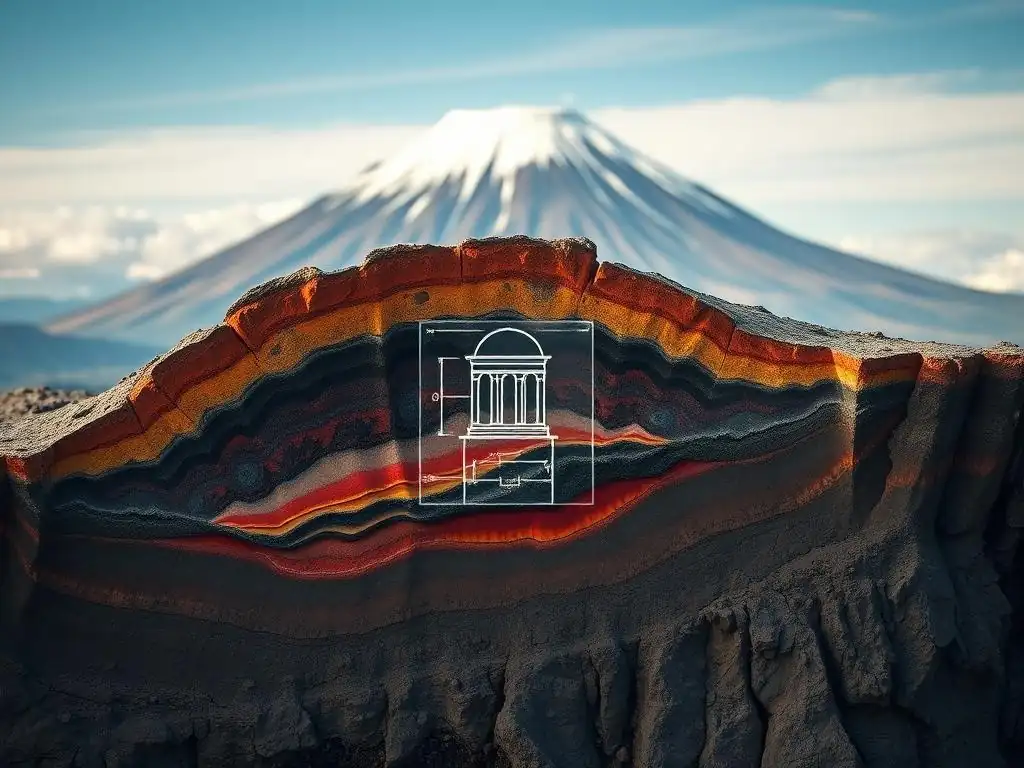
Biomimicry, the practice of learning from and emulating nature’s forms, processes, and ecosystems to solve human design challenges, offers a powerful approach to developing resilient infrastructure, particularly in volcanic regions. Volcanoes themselves, and the surrounding landscapes shaped by volcanic forces, provide a wealth of natural designs that can inspire innovative engineering solutions.
By studying the structural efficiency and adaptability of natural formations found in volcanic environments, engineers and architects can develop infrastructure that is not only stronger and more durable but also more sustainable and integrated with the natural environment. This approach moves beyond simply resisting natural forces and instead seeks to work in harmony with them.
The application of biomimicry in construction within volcanic areas is still in its early stages but holds immense potential. Researchers are exploring how the robust structures formed by volcanic processes, such as natural arches and lava tubes, can inform the design of buildings and underground infrastructure. Furthermore, the way ecosystems adapt and recover after volcanic eruptions can provide insights into creating more resilient and self-healing infrastructure systems.
By observing nature's strategies for dealing with extreme conditions, engineers can develop innovative materials and construction techniques that are better suited to withstand the challenges of volcanic environments and, more broadly, other disaster-prone regions. This interdisciplinary approach, combining biology, geology, and engineering, promises to unlock new frontiers in resilient infrastructure design.
Natural Arch Architecture: Mimicking Natural Bridge Structures for Stability
Natural arches, often found in volcanic landscapes, are remarkable examples of structural stability achieved through natural processes of erosion and weathering. These formations, carved by wind and water over millennia, demonstrate an inherent ability to withstand immense loads and stresses. Their curved shape distributes weight effectively, channeling forces downwards and outwards, making them incredibly strong and stable. Civil engineers can draw inspiration from the arch form to design bridges, tunnels, and building supports that are inherently more resilient to seismic activity and ground deformation, common hazards in volcanic regions.
Mimicking natural arch architecture in infrastructure design involves understanding the principles of compressive strength and load distribution inherent in these natural structures. For example, the design of arch bridges, a well-established engineering practice, directly reflects the principles observed in natural arches. However, biomimicry can push this further by exploring more complex arch geometries and materials inspired by natural formations.
Researchers are investigating the use of composite materials and innovative construction techniques to create arch-based structures that are not only strong but also lightweight and adaptable. Furthermore, the study of natural arch formation processes, including erosion patterns and material properties, can inform the development of more durable and self-healing construction materials, leading to infrastructure that is both robust and sustainable.
Lava Tube Thermal Regulation: Inspiration for Geothermal Heating and Cooling
Lava tubes, natural underground tunnels formed by flowing lava, provide exceptional insulation and thermal stability. The solidified lava crust acts as a natural insulator, maintaining a relatively constant temperature inside the tube, regardless of external temperature fluctuations. This thermal regulation property is a direct result of the insulating properties of volcanic rock and the depth of the tubes below the surface. This natural phenomenon can inspire the design of energy-efficient buildings and underground infrastructure systems, particularly in regions with extreme temperature variations or where geothermal energy is readily available.
The principles of lava tube thermal regulation can be applied to infrastructure through various approaches. For example, buildings can be partially or fully buried underground, mimicking the lava tube environment to take advantage of the earth's natural insulation. Geothermal heating and cooling systems, already utilized in volcanic regions like Iceland, can be further optimized by incorporating designs inspired by lava tube structures.
Underground infrastructure, such as pipelines and data centers, can also benefit from lava tube-inspired designs to maintain stable temperatures, reduce energy consumption for heating and cooling, and protect sensitive equipment from temperature extremes. Research into the thermal properties of volcanic rocks and the airflow dynamics within lava tubes can further enhance the efficiency of these bio-inspired thermal regulation systems for infrastructure.
Innovative Materials Inspired by Volcanic Processes
Pozzolanic Concrete: Enhancing Durability and Sustainability
Volcanic ash and pumice, byproducts of explosive volcanic eruptions, are naturally pozzolanic materials. Pozzolans are siliceous or siliceous and aluminous materials that, in themselves, possess little or no cementitious value but will, in finely divided form and in the presence of moisture, chemically react with calcium hydroxide at ordinary temperature to form compounds possessing cementitious properties.
This natural reactivity, recognized since Roman times with the use of volcanic ash in Roman concrete, can be harnessed to create more durable and sustainable concrete. Pozzolanic concrete, incorporating volcanic ash or other pozzolanic materials as a partial replacement for Portland cement, offers significant advantages in terms of strength, durability, and environmental impact.
The benefits of pozzolanic concrete are numerous and particularly relevant for infrastructure in volcanic regions and beyond. Pozzolans react with calcium hydroxide, a byproduct of Portland cement hydration, to form additional cementitious compounds, leading to a denser and less permeable concrete matrix. This enhanced microstructure results in improved resistance to chemical attack, such as sulfate attack and chloride penetration, crucial for durability in harsh volcanic environments.
Furthermore, pozzolanic concrete exhibits reduced heat of hydration, minimizing cracking in massive concrete structures. From a sustainability perspective, replacing a portion of Portland cement with pozzolans reduces the embodied carbon footprint of concrete, as cement production is a significant source of CO2 emissions. The utilization of locally sourced volcanic ash as a pozzolanic material also promotes resource efficiency and reduces transportation costs, making pozzolanic concrete a valuable material for volcano-inspired infrastructure solutions.
Basalt Fiber Reinforcement: A Stronger, Lighter Alternative to Steel
Basalt rock, an extrusive volcanic rock abundant in volcanic regions, can be melted and spun into basalt fibers, offering a compelling alternative to steel and fiberglass reinforcement in concrete and composite materials. Basalt fibers possess several advantageous properties, including high tensile strength, excellent chemical resistance, and high-temperature stability. Compared to steel, basalt fibers are lighter, non-corrosive, and require less energy-intensive production. These characteristics make basalt fiber reinforcement an attractive option for enhancing the durability and longevity of infrastructure, especially in the corrosive and demanding conditions often found in volcanic environments.
The application of basalt fiber reinforcement in infrastructure is gaining momentum. Basalt fibers can be used as rebar in concrete structures, providing superior corrosion resistance compared to steel rebar, which is prone to rusting, particularly in coastal or chemically aggressive environments. Basalt fiber-reinforced polymers (BFRPs) are also being developed for structural components, offering lightweight and high-strength alternatives to traditional materials.
In volcanic regions, where infrastructure may be exposed to volcanic gases, acidic rainfall, and geothermal activity, the chemical resistance of basalt fibers is particularly beneficial. Moreover, the high-temperature stability of basalt fibers makes them suitable for applications in fire-resistant construction. The increasing availability and decreasing cost of basalt fibers are paving the way for wider adoption in infrastructure projects, contributing to more resilient and sustainable built environments.
Case Studies: Implementing Infrastructure Solutions in Volcanic Regions
Reykjavik, Iceland: Geothermal Heating and Sustainable Infrastructure
Reykjavik, the capital of Iceland, is a prime example of a city that has successfully harnessed geothermal energy, a volcanic resource, to create a sustainable and resilient infrastructure system. Situated in a volcanically active region, Iceland has abundant geothermal resources, which Reykjavik has ingeniously utilized for district heating. Nearly all buildings in Reykjavik are heated with geothermal energy, pumped directly from underground hot water reservoirs. This system provides a reliable, clean, and cost-effective heating solution, significantly reducing the city's reliance on fossil fuels and its carbon footprint.
Reykjavik's geothermal heating system is not just environmentally friendly; it also enhances the city's resilience. By relying on a locally sourced and renewable energy resource, Reykjavik is less vulnerable to global energy price fluctuations and supply disruptions. The geothermal infrastructure, including pipelines and power plants, is designed to withstand seismic activity and other volcanic hazards.
Furthermore, the hot water from geothermal sources is also used for electricity generation, further diversifying the city's energy portfolio. Reykjavik's experience demonstrates how volcanic resources can be transformed from potential hazards into valuable assets, fostering sustainable and resilient urban development. The city’s success serves as a model for other volcanic regions and for cities seeking to transition to cleaner and more secure energy sources.
Naples, Italy: Designing for Volcanic Risk around Mount Vesuvius
Naples, Italy, a densely populated city situated in the shadow of Mount Vesuvius, one of Europe's most dangerous volcanoes, presents a compelling case study in designing infrastructure for extreme volcanic risk. The city faces the constant threat of explosive eruptions, pyroclastic flows, and ashfall. Recognizing these hazards, Naples has implemented a range of infrastructure solutions and preparedness measures to mitigate volcanic risk and enhance community safety. These strategies encompass urban planning, building codes, emergency management, and public education.
Urban planning in Naples prioritizes limiting development in the highest-risk zones around Vesuvius and directing new growth to safer areas. Building codes in the region incorporate specific requirements for volcanic hazard resistance, including reinforced structures capable of withstanding ashfall loads and seismic activity. Emergency management plans are meticulously developed and regularly exercised, involving evacuation routes, shelter locations, and communication protocols.
Extensive monitoring networks are in place to detect changes in volcanic activity, providing early warning of potential eruptions. Public education campaigns are crucial in raising awareness of volcanic hazards and promoting preparedness among residents. Naples' approach to living with volcanic risk is a testament to proactive planning and community resilience, demonstrating how even densely populated areas can adapt to and mitigate the threats posed by active volcanoes.
Future Directions: Research and Development in Volcanic Region Infrastructure
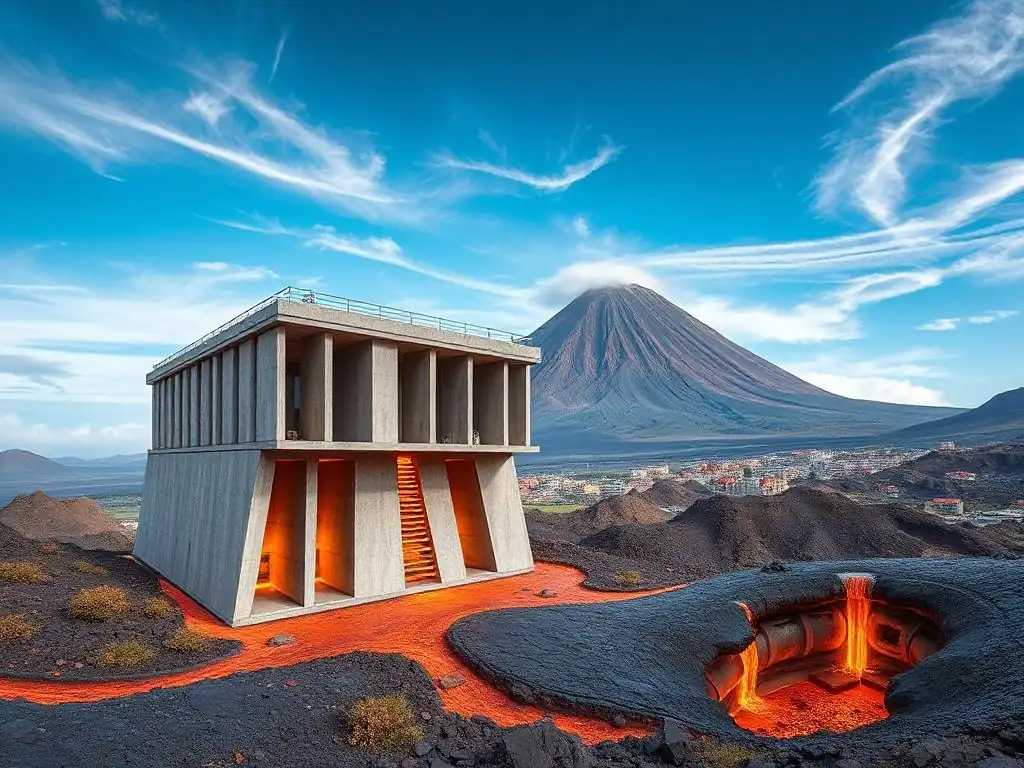
Advanced Modeling and Simulation: Predicting the Impact of Volcanic Events on Infrastructure
Advanced modeling and simulation technologies are playing an increasingly crucial role in predicting the impact of volcanic events on infrastructure and informing resilient design strategies. Computational models can simulate various volcanic hazards, including ashfall dispersal, lahar flow paths, pyroclastic flow dynamics, and ground deformation. These simulations allow engineers and urban planners to visualize potential hazard scenarios and assess the vulnerability of existing and planned infrastructure. By incorporating detailed topographic data, geological information, and eruption parameters, these models can provide valuable insights into the spatial extent and intensity of volcanic impacts.
The future of volcanic hazard modeling lies in integrating multi-hazard simulations and incorporating uncertainties. Volcanic eruptions often trigger a cascade of hazards, and models are being developed to simulate these complex interactions. Furthermore, probabilistic hazard assessments, which quantify the likelihood of different volcanic events occurring, are becoming increasingly sophisticated.
These advancements enable engineers to design infrastructure that is not only robust against specific volcanic hazards but also adaptable to a range of potential scenarios. The integration of real-time monitoring data into these models will further enhance their predictive capabilities, allowing for more dynamic and responsive infrastructure management in volcanic regions. This research is crucial for optimizing infrastructure investments and minimizing the societal and economic impacts of volcanic eruptions.
Developing Smart Infrastructure: Sensors and Monitoring Systems for Early Warning
Smart infrastructure, incorporating sensors, communication networks, and data analytics, offers transformative potential for enhancing resilience in volcanic regions. Real-time monitoring of volcanic activity, ground deformation, structural health, and environmental conditions can provide early warning of impending volcanic events and enable proactive infrastructure management. Sensor networks deployed on volcanoes and within infrastructure systems can continuously collect data on seismic activity, gas emissions, ground movement, and structural strain. This data is then transmitted wirelessly to central monitoring stations for analysis and interpretation.
The integration of artificial intelligence (AI) and machine learning (ML) algorithms into these monitoring systems is further enhancing their capabilities. AI and ML can analyze vast datasets to detect subtle anomalies and patterns that may indicate an increased risk of volcanic activity or structural failure. Early warning systems based on these technologies can provide crucial lead time for evacuations, infrastructure shutdowns, and emergency response actions.
Furthermore, smart infrastructure can enable adaptive infrastructure management, automatically adjusting traffic flows, rerouting power grids, or triggering protective measures based on real-time hazard assessments. The development and deployment of smart infrastructure in volcanic regions is a critical step towards building more resilient and safer communities.
Building Codes and Infrastructure in Volcanic Zones: A New Era of Resilience
The Role of Building Codes in Mitigating Volcanic Risk
Building codes are fundamental tools for mitigating volcanic risk and ensuring the safety and resilience of infrastructure in volcanic zones. Volcanic-specific building codes incorporate design and construction requirements that address the unique hazards associated with volcanic activity, such as ashfall loads, seismic shaking, and lahar impacts. These codes often specify minimum structural standards, material requirements, and construction techniques tailored to withstand these hazards. For example, building codes in ashfall-prone regions may mandate steeply pitched roofs to reduce ash accumulation and structural reinforcement to support heavy ash loads.
The effectiveness of building codes in mitigating volcanic risk depends on their comprehensiveness, enforcement, and regular updates. Building codes should be based on the latest scientific understanding of volcanic hazards and best practices in engineering design. Effective enforcement is crucial to ensure that buildings are constructed according to code requirements.
Regular updates are necessary to incorporate new research findings, technological advancements, and lessons learned from past volcanic events. Furthermore, building codes should be integrated with land-use planning policies to restrict development in the highest-risk zones and guide development towards safer areas. Well-designed and effectively implemented building codes are essential for creating a built environment that is resilient to volcanic hazards and protects lives and property.
Community Preparedness: Empowering Residents to Protect Themselves and Their Infrastructure
Community preparedness is an indispensable component of volcanic risk mitigation, complementing infrastructure solutions and building codes. Empowering residents with knowledge, skills, and resources to prepare for and respond to volcanic events is crucial for enhancing overall resilience. Community preparedness programs typically involve public education campaigns, emergency drills, and the establishment of community-based emergency response teams. Public education aims to raise awareness of volcanic hazards, evacuation procedures, and self-protective measures. Emergency drills provide opportunities for residents to practice evacuation routes, shelter procedures, and communication protocols.
Community-based emergency response teams, composed of trained volunteers, can play a vital role in assisting with evacuations, providing first aid, and supporting community recovery efforts. Furthermore, community preparedness initiatives can promote household-level preparedness, encouraging residents to develop emergency plans, assemble emergency kits, and secure their homes against volcanic hazards. Community engagement and participation are essential for the success of preparedness programs. By fostering a culture of preparedness and empowering residents to take proactive measures, communities in volcanic regions can significantly enhance their resilience and reduce the impacts of volcanic eruptions on both lives and infrastructure.
Conclusion: Embracing Innovative Design for Safer and More Resilient Cities
Learning from volcanic regions to build stronger everywhere is not just a matter of adapting to extreme environments; it's about embracing a new paradigm of resilient infrastructure design. Volcanoes, while destructive forces, offer invaluable lessons in resilience, adaptation, and sustainable resource utilization.
By understanding volcanic forces, mimicking natural designs, and innovating with volcanic materials, we can create infrastructure that is not only more robust against natural hazards but also more environmentally sustainable and resource-efficient. The case studies of Reykjavik and Naples exemplify how communities can successfully adapt to and mitigate volcanic risks through innovative infrastructure solutions and proactive preparedness measures.
The future of infrastructure lies in embracing biomimicry, advanced materials, smart technologies, and community-centered approaches. Research and development in these areas are crucial for pushing the boundaries of resilient design and creating safer, more sustainable, and more livable cities, not just in volcanic regions, but globally.
By drawing inspiration from the Earth's dynamic processes and the ingenuity of communities living in challenging environments, we can build a future where infrastructure is not just functional but also inherently resilient and harmonious with the natural world. The lessons learned from volcanic regions are thus not merely geographically specific but universally applicable, guiding us towards a new era of resilient urban development and a safer, more sustainable future for all.
Frequently Asked Questions
How can studying volcanoes inspire better infrastructure design?
Volcanoes demonstrate the power of natural forces. By understanding how they shape landscapes, we can design infrastructure that's more resilient and adaptable to extreme conditions.
What specific volcanic processes can inform infrastructure solutions?
The way volcanoes manage pressure and heat, along with their erosion resistance, offers valuable lessons. We can apply these principles to improve materials and construction techniques.
What are some examples of "volcano-inspired infrastructure solutions"?
This could include using geothermal energy for power, creating reinforced foundations modeled after volcanic rock formations, or implementing drainage systems mimicking volcanic lava flows for flood control.
How does VolcanoExplorers.org contribute to the development of volcano-inspired infrastructure?
The site provides educational resources and insights into volcanic processes. It also fosters collaboration between scientists, engineers, and policymakers to explore practical applications.
What makes "volcano-inspired infrastructure solutions" important for communities living near volcanoes?
These solutions can enhance safety and resilience in areas prone to volcanic activity. They can also promote sustainable development by harnessing geothermal resources.
Final Reflection: Building Resilience from Volcanic Lessons
The insights gleaned from studying volcanic formations and their inherent resilience are not merely academic exercises; they are critical blueprints for the future of our infrastructure. As climate change intensifies and natural disasters become more frequent, the lessons learned from nature's most powerful architects offer invaluable guidance for building structures that can withstand the test of time and adversity.
The enduring power of volcanic landscapes, shaped by immense forces and time, serves as a potent reminder of the importance of adaptability and robust design. This exploration of volcano-inspired infrastructure solutions has deepened my appreciation for the interconnectedness of natural processes and human innovation. The best way to predict the future is to design it.
- Buckminster Fuller. This quote encapsulates the proactive approach we must adopt, drawing inspiration from nature to create a more resilient and sustainable world.
Now, consider the implications of these principles in your own community. How can you advocate for the implementation of volcano-inspired infrastructure solutions in your local area? Let us all strive to build a future where our structures not only withstand the forces of nature but also harmonize with the environment, creating a legacy of resilience and sustainability for generations to come.
Unleash Your Inner Builder: Fortify Our World!
Thank you for exploring the fascinating world of volcanic ingenuity and its potential to revolutionize infrastructure! We hope this article has inspired you to think differently about resilience and innovation. Now, let's translate that inspiration into action.
Here are a few ways you can contribute to building a stronger future, inspired by nature's designs:
- Champion Innovative Materials: Research and advocate for the use of volcanic materials like pozzolans in your local construction projects. Talk to builders, architects, and local government officials about the benefits of these sustainable and resilient alternatives. This is your primary action to effect change.
- Delve Deeper: Explore the geology and history of volcanic activity in your region. Understanding the landscape's past can inform more resilient building practices for the future. Perhaps even visit a local volcano to witness its raw power firsthand (safely, of course! ).
- Share the Vision: Spread the word about biomimicry and nature-inspired infrastructure on social media. Let's get everyone thinking about how we can build smarter and more sustainably. Use #VolcanoInfrastructure #ResilientCities #Biomimicry
What immediate step will you take to incorporate volcanic lessons into your understanding of sustainable building practices?