
Edinburgh's Volcanic Heart: The Geological Tale of Castle Rock

Welcome to Volcano Explorers!
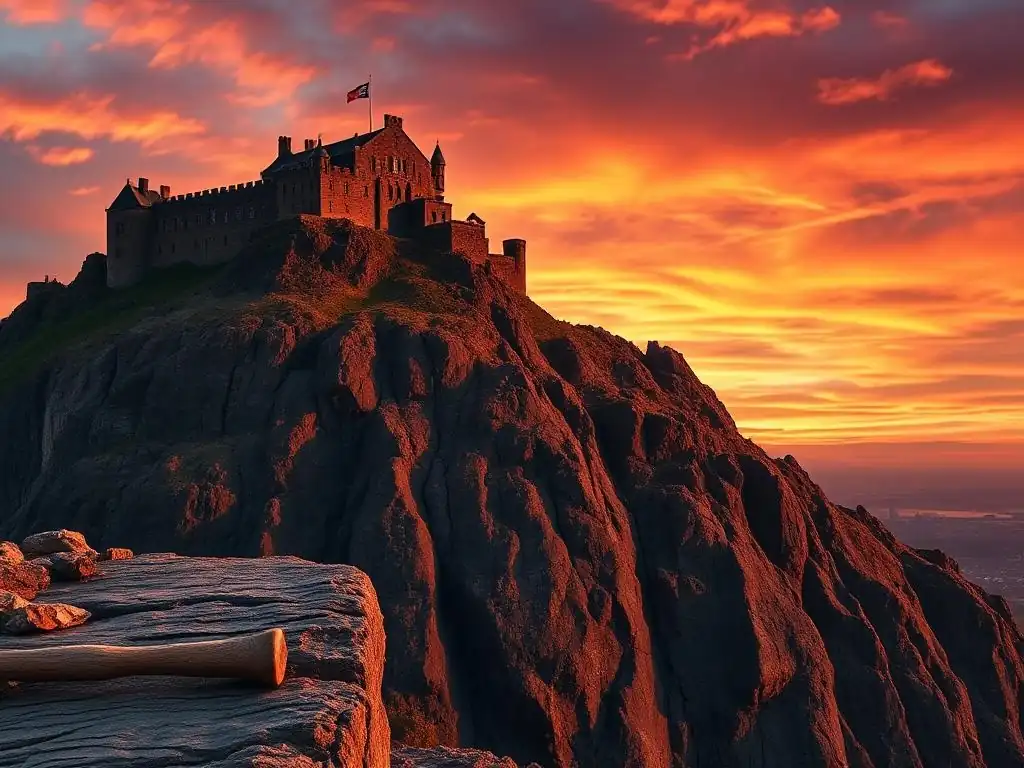
Prepare to unearth a hidden world beneath your feet. Have you ever wondered about the fiery secrets buried beneath familiar landscapes? Our exploration of Edinburgh's Volcanic Heart: The Geological Tale of Castle Rock begins now. Discover how ancient eruptions shaped this iconic landmark and what it reveals about the power and beauty of volcanic geology. What untold stories lie within the rock? Let's delve in and find out...
- Introduction: Exploring Edinburgh's Volcanic Origins Through Castle Rock
- Castle Rock: A Prime Example of a Volcanic Plug
- The Edinburgh Volcanic Geology Exploration: A Deep Dive
- The Geological Significance of Edinburgh Castle Rock
- Comparing Edinburgh's Volcano to Other Volcanic Plugs Worldwide
- Experiencing Edinburgh's Volcanic Geology Firsthand
- The Future of Edinburgh's Volcanic Heritage
- Conclusion: Edinburgh Castle Rock - A Testament to Volcanic Power
-
Frequently Asked Questions
- What makes Edinburgh's Castle Rock volcanically significant?
- What type of volcanic activity created Castle Rock?
- How old is the volcanic activity that formed Edinburgh's Castle Rock?
- Can I explore the volcanic geology of Edinburgh myself?
- Are there other volcanic features to explore in Edinburgh besides Castle Rock?
- Final Reflection: Unearthing Edinburgh's Fiery Past
- Unearth Your Inner Geologist!
Introduction: Exploring Edinburgh's Volcanic Origins Through Castle Rock
Unveiling the Volcanic Past Beneath Edinburgh Castle
Edinburgh Castle, an iconic landmark perched high above Scotland's capital, is not merely a testament to human history but also a dramatic showcase of Earth's geological forces. The imposing rock upon which the castle stands, known as Castle Rock, is a volcanic plug, a solidified core of an ancient volcano.
This remarkable geological feature offers a unique window into Edinburgh's fiery past, revealing a history sculpted by volcanic eruptions millions of years ago. Exploring Castle Rock is akin to stepping back in time, long before castles and kingdoms, to an era when volcanic activity shaped the very landscape we see today.
The story of Edinburgh is intrinsically linked to its volcanic geology. The very reason for Edinburgh's strategic importance and defensibility lies in the natural fortress provided by Castle Rock. Understanding the volcanic origins of this landmark is crucial for appreciating the full depth of Edinburgh's heritage, blending natural history with human history in a compelling narrative. This article delves into the geological tale of Castle Rock, exploring its formation, significance, and how it stands as a testament to the powerful geological processes that have shaped our world.
Why Edinburgh's Volcanic Geology is a Must-See
Edinburgh's volcanic geology offers a captivating journey for anyone interested in the Earth sciences. Unlike some volcanic regions that are remote or require specialized expeditions, Edinburgh's volcanic features are remarkably accessible and integrated into the urban landscape. Castle Rock, Arthur's Seat, and Salisbury Crags are all within easy reach, offering unparalleled opportunities to witness volcanic landforms in the heart of a bustling city. This accessibility makes Edinburgh a unique destination for geological exploration, allowing both casual visitors and seasoned geologists to appreciate the dramatic evidence of volcanic activity.
Moreover, Edinburgh's volcanic geology is exceptionally well-preserved, showcasing a range of volcanic features that are textbook examples of geological processes. From the columnar basalt of Salisbury Crags to the distinct plug shape of Castle Rock, the city provides a natural outdoor museum of volcanic formations. Exploring these sites offers a tangible connection to geological time scales, allowing us to visualize and understand the immense forces and timescales involved in shaping the Earth's surface. For those interested in Edinburgh volcanic geology exploration, the city presents an unmatched opportunity to witness and learn about volcanic phenomena firsthand.
Castle Rock: A Prime Example of a Volcanic Plug
Understanding Volcanic Plugs: A Geological Overview
Volcanic plugs, also known as volcanic necks, are fascinating geological formations that represent the solidified conduit of an extinct volcano. Imagine a volcano that has ceased erupting. Over millions of years, the softer volcanic cone, composed of ash and less resistant materials, is eroded away by wind and rain.
However, the magma within the volcano's vent, the pathway through which magma rose to the surface, often cools and solidifies into a dense, resistant rock. This solidified magma, typically composed of rocks like basalt or trachyte, is much harder than the surrounding volcanic cone. As erosion progresses, this resistant plug is left standing prominently, forming a distinctive and often imposing landform.
The shape of a volcanic plug is usually steep-sided and cylindrical or irregular, reflecting the shape of the original volcanic vent. They often rise dramatically from the surrounding landscape, offering panoramic views from their summits. Volcanic plugs are valuable to geologists as they provide insights into the internal plumbing system of volcanoes.
By studying the rocks and structures within a plug, geologists can learn about the composition of the magma, the pressures and temperatures involved in the eruption, and the processes that occurred deep beneath the Earth's surface. These formations are not just visually striking but also serve as geological archives, preserving crucial information about past volcanic activity.
The Formation of Castle Rock: From Eruption to Erosion
Castle Rock’s formation began approximately 340 million years ago during the Carboniferous period, a time of significant volcanic activity in the Edinburgh area. At this time, Scotland was located closer to the equator and experienced intense stretching of the Earth's crust. This stretching allowed molten rock, or magma, to rise from deep within the Earth's mantle towards the surface. This magma didn't erupt in a typical cone-shaped volcano fashion but rather intruded into existing sedimentary rocks, likely through fissures and cracks in the Earth’s crust.
The magma that formed Castle Rock was composed of basalt, a dark, fine-grained volcanic rock rich in minerals like plagioclase feldspar and pyroxene. This basaltic magma slowly cooled and solidified within the volcanic vent, creating a hard, resistant core. Over millions of years following the volcanic activity, the surrounding landscape, composed of softer sedimentary rocks, was subjected to relentless erosion.
Glacial activity during ice ages, wind, and rain all played a role in wearing away the softer rocks. Because basalt is significantly more resistant to erosion, Castle Rock remained standing while the surrounding landscape was lowered, resulting in the prominent plug we see today. This process of differential erosion, where harder rocks resist weathering while softer rocks are eroded away, is key to understanding the dramatic prominence of Castle Rock in the Edinburgh landscape.
The Edinburgh Volcanic Geology Exploration: A Deep Dive
The Carboniferous Period: Edinburgh's Volcanic Heyday
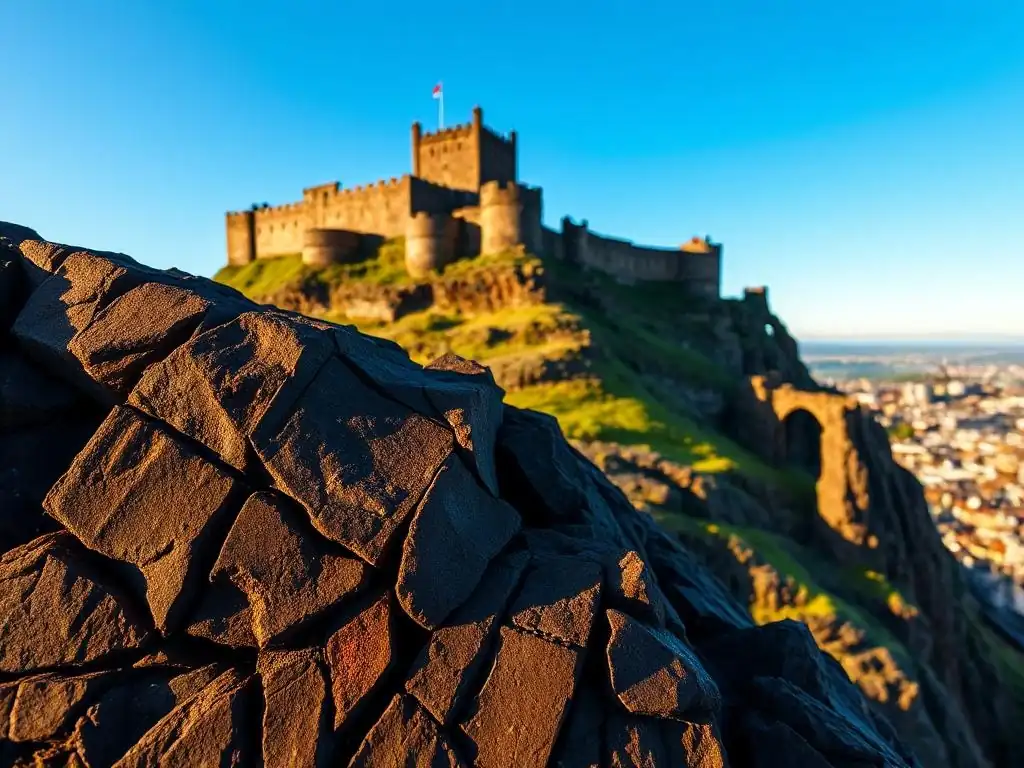
The Carboniferous Period, spanning from approximately 359 to 299 million years ago, was a pivotal epoch in Earth's history, and particularly significant for Edinburgh's geological narrative. During this time, the region that is now Edinburgh was situated near the equator and experienced intense volcanic activity.
This volcanism was driven by extensional tectonic forces, where the Earth's crust was being pulled apart, creating pathways for magma to rise to the surface. This wasn't a period of continuous, explosive eruptions like we might associate with modern volcanoes, but rather a more complex and varied volcanic landscape characterized by both effusive lava flows and intrusive volcanic features.
The volcanic activity in the Carboniferous Period wasn't isolated to Castle Rock. It was part of a broader volcanic province that extended across central Scotland. Arthur's Seat, Salisbury Crags, and Calton Hill are all remnants of this same period of volcanic activity, each representing different aspects of the volcanic processes.
Exploring Edinburgh's volcanic geology means delving into this Carboniferous past, understanding the geological context that gave rise to these iconic landforms. The rocks formed during this period, including basalts, tuffs (volcanic ash deposits), and various sedimentary rocks interbedded with volcanic materials, tell a story of a dynamic and volcanically active environment. This period laid the foundation for the dramatic landscape we see in Edinburgh today.
Magma Composition and the Creation of Castle Rock's Basalt
The specific type of magma that formed Castle Rock is crucial to understanding its characteristics and resistance to erosion. Analysis of the rock reveals it to be primarily basalt, a dark-colored, fine-grained extrusive igneous rock. Basaltic magma is relatively low in silica content and is typically less viscous compared to magmas that form rocks like rhyolite or granite. This lower viscosity allows basaltic lava to flow more easily and spread over wider areas, although in the case of Castle Rock, the magma solidified within the volcanic vent rather than flowing extensively across the surface.
The mineral composition of basalt is dominated by plagioclase feldspar and pyroxene, with smaller amounts of olivine and other minerals. These minerals crystallize from the cooling magma and interlock to form a dense, hard rock. The fine-grained texture of basalt indicates that the magma cooled relatively quickly, although slow enough within the volcanic vent to form a solid plug.
The specific mineralogy and texture of Castle Rock's basalt contribute to its durability and resistance to weathering, explaining why it has persisted as a prominent feature for millions of years while surrounding softer rocks have eroded away. Understanding the magma composition is key to deciphering the geological history and long-term survival of Edinburgh’s volcanic landmarks.
The Role of Erosion in Shaping Edinburgh's Volcanic Landscape
While volcanic activity initially created the geological foundations of Edinburgh's landscape, erosion has been the sculptor, shaping the dramatic forms we see today. For millions of years, weathering processes, including freeze-thaw cycles, wind, and rain, have acted upon the volcanic rocks and surrounding softer sedimentary rocks. However, the most significant erosional force in shaping Edinburgh's volcanic landscape was undoubtedly glacial activity during the Ice Ages.
During glacial periods, massive ice sheets covered Scotland, carving and reshaping the landscape on a grand scale. Glaciers acted like giant bulldozers, eroding softer rocks more readily while leaving behind harder, more resistant features like Castle Rock. The glaciers sculpted the valleys and basins surrounding Castle Rock, further accentuating its prominence.
The characteristic steep cliffs on the eastern side of Castle Rock are partly a result of glacial plucking, a process where glaciers freeze onto rocks and then pull them away as they move. Even after the ice ages, ongoing erosion continues to slowly modify the landscape, but the resistant volcanic plugs like Castle Rock remain as enduring monuments to both volcanic creation and erosional forces. The interplay between volcanic formation and glacial and ongoing erosion is fundamental to understanding the current form of Edinburgh's distinctive volcanic landscape.
The Geological Significance of Edinburgh Castle Rock
Identifying Volcanic Features: Clues in the Rock Formation
Castle Rock itself holds numerous geological clues that confirm its volcanic origin and provide insights into its formation. Close examination of the rock reveals columnar jointing, a characteristic feature of cooling basalt. As basaltic lava cools and solidifies, it contracts, and this contraction often leads to the formation of regular, polygonal columns, typically hexagonal or pentagonal in shape.
While not as perfectly formed as at places like the Giant's Causeway, evidence of columnar jointing can be observed on Castle Rock, particularly in certain exposed sections. These columns are a strong indicator of the slow cooling of the basaltic magma within the volcanic vent.
Furthermore, the overall shape and structure of Castle Rock, rising steeply from the surrounding terrain, are highly indicative of a volcanic plug. The sheer cliffs and the resistant nature of the rock compared to the surrounding landscape are consistent with the geological model of a volcanic neck.
Geologists studying Castle Rock would also look for other features such as xenoliths – fragments of surrounding rocks incorporated into the magma during its ascent – and any signs of volcanic breccia, which is fragmented volcanic rock. While often subtle, these geological features embedded within the rock formation itself provide compelling evidence for Castle Rock's volcanic past and help geologists reconstruct the processes that led to its creation.
Castle Rock as a Window into Ancient Volcanic Activity
Castle Rock is more than just a visually striking landmark; it serves as a valuable geological window into ancient volcanic activity that occurred millions of years ago. By studying the rock itself, geologists can glean information about the composition of the magma, the depth of its origin, and the conditions under which it cooled and solidified. The basalt of Castle Rock, when analyzed geochemically, can reveal details about the Earth's mantle at the time of its formation, providing insights into plate tectonic processes and magma generation in the Carboniferous Period.
Moreover, the preservation of Castle Rock as a volcanic plug allows geologists to study the internal structure of a volcanic conduit that would otherwise be buried or eroded away. It offers a rare opportunity to examine the pathway through which magma ascended to the surface, even if the surface expression of the volcano has long since disappeared.
Castle Rock, therefore, acts as a three-dimensional geological archive, preserving evidence of volcanic processes that occurred deep within the Earth and at the Earth's surface millions of years ago. For Edinburgh volcanic geology exploration, Castle Rock is an invaluable site for both research and education, allowing us to understand Earth's dynamic history.
The Unique Geological Context of Edinburgh's Volcano
Edinburgh's volcano, represented by Castle Rock and other nearby features, exists within a unique geological context that contributes to its significance. Unlike volcanoes associated with plate boundaries, such as those in the Pacific Ring of Fire, Edinburgh's volcanism is related to intraplate volcanism. This means it occurred within a tectonic plate, rather than at the boundary between plates.
Intraplate volcanism is often linked to mantle plumes or hotspots, areas where unusually hot mantle material rises towards the surface, causing melting and volcanic activity. While the precise mechanisms are still debated, the Carboniferous volcanism in Edinburgh is thought to be related to such intraplate processes.
This unique geological setting means that Edinburgh's volcano provides valuable insights into different types of volcanic activity compared to those typically studied in plate boundary settings. The magma composition, eruption styles, and overall geological context of intraplate volcanoes can differ significantly. Studying Edinburgh's volcanic geology helps broaden our understanding of the diverse range of volcanic phenomena that occur on Earth. Furthermore, the integration of these volcanic features into a modern urban landscape makes Edinburgh a particularly accessible and compelling location for studying and appreciating the broader context of global volcanism.
Comparing Edinburgh's Volcano to Other Volcanic Plugs Worldwide
Similarities and Differences in Volcanic Plug Formation
Volcanic plugs, like Castle Rock, are found in volcanic regions around the world, sharing commonalities in their formation processes but also exhibiting unique characteristics depending on their geological context. The fundamental process of formation remains consistent: magma solidifying in a volcanic vent and being exposed by erosion of the surrounding volcanic cone. This process leads to the characteristic steep-sided, resistant landforms that define volcanic plugs globally. They are typically composed of resistant igneous rocks like basalt, trachyte, or phonolite, depending on the magma composition of the original volcano.
However, differences arise due to variations in magma type, the tectonic setting, and the erosional history of each region. Some volcanic plugs may be formed from more explosive eruptions, resulting in a mix of solidified lava and volcanic breccia within the plug. Others may be associated with different types of volcanoes, such as shield volcanoes or stratovolcanoes, which influence the shape and surrounding landscape of the plug.
The climate and geological history of a region also play a significant role in shaping the final appearance of a volcanic plug through varying rates and styles of erosion. Comparing and contrasting volcanic plugs globally allows geologists to understand the spectrum of volcanic processes and erosional forces that create these distinctive landforms.
Case Studies: Shiprock and Devil's Tower
To further illustrate the diversity and shared characteristics of volcanic plugs, consider two prominent examples: Shiprock in New Mexico, USA, and Devil's Tower in Wyoming, USA. Shiprock, a dramatic landmark in the Navajo Nation, is a volcanic neck composed of dark volcanic rock called minette. It rises sharply from the desert landscape, showcasing classic volcanic plug morphology.
Shiprock is particularly notable for the radiating dykes (vertical sheets of solidified magma) that extend outwards from the plug, representing pathways through which magma flowed outwards from the central vent. Its formation is associated with a period of intense volcanic activity in the southwestern United States millions of years ago.
Devil's Tower, another iconic volcanic plug, is famous for its remarkable columnar jointing. While its precise formation is still debated, it is widely believed to be an intrusive igneous body that solidified beneath the surface and was later exposed by erosion. Devil's Tower exhibits exceptionally well-developed and large-scale columnar joints, making it a textbook example of this geological feature.
Comparing Castle Rock to Shiprock and Devil's Tower highlights both the common thread of volcanic plug formation and the unique geological stories each formation tells. Each volcanic plug is a product of specific volcanic events and erosional histories, contributing to the rich tapestry of volcanic geology worldwide.
Experiencing Edinburgh's Volcanic Geology Firsthand
Visiting Castle Rock: What to Look For
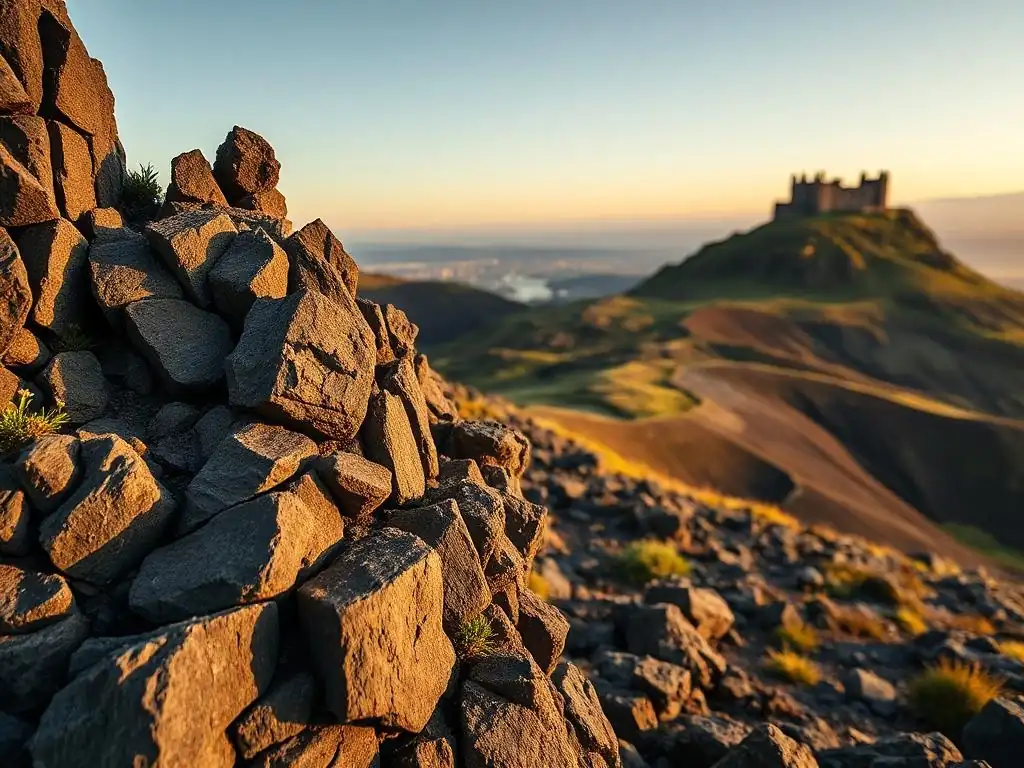
Visiting Castle Rock offers a tangible experience of Edinburgh's volcanic geology. While exploring the castle itself, take time to observe the rock on which it is built. Look for variations in color and texture within the rock, which can reflect different phases of cooling or minor variations in magma composition. Examine the cliff faces to identify evidence of columnar jointing, the polygonal columns that indicate slow cooling of basalt. Pay attention to the overall shape of Castle Rock, its steep sides, and its prominence above the surrounding landscape, all characteristic features of a volcanic plug.
From vantage points within and around the castle, consider the broader landscape. Notice how Castle Rock stands apart from the surrounding terrain, a testament to its resistance to erosion compared to the softer rocks that once surrounded it. Imagine the volcanic landscape that existed millions of years ago, and how erosion has sculpted the present-day scenery.
Even without specialized geological knowledge, simply observing Castle Rock with an awareness of its volcanic origins enhances the visitor experience, adding a geological dimension to the historical significance of Edinburgh Castle. A mindful visit to Castle Rock becomes an engaging introduction to Edinburgh volcanic geology exploration.
Geological Tours and Resources
For those seeking a deeper understanding of Edinburgh's volcanic geology, several resources and guided tours are available. The Edinburgh Geological Society offers field trips and excursions that often include visits to Castle Rock, Arthur's Seat, and Salisbury Crags, providing expert insights into the geological history of these sites. Local tour companies also offer specialized geological walks that focus on Edinburgh's volcanic heritage, led by knowledgeable guides who can explain the geological processes in accessible terms.
Museums in Edinburgh, such as the National Museum of Scotland, often have exhibits on Scottish geology, including displays on volcanic rocks and the formation of Edinburgh's landscape. Online resources, including websites and publications from geological surveys and universities, offer further information for self-guided exploration. Utilizing these resources enhances the experience of Edinburgh volcanic geology exploration, providing detailed explanations, maps, and further reading to deepen your understanding and appreciation of the city's volcanic past. These resources cater to various levels of interest, from casual learners to serious geology enthusiasts.
Exploring Salisbury Crags and Arthur's Seat
Extending your Edinburgh volcanic geology exploration beyond Castle Rock to Salisbury Crags and Arthur's Seat provides a more comprehensive picture of the region's volcanic history. Salisbury Crags, a dramatic series of cliffs adjacent to Arthur's Seat, showcase impressive columnar basalt formations, even more prominent and well-defined than those on Castle Rock. Walking along the base of Salisbury Crags allows for close-up observation of these geological structures, providing a textbook example of columnar jointing. The Crags represent a sill, a horizontal intrusion of magma that cooled and solidified beneath the surface.
Arthur's Seat, the highest point in Holyrood Park, is another volcanic hill formed during the same Carboniferous period as Castle Rock. It offers panoramic views of Edinburgh and the surrounding landscape, allowing you to appreciate the volcanic features in their broader geographical context.
Arthur's Seat is composed of a variety of volcanic rocks, including basalt lavas and volcanic breccias, representing different phases of volcanic activity. Exploring Salisbury Crags and Arthur's Seat in conjunction with Castle Rock provides a richer and more complete understanding of the volcanic landscape that shaped Edinburgh, showcasing different types of volcanic formations and geological processes within a relatively small area.
The Future of Edinburgh's Volcanic Heritage
Preserving Castle Rock for Future Generations
Preserving Castle Rock is crucial for safeguarding both Edinburgh's historical and geological heritage for future generations. As a natural monument and the foundation of Edinburgh Castle, Castle Rock requires ongoing conservation efforts to protect it from weathering, erosion, and the impacts of human activity. Regular monitoring of the rock face is essential to identify any signs of instability or deterioration. Conservation strategies may include stabilizing loose rock fragments, managing vegetation growth that can contribute to weathering, and controlling visitor access to sensitive areas to minimize erosion.
Beyond physical preservation, raising public awareness about the geological significance of Castle Rock is equally important. Educational initiatives, interpretive signage, and online resources can help visitors and residents alike understand and appreciate the volcanic story behind this iconic landmark. Promoting responsible tourism that respects the geological integrity of Castle Rock ensures that this natural wonder continues to inspire and educate for centuries to come. Preservation efforts must balance the need for conservation with the desire to make this geological heritage accessible and engaging to the public.
Ongoing Research in Edinburgh's Volcanic Geology
Edinburgh's volcanic geology continues to be a subject of ongoing research, with geologists seeking to further unravel the complexities of its formation and evolution. Current research may focus on refining the dating of volcanic events, using advanced techniques to analyze the composition of the volcanic rocks, and developing more detailed models of the volcanic processes that occurred in the Carboniferous Period. Researchers may also investigate the relationship between Edinburgh's volcanism and broader tectonic events in Scotland and the North Atlantic region.
Furthermore, research into the weathering and erosion processes acting on Castle Rock and other volcanic features is important for understanding long-term landscape evolution and informing conservation strategies. Studying the impact of climate change on these geological formations is also becoming increasingly relevant. Ongoing research ensures that our understanding of Edinburgh's volcanic geology remains dynamic and up-to-date, contributing to both scientific knowledge and informed management of this valuable geological heritage. This continuous investigation keeps the geological story of Edinburgh alive and evolving.
The Impact of Weathering on Edinburgh's Geological Formations
Weathering, the breakdown of rocks at the Earth's surface, plays a continuous role in shaping Edinburgh's volcanic formations, including Castle Rock, Arthur's Seat, and Salisbury Crags. Physical weathering processes, such as freeze-thaw action, where water expands in cracks when it freezes and exerts pressure, contribute to the gradual breakdown of the basalt rock. Chemical weathering, involving reactions between the rock minerals and water, air, and acids, also slowly alters the rock composition and weakens its structure. Biological weathering, caused by the action of plants and microorganisms, further contributes to the breakdown process.
While basalt is relatively resistant to weathering compared to many other rock types, it is not immune to these processes over geological timescales. Weathering gradually erodes the surface of Castle Rock, slowly rounding edges and potentially loosening rock fragments. Understanding the rates and types of weathering acting on Edinburgh's volcanic formations is crucial for predicting long-term landscape changes and informing conservation efforts. Monitoring weathering patterns and implementing appropriate management strategies helps to mitigate the impacts of these natural processes and preserve Edinburgh's volcanic heritage for the future.
Conclusion: Edinburgh Castle Rock - A Testament to Volcanic Power
Reflecting on the Volcanic History Beneath Edinburgh
Edinburgh Castle Rock stands as a powerful and enduring testament to the volcanic forces that shaped the city's landscape millions of years ago. From its origins in the Carboniferous Period to its dramatic emergence as a volcanic plug through millennia of erosion, Castle Rock embodies a remarkable geological history. It is a tangible link to a fiery past, a reminder that beneath the bustling city lies a foundation forged by volcanic activity. Understanding the volcanic origins of Castle Rock enriches our appreciation of Edinburgh, adding a deep geological dimension to its rich cultural and historical tapestry.
The story of Castle Rock is not just a geological narrative; it is interwoven with the human history of Edinburgh. The very reason for Edinburgh's strategic importance and the location of its iconic castle is directly attributable to this volcanic feature.
Castle Rock has provided a natural defensive site for centuries, shaping the city's development and playing a pivotal role in Scottish history. Reflecting on the volcanic history beneath Edinburgh allows us to see the city in a new light, as a place where natural forces and human endeavors have been intertwined for millennia, creating a truly unique and captivating urban landscape.
Further Exploration: Continuing Your Journey into Volcanic Geology
Edinburgh Castle Rock serves as an excellent starting point for a broader journey into the fascinating world of volcanic geology. From exploring other volcanic features in Edinburgh, such as Arthur's Seat and Salisbury Crags, to delving into the geology of volcanic regions worldwide, there are countless avenues for further exploration. Consider researching different types of volcanoes, from shield volcanoes to stratovolcanoes, and investigating the geological processes that drive volcanic activity. Explore online resources, visit geological museums, and consider joining geological societies or tours to deepen your knowledge and connect with others who share an interest in Earth science.
The study of volcanic geology is a dynamic and ever-evolving field, offering insights into the Earth's internal processes, plate tectonics, and the forces that shape our planet. By continuing your journey into volcanic geology, you can gain a deeper appreciation for the Earth's dynamic history and the powerful natural forces that have created the world around us. Edinburgh's volcanic heart, exemplified by Castle Rock, is just the beginning of a vast and rewarding exploration of our planet's geological wonders.
Frequently Asked Questions
What makes Edinburgh's Castle Rock volcanically significant?
Castle Rock is a volcanic plug, the solidified remains of a volcano's magma chamber. This resistant basalt is what remains after softer surrounding rock eroded away, creating the iconic landmark.
What type of volcanic activity created Castle Rock?
The volcanic activity involved was likely effusive, rather than explosive. This means lava flowed relatively gently, building up over time to form a cone, and then the plug.
How old is the volcanic activity that formed Edinburgh's Castle Rock?
The volcanic activity occurred around 340 million years ago, during the Carboniferous period. This predates most other geological features in the area.
Can I explore the volcanic geology of Edinburgh myself?
Yes, you can! A self-guided tour or a guided walk focusing on Edinburgh's geology will highlight the volcanic features and their formation.
Are there other volcanic features to explore in Edinburgh besides Castle Rock?
Absolutely! Arthur's Seat is another prominent example of volcanic activity, and Salisbury Crags offer excellent exposures of volcanic rocks.
Final Reflection: Unearthing Edinburgh's Fiery Past
The journey through Edinburgh's volcanic geology, as revealed by Castle Rock, isn't just a historical excavation; it's a revelation of the city's very foundation. Understanding the geological forces that shaped this iconic landmark allows us to appreciate the deep-seated power and resilience that underpin Edinburgh's enduring charm. The story etched in the rock is a testament to the dynamic processes that continue to shape our world, even in the heart of a modern city.
The enduring presence of Castle Rock serves as a constant reminder of the earth's immense power and the slow, deliberate processes that sculpt our landscapes. This exploration has deepened my own appreciation for the hidden narratives woven into the fabric of our everyday surroundings, urging me to look beyond the surface and seek the stories beneath. The best view comes after the hardest climb,
a sentiment that perfectly encapsulates the rewarding experience of understanding the complex geological history of Edinburgh.
As you walk the streets of Edinburgh, I encourage you to look up, to truly see Castle Rock not just as a fortress, but as a monument to the earth's fiery past. Let the knowledge of its volcanic origins inspire you to explore the hidden histories around you, to question the landscapes you inhabit, and to appreciate the profound connection between the present and the ancient forces that shaped it. Embrace the spirit of exploration, and unearth the geological tales that lie waiting to be discovered in your own backyard.
Unearth Your Inner Geologist!
Thank you for exploring the fascinating geological history of Edinburgh's Castle Rock with us! We hope you've gained a new appreciation for the volcanic forces that shaped this iconic landmark. Now, it's time to take your newfound knowledge further.
Here's how you can continue your exploration:
- Embark on your own Edinburgh Volcano Quest: Plan a visit to Castle Rock and see if you can identify the volcanic features discussed in the article. Take photos to record your findings – you'll be a real-life volcano explorer!
- Dive deeper into Scotland's volcanic past by researching other notable geological sites across the country. What other hidden volcanic wonders might you uncover?
- Share this article with fellow geology enthusiasts and spark a conversation about the power of volcanoes in shaping our world. Let's ignite some geological curiosity!
What surprising volcanic fact did you learn today, and how will it change the way you view Edinburgh's Castle Rock? Share your thoughts in the comments below!