
The Devil's Tower Enigma: Unraveling the Legend of a Volcanic Neck

Welcome to Volcano Explorers!
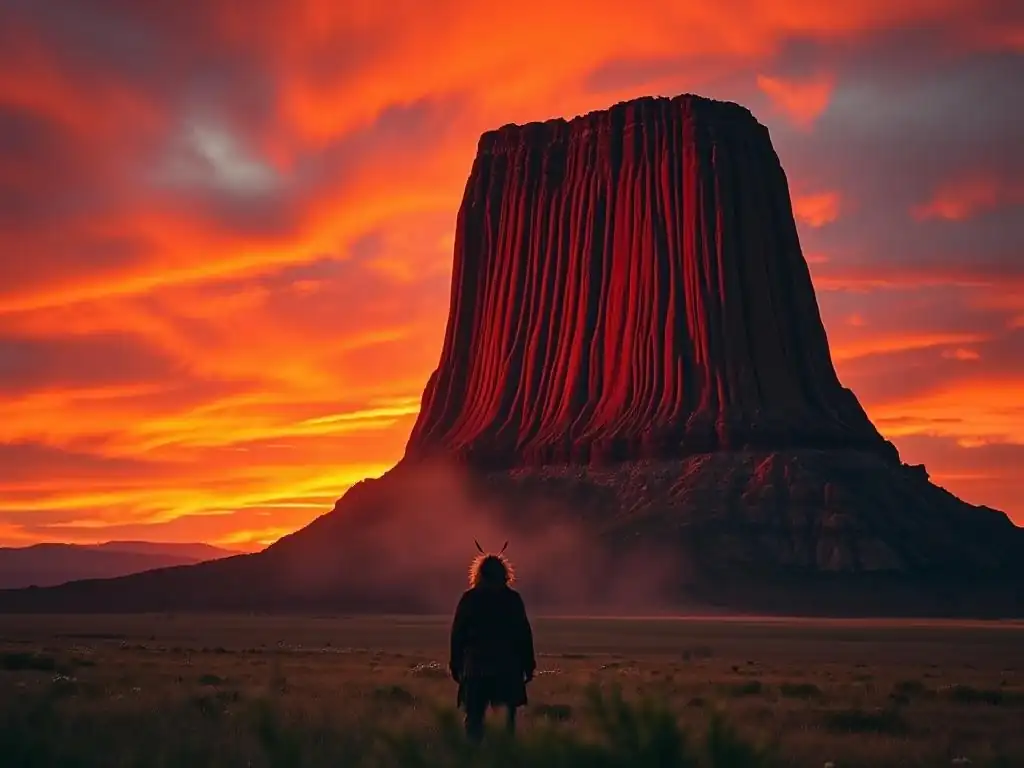
Prepare to journey into the heart of the earth's fiery secrets. Ever wondered how a solitary, towering monolith like Devil's Tower comes to dominate the landscape? Dive in and explore the captivating legend and geological truth behind this iconic formation – a volcanic neck born from ancient eruptions. What forces shaped this enigmatic landmark, and what stories does its imposing presence tell? Uncover the answers as we unravel the mysteries surrounding the Devil's Tower!
- Devils Tower National Monument: Geology, Legend, and Preservation
- Introduction: Devils Tower, A National Monument
- Geological Formation: From Magmatic Intrusion to Landmark
- Indigenous Legends: Interpretations and Cultural Significance
- Devils Tower: Fact vs. Fiction
- Devils Tower National Monument: Tourism, Conservation, and Research
- Similar Geological Formations Worldwide
- Conclusion: The Enduring Allure
-
Frequently Asked Questions
- What is a volcanic neck, and is Devil's Tower one?
- How does the Devil's Tower relate to the legend keyword "Devil's Tower volcanic neck legend"?
- How did Devil's Tower form if it's a volcanic neck?
- Is Devil's Tower still considered an active volcano?
- Where can I find more information about volcanic safety and real-time updates?
- Final Reflection: Echoes of Ancient Stone
- Ignite Your Inner Explorer: Journey Deeper into Volcanic Mysteries!
Devils Tower National Monument: Geology, Legend, and Preservation
Introduction: Devils Tower, A National Monument
Discovering the Geological Marvel
Devils Tower, a striking geological formation rising dramatically from the Wyoming landscape, stands as a testament to the powerful forces shaping our planet. Designated as the first United States National Monument in 1906 by President Theodore Roosevelt, this iconic landmark draws hundreds of thousands of visitors annually.
Its sheer cliffs and unique columnar structure have captivated imaginations for centuries, prompting both scientific inquiry and rich cultural narratives. The tower's imposing presence in the Belle Fourche River valley creates a visual spectacle that underscores the raw beauty and geological complexity of the American West, making it a must-see destination for nature enthusiasts and geological aficionados alike.
The monument, managed by the National Park Service, encompasses not only the tower itself but also a surrounding area of nearly 1,347 acres, protecting diverse ecosystems and providing recreational opportunities. Visitors can explore hiking trails that circle the base of the tower, offering different perspectives of its geological features and the surrounding prairie landscape. The visitor center provides educational exhibits that delve into the tower's geological origins, the cultural significance to Native American tribes, and the natural history of the area. This blend of natural beauty, geological intrigue, and cultural heritage ensures Devils Tower remains a treasured national landmark.
The Enduring Legends: A Land of Cultural Significance
Beyond its geological significance, Devils Tower is deeply intertwined with the cultural heritage of numerous Native American tribes, particularly those of the Northern Plains. For tribes like the Kiowa, Lakota, and Cheyenne, the tower is not merely a geological formation but a sacred site imbued with profound spiritual meaning and historical narratives. These narratives, passed down through generations, often explain the tower's formation through tales of creation, transformation, and the intervention of supernatural beings. These legends provide a rich layer of cultural context to the site, demonstrating a deep and enduring connection between the landscape and indigenous peoples.
The enduring legends surrounding Devils Tower highlight the importance of respecting the cultural significance of natural landmarks. These stories are not simply folklore; they are integral to the identity, history, and spiritual practices of the tribes who consider this land sacred. The National Park Service actively works to collaborate with associated tribes to ensure that the cultural narratives and spiritual significance of Devils Tower are recognized and respectfully presented to visitors. This collaborative approach emphasizes the importance of preserving both the geological and cultural heritage of this remarkable site for future generations.
Geological Formation: From Magmatic Intrusion to Landmark
The Magmatic Origins: A Deep Dive into Intrusive Igneous Activity
The scientific story of Devils Tower begins deep beneath the Earth's surface, approximately 50 million years ago during the Eocene epoch. Molten rock, or magma, began to rise from the Earth's mantle, pushing its way upwards through layers of sedimentary rock. This magma, rich in silica, was part of a larger period of igneous activity affecting the Black Hills region.
Unlike volcanic eruptions that create cone-shaped volcanoes on the surface, the magma that formed Devils Tower did not reach the surface. Instead, it intruded into the existing sedimentary layers, cooling and solidifying underground. This process is known as magmatic intrusion, a fundamental geological process shaping landscapes over vast timescales.
The composition of the magma, likely a phonolite porphyry, played a crucial role in the tower's formation. This type of igneous rock is characterized by its fine-grained matrix and larger crystals (phenocrysts), which contribute to its durability and distinctive appearance. The slow cooling process beneath the surface allowed for the formation of these large crystals and the development of the columnar jointing that is so characteristic of Devils Tower. Understanding the nature of this intrusive igneous activity is key to deciphering the geological history of this iconic landmark and distinguishing it from typical volcanic formations.
Columnar Jointing: A Unique Geological Feature
One of the most striking features of Devils Tower is its columnar jointing. As the molten magma cooled and solidified beneath the surface, it contracted. This contraction caused tensional forces to build up within the rock mass.
Because the cooling process was relatively uniform, these forces resulted in a regular pattern of fractures propagating through the rock. These fractures, or joints, primarily formed in a hexagonal pattern, although variations with four, five, and seven sides are also present. This hexagonal pattern is the most efficient way to relieve stress during cooling, leading to the formation of the distinctive columns that define Devils Tower.
These columns, ranging in diameter from 6 to 10 feet and reaching heights of up to 400 feet, create the fluted appearance of the tower's sides. The individual columns are stacked vertically, resembling bundles of pencils or organ pipes.
This columnar jointing is not unique to Devils Tower and can be observed in other volcanic necks and basalt flows around the world, such as the Giant's Causeway in Northern Ireland and Fingal's Cave in Scotland. However, the scale and prominence of the columnar jointing at Devils Tower make it an exceptional example of this geological phenomenon, captivating geologists and visitors alike.
Devils Tower as a Laccolithic Intrusion: Current Scientific Understanding
Initially, Devils Tower was often interpreted as a volcanic plug, the solidified conduit of an extinct volcano. However, current geological understanding suggests that Devils Tower is more accurately classified as a laccolithic intrusion. A laccolith is formed when viscous magma intrudes between layers of sedimentary rock, arching the overlying strata upwards without breaking through to the surface.
The magma then cools and solidifies into a lens-shaped body. While the exact formation process of Devils Tower is still debated, the laccolith theory is supported by the surrounding geology and the lack of evidence for a large-scale volcanic eruption at this location.
Over millions of years, erosion has played a crucial role in revealing Devils Tower. The softer sedimentary rocks that once surrounded and overlaid the igneous intrusion have been gradually eroded away by wind, rain, and ice.
This differential erosion, where softer rocks erode faster than harder ones, has exposed the more resistant igneous rock of Devils Tower, leaving it standing prominently above the surrounding landscape. While the term "volcanic neck" is still sometimes used informally to describe Devils Tower due to its appearance, the understanding of it as a laccolithic intrusion provides a more nuanced and scientifically accurate explanation of its geological origins.
Indigenous Legends: Interpretations and Cultural Significance
The Kiowa Legend: Bears, Scratches, and a Towering Rock
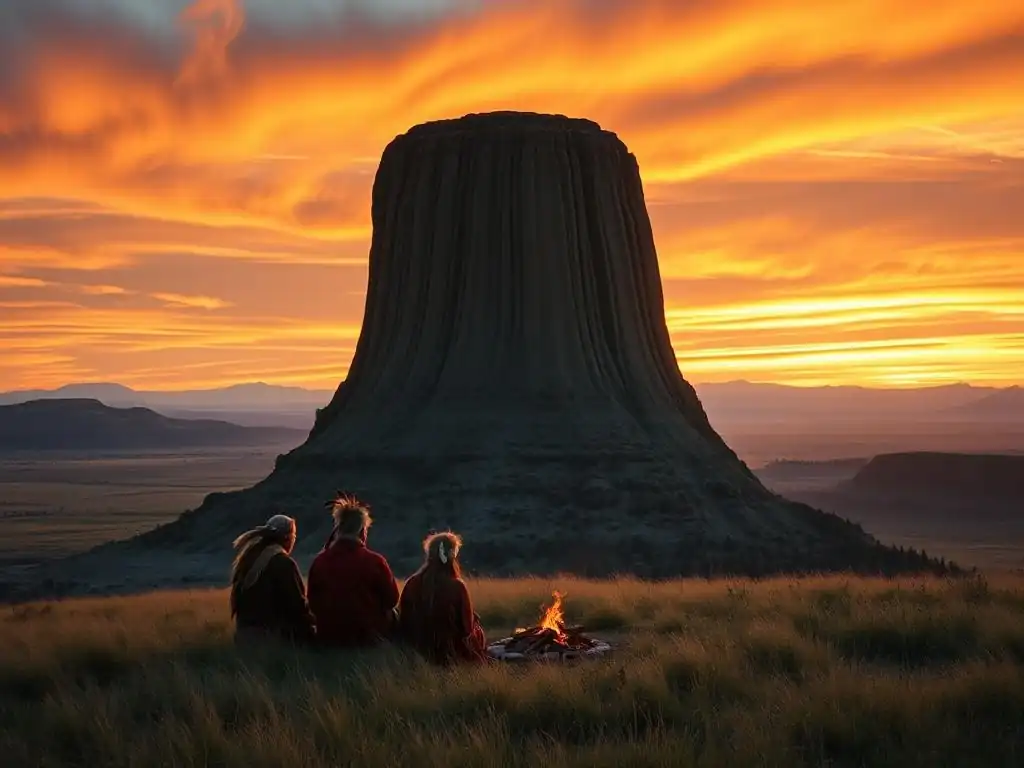
The most well-known legend associated with Devils Tower is that of the Kiowa people. According to this oral tradition, a group of young Kiowa girls were playing when they were suddenly pursued by giant bears. Fearing for their lives, the girls climbed onto a low rock and prayed to the Great Spirit to save them.
In response to their prayers, the Great Spirit caused the rock to rise vertically towards the sky, lifting the girls out of reach of the bears. The bears, in their frustration and attempts to climb the rising rock, scratched deep furrows into its sides with their claws. These scratches are said to be the columns visible on Devils Tower today.
The Kiowa legend not only explains the physical appearance of Devils Tower but also carries deeper cultural and spiritual significance. It is a story of faith, protection, and the power of prayer. The rising rock symbolizes divine intervention and the safety found in seeking spiritual help during times of danger. The bear, a powerful animal in Kiowa culture, represents both threat and respect, and its inability to reach the girls reinforces the protective power of the Great Spirit. This legend is a vital part of Kiowa oral history and continues to be shared and honored within the tribe.
Lakota Interpretations: Cultural Significance and Spiritual Connection
While the Kiowa legend is widely recognized, the Lakota and other Plains tribes also have their own interpretations and names for Devils Tower, reflecting its profound cultural significance to a broader range of indigenous peoples. The Lakota, for example, refer to Devils Tower as Mato Tipila, meaning "Bear Lodge" or "Bear's Tipi," a name that echoes the Kiowa bear legend but also carries its own nuances.
Lakota oral traditions connect Mato Tipila to spiritual ceremonies, visions, and the sacredness of the Black Hills region, of which Devils Tower is considered a part. For the Lakota, the tower is more than just a geological landmark; it is a place of spiritual power and connection to the land.
Other tribes, including the Cheyenne and Arapaho, also hold Devils Tower as a sacred site, with their own names and stories associated with it. These diverse indigenous perspectives underscore the multifaceted cultural significance of Devils Tower beyond a single legend. The tower serves as a powerful reminder of the long and deep history of Native American presence in the region and their enduring spiritual connection to the natural world. Recognizing and respecting these diverse cultural interpretations is crucial to understanding the full significance of Devils Tower.
Devils Tower as a Sacred Site: Modern-Day Practices and Respect
Even today, Devils Tower remains a sacred site for many Native American tribes. Tribes continue to conduct ceremonies, prayers, and vision quests at or near the tower, maintaining a living spiritual connection to this land. These contemporary practices are a continuation of long-standing traditions and demonstrate the ongoing importance of Devils Tower as a place of spiritual significance. The National Park Service recognizes and respects the sacred nature of Devils Tower and works to manage the monument in a way that is sensitive to these cultural practices.
Out of respect for these traditions, the National Park Service has implemented voluntary climbing closures during the month of June, a period of particular spiritual significance for many tribes. While climbing is a popular activity at Devils Tower, this voluntary closure is a result of ongoing dialogue and collaboration between the Park Service and associated tribes to balance recreational use with cultural preservation. This approach exemplifies the commitment to respecting indigenous cultural practices and ensuring the continued sanctity of Devils Tower as a living sacred site for Native American people.
Devils Tower: Fact vs. Fiction
Debunking Myths: Erosion and Exposed Intrusions
Despite the prevalence of legends and popular culture representations, some common misconceptions about Devils Tower's formation persist. One such myth is that Devils Tower is the solidified core of an extinct volcano. While it is related to volcanic activity, it is not a volcanic plug in the traditional sense. As previously discussed, the current scientific understanding points towards Devils Tower being a laccolithic intrusion, formed by magma cooling and solidifying beneath the surface, not within the vent of a volcano. Erosion then played the key role in exposing this intrusion, not the collapse or removal of a volcanic cone.
Another misconception is that the columns are perfectly hexagonal and uniformly shaped. While the columnar jointing is remarkably regular, there is natural variation in the shape and size of the columns. They are predominantly hexagonal, but pentagonal, quadrilateral, and even heptagonal columns are also present. Furthermore, the columns are not perfectly smooth; they exhibit variations in texture and surface features due to weathering and erosion. Debunking these myths helps to provide a more accurate and nuanced understanding of the geological processes that shaped Devils Tower, separating scientific fact from popular fiction.
The Role of Weathering: Shaping the Landscape
Weathering and erosion are the primary forces that have sculpted Devils Tower into its present-day form. Over millions of years, the softer sedimentary rocks surrounding the more resistant igneous rock have been progressively eroded away. This differential erosion is crucial to understanding why Devils Tower stands so prominently above the surrounding landscape. Processes like freeze-thaw cycles, where water seeps into cracks, freezes and expands, and then thaws, gradually break down the rock. Wind and rain also contribute to the erosion process, slowly wearing away the exposed surfaces.
The columnar jointing itself also influences weathering patterns. Water can penetrate along the joints, accelerating chemical weathering and physical breakdown of the rock along these lines of weakness. This process contributes to the separation and eventual toppling of individual columns, leading to the talus slopes of rock debris at the base of the tower. Understanding the ongoing role of weathering and erosion is essential for predicting the long-term evolution of Devils Tower and managing its preservation in the face of natural geological processes.
Ongoing Research: Refining Formation Theories
While the laccolithic intrusion theory is currently the prevailing scientific explanation for Devils Tower's formation, geological research continues to refine our understanding. Scientists are still investigating specific aspects of the tower's formation, such as the precise composition of the magma, the rate of cooling, and the detailed sequence of erosional events that exposed the tower. Geological mapping, rock sampling, and advanced dating techniques are employed to gather more data and test different hypotheses.
Ongoing research also focuses on the stability of the tower and the potential impacts of weathering and erosion in the future. Monitoring the rate of column collapse and talus accumulation helps scientists assess the long-term geomorphic evolution of Devils Tower. This continuous scientific inquiry ensures that our understanding of Devils Tower remains dynamic and evolves with new discoveries and advancements in geological knowledge. It also informs best practices for the conservation and management of this unique geological resource.
Devils Tower National Monument: Tourism, Conservation, and Research
National Park Service Management: Protecting a Unique Feature
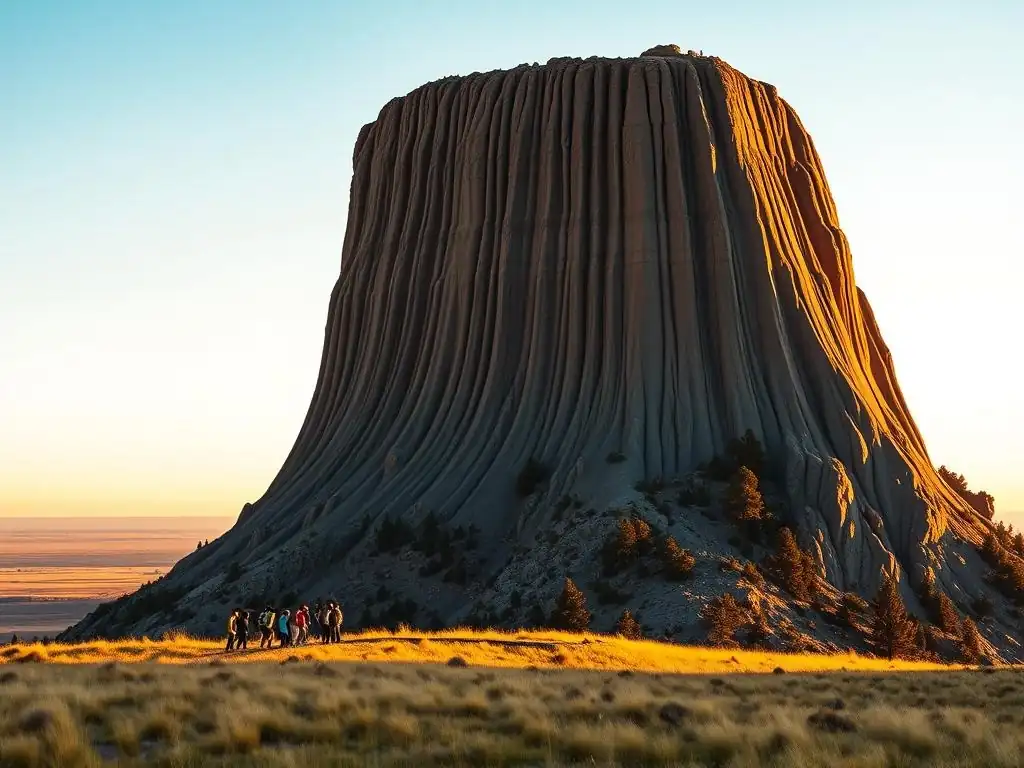
The National Park Service (NPS) is responsible for the management and preservation of Devils Tower National Monument. Their mission is to protect the natural and cultural resources of the monument while providing for visitor enjoyment and education. This involves a multifaceted approach encompassing resource management, visitor services, and law enforcement. The NPS actively monitors the geological integrity of Devils Tower, manages vegetation and wildlife, and works to preserve the cultural resources associated with the site.
Visitor management is a key aspect of NPS operations at Devils Tower. With hundreds of thousands of visitors annually, the NPS strives to balance access and recreation with resource protection. This includes maintaining trails, providing interpretive programs, managing traffic flow, and ensuring visitor safety. The NPS also plays a crucial role in educating the public about the geological significance of Devils Tower, its cultural importance, and the principles of Leave No Trace ethics, promoting responsible stewardship of this national treasure.
Rock Climbing: Balancing Recreation and Conservation
Rock climbing is a popular recreational activity at Devils Tower, attracting climbers from around the world. However, climbing is also a potentially impactful activity that must be carefully managed to ensure the preservation of the tower's geological integrity and respect for its cultural significance. The NPS manages climbing at Devils Tower through a permit system and established regulations designed to minimize environmental impact and ensure climber safety.
As mentioned previously, the NPS implements a voluntary climbing closure in June, respecting the sacred nature of the site during a period of tribal ceremonies. This voluntary closure is a successful example of collaboration between the NPS, climbing community, and associated tribes, demonstrating a commitment to balancing recreational access with cultural sensitivity. Ongoing dialogue and adaptive management strategies are essential to ensure that climbing at Devils Tower is sustainable and compatible with the long-term preservation of the monument's resources.
Future Research: Understanding Long-Term Preservation
Future research at Devils Tower National Monument will likely focus on understanding the long-term preservation of this unique geological feature in the face of ongoing natural processes and potential human impacts. Continued monitoring of weathering and erosion rates, column stability, and talus accumulation will provide valuable data for predicting the tower's future evolution. Research may also explore the impacts of climate change on the monument's resources, including vegetation, wildlife, and geological stability.
Collaborative research involving geologists, ecologists, archaeologists, and tribal representatives will be crucial for a holistic approach to conservation. Integrating scientific data with traditional ecological knowledge can provide a more comprehensive understanding of the monument's complex ecosystem and cultural landscape. This interdisciplinary approach will be essential for developing effective long-term preservation strategies and ensuring that Devils Tower remains a treasured national monument for generations to come.
Similar Geological Formations Worldwide
Examples: Shiprock, New Mexico, and Arthur's Seat, Scotland
Devils Tower, while iconic, is not unique in its geological formation. Similar geological structures, known as volcanic necks or plugs, can be found in various locations around the world. Shiprock in New Mexico, also located in the United States, is another prominent example of a volcanic neck. Like Devils Tower, Shiprock rises dramatically from the surrounding landscape and is composed of solidified igneous rock. It is also a sacred site for the Navajo Nation, highlighting the cultural significance often associated with these geological formations.
Arthur's Seat in Edinburgh, Scotland, offers another compelling example. This prominent hill overlooking the city is the remnant of an extinct volcano, with its craggy peak representing a volcanic neck. Arthur's Seat provides evidence of past volcanic activity in the region and offers insights into the geological processes that shaped the landscape of Scotland. Comparing Devils Tower to these and other similar formations allows for a broader understanding of volcanic necks and their global distribution.
Comparing Formation Processes and Geological Contexts
While volcanic necks share a common origin in volcanic activity, their specific formation processes and geological contexts can vary. Factors such as magma composition, cooling rates, surrounding rock types, and erosional history contribute to the unique characteristics of each formation. Comparing Devils Tower, Shiprock, and Arthur's Seat reveals both similarities and differences in their geological evolution. For example, while Devils Tower is now considered a laccolithic intrusion, Shiprock is more definitively interpreted as a volcanic neck representing the conduit of a former volcano.
Understanding these variations in formation processes and geological contexts provides valuable insights into the diversity of volcanic landscapes and the complex interplay of geological forces shaping our planet. Studying volcanic necks worldwide helps geologists refine their models of magma intrusion, cooling, and erosion, contributing to a broader understanding of igneous processes and landscape evolution.
Preserving Geological Wonders: Global Conservation Efforts
The preservation of geological wonders like Devils Tower, Shiprock, and Arthur's Seat is a global concern. These sites represent unique geological heritage and often hold significant cultural value. Conservation efforts vary depending on the location, ownership, and specific threats facing each site. In the United States, National Park status provides strong legal protection and management resources for sites like Devils Tower and parts of Shiprock. In other countries, different conservation strategies may be employed, ranging from national monument designations to local community-based preservation initiatives.
Global organizations like UNESCO play a role in recognizing and promoting the conservation of geological heritage through programs such as World Heritage Sites and Global Geoparks. Sharing best practices in geological conservation and fostering international collaboration are essential for ensuring the long-term protection of these remarkable natural wonders for future generations. Learning from the conservation efforts at Devils Tower and other similar sites can contribute to a global movement for preserving our planet's unique geological heritage.
Conclusion: The Enduring Allure
Intersection of Geology, Legend, and Human Connection
Devils Tower stands as a powerful symbol at the intersection of geology, legend, and human connection. Its dramatic geological formation, a testament to deep Earth processes and the forces of erosion, has captivated scientific minds for over a century. At the same time, the tower is deeply embedded in the cultural narratives and spiritual traditions of numerous Native American tribes, holding profound significance as a sacred site. This dual nature, as both a geological marvel and a cultural landmark, contributes to its enduring allure.
The legends associated with Devils Tower, particularly the Kiowa bear legend, have become integral to its identity, adding layers of meaning beyond its scientific explanation. These stories connect people to the landscape in a deeply personal and spiritual way, fostering a sense of awe and wonder. The ongoing spiritual practices of Native American tribes at Devils Tower demonstrate a living connection to this sacred site, highlighting the importance of respecting and preserving both its natural and cultural heritage.
Devils Tower: A Testament to Geological Processes and Cultural Heritage
Devils Tower serves as a powerful reminder of the immense timescales of geological processes and the enduring cultural connections to the land. Its formation over millions of years, from magmatic intrusion to exposure by erosion, illustrates the dynamic nature of our planet. The tower's continued evolution through weathering and erosion underscores the ongoing forces shaping our landscapes. Preserving Devils Tower is not only about protecting a unique geological feature but also about safeguarding a rich cultural heritage.
By understanding and appreciating both the geological and cultural significance of Devils Tower, we can foster a deeper respect for the natural world and the diverse ways humans interact with it. Devils Tower National Monument stands as a testament to the power of nature, the richness of cultural traditions, and the importance of conservation for future generations. Its enduring allure lies in its ability to inspire awe, spark curiosity, and connect us to both the deep time of geological history and the enduring spirit of human culture.
Frequently Asked Questions
What is a volcanic neck, and is Devil's Tower one?
A volcanic neck is a rock formation created when magma hardens within the vent of a volcano. After the volcano erodes, this resistant rock remains. Devil's Tower is widely accepted to be a classic example of a volcanic neck.
How does the Devil's Tower relate to the legend keyword "Devil's Tower volcanic neck legend"?
The term "Devil's Tower volcanic neck legend" combines the geological formation with the local folklore surrounding it. Many indigenous cultures have stories explaining the tower's unique shape. It's about the intersection of science and mythology.
How did Devil's Tower form if it's a volcanic neck?
Molten rock, or magma, rose into the Earth's crust but didn't erupt. It cooled and solidified, forming a plutonic intrusion. Over millions of years, the surrounding softer rock eroded away, exposing the harder, more resistant rock of Devil's Tower.
Is Devil's Tower still considered an active volcano?
No, Devil's Tower is not an active volcano. It represents the remains of an ancient volcanic feature that is no longer capable of erupting. The volcanic activity ceased millions of years ago.
Where can I find more information about volcanic safety and real-time updates?
While Devil's Tower is not active, VolcanoExplorers.org offers safety guides and real-time updates on currently active volcanoes around the world, providing valuable information for those living near potentially dangerous areas.
Final Reflection: Echoes of Ancient Stone
The enduring allure of Devil's Tower, as explored throughout this article, resonates deeply in our modern world, reminding us of the power of nature and the enduring strength of legend. The sheer geological wonder of this volcanic neck, coupled with the rich tapestry of indigenous stories, continues to captivate and inspire awe in all who encounter it. It serves as a potent symbol of both the earth's raw power and humanity's innate need to understand and interpret the mysteries around us.
The impact of Devil's Tower extends far beyond its physical presence. It's a reminder that the stories we tell shape our understanding of the world, imbuing landscapes with meaning and connecting us to generations past. The intertwining of scientific explanation and indigenous narrative creates a powerful dialogue, highlighting the importance of respecting diverse perspectives. We are all storytellers. We all live in a network of stories. There isn't a stronger connection between people than storytelling.
- Jimmy Neil Smith, Founder of the International Storytelling Center. This quote encapsulates the essence of Devil's Tower's enduring appeal: it's a story etched in stone, waiting to be heard.
As you gaze upon images of Devil's Tower, or perhaps even stand in its shadow one day, I invite you to reflect on the power of place and the stories that shape our perception. Consider the delicate balance between scientific understanding and cultural reverence. Let the enigma of this volcanic neck inspire you to seek out the narratives woven into the landscapes around you, and to appreciate the enduring legacy of those who came before. Embrace the mystery, honor the legend, and allow the echoes of ancient stone to resonate within your own spirit.
Ignite Your Inner Explorer: Journey Deeper into Volcanic Mysteries!
Thank you for joining us on this exploration of Devil's Tower! We hope you've gained a newfound appreciation for the geological wonders and rich legends surrounding this iconic landmark. Now, let's turn that knowledge into action!
Here are a few ways you can continue your volcanic adventure:
- Plan Your Pilgrimage: Seriously consider making a trip to witness the majesty of Devil's Tower firsthand. Experience the awe-inspiring scale and feel the history beneath your feet.
- Dive Deeper:Unearth the science: Delve into the geological research papers and studies on the formation of volcanic necks. Share your findings and understanding with friends.
- Share the Wonder: Spread the wonder by sharing this article with fellow volcano enthusiasts or anyone who loves a good mystery.
What's the first thing that comes to mind when you imagine standing at the base of Devil's Tower, looking up at its towering form? Share your thoughts below!