
Ring of Fire Volcano Types: A Diverse Landscape of Eruptive Styles

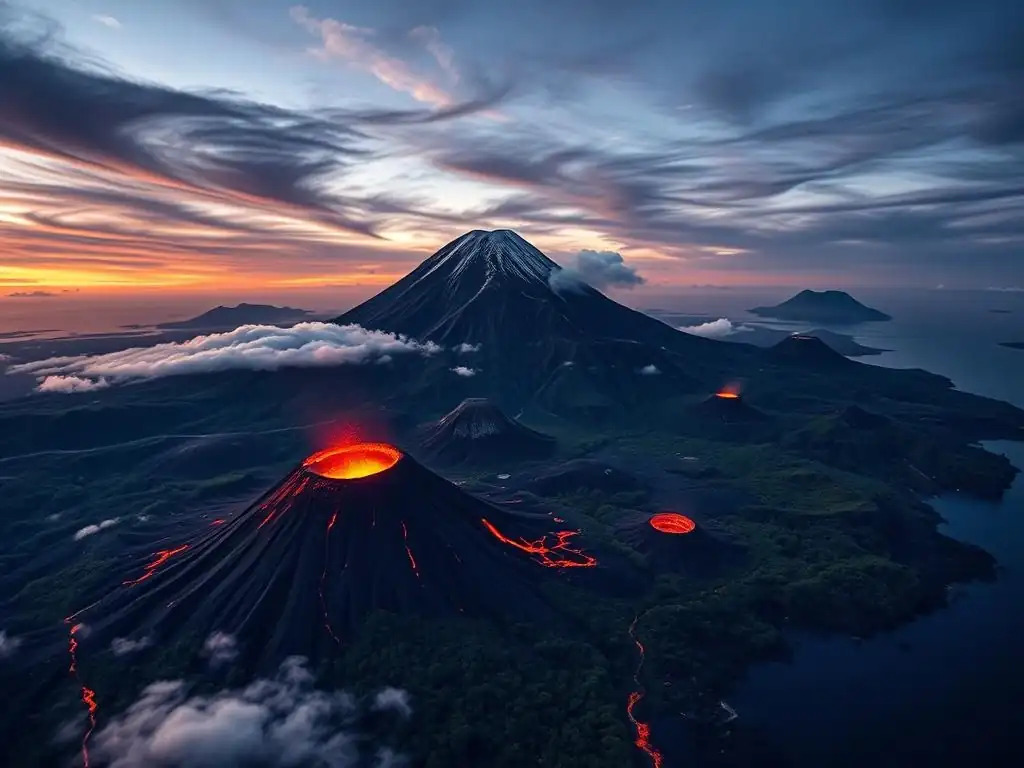
Welcome to Volcano Explorers!
Prepare to journey into the heart of the Ring of Fire, a realm where fiery landscapes are forged by unimaginable power. But what secrets lie beneath the surface, shaping the diverse types of volcanoes that dot this volatile region? Uncover the geological forces at play as we delve into the eruptive styles and unique characteristics that define the types of volcanoes in the Ring of Fire, and ignite your curiosity about Earth's most dramatic landscapes.
- Exploring the Diverse Volcanic Landscapes of the Ring of Fire
- Types of Volcanoes in the Ring of Fire: An Overview
- Classifying Volcanoes in the Ring of Fire Based on Eruption Style
- Specific Examples of Volcano Types Across the Ring of Fire
-
Frequently Asked Questions
- What types of volcanoes are commonly found within the Ring of Fire?
- How does the Ring of Fire's tectonic activity influence the types of volcanoes that form there?
- Are there specific eruption styles associated with the different types of volcanoes in the Ring of Fire?
- What makes the types of volcanoes in the Ring of Fire particularly dangerous?
- Where can I find real-time updates on volcanic activity and safety guides related to the Ring of Fire's types of volcanoes?
- Final Reflection: Embracing the Ring of Fire's Volcanic Tapestry
- Unearth Your Inner Volcanologist!
Exploring the Diverse Volcanic Landscapes of the Ring of Fire
The Geological Context of the Pacific Ring of Fire
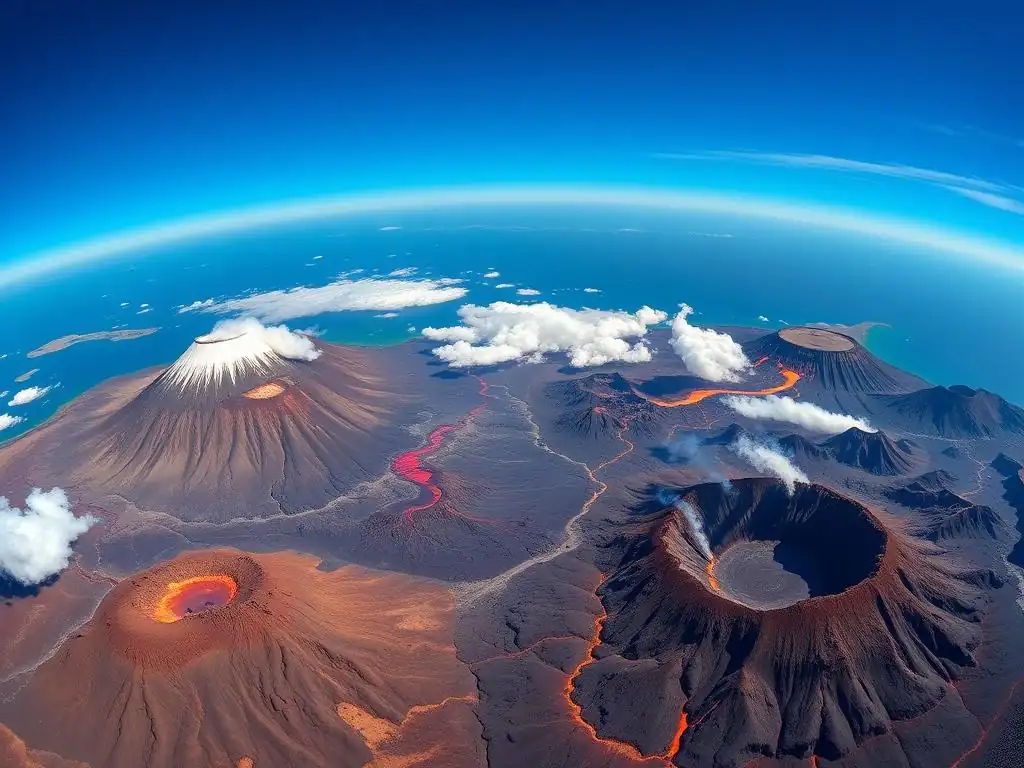
The Ring of Fire, also known as the Circum-Pacific Belt, is a major area in the basin of the Pacific Ocean where a large number of earthquakes and volcanic eruptions occur. Stretching approximately 40,000 kilometers (25,000 mi), it is horseshoe-shaped and associated with a nearly continuous series of oceanic trenches, volcanic arcs, volcanic belts, and plate movements. This zone is not a single geological structure, but rather a collection of different tectonic settings where the Pacific Plate interacts with surrounding plates.
Its fiery reputation stems from the immense concentration of active volcanoes, accounting for roughly 75% of the world's active and dormant volcanoes. The Ring of Fire is not just a geographical curiosity; it's a dynamic zone that profoundly shapes the Earth's surface and atmosphere.
The formation of the Ring of Fire is intrinsically linked to the movement and collision of the Earth's tectonic plates. The Pacific Plate, one of the largest tectonic plates, is surrounded by several other major and minor plates including the North American Plate, the Eurasian Plate, the Philippine Sea Plate, the Australian Plate, the Cocos Plate, and the Nazca Plate.
Along the Ring of Fire, these plates are in constant motion, converging and diverging, which results in intense geological activity. This dynamic interaction is the primary driver behind the region's prolific volcanism and seismicity, making it a crucial area for understanding the Earth's internal processes and their surface manifestations.
Tectonic Plate Boundaries and Volcano Formation
The high concentration of volcanoes in the Ring of Fire is a direct consequence of plate tectonics, specifically the process of subduction. Subduction occurs where tectonic plates converge, and one plate is forced beneath another into the Earth's mantle. Around the Pacific Ring of Fire, the denser oceanic plates, such as the Pacific Plate, are subducting beneath lighter continental plates or other oceanic plates.
This process is not smooth and continuous; it involves immense pressure and friction, leading to earthquakes and the melting of the subducting plate. The depth at which melting begins is typically around 100 kilometers (60 miles) beneath the Earth's surface.
As the subducting plate descends into the hotter mantle, it releases water and other volatile compounds. These volatiles lower the melting point of the mantle rock above, causing partial melting and the generation of magma. This newly formed magma, being less dense than the surrounding solid rock, rises towards the surface. Over time, this magma accumulates in magma chambers beneath the Earth's crust.
When the pressure in these chambers becomes too great or when weaknesses in the crust are exploited, the magma erupts onto the surface, creating volcanoes. The types of volcanoes formed and their eruptive styles are significantly influenced by the composition of the magma, which in turn is affected by the type of crust being melted and the tectonic setting. This explains the diverse range of volcano types we observe within the Ring of Fire.
Types of Volcanoes in the Ring of Fire: An Overview
The Ring of Fire is home to a remarkable diversity of volcano types, each characterized by unique shapes, formation processes, and eruptive styles. Understanding these different types of volcanoes is crucial for comprehending the volcanic hazards and the geological history of the region. The primary types of volcanoes found in the Ring of Fire include stratovolcanoes (also known as composite volcanoes), shield volcanoes, cinder cones, and caldera volcanoes. Each of these types is formed through distinct processes and exhibits different patterns of eruption, contributing to the varied volcanic landscapes across the Pacific basin.
The classification of volcanoes is based on several factors, including their morphology (shape), the materials they are composed of, and the style of their eruptions. In the Ring of Fire, the dominant volcano type is the stratovolcano, towering and often snow-capped mountains that are responsible for some of the most explosive eruptions in history. Shield volcanoes, while less common in some parts of the Ring of Fire compared to stratovolcanoes, are also present, characterized by their broad, gently sloping profiles.
Cinder cones, smaller and often found in volcanic fields or on the flanks of larger volcanoes, represent another significant type. Finally, caldera volcanoes, often less visually prominent but representing incredibly powerful past eruptions, are also critical features of the Ring of Fire's volcanic landscape. Exploring these different types of volcanoes provides a comprehensive view of the dynamic geological forces at play in this active region.
Stratovolcanoes: The Majestic Giants of the Ring of Fire
Stratovolcanoes, often considered the archetypal volcano, are prominent and imposing landforms that dominate many landscapes within the Ring of Fire. They are characterized by their steep, conical shape, built up by many layers (strata) of hardened lava, tephra, pumice, and volcanic ash. These volcanoes are typically associated with subduction zones, where one tectonic plate is forced beneath another. The magma that feeds stratovolcanoes is usually viscous, andesitic to rhyolitic in composition, and rich in silica and gases. This composition plays a crucial role in determining their explosive eruptive style.
Stratovolcanoes are not formed in single, continuous eruptions but rather through numerous eruptions over long periods, sometimes hundreds of thousands of years. Each eruption contributes a new layer to the volcano's structure, gradually building its height and characteristic conical shape. The layers of ash and tephra are interspersed with layers of more resistant lava flows, providing structural integrity to the volcano. Due to their explosive potential and their location often in densely populated areas, stratovolcanoes pose significant volcanic hazards in many parts of the Ring of Fire, requiring careful monitoring and hazard assessment.
Characteristics of Ring of Fire Stratovolcanoes
Stratovolcanoes in the Ring of Fire exhibit several distinctive characteristics that set them apart. Their magma, primarily andesitic in composition, is generated by the partial melting of the mantle wedge above subducting oceanic plates, often influenced by fluids released from the subducting slab. This magma is relatively viscous due to its higher silica content compared to basaltic magma. The high viscosity traps gases, leading to a buildup of pressure within the magma chamber. When this pressure exceeds the strength of the surrounding rocks, explosive eruptions occur.
Another key characteristic is their symmetrical, cone-like shape, often reaching significant heights. Mount Fuji in Japan, Mayon Volcano in the Philippines, and Mount Rainier in the Cascade Range of the United States are iconic examples of stratovolcanoes within the Ring of Fire, each exhibiting this classic conical form. They are typically composed of alternating layers of lava flows, pyroclastic flows, lahars (volcanic mudflows), and ashfalls. The presence of steep slopes, often exceeding 30 degrees near the summit, makes them prone to landslides and debris flows, further adding to the volcanic hazards associated with these majestic, yet potentially dangerous, mountains.
Eruptive Styles of Stratovolcanoes: From Explosive to Effusive
Stratovolcanoes are known for their diverse range of eruptive styles, ranging from highly explosive to relatively effusive. The explosive eruptions are often driven by the high gas content and viscosity of their magma. Plinian eruptions, named after Pliny the Younger who described the eruption of Vesuvius in 79 AD, are among the most violent.
They are characterized by powerful vertical columns of ash and gas that can reach tens of kilometers into the atmosphere, widespread ashfall, and pyroclastic flows – fast-moving, extremely hot mixtures of gas and volcanic debris. The 1991 eruption of Mount Pinatubo in the Philippines is a prime example of a Plinian eruption from a Ring of Fire stratovolcano, injecting vast amounts of aerosols into the stratosphere and affecting global climate.
Vulcanian eruptions are another type of explosive activity common to stratovolcanoes. They are less powerful than Plinian eruptions but still significant, characterized by short bursts of ash, gas, and volcanic bombs. In contrast to the explosive events, stratovolcanoes can also experience effusive eruptions, where lava flows slowly down their flanks.
These lava flows are typically viscous and do not travel very far, but they can still pose a threat to infrastructure and communities near the volcano. Dome-building eruptions, where viscous lava slowly oozes out and forms a lava dome within or near the summit crater, are also common. The eruptive style of a stratovolcano can vary significantly even during a single eruptive episode, making them complex and challenging to forecast.
Shield Volcanoes: Gentle Slopes and Basaltic Flows
Shield volcanoes present a stark contrast to the steep profiles of stratovolcanoes. They are characterized by their broad, gently sloping sides, resembling a warrior's shield laid flat – hence the name. Shield volcanoes are built almost entirely from fluid basaltic lava flows. This type of lava has low viscosity and low gas content compared to the andesitic or rhyolitic lavas of stratovolcanoes, allowing it to flow easily and spread over large distances. While less common than stratovolcanoes in some regions of the Ring of Fire, shield volcanoes are still significant volcanic features, particularly in areas with specific tectonic settings.
The formation of shield volcanoes is a gradual process, involving numerous eruptions of basaltic lava over extended periods. These eruptions are typically effusive, meaning they are characterized by the outpouring of lava rather than violent explosions. The lava flows spread out in thin layers, solidifying and accumulating to build the broad, shield-like structure. Although they are generally less explosive than stratovolcanoes, shield volcanoes can still produce significant volcanic hazards, primarily from lava flows that can inundate landscapes and destroy infrastructure.
Examples of Shield Volcanoes within the Ring of Fire
While the Ring of Fire is predominantly known for stratovolcanoes, shield volcanoes do exist within this vast region, particularly in areas where the tectonic setting allows for the eruption of basaltic magma. One notable example, although technically on the periphery of the most intensely active Ring of Fire subduction zones, is found in the Galapagos Islands, which lie near the Nazca Plate and are influenced by mantle plume activity.
Volcanoes like Sierra Negra on Isabela Island in the Galapagos are classic shield volcanoes, exhibiting broad, gentle slopes and having been built by numerous basaltic lava flows. Their eruptions are typically effusive, characterized by lava fountains and extensive lava flows that shape the islands' landscapes.
Another region within the broader Pacific basin that features shield volcanoes is Hawaii, although it's formed by a hotspot rather than subduction zone processes directly related to the Ring of Fire. However, the Hawaiian Islands are part of the Pacific Plate and geographically within the Pacific Ocean.
Volcanoes like Mauna Loa and Kilauea are prime examples of shield volcanoes, known for their frequent effusive eruptions of basaltic lava. While not directly formed by the same subduction processes as many Ring of Fire volcanoes, these examples demonstrate that shield volcano formation is a significant volcanic process within the larger Pacific region, contributing to the diversity of volcano types in the area.
Formation and Eruption Patterns of Shield Volcanoes
Shield volcanoes are formed through a distinct process primarily involving effusive eruptions of basaltic lava. The magma that feeds shield volcanoes is generated in the Earth's mantle, often through decompression melting, where a decrease in pressure allows mantle rock to melt without a change in temperature. This basaltic magma is relatively low in silica and gases, resulting in low viscosity and less explosive eruptions compared to magmas associated with stratovolcanoes. The eruptions are characterized by the quiet outpouring of lava, often from vents located along fissures or rift zones on the volcano's flanks or summit.
The eruption patterns of shield volcanoes are typically effusive and can be long-lasting. Lava fountains, where lava is propelled into the air due to dissolved gases, are common features of shield volcano eruptions. However, these fountains are not violently explosive like Plinian columns; they are more akin to fire fountains.
The lava flows that erupt from shield volcanoes can travel considerable distances, sometimes tens of kilometers, due to their low viscosity. As these flows cool and solidify, they accumulate layer upon layer, gradually building the broad, shield-shaped profile. The continuous and relatively predictable nature of effusive eruptions from shield volcanoes, while still posing hazards from lava flows, often allows for better monitoring and hazard mitigation compared to the more unpredictable explosive eruptions of stratovolcanoes.
Cinder Cones: Small but Significant Volcanic Features
Cinder cones, also known as scoria cones, are the simplest type of volcano, characterized by their small size and conical shape. They are built from ejected lava fragments, called cinders or scoria, which accumulate around a volcanic vent. These fragments are formed when gas-rich magma is explosively ejected into the air. As the fragments fall back to earth, they pile up around the vent, creating a cone-shaped structure with a bowl-shaped crater at the summit. Cinder cones are typically formed during a single eruptive episode, which can last from weeks to years.
While individually small, cinder cones are significant volcanic features because they often occur in groups or volcanic fields, sometimes numbering in the hundreds within a region. They can also form on the flanks of larger volcanoes, such as stratovolcanoes or shield volcanoes. The magma associated with cinder cones is typically basaltic or andesitic in composition, and their eruptions are generally Strombolian in style – moderately explosive bursts that eject cinders and bombs. Although they are not as large or long-lived as stratovolcanoes or shield volcanoes, cinder cones contribute to the overall volcanic landscape and can pose localized hazards.
Distribution of Cinder Cones in the Ring of Fire Region
Cinder cones are widely distributed throughout the Ring of Fire region, often occurring in association with larger volcanic structures or in extensive volcanic fields. They are particularly common in areas where basaltic volcanism is prevalent, such as along rift zones or in back-arc basins.
In regions like Central America, for example, cinder cones are found alongside stratovolcanoes, adding complexity to the volcanic landscape. Parícutin volcano in Mexico, which dramatically emerged from a cornfield in 1943 and grew into a substantial cinder cone over nine years, is a famous example from the Ring of Fire, demonstrating the rapid formation of these features.
In other parts of the Ring of Fire, such as in volcanic fields of the Kamchatka Peninsula in Russia or in parts of Indonesia, numerous cinder cones dot the landscape. They frequently form on the flanks of stratovolcanoes, representing parasitic vents that tap into the same magma system but erupt in a different style.
The distribution of cinder cones is often controlled by underlying geological structures, such as faults and fractures, which provide pathways for magma to reach the surface. Their presence indicates areas of relatively recent volcanic activity and potential for future eruptions, even if the cinder cones themselves are monogenetic, meaning they typically erupt only once.
Eruptive Processes and Cone Formation
The formation of cinder cones is primarily driven by Strombolian eruptions, a type of volcanic activity characterized by moderately explosive bursts of gas-rich magma. The process begins with magma rising to the surface, containing dissolved gases. As the magma nears the surface, the pressure decreases, causing the dissolved gases to exsolve and form bubbles. These gas bubbles coalesce and grow, eventually leading to an explosive burst that ejects fragments of molten rock into the air. The ejected material, ranging in size from ash to bombs, cools and solidifies as it flies through the air, forming cinders (scoria).
These cinders fall back to the ground around the volcanic vent, accumulating to build the cone-shaped structure. The angle of repose of the loose cinders, typically around 30-40 degrees, determines the steepness of the cone's slopes. The accumulation of cinders is concentrated around the vent, creating a circular or oval-shaped cone with a crater at the summit – the point from which the eruptions originate.
Strombolian eruptions are often intermittent, with periods of explosive bursts followed by quieter phases. The entire process of cinder cone formation can be relatively rapid, sometimes occurring over just a few weeks or months, although some cinder cones may continue to erupt sporadically for years.
Caldera Volcanoes: The Result of Catastrophic Eruptions
Caldera volcanoes represent a different scale of volcanic activity compared to stratovolcanoes, shield volcanoes, or cinder cones. Calderas are large, basin-shaped depressions formed by the collapse of a volcano's magma chamber following a massive eruption. These eruptions are typically extremely explosive, emptying a significant volume of magma from the chamber beneath the volcano.
The removal of this magma support leads to the roof of the magma chamber collapsing inward, creating a caldera. Calderas can range in size from a few kilometers to tens of kilometers in diameter, and they are often associated with highly evolved, silica-rich magmas that produce incredibly powerful eruptions.
Caldera-forming eruptions are among the most catastrophic geological events on Earth, capable of ejecting enormous volumes of volcanic material, including ash, pumice, and pyroclastic flows, over vast areas. These eruptions can have significant global impacts, affecting climate and ecosystems. While the caldera itself is a depression resulting from collapse, it can later become the site of renewed volcanic activity, with new cones or domes forming within the caldera or along its rim. Understanding caldera volcanoes is crucial for assessing the full spectrum of volcanic hazards in the Ring of Fire, as their potential for large-scale eruptions is immense.
Formation of Calderas within the Ring of Fire
The formation of calderas in the Ring of Fire is linked to the accumulation and eventual eruption of vast volumes of magma in shallow crustal reservoirs. These magma chambers are often filled with highly differentiated, silica-rich magma (rhyolitic or dacitic), which is very viscous and gas-rich, making it prone to explosive eruptions. The process leading to caldera formation typically begins with the buildup of pressure within the magma chamber as magma continues to rise from deeper within the Earth. Eventually, the pressure overcomes the strength of the overlying rocks, triggering a massive eruption.
This eruption is not a single event but rather a series of intense explosions and pyroclastic flows that can last for hours or even days. During the eruption, vast quantities of magma are ejected, significantly reducing the pressure support beneath the volcano's summit. As the magma chamber empties, the unsupported roof collapses inward along ring faults, creating the caldera depression.
The size and shape of the caldera are determined by the volume of magma erupted and the geological structure of the area. Caldera formation is often associated with large-scale faulting and ground deformation, leaving a lasting imprint on the landscape and representing a period of intense volcanic activity.
Examples of Notable Calderas and Their Volcanic History
The Ring of Fire hosts several notable calderas, each with a complex volcanic history and a record of significant eruptions. Crater Lake in Oregon, USA, occupies a caldera formed approximately 7,700 years ago by the cataclysmic eruption of Mount Mazama, a former stratovolcano. The eruption ejected an estimated 50 cubic kilometers (12 cubic miles) of material, leading to the collapse that formed the caldera now filled by the lake. The eruption of Mount Mazama is one of the largest known eruptions in North America in the past 10,000 years.
Another significant caldera in the Ring of Fire is Lake Taupo in New Zealand. Taupo caldera has experienced multiple caldera-forming eruptions throughout its history, with the most recent major event, the Oruanui eruption around 25,500 years ago, being one of the largest eruptions in Earth's history in the last 70,000 years. This eruption ejected an estimated 530 cubic kilometers (130 cubic miles) of magma.
The Taupo Volcanic Zone continues to be an area of active volcanism, with ongoing geothermal activity and potential for future eruptions. These examples highlight the immense scale of caldera-forming eruptions and their profound impact on the landscape and geological record within the Ring of Fire.
Classifying Volcanoes in the Ring of Fire Based on Eruption Style
Explosive Eruptions: Plinian and Vulcanian Activity
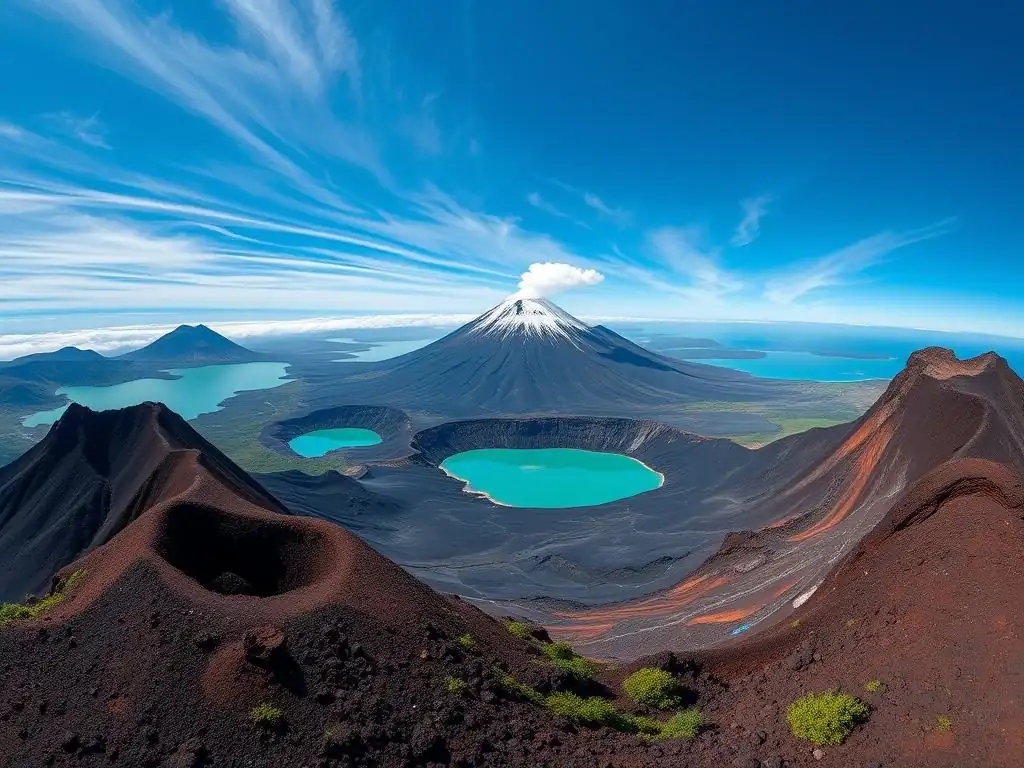
Explosive eruptions are a defining characteristic of many volcanoes in the Ring of Fire, particularly stratovolcanoes and caldera volcanoes. These eruptions are driven by the rapid release of pressure from gas-rich magma, resulting in the violent ejection of volcanic materials into the atmosphere. Plinian and Vulcanian eruptions are two significant types of explosive volcanic activity, differing in intensity and characteristics but both posing substantial hazards. Understanding these eruption styles is crucial for volcanic hazard assessment and mitigation in the Ring of Fire region.
Plinian eruptions are the most powerful type of explosive eruption, characterized by sustained, high eruption columns of ash and gas that can reach tens of kilometers into the stratosphere. They are associated with highly viscous, silica-rich magma and a large volume of gas. Vulcanian eruptions, while less powerful than Plinian, are still explosive and characterized by short-duration bursts of ash, gas, and volcanic bombs.
They are often associated with the clearing of a volcano's vent after a period of dormancy or dome building. Both Plinian and Vulcanian eruptions can produce pyroclastic flows, ashfall, and lahars, posing significant risks to surrounding areas.
Factors Contributing to Explosive Volcanism
Several factors contribute to the explosive nature of volcanic eruptions, particularly in the context of the Ring of Fire. The composition of the magma is a primary factor. Magmas that are rich in silica (andesitic to rhyolitic) are more viscous than basaltic magmas. High viscosity means the magma resists flow, trapping gases within it. As magma rises towards the surface, the pressure decreases, and dissolved gases exsolve, forming bubbles. In viscous magma, these gas bubbles struggle to escape, leading to a buildup of pressure.
Another crucial factor is the gas content of the magma. Magmas in subduction zones, common in the Ring of Fire, often contain significant amounts of dissolved water and other volatiles. These volatiles contribute to the explosivity of eruptions. The rate of magma ascent also plays a role. Rapid ascent can prevent gas from escaping gradually, leading to a more explosive release. Finally, external factors, such as the interaction of magma with groundwater or surface water, can also enhance explosivity, leading to phreatomagmatic eruptions, which are particularly violent due to the rapid vaporization of water.
Examples of Explosive Eruptions in the Ring of Fire
The Ring of Fire has a long history of explosive volcanic eruptions, providing numerous examples of Plinian and Vulcanian activity. The 1991 eruption of Mount Pinatubo in the Philippines was a classic Plinian eruption. It produced a massive eruption column that reached over 40 kilometers (25 miles) high, widespread ashfall that affected a large portion of Luzon Island, and devastating pyroclastic flows and lahars. The eruption injected a significant amount of sulfur dioxide into the stratosphere, leading to a temporary cooling effect on global climate.
Krakatoa in Indonesia is another iconic example of explosive volcanism in the Ring of Fire. The 1883 eruption of Krakatoa was one of the most violent volcanic events in recorded history, resulting in a massive explosion that was heard thousands of kilometers away. The eruption produced a large tsunami that caused widespread devastation and loss of life. While the exact eruption style is debated, it displayed characteristics of both Plinian and potentially ultra-Plinian activity. These examples illustrate the immense power and widespread impact of explosive eruptions from volcanoes in the Ring of Fire.
Effusive Eruptions: Lava Flows and Fissure Eruptions
Effusive eruptions, in contrast to explosive eruptions, are characterized by the relatively quiet outpouring of lava onto the Earth's surface. These eruptions are typically associated with less viscous, basaltic magma, which has a lower gas content compared to the magmas that drive explosive eruptions. Effusive eruptions can take various forms, including lava flows, lava fountains, and fissure eruptions. While generally less immediately hazardous than explosive eruptions, effusive activity can still pose significant threats by inundating landscapes, destroying infrastructure, and altering terrain.
Lava flows are streams of molten rock that flow down the flanks of volcanoes or across relatively flat terrain. Fissure eruptions occur when magma erupts from linear cracks or fissures in the Earth's crust, rather than from a central vent. These eruptions can produce extensive lava flows that cover large areas. While effusive eruptions are often associated with shield volcanoes, they can also occur at stratovolcanoes and other volcanic settings within the Ring of Fire. Understanding effusive eruption styles is important for assessing the range of volcanic hazards and the long-term geological impact of volcanism in the region.
Characteristics of Effusive Volcanic Activity
Effusive volcanic activity is characterized by several key features. The magma involved is typically basaltic, which is relatively low in silica and viscosity. This low viscosity allows the magma to flow easily and spread over large distances. The gas content is also generally lower compared to magmas associated with explosive eruptions, resulting in less pressure buildup and quieter eruptions. Effusive eruptions are typically non-fragmental, meaning they primarily involve the flow of molten lava rather than the ejection of large quantities of ash or pyroclastic debris.
Lava flows can vary in speed and thickness depending on factors such as lava viscosity, slope angle, and eruption rate. Pahoehoe and aa are two common types of basaltic lava flows, differing in their surface textures. Pahoehoe lava flows have smooth, ropy surfaces, while aa lava flows are characterized by rough, blocky surfaces. Effusive eruptions can be long-lasting, sometimes continuing for weeks, months, or even years, gradually building up volcanic edifices or covering vast areas with lava flows.
Examples of Effusive Eruptions in the Ring of Fire
While the Ring of Fire is predominantly known for its explosive volcanism, effusive eruptions also occur in certain areas and from specific volcano types within the region. The Galapagos Islands, located within the Ring of Fire and influenced by hotspot and plate tectonic interactions, are characterized by shield volcanoes that primarily erupt basaltic lava effusively. Volcanoes like Sierra Negra and Fernandina Island in the Galapagos are known for their frequent lava flows that reshape the island landscapes. Eruptions in the Galapagos often involve lava lakes, lava fountains, and extensive lava flows.
In other parts of the Ring of Fire, effusive eruptions can occur on the flanks of stratovolcanoes or from fissure systems. For example, some volcanoes in Iceland, which is influenced by both the Mid-Atlantic Ridge and proximity to the Ring of Fire, experience fissure eruptions that produce large volumes of basaltic lava. While less dramatic than explosive eruptions, effusive eruptions are a significant volcanic process in the Ring of Fire, contributing to the diversity of volcanic landscapes and posing their own set of hazards, primarily from lava flows.
Specific Examples of Volcano Types Across the Ring of Fire
Volcanoes of Japan: A Mix of Stratovolcanoes and Calderas
Japan, situated along a highly active segment of the Ring of Fire, is almost entirely volcanic and features a remarkable mix of volcano types, predominantly stratovolcanoes and calderas. The archipelago lies at the convergence of multiple tectonic plates, including the Pacific, Philippine Sea, Eurasian, and North American plates, resulting in intense subduction and volcanism. Mount Fuji, an iconic stratovolcano and Japan's highest peak, is a prime example of the steep-sided, explosive volcanoes that characterize the region. Other notable stratovolcanoes include Mount Asama, Mount Unzen, and Mount Sakurajima, each with a history of frequent eruptions and associated hazards.
In addition to stratovolcanoes, Japan also hosts several significant calderas, often formed by massive explosive eruptions. Aira Caldera, in Kyushu, is one of the largest and most active calderas in Japan, containing the active stratovolcano Sakurajima within its boundaries. Kutcharo Caldera in Hokkaido and Towada Caldera in northern Honshu are other examples of large calderas that have shaped the Japanese landscape. The interplay between stratovolcanoes and calderas in Japan reflects the complex volcanic history and the diverse range of eruptive styles prevalent in this tectonically active region.
Volcanoes of the Philippines: Active Stratovolcanoes and Their Hazards
The Philippines, located along the western edge of the Ring of Fire, is an arc archipelago known for its numerous active stratovolcanoes. The islands are situated at the convergence of the Philippine Sea Plate subducting beneath the Eurasian Plate, leading to intense volcanic activity. Mayon Volcano, with its perfectly symmetrical cone, is perhaps the most famous stratovolcano in the Philippines and a classic example of this volcano type in the Ring of Fire. Other highly active stratovolcanoes include Taal Volcano, Mount Pinatubo, and Mount Bulusan, each posing significant volcanic hazards to densely populated areas.
The volcanoes of the Philippines are characterized by explosive eruptions, often of Plinian and Vulcanian styles, driven by the andesitic to dacitic magma generated in the subduction zone setting. Pyroclastic flows, ashfall, and lahars are major hazards associated with these volcanoes, impacting communities living near their flanks. The 1991 eruption of Mount Pinatubo, one of the largest eruptions of the 20th century, demonstrated the devastating potential of Philippine volcanoes and the importance of volcanic monitoring and hazard mitigation in the region.
Volcanoes of Indonesia: The Most Volcanically Active Region
Indonesia, straddling the equator and situated within the Ring of Fire, is considered the most volcanically active region in the world. The archipelago is located at the complex intersection of multiple tectonic plates – the Pacific, Eurasian, Australian, and Philippine Sea plates – resulting in a high density of active volcanoes. Indonesia boasts a diverse array of volcano types, but stratovolcanoes are particularly dominant, including iconic examples like Mount Merapi, Krakatoa, and Mount Tambora. These volcanoes have shaped Indonesian landscapes and cultures for millennia, but also pose significant and ongoing volcanic risks.
The volcanoes of Indonesia exhibit a wide range of eruptive styles, from explosive Plinian eruptions to more effusive lava flows and dome growth. The 1815 eruption of Mount Tambora was the largest volcanic eruption in recorded history, causing global climate anomalies and widespread famine. The 1883 eruption of Krakatoa, as mentioned earlier, was another cataclysmic event. Mount Merapi is known for its frequent pyroclastic flows and lava dome collapses. Given the high population density in many volcanic areas of Indonesia, volcanic hazard mitigation and preparedness are critical priorities.
Volcanoes of the Americas: From the Andes to the Cascade Range
The Americas host a significant portion of the Ring of Fire, stretching from the Andes Mountains in South America through Central America, Mexico, and up to the Cascade Range in North America and Alaska's Aleutian Islands. This vast region encompasses a wide variety of volcano types and tectonic settings.
The Andes, formed by the subduction of the Nazca Plate beneath the South American Plate, are dominated by stratovolcanoes, such as Cotopaxi in Ecuador, Villarrica in Chile, and Misti in Peru. These volcanoes are known for their explosive potential and associated hazards, including ashfall, pyroclastic flows, and lahars, particularly given the presence of glaciers on many Andean volcanoes, which can exacerbate lahar hazards.
Moving north through Central America and Mexico, stratovolcanoes continue to be prominent, including Popocatépetl and Pico de O
Frequently Asked Questions
What types of volcanoes are commonly found within the Ring of Fire?
The Ring of Fire features a wide variety of volcanoes due to its active tectonic setting. Common types include stratovolcanoes, shield volcanoes, and calderas, each with distinct formation processes.
How does the Ring of Fire's tectonic activity influence the types of volcanoes that form there?
The Ring of Fire's high tectonic activity, especially subduction zones, leads to increased magma production. This magma composition and volume determines the type of volcano that will eventually form.
Are there specific eruption styles associated with the different types of volcanoes in the Ring of Fire?
Yes, eruption styles vary significantly. Stratovolcanoes often produce explosive eruptions, while shield volcanoes tend to have effusive lava flows. Calderas can create catastrophic eruptions.
What makes the types of volcanoes in the Ring of Fire particularly dangerous?
Many volcanoes in the Ring of Fire are highly populated, increasing the risk. The explosive nature of stratovolcano eruptions and the potential for lahars and pyroclastic flows add to the danger.
VolcanoExplorers.org provides real-time updates on volcanic activity worldwide. We also offer safety guides and evacuation tips for those living near active volcanoes.
Final Reflection: Embracing the Ring of Fire's Volcanic Tapestry
The Ring of Fire, a crucible of geological activity, is more than just a geographical boundary; it's a dynamic testament to the Earth's raw power. Understanding the diverse types of volcanoes that define this region is crucial for comprehending the planet's ongoing evolution and the inherent risks and opportunities they present. From the explosive stratovolcanoes to the gentler shield volcanoes, each type tells a story of magma composition, tectonic forces, and the ever-present dance between creation and destruction.
The sheer variety of volcanic landscapes within the Ring of Fire has profoundly shaped not only the physical environment but also the cultures and societies that have learned to coexist with these fiery giants. The resilience and ingenuity of communities living near these volcanoes are a constant source of inspiration, reminding us of humanity's capacity to adapt and thrive in the face of powerful natural forces. We cannot stop natural disasters but we can arm ourselves with knowledge: so many lives wouldn't have to be lost if there was enough disaster preparedness.
- Petra Nemcova. This quote underscores the importance of continued research and education about these geological wonders.
As we conclude this exploration of the Ring of Fire's volcanic diversity, I invite you to consider your own connection to the natural world. How can you, armed with this knowledge, contribute to a greater understanding and respect for the forces that shape our planet? Let us all strive to be informed stewards of the Earth, embracing the beauty and power of the Ring of Fire while working towards a future where communities can coexist safely and sustainably with these magnificent, yet potentially dangerous, landscapes.
Okay, here's a CTA designed for the end of a web article titled "Ring of Fire Volcano Types: A Diverse Landscape of Eruptive Styles" on the website Volcano Explorers (volcanoexplorers.org):
Unearth Your Inner Volcanologist!
Thank you for delving into the fascinating world of the Ring of Fire's volcanoes with us! We hope you've gained a deeper appreciation for the incredible diversity and power of these geological wonders. Now, let's put that knowledge into action and continue your exploration!
Here are a few ways you can further your journey:
- Identify and document at least three different Ring of Fire volcano types in your area or online. Share your findings with us in the comments below! This is your primary action to solidify your understanding.
- Research and share information about a lesser-known Ring of Fire volcano on your social media. Help spread awareness about these unique geological formations!
- Connect with other volcano enthusiasts! Join online forums or local geology groups to discuss your passion and learn from others.
What specific volcanic feature from the Ring of Fire are you most eager to learn more about, and why? Share your thoughts in the comments!