
CrossValidation Calamity? Testing the Robustness of Eruption Models.


Welcome to Volcano Explorers.
Ever wondered if we can truly foresee the fury of a volcano? Dive deep into the heart of uncertainty as we grapple with volcano eruption prediction models in our latest exploration. Can these complex algorithms withstand the ultimate test, or are we facing a "CrossValidation Calamity"? Unearth the challenges and triumphs of predicting volcanic eruptions and discover what the future holds for those living in the shadow of these fiery giants. Your journey into the world of volcano monitoring and prediction starts now...
- Cross-Validation in Volcanic Eruption Forecasting
- Introduction: Robustness of Eruption Forecasting Models
- Understanding Volcano Eruption Forecasting Models
- Cross-Validation in Volcano Eruption Modeling
- Case Studies: Cross-Validation in Action
- Factors Affecting Eruption Forecasting Model Robustness
- Techniques for Enhancing Model Robustness
- Assessing Volcano Forecasting Model Performance
- Improving Volcano Eruption Prediction
- Conclusion: Reliable Eruption Prediction Models for Safety
-
Frequently Asked Questions
- What are volcano eruption prediction models?
- Why is it important to test the robustness of volcano eruption prediction models?
- What factors can influence the accuracy of volcano eruption prediction models?
- How do volcanologists use cross-validation to evaluate eruption prediction models?
- What are the potential consequences of relying on inaccurate volcano eruption prediction models?
- Final Reflection: Embracing Uncertainty in Volcanic Prediction
- Ignite Your Inner Volcanologist!
Cross-Validation in Volcanic Eruption Forecasting
Introduction: Robustness of Eruption Forecasting Models
The prediction of volcanic eruptions stands as one of the most critical challenges in volcanology, demanding robust and reliable models. Unlike weather forecasting, where events occur relatively frequently and data is abundant, volcanic eruptions are infrequent and often unique events. This scarcity of data and the complexity of volcanic systems necessitate rigorous methodologies to validate the effectiveness of volcano eruption prediction models.
A crucial aspect of this validation process is cross-validation, a statistical technique used to assess how well the results of a model will generalize to an independent data set. In the context of volcano eruption forecasting, cross-validation helps us understand if a model trained on past volcanic activity can accurately predict future eruptions at the same volcano or even at different volcanic systems.
The stakes in volcano eruption forecasting are incredibly high. Accurate predictions can save lives, mitigate economic losses, and reduce societal disruption. Conversely, inaccurate or unreliable forecasts can lead to complacency, inadequate preparedness, or unnecessary evacuations, eroding public trust in scientific institutions.
Therefore, the robustness of volcano eruption prediction models is not merely an academic concern but a matter of public safety and effective risk management. Cross-validation provides a powerful tool to evaluate this robustness, helping to identify models that are truly predictive and not just overfitting to the specific data they were trained on. This article will explore the principles and applications of cross-validation in the challenging domain of volcano eruption forecasting.
Understanding Volcano Eruption Forecasting Models
Statistical Models for Eruption Forecasting
Statistical models form a cornerstone of volcano eruption forecasting, leveraging historical data and observed patterns to estimate the probability of future eruptions. These models range in complexity from relatively simple time-series analyses to sophisticated Bayesian frameworks and machine learning algorithms. A common approach involves analyzing precursory signals like seismicity, ground deformation, gas emissions, and thermal anomalies.
By statistically linking these precursory signals to past eruptions, models can be developed to assess current volcanic activity and forecast potential eruptive scenarios. For example, the rate of seismic events, the pattern of ground inflation, or changes in sulfur dioxide (SO2) flux can be statistically correlated with the likelihood of an eruption within a specific timeframe.
One widely used statistical model in volcanology is the Epidemic-Type Aftershock Sequence (ETAS) model. Originally developed for earthquake forecasting, ETAS models are adapted to volcanic seismicity, treating volcanic earthquakes as a point process where each event can trigger subsequent events. This allows for the modeling of earthquake swarms and the escalating seismicity often observed before volcanic eruptions.
Another class of statistical models employs Bayesian methods, which combine prior knowledge about volcanic behavior with observed data to update eruption probability estimates. Bayesian models are particularly useful for incorporating diverse datasets and expert opinions into a coherent forecasting framework. These statistical approaches provide quantitative tools to assess volcanic risk and inform decision-making during volcanic crises.
Key Components of Eruption Forecasting Models
Effective volcano eruption forecasting models rely on several key components working in concert. First and foremost is a robust understanding of the specific volcanic system being modeled. This includes its geological history, eruptive style, tectonic setting, and past precursory activity. Without this fundamental understanding, even the most sophisticated statistical techniques may yield misleading results. For instance, a volcano known for effusive eruptions will exhibit different precursory patterns compared to a volcano prone to explosive eruptions. Models must be tailored to the unique characteristics of each volcanic system.
Secondly, eruption forecasting models depend on the quality and quantity of input data. This data typically includes geophysical measurements like seismic data (magnitude, frequency, location of earthquakes), geodetic data (ground deformation from GPS or InSAR), geochemical data (gas composition and flux), and thermal data (surface temperature changes). The more comprehensive and continuous the monitoring data, the more reliable the model is likely to be.
Furthermore, the historical eruption record, even if incomplete, provides crucial information for model training and validation. Finally, the choice of statistical or computational methods is a critical component. The selected techniques must be appropriate for the type of data available, the complexity of the volcanic system, and the desired forecasting horizon.
Data's Role in Accurate Eruption Models
Data is the lifeblood of accurate volcano eruption prediction models. The accuracy and reliability of any forecasting model are fundamentally limited by the quality, quantity, and relevance of the data used to train and validate it. In volcanology, data scarcity is often a significant challenge. Volcanic eruptions are relatively infrequent events compared to other natural hazards, and comprehensive monitoring networks have only been deployed at a limited number of volcanoes worldwide for a few decades. This means that the historical record of eruptions and precursory signals is often incomplete, particularly for volcanoes in remote or poorly monitored regions.
The types of data collected are also crucial. A multi-parametric approach, integrating geophysical, geochemical, and geological data, is generally more effective than relying on a single data stream. For example, combining seismic and geodetic data can provide a more complete picture of magma movement and pressure changes within a volcano.
Real-time data acquisition and processing are essential for operational eruption forecasting. Modern monitoring networks utilize automated data transmission and analysis systems to rapidly detect changes in volcanic activity. Furthermore, data sharing and collaboration among volcanological observatories are vital to maximize the use of available data and improve global volcano eruption forecasting capabilities.
Cross-Validation in Volcano Eruption Modeling
Importance of Cross-Validation for Model Assessment
Cross-validation is a statistical technique indispensable for assessing the true predictive power of volcano eruption prediction models. In essence, cross-validation evaluates how well a model, trained on a subset of available data, generalizes to predict eruptions on unseen data. This is crucial because models can sometimes perform exceptionally well on the data they were trained on (training data) but fail to generalize to new, independent data (test data). This phenomenon, known as overfitting, occurs when a model becomes too tailored to the specifics of the training data, capturing noise and random fluctuations rather than underlying patterns.
By systematically partitioning the available data into training and validation sets, cross-validation provides a more realistic estimate of a model's performance in real-world forecasting scenarios. It helps to avoid overly optimistic performance assessments that might arise from simply evaluating a model on the same data used for training.
In the context of volcano eruption forecasting, where data is scarce and eruptions are complex events, cross-validation is particularly important for building confidence in the reliability and robustness of eruption prediction models. It allows volcanologists to compare different modeling approaches, tune model parameters, and ultimately select models that are most likely to provide accurate and useful forecasts.
Cross-Validation Techniques for Time Series Data
Volcanic monitoring data, such as seismic signals, ground deformation measurements, and gas emission rates, are inherently time series data. This means that the data points are ordered chronologically and often exhibit temporal dependencies. Therefore, standard cross-validation techniques need to be adapted for application to volcano eruption forecasting models. A common approach for time series data is time-series cross-validation, which respects the temporal order of the data. One specific method is "forward chaining" or "rolling origin" cross-validation.
In forward chaining, the model is trained on data up to a certain time point and then validated on data in a subsequent time period. This process is repeated by progressively expanding the training dataset forward in time and evaluating the model on the following time window. For example, if we have 20 years of volcanic monitoring data, we might train a model on the first 10 years and validate it on the next 2 years.
Then, we would train on the first 12 years and validate on the subsequent 2 years, and so on. This method mimics the real-world forecasting scenario where models are trained on historical data and used to predict future events. Other time-series cross-validation techniques include block cross-validation, which divides the data into contiguous blocks to account for temporal autocorrelation.
Challenges of Cross-Validating Eruption Models
Cross-validating volcano eruption models presents unique challenges due to the inherent characteristics of volcanic processes and the limitations of available data. One major challenge is the infrequency of eruptions and the often limited number of eruptions within a volcano's historical record. This scarcity of eruption events makes it difficult to obtain statistically robust validation datasets. For volcanoes with only a few documented eruptions, splitting the data into training and validation sets can lead to very small validation datasets, potentially resulting in unreliable performance estimates.
Another challenge arises from the non-stationarity of volcanic processes. Volcanic systems can evolve over time, with changes in magma supply rates, conduit geometry, and crustal stress regimes. This means that a model trained on past eruptive behavior might not accurately predict future eruptions if the volcanic system's characteristics have changed significantly. Furthermore, the precursory signals leading to eruptions can vary considerably between different eruptions at the same volcano and even more so across different volcanic systems.
This variability complicates the development of generalizable eruption forecasting models and necessitates careful consideration of volcano-specific characteristics during cross-validation. Finally, the definition of a "successful" prediction in volcanology is not always straightforward. Eruption forecasting often involves probabilistic forecasts, and evaluating the performance of probabilistic models requires appropriate metrics and validation strategies.
Case Studies: Cross-Validation in Action
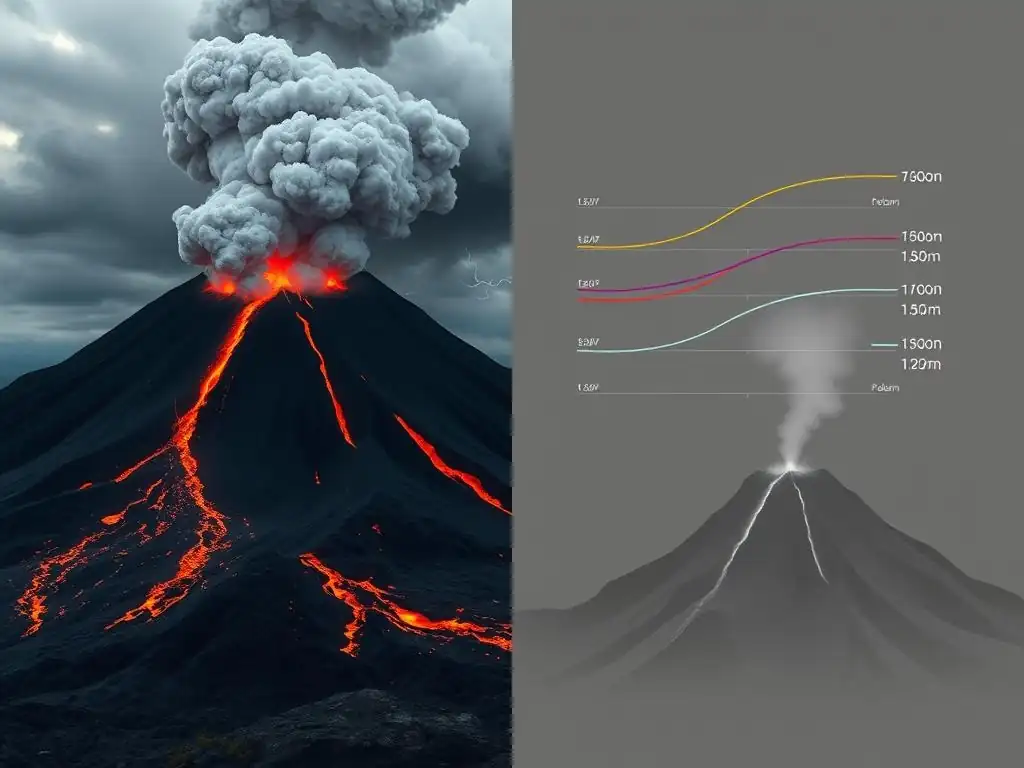
Case Study 1: Mount St. Helens - Model Performance and Validation Strategies
Mount St. Helens, a volcano in Washington State, USA, offers a compelling case study for examining cross-validation in eruption forecasting. The dramatic 1980 eruption and subsequent unrest have been extensively monitored, providing a rich dataset for model development and validation. Researchers have applied various statistical models to forecast eruptions at Mount St. Helens, often focusing on seismic data as a primary precursor. For example, ETAS models have been used to analyze earthquake swarms and assess eruption probabilities. In cross-validation studies for Mount St. Helens, researchers have employed time-series cross-validation techniques to evaluate the performance of these models.
One approach involves using seismic data from periods before known eruptions (e.g., pre-1980 unrest, pre-2004-2008 eruption) to train models and then testing their predictive capability on subsequent periods of unrest or eruptive activity. For instance, a model trained on seismic data from the pre-1980 unrest could be cross-validated using data from the 2004-2008 eruption sequence. These studies have shown that while statistical models can capture some aspects of pre-eruptive seismicity at Mount St. Helens, forecasting the precise timing and magnitude of eruptions remains challenging.
Cross-validation helps to quantify the uncertainties associated with these forecasts and identify the limitations of current models. For example, studies might reveal that while models can identify an increased probability of eruption during periods of heightened seismicity, they may struggle to accurately predict the onset of specific eruptive phases.
Case Study 2: Kilauea - Cross-Validation for Eruption Forecasting
Kilauea volcano in Hawaii, USA, known for its frequent effusive and occasional explosive eruptions, provides another valuable case study for cross-validation. The long-lived Pu'u'ō'ō eruption, which lasted from 1983 to 2018, and the more recent 2018 Lower East Rift Zone eruption have generated vast amounts of monitoring data, including seismic, geodetic, and geochemical measurements.
This wealth of data has facilitated the development and validation of various eruption forecasting models for Kilauea. Researchers have applied statistical models, machine learning techniques, and physics-based models to forecast different aspects of Kilauea's eruptive behavior, such as the onset of eruptions, lava flow paths, and eruption rates.
Cross-validation has played a crucial role in assessing the performance of these models. For instance, models predicting lava flow paths have been cross-validated by training them on past lava flow data and then testing their ability to predict the paths of subsequent flows. Time-series cross-validation has been used to evaluate models forecasting eruption onset based on precursory signals.
Studies have shown that models incorporating multiple data streams, such as ground deformation and gas emission data in addition to seismicity, often exhibit improved predictive performance for Kilauea. Cross-validation studies at Kilauea have also highlighted the importance of considering the evolving nature of the volcanic system. For example, the plumbing system and eruptive style of Kilauea changed significantly after the 2018 caldera collapse, necessitating model recalibration and re-evaluation.
Comparing Cross-Validation Across Volcanic Systems
Comparing cross-validation results across different volcanic systems reveals both commonalities and differences in the performance of eruption forecasting models. While statistical models and machine learning techniques can demonstrate some predictive capability at volcanoes like Mount St. Helens and Kilauea, the level of accuracy and reliability varies significantly between volcanoes. Volcanoes with more frequent eruptions and more comprehensive monitoring datasets, like Kilauea, generally allow for more robust model development and validation. The longer and more detailed eruption history at Kilauea provides a richer training dataset for models compared to volcanoes with less frequent or less well-documented eruptions.
Volcanic systems with simpler and more predictable eruptive behavior may also be more amenable to accurate forecasting than volcanoes with complex and variable eruption styles. For example, volcanoes dominated by effusive eruptions might exhibit more consistent precursory patterns compared to volcanoes prone to highly explosive eruptions. Furthermore, the quality and type of monitoring data available at different volcanoes can influence model performance.
Volcanoes with dense, multi-parametric monitoring networks generally provide better data for model training and validation than volcanoes with sparse or limited monitoring infrastructure. Cross-system comparisons emphasize that eruption forecasting models are often volcano-specific and need to be tailored to the unique characteristics of each volcanic system and the available data.
Factors Affecting Eruption Forecasting Model Robustness
Data Quality and Quantity for Reliable Models
The robustness of any volcano eruption prediction model is fundamentally tied to the quality and quantity of the data used in its development and validation. High-quality data is characterized by accuracy, precision, and reliability. Accurate data reflects the true state of the volcanic system without systematic errors.
Precise data has low random noise and allows for the detection of subtle changes in volcanic activity. Reliable data is consistently collected over time and across different monitoring instruments. Poor data quality, such as noisy seismic signals, inaccurate GPS measurements, or unreliable gas emission data, can significantly degrade model performance and lead to spurious forecasts.
Adequate data quantity is equally crucial. Statistical models and machine learning algorithms typically require a sufficient amount of data to learn underlying patterns and avoid overfitting. In the context of volcano eruption forecasting, this means having long-term monitoring datasets that capture multiple cycles of volcanic unrest and eruption. For volcanoes with infrequent eruptions, obtaining enough data to train and validate robust models can be a major challenge.
Furthermore, the temporal resolution of the data is important. High-frequency data, sampled at short intervals, can capture rapid changes in volcanic activity that might be missed by low-frequency data. The availability of both high-quality and high-quantity data is essential for building reliable and robust volcano eruption forecasting models.
Model Complexity and Generalizability
The complexity of an eruption forecasting model plays a critical role in its robustness and generalizability. Highly complex models, such as deep learning neural networks with many parameters, have the potential to capture intricate patterns in volcanic data. However, they also run the risk of overfitting to the training data, leading to poor performance on new, unseen data. Overfitting occurs when a model becomes too specialized to the training dataset and learns noise or random fluctuations rather than generalizable relationships. This results in excellent performance on the training data but poor generalization to new data.
Simpler models, such as linear regression models or basic statistical models, are less prone to overfitting but may not be able to capture complex non-linear relationships in volcanic data. The optimal level of model complexity often represents a trade-off between model flexibility and generalizability. Regularization techniques, discussed later, can help to mitigate overfitting in complex models.
Furthermore, the generalizability of a model refers to its ability to perform well on different volcanoes or different time periods at the same volcano. Models that are too tightly tailored to a specific volcano or eruption sequence may lack generalizability and fail to provide accurate forecasts in different contexts. Developing models that balance complexity and generalizability is a key challenge in volcano eruption forecasting.
Volcanic System Characteristics and Model Performance
The inherent characteristics of a volcanic system significantly influence the performance of eruption forecasting models. Different volcanoes exhibit distinct eruptive styles, magma compositions, plumbing systems, and tectonic settings. These variations lead to diverse precursory patterns and eruption dynamics, making it challenging to develop universally applicable eruption forecasting models. For example, volcanoes characterized by effusive eruptions, like shield volcanoes, often exhibit gradual and predictable precursory signals, such as steady ground deformation and degassing. In contrast, volcanoes prone to explosive eruptions, like stratovolcanoes, may exhibit more abrupt and less predictable precursory activity.
The geological structure and tectonic setting of a volcano also play a crucial role. Volcanoes located in complex tectonic environments with significant crustal deformation and faulting may exhibit more noisy and variable precursory signals compared to volcanoes in simpler tectonic settings. Furthermore, the availability of monitoring data and the history of past eruptions at a volcano can influence model performance. Volcanoes with long-term monitoring datasets and well-documented eruption histories generally allow for more robust model development and validation. Understanding the specific characteristics of each volcanic system is essential for selecting appropriate modeling techniques and interpreting forecast results.
Techniques for Enhancing Model Robustness
Ensemble Modeling for Accuracy
Ensemble modeling is a powerful technique to enhance the robustness and accuracy of volcano eruption forecasting models. Ensemble methods involve combining predictions from multiple individual models to create a more robust and reliable forecast. The underlying principle is that different models may capture different aspects of the complex volcanic system, and by combining their predictions, we can reduce individual model biases and improve overall forecast accuracy. Several ensemble techniques can be applied in volcano eruption forecasting.
One common approach is to train multiple models using different statistical methods, different subsets of the data, or different model parameters. For example, an ensemble could consist of a logistic regression model, a support vector machine model, and a neural network model, all trained on the same volcanic dataset. The predictions from these individual models can then be combined using various methods, such as simple averaging, weighted averaging based on model performance, or more sophisticated stacking techniques.
Ensemble modeling can improve forecast accuracy by reducing variance and bias, leading to more stable and reliable eruption predictions. Furthermore, ensemble methods can provide a measure of forecast uncertainty by examining the spread of predictions across the individual models in the ensemble.
Regularization to Prevent Overfitting
Regularization techniques are crucial for preventing overfitting, particularly when developing complex eruption forecasting models. Overfitting occurs when a model learns the training data too well, including noise and random fluctuations, and consequently performs poorly on new, unseen data. Regularization methods add constraints or penalties to the model training process to discourage overly complex models and promote simpler, more generalizable solutions. Several regularization techniques are commonly used in statistical modeling and machine learning.
L1 and L2 regularization are popular methods that add penalties to the model's loss function based on the magnitude of the model parameters. L1 regularization (Lasso) encourages sparsity in the model parameters, effectively setting some parameters to zero and simplifying the model. L2 regularization (Ridge) shrinks the magnitude of model parameters, preventing them from becoming too large and reducing model complexity.
Dropout is another regularization technique, particularly effective for neural networks, which randomly drops out neurons during training to prevent co-adaptation of neurons and improve generalization. Early stopping, which monitors model performance on a validation set during training and stops training when performance starts to degrade, is another simple yet effective regularization method. Applying regularization techniques helps to build more robust and generalizable volcano eruption forecasting models that are less prone to overfitting.
Incorporating and Quantifying Uncertainty
Incorporating and quantifying uncertainty is paramount in volcano eruption forecasting. Volcanic processes are inherently complex and influenced by numerous factors, leading to significant uncertainty in eruption predictions. Ignoring or underestimating uncertainty can lead to overconfident forecasts and potentially flawed decision-making. Eruption forecasts should not be presented as deterministic point predictions but rather as probabilistic forecasts that explicitly acknowledge and quantify uncertainty. Several methods can be used to incorporate and quantify uncertainty in volcano eruption forecasting models.
Bayesian statistical methods provide a natural framework for uncertainty quantification by explicitly modeling probability distributions for model parameters and predictions. Bayesian models can incorporate prior knowledge about volcanic behavior and update probability estimates as new data becomes available. Ensemble modeling, as discussed earlier, also provides a means to quantify uncertainty by examining the spread of predictions across different models.
Bootstrapping and jackknifing are resampling techniques that can be used to estimate the variability of model parameters and predictions by repeatedly resampling the data and retraining the model. Furthermore, sensitivity analysis can be used to assess how forecast uncertainty is affected by uncertainties in input data or model assumptions. Explicitly quantifying and communicating forecast uncertainty is essential for responsible and effective volcano eruption forecasting.
Assessing Volcano Forecasting Model Performance

Metrics for Assessing Model Performance
Rigorous assessment of volcano forecasting model performance requires the use of appropriate evaluation metrics. The choice of metrics depends on the specific goals of the forecasting model and the type of forecasts it produces (e.g., binary eruption/no-eruption forecasts, probabilistic eruption forecasts, or forecasts of eruption magnitude or timing). For binary eruption/no-eruption forecasts, common metrics include accuracy, precision, recall, and F1-score. Accuracy measures the overall correctness of the forecasts.
Precision measures the proportion of correctly predicted eruptions out of all predicted eruptions (minimizing false alarms). Recall measures the proportion of correctly predicted eruptions out of all actual eruptions (minimizing missed eruptions). The F1-score is the harmonic mean of precision and recall, providing a balanced measure of performance.
For probabilistic eruption forecasts, metrics such as Brier score, log-likelihood, and area under the receiver operating characteristic curve (AUC-ROC) are commonly used. The Brier score measures the mean squared error of probabilistic forecasts, penalizing both inaccuracy and overconfidence. Log-likelihood measures the probability assigned to the observed outcomes, with higher log-likelihood indicating better model performance.
AUC-ROC assesses the model's ability to discriminate between eruption and non-eruption events across different probability thresholds. In addition to these metrics, it is also important to consider volcano-specific context and the costs and benefits associated with different types of forecast errors (e.g., false alarms vs. missed eruptions) when evaluating model performance.
Testing Models Against Historical Data
Testing volcano eruption forecasting models against historical data is a crucial step in assessing their performance and reliability. This involves applying the model to past periods of volcanic unrest and eruption and evaluating how well the model would have performed if it had been used operationally during those periods. Historical testing, often referred to as retrospective testing or backtesting, provides a more realistic assessment of model performance compared to simply evaluating performance on the training data. Time-series cross-validation, discussed earlier, is a form of historical testing that systematically evaluates model performance on different historical time periods.
In historical testing, the model is typically trained on data up to a certain historical time point and then used to generate forecasts for subsequent time periods. These forecasts are then compared to the actual volcanic activity that occurred during those periods. Historical testing can reveal potential biases or limitations of the model that might not be apparent from cross-validation alone.
For example, historical testing can assess how well a model performs during periods of prolonged unrest or during different phases of an eruption sequence. It also allows for the evaluation of model performance under different data availability scenarios and monitoring conditions that might have existed in the past. Historical testing provides valuable insights into the strengths and weaknesses of eruption forecasting models and helps to build confidence in their operational application.
Cost-Benefit Analysis in Forecasting
Cost-benefit analysis is an essential consideration in the operational application of volcano eruption forecasting models. Eruption forecasts are not valuable in themselves but rather gain value through their ability to inform decision-making and mitigate volcanic risk. The effectiveness of eruption forecasts should be evaluated not only in terms of their accuracy but also in terms of the costs and benefits associated with using them to guide risk mitigation actions.
Different types of forecast errors have different consequences. False alarms (predicting an eruption when none occurs) can lead to unnecessary evacuations, economic disruption, and erosion of public trust in scientific institutions. Missed eruptions (failing to predict an eruption that does occur) can result in loss of life, property damage, and significant societal impacts.
A comprehensive cost-benefit analysis should consider the costs associated with different risk mitigation actions (e.g., evacuations, infrastructure protection measures) and the benefits of avoiding volcanic impacts (e.g., lives saved, property protected). The probabilities of different forecast outcomes (e.g., true positive, true negative, false positive, false negative) and the associated costs and benefits can be used to calculate the expected value of using a particular forecasting model.
Cost-benefit analysis can help to optimize forecasting strategies and risk mitigation actions by identifying the most cost-effective approaches for reducing volcanic risk. It also highlights the importance of communicating forecast uncertainties and potential costs and benefits to decision-makers and the public.
Improving Volcano Eruption Prediction
Machine Learning and AI for Forecasting
Machine learning (ML) and artificial intelligence (AI) are rapidly emerging as powerful tools for improving volcano eruption prediction. ML and AI techniques can analyze large and complex datasets, identify subtle patterns, and learn non-linear relationships that may be difficult to detect using traditional statistical methods. Various ML and AI approaches are being explored for volcano eruption forecasting, including supervised learning, unsupervised learning, and deep learning. Supervised learning algorithms, such as support vector machines, random forests, and neural networks, can be trained to classify volcanic activity states (e.g., erupting vs. non-erupting) or predict eruption probabilities based on precursory signals.
Unsupervised learning techniques, such as clustering and dimensionality reduction, can be used to identify patterns and anomalies in volcanic monitoring data without relying on pre-labeled eruption events. Deep learning, particularly convolutional neural networks and recurrent neural networks, has shown promise in analyzing time-series data and image data related to volcanic activity.
For example, deep learning models can be trained to analyze seismic waveforms, satellite imagery, and gas emission data to detect pre-eruptive changes and forecast eruptions. ML and AI offer the potential to improve the accuracy, speed, and automation of volcano eruption forecasting, but they also require careful validation, interpretation, and integration with existing volcanological knowledge.
Integrating Geophysical, Geochemical, and Geological Data
Improving volcano eruption prediction requires a holistic approach that integrates diverse datasets from geophysical, geochemical, and geological monitoring. Each data stream provides complementary information about the state and dynamics of a volcanic system. Geophysical data, such as seismic, geodetic, and thermal measurements, reflects the physical processes occurring within and around the volcano, such as magma movement, pressure changes, and ground deformation. Geochemical data, such as gas composition and flux measurements, provides insights into magma degassing, volatile transport, and magma source characteristics. Geological data, including volcanic stratigraphy, eruption history, and fault structures, provides long-term context and constraints on volcanic behavior.
Integrating these diverse datasets can provide a more complete and nuanced understanding of volcanic processes and improve eruption forecasting capabilities. Multi-parametric monitoring networks that collect geophysical, geochemical, and geological data are becoming increasingly common at active volcanoes worldwide. Data integration techniques, such as joint inversion, data fusion, and multi-sensor data analysis, are being developed to combine information from different data streams and extract more comprehensive insights.
For example, joint inversion of seismic and geodetic data can provide improved constraints on magma chamber location and volume changes. Integrating geophysical, geochemical, and geological data is essential for developing more accurate and robust volcano eruption prediction models.
Developing Adaptive Models Based on Real-Time Data
Developing adaptive eruption forecasting models that can learn and adapt based on real-time data is a crucial direction for future research. Volcanic systems are dynamic and can evolve over time, with changes in magma supply rates, conduit geometry, and eruptive style. Models trained on historical data may not be optimal for forecasting future eruptions if the volcanic system's characteristics have changed significantly. Adaptive models, also known as online learning models or dynamic models, are designed to continuously update their parameters and predictions as new data becomes available.
Several approaches can be used to develop adaptive eruption forecasting models. Recursive estimation techniques, such as Kalman filtering and particle filtering, can be used to update model parameters in real-time as new data streams in. Online machine learning algorithms can be trained incrementally, adapting to changing data patterns without requiring retraining from scratch.
Bayesian models can be updated using Bayesian updating techniques, incorporating new data to refine posterior probability distributions and improve forecast accuracy. Adaptive models have the potential to improve eruption forecasting by capturing the evolving dynamics of volcanic systems and providing more timely and accurate predictions, particularly during prolonged periods of volcanic unrest or during evolving eruption sequences.
Conclusion: Reliable Eruption Prediction Models for Safety
Importance of Cross-Validation and Model Evaluation
Cross-validation and rigorous model evaluation are absolutely critical for developing reliable and effective volcano eruption prediction models. Cross-validation provides an essential tool to assess the true predictive power of models, ensuring they generalize beyond the data they were trained on and are not simply overfitting to historical patterns. Thorough model evaluation, using appropriate metrics and testing against historical data, is necessary to quantify model performance, identify limitations, and build confidence in forecast accuracy. In the high-stakes domain of volcano eruption forecasting, where public safety and risk mitigation are paramount, robust model validation is not merely a statistical formality but an ethical imperative.
The techniques and methodologies discussed in this article, including time-series cross-validation, ensemble modeling, regularization, uncertainty quantification, and cost-benefit analysis, provide a comprehensive framework for developing and evaluating volcano eruption prediction models. By systematically applying these approaches, volcanologists can improve the reliability of eruption forecasts and enhance their utility for informed decision-making. The ongoing development and refinement of volcano eruption prediction models are essential for reducing volcanic risk and protecting communities living near active volcanoes.
Ongoing Research for Accurate Forecasts
Ongoing research efforts are continuously pushing the boundaries of volcano eruption forecasting. Advances in machine learning and AI are providing new tools for analyzing complex volcanic datasets and developing more sophisticated prediction models. Improved monitoring technologies, including satellite-based remote sensing and dense ground-based networks, are providing increasingly comprehensive and real-time data on volcanic activity. Efforts to integrate geophysical, geochemical, and geological data are leading to a more holistic understanding of volcanic processes and improved forecasting capabilities. Research into adaptive modeling techniques is paving the way for models that can learn and adapt to the evolving dynamics of volcanic systems.
Furthermore, research is focusing on improving the communication and interpretation of eruption forecasts, ensuring that forecasts are effectively translated into actionable information for decision-makers and the public. Collaborative research initiatives, bringing together volcanologists, statisticians, computer scientists, and social scientists, are essential for accelerating progress in volcano eruption forecasting and risk mitigation. Continued investment in research and development is crucial for realizing the full potential of volcano eruption prediction models to enhance public safety and resilience to volcanic hazards.
Collaboration and Data Sharing in Volcanology
Collaboration and data sharing are fundamental pillars for advancing the field of volcano eruption prediction. Volcanology is inherently a global and collaborative science, with volcanoes distributed across diverse geographical locations and monitored by numerous research institutions and observatories worldwide. Sharing data, models, and expertise across national and institutional boundaries is essential to maximize the collective knowledge base and accelerate progress in eruption forecasting. Open data policies and data repositories facilitate the sharing of volcanic monitoring data, allowing researchers to access and utilize data from volcanoes around the globe.
Collaborative research projects, involving international teams of scientists, can leverage diverse perspectives and expertise to tackle complex challenges in volcano eruption forecasting. Sharing best practices in model development, validation, and operational forecasting is crucial for raising the standards of eruption prediction globally.
Furthermore, collaboration between volcanologists and stakeholders, including civil protection agencies, emergency responders, and communities living near volcanoes, is essential for ensuring that eruption forecasts are effectively translated into risk mitigation actions and that communities are well-prepared for volcanic crises. Promoting a culture of collaboration and data sharing within the volcanological community is vital for improving volcano eruption prediction and enhancing global volcanic risk reduction efforts.
Frequently Asked Questions
What are volcano eruption prediction models?
These models use historical data, geophysical measurements, and statistical analysis to estimate the likelihood and timing of future volcanic eruptions. They help scientists assess risk and inform evacuation plans.
Why is it important to test the robustness of volcano eruption prediction models?
Testing ensures models are reliable and accurate, preventing false alarms or, more importantly, failures to predict an eruption. This testing process involves cross-validation using historical datasets.
What factors can influence the accuracy of volcano eruption prediction models?
The accuracy depends on the quality and quantity of data available, the complexity of the volcano's behavior, and the model's ability to account for uncertainties.
How do volcanologists use cross-validation to evaluate eruption prediction models?
Cross-validation involves training the model on a portion of the data and then testing its performance on the remaining data. This process is repeated multiple times, using different subsets of the data for training and testing, to get a more robust estimate of the model's accuracy.
What are the potential consequences of relying on inaccurate volcano eruption prediction models?
Inaccurate models can lead to unnecessary evacuations, causing disruption and economic loss, or, more dangerously, to a failure to evacuate before a hazardous eruption, putting lives at risk.
Final Reflection: Embracing Uncertainty in Volcanic Prediction
The preceding analysis underscores the inherent challenges in volcano eruption prediction models, highlighting the critical need for rigorous cross-validation. The complexities of subterranean processes and the limited availability of historical data mean that even the most sophisticated models are susceptible to biases and overfitting. Acknowledging these limitations is not a sign of failure, but rather a crucial step towards developing more robust and reliable prediction tools.
The ongoing quest to improve eruption forecasting has profoundly shaped our understanding of volcanic systems and their potential impact on society. This pursuit is deeply personal for many, especially those living in volcanically active regions, where the accuracy of these models can literally mean the difference between life and death. The only way to do great work is to love what you do.
- Steve Jobs. This sentiment resonates deeply with the dedication of scientists tirelessly working to unravel the mysteries of volcanoes and protect vulnerable communities.
As we conclude, consider the broader implications of this exploration. How can we, as individuals and as a society, better embrace uncertainty and prepare for unpredictable events? Let this analysis serve as a reminder that continuous learning, critical evaluation, and collaborative efforts are essential not only in the realm of volcano eruption prediction, but in all aspects of life where we strive to understand and mitigate risk. Let us commit to supporting scientific endeavors that push the boundaries of knowledge and empower us to build a more resilient future.
Okay, here's a CTA draft for the end of a web article titled "CrossValidation Calamity? Testing the Robustness of Eruption Models" for the website Volcano Explorers (volcanoexplorers.org):
Ignite Your Inner Volcanologist!
Thank you for delving into the fascinating world of eruption model validation! We hope you found the exploration of cross-validation techniques both insightful and empowering. Now, let's put that knowledge to work and keep the volcanic spirit alive!
Here are a few ways you can continue your journey:
- Dive Deeper: Choose one real-world volcanic dataset and attempt to build and cross-validate your own simplified eruption model.: Share your findings (and challenges!) in the comments below.
- Explore the Volcano Explorers Database: Browse our curated collection of eruption data, research papers, and visualizations to further your understanding of volcanic processes.
- Join the Discussion: What factors do you think are most critical for accurate eruption forecasting? Share your thoughts in the comments and let's learn from each other!
What specific volcanic region are you most interested in applying these cross-validation techniques to, and what data would you need to get started? Let's talk about it!