
Beyond Earth: Could Statistical Models Predict Eruptions on Other Planets?


Welcome to Volcano Explorers!
Dare to journey into the fiery heart of planetary science? Here, we don't just study Earth's volcanoes; we venture beyond, asking a crucial question: Can we use statistical models to unlock the secrets of predicting volcanic eruptions on planets far beyond our own? Prepare to explore the cutting-edge research that's shaping our understanding of these cosmic giants and discover how the same principles that help us here could one day save lives… even on other worlds.
- Volcano Explorers: Expanding Volcanic Prediction Beyond Earth
- Predicting Volcanic Eruptions on Planets Beyond Earth
- Statistical Models for Eruption Forecasting
- Case Studies: Applying Statistical Models to Known Planetary Volcanoes
- Comparing Earth-Based and Extraterrestrial Volcano Prediction
- The Future of Predicting Volcanic Eruptions on Other Planets
- Ethical Considerations in Predicting Extraterrestrial Volcanic Hazards
- Conclusion: Statistical Modeling for Understanding Planetary Volcanism
-
Frequently Asked Questions
- How can statistical models help in predicting volcanic eruptions on other planets?
- What type of data would be needed to build a reliable statistical model for predicting volcanic eruptions on another planet?
- What are the biggest challenges in predicting volcanic eruptions on planets beyond Earth?
- Are there any planets or moons where predicting volcanic eruptions is considered a particularly high priority?
- How accurate can statistical models realistically be in predicting volcanic eruptions on other planets, given current technology?
- Final Reflection: Unveiling Planetary Secrets
- Ignite Your Cosmic Curiosity: Explore Planetary Volcanism!
Volcano Explorers: Expanding Volcanic Prediction Beyond Earth
Challenges of Studying Extraterrestrial Volcanism
Studying volcanoes beyond Earth presents a unique set of challenges that are not encountered when observing terrestrial volcanism. The primary obstacle is distance. For most planets and moons in our solar system, data acquisition relies heavily on remote sensing techniques. Spacecraft missions, like NASA's Mars Reconnaissance Orbiter or ESA's Venus Express, provide invaluable data, but these are limited in spatial and temporal resolution compared to ground-based or airborne observations on Earth.
For example, while we can deploy networks of seismometers around volcanoes on Earth to precisely monitor ground deformation and tremor activity, such direct measurements are extremely rare on other planets. The vast distances also mean that real-time monitoring of volcanic activity, as is common practice for many active volcanoes on Earth, is simply not feasible. Data may be collected and transmitted over days, weeks, or even months, making rapid response to potential eruption events impossible with current technology.
Furthermore, the environmental conditions on other planets drastically differ from Earth. Atmospheric pressure, temperature, and composition vary significantly, influencing volcanic processes and eruption styles in ways we are still striving to fully understand. For instance, the near-vacuum conditions on the Moon or Mercury mean that explosive eruptions as we know them on Earth are unlikely, with volcanic activity primarily manifesting as effusive lava flows.
On Venus, the dense, hot atmosphere (around 90 times the pressure of Earth's and temperatures exceeding 460°C) dramatically alters the dispersal of volcanic plumes and the cooling rates of lava flows. These diverse planetary environments require us to adapt our understanding of volcanic processes and develop models that account for these extraterrestrial conditions when predicting volcanic eruptions on planets.
Applying Statistical Models to Volcano Monitoring & Prediction
Statistical models are increasingly crucial tools in volcano monitoring and prediction, especially when extending our understanding beyond Earth. These models offer a framework to analyze the often sparse and incomplete datasets obtained from remote observations of planetary bodies. Unlike deterministic models that rely on detailed physical parameters, statistical models can identify patterns and correlations within existing data to forecast future volcanic behavior.
This is particularly valuable when dealing with the inherent uncertainties and limitations in extraterrestrial volcanology. For example, instead of requiring precise knowledge of magma chamber pressure or conduit geometry, statistical models can analyze time series data of thermal emissions or surface deformation to estimate eruption probabilities or recurrence intervals.
Moreover, statistical approaches are well-suited to handle the complexity and variability of volcanic systems. Volcanoes are inherently non-linear systems, influenced by a multitude of interacting factors. Statistical models, especially those incorporating machine learning techniques, can capture these complex relationships and identify subtle precursors to eruptions that might be missed by traditional deterministic methods.
For instance, machine learning algorithms can be trained on datasets of terrestrial volcanic activity to recognize patterns in pre-eruptive signals, and these learned patterns can then be applied to analyze remote sensing data from extraterrestrial volcanoes. By quantifying uncertainties and providing probabilistic forecasts, statistical models offer a robust and adaptable framework for predicting volcanic eruptions on planets, even with the limited data and diverse conditions encountered beyond Earth.
Predicting Volcanic Eruptions on Planets Beyond Earth
Data Scarcity: A Major Hurdle
Predicting volcanic eruptions on planets beyond Earth is significantly hampered by the stark reality of data scarcity. Compared to the wealth of data available for terrestrial volcanoes, our knowledge of extraterrestrial volcanism is fragmented and often indirect. For most planetary bodies, we rely on snapshots of geological history captured by flyby missions or orbital spacecraft. These missions provide valuable images and spectral data, allowing us to identify volcanic features like lava flows, calderas, and volcanic cones.
However, the temporal resolution is often extremely limited. For example, the Magellan mission to Venus, which mapped the planet's surface in the early 1990s, provided a comprehensive dataset, but it is essentially a single snapshot in time. We lack continuous, long-term monitoring of volcanic activity on Venus or most other planets.
The scarcity of in-situ measurements is another major hurdle. While robotic landers and rovers have explored the surfaces of the Moon and Mars, and future missions are planned, these are localized explorations. Deploying a network of sensors across an entire planet to monitor volcanic activity, as we do on Earth, is currently impractical.
Consequently, we lack crucial datasets like seismic measurements, ground deformation data from GPS networks, and direct gas emission measurements for most extraterrestrial volcanoes. This forces us to rely on indirect proxies derived from remote sensing data, such as thermal anomalies indicating active lava flows or subtle changes in surface morphology that might suggest ground deformation. Overcoming data scarcity requires innovative approaches to data analysis and model development, emphasizing the importance of statistical methods that can extract meaningful information from limited datasets to predict volcanic eruptions on planets.
Adapting Terrestrial Models
To predict volcanic eruptions on planets, we cannot simply transplant terrestrial models directly. While the fundamental physics of magma generation and eruption processes are universal, the specific conditions on other planets necessitate significant adaptations to Earth-based models. Gravity, atmospheric pressure, and magma composition, among other factors, vary dramatically across planetary bodies and exert a strong influence on volcanic behavior.
For instance, the lower gravity on Mars compared to Earth affects the buoyancy of magma and the dynamics of eruption plumes. Eruption columns on Mars can reach significantly greater heights than terrestrial plumes for the same eruption energy due to reduced gravitational pull. This has implications for the dispersal of volcanic ash and gas, and consequently, for volcanic hazard assessments.
Furthermore, the composition of magma on other planets may differ significantly from Earth's. Evidence suggests that the Moon and Mercury experienced extensive mantle melting early in their history, leading to basaltic volcanism. However, the specific mineralogy and volatile content of these magmas may differ, influencing their viscosity, degassing behavior, and eruption styles.
Venusian volcanism, shrouded in a dense atmosphere, is less well-understood in terms of magma composition, but the high surface temperatures and pressures are likely to affect magma evolution and eruption dynamics. Adapting terrestrial models requires incorporating these planetary-specific parameters and considering the unique geological contexts of each volcanic body. This involves adjusting model parameters based on available planetary data, performing sensitivity analyses to understand the influence of different planetary conditions, and potentially developing entirely new model formulations that are tailored to extraterrestrial volcanism.
Statistical Models for Eruption Forecasting
Time Series Analysis for Planetary Volcanic Activity
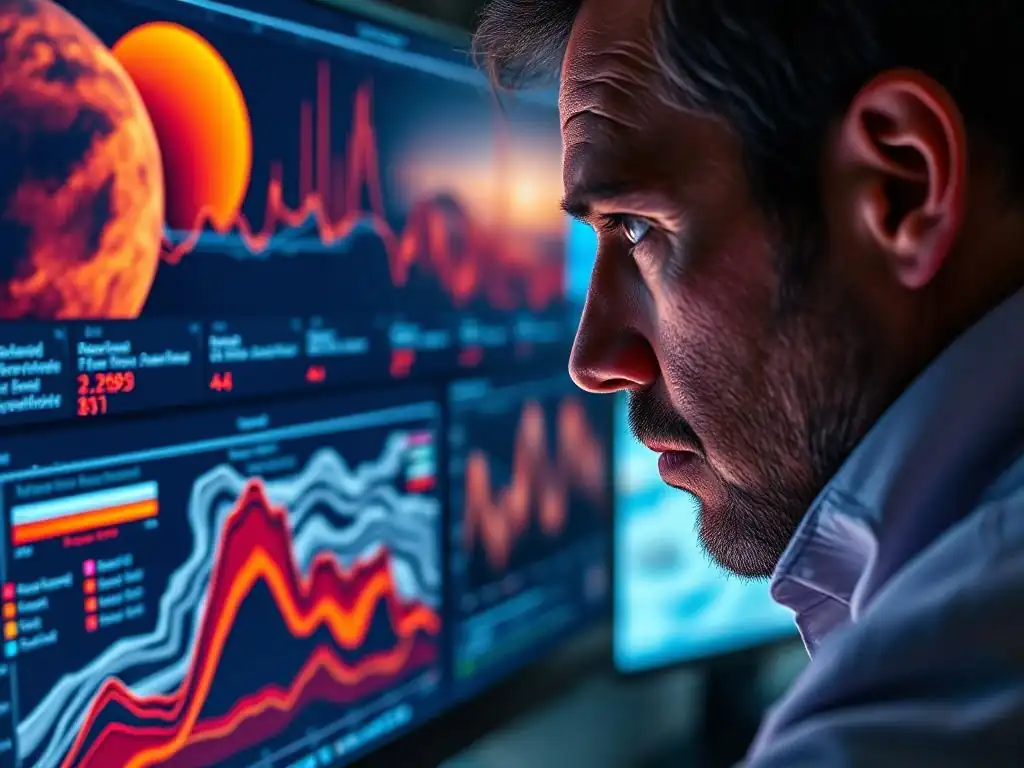
Time series analysis offers a powerful toolkit for deciphering patterns in planetary volcanic activity, particularly when dealing with sparse and irregularly sampled data. This statistical approach focuses on analyzing sequences of data points collected over time to identify trends, periodicities, and anomalies that might indicate impending eruptions. For extraterrestrial volcanoes, time series data can be derived from various remote sensing observations, such as thermal infrared measurements, which can detect changes in surface temperature associated with lava flows or fumarolic activity, or from radar interferometry, which can measure subtle surface deformation related to magma accumulation or movement.
Consider Io, Jupiter's volcanically hyperactive moon. While continuous, high-resolution data is unavailable, spacecraft like Galileo and Juno have provided snapshots of Io's thermal emissions over time. Time series analysis can be applied to these sporadic thermal datasets to identify recurring patterns in volcanic outbursts, estimate eruption frequencies, and potentially detect precursory signals before major eruptions.
For example, an increasing trend in thermal output over time might suggest magma accumulation and an elevated risk of eruption. Similarly, analyzing the temporal evolution of volcanic plume heights on Io, derived from imaging data, can reveal patterns related to magma supply rates and eruption dynamics. Techniques like autoregressive models and Fourier analysis can be employed to extract meaningful signals from noisy time series data and provide probabilistic forecasts of future volcanic activity on planets.
Machine Learning for Extraterrestrial Volcanic Hazard Assessment
Machine learning (ML) is emerging as a transformative approach for volcanic hazard assessment, particularly in the context of extraterrestrial volcanism where data is limited and complex. ML algorithms excel at identifying subtle patterns and relationships within large datasets, even when those datasets are incomplete or noisy. In the context of predicting volcanic eruptions on planets, ML models can be trained on a combination of terrestrial volcanic datasets and available extraterrestrial data to learn to recognize pre-eruptive signals and forecast eruption probabilities.
For instance, consider the vast amount of geological and remote sensing data available for Mars. While we lack real-time monitoring of Martian volcanoes, we have extensive imagery, topographic data, and spectral information from missions like Mars Reconnaissance Orbiter. ML algorithms can be trained on terrestrial volcanic datasets, incorporating parameters like ground deformation, seismic activity, gas emissions, and thermal anomalies, to learn the signatures of pre-eruptive unrest.
These trained models can then be applied to analyze Martian datasets to identify areas with elevated volcanic hazard potential based on geological features, thermal anomalies, or subtle morphological changes indicative of volcanic activity. Techniques like support vector machines, neural networks, and random forests can be employed to classify volcanic regions, predict eruption probabilities, and ultimately enhance our understanding of extraterrestrial volcanic hazards.
Bayesian Inference: Incorporating Uncertainty
Bayesian inference is a statistical framework that is particularly well-suited for dealing with the inherent uncertainties in predicting volcanic eruptions on planets. Unlike traditional statistical methods that provide point estimates, Bayesian inference provides probabilistic forecasts, explicitly quantifying the uncertainty associated with predictions. This is crucial in extraterrestrial volcanology where data is often sparse, indirect, and subject to significant measurement errors. Bayesian methods allow us to combine prior knowledge about volcanic processes with new observational data to update our beliefs and refine our predictions.
Consider predicting the timing of the next eruption of Olympus Mons on Mars, the largest volcano in the solar system. We have geological evidence of past eruptions and caldera collapses, but we lack real-time monitoring data. Bayesian inference can be used to combine geological constraints on eruption recurrence intervals with limited remote sensing data, such as observations of recent lava flows or potential thermal anomalies, to estimate the probability of an eruption within a given timeframe.
By incorporating prior knowledge from terrestrial volcanology and Martian geological history, and explicitly accounting for uncertainties in data and model parameters, Bayesian methods provide a robust and transparent framework for making probabilistic eruption forecasts for extraterrestrial volcanoes. This approach is particularly valuable for long-term hazard assessments and for informing decisions related to future robotic or human missions to volcanic regions on other planets.
Case Studies: Applying Statistical Models to Known Planetary Volcanoes
Olympus Mons, Mars: Modeling Caldera Collapse Frequency
Olympus Mons, the colossal shield volcano on Mars, provides an intriguing case study for applying statistical models to understand long-term volcanic processes. Its immense size and complex caldera structure suggest a long and episodic history of volcanic activity. While direct observation of eruptions is absent in recent times, geological evidence, particularly the nested caldera collapses, provides clues to past eruptive events. Statistical models can be employed to analyze the spatial distribution and relative ages of these caldera collapses to estimate the frequency of major caldera-forming eruptions on Olympus Mons.
Researchers have used crater counting techniques to estimate the ages of different caldera segments within Olympus Mons. By analyzing the density of impact craters on various caldera floor units, they can infer relative ages, with surfaces having fewer craters being younger. Statistical models, such as Poisson process models, can then be applied to these age estimates to infer the rate of caldera collapse events over geological timescales.
For example, if the crater counting suggests that five major caldera collapses occurred over a period of, say, 100 million years, a Poisson model can estimate the average recurrence interval between these events and the probability of a caldera collapse occurring within a given future timeframe. These statistical analyses, while based on indirect geological evidence, provide valuable insights into the long-term eruptive behavior of Olympus Mons and contribute to our understanding of Martian volcanism.
Io's Volcanic Activity: Modeling Eruption Plume Height and Frequency
Io, Jupiter's moon, stands out as the most volcanically active body in our solar system. Tidal forces from Jupiter and its other moons generate immense heat within Io, driving intense and frequent volcanic eruptions. Unlike the long-term, episodic volcanism of Olympus Mons, Io's volcanoes exhibit dynamic and often short-lived eruptions. Statistical models are crucial for analyzing the rapidly changing volcanic activity on Io, particularly for modeling eruption plume height and frequency based on remote sensing observations.
Spacecraft missions like Galileo and New Horizons have captured numerous images of Io's volcanic plumes. By measuring the heights of these plumes from image data, and analyzing sequences of images taken over time, researchers can construct time series of plume heights for individual volcanoes. Statistical models, including time series analysis and extreme value theory, can then be applied to these datasets.
Time series analysis can identify trends and periodicities in plume activity, while extreme value theory can estimate the probability of exceptionally large eruption plumes, which may pose hazards to spacecraft orbiting Jupiter. Furthermore, statistical models can be used to correlate plume height with other observable parameters, such as thermal emissions, to develop predictive relationships for eruption intensity and frequency on Io.
Venusian Volcanoes: Inferring Eruption Styles from Magellan Data
Venus, with its dense atmosphere and hot surface, presents unique challenges for studying volcanism. The Magellan mission, which used radar to penetrate Venus's cloud cover, provided a wealth of data on the planet's surface, revealing numerous volcanic features. However, direct observation of active volcanism on Venus remains elusive. Statistical models, combined with geological interpretations of Magellan radar data, can be used to infer eruption styles and volcanic processes on Venus, even without direct observation of eruptions.
Magellan radar images reveal a diverse array of volcanic features on Venus, including shield volcanoes, lava flows, pancake domes, and coronae. Statistical analysis of the spatial distribution, morphology, and radar backscatter properties of these features can provide insights into eruption styles. For example, the morphology of lava flows, such as their length, width, and sinuosity, can be statistically related to lava viscosity and effusion rates.
Similarly, the radar backscatter properties of volcanic surfaces can be correlated with surface roughness and age, providing clues to eruption history and weathering processes. Furthermore, statistical models can be used to analyze the spatial clustering of volcanic features, which may indicate regions of concentrated volcanic activity or underlying tectonic controls. By statistically analyzing Magellan data, we can infer volcanic processes and eruption styles on Venus, even in the absence of direct eruption observations, enhancing our understanding of volcanic activity on planets.
Comparing Earth-Based and Extraterrestrial Volcano Prediction
Common Volcanic Processes Across Planets
Despite the diverse planetary environments in our solar system, fundamental volcanic processes exhibit remarkable commonalities across planets. The underlying physics of magma generation, ascent, and eruption are governed by universal principles of fluid dynamics, thermodynamics, and rock mechanics. This commonality allows us to leverage our understanding of terrestrial volcanism to interpret and model volcanic phenomena on other planets.
For instance, the process of decompression melting, where mantle rocks partially melt due to a decrease in pressure, is believed to be a primary mechanism of magma generation on Earth, Mars, Venus, and Io. Similarly, the ascent of magma through conduits and its eventual eruption are governed by principles of buoyancy, viscosity, and gas exsolution, which are applicable across planetary bodies, albeit with planetary-specific variations in parameters.
Effusive volcanism, characterized by the relatively slow outpouring of lava flows, is observed on Earth, the Moon, Mars, Venus, and Io. Shield volcanoes, formed by the accumulation of basaltic lava flows, are a common volcanic landform across these planets. Explosive volcanism, driven by the rapid expansion of volcanic gases, also occurs on multiple planets, though its intensity and style can vary significantly depending on atmospheric conditions and magma composition.
Pyroclastic deposits, formed by explosive eruptions, have been identified on Mars and potentially on Venus. The commonality of these fundamental volcanic processes provides a basis for applying Earth-based models and knowledge to predict volcanic eruptions on planets, while acknowledging and accounting for planetary-specific differences.
Key Differences: Gravity, Atmosphere, and Magma Composition
While fundamental volcanic processes are shared across planets, key planetary differences significantly influence volcanic behavior and necessitate adjustments to Earth-based prediction models. Gravity, atmospheric pressure and composition, and magma composition are among the most critical factors that vary across planetary bodies and impact volcanic eruptions. Lower gravity, such as on Mars or the Moon, reduces the confining pressure on magma and affects the buoyancy and ascent rate of magma plumes.
This can lead to higher eruption columns and broader dispersal of volcanic ejecta compared to Earth for eruptions of similar energy. The near-vacuum conditions on the Moon and Mercury drastically alter eruption styles, favoring effusive eruptions and suppressing explosive activity driven by atmospheric interaction.
Atmospheric pressure and composition play a crucial role in controlling eruption explosivity and the dispersal of volcanic plumes. The dense atmosphere of Venus, for example, significantly dampens explosive eruptions and alters the cooling rates of lava flows. Conversely, the thin atmosphere of Mars allows for more extensive dispersal of volcanic plumes and dust.
Magma composition, which varies depending on the planet's mantle composition and geological history, influences magma viscosity, volatile content, and eruption style. For example, the sulfur-rich magmas on Io contribute to its highly energetic and volatile-driven volcanism. These key planetary differences must be carefully considered when adapting terrestrial models for predicting volcanic eruptions on planets, requiring adjustments to model parameters and potentially the development of planet-specific model formulations.
Statistical Model Adjustments for Planetary Variations
To accurately predict volcanic eruptions on planets, statistical models developed for Earth need to be adjusted to account for planetary variations in gravity, atmosphere, and magma composition. These adjustments can involve modifying model parameters, incorporating planet-specific data, and potentially developing entirely new statistical approaches tailored to extraterrestrial conditions.
For example, when applying time series analysis to thermal data from Io, the model parameters might need to be adjusted to reflect Io's rapid eruption frequency and high heat flux compared to terrestrial volcanoes. Similarly, when using machine learning to assess volcanic hazards on Mars, the training datasets might need to be augmented with Martian geological and remote sensing data to ensure the models are sensitive to Martian volcanic characteristics.
For gravity adjustments, models predicting eruption plume height or lava flow morphology might need to incorporate gravitational scaling factors to account for the lower gravity on planets like Mars or the Moon. Atmospheric effects can be incorporated by adjusting models that simulate plume dispersal or lava cooling rates to reflect the atmospheric pressure and composition of the target planet.
Adjustments for magma composition are more complex and often require incorporating geochemical data and experimental studies to understand the influence of magma properties on eruption dynamics. In some cases, planet-specific statistical models might need to be developed.
For instance, models designed to analyze the unique volcanic plume dynamics on Io might require different statistical approaches than models used for predicting caldera collapses on Mars. The key is to recognize the limitations of directly transferring Earth-based models and to systematically adapt and refine statistical approaches to account for the diverse planetary conditions encountered in our solar system.
The Future of Predicting Volcanic Eruptions on Other Planets
Advancements in Remote Sensing
The future of predicting volcanic eruptions on other planets is inextricably linked to advancements in remote sensing technologies. Improved spatial resolution, spectral sensitivity, and temporal coverage of remote sensing instruments are crucial for enhancing our ability to monitor and understand extraterrestrial volcanism.
Future space missions equipped with next-generation sensors will provide more detailed and frequent observations of volcanic regions on planets and moons, enabling more robust statistical analyses and eruption forecasts. For instance, hyperspectral imagers, which capture data across a wide range of wavelengths, can provide more precise information about the composition of volcanic plumes and surface materials, aiding in the detection of subtle changes indicative of volcanic activity.
Radar interferometry with improved accuracy and spatial resolution can detect subtle ground deformation associated with magma movement, even on planets with thick atmospheres like Venus. Thermal infrared sensors with higher sensitivity can detect fainter thermal anomalies, potentially revealing previously undetected volcanic activity or pre-eruptive heating.
Furthermore, constellations of small satellites or CubeSats, deployed in orbit around other planets, could provide more continuous and synoptic monitoring of volcanic regions, overcoming the limitations of single spacecraft missions. Advancements in data processing and analysis techniques, including automated feature extraction and change detection algorithms, will be essential to handle the increasing volume and complexity of remote sensing data and to extract meaningful signals related to volcanic activity for statistical modeling and prediction.
Future Space Missions for Volcano Monitoring
Dedicated space missions specifically designed for volcano monitoring are crucial for advancing our predictive capabilities for extraterrestrial volcanism. While past missions have provided valuable snapshots of volcanic activity, future missions focused on long-term, continuous monitoring are needed to capture the dynamic nature of volcanic processes and to collect the time-series data necessary for robust statistical modeling.
For Io, a dedicated orbiter equipped with a comprehensive suite of instruments, including high-resolution imagers, thermal infrared sensors, and plasma instruments, could provide near-real-time monitoring of its hyperactive volcanism. Such a mission could significantly improve our understanding of Io's eruption triggers, plume dynamics, and long-term volcanic evolution.
For Mars and Venus, missions focused on deploying networks of surface sensors, such as seismometers and gas analyzers, would be transformative. Seismic networks would provide direct measurements of subsurface magma movement and volcanic tremor, while gas analyzers could detect changes in volcanic gas emissions, both of which are crucial precursors to eruptions on Earth.
Future Venus missions could also incorporate atmospheric probes to directly sample volcanic plumes and measure atmospheric composition changes related to volcanic outgassing. Furthermore, missions incorporating advanced robotic explorers, such as rovers or even aerial drones, could be deployed to volcanic regions to conduct detailed geological investigations, collect samples, and deploy localized sensor networks, providing ground-truth data to complement remote sensing observations and enhance the accuracy of statistical eruption forecasts.
Collaboration Between Volcanologists and Statisticians
Effective prediction of volcanic eruptions on other planets requires strong collaboration between volcanologists and statisticians. Volcanologists bring expertise in understanding volcanic processes, interpreting geological data, and identifying potential eruption precursors. Statisticians provide the tools and methodologies to analyze complex datasets, develop probabilistic models, and quantify uncertainties in predictions.
Interdisciplinary teams, combining the expertise of both fields, are essential to develop robust and reliable statistical models for extraterrestrial volcano prediction. Volcanologists can guide the selection of relevant data, inform the model formulation based on physical understanding of volcanic processes, and interpret the statistical results in a volcanological context. Statisticians can contribute expertise in time series analysis, machine learning, Bayesian inference, and other statistical techniques to extract meaningful information from often sparse and noisy extraterrestrial datasets.
This collaboration should extend beyond data analysis and model development to encompass mission planning and instrument design. Volcanologists and statisticians should work together to define mission objectives, select appropriate remote sensing and in-situ instruments, and design data acquisition strategies that are optimized for statistical modeling and eruption prediction. Furthermore, open communication and data sharing between the volcanology and statistics communities are crucial to foster innovation and accelerate progress in this interdisciplinary field. Workshops, conferences, and joint research projects can facilitate the exchange of knowledge and expertise, leading to more effective and collaborative approaches to predicting volcanic eruptions on planets.
Ethical Considerations in Predicting Extraterrestrial Volcanic Hazards
Protecting Potential Future Colonists
As we contemplate future human colonization of other planets, ethical considerations related to predicting extraterrestrial volcanic hazards become increasingly important. If humans were to establish settlements on volcanically active planets like Mars or moons like Io, accurate eruption prediction would be crucial for ensuring their safety and minimizing risks. Ethical obligations to protect potential future colonists necessitate investing in research and developing robust volcano monitoring and prediction capabilities. This includes not only scientific research but also the development of early warning systems and evacuation protocols tailored to extraterrestrial environments.
Predicting volcanic eruptions on planets intended for colonization carries a significant ethical weight. Inaccurate predictions, whether false positives or false negatives, could have severe consequences for colonists. False positives could trigger unnecessary evacuations and disruptions, while false negatives could lead to catastrophic losses of life and infrastructure.
Therefore, the ethical imperative is to strive for the highest possible accuracy and reliability in eruption predictions, acknowledging and communicating the inherent uncertainties involved. Furthermore, ethical considerations extend to the responsible communication of volcanic hazard information to potential colonists, ensuring they are fully informed of the risks and have the necessary knowledge and resources to mitigate those risks.
Minimizing Risk to Robotic Explorers
Even in the absence of human colonists, ethical considerations arise in the context of robotic exploration of volcanically active planets. Robotic explorers, such as rovers, landers, and orbiters, represent significant investments of resources and scientific effort. Predicting volcanic eruptions can play a crucial role in minimizing risks to these valuable robotic assets. By identifying areas with elevated volcanic hazard potential and forecasting potential eruption events, mission planners can make informed decisions about rover traverse paths, lander deployment sites, and spacecraft orbital trajectories to minimize the likelihood of encountering volcanic hazards.
Ethical considerations in this context relate to the responsible stewardship of scientific resources and the minimization of unnecessary risks to robotic explorers. While some level of risk is inherent in planetary exploration, particularly in dynamic volcanic environments, proactive hazard assessment and eruption prediction can significantly reduce those risks.
This includes utilizing statistical models to identify hazardous regions, developing real-time eruption detection systems, and implementing contingency plans to safeguard robotic explorers in the event of volcanic activity. Ethical responsibility dictates that we should make every reasonable effort to protect our robotic emissaries as they explore and study the fascinating and potentially hazardous volcanic landscapes of other planets.
Conclusion: Statistical Modeling for Understanding Planetary Volcanism
The Importance of Interdisciplinary Research
Statistical modeling is not merely a technical tool but a crucial bridge connecting diverse scientific disciplines in our quest to understand planetary volcanism. The challenges of predicting volcanic eruptions on other planets are inherently interdisciplinary, requiring the integration of expertise from volcanology, statistics, planetary science, remote sensing, and potentially other fields like atmospheric science and geophysics.
Volcanologists provide the fundamental understanding of volcanic processes and geological context, while statisticians offer the analytical framework to extract meaningful information from complex and often incomplete datasets. Planetary scientists contribute knowledge of planetary environments and geological histories, and remote sensing specialists provide the data streams necessary for monitoring and analysis.
This interdisciplinary approach is essential to overcome the limitations imposed by data scarcity, diverse planetary conditions, and the inherent complexity of volcanic systems. Statistical models provide a common language and analytical framework for integrating data and knowledge from these diverse disciplines, enabling a more holistic and robust understanding of planetary volcanism. The future of predicting volcanic eruptions on planets hinges on fostering and strengthening these interdisciplinary collaborations, creating research teams that can effectively combine expertise from different fields to tackle this challenging and exciting scientific endeavor.
Future Research Directions
Future research in statistical modeling for predicting volcanic eruptions on other planets should focus on several key directions. Improving the accuracy and robustness of statistical models requires access to more and higher-quality data. This necessitates continued investment in space missions equipped with advanced remote sensing instruments and, where feasible, surface sensor networks.
Developing new statistical methodologies specifically tailored to the challenges of extraterrestrial volcanology is also crucial. This includes exploring machine learning techniques for pattern recognition in sparse and noisy datasets, refining Bayesian inference methods for incorporating prior knowledge and uncertainties, and developing models that can explicitly account for planetary variations in gravity, atmosphere, and magma composition.
Furthermore, research should focus on validating and testing statistical models using both terrestrial and extraterrestrial datasets. Comparative volcanology, drawing parallels and contrasts between volcanic processes on Earth and other planets, can provide valuable insights for model development and refinement.
Developing standardized protocols for data sharing, model validation, and uncertainty quantification within the planetary volcanology community is essential to ensure the transparency and reproducibility of research findings. Finally, continued collaboration between volcanologists, statisticians, planetary scientists, and engineers is paramount to drive innovation and accelerate progress in this exciting and rapidly evolving field, ultimately enhancing our ability to predict volcanic eruptions and understand the dynamic geological processes shaping planets throughout our solar system and beyond.
Frequently Asked Questions
How can statistical models help in predicting volcanic eruptions on other planets?
Statistical models analyze patterns in data like surface temperature changes, gas emissions, and seismic activity to forecast the likelihood of future eruptions. They help us understand potential eruption trends, even with limited data from other planets. These models extrapolate from Earth-based observations.
What type of data would be needed to build a reliable statistical model for predicting volcanic eruptions on another planet?
Ideally, we would need data on planetary seismic activity, atmospheric composition (especially volcanic gases like sulfur dioxide), and surface deformation. High-resolution imagery to detect changes in volcanic features would also be crucial. This data would be collected by probes or satellites.
What are the biggest challenges in predicting volcanic eruptions on planets beyond Earth?
The biggest challenges are the lack of extensive data, the difficulty in deploying monitoring equipment, and the potential for geochemical differences to volcanoes on other planets. We'd be relying on limited observations and inferences.
Are there any planets or moons where predicting volcanic eruptions is considered a particularly high priority?
Io, a moon of Jupiter, is a high priority because it's the most volcanically active world in the Solar System. Predicting eruptions on Io could tell us much about tidal heating and planetary differentiation. Venus is also of interest given evidence of recent volcanism.
How accurate can statistical models realistically be in predicting volcanic eruptions on other planets, given current technology?
Accuracy is currently limited. Models can potentially identify areas with high volcanic potential, but precise timing and magnitude predictions are difficult with the available data. Increased data collection will hopefully improve the accuracy of predicting eruptions.
Final Reflection: Unveiling Planetary Secrets
The exploration of volcanic activity beyond Earth, as we've discussed, is not merely an academic exercise; it's a crucial step in understanding the fundamental processes that shape planetary bodies and, ultimately, our place in the cosmos. The potential to apply statistical models to predict eruptions on other planets opens a new frontier in planetary science, promising to unlock secrets hidden beneath alien surfaces.
The ongoing quest to understand and predict volcanic eruptions, both on Earth and beyond, has profoundly influenced our understanding of planetary evolution and habitability. This pursuit resonates deeply, reminding us of the interconnectedness of all celestial bodies and the universal laws that govern them. The cosmos is within us. We are made of star-stuff. We are a way for the universe to know itself.
- Carl Sagan. This quote encapsulates the profound implications of our research, highlighting the potential for self-discovery through the study of distant worlds.
As we stand on the precipice of a new era of planetary exploration, consider the implications of these findings. How can we leverage the power of statistical models to not only predict volcanic eruptions on other planets, but also to better understand and mitigate volcanic hazards here on Earth? Let us embrace the challenge of unraveling the mysteries of the universe, for in doing so, we gain a deeper understanding of ourselves and our place within it.
Ignite Your Cosmic Curiosity: Explore Planetary Volcanism!
Thanks for diving deep into the fascinating possibilities of predicting eruptions on other planets! Now that you've gained insight into how statistical models could revolutionize our understanding of extraterrestrial volcanism, it's time to take your exploration further.
Here's how you can fuel your passion:
- Delve deeper into the data: Search for open-source planetary datasets related to past volcanic activity on celestial bodies like Mars or Venus. Try familiarizing yourself with the kind of data scientists use!
- Share this article with fellow space enthusiasts! Help us spread the word and spark conversations about the exciting future of planetary volcanology.
- Brainstorm! Could we adapt Earth-based volcano monitoring technology for use on other planets? What new tools might be needed?
What innovative technology do you think is most crucial for improving eruption prediction on planets beyond Earth? Share your ideas in the comments below!