
Historical Eruptions as Hints: Learning from the Past to Forecast the Future.


Welcome to Volcano Explorers, where the Earth breathes fire! Are you ready to unravel the secrets hidden within the Learning from Historical Eruptions? Imagine deciphering the past to predict the future of these fiery giants. Join us as we journey into the heart of volcano monitoring and prediction, and discover how the echoes of ancient explosions can help us prepare for tomorrow's eruptions. What secrets will you unearth?
- Introduction: Unveiling Volcanoes' Secrets Through Historical Eruptions
- Why Study Past Volcanic Eruptions? Understanding Eruption Patterns
- Case Studies: Iconic Eruptions and the Insights They Provide
- Statistical Models and Historical Eruption Data: A Powerful Combination
- Challenges in Utilizing Historical Eruption Data
- Improving Future Forecasting: Enhancing Historical Data Collection and Analysis
- The Future of Volcanic Eruption Forecasting: Learning from the Past, Preparing for Tomorrow
- Conclusion: The Enduring Importance of Historical Eruption Analysis
-
Frequently Asked Questions
- What is the main benefit of studying historical volcanic eruptions?
- What types of information can be gleaned from records of past volcanic activity?
- How do volcanologists use the data from historical eruptions to improve safety measures?
- Can the study of historical eruptions help predict the timing of future eruptions?
- What are some limitations of relying solely on historical data for volcano forecasting?
- Final Reflection: Echoes of Fire, Lessons for Tomorrow
- Unearth Tomorrow's Volcano Forecasts Today!
Introduction: Unveiling Volcanoes' Secrets Through Historical Eruptions
The Vital Role of Historical Data in Volcano Forecasting
Understanding volcanic eruptions is a complex endeavor, demanding insights from various scientific disciplines. One of the most crucial, yet sometimes overlooked, tools in our arsenal is the study of historical eruptions. These past events are not merely geological curiosities; they are invaluable natural experiments that provide critical clues about a volcano's potential behavior.
By meticulously analyzing the records of previous eruptions – their frequency, magnitude, style, and precursors – volcanologists can begin to discern patterns and trends that would otherwise remain hidden. This historical perspective is essential for establishing a baseline understanding of a volcano's eruptive history, which is fundamental for developing effective forecasting models and hazard assessments. Without the context provided by historical eruption data, our ability to anticipate future volcanic activity would be significantly diminished, leaving communities at greater risk.
The value of historical data stems from the inherent cyclical nature of many volcanic processes. While each eruption is unique, volcanoes often exhibit recurring patterns in their activity. For example, some volcanoes are known for effusive eruptions of lava flows, while others are characterized by explosive eruptions producing ash plumes and pyroclastic flows.
Historical records help us identify these characteristic eruption styles for individual volcanoes. Furthermore, the time intervals between eruptions, known as recurrence intervals, can be estimated from historical chronologies. Although these intervals are not perfectly regular, they provide crucial probabilistic information.
For instance, if a volcano has historically erupted every 50 to 100 years, and it has been 90 years since the last eruption, historical data suggests an increased likelihood of future activity compared to a volcano that has been dormant for centuries. Therefore, learning from historical eruptions is not simply about studying the past; it is about using the past to illuminate the present and prepare for the future.
VolcanoExplorers.org: Exploring the Intersection of History and Volcanology
VolcanoExplorers.org recognizes the profound importance of historical eruptions in understanding and forecasting volcanic activity. As a dedicated resource for exploring the world of volcanoes, the website serves as a valuable platform for delving into the rich tapestry of volcanic history and its relevance to modern volcanology.
Through detailed articles, educational resources, and engaging content, VolcanoExplorers.org aims to bridge the gap between historical accounts and contemporary scientific understanding. Visitors can discover stories of iconic eruptions from around the globe, learn about the methods used to reconstruct past volcanic events, and understand how this historical knowledge informs current volcano monitoring and prediction efforts.
The website emphasizes the interdisciplinary nature of volcanology, highlighting how historical records, often compiled from diverse sources like geological archives, written accounts, and oral traditions, are integrated with modern scientific data. VolcanoExplorers.org showcases how learning from historical eruptions is not just an academic exercise but a vital component of volcanic hazard mitigation and community resilience.
By presenting historical case studies, the site illustrates the tangible impacts of past eruptions and underscores the importance of preparedness. Whether you are a student, a researcher, or simply a volcano enthusiast, VolcanoExplorers.org provides a comprehensive gateway to explore the fascinating intersection of history and volcanology, fostering a deeper appreciation for the dynamic forces that shape our planet and the crucial role of historical context in understanding them.
Why Study Past Volcanic Eruptions? Understanding Eruption Patterns
Deciphering Volcanic Behavior: The Power of Retrospective Analysis
Retrospective analysis of volcanic eruptions is akin to reading a volcano's diary. Each eruption leaves behind clues – layers of ash and lava, altered rock formations, and sometimes, written accounts. By meticulously examining these records, volcanologists can reconstruct the sequence of events that unfolded during past eruptions, gaining invaluable insights into the volcano's typical behavior.
This "post-mortem" analysis allows scientists to identify patterns in eruption style, duration, and intensity, which are crucial for anticipating future activity. For example, studying the tephra deposits from past eruptions of Mount Rainier in Washington, USA, reveals a history of both explosive eruptions and voluminous lahars (volcanic mudflows). This knowledge informs hazard assessments, highlighting the dual threats posed by this volcano and guiding monitoring strategies to detect precursors for both types of events.
The power of retrospective analysis lies in its ability to reveal long-term trends that might be missed by short-term monitoring alone. Volcanic systems can operate on timescales of decades, centuries, or even millennia. Modern instrumental monitoring, while highly effective in detecting immediate precursors, typically only spans a few decades. Historical eruption records, extending back centuries or even millennia in some cases, provide a much longer-term perspective.
Consider the volcanoes of Iceland, where detailed historical chronicles, some dating back to the Viking Age, document centuries of eruptive activity. Analysis of these records has been instrumental in understanding the cyclical nature of Icelandic volcanism and identifying periods of heightened activity. This long-term view, gained through learning from historical eruptions, is essential for placing current volcanic unrest within a broader context and making informed decisions about long-term risk management.
Identifying Precursors to Eruptions: Lessons from Historical Records
Historical eruption accounts are not just chronicles of destruction; they often contain valuable, albeit sometimes qualitative, descriptions of precursory phenomena. Before a volcano erupts, it usually exhibits signs of unrest, such as increased seismicity, ground deformation, changes in gas emissions, and thermal anomalies. While modern monitoring networks are designed to detect these precursors with precision, historical records can provide crucial context and validation.
For instance, descriptions of increased fumarolic activity, unusual animal behavior, or changes in well water levels preceding historical eruptions can retrospectively confirm the significance of similar observations made during modern unrest. These historical "analogues" can be particularly valuable in interpreting ambiguous signals from volcanoes with limited monitoring history.
Furthermore, historical accounts can sometimes reveal precursory patterns that were not initially recognized as significant but are now understood to be important indicators of impending eruptions. The 1980 eruption of Mount St. Helens, for example, was preceded by a series of earthquakes and steam explosions that, in retrospect, were clear warning signs. However, at the time, the understanding of volcanic precursors was less developed.
Analyzing historical accounts of eruptions at other stratovolcanoes, both before and after the Mount St. Helens eruption, has helped refine our understanding of precursory sequences and improve our ability to recognize and interpret subtle signals. Learning from historical eruptions in this way enhances our capacity to identify and respond effectively to the often-subtle warning signs that volcanoes provide before they erupt.
Reducing Volcanic Risk: Applying Historical Knowledge to Hazard Assessment
The ultimate goal of studying past volcanic eruptions is to reduce volcanic risk. Hazard assessment, a critical component of risk reduction, relies heavily on historical eruption data. By understanding the types of eruptions a volcano has produced in the past, their frequency, magnitude, and the areas affected, scientists can create probabilistic hazard maps.
These maps delineate zones around a volcano that are susceptible to different volcanic hazards, such as lava flows, pyroclastic flows, ashfall, and lahars, with associated probabilities of occurrence within a given timeframe. For example, hazard maps for Mount Rainier incorporate historical lahar pathways, based on geological evidence and historical accounts of past events, to identify communities at risk and guide land-use planning and emergency preparedness efforts.
Historical eruption data is also crucial for informing infrastructure planning and development in volcanically active regions. Understanding the spatial extent of past eruptions, particularly lava flows and pyroclastic flows, helps in identifying areas that should be avoided for critical infrastructure, such as hospitals, power plants, and major transportation routes. In areas with a history of ashfall, building codes can be developed to ensure structures are resilient to ash loads.
Moreover, learning from historical eruptions strengthens community preparedness by raising awareness of local volcanic hazards and promoting effective evacuation plans. By grounding hazard assessments and risk mitigation strategies in the realities of past volcanic activity, historical knowledge becomes a powerful tool for building safer and more resilient communities in volcanic regions worldwide.
Case Studies: Iconic Eruptions and the Insights They Provide
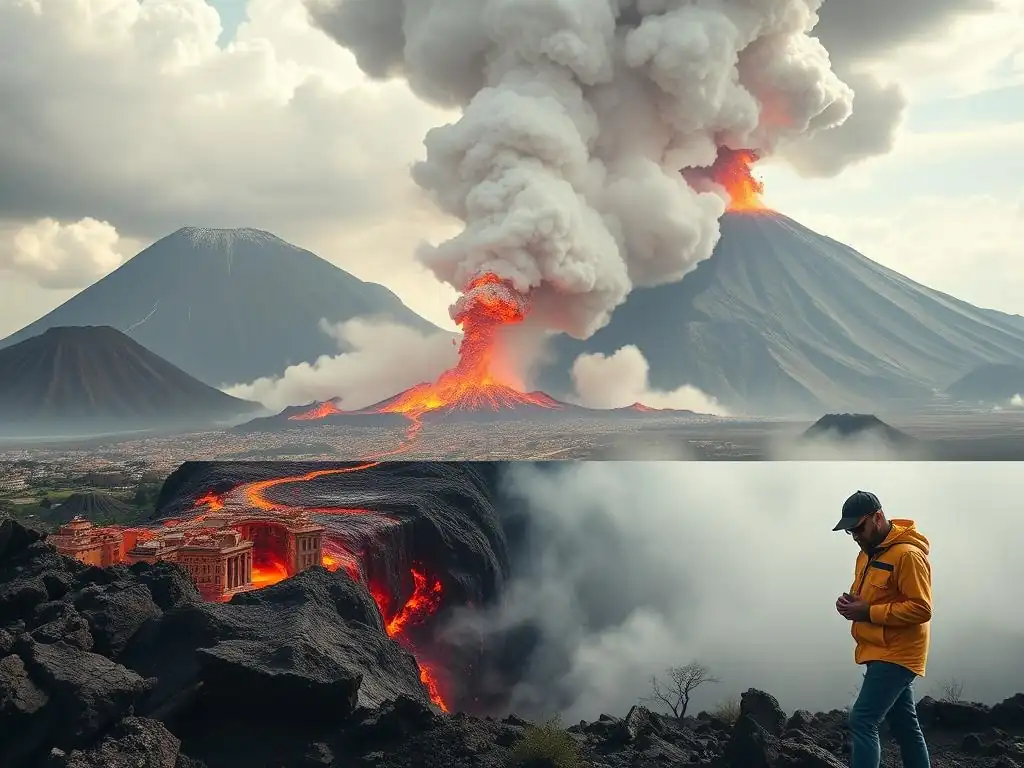
Mount Vesuvius, Italy: The Catastrophic Eruption of 79 AD and its Implications
The eruption of Mount Vesuvius in 79 AD, which buried the Roman cities of Pompeii and Herculaneum, stands as a stark reminder of the destructive power of pyroclastic flows. Pliny the Younger's eyewitness accounts, preserved in letters to the historian Tacitus, provide invaluable insights into the eruption's progression and the terrifying nature of these hot, fast-moving flows of gas and volcanic debris.
Archaeological excavations at Pompeii and Herculaneum have further revealed the devastating impact of the eruption, preserving snapshots of daily life frozen in time by the ash and pumice fall and subsequent pyroclastic surges. The rapid and complete burial of these cities highlights the extreme hazard posed by pyroclastic flows, emphasizing their ability to travel considerable distances from the volcano and overwhelm even densely populated areas with little to no warning.
The Vesuvius eruption of 79 AD has profoundly shaped our understanding of pyroclastic flow hazards and the importance of evacuation planning. The tragedy underscores the need for robust monitoring systems capable of detecting subtle precursors to explosive eruptions and for effective communication strategies to ensure timely evacuations.
Modern hazard assessments for Vesuvius, which remains a significant threat to the densely populated Bay of Naples, are directly informed by the lessons learned from this historical eruption. These assessments emphasize the potential for future pyroclastic flows to reach inhabited areas and necessitate ongoing monitoring, emergency preparedness drills, and public education initiatives to mitigate the risk to the millions of people living in the shadow of Vesuvius.
Krakatoa, Indonesia: The 1883 Eruption and Understanding Explosive Volcanism
The 1883 eruption of Krakatoa, in present-day Indonesia, was one of the most powerful volcanic explosions in recorded history. The eruption culminated in a massive caldera collapse and generated a devastating tsunami that claimed tens of thousands of lives in the surrounding coastal regions.
The sound of the eruption was heard thousands of kilometers away, and the atmospheric effects were global, with sunsets around the world displaying vivid colors for months due to the volcanic ash and aerosols injected into the stratosphere. Scientific observations made during and after the eruption, including barometric measurements and tide gauge records, provided unprecedented data on the scale and impact of explosive volcanism and tsunami generation.
The Krakatoa eruption significantly advanced our understanding of explosive volcanic processes and their far-reaching consequences. It demonstrated the potential for large caldera-forming eruptions to trigger devastating tsunamis and highlighted the global atmospheric impacts of volcanic aerosols on climate. Learning from this historical eruption has led to improvements in tsunami warning systems and a greater appreciation for the global-scale hazards associated with major volcanic explosions. The eruption also spurred research into volcanic explosivity indices (VEI) and the mechanisms driving explosive eruptions, contributing to a more comprehensive framework for assessing and forecasting volcanic hazards worldwide.
Mount Tambora, Indonesia: The 1815 Eruption and Global Climate Impacts
The 1815 eruption of Mount Tambora, also in Indonesia, was even larger than Krakatoa, ranking as the most powerful volcanic eruption in recent human history with a VEI of 7. The massive injection of sulfur dioxide into the stratosphere resulted in a significant global cooling effect, leading to the infamous "Year Without a Summer" in 1816.
Crop failures, famine, and widespread social unrest ensued in many parts of the world, particularly in Europe and North America. Tree ring data, ice core records, and historical climate observations have provided compelling evidence of the global climate disruption caused by the Tambora eruption.
The Tambora eruption serves as a critical case study for understanding the profound influence of large volcanic eruptions on global climate. It demonstrated that volcanic eruptions are not just local or regional hazards but can have significant planetary-scale impacts.
Learning from this historical eruption has been instrumental in climate science research, providing a natural analogue for understanding the potential climate effects of future large volcanic eruptions and informing climate models. The Tambora event also underscores the interconnectedness of natural systems and the vulnerability of human societies to climate shocks, emphasizing the importance of understanding and preparing for the potential global consequences of major volcanic events.
Mount St. Helens, USA: The 1980 Eruption and Lessons in Lahar Prediction
The 1980 eruption of Mount St. Helens in Washington State, USA, although smaller than Krakatoa or Tambora, was a landmark event in modern volcanology. It was the first major explosive eruption in the contiguous United States since Lassen Peak in 1915 and was exceptionally well-monitored and studied. The eruption was notable for its lateral blast, which devastated forests over a wide area, and for the generation of large lahars that flowed down river valleys, impacting communities downstream. The eruption sequence, including precursory earthquakes, ground deformation, and steam explosions, and the subsequent eruption dynamics were meticulously documented by USGS scientists.
The Mount St. Helens eruption provided invaluable lessons in volcano monitoring, eruption forecasting, and lahar hazard assessment and mitigation. The successful prediction of the major eruption, based on precursory activity, demonstrated the effectiveness of modern monitoring techniques.
The eruption also highlighted the significant lahar hazard associated with snow- and ice-clad volcanoes and spurred advancements in lahar monitoring and warning systems. Learning from this historical eruption has led to improved lahar detection technologies, such as acoustic flow monitors, and enhanced emergency response protocols for lahar-prone volcanic regions worldwide, including those in the Pacific Northwest and other areas with similar volcanic settings.
Statistical Models and Historical Eruption Data: A Powerful Combination
Building Statistical Models for Volcano Forecasting
Statistical models are increasingly used in volcano forecasting to quantify eruption probabilities and assess volcanic hazards. These models leverage historical eruption data, along with real-time monitoring information, to estimate the likelihood of future eruptions. Several types of statistical models are employed, ranging from simple Poisson models, which assume eruptions occur randomly in time, to more complex models that incorporate factors like volcano type, tectonic setting, and precursory activity.
For example, Bayesian event tree models can be constructed to assess the probabilities of different eruption scenarios, branching out based on observed precursory signals and historical eruption patterns. These models provide a quantitative framework for integrating diverse datasets and for communicating eruption probabilities to decision-makers and the public.
The effectiveness of statistical models in volcano forecasting hinges on the quality and completeness of the input data, particularly historical eruption records. Longer and more detailed historical records allow for more robust model calibration and validation. For volcanoes with well-documented eruption histories, statistical models can provide valuable probabilistic forecasts.
However, it is crucial to recognize the limitations of these models, especially for volcanoes with sparse or incomplete historical records, or for volcanoes whose eruptive behavior may change over time. Therefore, statistical models are best used as one tool among many in volcano forecasting, complementing other approaches such as geological investigations, geophysical monitoring, and expert judgment, all while learning from historical eruptions to refine model parameters and assumptions.
Integrating Historical Data into Eruption Probability Calculations
Historical eruption data forms the foundation for many eruption probability calculations. The frequency and magnitude of past eruptions are key inputs for statistical models used to estimate eruption recurrence intervals and probabilities. For instance, if a volcano has erupted ten times in the past 1000 years, a simple Poisson model might estimate an average recurrence interval of 100 years and an annual eruption probability of 1%.
However, more sophisticated models can incorporate variations in eruption frequency over time, clustering of eruptions, and uncertainties in dating historical events. Volcanic explosivity index (VEI) data from past eruptions can also be incorporated to estimate the probabilities of eruptions of different magnitudes, which is crucial for hazard assessment.
The integration of historical data into eruption probability calculations requires careful consideration of data quality and biases. Historical records may be incomplete, particularly for older eruptions or for volcanoes in remote regions. Dating uncertainties can also affect the accuracy of recurrence interval estimates. Furthermore, the assumption of stationarity – that volcanic behavior remains constant over time – may not always be valid.
Volcanic systems can evolve, and eruption patterns can change. Therefore, it is essential to critically evaluate the limitations of historical data and to use statistical models cautiously, recognizing that eruption probability calculations are inherently probabilistic and subject to uncertainties. Continued efforts to improve historical eruption databases and to develop more robust statistical methods are crucial for enhancing the reliability of eruption probability forecasts by learning from historical eruptions.
Limitations of Historical Data and Statistical Models
While historical data and statistical models are powerful tools in volcano forecasting, they are not without limitations. One significant limitation is the incompleteness and potential inaccuracies of historical records, particularly for eruptions that occurred before the era of systematic scientific observation. Older records may be based on anecdotal accounts, oral traditions, or sparse geological evidence, which may lack detail or be subject to biases.
Dating uncertainties in older eruptions can also introduce errors in recurrence interval estimates. For many volcanoes, the historical record is simply too short to capture the full range of their eruptive behavior, especially for volcanoes with long repose periods between eruptions.
Statistical models, by their nature, are simplifications of complex volcanic processes. They rely on assumptions about eruption probabilities and recurrence intervals that may not perfectly reflect the reality of volcanic systems. The assumption of stationarity, that volcanic behavior remains constant over time, is a particular concern, as volcanic systems can evolve due to magma supply variations, tectonic changes, or other factors.
Furthermore, statistical models may struggle to capture the full complexity of precursory processes and the triggers that initiate eruptions. Despite these limitations, historical data and statistical models remain valuable tools when used judiciously and in conjunction with other forecasting methods. Acknowledging these limitations is crucial for responsible and effective volcano hazard assessment and risk communication, always remembering the fundamental role of learning from historical eruptions within a broader, multi-faceted approach.
Challenges in Utilizing Historical Eruption Data
Incomplete or Inaccurate Historical Records
A major challenge in utilizing historical eruption data is the inherent incompleteness and potential inaccuracies of these records. For many volcanoes, especially those in remote or less-developed regions, systematic records of past eruptions are sparse or non-existent before the advent of modern volcanology. Older records often rely on anecdotal accounts, oral histories, or limited geological evidence, which can be incomplete, biased, or lack precise details about eruption timing, magnitude, and style.
Written accounts may focus on the impacts on human populations or infrastructure, rather than providing detailed scientific descriptions of the eruption itself. Oral traditions, while valuable sources of local knowledge, may be subject to distortion over time.
Even for more recent eruptions, historical records may not be uniformly accurate or complete. Early scientific observations may have been limited by the technology and understanding of the time. Documentation may be fragmented or dispersed across different archives. Reconstructing a comprehensive and reliable historical eruption record often requires painstaking research, piecing together information from diverse sources, and critically evaluating the quality and reliability of each piece of evidence. Addressing the challenges of incomplete or inaccurate historical records is crucial for improving the robustness of volcano forecasting and hazard assessments by learning from historical eruptions despite these data limitations.
Accounting for Changes in Volcanic Systems Over Time
Volcanic systems are dynamic and can evolve over time. Magma supply rates may change, plumbing systems may be altered by tectonic events or previous eruptions, and the composition of erupting magma may vary. These changes can affect a volcano's eruptive behavior, potentially altering eruption styles, frequencies, and magnitudes.
Assuming that a volcano's past behavior is a perfect predictor of its future behavior, without considering potential changes in the volcanic system, can lead to inaccurate forecasts and underestimation of hazards. For example, a volcano that has historically been characterized by effusive eruptions might transition to more explosive behavior due to changes in magma composition or gas content.
Accounting for changes in volcanic systems over time is a significant challenge in volcano forecasting. Geological investigations can provide insights into long-term volcanic evolution, but predicting short-term changes in eruptive behavior remains difficult. Monitoring data, such as changes in ground deformation, gas emissions, and seismicity, can provide clues about ongoing processes within the volcanic system.
Integrating geological evidence, monitoring data, and historical eruption records in a dynamic and adaptive forecasting framework is essential. This framework must acknowledge the potential for volcanic systems to evolve and for eruption patterns to change, ensuring that we are truly learning from historical eruptions while remaining vigilant for signs of system evolution.
The Rareness of Large Eruptions: Statistical Significance
Large, highly destructive volcanic eruptions are fortunately rare events. While frequent small eruptions may provide abundant data for statistical analysis, the rarity of large eruptions poses a challenge for statistical modeling and hazard assessment. Historical records may only capture a few, or even none, of the largest eruptions a volcano is capable of producing. This lack of data on large eruptions can lead to an underestimation of the potential for extreme volcanic events and their associated hazards. Statistical models calibrated solely on the frequency of smaller eruptions may not accurately represent the probability of rare but high-impact events.
Addressing the challenge of the rareness of large eruptions requires a multi-pronged approach. Geological investigations, including tephrochronology and paleovolcanology, can extend the eruption record further back in time, potentially capturing evidence of past large eruptions that are not documented in historical records. Comparative volcanology, studying the behavior of similar volcanoes worldwide, can provide insights into the potential range of eruptive styles and magnitudes, even for volcanoes with limited historical records.
Furthermore, developing statistical methods that are robust to small sample sizes and that can extrapolate beyond the observed range of eruption magnitudes is crucial. Learning from historical eruptions, even when those records are incomplete or biased towards smaller events, remains essential, but it must be complemented by other approaches to adequately assess the risk from rare but potentially catastrophic volcanic eruptions.
Improving Future Forecasting: Enhancing Historical Data Collection and Analysis
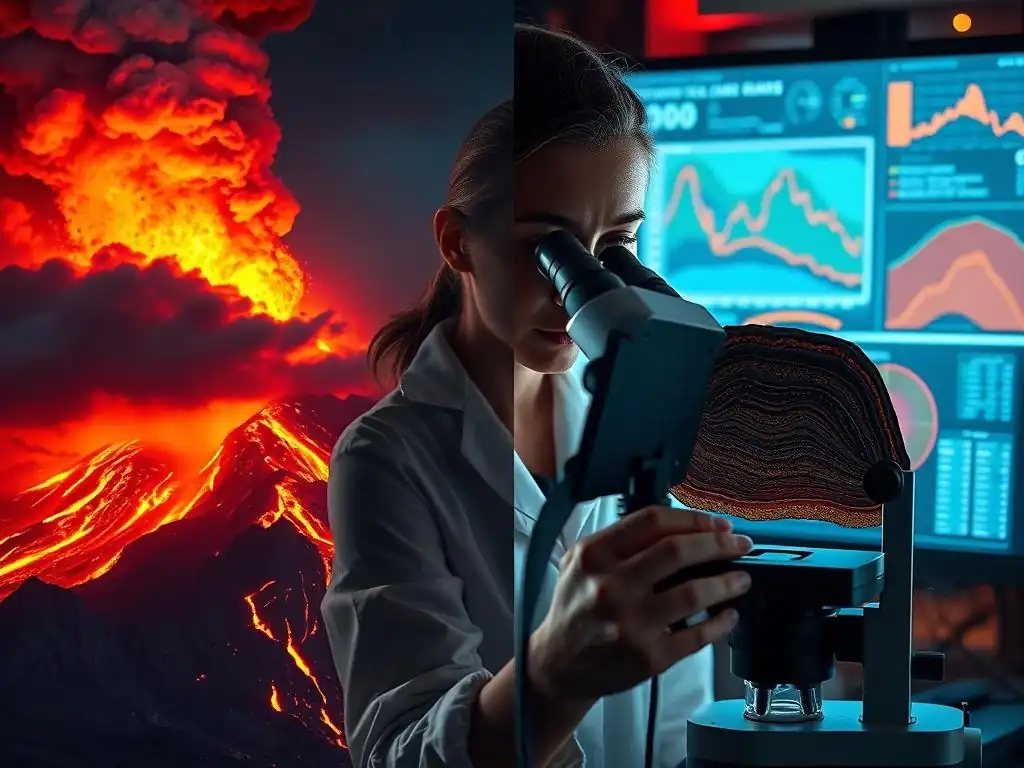
Modern Technologies for Reconstructing Past Eruptions
Modern technologies are revolutionizing our ability to reconstruct past volcanic eruptions, enhancing the quality and detail of historical eruption data. Tephrochronology, the dating and correlation of volcanic ash layers, has become a powerful tool for extending eruption records back tens of thousands of years. High-precision dating techniques, such as radiocarbon dating and argon-argon dating, allow for accurate chronological frameworks for past eruptions.
Geochemical analysis of volcanic ash and lava flows provides insights into magma composition, eruption styles, and source locations. Remote sensing technologies, including satellite imagery and LiDAR, enable detailed mapping of volcanic deposits and landforms, even in remote or inaccessible areas.
These modern technologies are enabling volcanologists to build more complete and accurate historical eruption records, particularly for volcanoes with limited written documentation. Tephrochronology studies, for example, have revealed previously unknown eruptions and have refined eruption chronologies for numerous volcanoes worldwide. Remote sensing data can identify subtle volcanic features and deposit distributions that might be missed by ground-based surveys.
Geochemical analyses can help distinguish between eruptions from different volcanic centers and track changes in magma composition over time. By leveraging these advanced tools, we are significantly enhancing our capacity for learning from historical eruptions and improving the foundation for future forecasting.
Combining Historical Data with Real-Time Monitoring
The most effective approach to volcano forecasting involves combining historical eruption data with real-time monitoring information. Historical data provides the long-term context, establishing the baseline eruptive behavior of a volcano and informing hazard assessments. Real-time monitoring, using instruments such as seismometers, GPS stations, gas sensors, and thermal cameras, detects subtle changes in volcanic activity that may precede an eruption.
Integrating these two types of data allows for a more comprehensive and dynamic assessment of volcanic risk. For example, real-time monitoring data can be interpreted in light of historical eruption patterns to assess whether observed unrest is typical background activity or a potential precursor to an eruption.
The synergy between historical data and real-time monitoring enhances our ability to distinguish between different types of volcanic unrest and to make more informed eruption forecasts. Historical eruption records can help define thresholds for precursory signals that are indicative of an impending eruption. Conversely, real-time monitoring data can help refine our understanding of precursory processes and improve the interpretation of historical accounts of pre-eruption phenomena. This integrated approach, constantly learning from historical eruptions and adapting to new monitoring data, is crucial for improving the accuracy and timeliness of eruption forecasts and for reducing volcanic risk.
Tephrochronology and Remote Sensing for Eruption Reconstruction
Tephrochronology and remote sensing are particularly valuable tools for reconstructing past eruptions and enhancing historical eruption data. Tephrochronology involves identifying, dating, and correlating layers of volcanic ash (tephra) deposited by past eruptions. Tephra layers can be found in lake sediments, peat bogs, soils, and ice cores, providing a widespread and often well-preserved record of volcanic activity. By analyzing the chemical composition and physical properties of tephra, and by using radiometric dating techniques, tephrochronologists can reconstruct eruption chronologies and estimate eruption magnitudes for volcanoes over timescales of thousands to hundreds of thousands of years.
Remote sensing techniques, including satellite imagery, aerial photography, and LiDAR (Light Detection and Ranging), provide powerful tools for mapping volcanic landforms and deposits, even in remote or hazardous areas. Satellite imagery can be used to track volcanic plumes, lava flows, and deformation patterns during eruptions. LiDAR provides high-resolution topographic data that can be used to map volcanic cones, craters, and lava flow boundaries with exceptional detail.
By combining tephrochronology and remote sensing data, volcanologists can create detailed reconstructions of past eruptions, including eruption frequency, magnitude, style, and spatial distribution of volcanic deposits. These reconstructions significantly enhance our understanding of volcanic history and improve the basis for learning from historical eruptions to forecast future activity.
Community Involvement in Documenting Volcanic Events
Community involvement plays a vital role in enhancing historical data collection and analysis, particularly in regions with limited scientific infrastructure or for events that predate systematic scientific observation. Local communities often possess valuable traditional knowledge and oral histories about past volcanic eruptions, which may not be documented in official scientific records.
Engaging with local communities, collecting oral histories, and incorporating traditional knowledge into eruption databases can enrich historical eruption records and provide insights that might otherwise be missed. Citizen science initiatives, where volunteers contribute to data collection and analysis, can also be valuable for monitoring volcanic activity and documenting eruption impacts, particularly in remote areas or during rapidly evolving volcanic crises.
Community involvement not only enhances the completeness of historical eruption records but also fosters a sense of ownership and responsibility for volcanic risk reduction within local populations. When communities are actively involved in documenting volcanic events and sharing their knowledge, it strengthens the link between scientific research and local needs. This collaborative approach, where scientists and communities work together to learn from historical eruptions, can lead to more effective volcano monitoring, hazard communication, and preparedness strategies, ultimately contributing to safer and more resilient volcanic communities.
The Future of Volcanic Eruption Forecasting: Learning from the Past, Preparing for Tomorrow
Towards More Accurate and Reliable Eruption Predictions
The future of volcanic eruption forecasting is focused on achieving more accurate and reliable predictions, ultimately reducing volcanic risk and protecting communities. This advancement relies on continued progress in several key areas, including enhanced volcano monitoring networks, improved understanding of pre-eruption processes, and the development of more sophisticated forecasting models.
Integrating diverse datasets, including real-time monitoring data, geological records, and historical eruption data, is crucial for building comprehensive and robust forecasting systems. Machine learning and artificial intelligence techniques are increasingly being explored to analyze large datasets and identify subtle patterns that may precede eruptions, further enhancing our ability to learn from historical eruptions and anticipate future events.
Improved accuracy in eruption predictions involves not only forecasting the timing of eruptions but also their magnitude, style, and potential impacts. Probabilistic forecasting, which provides estimates of the likelihood of different eruption scenarios, is becoming increasingly important for communicating uncertainty and informing risk-based decision-making. Developing more realistic and physically-based eruption models, which incorporate our growing understanding of magma dynamics and eruption processes, is also crucial for improving forecast accuracy. The ongoing pursuit of more accurate and reliable eruption predictions is a continuous process, driven by scientific innovation and the imperative to protect lives and livelihoods in volcanic regions worldwide.
Reducing Vulnerability to Volcanic Hazards: A Proactive Approach
Reducing vulnerability to volcanic hazards requires a proactive and multi-faceted approach, going beyond simply forecasting eruptions. Effective land-use planning, building codes, and infrastructure design can minimize exposure to volcanic hazards. Community education and preparedness programs are essential for raising awareness of volcanic risks and empowering individuals to take appropriate actions during volcanic crises. Developing and implementing robust evacuation plans and early warning systems are crucial for ensuring timely and safe evacuations when eruptions are imminent. A proactive approach to risk reduction emphasizes long-term resilience building, rather than solely focusing on responding to volcanic emergencies.
Learning from historical eruptions plays a critical role in reducing vulnerability. Historical eruption records inform hazard assessments, identify areas at risk, and guide land-use planning and infrastructure development. Case studies of past eruptions highlight the effectiveness of different mitigation strategies and inform best practices for emergency preparedness and response. By understanding the lessons of the past, communities can proactively adapt to volcanic hazards, reduce their vulnerability, and build greater resilience to future volcanic events. This proactive approach, grounded in historical knowledge and informed by scientific understanding, is essential for creating safer and more sustainable communities in volcanically active regions.
Empowering Communities Through Knowledge of Volcanic History
Empowering communities with knowledge of their local volcanic history is a crucial aspect of volcanic risk reduction. When communities understand the eruptive history of nearby volcanoes, the types of hazards they pose, and the potential impacts of future eruptions, they are better equipped to prepare for and respond to volcanic crises. Public education programs, community workshops, and accessible information resources can effectively communicate volcanic history and hazard information to local populations. Integrating local and traditional knowledge about volcanoes into education and preparedness efforts can further enhance community engagement and ownership.
Knowledge of volcanic history fosters a sense of informed awareness and reduces fatalism or complacency about volcanic risks. Understanding past eruptions provides a tangible and relatable context for understanding potential future events. Communities that are knowledgeable about their volcanic history are more likely to support and participate in risk reduction measures, such as evacuation drills, land-use planning, and monitoring efforts.
Empowering communities through knowledge of volcanic history is not just about disseminating scientific information; it is about building local capacity, fostering resilience, and creating a culture of preparedness in volcanic regions. This empowerment is a direct result of learning from historical eruptions and sharing that knowledge effectively.
Advancing Interdisciplinary Research and Global Collaboration
Advancing volcanic eruption forecasting and risk reduction requires interdisciplinary research and global collaboration. Volcanology is inherently interdisciplinary, drawing on expertise from geology, geophysics, geochemistry, atmospheric science, social science, and engineering. Collaborative research projects that integrate these diverse perspectives are essential for addressing the complex challenges of volcano forecasting and hazard mitigation. Global collaboration is also crucial, as volcanic hazards are a global issue, and sharing knowledge, data, and best practices across international boundaries accelerates progress and enhances capacity building in volcanic regions worldwide.
International collaborations facilitate the exchange of scientific expertise, monitoring technologies, and eruption forecasting methodologies. Sharing historical eruption databases and best practices for hazard assessment and risk communication strengthens global capacity for volcanic risk reduction.
Collaborative research projects can address global-scale questions, such as the climate impacts of large volcanic eruptions and the global distribution of volcanic hazards. By fostering interdisciplinary research and global collaboration, the volcanological community can collectively advance the science of eruption forecasting, enhance volcanic risk reduction efforts, and build a safer and more resilient world in the face of volcanic hazards, consistently learning from historical eruptions on a global scale.
Conclusion: The Enduring Importance of Historical Eruption Analysis
Historical Eruptions: Key to Unlocking Volcanic Potential
Historical eruptions are far more than just events of the past; they are essential keys to unlocking the secrets of volcanic behavior and improving our ability to forecast future activity. By meticulously studying historical eruption records, we gain invaluable insights into a volcano's characteristic eruption styles, frequencies, magnitudes, and precursory patterns.
This historical context is crucial for developing robust hazard assessments, calibrating statistical forecasting models, and interpreting real-time monitoring data. Learning from historical eruptions is not simply an academic exercise; it is a fundamental component of volcanic risk reduction, directly contributing to the safety and resilience of communities living near active volcanoes.
The analysis of historical eruptions provides a long-term perspective that is essential for understanding the dynamic nature of volcanic systems and for anticipating future volcanic activity. While modern monitoring technologies provide crucial real-time data, historical records offer a broader temporal context, revealing long-term trends and patterns that might be missed by short-term observations alone. As we continue to refine our understanding of volcanic processes and to develop more sophisticated forecasting tools, historical eruption analysis will remain an indispensable element of volcano science, guiding our efforts to mitigate volcanic risk and protect vulnerable populations.
VolcanoExplorers.org: Your Gateway to Understanding Volcanic Activity
VolcanoExplorers.org serves as your gateway to delving deeper into the fascinating world of volcanic activity and the crucial role of historical eruptions in understanding these powerful natural phenomena. Through informative articles, engaging content, and comprehensive resources, the website invites you to explore the rich tapestry of volcanic history, from iconic eruptions of the past to the cutting-edge science of modern volcano forecasting.
Whether you are a student, a researcher, or simply a curious explorer, VolcanoExplorers.org provides a valuable platform for learning from historical eruptions and gaining a deeper appreciation for the dynamic forces that shape our planet and the ongoing efforts to live safely alongside volcanoes.
Frequently Asked Questions
What is the main benefit of studying historical volcanic eruptions?
Studying historical eruptions helps us better understand volcanic behavior patterns and develop more accurate forecasting models for future events. This knowledge can ultimately save lives and property.
What types of information can be gleaned from records of past volcanic activity?
Historical records provide insights into eruption frequency, eruption style (effusive vs. explosive), the types of materials ejected (lava, ash, gas), and the impact on surrounding areas.
How do volcanologists use the data from historical eruptions to improve safety measures?
By analyzing past events, volcanologists can create hazard maps that identify areas at high risk, improve evacuation plans, and develop better early warning systems to alert communities.
Can the study of historical eruptions help predict the timing of future eruptions?
While predicting the exact timing is extremely difficult, analyzing eruption frequencies and patterns from historical records can help estimate the probability of future eruptions within a certain timeframe.
What are some limitations of relying solely on historical data for volcano forecasting?
Historical records are often incomplete or inaccurate, especially for older eruptions. Also, volcanic behavior can change over time, so past activity is not always a perfect predictor of future events.
Final Reflection: Echoes of Fire, Lessons for Tomorrow
The study of historical volcanic eruptions, as we've explored, isn't merely an academic exercise in geological history; it's a vital investment in our future safety and preparedness. Understanding the patterns and precursors of past events allows us to better anticipate and mitigate the devastating impact of future eruptions, transforming historical data into actionable intelligence.
The lessons gleaned from these fiery chronicles resonate deeply, shaping not only our scientific understanding but also our societal resilience. The power of historical analysis lies in its ability to connect us to the past, reminding us of the immense forces at play and the importance of respecting nature's power. Those who cannot remember the past are condemned to repeat it.
- George Santayana. This quote underscores the critical need to learn from the past, especially when dealing with potentially catastrophic events like volcanic eruptions.
As we conclude this exploration of learning from historical eruptions, let us all consider the implications for our own communities and the world at large. Take a moment to reflect on how you can contribute to a more informed and prepared future, whether through supporting scientific research, advocating for better disaster preparedness, or simply staying informed about the volcanic risks in your region. The echoes of past eruptions serve as a constant reminder: vigilance and knowledge are our greatest defenses.
Unearth Tomorrow's Volcano Forecasts Today!
Thank you for exploring the fascinating world of volcano forecasting with us! We hope you've gained valuable insights into how studying past eruptions can help predict future volcanic activity. Now, let's put that knowledge to work!
Here's how you can continue your volcanic journey:
- Delve deeper into a specific historical eruption discussed in this article and share your findings on the Volcano Explorers forum. This is a great way to apply what you've learned.
- Explore the interactive volcano map on VolcanoExplorers.org and compare regions with similar eruption histories. What patterns do you notice?
- Spread the word! Share this article with friends or colleagues interested in geology and help grow our community of Volcano Explorers.
Which historical eruption surprised you the most, and how could the lessons learned be applied to modern volcano monitoring? Share your thoughts in the comments below!