
No Explosions Needed: The Surprisingly Quiet Power of Fissure Volcanoes

Welcome to Volcano Explorers!
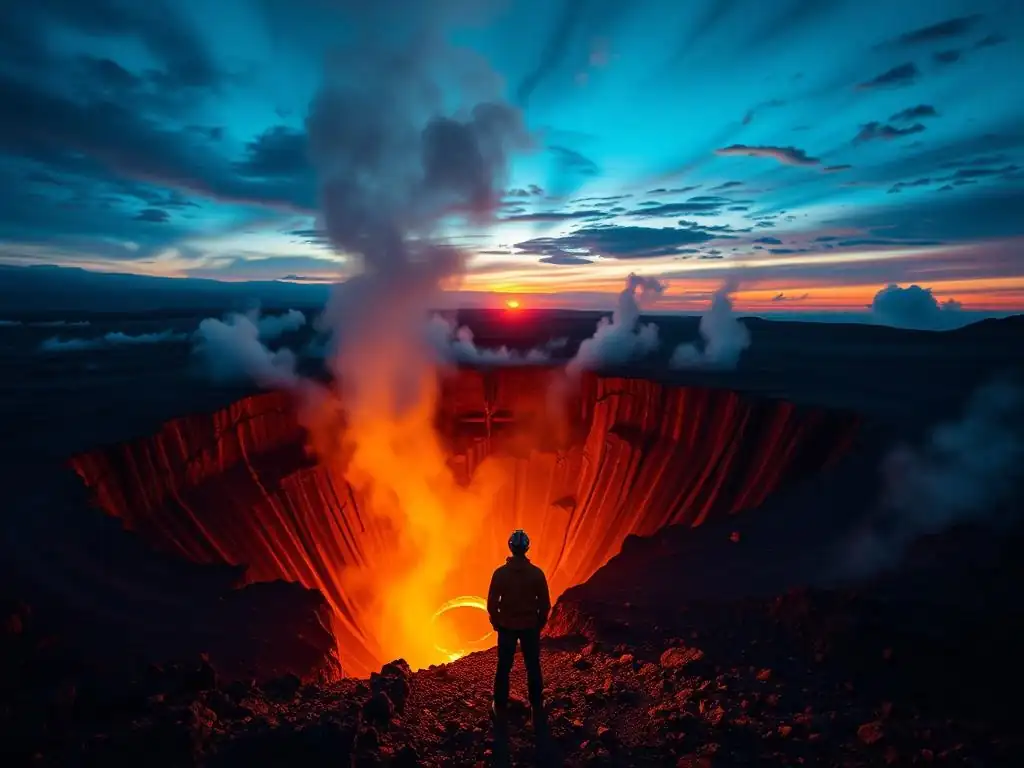
Prepare to be captivated by the raw, untamed power lurking beneath our planet's surface. Think volcanoes are all about fiery explosions and towering cones? Think again. Our journey begins with an exploration into the fascinating world of fissure volcanoes, where the Earth whispers secrets through cracks in the land. Discover the surprisingly quiet eruption dynamics that shape landscapes and challenge our understanding of volcanic activity. What makes these unique formations so different, and what can they tell us about the forces shaping our world? Dive in and uncover the answers!
- Introduction to Fissure Volcanoes: A Different Kind of Eruption
- Understanding Fissure Volcanoes: Linear Eruptions Explained
- The Quiet Eruption Dynamics of Fissure Volcanoes
- Formation of Fissure Volcanoes: Tectonic Plates and Crustal Weaknesses
- Notable Examples of Fissure Volcanoes Around the World
- Environmental Impact of Fissure Volcanoes: Lava Flows and Gas Emissions
- Studying Fissure Volcanoes: Volcanological Research and Monitoring
- The Cultural Significance of Fissure Volcanoes: Myths and Legends
- Living Near Fissure Volcanoes: Safety Measures and Preparedness
- Conclusion: Appreciating the Unique Power of Fissure Volcanoes and their Quiet Eruption Dynamics
-
Frequently Asked Questions
- What exactly are fissure volcanoes and how do they differ from other types?
- Why are fissure volcano eruptions often described as "quiet"?
- What are the main drivers of fissure volcano formation?
- Are fissure volcanoes dangerous, even if they aren't explosive?
- Where can I find real-time updates on fissure volcano activity and potential hazards?
- Final Reflection: The Unassuming Power of the Earth
- Unearth Your Inner Volcanologist!
Introduction to Fissure Volcanoes: A Different Kind of Eruption
Volcanoes often conjure images of towering cones erupting explosively, sending ash and pyroclastic flows cascading down their slopes. While iconic volcanoes like Mount Vesuvius or Mount St. Helens certainly fit this dramatic picture, they represent only one type of volcanic activity. There exists another, often overlooked, category of volcanoes that operates with a different style of eruption: fissure volcanoes. These geological features, instead of erupting from a central point, release lava from elongated cracks or fissures in the Earth's crust, offering a stark contrast to their more explosive counterparts.
Fissure volcanoes present a fascinating aspect of volcanism, showcasing the Earth's power in a less overtly violent, yet equally impactful way. Their eruptions, characterized by the quiet effusion of lava, might lack the dramatic explosions of stratovolcanoes, but they are responsible for shaping vast landscapes and have played a crucial role in the geological history of our planet. Understanding fissure volcanoes and their unique eruption dynamics is essential to gaining a comprehensive view of volcanic processes and their diverse manifestations.
Understanding Fissure Volcanoes: Linear Eruptions Explained
What are Fissure Volcanoes? Defining Linear Volcanic Vents
Fissure volcanoes, also known as volcanic fissures or linear vent volcanoes, are fundamentally different from the classic cone-shaped volcanoes most people envision. Instead of a central vent, they are characterized by linear fractures or cracks in the Earth's surface from which magma erupts. These fissures can range in length from a few meters to tens of kilometers, creating a line of volcanic activity rather than a point source. The eruptions from these vents are typically effusive, meaning they involve the steady outpouring of lava rather than violent explosions.
The nature of fissure volcanoes dictates a distinctive style of eruption. Imagine a crack opening in the ground and molten rock flowing out like a river, spreading across the surrounding terrain. This is the essence of a fissure eruption. The lava, often basaltic in composition due to its origin in the mantle, tends to be fluid and travels considerable distances, creating vast lava fields and plateaus over time. This linear volcanic venting is a key characteristic that distinguishes fissure volcanoes from other volcanic types.
Fissure Volcanoes vs. Central Vent Volcanoes: Key Differences
The most striking difference between fissure volcanoes and central vent volcanoes, such as stratovolcanoes and shield volcanoes, lies in their eruptive style and vent geometry. Central vent volcanoes erupt from a single, localized opening, often building up conical structures through successive eruptions of lava and pyroclastic material. Their eruptions can range from effusive lava flows to highly explosive events depending on the magma composition and gas content. In contrast, fissure volcanoes, with their linear vents, are predominantly associated with effusive eruptions.
Furthermore, the geological settings and magma compositions often differ. Central vent volcanoes are frequently found at subduction zones, where one tectonic plate slides beneath another, leading to magma generation that is often more viscous and gas-rich, resulting in explosive eruptions. Fissure volcanoes, on the other hand, are commonly associated with divergent plate boundaries and mantle plumes, where the crust is being pulled apart, allowing relatively low-viscosity basaltic magma to rise directly from the mantle. This difference in magma source and tectonic setting contributes significantly to the contrasting eruption styles observed in these two types of volcanoes.
The Quiet Eruption Dynamics of Fissure Volcanoes
Why Fissure Volcanoes Don't Explode: Low Viscosity Lava and Effusive Eruptions
The "quiet" nature of fissure volcano eruptions is primarily attributed to the characteristics of the magma involved, specifically its low viscosity and gas content. Viscosity, or the resistance to flow, plays a crucial role in determining eruptive style. Magma associated with fissure volcanoes, typically basaltic magma, is relatively low in silica content. This results in a fluid, low-viscosity lava that allows gas bubbles to escape easily. In contrast, highly viscous magma, like that found in stratovolcanoes, traps gas bubbles, leading to pressure buildup and explosive eruptions when the pressure exceeds the strength of the surrounding rocks.
Effusive eruptions, the hallmark of fissure volcanoes, are characterized by the gentle outpouring of lava. Because the basaltic lava is fluid and gases can readily escape, there is little pressure buildup within the volcanic system. The magma simply rises to the surface and flows out through the fissure, creating lava flows that can extend for kilometers.
This contrasts sharply with the explosive eruptions of other volcano types, where the rapid expansion of trapped gases causes violent fragmentation of magma and rock, propelling ash, gas, and rock fragments into the atmosphere. Therefore, the low viscosity and efficient degassing of magma are key factors in the quiet eruption dynamics of fissure volcanoes.
Effusive Eruptions: The Hallmark of Fissure Volcano Activity
Effusive eruptions are the defining characteristic of fissure volcano activity. These eruptions are marked by the steady, non-explosive outpouring of lava from fissures or cracks in the Earth's crust. Instead of violent explosions and towering ash plumes, effusive eruptions produce lava flows that can range from slow-moving, thick flows to fast-flowing, fluid rivers of molten rock. The volume of lava erupted can be enormous, capable of covering vast areas and significantly altering landscapes.
The 2018 eruption at Kīlauea volcano in Hawaii, while primarily a shield volcano eruption, also involved significant fissure venting along the East Rift Zone. This event showcased the power of effusive eruptions, with lava flows destroying entire neighborhoods and reshaping the coastline.
Similarly, the ongoing eruption at Geldingadalir in Iceland, which began in 2021, is a prime example of a fissure eruption characterized by the continuous effusion of lava, building up a lava field in a previously uninhabited valley. These examples highlight the constructive power of effusive eruptions, building new land and reshaping existing terrain through the persistent flow of lava.
Formation of Fissure Volcanoes: Tectonic Plates and Crustal Weaknesses
Tectonic Settings Conducive to Fissure Volcano Development
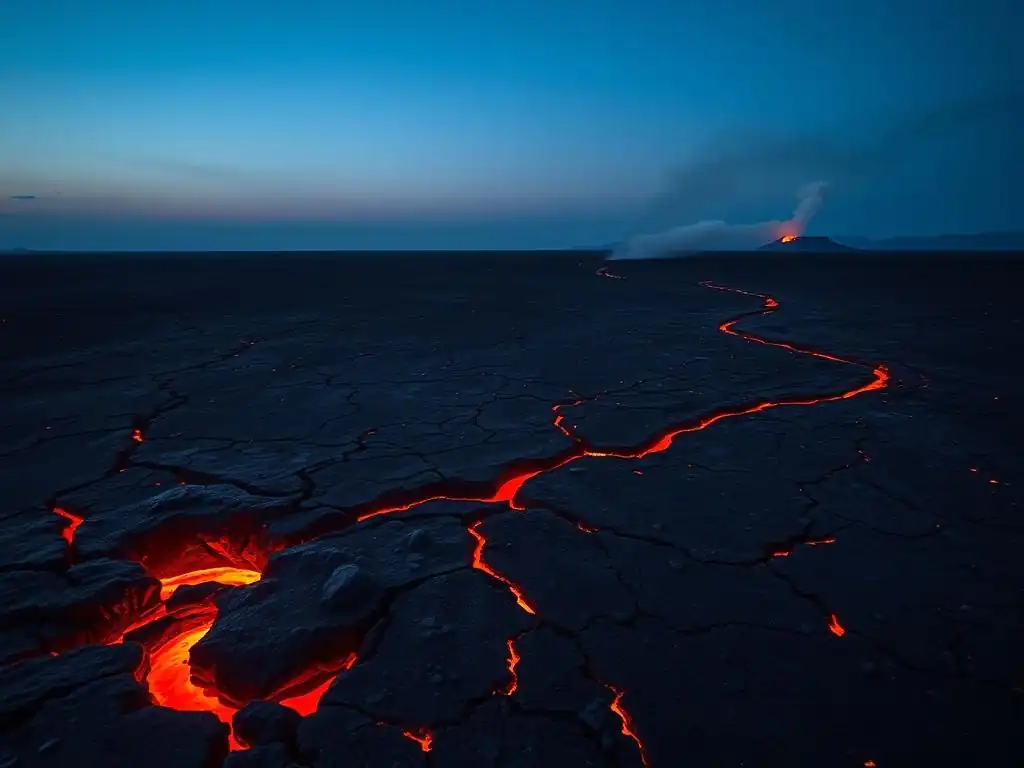
Fissure volcanoes are predominantly associated with specific tectonic settings where extensional forces are dominant. Divergent plate boundaries, where tectonic plates are moving apart, are particularly conducive to their formation. As plates diverge, the Earth's crust thins and fractures, creating pathways for magma to ascend from the mantle. The Mid-Atlantic Ridge, a prime example of a divergent plate boundary, is characterized by extensive fissure volcanism, responsible for the creation of Iceland and numerous submarine volcanic features.
Mantle plumes, upwellings of hot mantle material, are another significant setting for fissure volcano development. These plumes can impinge on the base of the lithosphere, causing the crust to uplift, stretch, and fracture. The East African Rift Valley, a region marked by extensive fissure volcanism, is believed to be associated with a mantle plume.
Similarly, Iceland's high volcanic activity is attributed to its location on both the Mid-Atlantic Ridge and the Iceland plume, creating a geologically dynamic environment ripe for fissure eruptions. These tectonic settings provide the necessary conditions for the formation of linear vents and the effusive eruptions characteristic of fissure volcanoes.
The Role of Crustal Weaknesses in Forming Fissure Eruptions
Crustal weaknesses, such as pre-existing faults and fractures, play a crucial role in dictating the location and orientation of fissure eruptions. These zones of structural weakness provide preferential pathways for magma to ascend to the surface. When tectonic stresses build up, these weaknesses are often the first to rupture, creating fissures that tap into magma reservoirs at depth. The alignment of fissures is often controlled by the orientation of these pre-existing faults, resulting in linear volcanic vents that follow regional structural trends.
In Iceland, for example, the volcanic zones are largely controlled by the rift valley system, which is a complex network of faults and fissures. Eruptions frequently occur along these pre-existing fault lines, leading to the characteristic linear volcanic systems seen across the island. The 1783-1784 Laki eruption, one of the largest fissure eruptions in recorded history, occurred along a 25-kilometer-long fissure that aligned with the regional tectonic fabric. This demonstrates how crustal weaknesses act as geological templates, guiding magma ascent and shaping the distribution and morphology of fissure volcanoes.
Notable Examples of Fissure Volcanoes Around the World
Iceland's Volcanic Systems: A Hotspot for Fissure Eruptions
Iceland stands as a preeminent example of a region dominated by fissure volcanism. Located on the Mid-Atlantic Ridge, a divergent plate boundary, and influenced by the Iceland plume, the island experiences frequent and diverse volcanic activity, with fissure eruptions being particularly common. Iceland's volcanic zones are characterized by extensive fissure systems that have shaped its dramatic landscapes, including vast lava fields, volcanic plateaus, and rift valleys.
The island's geological history is punctuated by numerous significant fissure eruptions. The Krafla Fires (1975-1984) were a series of rifting events and fissure eruptions in northeastern Iceland, demonstrating the long-lived and episodic nature of fissure volcanism in this region. More recently, the eruptions at Holuhraun (2014-2015) and Geldingadalir (2021-present) have further highlighted Iceland's ongoing fissure volcano activity, showcasing the continuous reshaping of the island by these linear eruptions. Iceland provides a living laboratory for studying fissure volcano dynamics and their impact on the Earth's surface.
The Great Rift Valley: Fissure Volcanoes in East Africa
The East African Rift Valley is another globally significant region characterized by extensive fissure volcanism. This vast continental rift system, stretching thousands of kilometers from north to south, is a zone where the African continent is slowly pulling apart. This extensional tectonic setting has resulted in widespread crustal thinning and fracturing, creating ideal conditions for magma ascent and fissure eruptions.
The rift valley floor is dotted with numerous volcanic centers, many of which are fissure volcanoes or have experienced significant fissure eruptions. Examples include the Ol Doinyo Lengai volcano in Tanzania, known for its unique natrocarbonatite lava, and the Menengai caldera in Kenya, which has experienced multiple caldera-forming eruptions and subsequent fissure activity. The Erta Ale volcano in Ethiopia, with its persistent lava lake, is also associated with the rift valley's fissure systems. The Great Rift Valley provides compelling evidence of the role of continental rifting in generating fissure volcanism and shaping continental landscapes.
Laki Fissure Eruption: Iceland's Devastating 1783-1784 Event
The Laki fissure eruption in Iceland, occurring between 1783 and 1784, stands as one of the largest and most impactful fissure eruptions in recorded history. The eruption originated from a 25-kilometer-long fissure system in southern Iceland, releasing an estimated 14 cubic kilometers of basalt lava and vast quantities of volcanic gases, including sulfur dioxide. The scale of the eruption was immense, blanketing the Icelandic landscape in lava and ash.
The environmental and societal consequences of the Laki eruption were catastrophic. The volcanic gases caused widespread acid rain and atmospheric haze, leading to the death of crops and livestock across Iceland. The resulting famine killed an estimated 20-25% of Iceland's population. The atmospheric effects were felt across Europe, contributing to unusually harsh winters and impacting weather patterns globally. The Laki eruption serves as a stark reminder of the potential for fissure volcanoes to have devastating environmental and societal impacts, even with their "quiet" effusive eruption style.
Eldfell Eruption: Iceland's Fight to Save Vestmannaeyjar in 1973
The Eldfell eruption, which began on the island of Heimaey in the Vestmannaeyjar archipelago of Iceland in 1973, presented a unique challenge: a fissure eruption occurring directly within a populated town. A fissure opened up unexpectedly on the eastern edge of the town of Vestmannaeyjar, spewing lava and ash towards the community. The eruption threatened to bury the town's harbor, its economic lifeline, and engulf homes and infrastructure.
In a remarkable feat of engineering and community resilience, Icelanders rallied to fight back against the advancing lava flows. Using seawater pumped onto the lava front, they managed to slow and divert the lava, ultimately saving the harbor and a significant portion of the town. The Eldfell eruption, while destructive, also demonstrated humanity's ability to mitigate the impact of volcanic eruptions, even fissure eruptions occurring in close proximity to populated areas. The event remains a testament to Iceland's preparedness and resourcefulness in the face of volcanic hazards.
Tolbachik Fissure Eruption: Kamchatka's 2012-2013 Event
The Tolbachik fissure eruption in Kamchatka, Russia, which took place between 2012 and 2013, provided a modern example of a large and well-studied basaltic fissure eruption in a remote volcanic region. The eruption occurred on the Plosky Tolbachik volcano, a shield volcano with a history of both central vent and fissure eruptions. The 2012-2013 event involved the opening of two main fissure systems, producing significant lava flows that covered a substantial area around the volcano.
The Tolbachik eruption was notable for its extensive lava flows and the formation of new cinder cones along the fissures. Scientists were able to closely monitor the eruption using modern geophysical and remote sensing techniques, providing valuable data on fissure eruption dynamics, lava flow emplacement, and volcanic gas emissions.
The eruption also highlighted the potential for fissure eruptions to occur in diverse volcanic settings, even within the context of a larger shield volcano complex. The Tolbachik event served as a valuable case study for understanding the processes and impacts of fissure volcanism in a relatively remote and less populated region.
Environmental Impact of Fissure Volcanoes: Lava Flows and Gas Emissions
Lava Flows: Reshaping the Landscape with Fissure Volcanoes
Lava flows from fissure volcanoes are powerful agents of landscape modification. The vast volumes of basaltic lava erupted during fissure events can cover extensive areas, burying pre-existing topography and creating new volcanic terrains. These lava flows can reshape valleys, coastlines, and even entire regions, leaving behind distinctive geological features like lava fields, lava plateaus, and lava tubes.
The Deccan Traps in India, a massive flood basalt province formed by extensive fissure volcanism approximately 66 million years ago, exemplify the landscape-altering potential of fissure eruptions. These basalt flows cover an area of over 500,000 square kilometers, significantly reshaping the Indian subcontinent and potentially contributing to global climate change and the extinction of the dinosaurs. More recent fissure eruptions, like those in Iceland and Hawaii, continue to demonstrate the ongoing role of lava flows in shaping the Earth's surface, creating new land and altering ecosystems.
Volcanic Gases from Fissure Eruptions: Environmental Considerations
While fissure eruptions are often described as "quiet," they are far from environmentally benign. Fissure eruptions release substantial quantities of volcanic gases into the atmosphere, including water vapor, carbon dioxide, sulfur dioxide, and hydrogen sulfide. While water vapor and carbon dioxide are greenhouse gases, the most significant environmental impact often comes from sulfur dioxide (SO2).
Sulfur dioxide released during large fissure eruptions can react with water vapor in the atmosphere to form sulfuric acid aerosols. These aerosols can have several environmental consequences, including acid rain, which can damage vegetation and acidify lakes and soils. They can also reflect sunlight back into space, leading to temporary global cooling. The 1783-1784 Laki eruption in Iceland is a prime example, where massive SO2 release led to widespread environmental damage and climate anomalies across the Northern Hemisphere. Even "quiet" fissure eruptions can have significant and far-reaching environmental impacts through their volcanic gas emissions.
Studying Fissure Volcanoes: Volcanological Research and Monitoring
Monitoring Fissure Volcano Activity: Techniques and Technologies
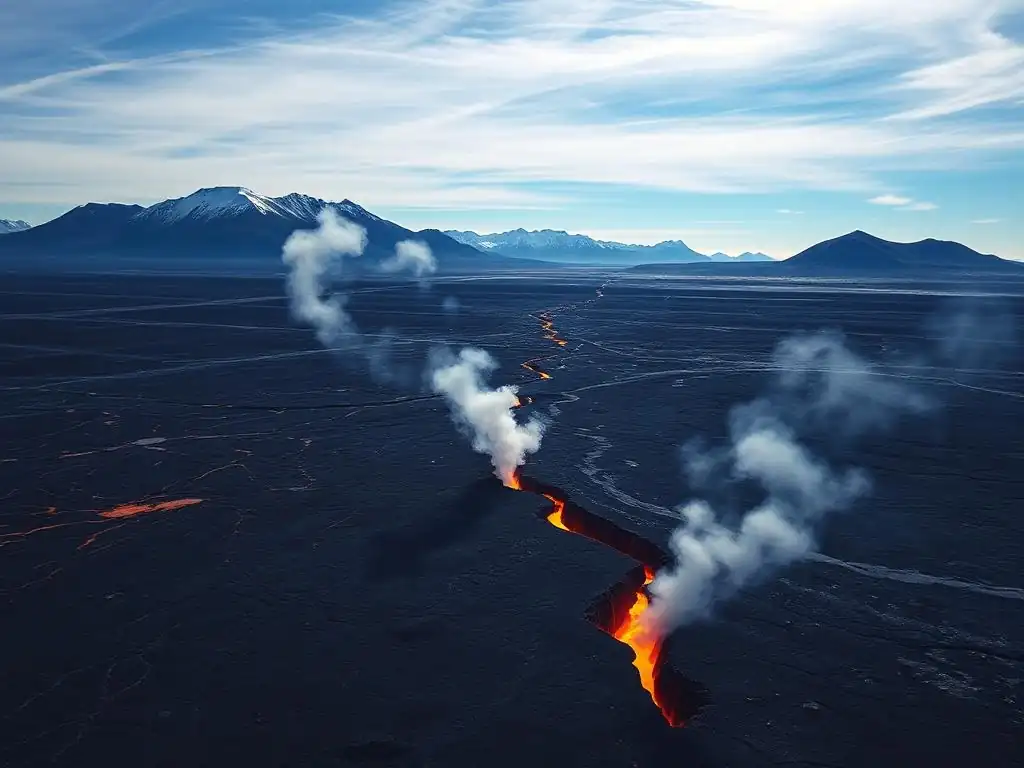
Monitoring fissure volcano activity requires a range of specialized techniques and technologies, focusing on detecting subtle changes in ground deformation, gas emissions, and thermal activity. Ground deformation monitoring, using GPS and satellite-based InSAR (Interferometric Synthetic Aperture Radar), can detect swelling or contraction of the ground surface, which may indicate magma movement beneath fissure systems. Gas monitoring stations measure the composition and flux of volcanic gases, providing insights into magma degassing and potential eruption precursors.
Thermal monitoring, using satellite thermal infrared imagery and ground-based thermal cameras, can detect changes in surface temperature, indicating the onset of magma ascent or lava effusion. Seismic monitoring is also crucial, as magma movement and fracturing within the Earth's crust can generate characteristic seismic signals, even before the eruption begins. By integrating data from these diverse monitoring techniques, volcanologists can gain a comprehensive understanding of fissure volcano behavior and improve eruption forecasting capabilities.
Predicting Fissure Eruptions: Challenges and Advancements in Volcanology
Predicting fissure eruptions presents unique challenges due to their linear nature and often rapid onset. Unlike central vent volcanoes, where magma accumulation beneath a single point can be more easily tracked, magma pathways for fissure eruptions can be more diffuse and less predictable. However, advancements in volcanology are continually improving our ability to forecast these events.
Improved understanding of tectonic stress regimes, crustal structure, and magma ascent pathways is crucial for predicting fissure eruption locations and timing. Refined geophysical monitoring techniques, coupled with sophisticated numerical models of magma flow and crustal deformation, are enhancing our ability to detect pre-eruptive signals and assess volcanic hazards. By combining geological knowledge, advanced monitoring technologies, and computational modeling, volcanologists are making progress in mitigating the risks associated with fissure volcanoes and their potentially impactful eruptions.
The Cultural Significance of Fissure Volcanoes: Myths and Legends
Pele and Volcanic Activity: Hawaiian Mythology and Lava Flows
In Hawaiian mythology, Pele, the goddess of volcanoes and fire, is deeply intertwined with volcanic activity, particularly lava flows associated with shield and fissure eruptions. Pele is believed to reside within Kīlauea volcano on the Big Island of Hawaii, and her fiery temper is manifested in volcanic eruptions. The fluid, flowing lava that characterizes Hawaiian volcanism is often seen as Pele's hair or tears, reflecting her power and presence in the landscape.
Legends and stories surrounding Pele and her interactions with the land and people are deeply embedded in Hawaiian culture. Offerings and rituals are traditionally performed to appease Pele and ensure her favor, highlighting the cultural significance of volcanic activity in shaping Hawaiian beliefs and traditions. The pervasive presence of volcanoes and lava flows in the Hawaiian Islands has profoundly influenced their mythology and worldview, with Pele serving as a powerful embodiment of volcanic forces.
Volcanic Deities and Rituals: Cultural Interpretations of Fissure Eruptions
Across various cultures and throughout history, volcanic eruptions, including those from fissures, have been interpreted through mythological and religious lenses. Volcanoes were often seen as dwelling places of deities or manifestations of divine power, inspiring both awe and fear. Rituals and ceremonies were frequently performed to appease volcanic gods and seek protection from their destructive forces.
In Roman mythology, Vulcan was the god of fire and volcanoes, with his forge believed to be located beneath volcanic mountains. Indigenous cultures in volcanic regions around the world, from Japan to Indonesia to South America, have developed rich mythologies and ritual practices associated with volcanoes. These cultural interpretations reflect humanity's long-standing relationship with volcanic phenomena, seeking to understand and contextualize the power and unpredictability of eruptions within their belief systems. Fissure eruptions, with their dramatic reshaping of the landscape, undoubtedly played a role in shaping these cultural narratives and ritualistic practices.
Living Near Fissure Volcanoes: Safety Measures and Preparedness
Volcanic Hazards Associated with Fissure Eruptions: Risks and Mitigation
While fissure eruptions are often less explosive than other types, they still pose significant volcanic hazards. Lava flows are the primary hazard, capable of destroying infrastructure, homes, and agricultural land in their path. Although lava flows typically move slowly enough for people to evacuate, they are virtually unstoppable and can cause widespread devastation. Volcanic gases, particularly sulfur dioxide, are another significant hazard, posing respiratory risks and contributing to acid rain.
Ashfall, while generally less voluminous from fissure eruptions compared to explosive eruptions, can still disrupt transportation, damage crops, and pose health hazards. Ground deformation and seismic activity associated with magma movement can also cause structural damage and trigger landslides. Mitigation strategies for fissure volcano hazards include land-use planning to avoid high-risk zones, infrastructure design to withstand lava flows or ashfall, and community preparedness plans for evacuation and emergency response. Effective monitoring and early warning systems are crucial for minimizing the impacts of fissure eruptions on communities living near these volcanic systems.
Community Preparedness: What to Do During a Fissure Volcano Eruption
Community preparedness is paramount for minimizing the risks associated with living near fissure volcanoes. Developing and practicing evacuation plans is essential, ensuring that residents know evacuation routes and assembly points. Emergency communication systems should be in place to provide timely warnings and updates on eruption activity. Stockpiling emergency supplies, including food, water, medication, and respiratory protection (masks for ash and gas), is crucial for self-sufficiency during an eruption.
Public education campaigns play a vital role in raising awareness about volcanic hazards, evacuation procedures, and safety measures. Community drills and exercises can help residents become familiar with emergency protocols and improve response effectiveness. Close collaboration between scientists, emergency responders, and local communities is essential for building resilience and minimizing the impacts of fissure volcano eruptions. Preparedness, education, and community involvement are key to living safely in volcanic regions.
Conclusion: Appreciating the Unique Power of Fissure Volcanoes and their Quiet Eruption Dynamics
The Importance of Understanding Fissure Volcanoes for Volcanic Hazard Assessment
Fissure volcanoes, with their seemingly "quiet" eruption dynamics, represent a significant aspect of global volcanism. While lacking the explosive drama of stratovolcanoes, their effusive eruptions have profound implications for landscape evolution, environmental processes, and human societies. Understanding fissure volcanoes and their unique characteristics is crucial for a comprehensive assessment of volcanic hazards and risks worldwide.
Studying fissure volcanoes provides valuable insights into the Earth's internal processes, magma generation and transport, and the interplay between tectonic forces and volcanic activity. Improved monitoring techniques and scientific research are continually enhancing our ability to forecast fissure eruptions and mitigate their impacts. Appreciating the power, both subtle and immense, of fissure volcanoes allows us to better prepare for and coexist with these dynamic geological forces that have shaped and continue to shape our planet.
Frequently Asked Questions
What exactly are fissure volcanoes and how do they differ from other types?
Fissure volcanoes are volcanic vents that release lava from elongated cracks or fissures, rather than a central cone. This contrasts with stratovolcanoes that erupt explosively from a single vent.
Why are fissure volcano eruptions often described as "quiet"?
"Quiet" refers to the lack of a violent, explosive eruption. Fissure eruptions typically involve effusive lava flows, which spread across the landscape without significant explosions.
What are the main drivers of fissure volcano formation?
Fissure volcanoes are typically associated with areas of crustal extension or tectonic rifting. These areas create pathways for magma to reach the surface through cracks and fractures.
Are fissure volcanoes dangerous, even if they aren't explosive?
Yes, fissure volcanoes can still be dangerous. Extensive lava flows can destroy infrastructure and alter landscapes. Also, gases released during eruptions can be harmful.
Where can I find real-time updates on fissure volcano activity and potential hazards?
VolcanoExplorers.org provides real-time updates on volcanic activity worldwide, including information on fissure volcanoes. Always consult local authorities for the most up-to-date safety information.
Final Reflection: The Unassuming Power of the Earth
The exploration of fissure volcanoes reveals a fascinating truth: power doesn't always roar. While we often associate volcanic activity with explosive eruptions and dramatic displays, the quiet, effusive nature of fissure volcanoes highlights a different kind of geological force, one that shapes landscapes and ecosystems with a slow, persistent hand. Understanding these "quiet eruption dynamics" is crucial in a world increasingly aware of the subtle yet profound ways the Earth impacts our lives.
The impact of fissure volcanoes, though less immediately catastrophic, is undeniably significant. Their lava flows, though slow-moving, can reshape entire regions, creating new land and influencing the course of rivers. This constant, albeit gradual, transformation reminds us of the Earth's enduring power and our place within its dynamic processes. The earth is always speaking, but we are often too busy to listen.
This quote encapsulates the essence of appreciating the subtle forces at play, forces like those exhibited by fissure volcanoes.
As we conclude this exploration of fissure volcanoes and their quiet eruption dynamics, I invite you to consider the power of the unassuming in your own life. What seemingly quiet forces are shaping your world, your relationships, your future? Embrace the understanding that true impact doesn't always require a dramatic explosion. Sometimes, the most profound changes come from the steady, persistent flow of quiet power.
Unearth Your Inner Volcanologist!
Thank you for exploring the fascinating world of fissure volcanoes! We hope you now appreciate the quiet power and unique beauty of these geological wonders. Ready to learn more? Here's how you can continue your volcanic journey:
- Explore interactive maps and 3D models of famous fissure volcanoes worldwide. Consider Iceland's Eldgja or Hawaii's Kilauea for a virtual field trip.
- Share this article with friends and family on social media! Let's spread the word about the beauty and wonder of fissure volcanoes, beyond the common perception of explosive eruptions.
- Join the Volcano Explorers community: Leave a comment below, telling us which fissure volcano captivates you most and why.
Which silent giant will you explore next?