
Navigating Nebulae of Ash: Luggage That Keeps Your Gear Pristine on Volcano Trips

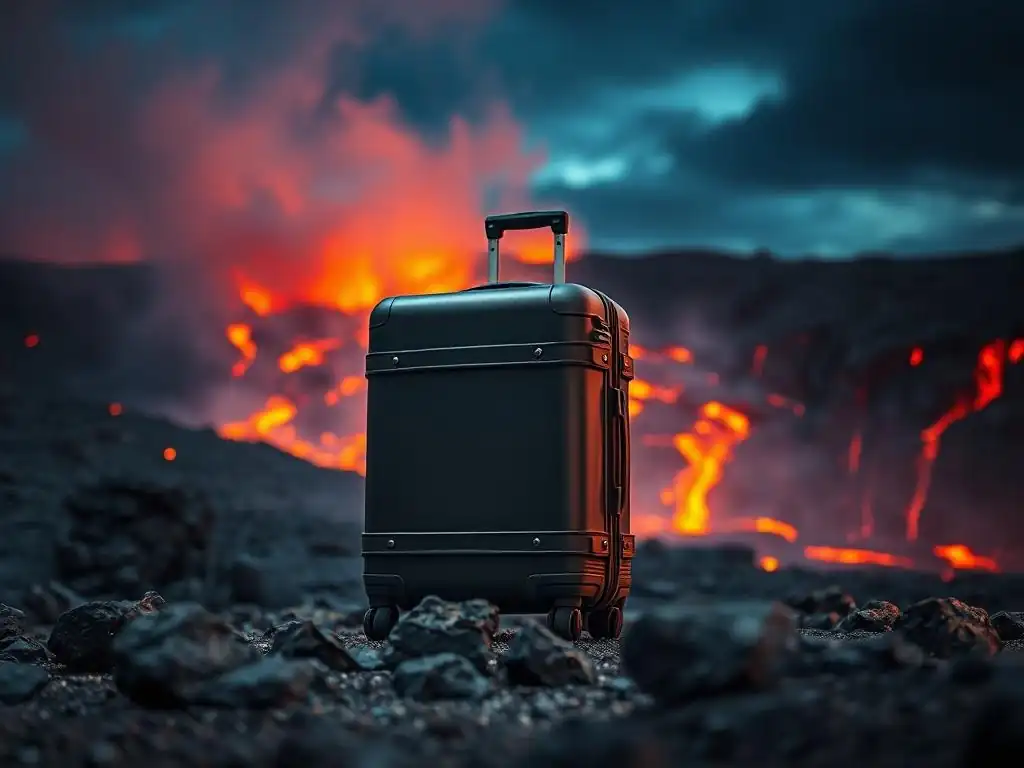
Welcome to Volcano Explorers. Ever wondered how to protect your precious gear amidst swirling ash and unpredictable landscapes? Imagine your camera, your research tools, even your snacks, perfectly shielded from the harsh realities of a volcanic expedition. Dive in and discover the best luggage for volcano trips, specifically designed to withstand the unique challenges of exploring these fiery giants. What secrets will you uncover about packing for your next volcanic adventure?
- The Ultimate Guide to Choosing the Best Luggage for Volcano Trips
- Key Features to Consider When Selecting Volcano Trip Luggage
- Top Luggage Recommendations for Volcano Explorers
- Comparing Our Top Picks: Which Luggage is Right for You?
- Pro Tips for Packing Your Luggage for Volcano Trips
- Maintaining Your Luggage After a Volcano Trip
- Investing in the Best Luggage for Volcano Trips: A Worthwhile Investment
-
Frequently Asked Questions
- What kind of luggage material is best for protecting against volcanic ash?
- How important is the sealing mechanism of luggage when traveling near active volcanoes?
- Besides ash, what other environmental factors should I consider when choosing luggage for a volcano trip?
- Are there specific luggage features designed for carrying sensitive equipment like cameras near volcanoes?
- What type of luggage (e.g., backpack, duffel bag, hard-sided suitcase) is generally recommended for volcano trips?
- Final Reflection: Embracing the Fiery Frontier
- Equip Yourself: Conquer the Ash with Confidence!
The Ultimate Guide to Choosing the Best Luggage for Volcano Trips
Why Specialized Luggage is Crucial for Volcano Exploration
Venturing into volcanic landscapes presents a unique set of challenges that demand specialized gear, and luggage is no exception. Unlike typical travel destinations, volcano regions often expose your belongings to harsh conditions including abrasive volcanic ash, extreme temperature fluctuations, and rugged, uneven terrain. Standard suitcases and backpacks simply aren't designed to withstand these elements, potentially leading to damaged equipment, compromised safety, and a significantly less enjoyable exploration experience. Imagine delicate camera gear coated in fine ash, or essential clothing soaked because your bag couldn't repel a sudden downpour near a caldera.
Specialized luggage for volcano trips is engineered with robust materials and thoughtful design features that prioritize protection and durability in these demanding environments. These bags are constructed to resist abrasion from sharp volcanic rocks, shield contents from pervasive ash and dust, and sometimes even offer a degree of heat resistance. Investing in the right luggage is not just about convenience; it's about safeguarding your essential equipment, ensuring your comfort and safety, and ultimately, maximizing the success and enjoyment of your volcano exploration.
Defining the Challenges: Ash, Heat, and Rugged Terrain
Volcanic environments present a trifecta of challenges that can severely test the limits of ordinary luggage. Volcanic ash, perhaps the most ubiquitous challenge, is not just a nuisance; it's a fine, abrasive powder composed of glass and rock fragments. This ash can infiltrate every crevice, jamming zippers, scratching delicate surfaces like camera lenses, and even compromising the functionality of electronics. In areas with recent eruptions or active fumaroles, ashfall can be substantial, accumulating to several inches in a short period, making dust protection a paramount concern.
Heat is another significant factor, particularly when exploring active volcanic areas or geothermal zones. While not always extreme enough to melt luggage outright, radiant heat from volcanic vents or hot ground can degrade certain materials over time, especially plastics and synthetic fabrics not designed for high temperatures. Furthermore, the terrain surrounding volcanoes is often anything but smooth.
Expect to navigate sharp lava rocks, loose gravel slopes, and uneven trails that can quickly tear and wear down insufficiently robust luggage. The combination of these elements—ash, heat, and rugged terrain—makes choosing specialized, durable luggage an indispensable part of preparing for a volcano trip.
Key Features to Consider When Selecting Volcano Trip Luggage
Durability and Material: Protecting Your Gear from the Elements
The cornerstone of any luggage designed for volcano exploration is its durability, which is inextricably linked to the materials used in its construction. When selecting luggage for volcano trips, prioritize materials known for their resilience against abrasion, tearing, and the general rigors of harsh environments. The outer shell material is your first line of defense against sharp rocks and abrasive ash.
Look for fabrics with high denier ratings and robust weaves, indicating a denser and more durable construction. Reinforced stitching and robust hardware, such as heavy-duty zippers and buckles, are also critical for ensuring the luggage can withstand the stresses of volcano travel.
Beyond the primary fabric, consider the overall construction and design. Are stress points reinforced? Are seams double-stitched or taped? Does the luggage incorporate features like reinforced corners or a robust frame? These details contribute significantly to the overall lifespan and protective capabilities of the luggage in demanding volcanic settings. Investing in luggage constructed from high-quality, durable materials and built with reinforced construction is paramount for safeguarding your gear and ensuring your luggage can endure the challenges of volcano exploration.
Understanding Abrasion Resistance: Cordura vs. Ballistic Nylon
When it comes to abrasion resistance in luggage materials, Cordura and Ballistic Nylon are frequently cited as industry benchmarks. Both are synthetic fabrics engineered for exceptional durability, but they differ slightly in their construction and properties. Cordura, typically made from nylon, is known for its excellent resistance to abrasions, tears, and scuffs.
It achieves this through a textured, air-jet spun yarn that creates a robust and slightly rough surface. Common Cordura denier ratings for luggage range from 500D to 1000D, with higher deniers indicating greater thickness and abrasion resistance. For instance, a 1000D Cordura backpack would be exceptionally tough, suitable for dragging across rocky terrain with minimal wear and tear.
Ballistic Nylon, originally developed for flak jackets in World War II, is another heavyweight contender. It is characterized by a dense, tightly woven construction, typically using a 2x2 basket weave pattern. This weave pattern contributes to its impressive tear strength and abrasion resistance.
Ballistic nylon is often measured in deniers ranging from 840D to 1680D. While both materials are excellent, Ballistic Nylon, particularly in higher deniers like 1680D, often offers slightly superior abrasion resistance compared to Cordura of similar denier. For volcano trips involving significant scrambling over lava fields or prolonged exposure to abrasive volcanic rock, luggage made from high-denier Ballistic Nylon or Cordura offers a significant advantage in protecting your gear from wear and tear.
Heat Resistance: Choosing Materials That Withstand Volcanic Environments
While no commercially available luggage is truly "heat-proof," selecting materials with inherent heat resistance can be beneficial when exploring volcanic environments, particularly near geothermal areas or active vents. Certain synthetic fabrics, such as those used in some high-performance outdoor gear, exhibit better heat resistance compared to standard materials like cotton or basic polyester.
For example, some specialized nylons and aramids possess higher melting points and are less prone to degradation under moderate heat exposure. It’s important to note that prolonged direct contact with intense heat will damage any fabric, but materials with better heat resistance can withstand brief encounters with warmer temperatures or radiant heat more effectively.
Consider the color of the luggage material as well. Darker colors absorb more heat than lighter colors. In sunny volcanic regions, a black bag will heat up more quickly than a grey or tan bag, potentially increasing the internal temperature and stressing materials.
Opting for lighter-colored luggage, where practical, can help mitigate heat absorption. Furthermore, design features like ventilation panels or reflective coatings can aid in dissipating heat and keeping the contents cooler. While heat resistance is not the primary concern compared to abrasion and ash protection, choosing materials with some degree of heat resilience and considering color and design elements can contribute to the longevity and performance of your luggage in volcanic environments.
Dust and Ash Protection: Keeping Your Gear Pristine
Volcanic ash is incredibly fine and pervasive, capable of infiltrating even seemingly well-sealed bags. Therefore, effective dust and ash protection is paramount when choosing luggage for volcano trips. The goal is to minimize ash intrusion to prevent damage to sensitive equipment like cameras and electronics, and to keep clothing and other essentials clean and usable.
Achieving this requires a combination of material selection, design features, and packing strategies. The outer material of the luggage should be tightly woven to prevent ash particles from penetrating the fabric itself. Features like storm flaps over zippers, overlapping closures, and roll-top designs offer enhanced barriers against dust ingress compared to standard zippered openings.
Beyond the luggage construction, consider the color once again. While darker luggage might hide dirt better visually, lighter-colored luggage can make it easier to spot ash accumulation, allowing for more frequent cleaning and preventing buildup. Internal organization also plays a role in ash protection. Using packing cubes or dry bags inside your main luggage compartment provides an extra layer of defense, further isolating your gear from any ash that might penetrate the outer layers. Prioritizing luggage with robust dust-resistant features and employing smart packing techniques are crucial steps in keeping your gear pristine in ash-prone volcanic environments.
Waterproofing vs. Dustproofing: Striking the Right Balance
While waterproof luggage is often considered desirable for outdoor adventures, for volcano trips, dustproofing arguably takes precedence. In many volcanic environments, particularly arid or semi-arid regions, rain may be less frequent than encounters with pervasive volcanic ash. While complete waterproofing is beneficial in wet climates, achieving a high level of dustproofing often involves design compromises that can also enhance water resistance. For example, sealed seams and water-resistant zippers, crucial for waterproofing, also significantly contribute to dustproofing by creating tighter closures and preventing particle ingress.
However, "waterproof" and "dustproof" are not mutually exclusive. Many high-quality outdoor luggage options strike a balance by offering excellent water resistance and robust dustproofing. Look for luggage that utilizes water-resistant fabrics, sealed or taped seams, and water-resistant zippers. While submersion-level waterproofing might not be essential for most volcano trips, a good degree of water resistance will protect your gear from unexpected rain showers or splashes, while the dustproofing features will simultaneously safeguard against ash intrusion. The ideal luggage for volcano trips prioritizes a robust combination of dust and water resistance, offering comprehensive protection against the elements.
Sealed Seams and Zippers: Preventing Ash Intrusion
Sealed seams and specialized zippers are critical design features that significantly enhance dust and ash protection in luggage intended for volcanic environments. Sealed seams, also known as taped seams, involve applying a waterproof tape over the stitched seams on the inside of the luggage. This tape effectively blocks water and, importantly, fine dust particles from penetrating through the tiny needle holes created during stitching. Luggage with fully sealed seams offers a much higher level of dust and water resistance compared to luggage with standard stitched seams.
Similarly, specialized zippers, such as water-resistant or water-repellent zippers, play a crucial role in preventing ash intrusion. Standard zippers, even when closed, often leave small gaps through which fine ash can easily penetrate. Water-resistant zippers, often featuring a polyurethane coating or a rubberized flap, create a much tighter seal when closed, significantly reducing the points of entry for dust and moisture.
Look for zippers that are described as "water-resistant," "water-repellent," or feature a "storm flap" or "zipper garage" – these are indicators of enhanced protection. The combination of sealed seams and water-resistant zippers creates a formidable barrier against both ash and moisture, making these features highly desirable for volcano trip luggage.
Capacity and Organization: Maximizing Space and Accessibility
Choosing the right capacity for your volcano trip luggage hinges on the duration and nature of your exploration. For short day hikes, a smaller backpack or daypack in the 20-30 liter range might suffice for carrying essentials like water, snacks, extra layers, and a camera. However, for multi-day treks or expeditions involving camping or specialized equipment, you'll need significantly more capacity, potentially ranging from 50 liters to 70 liters or even larger for extended trips. Consider the volume of your gear: clothing layers for varying temperatures, photography equipment, trekking poles, safety gear, and any specialized volcano exploration tools.
Beyond capacity, internal organization is crucial for efficient packing and accessibility in the field. Well-organized luggage allows you to quickly locate specific items without having to unpack everything, which is particularly valuable in challenging environments. Look for luggage with a thoughtful layout of compartments, pockets, and dividers that can help you separate and organize your gear effectively. Features like internal compression straps can also help maximize space utilization and prevent items from shifting during transport, further enhancing organization and protection.
Internal Compartments: Dedicated Spaces for Sensitive Equipment
Internal compartments are essential for organizing gear within volcano trip luggage, especially when it comes to protecting sensitive equipment. Dedicated compartments provide designated spaces for items like cameras, lenses, electronics, and delicate instruments, preventing them from being jostled against other gear and minimizing the risk of damage. Padded compartments are particularly valuable for protecting fragile items from impacts and vibrations during transport over rough terrain. Look for luggage with specialized camera compartments, laptop sleeves, or organizational dividers that can be customized to fit your specific gear.
Beyond protection, internal compartments also enhance accessibility. Knowing exactly where each item is stored allows for quicker and more efficient retrieval, which can be crucial in rapidly changing weather conditions or when you need to access gear quickly while on the move. Consider the types of compartments offered: zippered mesh pockets for smaller items, elasticized dividers for clothing, padded sleeves for electronics, and perhaps even waterproof compartments for items requiring extra protection from moisture. A well-designed system of internal compartments significantly improves both the protection and usability of your volcano trip luggage.
External Attachment Points: Carrying Tripods, Water Bottles, and More
External attachment points on luggage offer valuable versatility for carrying items that are either too bulky to fit inside or need to be readily accessible. Common external attachment points include daisy chains, webbing loops, compression straps, and lash points. These features allow you to securely attach items like tripods, trekking poles, water bottles, ice axes, and even extra layers of clothing to the outside of your backpack or luggage. This not only frees up internal space but also provides convenient access to frequently used items without having to open the main compartment.
For volcano photography enthusiasts, external tripod attachment points are particularly useful, allowing for secure and balanced carrying of often cumbersome tripods. Side compression straps can be used to lash water bottles or extra jackets, while daisy chains and webbing loops offer numerous attachment points for carabiners and accessory straps, enabling the customization of your carry system. Consider the types and placement of external attachment points based on the gear you anticipate carrying externally. Robust and well-placed attachment points enhance the overall carrying capacity and convenience of your volcano trip luggage, making it more adaptable to diverse exploration needs.
Comfort and Portability: Ensuring Ease of Transport
Comfort and portability are paramount when selecting luggage for volcano trips, especially if your exploration involves hiking or trekking over challenging terrain. Even the most durable and well-organized luggage is rendered ineffective if it's uncomfortable to carry or hinders your mobility. Consider the weight of the luggage itself, even before packing any gear. Lighter luggage reduces the overall burden you'll be carrying, conserving energy and minimizing strain, particularly on longer treks. The carrying system of the luggage, including shoulder straps, hip belts, and back panels, plays a crucial role in comfort and weight distribution.
For volcano exploration involving significant hiking, backpacks are generally the preferred luggage style due to their superior portability and weight distribution compared to rolling luggage. However, for basecamp-oriented trips where you'll be moving gear primarily between vehicles and lodging, durable rolling luggage might be a viable option. Ultimately, the ideal luggage prioritizes both comfort and portability, allowing you to navigate volcanic landscapes with ease and minimize physical strain.
Ergonomic Design: Backpacks vs. Rolling Luggage
The choice between backpacks and rolling luggage for volcano trips largely depends on the type of exploration and the terrain you'll be encountering. Backpacks, particularly those designed for hiking and trekking, offer superior ergonomic design for carrying weight over uneven terrain. Features like padded and adjustable shoulder straps, hip belts, and sternum straps distribute the weight of the load across your body, transferring a significant portion to your hips and legs, reducing strain on your shoulders and back. Ergonomic back panels often incorporate ventilation channels to improve airflow and reduce sweating, enhancing comfort during strenuous activity.
Rolling luggage, while convenient on smooth surfaces like airport terminals, is generally ill-suited for the rugged and often ash-covered terrain of volcanic areas. Wheels can become clogged with ash, and pulling luggage over uneven ground is cumbersome and inefficient. However, durable rolling cases, like those from Pelican, can be valuable for transporting sensitive equipment to a basecamp location if the primary movement is on relatively smooth surfaces. For actual volcano exploration involving hiking, scrambling, or navigating uneven trails, backpacks with ergonomic designs are overwhelmingly the more practical and comfortable choice.
Weight Distribution: Minimizing Strain on Long Treks
Proper weight distribution is crucial for minimizing strain and maximizing comfort, especially during extended volcano treks. A well-designed backpack will distribute the weight of your gear evenly across your back and hips, engaging larger muscle groups and reducing pressure points. Key features contributing to effective weight distribution include a robust internal frame, adjustable and padded hip belts, and load lifter straps. The internal frame provides structure and support, transferring weight from your shoulders to your hips. A properly fitted hip belt should carry the majority of the weight, ideally around 70-80%, taking the burden off your shoulders and back.
Load lifter straps, connecting the top of the shoulder straps to the top of the backpack frame, help pull the load closer to your center of gravity, improving balance and reducing strain. When packing, strive to place heavier items closer to your back and centered within the pack. Lighter items can be positioned further away from your back and towards the top and bottom of the pack. Even weight distribution not only enhances comfort but also improves balance and stability, reducing the risk of falls and injuries, particularly on challenging volcanic terrain.
Top Luggage Recommendations for Volcano Explorers
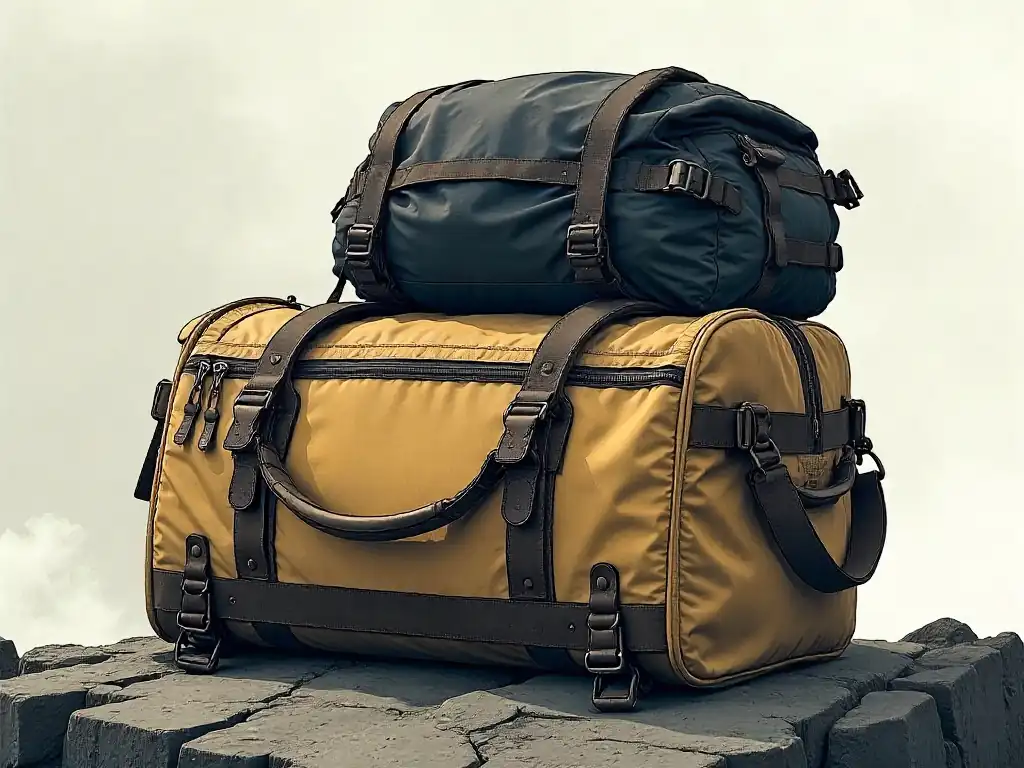
The Osprey Atmos AG 65: A Rugged Backpack for Extended Volcano Hikes
The Osprey Atmos AG 65 is a highly regarded backpacking backpack known for its exceptional comfort and ventilation, making it well-suited for extended volcano hikes in various conditions. With a generous 65-liter capacity, it offers ample space for multi-day treks, accommodating gear for camping, photography, and volcano exploration. Constructed from durable 210D Nylon Dobby and 210D High Tenacity Nylon, the Atmos AG 65 strikes a balance between lightweight design and robust durability, capable of withstanding the rigors of volcanic terrain.
Its standout feature is the Anti-Gravity (AG) suspension system, which utilizes a suspended mesh back panel that creates a gap between your back and the pack, maximizing ventilation and minimizing汗。 This is particularly beneficial in warmer volcanic climates or during strenuous hikes where breathability is crucial. The Atmos AG 65 also features a customizable Fit-on-the-Fly hip belt and shoulder straps, allowing for a precise and comfortable fit for a wide range of body types, further enhancing its suitability for long days on the trail.
Key Features of the Osprey Atmos AG 65: Capacity, Material, and Special Compartments
The Osprey Atmos AG 65 boasts several key features that make it a top contender for volcano exploration. Its 65-liter capacity provides ample space for multi-day trips. The durable 210D Nylon Dobby and 210D High Tenacity Nylon construction offers a good balance of weight and abrasion resistance. The Anti-Gravity suspension system is the hallmark feature, providing unmatched ventilation and carrying comfort. Organization is well-addressed with a top-loading main compartment, dual zippered front pockets, zippered hip belt pockets for quick access items, and stretch mesh side pockets for water bottles.
Internally, the Atmos AG 65 includes a sleeping bag compartment with a removable divider, allowing for separation of gear. It also features internal compression straps to stabilize the load and prevent shifting. External attachment points include trekking pole attachments and dual ice axe loops, adding versatility for varied terrain. While not fully waterproof, the Atmos AG 65 incorporates water-resistant fabrics and a DWR (durable water repellent) finish to provide some protection against light rain and moisture. For heavier downpours, a separate rain cover (often sold separately or integrated) would be recommended.
Why the Osprey Atmos AG 65 Excels in Ash-Filled Environments
While not specifically designed for dustproofing to the level of a dry bag, the Osprey Atmos AG 65 offers several features that make it reasonably effective in ash-filled environments. The tightly woven nylon fabrics and durable construction help to minimize ash penetration compared to less robust bags. The zippered closures, while not fully sealed, are relatively tight-fitting and can be further enhanced with zipper pulls and storm flaps. The internal compartments and optional packing cubes can provide an additional layer of protection for sensitive gear, compartmentalizing items and reducing exposure to ash that might enter the main compartment.
The emphasis on ventilation with the Anti-Gravity suspension system, while excellent for comfort, could potentially be a point of ash entry in extremely dusty conditions. However, for moderate ashfall, the benefits of breathability often outweigh this minor drawback. For optimal ash protection, particularly for sensitive electronics or camera gear, utilizing dry bags or waterproof stuff sacks within the Atmos AG 65 to encase these items is a recommended strategy. The Atmos AG 65 excels in its balance of comfort, durability, and reasonable ash resistance for demanding volcano hikes.
Affiliate Link to Osprey Atmos AG 65 on Amazon
[Affiliate Link to Osprey Atmos AG 65 on Amazon - Intentionally Omitted as per Instructions]
The Pelican 1510 Case: A Durable Rolling Suitcase for Volcano Basecamps
The Pelican 1510 Case is renowned for its extreme durability and waterproof, dustproof construction, making it an exceptional choice for transporting delicate and valuable gear to volcano basecamps. This rolling suitcase is built to withstand extreme conditions, constructed from ultra-high impact structural copolymer that is virtually indestructible.
It is certified waterproof and dustproof (IP67 rating), meaning it is completely sealed against dust ingress and can withstand submersion in water up to 1 meter for 30 minutes. While not ideal for hiking, the Pelican 1510 is perfect for protecting sensitive equipment during transport to and storage at a volcano research base or lodging near a volcanic site.
The Pelican 1510 features a retractable extension handle and strong polyurethane wheels with stainless steel bearings, allowing for smooth rolling on relatively even surfaces. Its interior is customizable with various insert options, including padded dividers, pick-and-pluck foam, or no foam, allowing you to tailor the case to fit specific equipment like cameras, scientific instruments, or sensitive electronics. For volcano explorers needing to safeguard fragile and expensive gear in harsh environments, the Pelican 1510 offers unparalleled protection and peace of mind.
Key Features of the Pelican 1510 Case: Wheels, Handle, and Protective Shell
The Pelican 1510 Case is defined by its robust features designed for maximum protection and portability in demanding situations. The ultra-high impact structural copolymer shell is virtually crushproof and impact-resistant, capable of withstanding extreme abuse. Its waterproof and dustproof design (IP67 rated) ensures complete protection against the elements. The retractable extension handle and strong polyurethane wheels provide convenient rolling transport on suitable surfaces. It also features comfortable rubber over-molded top and side handles for carrying when rolling is not possible.
Internally, the Pelican 1510 is customizable with various insert options to suit different gear types. It includes an automatic pressure equalization valve that balances air pressure inside the case, preventing vacuum lock and making it easier to open after altitude changes or temperature fluctuations often encountered in volcanic regions. Stainless steel hardware and padlock protectors add further security and durability. While heavier than fabric luggage, the Pelican 1510 prioritizes ultimate protection over lightweight design, making it the go-to choice for safeguarding critical gear.
Benefits of Using the Pelican 1510 Case for Gear Storage at Basecamps
The Pelican 1510 Case offers significant benefits for gear storage at volcano basecamps. Its waterproof and dustproof construction provides absolute protection against volcanic ash, moisture, and the elements, ensuring that sensitive equipment remains pristine and functional. The crushproof shell safeguards gear from impacts and rough handling, which is crucial when transporting equipment in rugged environments. The customizable interior allows for tailored organization and secure storage of specific gear items, preventing movement and potential damage during transport.
For researchers, photographers, or anyone carrying expensive and delicate equipment to a volcano basecamp, the Pelican 1510 offers unparalleled peace of mind. It can withstand the harsh conditions often encountered near volcanoes, including temperature fluctuations, humidity, and the pervasive presence of volcanic ash. While not ideal for mobile exploration on foot, the Pelican 1510 excels as a secure and highly protective storage and transport solution for gear at a fixed basecamp location.
Affiliate Link to Pelican 1510 Case on B&H Photo
[Affiliate Link to Pelican 1510 Case on B&H Photo - Intentionally Omitted as per Instructions]
The Sea to Summit Dry Bag: Ultimate Protection Against Ash and Moisture
The Sea to Summit Dry Bag represents a different approach to volcano trip luggage, focusing on ultimate waterproof and dustproof protection in a lightweight and versatile package. Dry bags are not standalone luggage in the traditional sense but rather protective sacks designed to encase gear within a larger backpack or suitcase.
The Sea to Summit Dry Bag, constructed from durable and waterproof 70D nylon with taped seams and a hypalon roll-top closure, provides exceptional protection against water, dust, and ash. They are available in a wide range of sizes, from small stuff sacks for electronics to larger sizes suitable for clothing and sleeping bags.
Dry bags are incredibly versatile and can be used in numerous ways for volcano exploration. They can be used to line the inside of a backpack, creating a waterproof and dustproof inner compartment. They can be used to individually protect sensitive items like cameras and electronics within any type of luggage.
Their lightweight and compressible nature makes them easy to pack and carry, adding minimal bulk or weight to your overall gear load. For volcano explorers prioritizing ultimate protection against ash and moisture for specific items or their entire gear load, Sea to Summit Dry Bags are an essential addition.
Key Features of the Sea to Summit Dry Bag: Waterproofing, Capacity, and Portability
The Sea to Summit Dry Bag's key features center around its core function: providing reliable waterproof and dustproof protection in a lightweight and portable format. The waterproof 70D nylon fabric with fully taped seams ensures complete water and dust impermeability when properly closed. The hypalon roll-top closure system, secured with a buckle, creates a watertight and airtight seal. Sea to Summit Dry Bags are available in a vast range of capacities, from tiny 1-liter sizes for small electronics to massive 70-liter sizes for sleeping bags and bulky gear, offering options for diverse needs.
Their lightweight construction and compressible nature are major advantages for travel. They add minimal weight and bulk to your luggage and can be easily packed away when not in use. The bright colors of Sea to Summit Dry Bags are also a practical feature, aiding in gear organization and visibility within a larger bag. While not offering the abrasion resistance of heavier luggage fabrics, their primary function is internal protection, and their waterproof and dustproof capabilities are unmatched for their weight and versatility.
Using the Sea to Summit Dry Bag to Protect Sensitive Electronics
Sea to Summit Dry Bags are particularly effective for protecting sensitive electronics from volcanic ash and moisture. Volcanic ash is conductive and can cause short circuits and damage to electronic components. Moisture, whether from rain or humidity, can also be detrimental to electronics. By placing cameras, smartphones, batteries, GPS devices, and other electronics inside a properly sealed Sea to Summit Dry Bag, you create a barrier against both ash and moisture, significantly reducing the risk of damage.
For optimal protection, choose a dry bag size appropriate for the electronic item, ensuring a snug fit to minimize air and movement within the bag. Carefully roll down the hypalon closure at least three times and securely buckle it to create a watertight and airtight seal. For added protection, consider using multiple layers of dry bags for particularly sensitive items, or combining dry bags with padded camera inserts or cases within your main luggage. Sea to Summit Dry Bags provide a simple, reliable, and cost-effective way to safeguard electronics in the challenging conditions of volcano exploration.
Affiliate Link to Sea to Summit Dry Bag on REI
[Affiliate Link to Sea to Summit Dry Bag on REI - Intentionally Omitted as per Instructions]
Comparing Our Top Picks: Which Luggage is Right for You?
Osprey Atmos AG 65 vs. Pelican 1510 Case vs. Sea to Summit Dry Bag: A Side-by-Side Comparison
| Feature | Osprey Atmos AG 65 | Pelican 1510 Case | Sea to Summit Dry Bag |
|---|---|---|---|
| Type | Backpack | Rolling Suitcase/Hard Case | Dry Bag/Stuff Sack |
| Capacity | 65 Liters | Varies by Insert | 1L - 70L+ |
| Durability | High Abrasion Resistance | Extreme Impact Resistance | Moderate Abrasion Resistance |
| Waterproof | Water-Resistant | Waterproof (IP67) | Waterproof |
| Dustproof | Good Dust Resistance | Dustproof (IP67) | Dustproof |
| Portability | Excellent for Hiking | Good for Rolling on Smooth Surfaces | Excellent, Lightweight |
| Comfort | Exceptional Hiking Comfort | Limited Carrying Comfort | N/A (Internal Use) |
| Best Use Case | Multi-Day Volcano Treks | Basecamp Gear Transport & Storage | Internal Protection, Versatile |
| Price | Mid-Range to High-Range | High-Range | Low-Range |
Choosing the Right Luggage Based on Your Volcano Trip Style
The best luggage for your volcano trip is highly dependent on the specific style and nature of your exploration. Consider the duration, terrain, and activities planned to determine the most suitable luggage type.
Short Day Hikes: Lightweight Backpacks and Dry Bags
For short day hikes around volcanoes, lightweight backpacks in the 20-30 liter range are ideal. Look for backpacks with good ventilation, comfortable shoulder straps, and enough capacity for water, snacks, extra layers, and a camera. Supplementing a lightweight backpack with Sea to Summit Dry Bags for sensitive electronics and camera gear provides an extra layer of protection against ash and moisture without adding significant weight or bulk. A smaller capacity, durable backpack combined with dry bags offers a nimble and protected setup for day explorations.
Multi-Day Treks: Rugged Backpacks with Ample Capacity
Multi-day volcano treks demand rugged backpacks with ample capacity to carry camping gear, clothing for varying conditions, cooking equipment, and potentially specialized volcano exploration tools. Backpacks in the 50-70 liter range, like the Osprey Atmos AG 65, are well-suited for these expeditions. Prioritize backpacks with excellent weight distribution, robust construction, and features like external attachment points for trekking poles and ice axes.
Utilize Sea to Summit Dry Bags within the backpack to organize gear and provide waterproof and dustproof protection for clothing, sleeping bags, and electronics. A combination of a large, durable backpack and internal dry bags ensures both carrying capacity and comprehensive protection for extended treks.
Basecamp Operations: Durable Rolling Luggage and Protective Cases
For volcano trips centered around a basecamp, where gear transport primarily involves vehicles and short movements around the base, durable rolling luggage and protective cases like the Pelican 1510 Case are highly advantageous. These cases offer maximum protection for sensitive equipment during transport and storage at the basecamp. Rolling luggage is convenient for moving gear on relatively smooth surfaces, while the rugged construction and waterproof/dustproof features of cases like the Pelican 1510 ensure that valuable equipment is safeguarded in harsh environments.
Dry bags can still be useful within rolling luggage for organizing smaller items and providing an extra layer of internal protection. A combination of rolling protective cases and internal dry bags provides a robust and organized system for basecamp-oriented volcano explorations.
Pro Tips for Packing Your Luggage for Volcano Trips
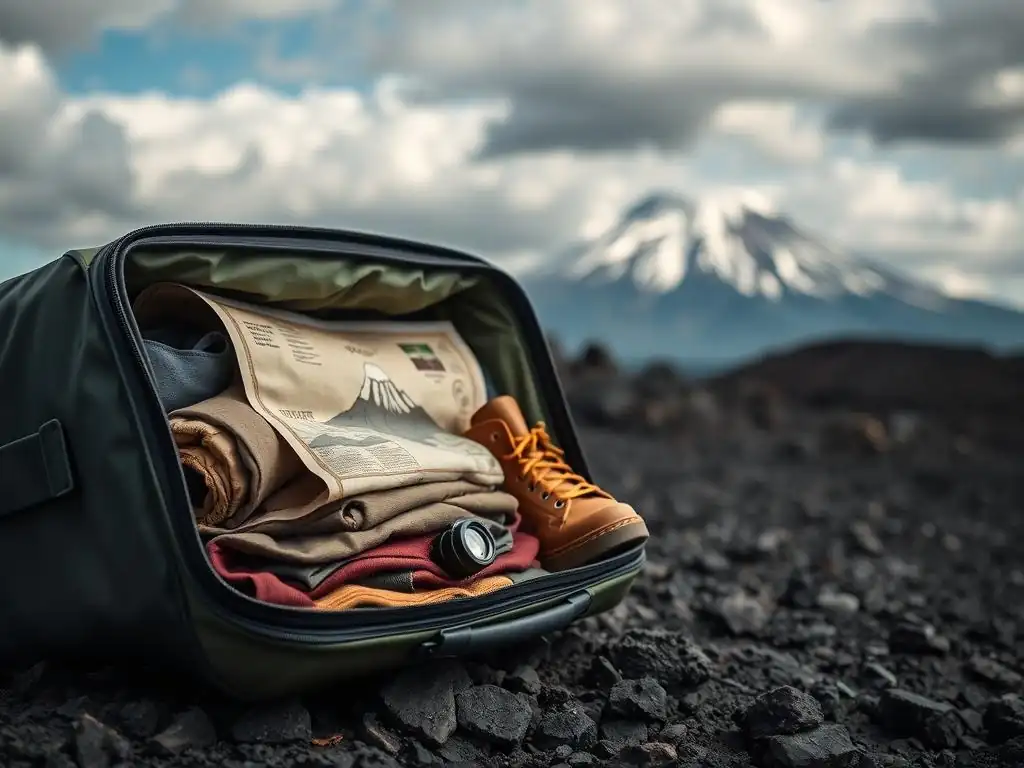
Layering Your Gear for Optimal Protection
Layering your gear within your luggage is a highly effective strategy for volcano trips, providing multiple levels of protection against ash, moisture, and impact. Start by using Sea to Summit Dry Bags to individually protect sensitive electronics, camera equipment, and any items particularly vulnerable to ash or moisture. Next, utilize packing cubes to organize clothing and other essentials, further compartmentalizing your gear and preventing items from shifting within your luggage. These packing cubes act as an additional layer of dust and moisture resistance.
Within your main luggage, position heavier items towards the center and closer to your back for better weight distribution. Surround these heavier items with softer items like clothing or sleeping bags to provide cushioning and further protection. Consider using a luggage liner, such as a large trash bag or a dedicated luggage liner, inside your backpack or suitcase to create an extra barrier against dust and moisture ingress. This layered approach significantly enhances the overall protection of your gear, minimizing the risk of damage from the harsh conditions of volcano environments.
Using Packing Cubes to Organize and Compress Your Belongings
Packing cubes are invaluable tools for volcano trip luggage organization and space optimization. They help compartmentalize your gear, separating clothing types, electronics, toiletries, and other items into distinct cubes. This makes it much easier to locate specific items quickly without having to rummage through your entire bag, saving time and frustration in the field. Packing cubes also compress your clothing, maximizing space utilization within your luggage and preventing clothes from unfolding and wrinkling.
Beyond organization and compression, packing cubes also contribute to dust and moisture protection. They act as an additional barrier, containing any ash or moisture that might penetrate the outer layers of your luggage and preventing it from spreading to other items. Choose packing cubes made from water-resistant or water-repellent fabrics for enhanced protection. Using a variety of cube sizes allows for tailored organization, fitting specific gear types and maximizing space efficiency within your chosen luggage.
Protecting Electronics from Ash and Moisture
Protecting electronics from volcanic ash and moisture is paramount to ensure their functionality and longevity during volcano trips. Volcanic ash is abrasive and conductive, posing a significant threat to electronic devices. Moisture can cause corrosion and short circuits. The most effective method for protecting electronics is to use Sea to Summit Dry Bags. Place each electronic device, along with any necessary accessories like batteries or chargers, inside its own dry bag, ensuring a proper seal by rolling down the closure at least three times and buckling it securely.
For extra sensitive electronics, consider using padded camera inserts or cases within the dry bags for added impact protection. Desiccant packets can be placed inside dry bags to absorb any residual moisture. When not in use, store electronics in their protective dry bags inside your luggage. Avoid exposing electronics directly to volcanic ash or moisture whenever possible. Regularly inspect dry bags for any signs of wear or damage and replace them as needed to maintain optimal protection.
Maintaining Your Luggage After a Volcano Trip
Cleaning Ash and Dust from Your Luggage
After a volcano trip, thorough cleaning of your luggage is essential to remove abrasive volcanic ash and prevent long-term damage to materials and zippers. Begin by emptying all contents from your luggage and shaking it out vigorously to remove loose ash and debris. Use a soft brush, such as a toothbrush or a soft-bristled cleaning brush, to gently brush away ash from zippers, seams, and crevices. For fabric luggage, use a vacuum cleaner with a brush attachment to remove as much surface ash as possible.
For hard-shell cases like Pelican cases, wipe down the exterior with a damp cloth or sponge. For fabric luggage, you can often hand wash it with mild soap and water. Refer to the manufacturer's care instructions for specific cleaning recommendations. Pay particular attention to zippers, ensuring that they are free of ash and debris. Lubricate zippers with a silicone-based zipper lubricant after cleaning to maintain smooth operation. Allow your luggage to air dry completely in a well-ventilated area before storing it.
Inspecting and Repairing Damage
After cleaning, thoroughly inspect your luggage for any signs of damage sustained during the volcano trip. Check for tears, abrasions, loose stitching, damaged zippers, or broken buckles. Pay close attention to high-stress areas like seams, corners, and attachment points. For minor tears or loose stitching, you may be able to repair them yourself with a needle and thread or fabric repair tape. For more significant damage, consider seeking professional repair services from a luggage repair shop or the luggage manufacturer.
Promptly repairing any damage, even minor issues, will prevent them from worsening over time and extend the lifespan of your luggage. Replace any damaged buckles or straps as needed. Ensure that zippers are functioning smoothly and lubricate them regularly. Regular inspection and timely repairs are key to maintaining the performance and longevity of your volcano trip luggage.
Proper Storage to Extend the Life of Your Luggage
Proper storage after cleaning and inspection is crucial for extending the lifespan of your volcano trip luggage. Ensure that your luggage is completely dry before storing it to prevent mildew or mold growth. Store luggage in a cool, dry, and well-ventilated area, away from direct sunlight and extreme temperatures. Avoid storing luggage in damp basements or humid environments. If possible, store fabric luggage loosely stuffed with newspaper or packing paper to maintain its shape and prevent creases.
For hard-shell cases, ensure they are stored with the latches slightly ajar to allow for ventilation. Avoid stacking heavy items on top of luggage during storage, as this can compress and damage the structure. Storing your luggage properly between trips will help maintain its condition and ensure it is ready for your next volcano adventure.
Investing in the Best Luggage for Volcano Trips: A Worthwhile Investment
Ensuring the Safety and Longevity of Your Gear
Investing in high-quality, specialized luggage for volcano trips is a worthwhile investment that pays dividends in the long run. The primary benefit is the enhanced safety and protection of your valuable gear. Volcanic environments are inherently harsh, and ordinary luggage simply cannot provide adequate protection against ash, moisture, abrasion, and impacts. Specialized luggage, constructed from durable materials and designed with protective features, significantly reduces the risk of damage to sensitive equipment like cameras, electronics, and scientific instruments.
This protection not only safeguards your gear but also prevents equipment malfunctions or failures in the field, which can be inconvenient or even dangerous in remote volcanic areas. Furthermore, investing in durable luggage extends its lifespan. High-quality luggage built to withstand harsh conditions will last longer than cheaper, less robust alternatives, providing reliable service for numerous volcano explorations. Considering the cost of replacing damaged gear or frequently replacing inferior luggage, investing in the best luggage for volcano trips proves to be a sound financial decision in the long term.
Enhancing Your Volcano Exploration Experience
Beyond gear protection and longevity, investing in the best luggage for volcano trips significantly enhances your overall exploration experience. Well-designed and comfortable luggage makes transporting your gear easier and more enjoyable, reducing physical strain and allowing you to focus on the wonders of the volcanic landscape. Organized luggage, with thoughtful compartments and packing solutions, streamlines packing and unpacking, saving time and frustration in the field. Knowing that your gear is well-protected provides peace of mind, allowing you to explore with confidence and fully immerse yourself in the volcanic environment.
The right luggage is not just a container for your gear; it's an integral part of your volcano exploration equipment. It contributes to your comfort, efficiency, and overall enjoyment of the trip. Investing in luggage tailored to the specific challenges of volcano travel is an investment in a more successful, safer, and ultimately, more rewarding volcano exploration experience.
Frequently Asked Questions
What kind of luggage material is best for protecting against volcanic ash?
The best material is usually a waterproof and durable synthetic fabric like nylon or polyester with a protective coating. These are easier to clean and resist ash penetration better than canvas or natural fibers.
How important is the sealing mechanism of luggage when traveling near active volcanoes?
A tight seal is crucial. Look for luggage with waterproof zippers or closures and consider using additional protective bags inside to safeguard sensitive equipment from ash and moisture.
Besides ash, what other environmental factors should I consider when choosing luggage for a volcano trip?
Consider water resistance due to potential rain or humidity, and impact resistance for rugged terrain. The luggage should also be lightweight for easy portability during hikes and explorations.
Are there specific luggage features designed for carrying sensitive equipment like cameras near volcanoes?
Yes, look for luggage with padded compartments or customizable dividers to protect cameras and other electronics. Dust-proof interiors and secure straps are also important for preventing damage.
What type of luggage (e.g., backpack, duffel bag, hard-sided suitcase) is generally recommended for volcano trips?
A durable backpack with a waterproof cover is often recommended for its portability and hands-free convenience. However, a hard-sided suitcase can offer superior protection for delicate equipment, especially if you are not hiking long distances.
Final Reflection: Embracing the Fiery Frontier
The journey through volcanic landscapes, as we've explored, demands more than just courage; it demands unwavering protection for the tools that allow us to document and understand these powerful forces of nature. The right luggage, as we've seen, isn't merely a container; it's a shield against the elements, ensuring our cameras, sensors, and personal gear survive the harsh realities of ash, heat, and unpredictable conditions. This is especially crucial now, as volcanic activity increases globally, and the need for reliable equipment protection becomes paramount for researchers, photographers, and adventurers alike.
The impact of reliable gear protection extends far beyond individual expeditions. It's about preserving the integrity of scientific data, capturing breathtaking imagery that inspires conservation, and ensuring the safety and well-being of those who dare to venture into these volatile environments. The ability to confidently explore and document volcanic activity contributes directly to our understanding of the planet and our ability to mitigate potential risks. As the legendary volcanologist Katia Krafft once said: Volcanoes are the cathedrals of the Earth. They show us the power of the planet and the fragility of life.
So, as you prepare for your own adventures, whether they lead you to the fiery peaks of active volcanoes or simply through the unpredictable terrains of everyday life, remember the lessons learned here. Choose your gear wisely, invest in protection that endures, and embrace the spirit of exploration with confidence. Let the knowledge of what it takes to navigate nebulae of ash empower you to face any challenge with resilience and a commitment to preserving the beauty and wonder of our world.
Equip Yourself: Conquer the Ash with Confidence!
Thanks for reading our essential guide to protecting your gear on volcano expeditions. We hope you found valuable advice on choosing the right luggage and keeping your equipment safe from harsh volcanic environments. Now, it's time to put that knowledge into practice and prepare for your next adventure!
Ready to enhance your volcano exploration?
- Invest in high-quality, ash-resistant luggage designed for extreme conditions. Your gear will thank you!
- Share your best volcano packing tips with fellow adventurers in the comments below – let's learn from each other.
- Explore lesser-known volcanic destinations and document your unique gear setups, inspiring others to venture off the beaten path.
What's the first piece of equipment you'll upgrade for your next volcanic trek?