
Are Lava Tubes Echoes of Martian Landscapes? Earth's Hidden Planets

Welcome to Volcano Explorers, where we unearth the Earth's fiery secrets and beyond! Ever wondered if the landscapes we see are unique to our planet? Prepare to journey into the heart of volcanic wonders, beginning with a question that stretches even to the Red Planet: Could the lava tubes on Mars hold clues to understanding Earth’s own hidden worlds? Dive in to explore the fascinating connection between these subterranean pathways and the echoes of volcanic activity across the solar system.
- Are Lunar Lava Tubes Echoes of Lunar Landscapes? Earth's Hidden Planets
- Introduction: Exploring the Connection Between Earth's Lava Tubes and Lunar Geology
- What are Lava Tubes? Formation and Characteristics
- Lava Tubes on the Moon: Evidence and Potential Significance
- Earth's Lava Tubes as Analogues for Lunar Environments
- Radiation Shielding and Stability: Advantages of Lunar Lava Tubes
- Volcanic Activity and Lava Tube Formation on the Moon: A Comparative Analysis
- Exploring Specific Examples: Earth Lava Tubes and Their Lunar Counterparts [Specific Examples of Locations]
- The Future of Lava Tube Research: Unveiling the Secrets of Earth and the Moon
- Conclusion: Lava Tubes as Windows into Planetary Geology and Potential Lunar Habitats
-
Frequently Asked Questions
- What are lava tubes, and why are they relevant to Mars?
- How do lava tubes form on Earth, and would the process be similar on Mars?
- What evidence suggests the existence of lava tubes on Mars?
- Why are lava tubes considered important for potential future Martian colonization?
- How are scientists studying potential lava tubes on both Earth and Mars?
- Final Reflection: Echoes Across Worlds
- Unearth Your Inner Explorer: Journey Beyond the Surface!
Introduction: Exploring the Connection Between Earth's Lava Tubes and Lunar Geology
Volcanoes, in their fiery grandeur, are not confined to Earth alone. Our celestial neighbor, the Moon, also bears the scars and whispers of past volcanic activity. While the lunar surface appears stark and inactive today, evidence suggests a dynamic volcanic history, particularly during its early epochs.
Intriguingly, both Earth and the Moon share a fascinating volcanic feature: lava tubes. These subterranean conduits, carved by flowing lava, present compelling parallels between our planet and the Moon, offering unique insights into planetary geology and even the potential for future lunar habitation. Exploring the similarities and differences between terrestrial and lunar lava tubes can unlock secrets about volcanic processes across different celestial bodies and illuminate the hidden, subsurface worlds that may exist beyond our own.
What are Lava Tubes? Formation and Characteristics
Lava tubes are natural underground tunnels formed by flowing lava during volcanic eruptions. They are essentially conduits that transport lava from a volcanic vent to the flow front. Understanding their formation and characteristics on Earth is crucial because it provides a framework for interpreting similar features potentially found on the Moon and other volcanic worlds. These geological formations are not merely curiosities; they are key to understanding volcanic processes and, in the case of the Moon, could be vital for future human endeavors.
The Formation Process of Terrestrial Lava Tubes
The genesis of lava tubes on Earth is a spectacular process tied to basaltic lava flows. When low-viscosity lava, rich in basalt, erupts, its surface begins to cool and solidify upon exposure to air, forming a crust. However, beneath this hardening exterior, the molten lava continues to flow. As the eruption progresses, the solidified crust thickens, creating a roof over the still-flowing lava stream.
Over time, if the lava supply ceases or diverts, the molten material drains out, leaving behind a hollow tunnel – a lava tube. This process often occurs in pāhoehoe flows, characterized by their smooth, ropy surfaces, which are ideal for tube development due to their fluid nature and ability to form stable crusts. The efficiency of lava tubes in insulating and transporting lava allows flows to travel much further distances than surface flows alone, sometimes kilometers away from the vent.
Key Features of Lava Tubes on Earth: Size, Shape, and Composition
Terrestrial lava tubes exhibit a remarkable range in size, shape, and composition. Their dimensions can vary dramatically, from small tunnels barely large enough to crawl through to colossal caverns tens of meters wide and high, extending for kilometers. For example, Kazumura Cave in Hawaii, one of the longest and deepest lava tubes in the world, boasts over 65 kilometers in mapped length and reaches depths exceeding 1,100 meters.
The shape of lava tubes is typically cylindrical or tube-like, reflecting the flow path of the lava, but can also be irregular, branching, or contain multiple levels. The walls of lava tubes are composed of solidified basalt, the same volcanic rock that formed the flow itself. Inside, one often finds fascinating features such as lava stalactites and stalagmites, formed by dripping or splashing lava during the tube's active phase, adding to the geological richness of these subterranean landscapes.
Lava Tubes on the Moon: Evidence and Potential Significance
The possibility of lava tubes existing on the Moon has captivated scientists for decades. Evidence gathered from lunar orbiters and robotic missions strongly suggests their presence, sparking intense interest due to their potential significance for future lunar exploration and even long-term habitation. These subsurface features could offer unique advantages in the harsh lunar environment, making them invaluable assets for establishing a sustained human presence beyond Earth.
Evidence Suggesting the Existence of Lunar Lava Tubes
While no lunar lava tube has been directly explored by humans or robots, compelling indirect evidence points towards their existence. Lunar orbiters have captured images of sinuous rilles – meandering, channel-like depressions on the lunar surface – which are widely interpreted as collapsed lava tubes or surface lava channels that roofed over to form tubes. Furthermore, lunar surface features known as "skylights" or "pit craters" – vertical shafts that appear to be openings into subsurface voids – are strongly indicative of underlying lava tubes.
These skylights, often found in association with rilles, provide direct glimpses into potential subsurface cavities. Data from gravity measurements and radar sounding further support the presence of subsurface voids in certain lunar regions, reinforcing the lava tube hypothesis. The Marius Hills region, for instance, is particularly rich in skylights and sinuous rilles, making it a prime candidate for lunar lava tube exploration.
Why are Lunar Lava Tubes Important for Future Exploration? [Potential for Habitats, Resource Storage]
Lunar lava tubes hold immense potential for future lunar exploration and habitation due to the unique protection they offer from the hostile lunar environment. The Moon lacks a substantial atmosphere and magnetic field, exposing its surface to extreme temperature variations, intense solar and cosmic radiation, and micrometeoroid bombardment. Lava tubes, being underground, naturally shield against these hazards.
They offer a stable temperature environment, potentially hovering around -20°C to -30°C, significantly moderating the extreme swings between lunar day and night surface temperatures which range from +127°C to -173°C. Furthermore, the rock overburden of a lava tube provides substantial shielding from harmful radiation and reduces the risk of micrometeoroid impacts.
Beyond protection, lava tubes could potentially house reserves of water ice, deposited over geological time from lunar volcanic outgassing or meteoroid impacts, offering valuable in-situ resources for future lunar settlements. These combined advantages make lunar lava tubes highly attractive locations for establishing long-term lunar habitats and research outposts, potentially revolutionizing space exploration.
Earth's Lava Tubes as Analogues for Lunar Environments
Given the challenges of directly exploring lunar lava tubes, studying their terrestrial counterparts becomes paramount. Earth's lava tubes serve as invaluable analogues for understanding the formation, characteristics, and potential of lunar lava tubes. By investigating these accessible underground environments on our planet, we can develop exploration techniques, test technologies, and gain critical insights applicable to future lunar missions.
Studying Earth Lava Tubes to Understand Lunar Geology
Earth's lava tubes offer a readily accessible laboratory for studying the geological processes that may have shaped lunar lava tubes. By analyzing the morphology, rock types, and internal features of terrestrial lava tubes, scientists can refine models of lunar volcanism and lava tube formation. For example, studying the flow patterns and cooling rates within Earth lava tubes helps to understand how lunar lava flows behaved and the potential dimensions of lunar tubes.
Furthermore, research in Earth lava tubes informs the development of remote sensing techniques for detecting and characterizing subsurface features on the Moon. Understanding the mineralogy and alteration processes within terrestrial lava tubes can also provide clues about the composition and potential resources within lunar lava tubes. In essence, Earth's lava tubes act as a natural training ground for unraveling the geological mysteries of the Moon.
Similarities and Differences Between Earth and Lunar Lava Tubes
While Earth lava tubes are excellent analogues, it's crucial to acknowledge both similarities and differences when extrapolating to the lunar context. Similarities include the fundamental formation process – both are carved by flowing basaltic lava. Both can exhibit comparable shapes, internal features like lava stalactites, and potential for significant size.
However, gravity is a key difference. Lunar gravity is approximately one-sixth of Earth's, which could lead to the formation of wider and potentially more stable lava tubes on the Moon. Lunar lava compositions might also differ slightly from terrestrial basalts, potentially affecting lava viscosity and tube morphology.
Furthermore, the lunar vacuum environment influences cooling rates and outgassing processes during lava tube formation, which could result in unique features not commonly observed on Earth. Despite these differences, the fundamental principles of lava tube formation and their potential benefits as sheltered environments remain consistent, making Earth lava tubes indispensable for preparing for lunar exploration.
Radiation Shielding and Stability: Advantages of Lunar Lava Tubes
The lunar surface presents a harsh environment for sustained human presence. Lunar lava tubes offer natural protection against two of the most significant hazards: radiation and extreme temperature fluctuations. These inherent shielding properties are major drivers for considering lava tubes as potential sites for lunar bases and long-term scientific outposts.
Protection from Solar and Cosmic Radiation
The absence of a substantial atmosphere and magnetic field on the Moon means the lunar surface is directly exposed to intense solar and cosmic radiation. Solar radiation, especially during solar flares, and galactic cosmic radiation pose significant health risks to astronauts, increasing the likelihood of cancer and other radiation-related illnesses. The rock overburden of a lava tube provides substantial shielding from these harmful radiations.
Even a few meters of solid rock can significantly reduce radiation levels, making lava tubes much safer environments than the lunar surface. Studies estimate that a lunar lava tube with a roof thickness of just a few meters could reduce radiation exposure by a factor of hundreds or even thousands compared to the surface, creating a relatively radiation-safe haven for lunar inhabitants.
Temperature Stability and Reduced Meteoroid Impact Risk
Lunar surface temperatures fluctuate dramatically between day and night, ranging hundreds of degrees Celsius. This extreme temperature variation poses significant challenges for equipment and human comfort. Lava tubes, insulated by the overlying rock, offer a remarkably stable temperature environment. While precise temperatures within lunar lava tubes are not yet directly measured, models and indirect evidence suggest they likely maintain a relatively constant temperature, potentially around -20°C to -30°C.
This stable temperature reduces the thermal stress on habitats and equipment, simplifying thermal control systems and conserving energy. Furthermore, the rock roof of a lava tube offers significant protection from micrometeoroid impacts, a constant hazard on the lunar surface. While large meteoroid impacts are rare, smaller micrometeoroids constantly bombard the Moon, posing a risk to exposed structures and astronauts. The natural shielding of a lava tube dramatically reduces this risk, enhancing the safety and longevity of any facilities located within.
Volcanic Activity and Lava Tube Formation on the Moon: A Comparative Analysis
Understanding the volcanic history of both Earth and the Moon is crucial for comprehending the formation and distribution of lava tubes on both celestial bodies. Comparing volcanic processes and geological contexts helps to refine our understanding of lava tube development in different planetary environments.
Lunar Volcanism: Understanding the Geological Context
Lunar volcanism was most active billions of years ago, primarily during the Moon's early history. Unlike Earth's plate tectonics-driven volcanism, lunar volcanism was largely due to internal heat buildup and decompression melting of the lunar mantle. This resulted in vast outpourings of basaltic lava that flooded impact basins, creating the dark lunar maria we see today.
These mare basalts are geologically similar to terrestrial basalts, being low in viscosity and conducive to lava tube formation. Lunar volcanic activity waned significantly billions of years ago, and the Moon is considered volcanically inactive today, although some recent studies suggest the possibility of very localized, recent volcanic events. The extensive mare basalts and evidence of sinuous rilles and skylights indicate that lava tube formation was likely a significant process during the Moon's volcanic past.
Comparing Volcanic Processes on Earth and the Moon
While both Earth and Moon experienced basaltic volcanism conducive to lava tube formation, there are key differences. Earth's volcanism is ongoing and diverse, driven by plate tectonics and mantle plumes, resulting in a wide range of volcanic landforms and lava compositions. Lunar volcanism was primarily mare-related, characterized by large-scale effusive eruptions of basaltic lava, lacking the explosive volcanism and diverse volcanic features seen on Earth.
The lower gravity and vacuum environment on the Moon likely influenced lava flow dynamics and tube morphology. Lunar lava flows might have traveled further and formed wider, more extensive lava tubes compared to terrestrial counterparts.
Despite these differences, the fundamental physics of lava flow and crust formation are similar, making Earth a valuable analogue for understanding lunar volcanic processes and lava tube development. And while the focus here is lunar, understanding lava tubes on Mars, another volcanic world, benefits from this comparative approach, drawing insights from both Earth and Moon.
Exploring Specific Examples: Earth Lava Tubes and Their Lunar Counterparts [Specific Examples of Locations]
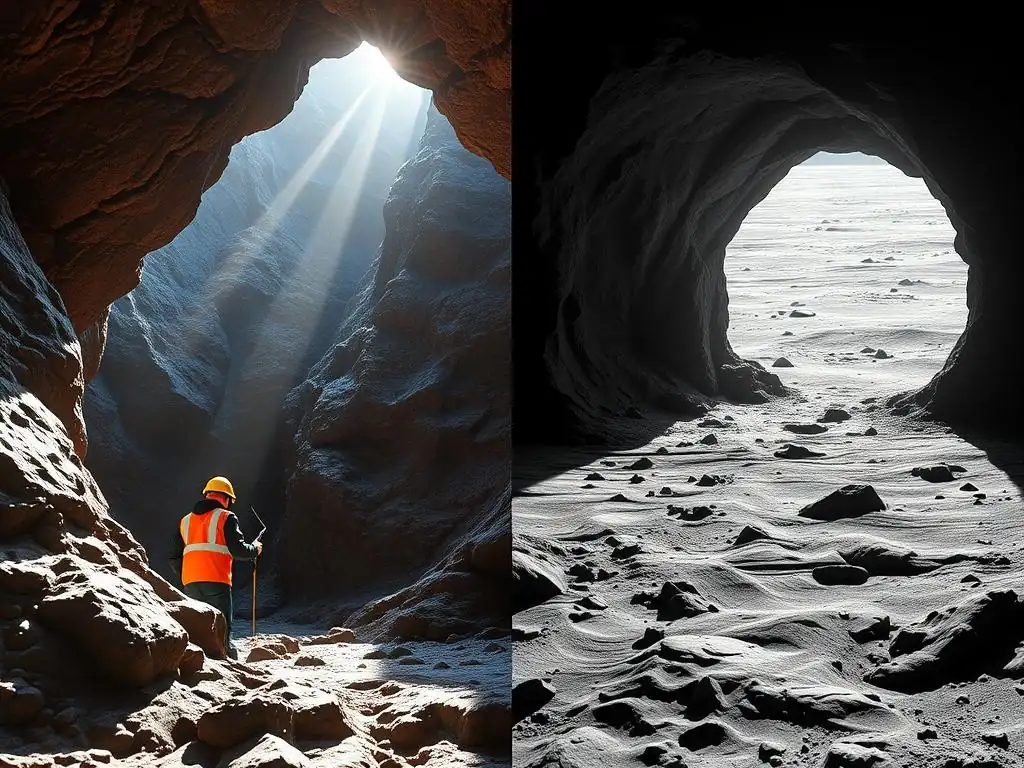
To illustrate the connection between Earth and lunar lava tubes, examining specific examples on both bodies is highly informative. Earth's Kazumura Cave serves as a detailed case study of a well-developed lava tube system, while the Marius Hills Hole exemplifies a potential lunar lava tube skylight.
Kazumura Cave (Hawaii): A Detailed Case Study
Kazumura Cave in Hawaii is one of the longest and deepest known lava tubes on Earth. Located on the Kilauea volcano, it formed within a pāhoehoe lava flow approximately 500 to 600 years ago. This extensive cave system provides a remarkable example of lava tube morphology, internal features, and geological complexity. Kazumura Cave features multiple levels, large chambers, and intricate networks of passages extending over 65 kilometers.
Inside, researchers have documented diverse geological formations, including lava falls, benches, pillars, and various lava decorations like stalactites and stalagmites. The cave's size and complexity highlight the potential scale and intricacy of lava tube systems that can form on volcanic planets. Studying Kazumura Cave provides valuable insights into lava tube formation processes, internal structure, and the long-term stability of these underground environments, directly applicable to understanding potential lunar lava tubes.
Marius Hills Hole: What We Could Find
The Marius Hills Hole is a prominent lunar skylight located in the Marius Hills region on the near side of the Moon. Discovered in images from the Japanese SELENE (Kaguya) lunar orbiter, this pit crater is approximately 65 meters in diameter and estimated to be at least 80 meters deep, based on shadow analysis. It is strongly believed to be an opening into a lunar lava tube.
The Marius Hills region is characterized by volcanic domes and sinuous rilles, further supporting the presence of extensive subsurface lava tube systems. If explored, the Marius Hills Hole could provide direct access to a pristine lunar lava tube environment. Scientists hypothesize that such a lunar lava tube could contain undisturbed volcanic materials, offering valuable insights into lunar volcanic history.
Furthermore, it could reveal potential deposits of water ice or other volatile compounds trapped within the shielded subsurface environment. Exploring the Marius Hills Hole and similar lunar skylights is a high priority for future lunar missions, holding the promise of unlocking secrets about the Moon's geological past and paving the way for lunar habitation within the protection of lava tubes.
The Future of Lava Tube Research: Unveiling the Secrets of Earth and the Moon
The study of lava tubes, both on Earth and potentially on the Moon, is a burgeoning field with significant implications for planetary science and space exploration. Future research efforts are poised to further unveil the secrets of these fascinating subterranean worlds.
Future Missions and Technologies for Exploring Lava Tubes
Exploring lunar lava tubes presents significant technological challenges, but advancements are rapidly paving the way for future missions. Robotic missions are planned to descend into lunar skylights, using specialized rovers or tethered robots equipped with cameras, sensors, and geological instruments. These missions will aim to map the internal structure of lava tubes, analyze their composition, and search for resources like water ice.
Developing autonomous robots capable of navigating complex, dark, and potentially hazardous lava tube environments is crucial. Furthermore, advancements in remote sensing techniques, such as ground-penetrating radar and gravity gradiometry, will enhance our ability to detect and characterize subsurface lava tubes from orbit.
The long-term goal is to send human missions into lunar lava tubes, establishing research bases and potentially habitats within these naturally protected environments. These endeavors will not only advance our understanding of the Moon but also test technologies and strategies applicable to exploring lava tubes on Mars and other volcanic worlds.
The Role of Lava Tubes in Understanding Planetary Evolution
Lava tubes, both terrestrial and extraterrestrial, play a crucial role in understanding planetary evolution. On Earth, they provide insights into volcanic processes, geothermal systems, and even microbial life in extreme environments. On the Moon and Mars, lava tubes offer a window into the volcanic history of these bodies and the potential for past or present habitability.
Studying lunar lava tubes can reveal details about the Moon's thermal history, mantle composition, and volcanic outgassing. The potential presence of water ice within lunar lava tubes could provide clues about the delivery of volatiles to the Moon and the early solar system.
Furthermore, understanding the formation and stability of lava tubes on different planetary bodies helps us to generalize volcanic processes across the solar system and beyond. Lava tubes are not just geological curiosities; they are key archives of planetary history and potential havens for life, making their exploration a high priority in our quest to understand the cosmos.
Conclusion: Lava Tubes as Windows into Planetary Geology and Potential Lunar Habitats
Lava tubes, these subterranean pathways sculpted by volcanic fire, offer a compelling link between Earth and the Moon. While seemingly disparate worlds, both share this remarkable geological feature, highlighting the universality of volcanic processes in planetary formation. Earth's lava tubes serve as vital analogues for understanding the potential and characteristics of lunar lava tubes.
These lunar subsurface environments offer not only a window into the Moon's volcanic past but also a promising avenue for future lunar exploration and habitation. The natural shielding and stable environment within lunar lava tubes present significant advantages for establishing long-term human presence on the Moon, potentially revolutionizing our approach to space exploration and opening up new frontiers for scientific discovery and human settlement beyond Earth. The exploration of lava tubes, therefore, represents a critical step in unveiling the secrets of planetary geology and realizing the dream of a sustainable human presence amongst the stars.
Frequently Asked Questions
What are lava tubes, and why are they relevant to Mars?
Lava tubes are underground tunnels formed by flowing lava. They are relevant to Mars because they may exist there and could offer shelter from radiation and extreme temperatures for potential future human explorers or even existing microbial life.
How do lava tubes form on Earth, and would the process be similar on Mars?
On Earth, lava tubes form when the surface of a lava flow cools and hardens, creating a crust while molten lava continues to flow beneath. The process would likely be similar on Mars, although Martian gravity and atmosphere might influence the tube's size and shape.
What evidence suggests the existence of lava tubes on Mars?
Scientists have found sinuous rilles and collapsed pits on Mars that resemble features associated with lava tubes on Earth. These features are considered strong indicators of subsurface lava flow and potential tube formation.
Why are lava tubes considered important for potential future Martian colonization?
Lava tubes offer natural shielding from harmful radiation, micrometeorites, and extreme temperature fluctuations on the Martian surface. This makes them ideal candidates for long-term habitats for future human colonists.
How are scientists studying potential lava tubes on both Earth and Mars?
Scientists use techniques like ground-penetrating radar, satellite imagery analysis, and computer modeling to study lava tubes. Comparative studies of terrestrial lava tubes help them understand the formation and characteristics of potential Martian lava tubes.
Final Reflection: Echoes Across Worlds
The exploration of lava tubes, both on Earth and potentially on Mars, is more than just a scientific endeavor; it's a quest to understand the very origins and possibilities of life beyond our planet. The similarities between these subterranean formations on both worlds offer compelling evidence that Mars may have once harbored, or perhaps even continues to harbor, microbial life shielded from the harsh surface conditions.
The enduring allure of lava tubes lies in their potential as havens, not just for life, but also for future human exploration. This connection between our own planet's hidden landscapes and the potential for Martian colonization deeply resonates with our innate desire to explore and understand the universe. The important thing is not to stop questioning. Curiosity has its own reason for existing.
- Albert Einstein. This quote perfectly encapsulates the driving force behind our fascination with lava tubes and their implications for the search for life on Mars.
As we continue to unravel the mysteries of these subterranean worlds, let us remember that the lessons learned from Earth's lava tubes can guide our search for life beyond our planet and inform our plans for future exploration. Consider the implications of this research: what new perspectives does it offer on the potential for life in extreme environments, and how can we apply this knowledge to protect our own planet's fragile ecosystems? The future of space exploration, and perhaps even the discovery of extraterrestrial life, may very well lie beneath our feet, and on the surface of Mars.
Unearth Your Inner Explorer: Journey Beyond the Surface!
Thanks for exploring the fascinating world of lava tubes and their potential Martian counterparts! We hope you've gained a new appreciation for the hidden wonders beneath our feet and the insights they offer into other worlds. Now, let's turn that knowledge into action:
- Embark on a virtual exploration of a lava tube! Use online resources like 3D models and virtual tours to experience these subterranean marvels firsthand.
- Share this article with friends interested in space, geology, or both! Spark a conversation and spread the wonder of Earth's hidden planetary features.
- Discover local geological societies or caving clubs near you. You might be surprised to find opportunities for guided tours and a deeper understanding of your region's subterranean landscapes.
What questions about lava tubes and planetary geology remain after this exploration? Share your thoughts in the comments below!