
The Wildlife of Iceland's Volcanic Regions: Adapting to Extreme Environments

Welcome to Volcano Explorers!
Dare to venture into a realm where fire meets ice, and life finds a way against all odds? Today, we're turning our gaze to the extraordinary resilience of Wildlife in Iceland's Volcanoes. Discover how animals and plants have adapted to thrive in these seemingly inhospitable landscapes. Prepare to be amazed by the secrets hidden within Iceland's volcanic heart – but the real question is, what will you uncover?
- Introduction: Iceland's Unique Volcanic Landscapes and Their Inhabitants
- Adapting to Fire and Ice: Challenges for Wildlife in Volcanic Areas
- Avian Life Around Icelandic Volcanoes: Bird Species Thriving in Harsh Conditions
- Mammalian Survivors: Animals Adapting to Iceland's Volcanic Environment
- Invertebrates and Microbes: The Foundation of Life in Volcanic Ecosystems
- Conservation Efforts: Protecting Wildlife in Iceland's Volcanic Landscapes
- Observing Wildlife Safely: Tips for Volcano Explorers
- Conclusion: The Enduring Resilience of Iceland's Volcanic Wildlife
-
Frequently Asked Questions
- What types of animals have adapted to survive in Iceland's volcanic regions?
- How does volcanic activity impact the habitats of wildlife in Iceland?
- What specific adaptations do birds in Icelandic volcanic regions possess?
- Are there any endangered species that rely on habitats within Iceland's volcanic regions?
- How can people help protect wildlife in Iceland's volcanic areas?
- Final Reflection: Resilience in the Face of Fire
- Ignite Your Inner Explorer: Venture Deeper into Iceland's Wild Heart!
Introduction: Iceland's Unique Volcanic Landscapes and Their Inhabitants
Iceland, the land of fire and ice, presents a dramatic tapestry of landscapes shaped by intense volcanic activity and glacial forces. This Nordic island nation, straddling the Mid-Atlantic Ridge, is a geological marvel, boasting active volcanoes, vast lava fields, geothermal areas, and glacial rivers. Despite the seemingly harsh and volatile nature of these environments, Iceland teems with a surprisingly diverse array of wildlife.
From resilient bird species nesting on precarious cliffs to hardy mammals navigating lava fields, and even microscopic life thriving in geothermal hot springs, Iceland's volcanic regions are home to creatures that have ingeniously adapted to survive and even flourish in these extreme conditions. This article delves into the fascinating world of wildlife in Iceland's volcanoes, exploring the unique adaptations that allow these animals to not only endure but thrive in one of Earth's most dynamic geological settings.
Adapting to Fire and Ice: Challenges for Wildlife in Volcanic Areas
The volcanic landscapes of Iceland pose a unique set of challenges for wildlife. The constant threat of volcanic eruptions, with their associated lava flows, ashfalls, and gas emissions, can drastically alter habitats in a short span of time. Volcanic eruptions can directly destroy vegetation and displace animal populations.
Ashfall, while potentially enriching soil in the long term, can initially suffocate plants and contaminate water sources, impacting food availability for herbivores and subsequently carnivores. Geothermal areas, while providing warmth in a cold climate, present their own set of challenges with extreme temperatures and chemically unique water sources.
Furthermore, the rugged terrain of lava fields and volcanic highlands, characterized by sharp rocks, limited vegetation in some areas, and unpredictable weather patterns, demands remarkable resilience and adaptability from the animals that call these places home. Despite these obstacles, Icelandic wildlife has developed remarkable strategies to overcome these environmental hurdles, demonstrating nature's incredible capacity for adaptation even in the face of seemingly insurmountable odds.
Avian Life Around Icelandic Volcanoes: Bird Species Thriving in Harsh Conditions
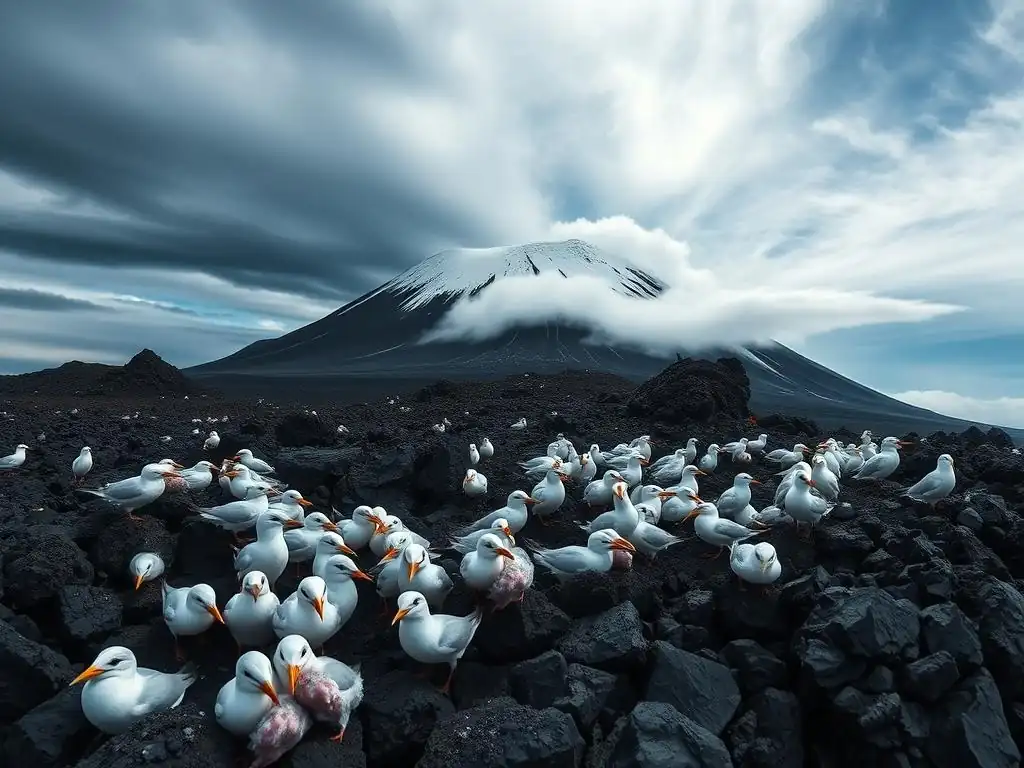
Iceland's volcanic regions, despite their dramatic nature, are surprisingly rich in avian life. Birds have evolved a range of adaptations to thrive in these challenging environments, utilizing volcanic cliffs for nesting, exploiting geothermal warmth, and finding sustenance in the unique ecosystems that develop in volcanic areas.
From small, ground-dwelling birds camouflaged against volcanic rocks to large seabirds colonizing coastal cliffs, the wildlife in Iceland's volcanoes includes a diverse array of avian species that have carved out a niche in this dramatic landscape. Many birds are migratory, taking advantage of the abundant summer resources and then leaving during the harsh winter months, while others are year-round residents, showcasing remarkable hardiness.
The Ptarmigan: Masters of Camouflage in Volcanic Terrain
The Rock Ptarmigan ( Lagopus muta) is a quintessential example of a bird perfectly adapted to Iceland's volcanic terrain. This medium-sized grouse is a year-round resident of Iceland, and its survival strategy heavily relies on camouflage. In the summer, the ptarmigan's plumage is mottled brown and grey, blending seamlessly with the lichen-covered volcanic rocks and sparse vegetation of the highlands. As winter approaches and snow blankets the landscape, the ptarmigan undergoes a dramatic molt, transforming its plumage to pure white, rendering it virtually invisible against the snowy backdrop. This seasonal camouflage is crucial for avoiding predators such as Arctic foxes and gyrfalcons, which are also part of the wildlife in Iceland's volcanoes. Ptarmigans feed on buds, berries, seeds, and insects, finding sustenance even in the relatively barren volcanic highlands. Their ability to withstand harsh weather conditions and blend into their surroundings makes them a successful resident of Iceland's volcanic regions.
The Great Skua: A Predatory Bird of the Volcanic Highlands
The Great Skua ( Stercorarius skua) is a powerful and opportunistic seabird that breeds in Iceland, often in coastal and highland volcanic areas. Known for its aggressive behavior, the Great Skua is a formidable predator and kleptoparasite, meaning it steals food from other birds. These large birds, with wingspans reaching up to 140 cm, are often seen patrolling territories in the vicinity of seabird colonies or inland lakes, preying on smaller birds, eggs, and chicks.
They are also known to harass gulls and terns, forcing them to regurgitate their catches, which the skua then readily consumes. In the volcanic highlands, Great Skuas may nest on the ground, utilizing the sparse vegetation for cover.
Their predatory prowess and adaptability allow them to thrive in the volcanic environment, playing a significant role in the food web of wildlife in Iceland's volcanoes. Population estimates suggest several thousand pairs breed in Iceland annually, highlighting their successful adaptation to the island's conditions.
Seabirds Nesting on Volcanic Cliffs: Puffins, Guillemots, and Razorbills
Iceland's volcanic coastlines, characterized by dramatic cliffs and sea stacks, provide ideal nesting habitats for a variety of seabirds. These cliffs, often formed from volcanic rock, offer protection from terrestrial predators and easy access to the rich feeding grounds of the North Atlantic. Among the most iconic seabirds found in these volcanic areas are Atlantic Puffins ( Fratercula arctica), Common Guillemots ( Uria aalge), and Razorbills ( Alca torda).
Puffins, with their brightly colored beaks, nest in burrows in grassy clifftops, often in massive colonies. Guillemots and Razorbills, on the other hand, are cliff-nesting specialists, laying their eggs directly on narrow ledges on sheer rock faces. These seabirds are highly adapted to marine life, feeding primarily on fish and crustaceans.
The volcanic cliffs of Iceland are crucial breeding grounds for these species, supporting millions of individuals and making Iceland a globally significant location for seabird wildlife. For example, Iceland hosts approximately 60% of the global Atlantic Puffin population, a testament to the suitability of its volcanic coastlines for these birds.
Mammalian Survivors: Animals Adapting to Iceland's Volcanic Environment
While Iceland's avian fauna is prominent, mammals also play a crucial role in the wildlife in Iceland's volcanoes. Although the number of native terrestrial mammal species is relatively low, those present have demonstrated remarkable adaptability to the challenging volcanic environment. From resourceful Arctic foxes scavenging in lava fields to introduced reindeer grazing in geothermal areas and seals thriving along volcanic coastlines, these mammals showcase diverse strategies for survival in this dynamic landscape. Their presence highlights the resilience of mammalian life even in environments shaped by powerful geological forces.
Arctic Foxes: Resourceful Scavengers in Volcanic Regions
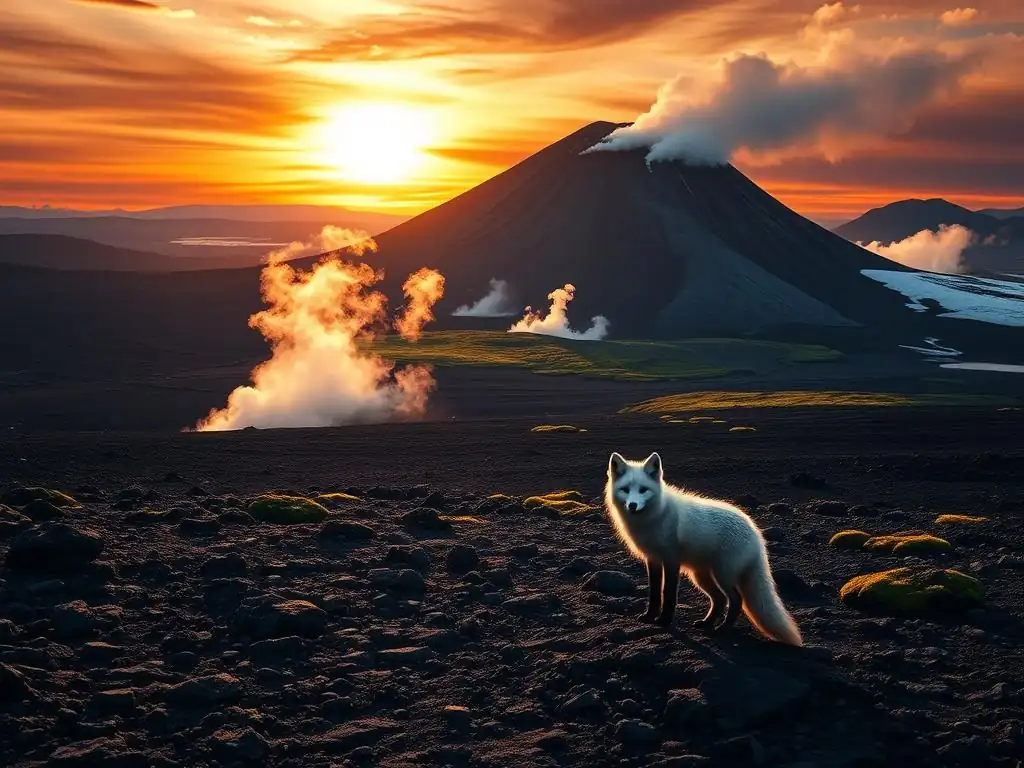
The Arctic Fox ( Vulpes lagopus) is Iceland's only native land mammal and a quintessential example of wildlife adapting to extreme conditions. These highly adaptable canids are found throughout Iceland, including volcanic regions, where they demonstrate remarkable resourcefulness. Arctic foxes exhibit seasonal coat color changes, with a blue-grey or brown coat in summer transitioning to white in winter, providing camouflage in both snow-free and snow-covered volcanic landscapes.
They are opportunistic omnivores, feeding on a wide variety of food sources, including rodents, birds, eggs, berries, and carrion. In volcanic areas, they may scavenge for scraps around geothermal areas, prey on seabird chicks near coastal cliffs, or hunt small mammals in vegetated patches within lava fields. Arctic foxes are also known to follow polar bears onto sea ice in winter to scavenge from their kills, although this is less common in Iceland.
Their adaptability, dietary flexibility, and thick fur enabling them to withstand harsh weather conditions make them successful inhabitants of Iceland's volcanic regions. Population estimates suggest several thousand Arctic foxes inhabit Iceland, demonstrating their resilience and widespread distribution.
Reindeer in Iceland's Volcanic Highlands: Grazing in Geothermal Areas
Reindeer ( Rangifer tarandus) are not native to Iceland but were introduced in the late 18th century. Despite being introduced, they have successfully established themselves, primarily in the eastern highlands, which include volcanic areas. These large herbivores are well-adapted to cold climates and are capable of surviving in the harsh conditions of Iceland's volcanic highlands.
Reindeer graze on grasses, lichens, and mosses, finding sustenance even in areas with sparse vegetation. Interestingly, they are known to utilize geothermal areas, especially in winter, as these locations often have less snow cover and slightly warmer temperatures, providing access to forage that would otherwise be buried.
While reindeer populations are managed in Iceland, their presence in volcanic regions highlights the potential for large herbivores to adapt to and even benefit from certain aspects of volcanic landscapes, such as geothermal warmth. Current populations are estimated to be around a few thousand individuals, concentrated in eastern Iceland.
Seals Around Volcanic Coastlines: A Thriving Marine Mammal Population
Iceland's volcanic coastlines are not only important for seabirds but also support a thriving population of seals. Harbor Seals ( Phoca vitulina) and Grey Seals ( Halichoerus grypus) are the most common seal species found around Iceland, and they frequently haul out on rocky shores, including those of volcanic origin. Seals are well-adapted to marine life, spending a significant portion of their time in the water hunting fish, crustaceans, and squid.
They come ashore to rest, molt, and breed. Volcanic coastlines, with their rugged and often inaccessible shores, provide suitable haul-out sites, offering protection from terrestrial predators and rough weather. The nutrient-rich waters surrounding Iceland, influenced by ocean currents and upwelling, support abundant fish populations, providing ample food for seals.
Seal populations in Iceland are relatively healthy, indicating their successful adaptation to the coastal environment, including volcanic regions. Estimates suggest tens of thousands of harbor seals and grey seals inhabit Icelandic waters, contributing significantly to the wildlife ecosystem.
Invertebrates and Microbes: The Foundation of Life in Volcanic Ecosystems
While larger animals are more visible, invertebrates and microbes form the foundation of life in Iceland's volcanic ecosystems. These often-overlooked organisms play critical roles in nutrient cycling, soil formation, and supporting the food web. From microscopic bacteria and archaea thriving in geothermal hot springs to insects and spiders adapted to volcanic soils and climates, these smaller creatures are essential components of the wildlife in Iceland's volcanoes. Their diversity and adaptations are crucial for understanding the functioning of these unique ecosystems.
The Role of Bacteria and Archaea in Geothermal Areas
Geothermal areas, common in Iceland's volcanic regions, are hotspots of microbial life. Bacteria and archaea, often referred to as extremophiles, are uniquely adapted to thrive in the extreme temperatures and chemical conditions of hot springs, fumaroles, and geysers. These microorganisms are chemosynthetic, meaning they derive energy from chemical reactions, often utilizing compounds like sulfur, hydrogen sulfide, or methane found in geothermal fluids.
They form the base of the food web in these unique ecosystems, supporting other organisms that can tolerate these extreme conditions. For example, certain bacteria oxidize sulfur, producing energy and contributing to sulfur cycling in geothermal areas. Archaea, another domain of single-celled organisms, are also abundant and diverse in these environments, often playing roles in methane production or consumption.
These microbial communities are not only fascinating in their own right but also play a critical role in the biogeochemical cycles of volcanic landscapes, influencing the availability of nutrients and shaping the overall ecosystem. Research into these microbial communities is ongoing, revealing new species and uncovering their diverse metabolic capabilities.
Insects and Spiders: Adapting to Volcanic Soils and Climate
Despite the challenging conditions, insects and spiders are also part of the wildlife in Iceland's volcanoes. These invertebrates have adapted to the volcanic soils, often young and nutrient-poor, and the cool, windy climate of Iceland. Species found in volcanic regions often exhibit adaptations such as dark coloration for absorbing solar radiation, reduced wings or winglessness to avoid being blown away by wind, and tolerance to temperature fluctuations.
For example, certain species of midges and flies are found around geothermal areas, exploiting the warmer temperatures and sometimes even feeding on microbial mats. Spiders, often ground-dwelling, prey on insects and other small invertebrates, playing a role in regulating insect populations.
While the diversity of insects and spiders in volcanic regions may be lower than in more temperate areas, those present are highly specialized and adapted to these specific conditions. Studies on insect diversity in Icelandic volcanic areas are contributing to our understanding of ecological adaptation and resilience in extreme environments.
Conservation Efforts: Protecting Wildlife in Iceland's Volcanic Landscapes
Iceland is committed to conservation, and efforts are in place to protect the unique wildlife in Iceland's volcanoes and their habitats. Vatnajökull National Park, for example, encompasses a vast area of volcanic landscape and glaciers, providing protection for a wide range of species, including Arctic foxes, reindeer, and various bird species. Regulations are in place to manage tourism and minimize disturbance to sensitive ecosystems, such as seabird colonies and geothermal areas.
Monitoring programs track populations of key species, such as puffins and Arctic foxes, to assess their status and inform conservation strategies. International collaborations also play a role in conservation efforts, particularly for migratory bird species.
Sustainable tourism practices are promoted to ensure that visitors can enjoy Iceland's natural beauty without negatively impacting its wildlife. Balancing human activities with the need to protect these unique and vulnerable ecosystems is an ongoing challenge, but Iceland is actively working towards preserving its natural heritage for future generations.
Observing Wildlife Safely: Tips for Volcano Explorers
For those venturing into Iceland's volcanic regions to observe wildlife, safety and responsible behavior are paramount. Always respect wildlife and maintain a safe distance, avoiding disturbance to nesting birds, seals, or other animals. Stick to marked trails and avoid venturing into fragile habitats, especially in geothermal areas.
Be aware of potential volcanic hazards, such as gas emissions or unstable ground, and heed any warnings or closures. Dress appropriately for changeable weather conditions, as volcanic regions can experience rapid shifts in temperature and wind. Carry binoculars and field guides to enhance your wildlife viewing experience.
When photographing wildlife, use telephoto lenses to avoid getting too close and causing stress to animals. Remember that you are a visitor in their habitat, and your actions should minimize your impact on the delicate balance of these volcanic ecosystems. By practicing responsible wildlife observation, you can contribute to the conservation of these remarkable creatures and their unique environment.
Conclusion: The Enduring Resilience of Iceland's Volcanic Wildlife
The wildlife in Iceland's volcanoes stands as a testament to the remarkable resilience and adaptability of life on Earth. From birds mastering camouflage and exploiting geothermal warmth to mammals navigating lava fields and microbes thriving in boiling hot springs, the creatures inhabiting these extreme environments have evolved ingenious strategies for survival. Despite the ongoing volcanic activity and challenging conditions, Iceland's volcanic regions are far from barren; they are vibrant ecosystems teeming with life.
The ongoing conservation efforts are crucial to ensuring that this unique wildlife continues to thrive and that future generations can marvel at the enduring resilience of life in the land of fire and ice. The story of wildlife in Iceland's volcanoes is a powerful reminder of nature's capacity to adapt and flourish even in the most dramatic and dynamic landscapes on our planet.
Frequently Asked Questions
What types of animals have adapted to survive in Iceland's volcanic regions?
Many hardy species like arctic foxes, various bird species (particularly seabirds), and even some insects have found ways to thrive in these seemingly inhospitable areas. They've adapted to the unique challenges these environments present.
How does volcanic activity impact the habitats of wildlife in Iceland?
Volcanic eruptions can cause short-term destruction of habitats through lava flows, ashfall, and gas emissions. However, over time, volcanic landscapes can also create new habitats and nutrient-rich soils.
What specific adaptations do birds in Icelandic volcanic regions possess?
Seabirds nesting on volcanic cliffs often have adaptations for strong winds and limited vegetation. Some, like puffins, are adapted to burrowing in the volcanic soil.
Are there any endangered species that rely on habitats within Iceland's volcanic regions?
While not directly relying solely on volcanic regions, some endangered species, such as certain migratory birds, may use these areas for nesting or foraging, making these habitats important for their survival.
How can people help protect wildlife in Iceland's volcanic areas?
By respecting wildlife habitats, following designated trails, and minimizing their impact on the environment, visitors can help protect these fragile ecosystems. Supporting sustainable tourism practices is also crucial.
Final Reflection: Resilience in the Face of Fire
The preceding exploration of Icelandic wildlife in volcanic regions underscores a vital truth: life finds a way, even in the most seemingly inhospitable environments. From hardy plants clinging to lava fields to resilient birds nesting near geothermal vents, the creatures of Iceland's volcanoes demonstrate an extraordinary capacity to adapt and thrive, a testament to the power of nature's ingenuity.
The enduring presence of wildlife in these extreme landscapes has profoundly shaped our understanding of resilience and adaptation. Witnessing these animals overcome such challenges inspires a deeper appreciation for the delicate balance of ecosystems and the importance of conservation efforts. The resilience of nature is often underestimated, but it is this very resilience that allows life to persist even in the face of adversity.
This observation reminds us that even amidst destruction, the seeds of renewal are always present.
As we conclude this journey into the heart of Iceland's volcanic wildlife, let us carry forward the lessons learned. Consider the adaptability and tenacity displayed by these creatures, and ask yourself: how can you cultivate similar resilience in your own life, facing your own challenges with the same unwavering spirit? Let the wildlife of Iceland's volcanoes inspire you to embrace change, overcome obstacles, and find strength in the face of adversity.
Ignite Your Inner Explorer: Venture Deeper into Iceland's Wild Heart!
Thanks for joining us on this journey into the resilient world of Icelandic wildlife! We hope you've discovered the amazing adaptations that allow these creatures to thrive in such a unique volcanic landscape. Now, it's time to take your newfound knowledge and turn it into action!
Here are a few ways to keep exploring:
- Embark on a virtual photo safari of Iceland's volcanic regions. Search for stunning images of the animals we've discussed and share your favorites with friends and family! This will deepen your connection with their environment and inspire others to appreciate their remarkable endurance.
- Delve deeper by researching a specific species mentioned in the article. Learn about its unique evolutionary history and adaptations, and then find out if conservation efforts are in place to protect it.
- Consider supporting organizations dedicated to preserving Iceland’s unique ecosystem. Even a small donation can make a big difference! And, if you are planning a trip, remember to respect the animals and their habitats!
What fascinating aspect of Iceland's volcanic wildlife has sparked your curiosity, and where will your explorations lead you next? Share your thoughts in the comments below!