
The Krakatoa Paradox: Beauty and Destruction in a Single Eruption

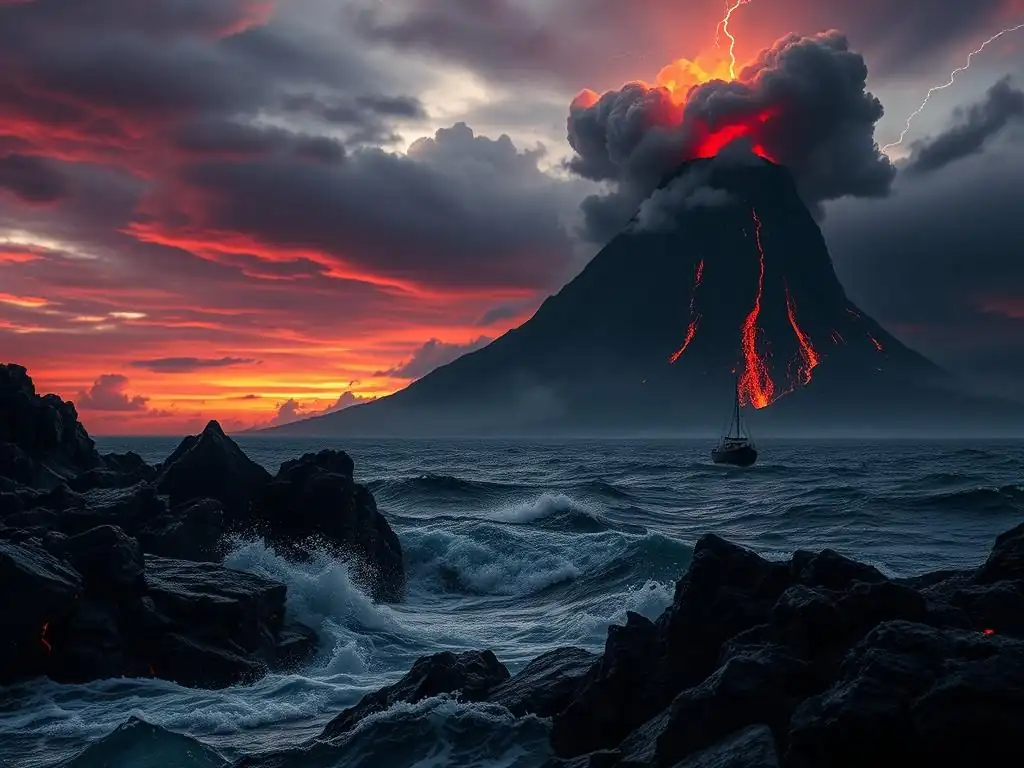
Welcome to Volcano Explorers!
Prepare to be captivated by the raw power and breathtaking beauty of volcanoes. Unearth the secrets hidden within molten rock and shifting tectonic plates. Are you ready to explore the Krakatoa eruption impact analysis and discover how this cataclysmic event continues to shape our understanding of volcanic forces? The paradox of destruction and creation awaits... delve deeper.
- Introduction: Krakatoa's Dual Legacy - Beauty and Devastation
- Krakatoa 1883: A Volcanic Eruption of Unprecedented Scale
- Krakatoa Eruption Impact Analysis: A Multifaceted Examination
- The Krakatoa Eruption's Environmental Consequences: Reshaping the Landscape
- Societal and Cultural Reflections of the Krakatoa Eruption
- Analyzing the Krakatoa Eruption: Lessons Learned for Volcanology
- The Paradox of Krakatoa: Beauty Amidst Destruction
- Conclusion: The Enduring Legacy of Krakatoa
-
Frequently Asked Questions
- What were the most significant immediate impacts of the Krakatoa eruption?
- How did the Krakatoa eruption impact global climate?
- What role did Krakatoa play in the development of volcanology as a science?
- What is the "Krakatoa Paradox" as mentioned in the article?
- What safety measures are recommended for people living near potentially active volcanoes like Krakatoa?
- Final Reflection: Echoes of Krakatoa's Legacy
Introduction: Krakatoa's Dual Legacy - Beauty and Devastation
The name Krakatoa evokes images of both breathtaking sunsets and catastrophic destruction. This volcanic island, nestled in the Sunda Strait between Java and Sumatra, Indonesia, is synonymous with one of the most violent volcanic eruptions in recorded history.
The 1883 eruption of Krakatoa was not just a geological event; it was a global spectacle that showcased the raw, untamed power of nature, leaving an indelible mark on the world's collective memory. While the eruption caused immense devastation and loss of life, it also presented a dramatic demonstration of Earth's dynamic processes, captivating scientists and the public alike, and ultimately contributing significantly to the field of volcanology.
Krakatoa's legacy is paradoxical. On one hand, it represents unimaginable destruction: the obliteration of an island, the generation of deadly tsunamis, and a global atmospheric disturbance. On the other hand, it is a testament to nature's resilience and creative force. The very forces that caused such destruction also led to the formation of new geological features and spurred ecological renewal. The story of Krakatoa is a powerful narrative of both devastation and regeneration, a dramatic illustration of the delicate balance between beauty and destruction inherent in volcanic phenomena.
Krakatoa 1883: A Volcanic Eruption of Unprecedented Scale
The Cataclysmic Event: Detailing the Krakatoa Eruption
The eruption of Krakatoa in 1883 culminated in a series of colossal explosions on August 26th and 27th. The climactic explosion on August 27th is estimated to have been equivalent to 200 megatons of TNT, making it four times more powerful than the Tsar Bomba, the largest thermonuclear weapon ever detonated.
This VEI 6 eruption obliterated most of the island of Krakatoa, sending cubic miles of rock, ash, and pumice high into the atmosphere. The sound of the eruption was heard thousands of miles away, as far as Rodriguez Island near Madagascar, approximately 4,800 kilometers (3,000 miles) distant, a testament to its extraordinary power and the immense energy released.
The eruption was not a singular event but a sequence of escalating volcanic activity. Months prior, in May 1883, steam and ash venting began at Perboewatan, the northernmost of Krakatoa's three cones. This activity intensified throughout the summer, culminating in the paroxysmal explosions of late August.
The geological setting of Krakatoa, situated in a volcanic arc where the Indo-Australian Plate subducts beneath the Eurasian Plate, provided the tectonic framework for such a powerful eruption. The interaction of seawater with magma within the volcanic conduit is believed to have contributed significantly to the explosive nature of the eruption, a process known as phreatomagmatic activity.
Precursors to Disaster: Signs Before the 1883 Krakatoa Eruption
While the final eruption seemed sudden to many, there were indeed precursors to the cataclysmic events of 1883. Local inhabitants reported increased seismic activity and rumbling sounds emanating from Krakatoa in the months leading up to the major eruption. In May, ships passing through the Sunda Strait reported seeing plumes of steam and ash rising from the volcano, confirming the initial phase of renewed volcanic activity. These early signs, while perhaps not fully understood or heeded at the time due to limited scientific understanding and communication infrastructure, were clear indicators of escalating volcanic unrest.
The Dutch colonial authorities in Batavia (present-day Jakarta) did investigate reports of increased volcanic activity. However, the remote location of Krakatoa and the limited volcanological knowledge of the time hindered a full appreciation of the escalating danger. Routine surveys were conducted, and reports were filed, but the scale of the impending disaster was likely underestimated.
This highlights the challenges faced in predicting and responding to volcanic eruptions, especially in remote areas, even when some precursory signs are present. The Krakatoa case underscores the importance of continuous monitoring and improved communication in volcanic regions, lessons that are crucial for modern volcanic hazard mitigation.
Krakatoa Eruption Impact Analysis: A Multifaceted Examination
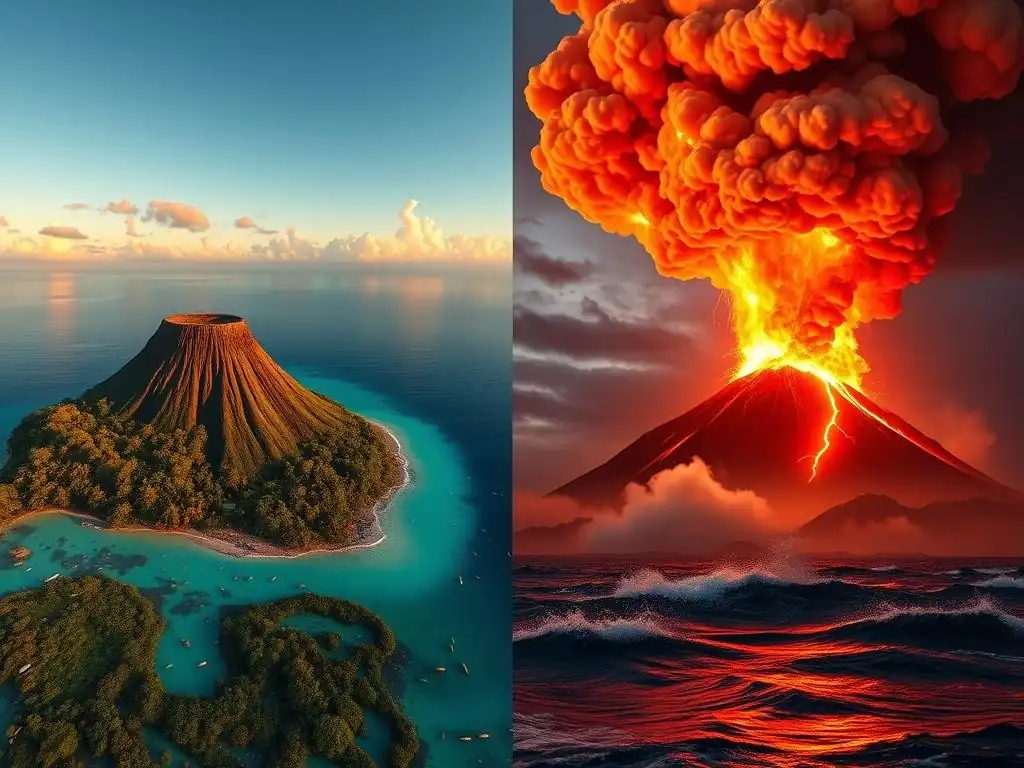
Immediate Impact of the Krakatoa Explosion: Tsunamis and Pyroclastic Flows
The most devastating immediate impacts of the Krakatoa eruption were the tsunamis and pyroclastic flows it generated. The colossal explosions displaced an enormous volume of water, creating massive tsunamis that radiated outwards from Krakatoa. These waves, reaching heights of up to 46 meters (150 feet) in some coastal areas, devastated coastlines in Java and Sumatra. The tsunamis were responsible for the vast majority of the estimated 36,000 fatalities attributed to the eruption, inundating coastal towns and villages with destructive force.
Pyroclastic flows, fast-moving currents of hot gas and volcanic debris, also played a significant role in the immediate destruction. Although less geographically widespread than the tsunamis, these flows incinerated everything in their path on Krakatoa and surrounding islands. The intense heat and velocity of pyroclastic flows make them incredibly lethal, capable of destroying infrastructure and causing complete devastation in affected areas. The combination of tsunamis and pyroclastic flows created a catastrophic scenario, making the immediate aftermath of the Krakatoa eruption a scene of widespread death and destruction across the region.
The Sound Heard Around the World: Acoustic Waves from Krakatoa
Perhaps the most globally remarkable aspect of the Krakatoa eruption was the sound. The climactic explosion generated an acoustic wave that traveled around the Earth multiple times. Barographs, instruments designed to measure atmospheric pressure, recorded the pressure wave as it propagated across the globe. The sound was reportedly heard as far away as Rodriguez Island in the Indian Ocean and Alice Springs in central Australia, and even in locations as distant as London and New York, though these latter reports are debated and may refer to atmospheric pressure changes rather than audible sound.
The intensity and global reach of the Krakatoa eruption's sound wave provided unprecedented insights into atmospheric science at the time. Scientists meticulously analyzed barograph readings from around the world, using this data to study the propagation of sound waves over long distances and to understand atmospheric conditions at different altitudes. The Krakatoa eruption effectively transformed the Earth's atmosphere into a giant laboratory, allowing for groundbreaking research on acoustics and atmospheric dynamics. This event underscored the interconnectedness of the planet and the far-reaching consequences of major geophysical events.
Global Climatic Effects: Volcanic Winter After Krakatoa
The Krakatoa eruption injected vast quantities of sulfur dioxide gas high into the stratosphere. This gas reacted with water vapor to form sulfate aerosols, tiny particles that reflect sunlight back into space. This phenomenon resulted in a noticeable decrease in global average temperatures in the years following the eruption, a period often referred to as a "volcanic winter". Global temperatures are estimated to have decreased by as much as 1.2 degrees Celsius (2.2 degrees Fahrenheit) in 1884, with effects lasting for several years.
The volcanic aerosols also caused spectacular sunsets and sunrises around the world for months and even years after the eruption. The aerosols scattered sunlight, particularly at longer wavelengths, leading to vivid red and orange hues in the sky.
These dramatic atmospheric effects were widely reported and depicted in paintings and literature of the time, serving as a constant reminder of the distant volcanic cataclysm. The Krakatoa eruption provided a clear and dramatic example of how volcanic eruptions can influence global climate, a concept that is now central to understanding Earth's climate system and the potential impacts of large volcanic events.
The Krakatoa Eruption's Environmental Consequences: Reshaping the Landscape
Island Remnants: The Formation of Anak Krakatau
The 1883 eruption dramatically reshaped the Krakatoa archipelago. The main island of Krakatoa was largely destroyed, leaving behind only remnants of Rakata, the southernmost cone. However, the story of Krakatoa did not end with destruction. In 1927, a new volcanic island emerged from the caldera formed by the 1883 eruption. This new island, named Anak Krakatau, meaning "Child of Krakatoa," represents the ongoing volcanic activity in the region and the Earth's continuous process of creation and destruction.
Anak Krakatau has grown steadily since its emergence, becoming a significant volcanic feature in its own right. Its growth provides volcanologists with a unique opportunity to study the formation and evolution of a new volcanic island in real-time. The island has experienced periods of both effusive and explosive eruptions, demonstrating the dynamic nature of volcanic processes. Anak Krakatau serves as a living laboratory for studying volcanic island formation and the interplay between geological forces and ecological succession.
Ecological Recovery: The Return of Life to Krakatoa
Despite the devastating eruption, the Krakatoa islands became a remarkable case study in ecological recovery. The eruption effectively sterilized the islands, removing all existing life. However, within years, life began to return, demonstrating nature's resilience and the processes of ecological succession. Seeds and spores, carried by wind and ocean currents, gradually colonized the barren landscape. Scientists meticulously documented the recolonization process, observing the arrival of plants, insects, birds, and other animals.
The Krakatoa islands have become a classic example of primary succession, the ecological process by which life re-establishes itself in a previously barren environment. The relatively isolated location of the islands and the well-documented history of the eruption have made them a valuable natural laboratory for ecological research. Studies on Krakatoa have provided crucial insights into dispersal mechanisms, colonization patterns, and the factors that influence biodiversity in newly formed ecosystems. The ecological recovery of Krakatoa stands as a powerful symbol of nature's capacity for renewal even after catastrophic events.
Societal and Cultural Reflections of the Krakatoa Eruption
Eyewitness Accounts: Personal Stories of the Krakatoa Disaster
The Krakatoa eruption generated numerous eyewitness accounts, providing poignant personal perspectives on the disaster. Letters, diaries, and official reports from survivors and those who witnessed the events offer vivid descriptions of the explosions, tsunamis, and the aftermath. These accounts, often filled with terror and grief, paint a human picture of the devastation, highlighting the immense suffering and resilience of those affected. For instance, accounts from coastal residents describe the sudden arrival of massive waves, sweeping away homes and entire villages with little warning.
These personal narratives are invaluable for understanding the human impact of the Krakatoa eruption. They go beyond scientific data and statistics to convey the lived experiences of individuals caught in the disaster. Eyewitness accounts not only document the physical destruction but also capture the emotional and psychological toll of such a catastrophic event. They serve as a reminder of the human cost of natural disasters and the importance of disaster preparedness and community resilience.
The Krakatoa Eruption in Art and Literature: Cultural Interpretations
The Krakatoa eruption profoundly impacted art and literature, inspiring creative works that reflected on the event's magnitude and its implications. Paintings from the period often depicted the vibrant, unusual sunsets caused by the volcanic aerosols, capturing the eerie beauty that veiled the underlying disaster. Literary works, both contemporary and later, referenced Krakatoa as a symbol of nature's power, destruction, and the fragility of human existence.
The eruption entered the cultural consciousness as a metaphor for cataclysmic change and the forces beyond human control. It became a touchstone in discussions about natural disasters, scientific understanding, and the relationship between humanity and the environment. The enduring presence of Krakatoa in art and literature demonstrates the event's lasting cultural significance, extending far beyond its immediate geological and geographical context. It continues to inspire reflection on the power of nature and the human response to extreme events.
Long-Term Socioeconomic Effects: Impact on Regional Fishing Communities
The Krakatoa eruption had long-term socioeconomic consequences, particularly for regional fishing communities. The tsunamis destroyed fishing boats and infrastructure, and the ashfall and altered sea conditions disrupted marine ecosystems. Fishing, a vital livelihood for coastal communities in Java and Sumatra, was severely impacted for years following the eruption. The immediate losses and the long-term disruption to fish stocks created significant economic hardship and social disruption.
The recovery of fishing communities was a slow and challenging process. Rebuilding infrastructure, replacing lost boats, and adapting to altered marine environments required significant time and resources. The Krakatoa eruption serves as a stark reminder of the vulnerability of coastal communities to volcanic hazards and the long-lasting socioeconomic repercussions of such events. Analyzing the long-term impact on fishing communities provides valuable lessons for disaster recovery and sustainable development strategies in volcanically active regions.
Analyzing the Krakatoa Eruption: Lessons Learned for Volcanology
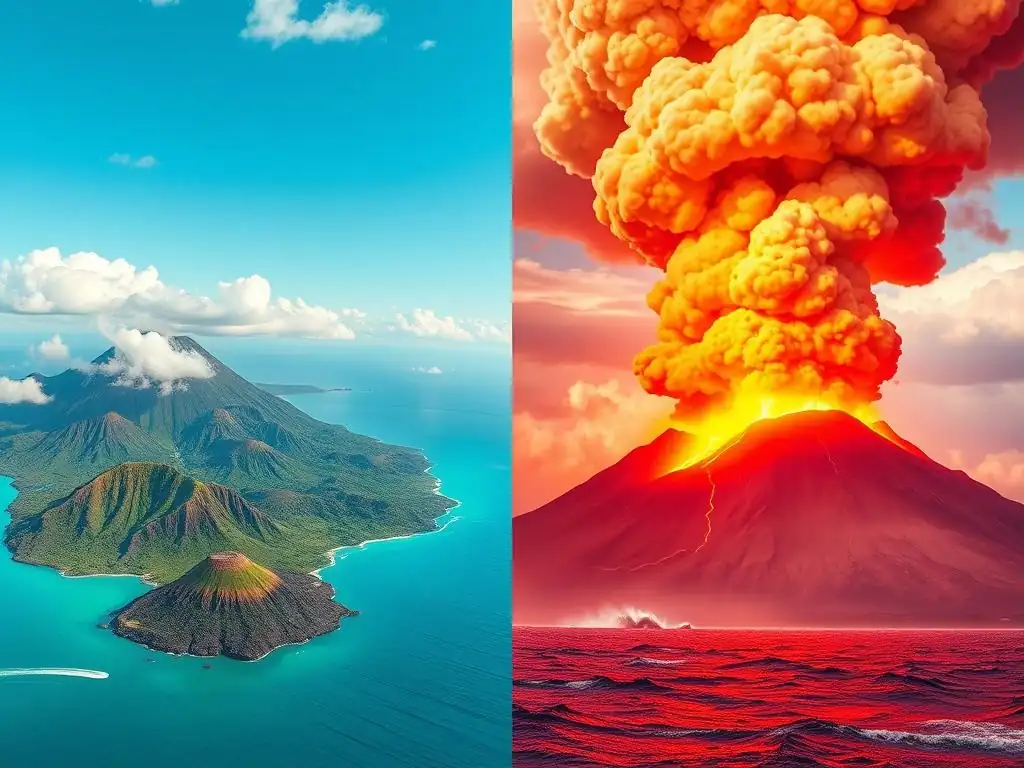
Studying Volcanic Hazards: Applying Krakatoa's Lessons to Modern Risk Assessment
The Krakatoa eruption provided invaluable lessons for the field of volcanology, significantly advancing our understanding of volcanic hazards and risk assessment. The scale of the eruption and its far-reaching impacts highlighted the need for improved monitoring, prediction, and mitigation strategies for volcanic disasters. The study of Krakatoa's eruption dynamics, tsunami generation, and atmospheric effects has informed modern volcanic hazard assessments worldwide.
The Krakatoa event underscored the importance of considering multiple volcanic hazards, including not only pyroclastic flows and ashfall but also tsunamis and long-range atmospheric effects. It emphasized the need for comprehensive risk assessments that take into account the potential for cascading hazards and their widespread impacts. Modern volcanology incorporates the lessons learned from Krakatoa to develop more robust hazard models, improve early warning systems, and enhance community preparedness in volcanically active regions globally.
Monitoring Volcanic Activity: Improved Seismographic Monitoring Techniques
The Krakatoa eruption spurred advancements in seismographic monitoring techniques. The global detection of the eruption's acoustic wave and seismic signals highlighted the potential of seismology for monitoring volcanic activity and detecting early signs of unrest. Following Krakatoa, there was increased investment in seismographic networks and the development of more sensitive instruments to detect subtle changes in ground deformation and seismic activity around volcanoes.
The lessons from Krakatoa contributed to the development of modern volcano monitoring systems that utilize a range of techniques, including seismology, gas monitoring, ground deformation measurements, and satellite observations. These integrated monitoring approaches allow volcanologists to detect subtle changes in volcanic behavior, improve eruption forecasting capabilities, and provide timely warnings to at-risk populations. The legacy of Krakatoa in the field of volcano monitoring continues to save lives and reduce the impact of volcanic eruptions around the world.
Understanding Eruption Dynamics: Modeling Volcanic Explosivity Index (VEI)
The Krakatoa eruption played a crucial role in the development and refinement of the Volcanic Explosivity Index (VEI). The VEI is a scale used to quantify the explosivity of volcanic eruptions, ranging from VEI 0 (non-explosive) to VEI 8 (extremely explosive). Krakatoa 1883 is classified as a VEI 6 eruption, serving as a benchmark for understanding and comparing the magnitude of different volcanic events. The detailed study of Krakatoa's eruption volume, plume height, and duration provided key data for calibrating the VEI scale and improving our understanding of eruption dynamics.
By studying the geological deposits and historical records of the Krakatoa eruption, volcanologists have been able to reconstruct the sequence of events, estimate the eruption's magnitude, and model the processes that led to its extreme explosivity. This research has contributed to a deeper understanding of the factors that control volcanic explosivity, including magma composition, gas content, and interaction with water. The Krakatoa eruption remains a key case study for understanding large explosive eruptions and for further refining models of volcanic explosivity.
The Paradox of Krakatoa: Beauty Amidst Destruction
The Awe-Inspiring Power of Volcanoes: A Perspective on Natural Forces
The Krakatoa eruption, despite its devastating consequences, serves as a powerful reminder of the awe-inspiring power of natural forces. Volcanoes, in their capacity to both create and destroy, embody the raw energy of the Earth. The immense scale of the Krakatoa eruption, from the sound waves that circled the globe to the climatic effects that altered sunsets worldwide, demonstrated the planet-shaping potential of volcanic activity. This perspective encourages a sense of humility and respect for the natural world, acknowledging forces far greater than human capabilities.
Witnessing the power of volcanoes, even indirectly through historical events like Krakatoa, can foster a deeper appreciation for the dynamic processes that shape our planet. It highlights the interconnectedness of Earth systems and the far-reaching consequences of geological events. Understanding the scale of volcanic eruptions can inspire both awe and caution, prompting a more responsible and sustainable approach to living in volcanically active regions.
The Allure of Volcanic Landscapes: Exploring Anak Krakatau Today
Despite the history of destruction, volcanic landscapes possess a unique and compelling allure. Anak Krakatau, the "Child of Krakatoa," stands as a testament to this allure. The island, constantly being reshaped by volcanic activity, offers a stark and dramatic beauty. Its black lava flows, steaming vents, and sparse vegetation create a landscape that is both otherworldly and captivating. Anak Krakatau attracts scientists, adventurers, and tourists alike, drawn to witness the ongoing geological processes and the raw power of nature.
Exploring Anak Krakatau today provides a tangible connection to the events of 1883 and the ongoing story of Krakatoa. It offers a unique opportunity to observe volcanic island formation firsthand and to witness the interplay between destruction and creation. The stark beauty of Anak Krakatau serves as a reminder that even in the wake of devastation, new beginnings and new landscapes can emerge, showcasing nature's resilience and creative force.
Coexistence with Volcanoes: Respecting Nature's Power and Beauty
The story of Krakatoa ultimately underscores the importance of coexistence with volcanoes. Volcanic regions are often areas of great natural beauty and fertile lands, supporting diverse ecosystems and human communities. However, living near volcanoes also entails inherent risks. The key to sustainable coexistence lies in respecting nature's power, understanding volcanic hazards, and implementing effective mitigation strategies.
Learning from the Krakatoa eruption, and similar volcanic events, is crucial for developing responsible approaches to living in volcanically active regions. This includes investing in volcano monitoring, developing early warning systems, promoting community preparedness, and implementing land-use planning that minimizes risk. By acknowledging and respecting the power and beauty of volcanoes, we can strive to coexist sustainably with these dynamic and often awe-inspiring natural features.
Conclusion: The Enduring Legacy of Krakatoa
The Krakatoa eruption of 1883 remains a pivotal event in both geological and human history. It was a cataclysm of immense destructive power, reshaping landscapes, altering global climate, and claiming tens of thousands of lives. Yet, from this devastation emerged new scientific understanding, ecological renewal, and a profound appreciation for the dynamic forces that shape our planet.
The paradox of Krakatoa lies in its dual legacy: a stark reminder of nature's destructive potential intertwined with the enduring beauty and creative power of volcanic processes. The lessons learned from Krakatoa continue to inform volcanology, disaster preparedness, and our understanding of the complex relationship between humanity and the natural world.
Frequently Asked Questions
What were the most significant immediate impacts of the Krakatoa eruption?
The immediate impacts included a devastating tsunami that killed tens of thousands, widespread destruction from pyroclastic flows, and darkness across the region due to ash.
How did the Krakatoa eruption impact global climate?
The eruption injected massive amounts of sulfur dioxide into the stratosphere, leading to a significant, albeit temporary, global cooling effect for several years. This affected weather patterns worldwide.
What role did Krakatoa play in the development of volcanology as a science?
The Krakatoa eruption served as a crucial case study for early volcanologists, providing valuable data and insights into volcanic processes, tsunami generation, and atmospheric impacts.
What is the "Krakatoa Paradox" as mentioned in the article?
The "Krakatoa Paradox" refers to the contrast between the destructive power of the eruption and the beauty of the volcanic landscapes and natural phenomena it created in its aftermath.
What safety measures are recommended for people living near potentially active volcanoes like Krakatoa?
Evacuation plans are crucial. Also, monitoring official alerts and being aware of potential hazards like lahars and ashfall are essential for communities near active volcanoes.
Final Reflection: Echoes of Krakatoa's Legacy
The analysis presented throughout this article underscores the enduring relevance of the Krakatoa eruption. Its impact, both immediate and long-term, continues to shape our understanding of volcanic activity and its profound influence on global climate and ecosystems. The Krakatoa eruption serves as a stark reminder of nature's raw power and the interconnectedness of our planet, demanding continued research and preparedness for future events of similar magnitude.
The Krakatoa eruption's influence extends far beyond the scientific realm, deeply impacting the cultural and social landscape of the time and even today. The stories, the art, and the scientific advancements that emerged in its wake serve as a testament to humanity's resilience and our capacity to learn from even the most devastating events. The eruption of Krakatoa was a pivotal moment in our understanding of the Earth's dynamic processes, forever changing how we perceive the relationship between humanity and the planet.
As we reflect on the Krakatoa eruption impact analysis, let us remember the lessons learned and the lives affected. Consider how this historical event informs our present-day approach to disaster preparedness and environmental stewardship. Let us strive to understand and respect the power of nature, working towards a future where we are better equipped to mitigate the risks and appreciate the beauty that exists even amidst destruction.
Okay, I'm ready. Now, provide me with the content of the web article you mentioned (The Krakatoa Paradox: Beauty and Destruction in a Single Eruption) so I can create a relevant and effective Call To Action. I need to understand the article's key themes and takeaways to craft a compelling CTA for Volcano Explorers. I will assume that the article talks about the 1883 eruption of Krakatoa, exploring both the catastrophic impact and the long-term ecological recovery and surprising beauty that followed.