
Volcanoes After Dark: The Magic of Night Hiking on Volcanic Terrain

Welcome to Volcano Explorers!
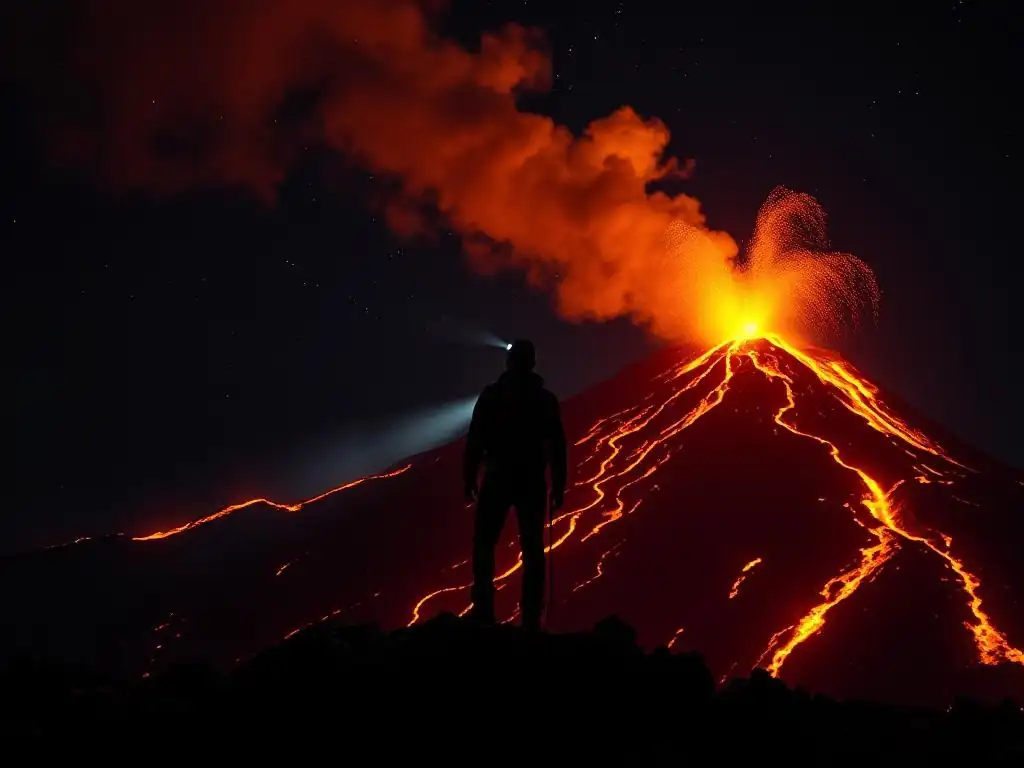
Ever wondered what secrets the fiery heart of the Earth whispers under the cloak of night? Prepare to be captivated. Our latest exploration delves into the extraordinary world of night hiking volcanic terrain. But be warned: the allure of a volcano after dark is as dangerous as it is breathtaking. Are you brave enough to uncover its mysteries? Keep reading to discover the magic, and the risks, that await.
- Exploring Volcanic Landscapes Under the Stars: An Introduction to Night Hiking
- The Allure of Night Hiking on Volcanic Terrain: Why Explore After Dark?
- Essential Gear for Safe Night Hiking on Volcanic Terrain
- Choosing the Right Volcanic Trail for Night Hiking
- Safety Precautions for Night Hiking on Volcanic Terrain
- Capturing the Beauty: Volcano Photography at Night
- Responsible Volcanic Tourism: Minimizing Your Impact
- The Best Volcanoes for Night Hiking Experiences Around the World
- Conclusion: Embracing the Adventure of Night Hiking on Volcanic Terrain
-
Frequently Asked Questions
- What are the biggest dangers of night hiking on volcanic terrain?
- What kind of gear is essential for night hiking on volcanic terrain?
- Are there specific volcanic hazards that are more dangerous at night?
- How can I prepare for rapid changes in weather during a night hike?
- What are the ethical considerations of night hiking near volcanoes?
- Final Reflection: Embracing the Volcanic Night
- Ignite Your Inner Explorer: Start Your Volcanic Adventure Now!
Exploring Volcanic Landscapes Under the Stars: An Introduction to Night Hiking
Night hiking offers a unique way to experience the natural world, transforming familiar landscapes into realms of mystery and wonder. When combined with the dramatic terrain of volcanoes, this experience elevates to something truly extraordinary. Imagine traversing hardened lava flows under a canopy of stars, the silhouette of a volcanic cone looming against the moonlit sky, and the subtle sounds of nocturnal nature replacing the daytime bustle.
Volcanic landscapes, already awe-inspiring in daylight, take on an entirely different character after sunset, revealing a raw, primal beauty that is both humbling and exhilarating. This article serves as your guide to safely and responsibly exploring the captivating world of night hiking on volcanic terrain.
The Allure of Night Hiking on Volcanic Terrain: Why Explore After Dark?
Venturing onto volcanic trails once the sun dips below the horizon is not merely about hiking in the dark; it’s about unlocking a completely new dimension of the volcanic experience. The shift from day to night brings a profound change to the environment, stimulating different senses and offering perspectives unseen in daylight. From the celestial spectacle above to the subtle shifts in the volcanic landscape itself, night hiking on volcanic terrain promises an adventure that is both unique and deeply rewarding.
Unveiling the Mystical Beauty of Volcanoes at Night
Volcanoes, with their stark and often otherworldly landscapes, possess an inherent mystique that is amplified under the cloak of night. The absence of sunlight softens the harsh edges of lava fields, transforming them into lunar-like expanses bathed in the silvery glow of the moon and stars. Consider the Teide National Park in Tenerife, Spain, a UNESCO World Heritage site dominated by Mount Teide.
At night, the volcanic rocks take on deep shadows, creating dramatic contrasts that highlight the intricate textures and formations sculpted by past eruptions. The clear, high-altitude skies above volcanic regions often offer unparalleled stargazing opportunities, making the celestial dome above feel closer and more vibrant, merging the earthly drama of the volcano with the cosmic grandeur of the universe. This combination of terrestrial and celestial beauty creates a truly mystical atmosphere, unlike any other hiking experience.
Furthermore, the cooler temperatures at night, especially at higher altitudes common to volcanoes, provide a welcome respite from the daytime heat. This makes night hiking on volcanic terrain more comfortable, particularly in regions known for intense sun exposure and heat reflection from dark volcanic rock during the day. The air becomes crisper, and the silence of the night allows for a deeper connection with the environment, enhancing the sense of adventure and exploration. This sensory shift transforms a familiar volcanic landscape into an almost dreamlike environment, heightening the sense of wonder and making the experience deeply memorable.
Experiencing Solitude and Serenity on Volcanic Trails
Daytime on popular volcanic trails often means sharing the experience with crowds of fellow hikers. Night hiking, however, offers a pathway to solitude and serenity rarely found during daylight hours. As the sun sets, most visitors retreat, leaving the trails to those seeking a more intimate connection with nature. Imagine hiking the trails of Pacaya Volcano in Guatemala at night.
During the day, this active volcano is a bustling tourist destination. But as darkness falls, the crowds dissipate, and the mountain transforms into a haven of tranquility. The only sounds might be the crunch of your boots on the volcanic ash and the distant calls of nocturnal wildlife, creating a profound sense of peace and isolation.
This solitude allows for a deeper immersion into the volcanic environment. Without the distractions of crowds and daytime noise, you can fully appreciate the subtle nuances of the landscape, the textures of the volcanic rock, and the vastness of the night sky. This sense of quietude can be particularly powerful on volcanic terrain, where the raw, elemental forces of nature are palpable.
The experience becomes meditative, allowing for introspection and a heightened awareness of your place within the larger natural world. For those seeking escape from the everyday and a genuine connection with the wilderness, night hiking on volcanic trails offers an unparalleled opportunity for solitude and serenity.
Witnessing Unique Volcanic Phenomena Under the Moonlight
Night hiking on volcanic terrain unveils a range of unique phenomena that are simply not visible during daylight hours. One of the most captivating is the potential to witness volcanic activity in a dramatically different light. For example, on Stromboli, an active volcano in Italy, frequent small eruptions send incandescent lava fountains into the night sky.
These fiery displays are far more visible and striking against the darkness, creating a breathtaking spectacle that is muted during the day. The glow of molten lava, if present, becomes intensified in the darkness, illuminating the surrounding volcanic landscape with an eerie and captivating light.
Furthermore, the play of moonlight on volcanic features creates unique visual effects. The shadows cast by volcanic cones and lava formations become elongated and distorted, enhancing the dramatic topography of the landscape. Certain minerals in volcanic rocks may exhibit fluorescence under ultraviolet light, although less commonly observed with moonlight, the subtle interplay of light and shadow reveals hidden textures and patterns in the terrain.
Nighttime also brings out the sounds of the volcanic environment more clearly. The subtle hisses of fumaroles, the rustling of wind across lava fields, and the distant rumbles from within the volcano itself become more pronounced in the quiet of the night, adding another layer to the sensory experience of night hiking on volcanic terrain.
Essential Gear for Safe Night Hiking on Volcanic Terrain
Safety is paramount when venturing out for night hiking, and even more so on the challenging and potentially hazardous terrain of volcanoes. Proper gear is not just recommended; it’s essential for ensuring a safe and enjoyable experience. From illumination to navigation and protection from the elements, equipping yourself adequately is the first step towards a successful night hike on volcanic terrain.
Headlamps and Lighting Systems for Volcanic Night Hikes
The most crucial piece of gear for night hiking is a reliable headlamp. Keeping your hands free is essential for navigating uneven volcanic trails and maintaining balance. A headlamp with a strong beam, measured in lumens, is necessary to illuminate the path ahead and identify potential hazards.
For volcanic terrain, which can be rocky and uneven, a headlamp with at least 300 lumens is recommended for general trail visibility. For more challenging sections or off-trail navigation, consider a headlamp with 500 lumens or more. Look for headlamps with adjustable brightness settings to conserve battery life when maximum illumination is not needed, and a red light mode to preserve night vision and minimize disturbance to wildlife.
Beyond the primary headlamp, it's wise to carry a backup light source, such as a small flashlight or a second headlamp. Batteries can fail unexpectedly, and having a redundant light source is a crucial safety precaution. Consider headlamps that use rechargeable batteries or carry extra batteries, especially for longer hikes. Before embarking on your night hike, always test your headlamp to ensure it’s functioning correctly and that the batteries are fully charged. Familiarize yourself with its operation, including how to change brightness settings and switch between light modes, so you can operate it efficiently in the dark.
Navigating volcanic terrain at night presents unique challenges. Trails can be less visible in the dark, and disorientation is a significant risk. Relying solely on trail markers may not be sufficient, especially in areas with sparse or damaged markings. A combination of GPS devices and traditional maps and compass is the most prudent approach to navigation for night hiking on volcanoes.
A handheld GPS device, or a GPS-enabled watch, can provide real-time location information and track your route. Pre-load trail maps onto your GPS device and familiarize yourself with its operation before your hike. Learn how to mark waypoints, follow routes, and interpret the displayed information.
However, electronic devices can malfunction or run out of battery. Therefore, carrying a physical map of the volcanic area and a compass is a critical backup. Know how to read a topographic map and use a compass to orient yourself and determine direction. Practice map and compass skills before venturing out on a night hike.
Understanding contour lines, elevation, and key landmarks on the map can be invaluable for navigation in challenging volcanic terrain. Consider carrying a waterproof map case to protect your map from moisture and damage. Combining GPS technology with traditional map and compass skills provides redundancy and ensures you can navigate safely even if one system fails.
Protective Clothing for Variable Weather Conditions on Volcanoes
Volcanic regions are often characterized by unpredictable and rapidly changing weather conditions, especially at higher elevations. Temperatures can drop significantly at night, and wind, rain, or even snow are possible, regardless of the daytime forecast. Layering clothing is crucial for adapting to these variable conditions and maintaining comfort and safety during a night hike on volcanic terrain.
Start with a moisture-wicking base layer to keep sweat away from your skin and prevent chilling. Add an insulating mid-layer, such as fleece or down, for warmth. Carry a waterproof and windproof outer shell jacket and pants to protect against rain, snow, and wind.
Even in seemingly mild conditions, be prepared for sudden changes. Pack extra layers, including a warm hat and gloves, even in summer months, as temperatures can plummet at night, particularly at higher altitudes on volcanoes. Consider the specific climate of the volcanic region you are hiking in. For example, in high-altitude volcanoes like those in the Andes, be prepared for extremely cold temperatures and potential snow.
In lower-altitude volcanic areas, rain and wind might be the primary concerns. Choose clothing materials that are quick-drying and lightweight to minimize bulk and ensure comfort. Avoid cotton, which retains moisture and can lead to hypothermia in cold conditions.
Sturdy Hiking Boots for Rough Volcanic Surfaces
Volcanic terrain is notoriously rough and uneven, characterized by loose rocks, sharp lava fragments, and unstable surfaces. Ankle support and robust soles are essential to prevent injuries and ensure stability while night hiking on such terrain. Sturdy hiking boots with good ankle support are non-negotiable for volcanic night hikes. Choose boots that fit well and have been properly broken in to avoid blisters and discomfort. Look for boots with stiff midsoles to provide support and protection from sharp rocks underfoot. Vibram soles or similar high-traction outsoles are crucial for gripping loose volcanic surfaces and providing stability on uneven terrain.
Consider the type of volcanic terrain you will be hiking on. If the trail is primarily on loose ash or scree, boots with gaiters can help keep debris out of your boots. If you anticipate encountering wet or muddy conditions, waterproof hiking boots are essential. Ensure your boots are appropriate for the expected temperature conditions.
For colder climates, insulated hiking boots may be necessary. Wear moisture-wicking hiking socks to keep your feet dry and comfortable. Carry extra socks in case your feet get wet. Proper footwear is the foundation for safe and comfortable night hiking on volcanic terrain, providing the support and protection needed to navigate challenging surfaces in the dark.
Choosing the Right Volcanic Trail for Night Hiking
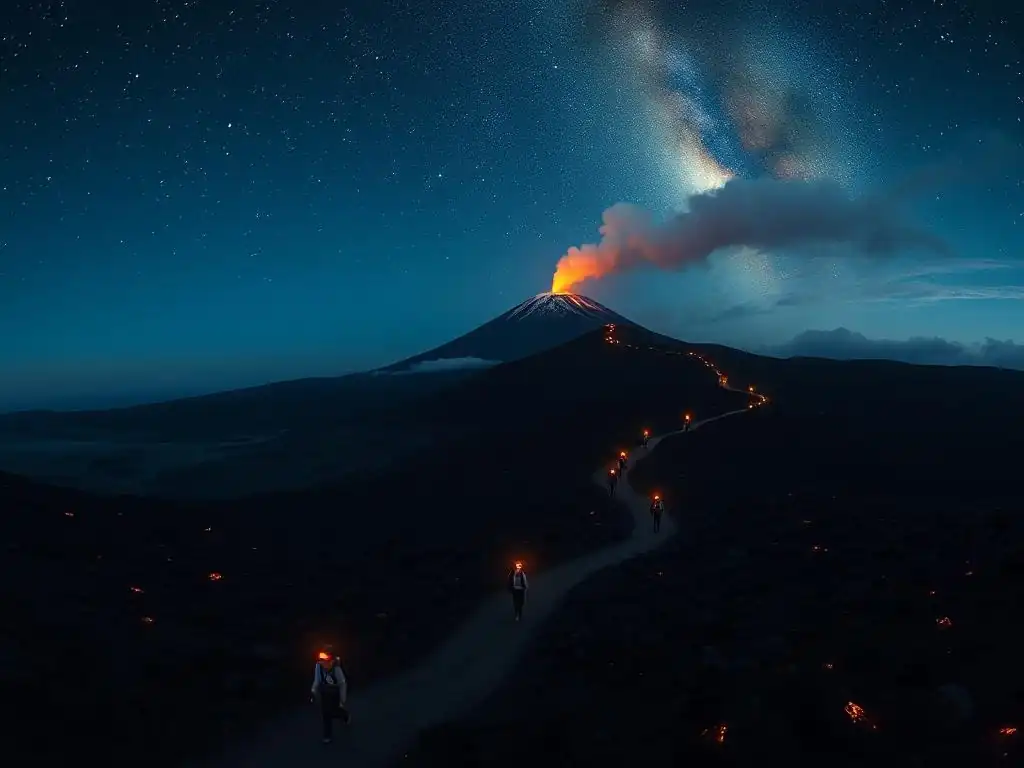
Selecting the appropriate volcanic trail for night hiking is a critical step in ensuring a safe and enjoyable experience. Not all volcanic trails are suitable for nighttime exploration, and choosing a trail that matches your experience level and preparedness is essential. Factors to consider include trail difficulty, potential hazards, accessibility, and your group's capabilities.
Selecting Beginner-Friendly Volcanoes for Night Hikes
For those new to night hiking or volcanic terrain, choosing beginner-friendly volcanoes with well-maintained trails is highly recommended. These trails are typically shorter, less steep, and have clearly marked paths, minimizing the risks associated with nighttime navigation and challenging terrain. Diamond Head in Hawaii, while not a towering volcano, offers a relatively easy and popular hike to a summit with panoramic views. The trail is paved and well-maintained, making it suitable for beginner night hikers.
The relatively short distance and moderate elevation gain make it achievable for those with basic fitness levels. Another example could be a section of the trails around Volcano Arenal in Costa Rica. While Arenal is an active volcano, the surrounding national park offers numerous well-marked trails through secondary rainforest and old lava flows that are generally considered easy to moderate and are sometimes offered as guided night hikes.
When selecting beginner-friendly volcanic trails for night hikes, prioritize trails that are well-trafficked during the day, indicating a lower level of inherent difficulty. Look for trails with minimal elevation gain and clearly defined paths that are easy to follow even in the dark with headlamps. Check trail maps and reviews to assess the terrain and potential hazards. Consider guided night hikes offered by local tour operators, especially for your first few experiences. Guided hikes provide added safety and expertise, allowing you to learn from experienced hikers and familiarize yourself with night hiking techniques in a controlled environment.
Identifying Moderately Challenging Volcanic Night Trails
Once you have gained some experience with night hiking and are comfortable navigating in the dark, you can explore moderately challenging volcanic trails. These trails may involve steeper inclines, longer distances, and more varied terrain, requiring a higher level of fitness and navigation skills. Mount Vesuvius in Italy, famous for its eruption that buried Pompeii, offers trails to its summit that are considered moderately challenging. The ascent involves a significant elevation gain on volcanic ash and gravel, requiring good physical condition and sturdy footwear.
While the trails are generally well-defined, night hiking on Vesuvius requires careful footing and awareness of the terrain. Another example could be hiking to the summit of Pacaya Volcano in Guatemala. While popular, the ascent to Pacaya's crater rim involves steep sections on loose volcanic ash and rock, making it moderately challenging, especially at night.
For moderately challenging volcanic night hikes, ensure you have a good level of physical fitness and experience with hiking in varied terrain. Refine your navigation skills with map and compass and GPS devices. Choose trails that are still relatively well-marked but may have some sections with less defined paths. Be prepared for steeper climbs and descents, and potentially more exposed sections. Carry adequate water and snacks to sustain your energy levels throughout the hike. Consider hiking with a small group for added safety and support. Thoroughly research the trail conditions and potential hazards before embarking on your hike.
Considering Advanced Volcanic Night Hiking Expeditions: Mount Etna, Italy
For experienced hikers seeking a significant challenge, advanced volcanic night hiking expeditions offer an unparalleled adventure. These expeditions often involve multi-day treks, high altitudes, technical terrain, and potentially active volcanic areas, requiring advanced mountaineering skills, specialized equipment, and expert guidance. Mount Etna in Sicily, Italy, one of Europe's most active volcanoes, presents opportunities for advanced night hiking expeditions.
Ascending to the summit craters of Etna, especially at night, is a demanding undertaking that may involve crossing lava fields, navigating steep slopes, and dealing with unpredictable weather conditions and volcanic activity. These expeditions often require specialized equipment like ice axes and crampons depending on the season and snow conditions at higher elevations.
Another example of an advanced volcanic night hike could be attempting a summit ascent of Mount Rainier in Washington State, USA, via routes that traverse volcanic glaciers and steep snowfields. While not exclusively a night hike, summit attempts often begin in the late night or early morning hours to reach the summit before afternoon weather changes.
Advanced volcanic night hiking expeditions should only be undertaken by highly experienced and well-prepared individuals with proven mountaineering skills and a thorough understanding of volcanic hazards. These expeditions typically require expert guiding services from certified mountain guides with experience in volcanic environments. Ensure you have all necessary specialized equipment, including mountaineering boots, ice axe, crampons, helmet, and appropriate cold-weather gear.
Be prepared for extreme weather conditions, high altitudes, and potential exposure to volcanic gases and other hazards. Thoroughly research the specific risks and challenges of the chosen volcano and expedition route, and ensure you have the necessary permits and permissions. Advanced volcanic night hiking expeditions offer an incredible and rewarding experience, but demand meticulous planning, preparation, and respect for the inherent risks.
Checking Volcanic Activity and Safety Reports Before You Go
Before embarking on any volcanic night hike, regardless of difficulty level, it is absolutely essential to check current volcanic activity reports and safety advisories. Volcanic activity can change rapidly, and conditions that are safe one day may become hazardous the next. Monitoring volcanic activity is crucial for assessing potential risks and making informed decisions about your hike. Consult official sources for volcanic activity information, such as volcano observatories and geological surveys in the region.
For Mount Etna, the Istituto Nazionale di Geofisica e Vulcanologia (INGV) provides real-time monitoring data and alerts. For volcanoes in the United States, the U.S. Geological Survey (USGS) Volcano Hazards Program offers comprehensive information and updates. Many countries with active volcanoes have similar government agencies responsible for monitoring and reporting volcanic activity.
Pay attention to alert levels, eruption warnings, gas emission reports, and any trail closures or restrictions issued by park authorities or volcano observatories. Volcanic gases, such as sulfur dioxide, can be invisible and odorless in low concentrations but can become hazardous at higher levels, especially in enclosed areas or valleys. Lava flows, even small ones, pose obvious and extreme risks.
Seismic activity can also be an indicator of potential eruptions or instability. Check weather forecasts specifically for the volcanic area, as conditions can be highly localized and differ significantly from general weather reports. Be aware of potential hazards related to weather, such as strong winds, heavy rain, or snow, which can exacerbate volcanic risks and make hiking more dangerous.
If there are any warnings or advisories suggesting increased volcanic activity or hazardous conditions, postpone your night hike or choose an alternative location. Safety should always be the top priority when exploring volcanic terrain, especially at night.
Safety Precautions for Night Hiking on Volcanic Terrain
Night hiking on volcanic terrain, while incredibly rewarding, inherently involves certain risks that must be carefully considered and mitigated. Understanding potential volcanic hazards, adhering to safety guidelines, and being prepared for emergencies are crucial aspects of responsible and safe volcanic night hiking.
Understanding Volcanic Hazards: Gas Emissions and Lava Flows
Volcanic environments present unique hazards that are not typically encountered in other hiking areas. Two primary concerns are volcanic gas emissions and lava flows, although the likelihood and nature of these hazards vary greatly depending on the specific volcano and its activity level. Volcanic gases, such as sulfur dioxide (SO2), carbon dioxide (CO2), and hydrogen sulfide (H2S), are released from vents, fumaroles, and diffuse degassing areas on volcanoes. Sulfur dioxide is pungent and irritating to the respiratory system, even in relatively low concentrations.
Carbon dioxide is odorless and heavier than air, and can accumulate in low-lying areas, displacing oxygen and posing a risk of asphyxiation. Hydrogen sulfide has a characteristic rotten egg smell and is also toxic in higher concentrations. Exposure to volcanic gases can cause respiratory irritation, headaches, nausea, and in severe cases, unconsciousness or death.
Lava flows are molten rock that erupts from volcanoes. While lava flows are often slow-moving, they are incredibly hot and destructive, posing obvious and extreme hazards. Even solidified lava flows can be unstable and hazardous to traverse, with sharp edges and uneven surfaces.
Pyroclastic flows are fast-moving currents of hot gas and volcanic debris that can travel at high speeds down the flanks of volcanoes. These are extremely dangerous and pose a significant threat in certain volcanic eruption scenarios. Lahars are volcanic mudflows composed of water, ash, and rock that can be triggered by rainfall or melting snow and ice on volcanoes.
Lahars can travel rapidly and are highly destructive. Before embarking on a night hike on volcanic terrain, research the specific hazards associated with the volcano you are visiting and heed any warnings or advisories from volcano observatories or park authorities. Be aware of areas known for gas emissions, lava flow paths, or lahar hazards, and avoid these areas, especially at night when visibility is reduced.
Staying on Marked Trails: Avoiding Dangerous Areas on Volcanoes
Sticking to marked trails is paramount for safety during night hiking on volcanic terrain. Trails are typically designed to avoid known hazards and navigate the safest routes through the landscape. Venturing off-trail, especially at night, significantly increases the risk of encountering dangerous areas, becoming disoriented, or getting lost.
Volcanic terrain can be complex and disorienting, even in daylight. At night, visibility is limited, and it becomes much easier to lose your way or stray into hazardous zones. Marked trails are usually chosen to avoid areas with unstable slopes, steep drop-offs, or known volcanic hazards like fumaroles or areas prone to gas accumulation.
Off-trail areas may also be more susceptible to loose rocks, hidden crevices, or uneven terrain, increasing the risk of falls or injuries, especially in the dark. Respect trail closures and restrictions. Park authorities or volcano observatories may close certain trails due to volcanic activity, weather conditions, or other hazards. These closures are in place for your safety, and it is crucial to adhere to them.
If you are unsure about the trail route or markings, retrace your steps and consult your map and compass or GPS device. Avoid shortcuts or improvising routes, especially at night. Staying on marked trails is a fundamental safety precaution for night hiking on volcanic terrain, minimizing the risk of getting lost, injured, or encountering volcanic hazards.
Communicating with Others: Essential for Volcanic Night Hikes
Communication is a critical safety element for any hike, but it becomes even more crucial for night hiking on volcanic terrain, where risks are amplified and help may be further away. Letting someone know your hiking plans, carrying communication devices, and maintaining communication within your hiking group are essential practices. Before you go, inform a trusted friend or family member about your night hiking plans, including the specific trail you intend to hike, your expected start and return times, and the names of everyone in your hiking group.
Leave a detailed itinerary with them, including maps and emergency contact information. This ensures that someone knows your whereabouts and can initiate a search if you are overdue or encounter problems.
Carry a reliable communication device, such as a fully charged cell phone or a satellite communication device, especially in areas with limited or no cell phone coverage. A satellite messenger, like a Garmin inReach or SPOT device, allows you to send messages, share your location, and trigger an SOS signal in emergencies, even in remote volcanic regions. Ensure you know how to use your communication devices and test them before your hike.
If hiking in a group, establish a system for communication within the group. Use whistles or hand signals to communicate in situations where verbal communication is difficult, such as in windy conditions or across distances.
Stay within visual or auditory range of each other, especially in the dark. Regular communication within your group and with someone outside your group is a vital safety measure for night hiking on volcanic terrain, enabling you to summon help if needed and ensure everyone's well-being.
Emergency Preparedness: First Aid and Rescue Procedures on Volcanoes
Despite careful planning and precautions, emergencies can still occur during night hiking on volcanic terrain. Being prepared to handle emergencies, including carrying a well-stocked first-aid kit and knowing basic first-aid procedures, is crucial. Furthermore, understanding rescue procedures in volcanic environments and knowing how to summon help effectively are essential components of emergency preparedness.
Carry a comprehensive first-aid kit that is appropriate for the size of your hiking group and the potential risks of volcanic terrain. Include items such as bandages, antiseptic wipes, pain relievers, blister treatment, insect repellent, sunscreen, and any personal medications. Consider adding items specific to volcanic hazards, such as a respirator mask for protection against volcanic gases, depending on the volcano and its activity level.
Familiarize yourself with basic first-aid procedures, especially for common hiking injuries like cuts, sprains, fractures, and altitude sickness. If someone in your group is injured, assess the situation, administer first aid, and determine if evacuation is necessary. In case of a serious emergency, use your communication device to call for help.
Know the local emergency contact numbers and procedures for the volcanic area you are hiking in. Be prepared to provide accurate location information to rescuers, using GPS coordinates if possible. If you need to initiate a rescue, stay with the injured person and provide comfort and support while waiting for help to arrive.
Be aware that rescue operations in volcanic terrain can be challenging and time-consuming, especially at night. Emergency preparedness, including first aid knowledge, a well-stocked kit, and understanding rescue procedures, is a critical aspect of safe night hiking on volcanic terrain, ensuring you are equipped to handle unforeseen situations and assist yourself and others in case of emergencies.
Capturing the Beauty: Volcano Photography at Night
Night hiking on volcanic terrain offers unparalleled opportunities for capturing stunning and unique photographs. The combination of dramatic volcanic landscapes, starlit skies, and potentially glowing lava creates a visually captivating scene. However, night photography presents specific challenges, particularly in the often-remote and rugged environments of volcanoes.
Night Photography Techniques for Volcanic Landscapes
Night photography of volcanic landscapes requires mastering specific techniques to overcome the challenges of low light and capture the beauty of the scene. Long exposure photography is essential for capturing detail in both the foreground volcanic terrain and the night sky. Using slow shutter speeds, typically ranging from several seconds to minutes, allows the camera sensor to gather enough light to create a well-exposed image. A sturdy tripod is absolutely crucial for long exposures to prevent camera shake and ensure sharp images.
Remote shutter releases or self-timers can further minimize camera shake during long exposures. Understanding aperture and ISO settings is also critical. Wider apertures (lower f-numbers) allow more light to enter the lens, enabling shorter exposure times and lower ISO settings, which minimize noise.
However, wider apertures also result in shallower depth of field, so you may need to use focus stacking techniques to ensure sharpness throughout the image. Higher ISO settings increase the sensor's sensitivity to light, but also introduce more noise into the image. Finding the optimal balance between aperture, ISO, and shutter speed is key to achieving well-exposed and low-noise night photographs of volcanic landscapes.
Experiment with different exposure times and settings to find what works best for the specific lighting conditions and your creative vision. Consider capturing star trails by using very long exposures, ranging from 15 minutes to several hours, to show the apparent movement of stars across the sky. For landscapes illuminated by moonlight, shorter exposure times may be sufficient. If you are photographing active volcanoes with glowing lava, be mindful of the extreme contrast between the bright lava and the dark surroundings.
Use techniques like HDR (High Dynamic Range) photography or exposure blending to capture detail in both the highlights and shadows. Practice bracketing exposures, taking multiple shots of the same scene at different exposure settings, to ensure you capture a usable image and have flexibility in post-processing. Mastering these night photography techniques will enable you to capture the breathtaking beauty of volcanic landscapes under the stars.
Equipment Recommendations for Night Volcano Photography
Specific equipment is essential for successful night volcano photography, going beyond standard daytime hiking gear. A high-quality DSLR or mirrorless camera with good low-light performance is the foundation of your night photography setup. Cameras with larger sensors generally perform better in low light and produce less noise at higher ISO settings.
A wide-angle lens is ideal for capturing expansive volcanic landscapes and the night sky. Lenses with fast maximum apertures (f/2.8 or wider) are beneficial for gathering more light and allowing for shorter exposure times. A sturdy tripod is non-negotiable for long exposure night photography.
Choose a tripod that is stable even in windy conditions and can support the weight of your camera and lens. A remote shutter release or cable release minimizes camera shake during long exposures. Headlamps with red light modes are crucial for preserving your night vision and the night vision of others around you while setting up shots and navigating in the dark.
Consider carrying extra batteries for your camera and headlamp, as batteries drain faster in cold conditions and during long exposures. Lens cleaning cloths and wipes are essential for keeping your lens clean from dust, moisture, and volcanic ash. A star tracker, a motorized mount that compensates for the Earth's rotation, can be used for extremely long exposures of the night sky, allowing you to capture sharper stars and fainter celestial objects.
However, star trackers add complexity and weight to your gear. Filters, such as UV filters to protect your lens and polarizing filters to reduce glare in certain situations, may also be useful. A camera bag or backpack that is comfortable to carry and protects your equipment is essential for hiking on volcanic terrain.
Choose a bag that is weather-resistant and provides adequate padding for your camera gear. Investing in the right equipment and understanding how to use it effectively is crucial for capturing high-quality night photographs of volcanic landscapes.
Composition Tips for Stunning Volcanic Night Photos
Composition is key to creating compelling night photographs of volcanic landscapes. While the scene itself is inherently dramatic, thoughtful composition elevates your images from mere snapshots to visually engaging works of art. Utilize foreground elements to create depth and interest in your compositions.
Volcanic rocks, lava formations, or unique vegetation can serve as strong foreground subjects, leading the viewer's eye into the scene and adding a sense of scale and perspective. Look for leading lines, such as trails, lava flows, or ridgelines, to guide the viewer's eye through the image and create a sense of movement and direction. Consider the rule of thirds, placing key elements of your composition along the intersecting lines or at the intersections themselves to create a more balanced and visually appealing image.
Incorporate the night sky as a significant element in your volcanic landscape compositions. The vastness of the starry sky above a volcanic landscape can convey a sense of awe and wonder. Frame your shots to include prominent constellations, the Milky Way, or planetary alignments to add celestial interest. Experiment with different perspectives and viewpoints.
Shooting from a low angle can emphasize the height and grandeur of volcanic cones. Shooting from a higher vantage point can provide a panoramic view of the volcanic landscape and the surrounding night sky. Pay attention to the interplay of light and shadow.
Moonlight, starlight, and any artificial light sources (like lava glow) can create dramatic shadows and highlights, adding depth and texture to your images. Consider including human elements in your compositions, such as hikers with headlamps, to provide a sense of scale and adventure. Experiment with different compositional techniques and perspectives to find unique and compelling ways to capture the beauty of volcanic landscapes at night.
Dealing with Low Light Conditions on Volcanoes
Low light conditions are the defining characteristic of night photography, and volcanic environments often present even more challenging lighting scenarios due to the absence of artificial light sources and the potentially dark nature of volcanic rock. Understanding how to effectively deal with low light is crucial for capturing successful night photographs of volcanoes. Maximize your camera's light-gathering capabilities by using wide apertures (low f-numbers) and increasing ISO settings. However, be mindful of the trade-off between ISO and noise.
Experiment with different ISO settings to find the highest acceptable ISO level that still produces images with acceptable noise levels for your camera. Use long exposure times to compensate for low light. However, be aware of potential motion blur from moving subjects, such as clouds or windblown vegetation. A sturdy tripod is essential for long exposures.
Utilize available light sources effectively. Moonlight, even faint moonlight, can illuminate volcanic landscapes and provide enough light for photography. Starlight, while much dimmer, can also contribute to the overall illumination, especially with long exposures. If you are photographing active volcanoes with lava flows, the glow from the lava can provide a unique and dramatic light source.
Experiment with different white balance settings to achieve the desired color rendition in your night photographs. Auto white balance may not always be accurate in low light. Consider using custom white balance settings or adjusting white balance in post-processing. Learn to "read" the light and shadows in low light conditions.
Pay attention to subtle variations in illumination and use them to enhance the mood and drama of your images. Post-processing is an essential part of night photography. Use software like Adobe Lightroom or Photoshop to fine-tune exposure, contrast, white balance, and noise reduction in your images. Mastering these techniques for dealing with low light conditions will enable you to capture stunning night photographs of even the darkest volcanic landscapes.
Responsible Volcanic Tourism: Minimizing Your Impact
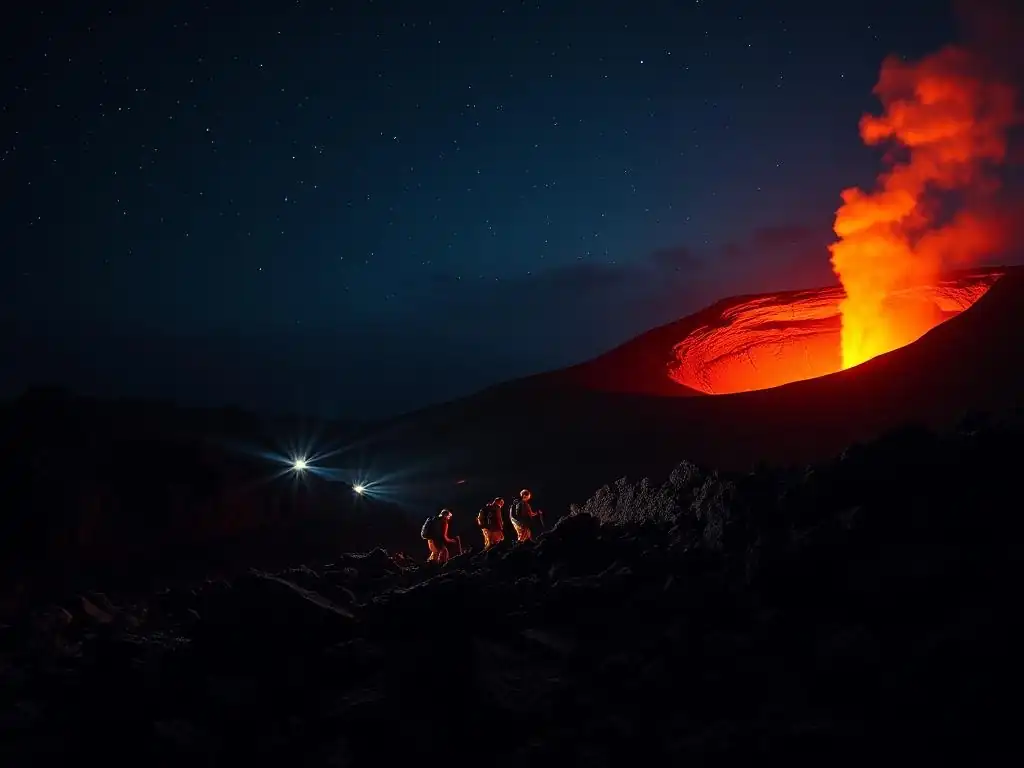
Volcanic landscapes are fragile ecosystems and culturally significant sites. Responsible tourism is crucial to minimize your impact, preserve these environments for future generations, and contribute positively to local communities. Adopting ethical and sustainable practices ensures that your night hiking experience on volcanic terrain is both enjoyable and environmentally conscious.
Leave No Trace Principles on Volcanic Terrain
The Leave No Trace principles are a set of ethical guidelines designed to minimize human impact on the outdoors. These principles are particularly relevant to volcanic terrain, which is often delicate and slow to recover from disturbance. Plan ahead and prepare by researching the volcanic area you intend to visit, checking regulations and guidelines, and packing appropriately. Travel and camp on durable surfaces, sticking to established trails and designated campsites.
Volcanic soils are often thin and easily eroded, and off-trail travel can damage vegetation and fragile geological formations. Dispose of waste properly by packing out everything you pack in, including trash, food scraps, and human waste. "Pack it in, pack it out" is a fundamental Leave No Trace principle.
Minimize campfire impacts. Campfires can be particularly damaging in volcanic areas where vegetation is sparse and slow-growing. Use portable stoves for cooking and avoid building campfires unless in designated fire rings and permitted.
Leave what you find. Avoid taking souvenirs from volcanic areas, including rocks, plants, or artifacts. These items are part of the natural and cultural heritage of the site. Minimize impact to wildlife. Observe wildlife from a distance and avoid disturbing animals or their habitats.
Keep noise levels down to avoid disturbing wildlife and other visitors. Be considerate of other visitors. Respect the solitude and tranquility of the volcanic environment and be mindful of the experience of others. By adhering to the Leave No Trace principles, you can significantly reduce your impact on volcanic terrain and help preserve these special places for future generations of hikers and explorers.
Respecting Volcanic Ecosystems and Wildlife
Volcanic ecosystems, while seemingly barren, often support unique and specialized plant and animal life adapted to harsh conditions. Respecting these ecosystems and the wildlife that inhabit them is an essential aspect of responsible volcanic tourism. Stay on designated trails to avoid trampling vegetation and disturbing wildlife habitats. Off-trail travel can damage fragile plant communities and disrupt animal breeding or nesting sites. Avoid feeding wildlife.
Feeding wild animals can alter their natural behaviors, make them dependent on human food sources, and potentially harm their health. Observe wildlife from a distance using binoculars or telephoto lenses. Maintain a respectful distance and avoid approaching or harassing animals. Keep noise levels down to minimize disturbance to wildlife. Loud noises can stress animals and disrupt their natural activities.
Be aware of sensitive habitats, such as geothermal areas, wetlands, or areas with rare or endangered species. Avoid entering or disturbing these sensitive areas. Respect any closures or restrictions in place to protect wildlife or sensitive ecosystems. Learn about the local flora and fauna of the volcanic area you are visiting.
Understanding the unique adaptations of volcanic wildlife can enhance your appreciation for these ecosystems and motivate you to protect them. Support conservation efforts in volcanic regions. Consider donating to or volunteering with organizations dedicated to protecting volcanic ecosystems and wildlife. By respecting volcanic ecosystems and wildlife, you contribute to their long-term preservation and ensure that future visitors can also appreciate the biodiversity of these remarkable environments.
Supporting Local Communities Through Sustainable Tourism
Sustainable tourism aims to benefit local communities economically and culturally while minimizing negative environmental impacts. When visiting volcanic regions, especially those in developing countries, supporting local communities through responsible tourism practices can make a significant positive difference. Choose locally owned businesses and services, such as hotels, restaurants, tour operators, and guides. Spending your money directly with local businesses ensures that tourism revenue benefits the community directly, rather than leaking out to large corporations or foreign entities.
Hire local guides and porters for your volcanic night hikes. Local guides possess invaluable knowledge of the terrain, weather conditions, and cultural significance of the area. Hiring them provides economic opportunities for community members and enhances your hiking experience.
Purchase local products and crafts. Supporting local artisans and craftspeople helps preserve traditional skills and provides economic opportunities. Be respectful of local cultures and customs. Learn about the local culture, traditions, and etiquette of the volcanic region you are visiting.
Dress modestly and be mindful of local customs and sensitivities. Practice responsible waste disposal and minimize your environmental impact in local communities as well as on the trails. Support community-based tourism initiatives that are designed to benefit local communities and promote sustainable practices. By supporting local communities through sustainable tourism, you contribute to their economic well-being, cultural preservation, and environmental stewardship, creating a more positive and mutually beneficial tourism experience.
The Best Volcanoes for Night Hiking Experiences Around the World
The world is dotted with volcanoes offering incredible night hiking experiences, each with unique landscapes, challenges, and rewards. From the Canary Islands to Central and South America, and beyond, here are a few examples of volcanoes renowned for their nighttime trekking adventures.
Night Hiking on Mount Teide, Tenerife: A Detailed Overview
Mount Teide, located on the island of Tenerife in Spain's Canary Islands, is the highest peak in Spain and a truly exceptional destination for night hiking. Teide National Park, a UNESCO World Heritage Site, offers a variety of trails, with the most popular leading to the summit of Mount Teide (3,718 meters or 12,198 feet). Night hikes to the summit are particularly sought after for witnessing the sunrise from above the clouds and experiencing unparalleled stargazing opportunities.
Due to the altitude and popularity, permits are required to hike to the summit of Teide, especially to access the final section above the cable car station ("Telesforo Bravo" trail). Permits are free but limited and should be booked well in advance, particularly during peak season. The ascent typically starts in the late afternoon or early evening, allowing hikers to reach the summit area before sunrise.
The most common route involves taking the Teide cable car up to 3,555 meters (11,663 feet) and then hiking the remaining section to the summit on foot (Telesforo Bravo trail). This final section is moderately challenging, involving a steep ascent on volcanic rock and scree. Alternatively, for a more strenuous and rewarding experience, hikers can trek from the base of the volcano (Montana Blanca trail), which is a longer and more demanding ascent, taking several hours to reach the summit area.
Night hiking on Teide offers breathtaking views of the surrounding islands, the Atlantic Ocean, and the vast expanse of the Milky Way. The clear, high-altitude skies above Teide are renowned for stargazing, and the summit area is often above a layer of clouds, creating a surreal and otherworldly landscape. Temperatures at the summit can be significantly colder than at lower elevations, even in summer, so warm layers, including hat and gloves, are essential.
Altitude sickness is a potential concern due to the high elevation, so acclimatization and slow ascent are recommended. Night hiking on Mount Teide is a truly unforgettable experience, combining volcanic landscapes, celestial beauty, and a sense of adventure.
Discovering the Night Trails of Pacaya Volcano, Guatemala
Pacaya Volcano, located near Antigua, Guatemala, is an active volcano offering accessible and exciting night hiking opportunities. Pacaya is one of Guatemala's most active volcanoes, and hiking to its summit or nearby viewpoints provides a chance to witness volcanic activity, including lava flows (depending on activity levels) and incandescent vents. Night hikes on Pacaya are typically guided tours, due to safety considerations and the active nature of the volcano. Numerous tour operators in Antigua offer guided night hikes to Pacaya, providing transportation, entrance fees, and experienced local guides.
The hike to the summit area of Pacaya is moderately challenging, taking approximately 1.5 to 2 hours to ascend. The trail traverses volcanic ash and rock, with some steep sections, but is generally manageable for people with moderate fitness levels. Horses are often available for hire for those who prefer not to hike the entire distance on foot.
Night hikes on Pacaya offer spectacular views of glowing lava (when active), the surrounding volcanic landscape, and the city lights of Antigua twinkling in the distance. The darkness enhances the visual impact of any volcanic activity, making the experience particularly dramatic. The summit area can be windy and exposed, and temperatures can drop at night, so layers of clothing, including a windproof jacket and warm hat, are recommended.
Safety briefings and guidance from experienced local guides are crucial for night hikes on Pacaya, as volcanic activity can change rapidly. Guides are knowledgeable about safe routes and potential hazards. Night hiking on Pacaya Volcano is a thrilling and relatively accessible way to experience an active volcano after dark, offering a unique blend of adventure, natural beauty, and volcanic spectacle.
Experiencing the Magic of Villarrica, Chile After Dark
Villarrica Volcano, situated in the Chilean Lake District near the town of Pucón, is a strikingly symmetrical stratovolcano renowned for its persistent summit crater lava lake and excellent skiing in winter. Villarrica is also a popular destination for night hiking and summit ascents, offering a challenging and rewarding mountaineering experience. Night hikes to the summit of Villarrica are demanding and typically require mountaineering experience and appropriate equipment, including crampons, ice axe, helmet, and mountaineering boots, especially if snow and ice are present.
Guided tours are highly recommended for summit ascents of Villarrica, particularly at night, due to the technical nature of the climb and potential volcanic hazards. Several reputable tour operators in Pucón offer guided summit expeditions.
The ascent to the summit of Villarrica (2,847 meters or 9,340 feet) is steep and involves traversing snow and ice fields, volcanic rock, and potentially glacier sections, depending on the route and season. The climb typically starts in the late night or early morning hours to reach the summit before afternoon weather changes and to witness the sunrise from the top.
Night hiking on Villarrica offers breathtaking panoramic views of the surrounding Andes Mountains, the Chilean Lake District, and potentially the glow of the lava lake within the summit crater. The darkness enhances the sense of adventure and the dramatic beauty of the volcanic landscape. Weather conditions on Villarrica can change rapidly, and summit ascents are highly weather-dependent.
Guides closely monitor weather forecasts and volcanic activity levels and may adjust or cancel climbs if conditions are deemed unsafe. Altitude sickness is a potential concern due to the elevation, so acclimatization and a slow ascent are important. Night hiking and summiting Villarrica Volcano is a challenging but incredibly rewarding mountaineering experience, offering stunning views, a sense of accomplishment, and the magic of experiencing a glaciated volcano under the stars.
Comparing Volcanoes for Night Hiking: Difficulty, Scenery, and Safety
| Volcano | Location | Difficulty | Scenery | Safety Considerations | Best Time to Hike (Night) |
|---|---|---|---|---|---|
| Mount Teide | Tenerife, Spain | Moderate | Stargazing, Sunrise above clouds, Island views | Altitude, Permits required, Cable car option | Spring, Summer, Autumn |
| Pacaya Volcano | Guatemala | Moderate | Lava views (if active), City lights, Volcano | Active volcano, Guided tours recommended, Volcanic gases | Year-round |
| Villarrica Volcano | Chile | Advanced | Summit views, Glaciers, Lava lake (glow), Andes | Mountaineering experience, Guided tours essential, Weather dependent, Altitude | Winter (for snow/ice) |
This table provides a simplified comparison of these three volcanoes for night hiking, highlighting their key characteristics in terms of difficulty, scenery, safety considerations, and the best time of year for nighttime treks. Difficulty is categorized as Beginner, Moderate, or Advanced. Scenery describes the primary visual attractions of night hiking on each volcano. Safety Considerations outline important factors to be aware of when planning a night hike.
Best Time to Hike (Night) indicates the seasons generally considered most favorable for nighttime trekking on each volcano, though conditions can vary. This comparison is intended to provide a starting point for choosing a volcanic night hiking destination based on your experience level, interests, and safety preferences. Always conduct thorough research and consult with local experts before embarking on any volcanic night hike.
Conclusion: Embracing the Adventure of Night Hiking on Volcanic Terrain
Night hiking on volcanic terrain is more than just a hike in the dark; it’s an immersion into a world transformed. It's an opportunity to witness the raw beauty of volcanic landscapes under a celestial canopy, experience profound solitude, and engage with the primal forces of nature in a uniquely intimate way.
By preparing adequately, respecting safety guidelines, and embracing responsible tourism practices, you can unlock the magic of volcanoes after dark and create memories that will last a lifetime. The adventure awaits for those willing to step off the beaten path and explore the dramatic world of volcanic night hiking.
Frequently Asked Questions
What are the biggest dangers of night hiking on volcanic terrain?
The biggest dangers are reduced visibility, making it easier to trip and fall, and difficulty navigating due to the lack of natural light. Unexpected changes in weather and volcanic activity can also pose significant risks.
What kind of gear is essential for night hiking on volcanic terrain?
Essential gear includes a powerful headlamp or flashlight with extra batteries, sturdy hiking boots, appropriate layers of clothing for changing temperatures, a map and compass or GPS, and emergency communication devices like a satellite phone or personal locator beacon (PLB).
Are there specific volcanic hazards that are more dangerous at night?
Yes, hazards like gas emissions (e.g., sulfur dioxide) can be harder to detect at night, and sudden changes in lava flow or steam vents may be less visible. Also, ashfall can be more disorienting in the dark.
How can I prepare for rapid changes in weather during a night hike?
Pack layers of clothing that can be easily added or removed, including waterproof and windproof outer layers. Check the weather forecast before you go, but be prepared for unexpected changes, especially at higher elevations.
What are the ethical considerations of night hiking near volcanoes?
Respect the natural environment by staying on designated trails, avoiding disturbing wildlife, and packing out all trash. Be mindful of noise levels to avoid disturbing other hikers or local communities, and follow all posted regulations and guidelines.
Final Reflection: Embracing the Volcanic Night
The allure of volcanic landscapes, amplified under the cloak of night, is more than just a thrilling adventure; it's a potent reminder of the Earth's raw power and the humbling beauty it can create. This exploration of night hiking on volcanic terrain highlights our innate desire to connect with the planet on a deeper, more visceral level. The darkness strips away the familiar, forcing us to rely on our senses and fostering a profound appreciation for the subtle nuances of the natural world.
The experience of traversing volcanic terrain at night has profoundly shaped my perspective, revealing the fragility and resilience of life in the face of immense geological forces. It's a reminder that even in seemingly barren landscapes, life persists and thrives. This understanding extends beyond the volcanic slopes, influencing how I perceive challenges and opportunities in my own life. The best view comes after the hardest climb,
a sentiment that resonates deeply when standing beneath a starlit sky atop a volcanic peak, feeling the warmth of the Earth beneath your feet.
Now, I invite you to consider your own relationship with the natural world. What landscapes call to you? What adventures ignite your spirit? Perhaps it's not a volcanic night hike, but whatever it is, embrace the opportunity to step outside your comfort zone, connect with the Earth, and discover the magic that awaits you in the darkness. Let the lessons learned from the volcanic night guide you towards a deeper understanding of yourself and the world around you.
Ignite Your Inner Explorer: Start Your Volcanic Adventure Now!
Thanks for delving into the captivating world of night hiking on volcanic terrain! We hope you're now inspired to experience the unique magic volcanoes offer after dark. Ready to take the next step?
Here are a few ways to ignite your volcanic passion:
- Plan your first night hike to a dormant or accessible volcano. Start small, research thoroughly, and always prioritize safety! This is your primary mission!
- Share this article with fellow adventure seekers and inspire them to discover the otherworldly beauty of volcanoes at night.
- Dive deeper into the Volcano Explorers community by sharing your dream volcanic hiking destination in the comments below.
What’s the first step you’ll take to experience the thrill of a volcanic night hike?