
Pompeii's Ghost and Santorini's Shadow: Legacies of the Mediterranean Volcanic Belt

Welcome to Volcano Explorers!
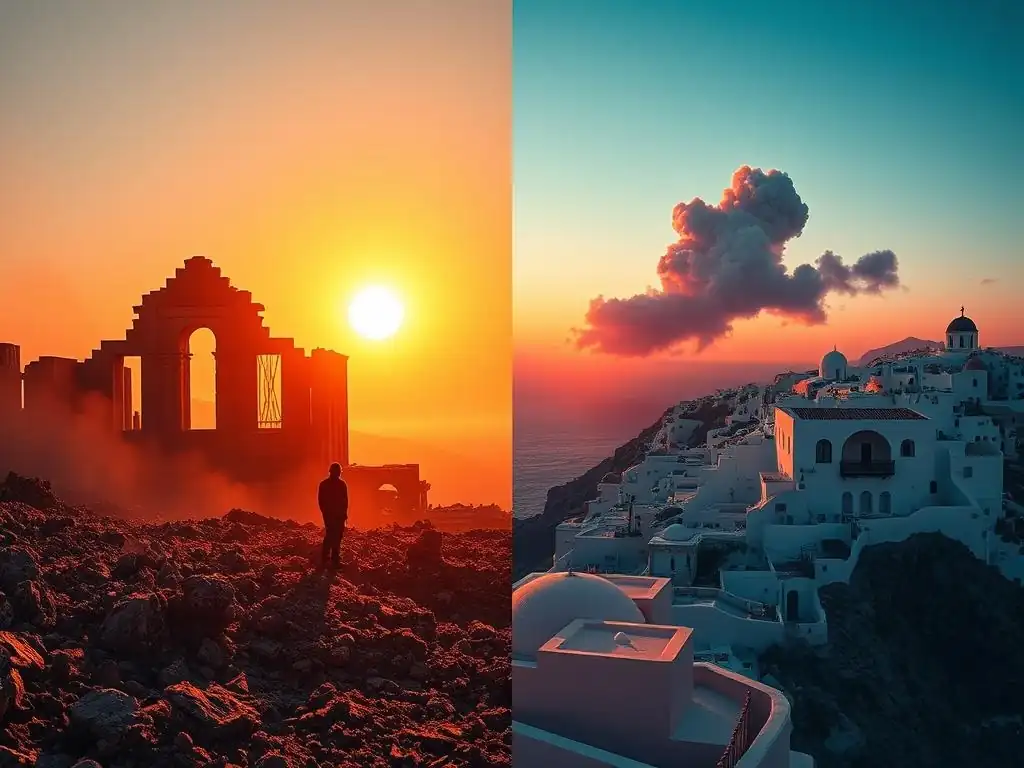
Prepare to journey into the heart of fiery landscapes and uncover secrets forged in molten rock. What if the past held the key to understanding the present? Our exploration of Mediterranean volcanic history and impact begins now. Are you ready to witness the echoes of Pompeii's ghost and feel the shadow of Santorini loom large? Dive in and discover the dramatic forces that have shaped this legendary region.
- Unveiling the Mediterranean Volcanic Belt: A Historical Overview
- Pompeii: A City Frozen in Time by Vesuvius' Wrath
- Santorini: A Volcanic Island's Enduring Shadow
- Comparing Volcanic Impacts: Pompeii and Santorini
- The Broader Context: Other Notable Volcanoes of the Mediterranean
- Mediterranean Volcanic History and Impact: Lessons for the Future
-
Frequently Asked Questions
- What is the Mediterranean Volcanic Belt, and why is it important?
- How did the eruption of Vesuvius impact Pompeii?
- What were the consequences of the Santorini (Thera) eruption?
- What are some of the ongoing risks associated with living near Mediterranean volcanoes?
- How do volcanologists study Mediterranean volcanoes?
- Final Reflection: Echoes of Fire, Lessons in Resilience
- Unearth Your Inner Explorer: Continue the Volcanic Journey!
Unveiling the Mediterranean Volcanic Belt: A Historical Overview
Introduction to the Mediterranean's Volcanic Landscape
The Mediterranean region, cradle of civilizations and crossroads of cultures, is also a dynamic geological zone marked by intense volcanic activity. From the towering Mount Etna in Sicily to the picturesque island of Santorini, volcanoes have sculpted the landscapes, influenced human settlements, and occasionally unleashed devastating forces that have shaped the course of history.
This region, steeped in mythology and ancient narratives, offers a unique opportunity to explore the profound interplay between human societies and the powerful forces of nature, particularly the dramatic and often unpredictable phenomenon of volcanism. The Mediterranean volcanic history is not just a geological story; it is interwoven with the cultural, social, and economic development of the surrounding lands.
The allure of the Mediterranean is often associated with its tranquil blue waters and sun-drenched coasts, yet beneath this serene facade lies a fiery reality. Volcanoes, both active and dormant, are scattered across the region, each with its own unique character and history.
These volcanic systems are not isolated geological curiosities; they are integral components of the Mediterranean environment, influencing soil fertility, shaping coastlines, and even impacting atmospheric conditions. Understanding the distribution and behavior of these volcanoes is crucial not only for grasping the region's geological complexity but also for appreciating the risks and opportunities they present to the millions who live in their shadow.
Defining the Mediterranean Volcanic Belt: Geographical Boundaries and Geological Context
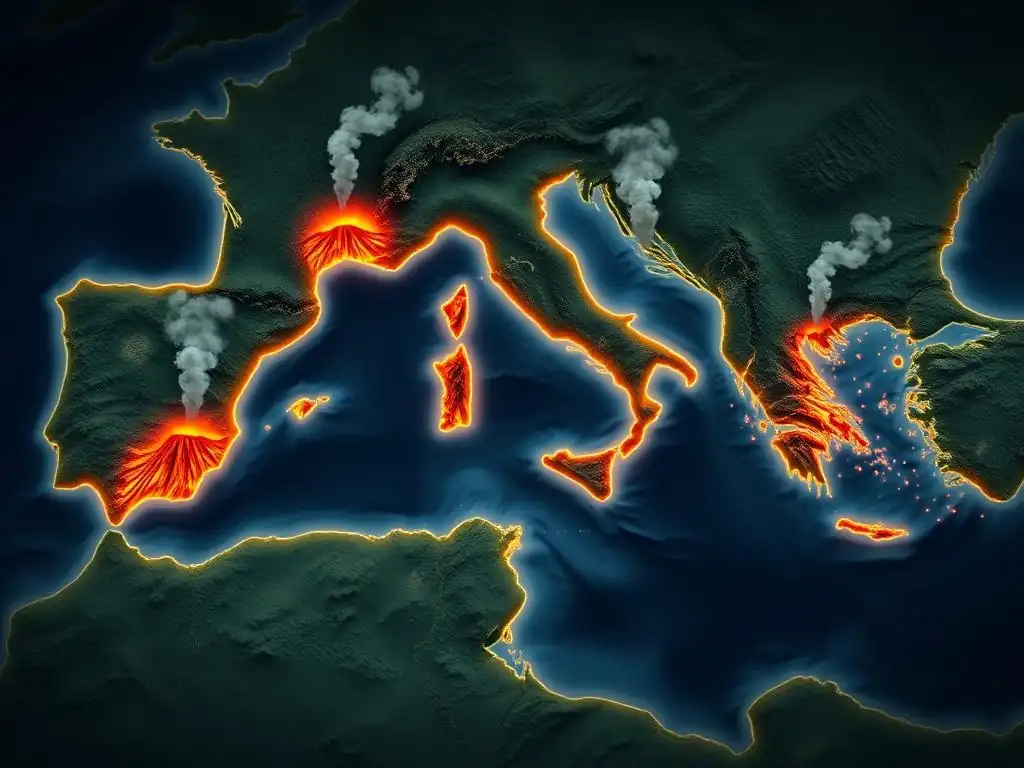
The Mediterranean Volcanic Belt is not a single, continuous chain like the Pacific Ring of Fire, but rather a series of distinct volcanic areas scattered throughout the Mediterranean basin. Geographically, this belt primarily stretches across Southern Europe, encompassing regions of Italy, Greece, and Turkey, and extends into parts of North Africa. Key volcanic areas include the Italian volcanic arc, featuring Vesuvius, Etna, Stromboli, and Campi Flegrei; the Aegean arc in Greece, home to Santorini, Milos, and Nisyros; and volcanic zones in Sicily and the Aeolian Islands. This broad distribution reflects the complex tectonic setting of the Mediterranean.
Geologically, the Mediterranean Volcanic Belt is primarily a consequence of the collision between the African and Eurasian tectonic plates. This ongoing convergence, a fundamental aspect of Mediterranean volcanic history, results in a variety of tectonic processes, including subduction, where the African plate is forced beneath the Eurasian plate in certain areas. This subduction is the primary engine driving magma generation and subsequent volcanic activity.
Furthermore, faulting and crustal thinning associated with this complex plate interaction contribute to the pathways for magma to ascend to the surface, creating the diverse volcanic landscapes observed across the Mediterranean. The specific type of volcanism and the characteristics of individual volcanoes within the belt are further influenced by local geological factors, such as the composition of the crust and mantle, and the presence of fault systems.
The Geological Processes Shaping the Mediterranean's Volcanic Activity
The driving force behind the Mediterranean's dynamic volcanism is the intricate dance of plate tectonics, specifically the convergence of the African and Eurasian plates. As the denser African plate subducts beneath the Eurasian plate, it descends into the Earth's mantle. This process releases water and other volatile compounds from the subducting slab, lowering the melting point of the overlying mantle wedge.
This, in turn, generates magma, molten rock that is less dense than its surroundings and thus begins to rise towards the surface. The composition of this magma, and consequently the type of volcanic eruption, is influenced by the materials involved in the melting process and the journey the magma takes through the Earth's crust.
The type of volcanism observed in the Mediterranean varies depending on the specific geological setting. In areas like Italy and Greece, where subduction is prominent, stratovolcanoes, characterized by steep slopes and explosive eruptions, are common. Vesuvius and Santorini are prime examples.
These volcanoes are formed from layers of solidified lava, volcanic ash, and pumice, built up over successive eruptions. In other areas, like parts of Sicily and the Aeolian Islands, different tectonic regimes and magma sources can lead to different volcanic styles, including shield volcanoes or more effusive eruptions. The interplay of subduction, crustal extension, and mantle plumes contributes to the rich tapestry of volcanic activity that defines the Mediterranean region and its long and impactful volcanic history.
Pompeii: A City Frozen in Time by Vesuvius' Wrath
The Eruption of Mount Vesuvius in 79 AD: A Catastrophic Event
The eruption of Mount Vesuvius in 79 AD stands as one of the most infamous volcanic events in human history, forever etching itself into the collective memory. On a seemingly ordinary day, Vesuvius, which had been dormant for centuries and mistaken for just another mountain, unleashed a catastrophic eruption that buried the Roman cities of Pompeii and Herculaneum under layers of volcanic ash, pumice, and pyroclastic flows.
Pliny the Younger’s eyewitness accounts, documented in his letters to Tacitus, provide invaluable details of the eruption's progression, describing the towering ash cloud, the falling pumice, and the devastating pyroclastic surges that ultimately sealed the fate of the cities.
The eruption was Plinian in style, characterized by a powerful vertical eruption column that propelled ash and pumice high into the atmosphere. This initial phase rained down pumice on Pompeii, burying buildings and streets. However, the most lethal phase came later, with the onset of pyroclastic flows – fast-moving, scorching mixtures of hot gas and volcanic debris that swept down the volcano's flanks at tremendous speeds.
These pyroclastic flows, reaching temperatures of hundreds of degrees Celsius, were responsible for the widespread destruction and the tragic loss of life in both Pompeii and Herculaneum. Estimates suggest that thousands perished in Pompeii alone, their final moments tragically preserved in the volcanic deposits.
Pompeii's Archaeological Significance: Insights into Roman Life and Society
The layers of volcanic debris that entombed Pompeii and Herculaneum, while causing immense devastation, paradoxically acted as a remarkable preservative. The ash and pumice effectively sealed the cities, halting the normal processes of decay and preserving an extraordinary snapshot of Roman life in the 1st century AD. Excavations at Pompeii, beginning in the 18th century and continuing to this day, have unearthed remarkably well-preserved buildings, streets, artifacts, and even the casts of human and animal victims, providing unparalleled insights into the daily lives of Roman citizens.
Pompeii offers a unique window into Roman urban planning, architecture, commerce, and social structures. The city's layout, with its grid pattern of streets, public buildings like the forum and amphitheater, private houses with intricate frescoes, and bustling shops, reveals a thriving Roman community. Artifacts recovered from Pompeii, ranging from everyday household items to tools, artwork, and inscriptions, paint a vivid picture of Roman society, their customs, beliefs, and daily routines.
The preservation of organic materials, like food remains and wooden structures, further enriches our understanding of Roman diet, crafts, and technologies. Pompeii stands as an unparalleled archaeological treasure, offering a tangible connection to the past and a profound understanding of Roman civilization.
The Impact of Vesuvius on the Bay of Naples Region: A Long-Term Perspective
The eruption of Vesuvius in 79 AD had a profound and lasting impact on the Bay of Naples region, extending far beyond the immediate destruction of Pompeii and Herculaneum. The event dramatically reshaped the landscape, altering coastlines, burying fertile agricultural land under volcanic deposits, and impacting the local ecosystem. While the immediate aftermath was devastating, the volcanic deposits also enriched the soil over time, contributing to the region’s agricultural productivity in subsequent centuries. The volcanic history of Vesuvius has thus created a complex legacy of both destruction and renewal.
The psychological impact of the eruption on the survivors and subsequent generations should not be underestimated. The sudden and catastrophic destruction of Pompeii and Herculaneum served as a stark reminder of the unpredictable power of nature. This event likely influenced Roman perceptions of risk and vulnerability, and shaped the cultural memory of the region.
Even today, the shadow of Vesuvius looms large over the Bay of Naples, a constant reminder of the volcano's potential. The region's history is inextricably linked to Vesuvius, with the volcano shaping not only the physical landscape but also the cultural and social identity of the communities that have lived in its vicinity for millennia.
Lessons from Pompeii: Understanding Volcanic Hazards and Risk Mitigation
Pompeii's tragic fate serves as a powerful and enduring lesson in volcanic hazards and the importance of risk mitigation. The eruption of Vesuvius in 79 AD highlighted the devastating potential of stratovolcanoes and the need for effective monitoring, preparedness, and evacuation strategies in volcanic regions. The lack of prior awareness of Vesuvius's volcanic nature among the Roman population, coupled with the rapid and catastrophic nature of the eruption, contributed to the high death toll. Pompeii's story underscores the critical need for education and public awareness regarding volcanic risks in areas prone to such events.
Modern volcanology has learned invaluable lessons from Pompeii. The study of the eruption deposits, the reconstruction of the eruption sequence, and the analysis of the human remains have provided crucial insights into the dynamics of Plinian eruptions and pyroclastic flows. These insights have informed hazard assessments for other volcanoes worldwide and have improved our understanding of volcanic processes.
Furthermore, Pompeii emphasizes the importance of urban planning and land-use management in volcanic areas. Avoiding construction in high-risk zones and developing effective evacuation plans are crucial steps in mitigating the potential impact of future eruptions in regions like the Bay of Naples, where Vesuvius remains an active and potentially dangerous volcano.
Santorini: A Volcanic Island's Enduring Shadow
The Minoan Eruption of Thera (Santorini): A Bronze Age Cataclysm
Centuries before the destruction of Pompeii, another colossal volcanic eruption reshaped the Mediterranean world and potentially contributed to the decline of a major civilization. The Minoan eruption of Thera, modern-day Santorini, is estimated to have occurred in the 17th or 16th century BC, during the Late Bronze Age. This eruption, one of the largest volcanic events of the Holocene epoch, dwarfed Vesuvius in scale and intensity, leaving a lasting impact on the Aegean Sea and potentially beyond. Archaeological and geological evidence suggests that the eruption was a cataclysmic event that triggered tsunamis, atmospheric disturbances, and widespread environmental changes.
The Minoan eruption ejected vast quantities of volcanic material, estimated to be several times greater than the 79 AD Vesuvius eruption. The eruption column likely reached tens of kilometers into the stratosphere, and the resulting ashfall blanketed a vast area of the Eastern Mediterranean.
The caldera collapse that followed the eruption created the iconic crescent-shaped island of Santorini we see today, and generated massive tsunamis that devastated coastal settlements across the Aegean. While the precise impact on Minoan civilization is still debated, many scholars believe that the eruption played a significant role in its decline, although it is unlikely to be the sole cause.
Santorini's Caldera: Formation and Ongoing Volcanic Activity
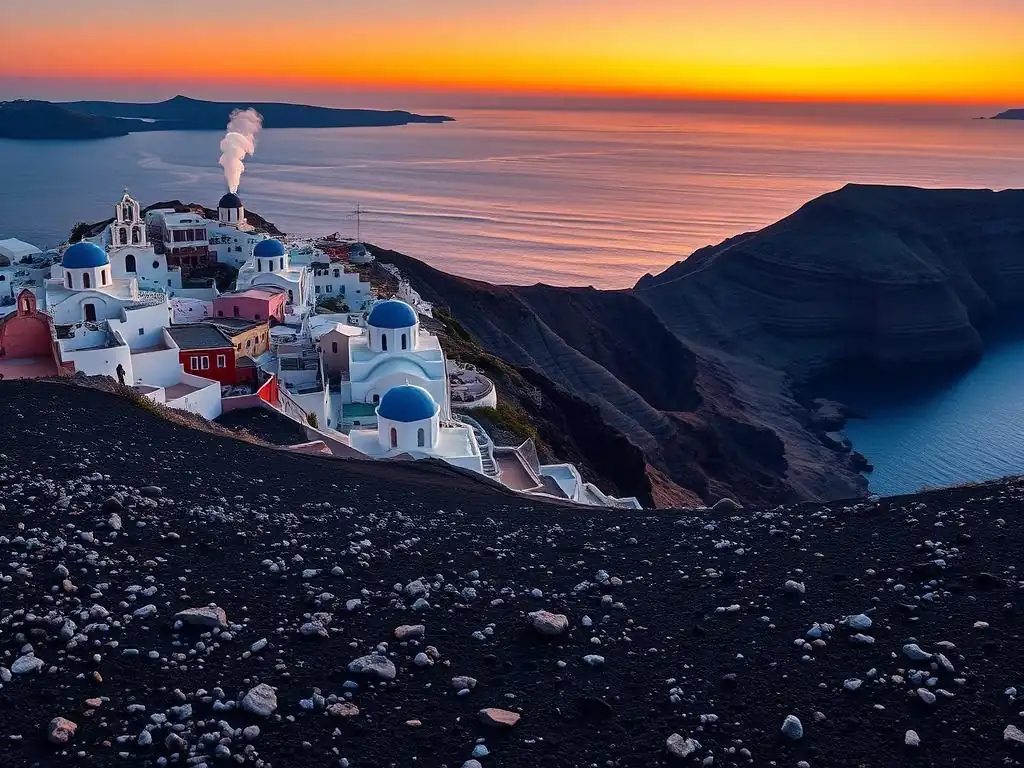
Santorini's most striking geological feature is its magnificent caldera, a large volcanic crater formed by the collapse of a magma chamber following a major eruption. The caldera of Santorini is a testament to the immense power of volcanic forces, a dramatic amphitheater of cliffs plunging into the deep blue waters of the Aegean Sea. The formation of the caldera was a direct consequence of the Minoan eruption, when the emptying of the magma chamber beneath Thera led to the roof of the chamber collapsing inward, creating the vast depression that now defines Santorini's landscape.
Despite the cataclysmic Minoan eruption, Santorini remains volcanically active. While no eruption of comparable magnitude has occurred in the millennia since, smaller eruptions have taken place within the caldera, building new volcanic islands like Nea Kameni in the center of the caldera. Ongoing monitoring of Santorini's volcanic system reveals continued signs of activity, including ground deformation, seismic events, and gas emissions.
These observations indicate that magma is still present beneath Santorini and that future eruptions are possible, although the timing and scale of such events remain uncertain. The caldera itself is a dynamic environment, constantly being shaped by volcanic, tectonic, and erosional processes.
The Geological History of Santorini: From Ancient Volcano to Modern Island
Santorini's geological history extends far beyond the Minoan eruption, stretching back hundreds of thousands of years. The island is the product of repeated cycles of volcanic activity, with multiple phases of volcano building and caldera formation shaping its complex geological structure. Prior to the Minoan eruption, several earlier caldera-forming eruptions had occurred at Santorini, each contributing to the island's evolution. These earlier eruptions, though less well-known than the Minoan event, played a crucial role in creating the volcanic edifice upon which Minoan civilization flourished.
The geological record of Santorini reveals a long and dynamic volcanic history, punctuated by periods of intense eruptive activity and periods of relative quiescence. The island's volcanic rocks provide a detailed archive of magma compositions, eruption styles, and caldera-forming processes. Geologists continue to study Santorini to unravel its complex volcanic past and to better understand the processes that govern caldera-forming eruptions.
This knowledge is not only crucial for assessing the volcanic hazards associated with Santorini but also for gaining insights into caldera volcanism in general, a phenomenon observed at other volcanoes around the world. The geological history of Santorini is a story of ongoing volcanic evolution, a process that continues to shape the island and its surroundings to this day.
Santorini's Impact on the Aegean Sea and Mediterranean Climate
The Minoan eruption of Santorini had far-reaching environmental consequences, impacting not only the immediate vicinity of the island but also the wider Aegean Sea and potentially influencing Mediterranean climate patterns. The massive injection of volcanic ash and gases into the atmosphere during the eruption is believed to have caused short-term climate cooling, potentially affecting agricultural productivity and weather patterns across the region. The eruption also triggered tsunamis that devastated coastal areas, causing widespread destruction and ecological disruption.
The deposition of volcanic ash over a vast area of the Aegean Sea and surrounding lands had both immediate and long-term effects. While the initial ashfall could have been detrimental to agriculture in some areas, over time, volcanic ash can enrich soils with nutrients, enhancing their fertility. The tsunamis generated by the eruption would have had a devastating impact on coastal ecosystems, destroying coastal habitats and altering marine environments.
Furthermore, the release of sulfur dioxide and other volcanic gases into the atmosphere could have had complex effects on atmospheric chemistry and climate, potentially contributing to short-term cooling and altered precipitation patterns in the Mediterranean region. The full extent and duration of these environmental impacts are still being investigated, but it is clear that the Minoan eruption was a major environmental perturbation with significant consequences for the Aegean and Mediterranean regions.
Comparing Volcanic Impacts: Pompeii and Santorini
Contrasting Eruption Styles: Vesuvius vs. Thera
While both Pompeii and Santorini suffered catastrophic volcanic eruptions, the style and characteristics of these eruptions differed significantly, leading to distinct patterns of destruction and long-term impacts. The eruption of Vesuvius in 79 AD was a Plinian eruption, characterized by a towering eruption column and devastating pyroclastic flows. The primary agents of destruction in Pompeii were the pumice fall and subsequent pyroclastic surges, which buried the city rapidly and completely. The eruption was relatively short-lived, lasting approximately 24 hours, but intensely destructive within its immediate vicinity.
In contrast, the Minoan eruption of Thera was a much larger and more complex event, classified as a caldera-forming eruption. It involved multiple phases, including a Plinian phase, but culminated in the collapse of the magma chamber and the formation of the Santorini caldera. The eruption was significantly longer in duration and ejected a much greater volume of volcanic material than Vesuvius.
The primary agents of destruction at Thera were the caldera collapse, which obliterated the pre-eruption island, and the massive tsunamis generated by the eruption. While pyroclastic flows were also present, the overall eruption style and the scale of the event were fundamentally different from the Vesuvius eruption. Understanding these contrasting eruption styles is crucial for assessing volcanic hazards and predicting the potential impacts of future eruptions in these regions.
Differences in Societal Impact: Roman Empire vs. Minoan Civilization
The societal contexts in which the Pompeii and Santorini eruptions occurred were vastly different, leading to contrasting impacts on the respective civilizations. Pompeii was a thriving Roman city within a vast and well-organized empire. While the eruption was a local catastrophe, the Roman Empire possessed the resources and infrastructure to provide aid, rebuild, and maintain societal continuity, albeit with the permanent loss of Pompeii and Herculaneum. The Roman Empire, despite the tragedy, continued to flourish in the centuries following the eruption.
In contrast, Minoan civilization on Thera and Crete was a Bronze Age society, arguably at its peak at the time of the eruption. The Minoan eruption is hypothesized to have significantly weakened Minoan civilization, potentially contributing to its eventual decline. The eruption caused widespread destruction on Thera itself, and the tsunamis likely devastated Minoan coastal settlements on Crete and elsewhere in the Aegean.
The disruption to trade, agriculture, and social structures caused by the eruption, coupled with other factors, may have contributed to the vulnerability of Minoan civilization to subsequent challenges, such as Mycenaean expansion. The societal impact of the Santorini eruption was thus potentially more profound and long-lasting than that of the Vesuvius eruption, reflecting the different vulnerabilities and resilience of the affected societies.
Long-Term Environmental Effects: Assessing the Legacies of Both Eruptions
Both the Vesuvius and Santorini eruptions left long-term environmental legacies, although the nature and scale of these effects differed. Vesuvius's eruption buried Pompeii and Herculaneum under volcanic deposits, dramatically altering the landscape of the Bay of Naples. While the immediate impact was devastating, the volcanic deposits eventually enriched the soil, contributing to the region's agricultural fertility over time. The eruption also reshaped the coastline and altered local ecosystems, creating a new volcanic landscape that continues to evolve.
The Minoan eruption of Santorini had more widespread and potentially longer-lasting environmental effects. The caldera formation fundamentally altered the geography of the island, and the massive ashfall and gas emissions likely had regional and even global climate impacts. The tsunamis caused significant ecological damage to coastal environments across the Aegean.
While volcanic ash can eventually enrich soils, the immediate impact of heavy ashfall can be detrimental to vegetation and agriculture. The long-term environmental legacy of the Santorini eruption is still being investigated, but it is clear that it was a major environmental perturbation with far-reaching consequences for the Aegean region and potentially beyond.
The Broader Context: Other Notable Volcanoes of the Mediterranean
Stromboli: The Lighthouse of the Mediterranean
Beyond Pompeii and Santorini, the Mediterranean Volcanic Belt is home to numerous other fascinating and active volcanoes. Stromboli, located in the Aeolian Islands off the coast of Sicily, is often referred to as the "Lighthouse of the Mediterranean" due to its persistent, Strombolian activity. This type of eruption is characterized by regular, relatively small explosions that eject incandescent lava fragments and gas into the air, creating a spectacular and predictable display, especially visible at night. Stromboli has been erupting in this manner for centuries, making it one of the most continuously active volcanoes on Earth.
Stromboli's consistent activity provides volcanologists with a unique natural laboratory to study Strombolian eruptions and the processes that drive them. The volcano's relatively gentle but persistent eruptions pose a lower risk compared to more explosive volcanoes like Vesuvius, but they still present hazards, particularly to those living on the island.
Monitoring Stromboli's activity is crucial for understanding its behavior and for forecasting any potential changes in its eruptive style. The island's volcanic landscape and the spectacle of its ongoing eruptions also make it a popular destination for tourists and volcano enthusiasts, highlighting the complex relationship between humans and active volcanoes in the Mediterranean.
Etna: Europe's Largest Active Volcano
Mount Etna, towering over the eastern coast of Sicily, is Europe's largest and most active volcano. Its imposing presence dominates the landscape and its volcanic activity has profoundly shaped the region's environment, culture, and economy. Etna exhibits a diverse range of eruptive styles, from Strombolian eruptions at its summit craters to more effusive flank eruptions that can produce lava flows extending for kilometers down its slopes. Etna's activity is characterized by frequent eruptions, making it one of the most dynamic volcanoes in the world.
Etna's volcanic history is complex and extends back hundreds of thousands of years. Its eruptions have both destructive and constructive effects. Lava flows can destroy infrastructure and agricultural land, but the volcanic soils are also incredibly fertile, supporting a thriving agricultural sector on Etna's flanks, particularly for vineyards and orchards. The volcano's activity also poses hazards to nearby towns and villages, requiring constant monitoring and preparedness. Despite the risks, the fertile land and unique landscape created by Etna have attracted human settlements for millennia, demonstrating the enduring allure and challenges of living alongside active volcanoes in the Mediterranean.
Campi Flegrei: A Supervolcano Beneath Naples
Located just west of Naples, the Campi Flegrei, or Phlegraean Fields, is a vast volcanic caldera, largely submerged beneath the Bay of Pozzuoli. Unlike the cone-shaped volcanoes like Vesuvius and Etna, Campi Flegrei is a broad, low-lying area characterized by fumaroles, hot springs, and numerous volcanic craters and cones. Campi Flegrei is classified as a supervolcano due to its potential for extremely large and explosive eruptions, although such events are rare. The last major eruption occurred in 1538, forming Monte Nuovo, a relatively small volcanic cone within the caldera.
Campi Flegrei has experienced periods of unrest in recent decades, characterized by ground uplift, seismic activity, and increased gas emissions, a phenomenon known as bradyseism. These periods of unrest raise concerns about the potential for future eruptions, although the exact nature and timing of such events are difficult to predict. The densely populated area overlying Campi Flegrei makes it a high-risk volcanic region, requiring intensive monitoring and hazard assessment. Understanding the volcanic history and current state of Campi Flegrei is crucial for mitigating potential risks and ensuring the safety of the millions who live in its vicinity.
Mediterranean Volcanic History and Impact: Lessons for the Future
Understanding Volcanic Hazards in the Mediterranean Region
The Mediterranean Volcanic Belt, with its diverse array of active volcanoes, presents a range of volcanic hazards to the densely populated regions surrounding it. Understanding these hazards is paramount for effective risk mitigation and community preparedness. Volcanic hazards in the Mediterranean include explosive eruptions, pyroclastic flows, lava flows, ashfall, volcanic gas emissions, lahars (volcanic mudflows), and tsunamis. The specific hazards and their potential impact vary depending on the type of volcano, the style of eruption, and the proximity of population centers.
Explosive eruptions, like those of Vesuvius and Santorini, pose significant threats due to pyroclastic flows and ashfall. Pyroclastic flows are fast-moving, extremely hot mixtures of gas and volcanic debris that can be lethal and destructive. Ashfall can disrupt infrastructure, damage agriculture, and pose respiratory health risks. Lava flows, while typically slower moving, can destroy everything in their path.
Volcanic gas emissions, such as sulfur dioxide, can be harmful to human health and the environment. Tsunamis, generated by submarine eruptions or caldera collapses, can inundate coastal areas, causing widespread destruction. A comprehensive understanding of these hazards, informed by Mediterranean volcanic history, is essential for developing effective strategies to reduce volcanic risk.
Monitoring and Predicting Volcanic Activity: Advancements in Volcanology
Advancements in volcanology have significantly improved our ability to monitor and, to some extent, predict volcanic activity in the Mediterranean and globally. Modern monitoring techniques employ a range of instruments and methods to detect subtle changes in volcanic behavior that may precede eruptions. These include seismometers to detect volcanic earthquakes, GPS and satellite-based instruments to measure ground deformation, gas sensors to monitor volcanic gas emissions, and thermal cameras to detect changes in surface temperature. Data from these monitoring networks are analyzed in real-time to assess volcanic activity levels and identify potential precursors to eruptions.
While predicting the precise timing and magnitude of volcanic eruptions remains a complex challenge, volcanologists are increasingly able to provide timely warnings of impending eruptions. Statistical models, based on past eruption patterns and current monitoring data, help to assess volcanic hazards and forecast potential eruption scenarios.
Improvements in our understanding of magma dynamics and eruption processes, coupled with enhanced monitoring capabilities, are continually refining our ability to anticipate volcanic activity and provide valuable information for risk mitigation and emergency response. Continued investment in volcanic monitoring and research is crucial for enhancing volcanic hazard forecasting and reducing the impact of future eruptions in the Mediterranean region.
Community Preparedness and Risk Reduction Strategies for Volcanic Areas
Effective community preparedness and risk reduction strategies are essential for minimizing the impact of volcanic eruptions in the Mediterranean region. These strategies involve a multi-faceted approach, encompassing public education, land-use planning, emergency preparedness, and infrastructure resilience. Public education campaigns are crucial for raising awareness about volcanic hazards, evacuation procedures, and safety measures. Providing clear and accessible information to communities living near volcanoes empowers them to make informed decisions and take appropriate actions during volcanic crises.
Land-use planning plays a critical role in reducing volcanic risk by limiting development in high-hazard zones. Zoning regulations and building codes can be implemented to minimize exposure to volcanic hazards and ensure that infrastructure is designed to withstand potential impacts. Emergency preparedness plans, including evacuation routes, shelters, and communication systems, are vital for ensuring a coordinated and effective response during volcanic emergencies.
Regular drills and exercises help to test and refine these plans and ensure that communities are well-prepared to evacuate if necessary. Investing in infrastructure resilience, such as strengthening buildings and critical facilities, can further reduce vulnerability to volcanic hazards and enhance community resilience.
The Role of Volcanic Landscapes in Tourism and Culture
Despite the inherent risks, volcanic landscapes in the Mediterranean have become significant centers for tourism and have deeply influenced local cultures. The dramatic beauty of volcanic islands like Santorini and Stromboli, the historical significance of Pompeii, and the imposing presence of Mount Etna draw millions of tourists each year. Volcanic landscapes offer unique opportunities for geotourism, adventure tourism, and cultural tourism, contributing significantly to local economies. The fertile volcanic soils also support agriculture, particularly wine production in areas like Etna and Santorini, further enhancing the economic and cultural value of these regions.
Volcanoes have also played a prominent role in Mediterranean mythology, folklore, and art for millennia. Ancient Greeks and Romans attributed volcanic activity to divine forces and incorporated volcanoes into their mythology and religious beliefs. Volcanic landscapes have inspired artists, writers, and poets throughout history, shaping cultural expressions and perceptions of nature.
The ongoing interaction between humans and volcanoes in the Mediterranean region has created a rich tapestry of cultural traditions, economic activities, and social adaptations. Recognizing and managing the complex interplay between volcanic hazards and the cultural and economic value of volcanic landscapes is crucial for sustainable development and risk management in the Mediterranean.
Frequently Asked Questions
What is the Mediterranean Volcanic Belt, and why is it important?
The Mediterranean Volcanic Belt is a region of active volcanoes formed by the collision of tectonic plates. It's important because it has shaped the geography, history, and culture of the Mediterranean region.
How did the eruption of Vesuvius impact Pompeii?
The eruption of Vesuvius in 79 AD buried Pompeii under layers of ash and pumice. This cataclysmic event preserved the city in remarkable detail, offering a snapshot of Roman life.
What were the consequences of the Santorini (Thera) eruption?
The Santorini eruption, likely in the 16th century BC, was one of the largest volcanic events in history. It may have contributed to the decline of the Minoan civilization and inspired myths about Atlantis.
What are some of the ongoing risks associated with living near Mediterranean volcanoes?
Living near active Mediterranean volcanoes presents risks like pyroclastic flows, ashfall, and tsunamis. Monitoring and preparedness are crucial for mitigating potential disasters.
How do volcanologists study Mediterranean volcanoes?
Volcanologists use a variety of techniques, including seismic monitoring, gas analysis, and geological mapping, to study Mediterranean volcanoes. This helps them understand volcanic activity and predict future eruptions.
Final Reflection: Echoes of Fire, Lessons in Resilience
The echoes of Pompeii's demise and the shadow of Santorini's eruption serve as stark reminders of the unyielding power of the Mediterranean volcanic belt. These ancient catastrophes, far from being relics of the past, continue to resonate in our understanding of geological hazards and the vulnerability of human civilization to natural forces. The lessons learned from these events are crucial in shaping our preparedness and mitigation strategies for future volcanic activity in the region and beyond.
The enduring fascination with these sites underscores humanity's deep-seated connection to the earth and our constant struggle to coexist with its volatile nature. The stories of those lost, preserved in ash and legend, serve as a poignant testament to the fragility of life and the importance of respecting the forces that shape our world. The past is never dead. It's not even past.
- William Faulkner. This quote perfectly encapsulates the enduring relevance of these historical events, reminding us that the past continues to inform our present and future.
As we contemplate the Mediterranean volcanic history and impact, let us not only marvel at the geological wonders and mourn the lives lost, but also commit to learning from these ancient tragedies. Let us use this knowledge to foster greater awareness, develop more effective early warning systems, and build more resilient communities. The ghosts of Pompeii and the shadow of Santorini urge us to act, to prepare, and to protect ourselves and future generations from the potential devastation that lies dormant beneath our feet.
Unearth Your Inner Explorer: Continue the Volcanic Journey!
Thanks for delving into the fascinating history and legacy of the Mediterranean's volcanic belt. We hope you've gained a deeper appreciation for the powerful forces that have shaped our world. Now, let's turn that knowledge into action!
Here are a few ways to keep the volcanic fires burning:
- Plan your own virtual expedition! Research a specific eruption mentioned in the article (or a completely new one!) and create a presentation to share your findings with friends or family. Imagine you are a tour guide and bring the volcano to life.
- Share this article with fellow history buffs and volcano enthusiasts. Let's spark more conversations about the geological wonders of our planet.
- Delve deeper into volcanology: explore the Volcano Explorers website (volcanoexplorers.org) to expand your knowledge and discover hidden gems. This domain holds a wealth of information ready for exploration.
What other historical volcanoes are you now curious about, and what new discoveries are you inspired to make?