
Silent Rivers of Fire: Understanding the Different Types of Lava Flows

Welcome to Volcano Explorers!
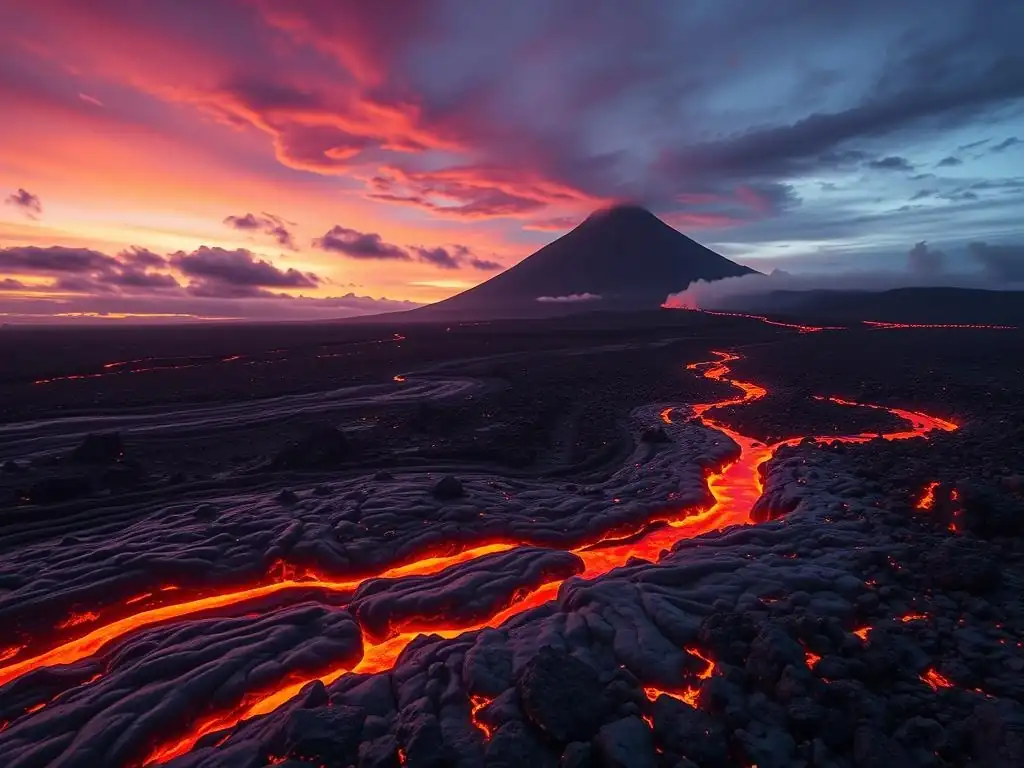
Prepare to be mesmerized by the fiery heart of our planet. Ever wondered about the silent rivers of fire that sculpt our world? Dive in and discover the secrets behind different types of lava flows, from the ropy pahoehoe to the jagged a'a, and understand how these molten landscapes are constantly evolving. But that's just the beginning... what makes each flow unique, and how do they impact the land and the people living nearby? Explore further to unravel the mysteries within!
- Introduction to Lava Flows: A Volcanic Hazard
- Types of Lava Flows Explained: A Comprehensive Guide
- Comparing and Contrasting Lava Flow Types
- Factors Influencing Lava Flow Behavior
- Dangers Associated with Lava Flows: Understanding the Risks
- Monitoring and Predicting Lava Flows: Protecting Communities
- Conclusion: Appreciating the Power and Diversity of Lava Flows
- Frequently Asked Questions
- Final Reflection: Embracing the Earth's Fiery Breath
- Ignite Your Inner Volcanologist!
Introduction to Lava Flows: A Volcanic Hazard
Understanding the Nature of Lava: Molten Rock on the Surface
Lava, in its most fundamental sense, is molten rock expelled by a volcano during an eruption. This incandescent material originates from magma beneath the Earth's surface. Once magma breaches the surface and begins to flow, it is then termed lava.
The temperature of lava can range dramatically, typically between 700°C to 1,200°C (1,292°F to 2,192°F), depending largely on its chemical composition and gas content. This intense heat is capable of igniting vegetation on contact and causing severe burns, making lava flows a significant volcanic hazard. Understanding lava is crucial for comprehending volcanic processes and mitigating the risks associated with eruptions in volcanically active regions.
The journey of lava from the Earth's interior to the surface is driven by pressure differences and buoyancy. Magma, being less dense than the surrounding solid rock, rises towards the surface. This ascent is often facilitated by fractures and weaknesses in the Earth's crust.
When the pressure exerted by the magma exceeds the strength of the surrounding rocks, or when pathways to the surface are created, an eruption occurs. The characteristics of the erupted lava, such as its viscosity and flow behavior, are determined by a complex interplay of factors, including its chemical composition, temperature at the time of eruption, and the amount of dissolved gases it contains. These factors are what ultimately dictate the type of lava flow that will form and the hazards it will pose.
The Viscosity Factor: What Makes Lava Flows Different?
Viscosity, often described as a fluid's resistance to flow, is the paramount property that dictates the behavior of lava flows. High viscosity lava is thick and sticky, resisting movement, whereas low viscosity lava is thin and runny, flowing more easily. Imagine the difference between honey and water – honey is highly viscous, while water has low viscosity. This analogy directly applies to lava; different types of lava exhibit vastly different viscosities, leading to diverse flow characteristics and landform creation. The primary control on lava viscosity is its silica (silicon dioxide, SiO2) content.
Lavas with high silica content, typically classified as felsic or intermediate in composition (like rhyolite or andesite), are significantly more viscous. Silica molecules tend to link together in molten rock, forming complex chains that hinder flow. Conversely, lavas with low silica content, known as mafic lavas (like basalt), have fewer silica linkages and thus exhibit lower viscosity.
Temperature also plays a role; hotter lava is generally less viscous than cooler lava of the same composition. Furthermore, the presence of crystals and dissolved gases can influence viscosity, although silica content and temperature are the dominant factors. Understanding lava viscosity is key to predicting the speed, distance, and style of lava flows, which is essential for hazard assessment and mitigation efforts in volcanic areas.
Types of Lava Flows Explained: A Comprehensive Guide
Pahoehoe Lava: The Smooth, Ropy Flow
Characteristics of Pahoehoe Lava: Texture and Appearance
Pahoehoe (pronounced pa-hoy-hoy) lava flows are characterized by their smooth, gently undulating, or ropy surfaces. The Hawaiian term "pahoehoe" itself describes this texture, meaning "smooth, unbroken lava." When fresh, pahoehoe lava often has a glassy, almost skin-like appearance, sometimes displaying beautiful iridescent sheens. As it cools, it can wrinkle and fold into intricate patterns resembling coils of rope or swirling braids. The color of pahoehoe lava is typically dark gray to black, but it can also exhibit reddish or brownish hues depending on its oxidation state and mineral content.
The smooth texture of pahoehoe is due to its high temperature and relatively low viscosity at the time of emplacement. As the lava flows, its surface cools and solidifies, forming a thin, flexible skin. Beneath this skin, the molten lava continues to flow, causing the surface to wrinkle and fold. This process creates the characteristic ropy texture and allows pahoehoe flows to advance in lobes and tongues, often creating intricate patterns across the landscape. Pahoehoe flows are generally thinner than other types of lava flows, typically ranging from a few centimeters to a few meters in thickness.
Formation of Pahoehoe: How it Creates Lava Tubes
Pahoehoe lava flows are not only visually distinct but also form unique geological features, most notably lava tubes. Lava tubes are natural conduits formed within a lava flow where molten lava flows beneath a solidified crust. The formation process begins as the surface of a pahoehoe flow cools and crusts over, insulating the molten lava flowing beneath. This insulation allows the interior of the flow to remain hot and fluid, enabling it to travel longer distances without cooling and solidifying completely.
As the eruption continues, lava keeps flowing through these insulated channels, effectively creating underground rivers of molten rock. Once the eruption ceases and the lava supply is cut off, the molten lava drains out of the tube, leaving behind a hollow tunnel. These lava tubes can extend for kilometers, acting as efficient pathways for lava transport and contributing to the extensive reach of some pahoehoe flows. For example, the Kazumura Cave in Hawaii, one of the longest lava tubes in the world, formed within a pahoehoe flow from the Kilauea volcano, stretching over 65 kilometers (40 miles).
A'a Lava: The Rough, Jagged Flow
Characteristics of A'a Lava: Texture and Appearance
A'a (pronounced ah-ah) lava flows present a stark contrast to pahoehoe, characterized by their rough, jagged, and clinkery surfaces. The term "a'a" is also Hawaiian, and aptly describes the sound one might make walking across this type of lava – a sharp cry of pain. A'a lava is composed of loose, fragmented pieces of solidified lava, ranging in size from centimeters to meters, creating a chaotic and rubbly appearance. The surface is so irregular and sharp that traversing an a'a flow can be extremely difficult and even dangerous.
The texture of a'a lava results from its higher viscosity compared to pahoehoe, combined with a higher eruption rate and gas content. As a'a lava flows, it cools and solidifies more quickly on the surface, forming a thick, brittle crust. The continued movement of the molten lava underneath this crust causes it to fracture and break apart, creating the characteristic jagged fragments.
These fragments are constantly tumbling and colliding as the flow advances, contributing to the chaotic and rubbly nature of the a'a surface. A'a flows are typically thicker than pahoehoe, ranging from a few meters to tens of meters in thickness.
Formation of A'a Lava: How Gas Content Impacts Flow
The formation of a'a lava is significantly influenced by its gas content and the way these gases escape during flow. A'a lava generally has a higher gas content than pahoehoe. As the lava erupts and flows, these dissolved gases attempt to escape. In the more viscous a'a lava, gas escape is not as smooth or efficient as in pahoehoe. The gases become trapped within the cooling lava, contributing to its fragmentation and the development of its rough surface.
The process of gas escape in a'a lava often involves explosive bursts, further breaking up the solidifying crust and adding to the jagged texture. This degassing process is more violent and disruptive in a'a compared to pahoehoe, where gas escape is more gradual and contributes to the smooth, skin-like surface. Furthermore, the higher viscosity of a'a lava impedes the formation of a continuous, insulating crust like that seen in pahoehoe.
Instead, the surface crust of a'a is constantly broken and overturned, exposing the still-molten interior and promoting further fragmentation. The combination of higher gas content and viscosity creates the distinctive, rough, and chaotic character of a'a lava flows.
Block Lava: Massive Angular Blocks
Characteristics of Block Lava: Viscous and Slow-Moving
Block lava flows are characterized by their surface composed of massive, angular blocks of solidified lava. These blocks are typically smoother than the fragments in a'a lava but are still irregular and can be quite large, ranging from several meters to tens of meters in diameter. Block lava flows are significantly more viscous than both pahoehoe and a'a lavas, making them the slowest-moving type of lava flow. Their advance is often described as sluggish and ponderous, with blocks slowly grinding and tumbling over each other.
The high viscosity of block lava is primarily attributed to its high silica content, typically found in andesitic to rhyolitic compositions. This high silica content makes the lava extremely sticky and resistant to flow. Block lava flows tend to be very thick, often tens to hundreds of meters in thickness, reflecting their slow and viscous nature. Due to their slow movement and high viscosity, block lava flows typically do not travel as far as pahoehoe or a'a flows, often confined to steeper slopes near the volcanic vent.
Formation of Block Lava: High Silica Content and Steep Slopes
The formation of block lava is directly linked to its high silica content and the environment in which it erupts. The high silica content, as mentioned, results in extremely viscous lava. This viscosity prevents the lava from flowing smoothly or forming the ropy textures of pahoehoe or the fragmented surface of a'a. Instead, as block lava flows, the surface rapidly cools and solidifies into a thick crust. The immense pressure from the molten lava beneath this crust causes it to fracture into large, angular blocks.
The steep slopes often associated with volcanoes that erupt block lava also play a crucial role in their formation. Gravity acts on the viscous lava, causing it to break apart as it moves down steep inclines. The combination of high viscosity, rapid surface cooling, and movement down steep slopes results in the characteristic blocky surface texture.
Block lava flows are commonly associated with stratovolcanoes, which are known for their explosive eruptions and the production of more viscous, silica-rich lavas. Mount Shasta in California and Mount Fuji in Japan are examples of stratovolcanoes that have produced block lava flows in their history.
Pillow Lava: Underwater Eruptions
Characteristics of Pillow Lava: Bulbous Shapes
Pillow lava is unique because it forms exclusively underwater, either in the deep ocean or in subglacial environments. Its most distinctive characteristic is its shape – it is composed of a collection of bulbous, pillow-shaped lobes that are stacked upon each other. These pillow shapes are typically a meter or less in diameter and have a smooth, glassy crust. The glassy crust is a result of the rapid cooling of the lava upon contact with water. The interior of the pillows can be either glassy or crystalline, depending on the cooling rate and lava composition.
Pillow lava formations often exhibit a radiating fracture pattern on their surface, further accentuating their pillow-like appearance. The color of pillow lava can vary depending on its composition and the degree of alteration by seawater, ranging from dark gray to black, and sometimes exhibiting greenish or brownish tints due to mineral alteration. Pillow lava is a very common feature on the ocean floor, forming the vast majority of the oceanic crust at mid-ocean ridges and seamounts.
Formation of Pillow Lava: Rapid Cooling in Water
The formation of pillow lava is a direct consequence of the rapid cooling of lava when it erupts underwater. When molten lava comes into contact with water, the surface instantly quenches, forming a solid, glassy skin. This skin acts as a barrier, preventing the rapid dispersal of the molten lava within. As more lava is extruded from the vent, it inflates this glassy skin, forming a lobe or "pillow." This process repeats itself continuously, with new pillows budding out from the ends of existing ones, creating the characteristic stacked, bulbous structure of pillow lava flows.
The rapid cooling not only forms the glassy crust but also limits the flow distance of individual pillows. As each pillow solidifies relatively quickly, the lava flow advances by the continuous formation and stacking of new pillows at the flow front. The spaces between pillows are often filled with volcanic glass fragments and hyaloclastite, which is formed by the explosive fragmentation of lava due to rapid cooling in water. Pillow lava provides valuable insights into underwater volcanic processes and is a key component in understanding the geological history of the ocean floor.
Comparing and Contrasting Lava Flow Types
Pahoehoe vs. A'a: Key Differences in Appearance and Formation
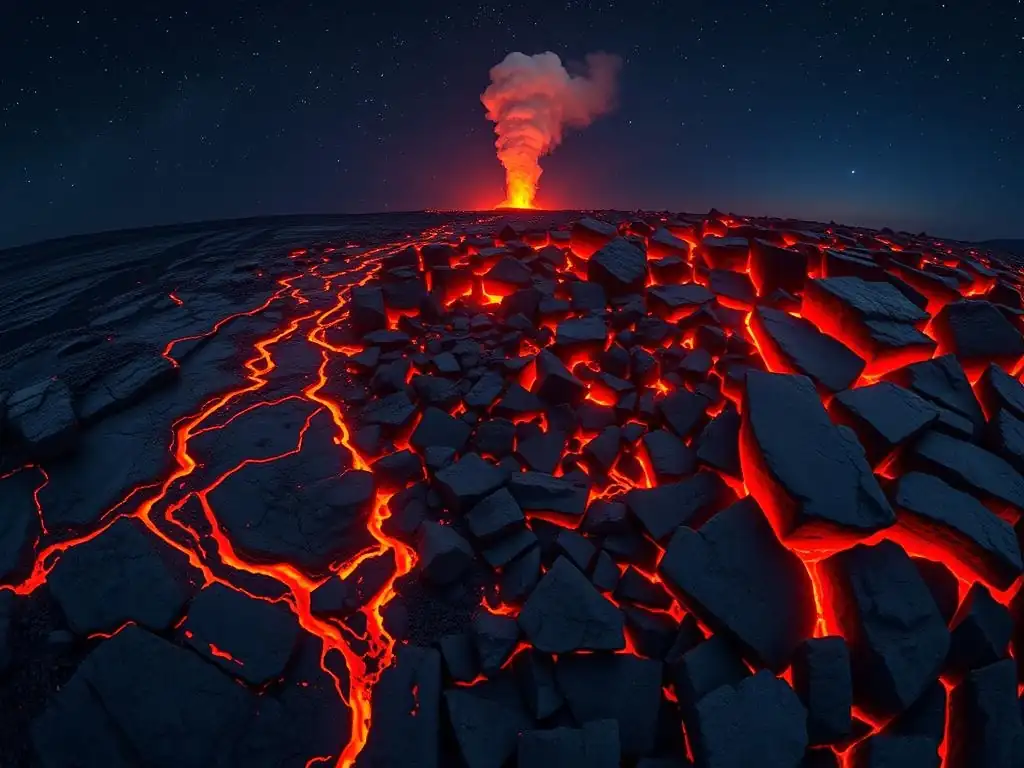
Pahoehoe and a'a lavas, while both basaltic in composition and often erupting from the same volcano (like Kilauea in Hawaii), exhibit striking differences in appearance and formation. Pahoehoe is characterized by its smooth, ropy texture, formed by the gentle wrinkling of a thin surface skin as molten lava flows beneath. A'a, in contrast, presents a rough, jagged, and fragmented surface, resulting from the fracturing and overturning of a thicker, more brittle crust. These textural differences stem primarily from variations in viscosity, gas content, and eruption rate.
Pahoehoe lava is generally hotter and less viscous at the time of eruption, allowing it to flow more smoothly and form lava tubes. A'a lava is cooler and more viscous, with a higher gas content, leading to a more chaotic and fragmented flow behavior.
Pahoehoe flows tend to be thinner and faster-moving initially but can transition into a'a flows as they cool and lose gas content further down slope. This transition highlights that pahoehoe and a'a are not necessarily distinct lava types but rather different expressions of the same basaltic lava under varying conditions of cooling, degassing, and flow dynamics.
Block Lava vs. A'a: Viscosity and Flow Rate
Block lava and a'a lava, while both possessing rough surfaces, differ significantly in viscosity, flow rate, and the size of their surface fragments. Block lava is considerably more viscous than a'a lava due to its higher silica content (andesitic to rhyolitic composition compared to basaltic for a'a). This higher viscosity results in much slower flow rates for block lava, often moving at speeds of meters per hour or even less, compared to a'a which can advance at meters per minute.
The surface fragments also differ considerably. Block lava is composed of large, angular blocks, often meters in size, with relatively smooth surfaces compared to the smaller, highly irregular, and jagged clinker fragments of a'a lava. While a'a forms due to the fracturing of a relatively thin crust, block lava results from the fracturing of a very thick, solidifying crust under the immense pressure of highly viscous lava beneath. Both a'a and block lava flows are hazardous, but their slower flow rate generally allows for easier evacuation from block lava flows compared to the potentially faster-moving a'a flows.
Pillow Lava vs. Subaerial Flows: The Influence of Water
Pillow lava stands apart from pahoehoe, a'a, and block lava as it is exclusively formed underwater, highlighting the profound influence of water on lava flow morphology. Subaerial flows (pahoehoe, a'a, and block lava) cool in air, allowing for a relatively slow cooling process that leads to the development of various surface textures depending on viscosity and degassing. Pillow lava, in contrast, undergoes extremely rapid cooling upon contact with water, instantly forming a glassy crust.
This rapid cooling dictates the bulbous, pillow-like shape of pillow lava and limits the flow distance of individual pillows. Subaerial flows can travel for tens of kilometers, particularly pahoehoe flows utilizing lava tubes. Pillow lava flows advance by the continuous budding and stacking of individual pillows, typically forming much more localized accumulations around underwater vents or fissures. The presence of water not only determines the shape and texture of pillow lava but also influences the overall style of eruption, often leading to effusive, non-explosive underwater eruptions due to the confining pressure of the water column.
Factors Influencing Lava Flow Behavior
Lava Composition: Silica Content and Viscosity
The chemical composition of lava, particularly its silica (SiO2) content, is the primary determinant of its viscosity and consequently, its flow behavior. Silica-rich lavas, such as rhyolites and andesites, contain a high proportion of silicon dioxide. This silica forms complex molecular chains within the molten rock, increasing internal friction and making the lava highly viscous. These viscous lavas tend to flow slowly, forming thick, short flows like block lava, and are often associated with explosive eruptions due to their ability to trap gases.
Conversely, silica-poor lavas, like basalts, have a lower silica content. This results in simpler molecular structures and reduced internal friction, making them less viscous and more fluid. Basaltic lavas flow more readily, forming thin, extensive flows like pahoehoe and a'a, and are typically associated with effusive, less explosive eruptions. The difference in silica content, even a few percentage points, can drastically alter lava viscosity and the resulting volcanic landforms. For instance, rhyolitic lava can be up to 100,000 times more viscous than basaltic lava.
Eruption Rate: How Much Lava is Being Erupted?
The eruption rate, or the volume of lava erupted per unit of time, significantly influences the extent and speed of lava flows. High eruption rates supply a large volume of lava quickly, leading to faster-moving and potentially longer lava flows. A high eruption rate can overwhelm cooling effects, maintaining the lava's temperature and fluidity over greater distances. For example, during periods of peak activity at Kilauea volcano in Hawaii, high eruption rates have fueled pahoehoe flows that traveled for tens of kilometers, reaching the ocean.
Conversely, low eruption rates result in slower, shorter lava flows. With a lower volume of lava being supplied, cooling becomes a more dominant factor, increasing viscosity and slowing down the flow's advance. Low eruption rates might produce thicker, shorter flows, or even lead to lava flows that stagnate and solidify relatively close to the vent. The eruption rate is a dynamic parameter that can change throughout an eruption, leading to variations in lava flow behavior over time.
Slope Angle: The Role of Gravity
Slope angle plays a crucial role in determining the speed and direction of lava flows. Gravity is the driving force behind lava flow movement, and steeper slopes enhance the gravitational pull, causing lava to flow faster and further downslope. Lava flows on steep slopes can achieve higher velocities and are more likely to travel longer distances. Conversely, lava flows on gentle slopes will move much slower and may spread out laterally rather than advancing rapidly in a single direction.
The topography of the terrain also influences lava flow paths. Lava flows naturally follow the path of least resistance, often channeling into valleys and topographic depressions. Steep canyons or channels can confine lava flows, increasing their velocity and potentially concentrating their destructive power in specific areas. Understanding the slope angle and topographic features of a volcanic area is essential for predicting lava flow paths and assessing potential hazards.
Gas Content: Driving Force Behind Explosivity and Flow
The amount and type of dissolved gases within magma and lava have a profound impact on both eruption explosivity and lava flow behavior. Magma contains dissolved gases, primarily water vapor, carbon dioxide, sulfur dioxide, and hydrogen sulfide. These gases are under pressure deep within the Earth. As magma rises towards the surface, the pressure decreases, and the dissolved gases begin to exsolve, forming bubbles.
In highly viscous, silica-rich magmas, gas bubbles struggle to escape due to the magma's stickiness. This gas buildup can lead to explosive eruptions. However, even in effusive eruptions producing lava flows, gas content influences flow behavior. Higher gas content can reduce lava viscosity to some extent, promoting faster flow rates, particularly in pahoehoe flows. The release of gases from lava also contributes to the fragmentation of a'a lava, creating its rough surface. Furthermore, the degassing process can influence the cooling rate of lava, as gas escape can carry away heat.
Dangers Associated with Lava Flows: Understanding the Risks
Direct Hazards: Burns and Entrapment
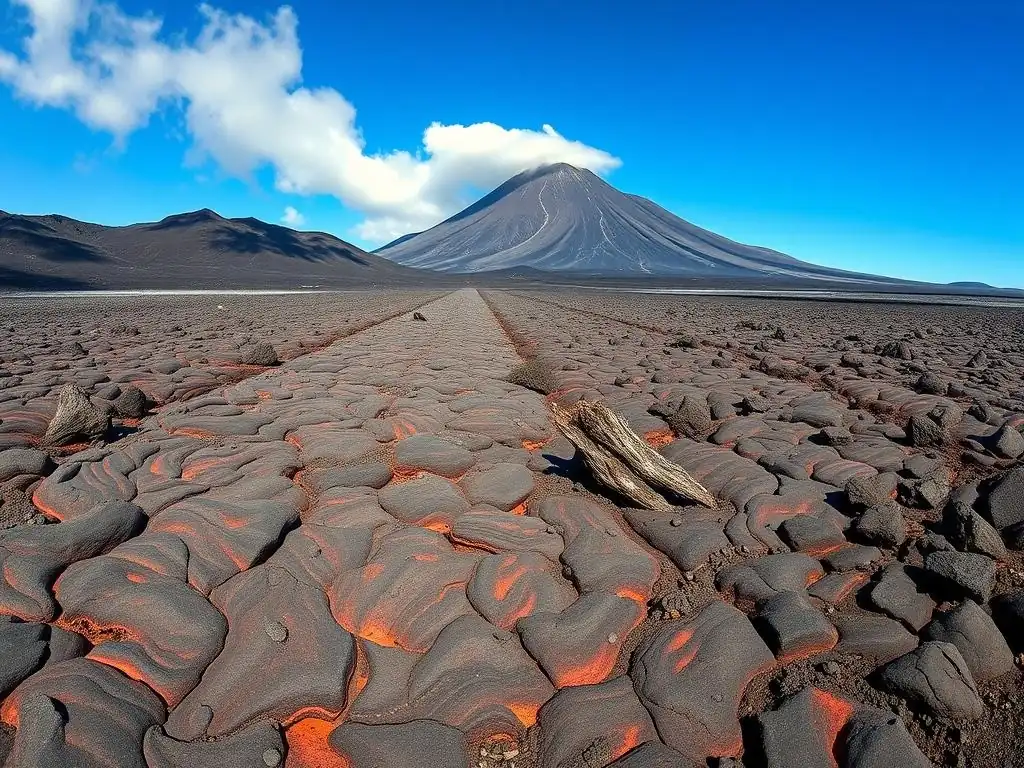
Lava flows present direct and immediate hazards primarily due to their extreme heat and destructive physical force. Direct contact with lava will cause severe burns and is almost always fatal. The temperature of lava, ranging from 700°C to 1,200°C, is capable of instantly igniting combustible materials and inflicting third-degree burns within seconds. Even proximity to a lava flow can pose a burn risk due to intense radiant heat.
Entrapment is another significant direct hazard. While lava flows are often portrayed as fast-moving rivers of fire, some types, particularly a'a and block lava, can advance at speeds that, while seemingly slow, can still outpace a person on foot, especially on uneven terrain. Individuals who underestimate the speed or change in direction of a lava flow can become trapped, particularly in topographic depressions or areas surrounded by dense vegetation that can be ignited by the advancing lava.
Indirect Hazards: Fires and Gas Emissions
Beyond the direct threat of burns and entrapment, lava flows also pose several indirect hazards. Lava flows ignite vegetation and structures in their path, causing wildfires that can spread rapidly and engulf surrounding areas. These lava-induced fires can generate significant amounts of smoke and ash, impacting air quality and visibility, and posing respiratory hazards. Furthermore, fires can damage infrastructure and property beyond the direct path of the lava flow itself.
Volcanic gas emissions are another significant indirect hazard associated with lava flows. Lava releases various gases, including sulfur dioxide (SO2), carbon dioxide (CO2), and hydrogen sulfide (H2S). Sulfur dioxide reacts with moisture in the air to form acid rain and volcanic smog (vog), which can irritate the respiratory system, eyes, and skin, and damage crops and infrastructure. Carbon dioxide, while odorless and colorless, can accumulate in low-lying areas and displace oxygen, creating potentially lethal conditions. Hydrogen sulfide is toxic and has a characteristic rotten egg smell; even low concentrations can be irritating, and higher concentrations can be dangerous.
Environmental Impact: Destruction of Vegetation and Infrastructure
The environmental impact of lava flows is profound and long-lasting. Lava flows completely destroy vegetation in their path, burying forests, grasslands, and agricultural land under a layer of solidified rock. This destruction can have devastating consequences for ecosystems and agriculture, requiring decades or even centuries for ecosystems to fully recover. The solidified lava also alters drainage patterns, stream courses, and soil profiles, further impacting the landscape.
Infrastructure in the path of lava flows is also completely destroyed. Buildings, roads, pipelines, and power lines are engulfed and rendered unusable. The economic costs of lava flow damage can be substantial, particularly in densely populated or agriculturally important areas. While volcanic eruptions and lava flows are natural processes, their impact on human environments and natural ecosystems can be significant and require careful planning and mitigation strategies in volcanically active regions.
Monitoring and Predicting Lava Flows: Protecting Communities
Volcanologists' Role: Studying Lava Flow Dynamics
Volcanologists play a crucial role in monitoring, studying, and predicting lava flow behavior to protect communities living near active volcanoes. They employ a variety of techniques to understand the dynamics of lava flows, including field observations, laboratory experiments, and numerical modeling. Field observations involve mapping lava flows, measuring flow rates, temperatures, and viscosity, and collecting lava samples for chemical analysis. Laboratory experiments simulate lava flow conditions to study the effects of different parameters like viscosity, slope, and cooling rate.
Numerical models are used to simulate lava flow paths and predict their potential reach based on various eruption scenarios and topographic data. Volcanologists also study past lava flow events to understand the eruptive history of a volcano and identify areas that are at higher risk from future lava flows. By combining these approaches, volcanologists contribute to a better understanding of lava flow hazards and provide crucial information for hazard assessment and mitigation efforts.
Remote Sensing Techniques: Using Satellites and Drones
Remote sensing techniques, utilizing satellites and drones, have become indispensable tools for monitoring lava flows, particularly in remote or hazardous volcanic regions. Satellites equipped with thermal infrared sensors can detect and track the thermal signature of active lava flows, even through clouds and at night. This allows for continuous monitoring of lava flow extent, advance rate, and temperature changes, providing valuable real-time information to volcanologists and emergency responders. Satellite data can also be used to create detailed maps of lava flow inundation zones.
Drones offer a more flexible and high-resolution platform for lava flow monitoring. Equipped with cameras, thermal sensors, and GPS, drones can be deployed to acquire detailed imagery and thermal data of active lava flows from a safe distance. Drones can be used to map lava flow boundaries with high precision, assess damage to infrastructure, and monitor gas emissions. The use of remote sensing technologies enhances the ability to monitor lava flow activity comprehensively and effectively, contributing to improved hazard assessment and early warning systems.
Lava Flow Hazard Maps: Assessing Risk Zones
Lava flow hazard maps are essential tools for assessing risk zones and guiding land-use planning and emergency preparedness in volcanic areas. These maps delineate areas that are potentially susceptible to lava flow inundation based on past eruption history, topographic analysis, and numerical modeling. Hazard maps typically categorize areas into different risk zones, ranging from high-risk zones close to volcanic vents to lower-risk zones further away.
High-risk zones are areas that have been frequently inundated by lava flows in the past and are likely to be affected again in future eruptions. These zones are generally considered unsuitable for permanent habitation or critical infrastructure. Lower-risk zones may be less frequently affected but still pose a potential hazard. Lava flow hazard maps are used by land-use planners to guide development away from high-risk areas and by emergency management agencies to develop evacuation plans and allocate resources for volcanic crises. Regular updates to hazard maps are crucial as volcanic landscapes and eruption patterns can change over time.
Conclusion: Appreciating the Power and Diversity of Lava Flows
The Dynamic Nature of Volcanic Landscapes
Lava flows are fundamental processes that shape and reshape volcanic landscapes, highlighting the dynamic and ever-changing nature of our planet. From the smooth, ropy surfaces of pahoehoe to the jagged, rubbly fields of a'a, and the massive, angular blocks of block lava, the diversity of lava flow types reflects the complex interplay of factors that govern volcanic activity. Pillow lava, formed in the depths of the ocean, reveals the pervasive volcanism that shapes the Earth's seafloor and creates new oceanic crust.
The continuous cycle of volcanic eruptions and lava flows creates new land, destroys existing landscapes, and influences ecosystems over geological timescales. Volcanic landscapes are constantly being sculpted and modified by these "silent rivers of fire," demonstrating the immense power and creative force of volcanic processes. Understanding lava flows is not only crucial for hazard mitigation but also for appreciating the dynamic and transformative nature of volcanic environments.
Staying Informed and Prepared: Resources for Residents and Visitors Near Active Volcanoes
For residents and visitors in areas near active volcanoes, staying informed and prepared is paramount for mitigating the risks associated with lava flows. Reliable sources of information include volcano observatories, such as the U.S. Geological Survey (USGS) Volcano Hazards Program and local geological surveys, which provide real-time updates on volcanic activity, hazard assessments, and safety guidelines. Understanding volcano alert levels and evacuation procedures is crucial for responding effectively during a volcanic crisis.
Developing a family emergency plan, including evacuation routes and meeting points, and preparing a go-bag with essential supplies are important preparedness measures. For visitors, respecting volcano closures and heeding warnings from authorities are essential for safety. Learning about the specific volcanic hazards in the area and understanding the potential impacts of lava flows can empower individuals to make informed decisions and take appropriate actions to protect themselves and their communities in volcanically active regions.
Frequently Asked Questions
What are the main types of lava flows?
The main types are pahoehoe and ʻaʻā. Pahoehoe is smooth and ropy, while ʻaʻā is rough and blocky.
What makes pahoehoe lava different from ʻaʻā lava?
Pahoehoe lava has a lower viscosity and a higher temperature, allowing it to flow more smoothly. ʻAʻā lava is cooler and more viscous, resulting in its jagged surface.
How does the composition of lava affect its flow type?
Lava with high silica content tends to be more viscous and form ʻaʻā flows. Lava with lower silica content flows more easily and forms pahoehoe flows.
What is block lava, and how is it different from ʻaʻā?
Block lava is another type of lava flow characterized by large, angular blocks. It is typically more viscous than ʻaʻā and often associated with andesitic or dacitic lavas.
Are there any other less common types of lava flows?
Yes, there are other types, such as pillow lava, which forms underwater, and sheet flows, which are thin, broad flows that can cover large areas.
Final Reflection: Embracing the Earth's Fiery Breath
The exploration of lava flows, as detailed in this article, might seem like a purely scientific endeavor, but it's profoundly relevant today because it connects us to the dynamic and powerful forces shaping our planet. Understanding the nuances of 'types of lava flows explained' allows us to better predict volcanic activity, mitigate potential disasters, and appreciate the raw, untamed beauty of Earth's geological processes.
The impact of volcanic activity, and therefore our understanding of it, extends far beyond scientific journals. It shapes landscapes, influences climate, and even inspires art and mythology. The ongoing fascination with volcanoes stems from their dual nature: destructive and creative. They are a constant reminder of the Earth's power, a power that both threatens and sustains life. The mountains are fountains of men as well as of rivers, of industry as well as of water, of poetry as well as of mineral wealth, of song as well as of wood and pasturage.
- John Muir, reminding us of the multifaceted influence of geological formations.
As you consider the different types of lava flows explained within these pages, I invite you to reflect on your own relationship with the natural world. How can we, as individuals and as a society, better understand and respect the forces that shape our planet? Let this knowledge inspire you to become a more informed and responsible steward of the Earth, appreciating both its beauty and its inherent power.
Ignite Your Inner Volcanologist!
Thanks for diving into the fascinating world of lava flows with us! We hope you've gained a deeper appreciation for the power and diversity of these molten rivers. Now, it's time to put that newfound knowledge to good use!
Here are a few ways you can continue your journey:
- Start a Lava Flow Journal: Document your observations from the article, draw your favorite types of lava flow, and research real-world examples from volcanoexplorers.org. This personal record will solidify your understanding and inspire future explorations.
- Share this article with another geology lover.
- Leave a comment. What is the most interesting lava flow fact that you learnt?
Ready to become a true Volcano Explorer? What fascinating lava flow fact will you share first?