
Early Warning Mirage? Can We Truly Predict Volcanic Gas Releases?

Welcome to Volcano Explorers, where the Earth's fiery heart beats loud! Ever wondered if we could truly anticipate a volcano's next breath? Dive into our latest exploration, "Early Warning Mirage? Can We Truly Predict Volcanic Gas Releases?" and uncover the complex science behind predicting volcanic gas emissions, a critical key to volcano safety. But is it a reliable early warning, or just a tantalizing mirage? Read on to find out, and begin your journey into the captivating and potentially dangerous world of volcanoes!
- Introduction: The Challenge of Predicting Volcanic Gas Emissions
- Current Methods for Monitoring Volcanic Gases
- Limitations of Current Prediction Models for Volcanic Gas
- Case Studies: Examining Past Volcanic Gas Events
- Emerging Technologies and Future Directions in Volcanic Gas Prediction
- The Role of Community Preparedness and Education
- Conclusion: The Future of Predicting Volcanic Gas Emissions
-
Frequently Asked Questions
- Can volcanologists accurately predict the exact timing of volcanic gas emissions?
- What tools do volcanologists use to monitor volcanic gas emissions?
- Why is predicting volcanic gas emissions important?
- What are some of the challenges in predicting volcanic gas emissions?
- How does the study of volcanic gas emissions contribute to our understanding of volcanoes?
- Final Reflection: Unveiling the Volcanic Breath
- Ignite Your Inner Volcanologist: Take Action Now!
Introduction: The Challenge of Predicting Volcanic Gas Emissions
Understanding the Threat of Volcanic Gases: A Volcanic Hazard Overview
Volcanic gases are a significant and often underestimated hazard associated with volcanic activity. While dramatic eruptions involving lava flows and pyroclastic flows capture public attention, the silent threat of volcanic gases can be equally, if not more, dangerous, particularly to communities living near active volcanoes.
These gases, released both during eruptions and in periods of volcanic quiescence, are complex mixtures that can include water vapor (H2O), carbon dioxide (CO2), sulfur dioxide (SO2), hydrogen sulfide (H2S), hydrogen halides (HCl, HF), and other trace elements. The specific composition and concentration of these gases vary depending on the volcano, the magma source, and the stage of volcanic activity.
The dangers posed by volcanic gases are multifaceted. High concentrations of gases like sulfur dioxide (SO2) can create acid rain, damaging vegetation, infrastructure, and impacting water quality. Hydrogen sulfide (H2S) is toxic and, even in low concentrations, can cause irritation to the eyes, nose, and throat. Carbon dioxide (CO2), while not directly toxic in low concentrations, is heavier than air and can accumulate in low-lying areas, displacing oxygen and creating deadly, invisible traps. Furthermore, volcanic gas emissions can be an indicator of changes in volcanic activity, making their monitoring and prediction crucial for hazard assessment and mitigation.
The Importance of Forecasting Gas Releases for Volcanic Safety
The ability to accurately forecast volcanic gas releases is paramount for ensuring the safety and well-being of populations residing in volcanically active regions. Predicting changes in gas emission rates and compositions can provide crucial early warning signals of impending volcanic unrest or eruptions. An increase in the flux of certain gases, like sulfur dioxide (SO2), can indicate magma rising closer to the surface, increasing the likelihood of an eruption. Conversely, changes in the ratio of different gases, such as CO2 to SO2, might signify changes in magma degassing processes and potentially signal shifts in eruption style.
Effective forecasting of volcanic gas releases allows for timely implementation of safety measures. This includes issuing warnings to communities at risk, enabling evacuations if necessary, and advising on preventative actions such as staying indoors during periods of high gas concentrations.
For example, understanding the potential for sulfur dioxide plumes to affect air quality can help public health officials issue advisories to vulnerable populations, such as individuals with respiratory conditions. Furthermore, accurate gas forecasts are essential for aviation safety, as volcanic ash and gases, particularly sulfur dioxide, can pose significant hazards to aircraft engines and visibility, as demonstrated during the 2010 Eyjafjallajökull eruption in Iceland.
Current Methods for Monitoring Volcanic Gases
Ground-Based Gas Monitoring Techniques: Differential Optical Absorption Spectroscopy (DOAS), Fourier Transform Infrared Spectroscopy (FTIR)
Ground-based monitoring stations play a vital role in the continuous assessment of volcanic gas emissions. Two prominent techniques employed are Differential Optical Absorption Spectroscopy (DOAS) and Fourier Transform Infrared Spectroscopy (FTIR). DOAS instruments measure the absorption of ultraviolet and visible light by specific gases, such as sulfur dioxide (SO2) and nitrogen dioxide (NO2), in the atmosphere. By analyzing the spectrum of light that passes through the volcanic plume, scientists can determine the concentration and flux of these gases. DOAS systems are often deployed as networks around volcanoes, providing real-time data on gas emissions from various vents and fumaroles.
FTIR spectroscopy, on the other hand, utilizes infrared light to analyze a broader range of volcanic gases, including water vapor (H2O), carbon dioxide (CO2), sulfur dioxide (SO2), hydrogen sulfide (H2S), and hydrogen halides (HCl, HF). FTIR instruments measure the absorption and emission of infrared radiation by gas molecules, providing detailed information about the gas composition and temperature of volcanic plumes.
Portable FTIR systems are also used for field measurements, allowing volcanologists to directly sample gas emissions from fumaroles and vents. Both DOAS and FTIR techniques offer high temporal resolution, enabling the detection of rapid changes in gas emissions, which can be crucial for short-term volcanic hazard assessment.
Satellite-Based Remote Sensing of Volcanic Gas Plumes
Satellite-based remote sensing provides a powerful tool for monitoring volcanic gas emissions on a global scale, particularly in remote or inaccessible volcanic regions. Satellites equipped with specialized sensors, such as the Ozone Monitoring Instrument (OMI) and the Tropospheric Monitoring Instrument (TROPOMI), can detect and measure sulfur dioxide (SO2) and other volcanic gases in the atmosphere. These instruments operate by measuring the absorption of solar radiation by gases in the Earth's atmosphere, allowing for the mapping of volcanic plumes and the estimation of gas fluxes over large areas.
Satellite data offers several advantages for volcanic gas monitoring. It provides a synoptic view, capturing gas plumes from multiple volcanoes simultaneously, which is essential for regional and global volcanic hazard monitoring. Furthermore, satellite observations are continuous and independent of ground-based infrastructure, making them invaluable for monitoring volcanoes in developing countries or remote locations where ground-based networks may be limited.
Satellite data can also be used to track the dispersion of volcanic plumes and assess their impact on air quality and aviation safety. For instance, during the 2018 Kilauea eruption in Hawaii, satellite data played a crucial role in monitoring the extensive sulfur dioxide plume and its impact on the surrounding islands.
Analyzing Gas Composition: Identifying Key Volcanic Gases (SO2, CO2, H2S)
Analyzing the composition of volcanic gases is critical for understanding magmatic processes and assessing volcanic hazards. Certain gases are particularly informative indicators of volcanic activity. Sulfur dioxide (SO2) is often considered a key indicator gas. A significant increase in SO2 emissions can signal the ascent of magma towards the surface, as magma typically releases sulfur-rich gases during decompression. For example, ahead of the 1991 eruption of Mount Pinatubo in the Philippines, a substantial increase in SO2 emissions was observed, providing crucial warning signs of the impending eruption.
Carbon dioxide (CO2) is another important volcanic gas, often being the most abundant component in volcanic emissions. While CO2 emissions may not show rapid changes like SO2 during the immediate pre-eruptive phase, long-term monitoring of CO2 fluxes can provide insights into the overall degassing budget of a volcano and magma supply rates. Changes in the CO2/SO2 ratio can also be significant; an increase in CO2 relative to SO2 might indicate deeper magma degassing or changes in magma composition.
Hydrogen sulfide (H2S), while typically present in lower concentrations than SO2 and CO2, is a highly toxic gas and its presence in detectable amounts can pose immediate health risks in areas near fumaroles and vents. Monitoring the concentrations of these key gases, and their ratios, provides volcanologists with vital clues about the state of a volcanic system and its potential for future activity.
Limitations of Current Prediction Models for Volcanic Gas
The Complexity of Volcanic Systems: Factors Influencing Gas Release
Predicting volcanic gas emissions is inherently challenging due to the extreme complexity of volcanic systems. Gas release is not a simple, linear process; it is influenced by a multitude of interconnected factors operating deep within the Earth and at the surface. Magma composition, for instance, plays a crucial role.
Magmas with higher volatile contents, particularly water and sulfur, will naturally produce more gas. The pressure and temperature conditions within the magma chamber and conduit system also dictate gas solubility and exsolution. As magma rises and pressure decreases, dissolved gases are released, but the rate and style of degassing are further influenced by the viscosity of the magma.
The geological structure surrounding the volcano also significantly impacts gas pathways. Faults, fractures, and permeable rock formations can act as conduits for gas migration, often leading to diffuse degassing rather than concentrated emissions from the summit vent. Hydrothermal systems, which are common in volcanic areas, can further complicate gas release.
Interaction between magmatic gases and hydrothermal fluids can alter gas compositions and emission patterns. External factors, such as tectonic stress and even atmospheric pressure changes, can also subtly influence gas release rates. This intricate web of interacting variables makes creating universally applicable predictive models for volcanic gas emissions exceedingly difficult.
Challenges in Real-Time Data Acquisition and Processing
Despite advancements in monitoring technology, significant challenges remain in acquiring and processing volcanic gas data in real-time, which is essential for timely predictions. Ground-based instruments, while providing high-resolution data, are often limited in their spatial coverage and can be vulnerable to harsh volcanic environments, including ashfall, corrosive gases, and extreme weather. Maintaining continuous operation and data transmission from remote volcanic sites can be logistically complex and expensive. Satellite-based remote sensing, while offering broad spatial coverage, has limitations in temporal resolution and sensitivity, particularly for detecting low-level gas emissions or rapid, short-lived changes.
Data processing and analysis also present challenges. Volcanic gas data streams are often noisy and require sophisticated filtering and correction techniques to extract meaningful signals. Interpreting gas data in the context of other monitoring parameters, such as seismicity, ground deformation, and thermal changes, requires integrated analysis and expert knowledge of volcanic processes.
Developing automated, real-time data processing pipelines that can reliably detect subtle but significant changes in gas emissions and provide timely alerts remains a crucial area of ongoing research and development. The sheer volume of data generated by modern monitoring networks also necessitates advanced data management and analysis tools.
Uncertainties in Modeling Magma Dynamics and Gas Transport
Accurate prediction of volcanic gas emissions relies heavily on our ability to model magma dynamics and gas transport within the volcanic system. However, our understanding of these subsurface processes is still incomplete, leading to significant uncertainties in predictive models. Magma chambers are complex, dynamic environments where magma composition, temperature, and pressure can vary spatially and temporally. Modeling magma ascent through the volcanic conduit and the associated degassing processes requires sophisticated numerical simulations that account for multiphase flow, heat transfer, and chemical reactions.
Gas transport from the magma to the surface is also a complex process influenced by factors such as magma viscosity, permeability of surrounding rocks, and the presence of fractures and faults. Current models often simplify these processes, leading to inaccuracies in predicting gas release rates and patterns. Furthermore, the interaction between magmatic gases and hydrothermal systems is not fully understood and incorporated into predictive models.
Developing more realistic and comprehensive models of magma dynamics and gas transport, validated by observational data, is crucial for improving the accuracy and reliability of volcanic gas emission predictions. This requires continued research in volcanology, geophysics, and computational modeling.
Case Studies: Examining Past Volcanic Gas Events
Case Study 1: The 2010 Eyjafjallajökull Eruption, Iceland: Gas Monitoring and Air Traffic Disruption
The 2010 eruption of Eyjafjallajökull volcano in Iceland, while not exceptionally large in terms of explosivity, had a disproportionately massive global impact due to its extensive ash and gas plume. Preceding the eruption, Icelandic volcanologists closely monitored the volcano, including gas emissions, using ground-based networks and remote sensing techniques.
Elevated levels of sulfur dioxide (SO2) were detected prior to the eruption onset, indicating magma ascent and degassing, which contributed to the overall understanding of increasing volcanic unrest. However, the primary focus of monitoring was on potential ash production and its trajectory, rather than the specific characteristics of the gas plume itself in terms of long-range transport and atmospheric effects.
The eruption produced a fine-grained ash plume that, combined with significant quantities of volcanic gases, particularly sulfur dioxide, extended across Europe. While gas concentrations at ground level were generally not hazardous at long distances, the presence of SO2 in the ash plume and its impact on aircraft engines became a major concern.
The eruption highlighted the need for improved characterization of volcanic gas plumes, not only in terms of gas composition and flux but also their physical properties and atmospheric interactions. The Eyjafjallajökull event underscored the limitations of solely focusing on ash and demonstrated the significant disruptive potential of volcanic gas plumes, particularly for aviation, even from moderate eruptions.
Case Study 2: The 1986 Lake Nyos Disaster, Cameroon: Unpredicted CO2 Release and its Consequences
The 1986 Lake Nyos disaster in Cameroon serves as a stark reminder of the deadly potential of unpredicted volcanic gas releases, particularly carbon dioxide (CO2). Lake Nyos is a crater lake situated above a volcanic vent that slowly releases CO2 into the lake water. Over time, CO2 accumulated in the deep, stable layers of the lake, creating a highly stratified and unstable system.
In August 1986, a limnic eruption, possibly triggered by a landslide or a small volcanic disturbance, caused the sudden overturn of the lake water. This rapid overturn released a massive cloud of dissolved CO2 into the surrounding atmosphere.
The CO2 gas, being heavier than air, flowed down valleys surrounding the lake, suffocating thousands of people and livestock in nearby villages. Estimates suggest that around 1,700 people perished in the disaster. Prior to the event, there was little awareness of the potential for such a catastrophic CO2 release from Lake Nyos, and no monitoring systems were in place to detect the gradual buildup of CO2 or provide early warning.
The Lake Nyos disaster highlighted the critical need for monitoring volcanic lakes and understanding the risks associated with dissolved gases, particularly CO2, even in volcanoes considered to be in a quiescent state. It also emphasized the importance of community education and preparedness for less conventional volcanic hazards, such as limnic eruptions.
Lessons Learned from Past Events: Improving Prediction Accuracy
Analyzing past volcanic gas events, such as the Eyjafjallajökull and Lake Nyos cases, provides crucial lessons for improving prediction accuracy and mitigating volcanic gas hazards. The Eyjafjallajökull eruption highlighted the need to consider the broader impacts of volcanic gas plumes, beyond just ash, particularly for aviation and long-range atmospheric effects. This necessitates enhancing our ability to model plume dispersal and gas-ash interactions, and to integrate gas monitoring data into aviation hazard assessments.
The Lake Nyos disaster underscored the importance of recognizing and monitoring less obvious volcanic gas hazards, such as CO2 accumulation in volcanic lakes. It emphasized the need for proactive monitoring of volcanic lakes and the development of early warning systems for limnic eruptions, even in areas perceived as low volcanic risk.
More broadly, both cases reinforce the need for multi-parameter monitoring approaches that integrate gas data with other geophysical and geochemical observations. Improved data processing and analysis techniques are crucial for extracting meaningful signals from complex datasets and for detecting subtle precursory changes in gas emissions. Furthermore, effective communication of volcanic gas hazards to communities at risk and the development of robust emergency response plans are essential for minimizing the impacts of future volcanic gas events. Learning from past events is vital for continually refining our prediction capabilities and enhancing volcanic hazard preparedness globally.
Emerging Technologies and Future Directions in Volcanic Gas Prediction
Advancements in Sensor Technology for Enhanced Gas Detection
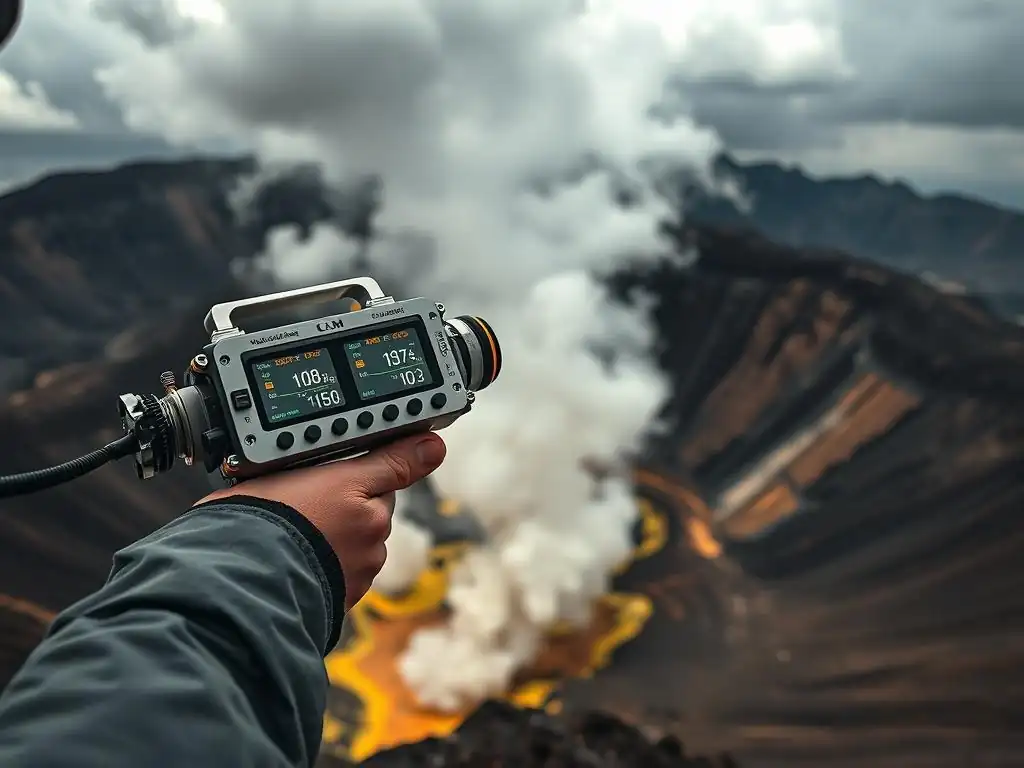
The field of volcanic gas monitoring is constantly evolving, driven by advancements in sensor technology that are leading to enhanced gas detection capabilities. Miniaturization and improved sensitivity of gas sensors are enabling the development of more compact, portable, and energy-efficient instruments. This facilitates deployment of denser ground-based monitoring networks, including in remote and challenging volcanic environments. For example, micro-sensors based on electrochemical and optical principles are being integrated into low-cost, autonomous monitoring stations that can be deployed in large numbers to provide high spatial resolution data.
New sensor technologies are also expanding the range of gases that can be routinely monitored. Advanced spectroscopic techniques, such as cavity ring-down spectroscopy (CRDS) and laser-induced breakdown spectroscopy (LIBS), offer high sensitivity and selectivity for detecting trace gases and isotopic ratios, providing more detailed insights into magmatic processes. Furthermore, development of robust and reliable sensors for harsh volcanic environments, capable of withstanding high temperatures, corrosive gases, and ashfall, is crucial for long-term, continuous monitoring. These technological advancements promise to improve the quality, quantity, and accessibility of volcanic gas data, ultimately enhancing our ability to predict volcanic activity.
Integrating Machine Learning and AI for Predictive Modeling
The increasing volume and complexity of volcanic monitoring data necessitate the application of advanced data analysis techniques. Machine learning (ML) and artificial intelligence (AI) are emerging as powerful tools for analyzing volcanic gas data and developing more sophisticated predictive models. ML algorithms can identify patterns and anomalies in gas emission data that might be missed by traditional statistical methods. For example, ML models can be trained to recognize precursory changes in gas compositions or fluxes that are indicative of impending volcanic unrest or eruptions.
AI techniques, such as neural networks, can be used to integrate multi-parameter datasets, including gas, seismic, deformation, and thermal data, to develop more comprehensive and robust volcanic hazard assessments. These models can learn complex relationships between different monitoring parameters and improve the accuracy of eruption forecasts. Furthermore, AI can be applied to real-time data processing and analysis, enabling rapid detection of changes in volcanic activity and automated alert systems. While still in its early stages of application in volcanology, the integration of machine learning and AI holds significant promise for advancing volcanic gas prediction and hazard mitigation.
Developing Comprehensive Volcanic Hazard Assessment Systems
The future of volcanic gas prediction lies in the development of comprehensive volcanic hazard assessment systems that integrate advanced monitoring technologies, sophisticated predictive models, and effective communication strategies. Such systems will require multi-parameter monitoring networks, incorporating ground-based and satellite-based gas sensors, seismic networks, deformation measurements, and thermal imaging. Data from these diverse sources will be integrated and analyzed using advanced data processing techniques and predictive models, including machine learning and AI algorithms.
Comprehensive hazard assessment systems should also incorporate probabilistic approaches to quantify uncertainties in predictions and provide more nuanced risk assessments. Furthermore, effective communication of hazard information to stakeholders, including emergency responders, public health officials, and communities at risk, is crucial. This includes developing user-friendly platforms for accessing real-time monitoring data and hazard forecasts, and establishing clear communication protocols for issuing warnings and implementing emergency response plans. The ultimate goal is to create integrated systems that provide timely and accurate information to mitigate the risks posed by volcanic gases and other volcanic hazards, enhancing community resilience in volcanically active regions.
The Role of Community Preparedness and Education
Educating Communities About Volcanic Gas Hazards
Effective volcanic hazard mitigation requires not only scientific advancements in prediction but also robust community preparedness and education initiatives. Educating communities living near volcanoes about the specific hazards posed by volcanic gases is paramount. Many people may be more familiar with the dramatic imagery of lava flows and explosions, but less aware of the often invisible and insidious dangers of volcanic gases. Educational programs should clearly explain the different types of volcanic gases, their potential health effects, and the specific risks they pose in the local context.
Information should be disseminated through various channels, including community meetings, school programs, public service announcements, and accessible online resources. Educational materials should be tailored to different age groups and literacy levels, using clear and concise language, visual aids, and local examples. Emphasis should be placed on practical actions individuals and families can take to protect themselves from volcanic gas hazards, such as knowing evacuation routes, preparing emergency kits, and understanding early warning signals. Building community awareness and understanding is the foundation for effective preparedness and response.
Developing Effective Evacuation Plans and Early Warning Systems
Developing and implementing effective evacuation plans and early warning systems are crucial components of volcanic gas hazard mitigation. Evacuation plans should be tailored to the specific volcanic hazards in a region, including potential gas release scenarios. These plans should clearly define evacuation routes, designated safe zones, and communication protocols. Regular drills and exercises are essential to ensure that communities are familiar with evacuation procedures and can respond effectively in an emergency.
Early warning systems for volcanic gas hazards should be based on robust monitoring networks and reliable data analysis. These systems should be capable of detecting changes in gas emissions that indicate increased risk and triggering timely alerts to communities and emergency responders. Warning messages should be clear, concise, and easily understood, and disseminated through multiple channels, such as sirens, radio broadcasts, mobile phone alerts, and social media. Community involvement in the development and testing of evacuation plans and early warning systems is essential to ensure their effectiveness and build local ownership.
Empowering Local Communities with Real-Time Information
Empowering local communities with access to real-time information about volcanic activity and gas emissions is a key aspect of building resilience. Providing communities with user-friendly platforms to access monitoring data, hazard maps, and forecasts can enhance their ability to make informed decisions and take proactive measures to protect themselves. This might involve developing mobile apps or web portals that display real-time gas monitoring data, volcanic alert levels, and evacuation advisories in an accessible format.
Community-based monitoring initiatives, where local residents are trained to participate in data collection and reporting, can also be valuable. This not only enhances monitoring capacity but also fosters community engagement and ownership of hazard management. Regular communication and dialogue between scientists, emergency responders, and local communities are essential to build trust, share information, and ensure that hazard management strategies are effective and responsive to local needs. Empowering communities with information and participation strengthens their capacity to live safely with volcanic hazards.
Conclusion: The Future of Predicting Volcanic Gas Emissions
The Ongoing Quest for Reliable Volcanic Gas Forecasts
The quest for reliable volcanic gas forecasts remains an ongoing scientific endeavor. While significant progress has been made in monitoring technologies and our understanding of volcanic processes, predicting volcanic gas emissions with pinpoint accuracy is still a complex challenge. Volcanic systems are inherently variable and dynamic, and our ability to fully capture and model their intricate behavior is limited. However, continued research and development in volcanology, geophysics, and related fields are steadily improving our predictive capabilities.
Advancements in sensor technology, data analysis techniques, and numerical modeling are paving the way for more accurate and timely volcanic gas forecasts. Integration of machine learning and AI holds particular promise for extracting valuable insights from complex datasets and developing more sophisticated predictive models. International collaboration and data sharing are also crucial for advancing the field and ensuring that volcanic hazard mitigation efforts are globally coordinated and effective. The pursuit of reliable volcanic gas forecasts is a continuous process of scientific refinement and technological innovation.
Balancing Scientific Advancements with Community Safety and Preparedness
While scientific advancements in volcanic gas prediction are essential, it is equally important to balance these advancements with robust community safety and preparedness measures. Even with perfect prediction capabilities, effective hazard mitigation requires well-informed and prepared communities, robust emergency response systems, and clear communication channels. Investing in community education, developing effective evacuation plans, and establishing reliable early warning systems are crucial complements to scientific research and monitoring.
A holistic approach to volcanic hazard management recognizes that scientific predictions are just one piece of the puzzle. It emphasizes the importance of integrating scientific knowledge with local knowledge, cultural context, and community participation. Building trust and fostering collaboration between scientists, emergency responders, and local communities are essential for ensuring that volcanic hazard mitigation strategies are effective, sustainable, and truly enhance community safety and resilience.
Call to Action: Supporting Research and Education in Volcanic Gas Monitoring
To further advance the field of volcanic gas prediction and enhance volcanic hazard mitigation globally, a concerted call to action is needed. Increased investment in research and development of volcanic gas monitoring technologies, predictive models, and hazard assessment systems is crucial. This includes supporting fundamental research on magmatic processes and gas transport, as well as applied research focused on developing practical tools and techniques for real-time monitoring and forecasting.
Furthermore, greater emphasis should be placed on education and outreach initiatives aimed at raising public awareness about volcanic gas hazards and promoting community preparedness. This includes supporting educational programs in schools and communities, developing accessible online resources, and fostering collaboration between scientists and educators.
Finally, sustained international collaboration and data sharing are essential for maximizing the impact of research and education efforts and ensuring that volcanic hazard mitigation is effectively addressed on a global scale. By supporting research and education in volcanic gas monitoring, we can collectively work towards a safer and more resilient future for communities living with volcanoes.
Frequently Asked Questions
Can volcanologists accurately predict the exact timing of volcanic gas emissions?
No, currently accurate, precise predictions of the exact timing of volcanic gas emissions are not possible. Scientists can monitor gas levels and other indicators to assess the likelihood of increased activity, but pinpointing the moment is a challenge.
What tools do volcanologists use to monitor volcanic gas emissions?
Volcanologists use a variety of tools, including gas sensors (COSPEC and DOAS), satellite imagery, and ground-based spectrometers. These tools measure the types and amounts of gases being released, offering insights into the volcano's internal state.
Why is predicting volcanic gas emissions important?
Predicting gas emissions is crucial for public safety and hazard mitigation. High concentrations of volcanic gases like sulfur dioxide can be dangerous to human health and the environment.
What are some of the challenges in predicting volcanic gas emissions?
Challenges include the complex and dynamic nature of volcanic systems, the difficulty in directly accessing subsurface magma, and the unpredictable nature of magma movement.
How does the study of volcanic gas emissions contribute to our understanding of volcanoes?
Analyzing gas emissions provides valuable information about the magma's composition, temperature, and depth. This data helps scientists understand volcanic processes and improve eruption forecasting in the long term.
Final Reflection: Unveiling the Volcanic Breath
The pursuit of predicting volcanic gas emissions is not merely an academic exercise; it's a vital endeavor that directly impacts the safety and well-being of communities living near active volcanoes. The complexities we've explored highlight the challenges inherent in this field, emphasizing that while progress has been made, a truly reliable early warning system remains, to some extent, a mirage – a tantalizing goal just beyond our grasp.
The ongoing quest to understand and forecast these emissions has profoundly influenced our approach to disaster preparedness and risk assessment. The very act of striving for predictability, even if imperfect, fosters a culture of vigilance and proactive mitigation. The best predictor of future behavior is past behavior.
This quote, often attributed to Peter Drucker, reminds us that while perfect prediction may elude us, careful observation and analysis of past volcanic activity remain our most powerful tools in safeguarding vulnerable populations.
As we conclude this exploration, I invite you to consider your own role in promoting informed decision-making and responsible stewardship of our planet. The lessons learned from the study of volcanic gas emissions extend far beyond the realm of volcanology. They underscore the importance of continuous learning, critical thinking, and a commitment to using scientific knowledge to build a safer and more resilient future for all. Let us embrace the challenge of understanding the Earth's dynamic processes, not with fear, but with a spirit of curiosity and a dedication to protecting those most vulnerable to its power.
Ignite Your Inner Volcanologist: Take Action Now!
Thanks for exploring the fascinating, yet complex, world of volcanic gas prediction. You've gained valuable insights into the challenges and limitations of forecasting these hazardous releases. Ready to put your knowledge to good use?
Here's how you can contribute and stay connected:
- Advocate for increased funding and research into advanced gas monitoring technologies within your community. This is a crucial step in improving our understanding and preparedness.
- Share this article with fellow science enthusiasts and researchers – let's spread awareness about the complexities of volcanic gas prediction!
- Create a short, informative video explaining the limitations of current prediction models and post it on social media using the hashtag #VolcanoGasRealTalk. This will help to educate others and spark discussion.
What innovative solution could significantly improve volcanic gas release prediction accuracy? Share your ideas in the comments below!