
Earth's Breathing Patterns: Understanding Volcanic Gases Through Observatory Analysis

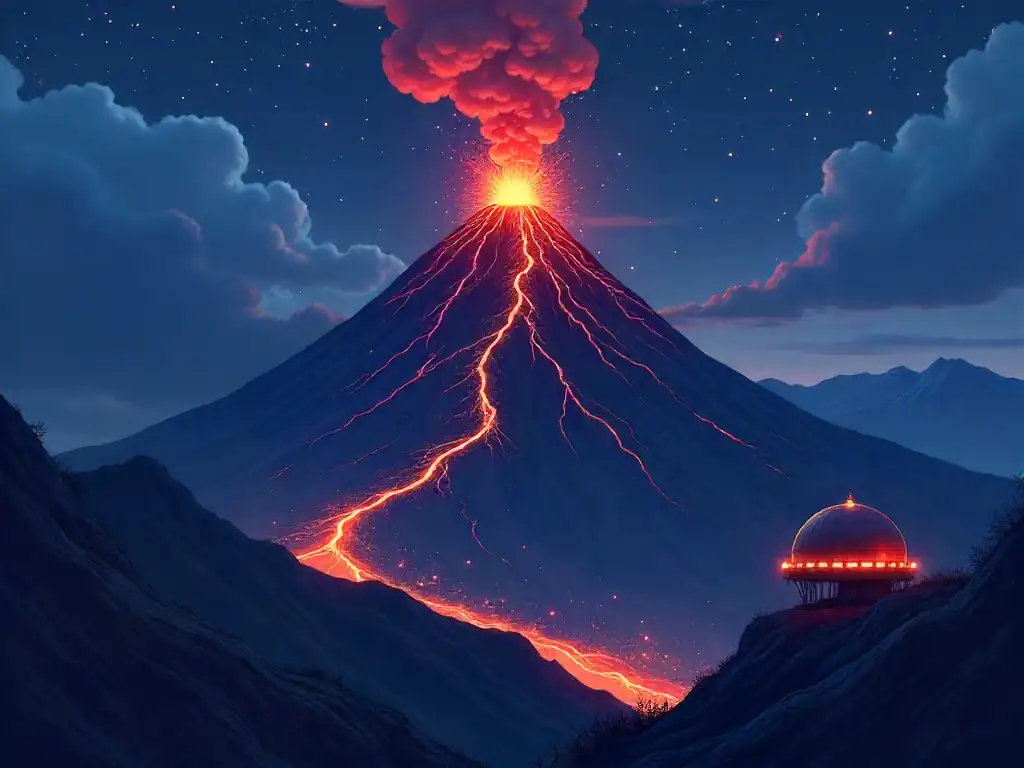
Welcome to Volcano Explorers, where the earth whispers its secrets in fire and ash. Ever wondered what a volcano breathes? Our latest article, "Earth's Breathing Patterns: Understanding Volcanic Gases Through Observatory Analysis," plunges into the fascinating world of volcanic gas emissions analysis. Discover how scientists decipher these plumes to predict eruptions and unlock the mysteries hidden beneath the surface. Are you ready to decode the language of volcanoes?
- Introduction: Unveiling Earth's Secrets Through Volcanic Gas Monitoring
- The Vital Role of Volcano Observatories in Gas Emission Studies
- Understanding Volcanic Gas Composition: A Window into the Earth's Interior
- Methods for Volcanic Gas Emissions Analysis: From Field to Lab
- Interpreting Volcanic Gas Data: What Do the Numbers Tell Us?
- Case Studies: How Observatories Use Gas Data to Forecast Eruptions
- Challenges and Future Directions in Volcanic Gas Research
- The Importance of Long-Term Volcanic Gas Monitoring Programs
- Conclusion: The Ongoing Quest to Decipher Earth's Volcanic Breath
-
Frequently Asked Questions
- What are volcanic gas emissions and why are they important to analyze?
- How does "VolcanoExplorers.org" contribute to understanding volcanic gas emissions?
- What techniques are used in "Volcanic gas emissions analysis" as discussed on VolcanoExplorers.org?
- What safety measures should individuals living near volcanoes take based on "Volcanic gas emissions analysis" updates?
- How can I learn more about the cultural significance of volcanoes and their relationship to gas emissions on VolcanoExplorers.org?
- Final Reflection: Whispers from the Earth's Core
- Unearth Your Inner Volcanologist!
Introduction: Unveiling Earth's Secrets Through Volcanic Gas Monitoring
Volcanoes, Earth's dynamic vents, offer a unique window into the planet's interior. Beyond the dramatic eruptions of ash and lava, volcanoes constantly release gases, a phenomenon often described as Earth "breathing". Analyzing these volcanic gas emissions is not merely an academic exercise; it is a critical tool for understanding volcanic processes, predicting eruptions, and assessing volcanic hazards.
By meticulously studying the composition and flux of these gases, scientists at volcano observatories around the world are piecing together the intricate puzzle of magma generation, storage, and movement beneath our feet. This article will delve into the methodologies and interpretations of volcanic gas emissions analysis, highlighting its pivotal role in modern volcanology and hazard mitigation.
The Vital Role of Volcano Observatories in Gas Emission Studies
Volcano observatories are the frontline guardians in regions threatened by volcanic activity. Their multifaceted mission encompasses a range of monitoring techniques, with volcanic gas emissions analysis standing as a cornerstone of their operations. These institutions are not just passive observers; they are active investigators, deploying sophisticated instruments and employing rigorous scientific methods to decipher the signals emanating from restless volcanoes. The data they gather, particularly on gas emissions, informs crucial decisions about public safety and resource management in volcanically active areas.
Volcano Observatories: Sentinels of Volcanic Activity
Volcano observatories operate as permanent monitoring centers, often situated near active or potentially active volcanic regions. Their primary role is to continuously monitor volcanic activity using a variety of techniques, including seismology, ground deformation studies, thermal imaging, and, crucially, volcanic gas emissions analysis.
These observatories are staffed by volcanologists, geochemists, and technicians who work collaboratively to collect, analyze, and interpret data. A prime example is the Hawaiian Volcano Observatory (HVO), established in 1912, which has been instrumental in monitoring the Kilauea and Mauna Loa volcanoes, providing invaluable insights into their behavior through decades of continuous observation, including detailed volcanic gas emissions analysis.
Similarly, the Vesuvius Observatory in Italy, the world's oldest volcano observatory, meticulously monitors the Vesuvius and Campi Flegrei volcanic areas, relying heavily on gas monitoring to assess the state of these densely populated volcanic systems. These observatories serve as vital hubs for scientific research, hazard assessment, and public education, acting as sentinels, constantly vigilant for signs of impending volcanic unrest.
The Crucial Task of Monitoring Volcanic Gas Plumes
Monitoring volcanic gas plumes is a crucial task for volcano observatories because changes in gas composition and emission rates can be early indicators of volcanic unrest or eruption. Magma, as it rises towards the surface, releases dissolved gases. These gases, escaping through vents and fumaroles, form plumes that can be analyzed to understand the processes occurring beneath the volcano.
For instance, an increase in sulfur dioxide (SO2) emissions can signify the arrival of fresh, gas-rich magma at shallow depths. Changes in the ratio of different gases, such as SO2 to CO2, can also provide insights into magma degassing processes and potential eruption styles. Observatories utilize a range of instruments and techniques, from ground-based spectrometers to satellite-mounted sensors, to continuously monitor these plumes.
The data collected is then used to track trends, identify anomalies, and ultimately contribute to eruption forecasting and hazard assessments. Continuous volcanic gas emissions analysis allows observatories to detect subtle changes that might precede more obvious signs of volcanic activity, providing crucial lead time for warnings and evacuations.
Understanding Volcanic Gas Composition: A Window into the Earth's Interior
The composition of volcanic gases is a rich source of information about the depths and processes within the Earth's volcanic systems. These gases are primarily derived from magma, reflecting the chemical and physical conditions of their source regions. Analyzing the major and trace components of these gases allows volcanologists to infer magma source characteristics, magma storage depths, and the processes of magma ascent and degassing. Essentially, volcanic gas emissions analysis provides a geochemical fingerprint of the magma, offering a unique window into the otherwise inaccessible depths of the Earth.
Major Volcanic Gases: Sulfur Dioxide (SO2), Carbon Dioxide (CO2), and Water Vapor (H2O)
The most abundant components of volcanic gases are sulfur dioxide (SO2), carbon dioxide (CO2), and water vapor (H2O). Sulfur dioxide is particularly important in volcanic monitoring because its emission rates often correlate strongly with volcanic activity. For example, during the 2010 eruption of Eyjafjallajökull in Iceland, the massive release of SO2 into the atmosphere had significant impacts on air travel.
Carbon dioxide, while often odorless and colorless, is a major contributor to global carbon cycles and its volcanic emissions play a role in long-term climate regulation. Water vapor, the most abundant volcanic gas, is primarily derived from magma degassing and can also include contributions from hydrothermal systems interacting with volcanic heat.
The relative proportions of these major gases, as determined through volcanic gas emissions analysis, can vary depending on the volcano type, tectonic setting, and the stage of volcanic activity. Monitoring these major components provides a fundamental baseline for understanding volcanic behavior.
Beyond the major gases, volcanic gas emissions contain a suite of trace gases, including hydrogen sulfide (H2S), hydrogen halides (HCl, HF), helium (He), and argon (Ar). While present in much smaller concentrations, these trace gases can provide crucial, often unique, insights into magmatic processes. For instance, the isotopic ratios of helium (specifically 3He/4He) can help differentiate between mantle-derived and crustal magma sources.
Hydrogen halides, such as HCl and HF, are highly reactive and contribute significantly to acid rain and volcanic smog (vog) downwind of volcanoes. Changes in the concentrations of trace gases can sometimes precede changes in major gas emissions, offering early warning signals of magmatic unrest. Advanced volcanic gas emissions analysis techniques are capable of detecting and quantifying these trace components, unlocking hidden clues about magma source regions, degassing pathways, and the evolution of volcanic systems over time.
Methods for Volcanic Gas Emissions Analysis: From Field to Lab
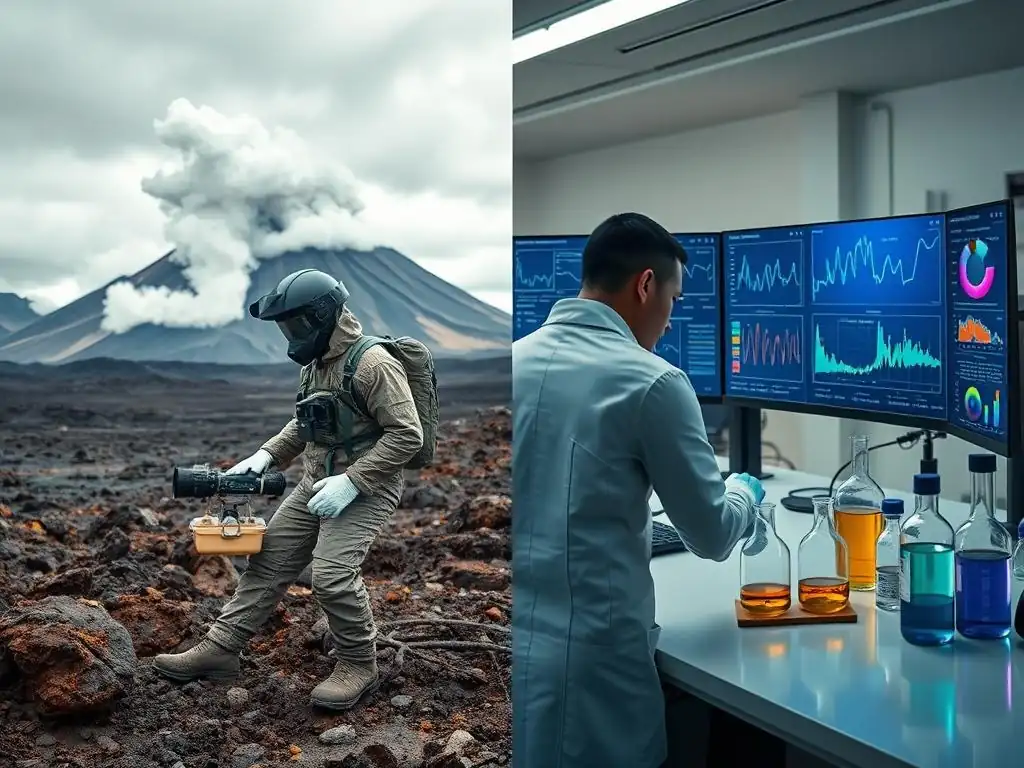
The analysis of volcanic gas emissions relies on a diverse range of methods, spanning from direct sampling in hazardous volcanic environments to remote sensing techniques that can monitor volcanoes from afar. These methods can be broadly categorized into field techniques for sample collection and remote sensing techniques for plume observation, followed by laboratory-based spectroscopic analysis to determine gas composition. The choice of method depends on the specific objectives of the study, the accessibility of the volcano, and the type of information required.
Direct Sampling Techniques: Collecting Gas Samples at the Source
Direct sampling techniques involve physically collecting volcanic gas samples directly from fumaroles, vents, or plumes. This often requires volcanologists to work in challenging and potentially dangerous environments close to active volcanic features. Common methods include using evacuated flasks or gas-tight containers to collect gas samples. For example, Giggenbach bottles, specially designed evacuated flasks containing a sodium hydroxide solution, are frequently used to collect gas samples from high-temperature fumaroles.
These bottles allow for the absorption of acid gases, preserving the sample for later laboratory analysis. Direct sampling provides the most accurate representation of gas composition at the source, but it is limited by accessibility and can be hazardous. Despite these challenges, direct sampling remains a vital technique for calibrating remote sensing methods and for obtaining detailed compositional information that may not be accessible through other means.
Remote Sensing of Volcanic Gases: DOAS, FTIR, and Satellite Monitoring
Remote sensing techniques offer a safer and more spatially extensive approach to volcanic gas emissions analysis. Differential Optical Absorption Spectroscopy (DOAS) is a widely used ground-based remote sensing method that measures the absorption of ultraviolet and visible light by gases in the volcanic plume. DOAS instruments can be deployed at a safe distance from the vent and provide continuous measurements of SO2 and other gas fluxes.
Fourier Transform Infrared (FTIR) spectroscopy is another powerful remote sensing technique that measures the infrared radiation absorbed and emitted by volcanic plumes. FTIR can detect a broader range of gases, including SO2, CO2, H2O, HCl, and HF, and can also provide information on plume temperature.
Satellite-based instruments, such as the Ozone Monitoring Instrument (OMI) and the Tropospheric Monitoring Instrument (TROPOMI), provide a global perspective on volcanic gas emissions, particularly SO2. These satellite sensors can track large volcanic plumes and quantify SO2 fluxes from even remote and inaccessible volcanoes, providing invaluable data for global volcanic monitoring and hazard assessment.
Spectroscopic Analysis: Unraveling the Composition of Volcanic Gases
Spectroscopic analysis is the cornerstone of determining the precise composition of volcanic gas samples collected in the field or remotely sensed. Gas Chromatography (GC) is a common laboratory technique used to separate and quantify the different components of a gas sample. GC is particularly useful for analyzing the major gases and some trace gases.
Mass Spectrometry (MS) is another powerful technique that measures the mass-to-charge ratio of ions, allowing for the identification and quantification of a wide range of gases, including isotopic analysis. For remote sensing data, spectral analysis techniques are applied to the measured spectra to determine gas concentrations and fluxes. For example, DOAS data is analyzed using algorithms that quantify the absorption of light at specific wavelengths characteristic of SO2.
FTIR spectra are analyzed using spectral fitting techniques to determine the concentrations of different gases based on their infrared absorption features. Spectroscopic analysis, whether applied to directly sampled gases or remotely sensed plumes, is essential for unraveling the complex chemical composition of volcanic gas emissions and extracting meaningful information about volcanic processes.
Interpreting Volcanic Gas Data: What Do the Numbers Tell Us?
The raw data from volcanic gas emissions analysis, whether it's gas concentrations, fluxes, or isotopic ratios, must be carefully interpreted to extract meaningful information about volcanic activity. Interpreting this data involves understanding the processes that control gas release from magma, the factors that influence gas transport and plume dynamics, and how changes in gas parameters relate to volcanic unrest and eruption potential. This interpretation often requires integrating gas data with other monitoring datasets, such as seismic and deformation data, to build a comprehensive picture of volcanic behavior.
Gas Flux Measurements: Quantifying Volcanic Gas Output
Gas flux measurements, which quantify the rate at which gases are released from a volcano (typically in tonnes per day), are crucial for assessing the overall degassing budget of a volcanic system and tracking changes in volcanic activity. For example, a significant increase in SO2 flux can indicate an increase in magma supply rate or magma ascent towards the surface.
Conversely, a decrease in gas flux might suggest magma degassing at depth or a sealing of the volcanic conduit. Global networks of ground-based and satellite-based instruments are used to continuously monitor SO2 fluxes from volcanoes worldwide.
For instance, the Mount Etna volcano in Italy, one of the most active volcanoes in Europe, exhibits highly variable SO2 fluxes, ranging from hundreds to thousands of tonnes per day depending on its eruptive state. Analyzing trends in gas flux measurements, particularly when combined with other monitoring data, provides valuable insights into the evolving state of a volcano and its potential for eruption.
Isotopic Analysis of Volcanic Gases: Tracing Magma Sources and Evolution
Isotopic analysis of volcanic gases provides powerful tracers for understanding magma sources and magmatic processes. Different isotopic systems, such as helium (He), carbon (C), and sulfur (S) isotopes, can provide unique information about the origin and evolution of magmas. For example, the 3He/4He isotopic ratio is used to distinguish between mantle-derived helium, which is relatively enriched in 3He, and crustal helium, which is dominated by radiogenic 4He. Variations in carbon isotopes (δ13C) can reflect different magma sources or processes such as crustal assimilation or degassing.
Sulfur isotopes (δ34S) can provide insights into the oxidation state of the magma and the source of sulfur. Studies of helium isotopes in volcanic gases from Hawaii have revealed the presence of a deep mantle plume source. Isotopic analysis, therefore, complements compositional analysis, providing a deeper understanding of the geochemical history and plumbing system of volcanoes.
Gas Geochemistry: Linking Gas Composition to Magmatic Activity
Gas geochemistry involves linking the composition of volcanic gases to specific magmatic processes and volcanic activity. The ratios of different gas species, such as SO2/CO2, H2O/SO2, and CO2/3He, can be used as indicators of magma depth, degassing conditions, and the stage of volcanic activity. For example, an increase in the SO2/CO2 ratio may suggest shallow degassing of a magma batch that is becoming more sulfur-rich as CO2 exsolves at greater depths.
Changes in gas ratios can sometimes precede changes in gas flux or other monitoring parameters, making them valuable early warning indicators. For instance, at Stromboli volcano in Italy, changes in the CO2/SO2 ratio have been observed prior to increases in eruptive activity. Gas geochemistry, therefore, provides a framework for interpreting volcanic gas emissions analysis data in the context of magmatic processes and for using gas data to assess volcanic hazards.
Case Studies: How Observatories Use Gas Data to Forecast Eruptions
Real-world case studies demonstrate the practical application of volcanic gas emissions analysis in eruption forecasting. Volcano observatories around the globe have successfully utilized gas monitoring data, often in conjunction with other datasets, to improve eruption predictions and mitigate volcanic risks. These examples highlight the power of gas monitoring as a crucial tool in volcanic hazard assessment and early warning systems.
Case Study 1: Mount St. Helens - Predicting Eruptions Through SO2 Monitoring
Mount St. Helens in Washington State, USA, is a classic example of how volcanic gas emissions analysis, specifically SO2 monitoring, has been used to forecast eruptions. Following the cataclysmic eruption of 1980, the US Geological Survey (USGS) established a comprehensive monitoring network at Mount St. Helens, including continuous SO2 measurements. In the years that followed, several episodes of dome-building eruptions occurred within the crater.
During periods of unrest leading up to these eruptions, scientists observed significant increases in SO2 emission rates. For instance, prior to the 2004-2008 eruption, SO2 fluxes began to rise months in advance, providing valuable warning time. The correlation between SO2 flux and eruptive activity at Mount St. Helens has been well-established, demonstrating the effectiveness of SO2 monitoring as a predictive tool for dome-building eruptions at this volcano.
Case Study 2: Kilauea - CO2 Flux as an Indicator of Magmatic Unrest
Kilauea volcano in Hawaii, known for its persistent activity, provides another compelling case study for the use of volcanic gas emissions analysis in eruption forecasting. While SO2 is a key gas at many volcanoes, at Kilauea, carbon dioxide (CO2) flux has proven to be a particularly useful indicator of magmatic unrest. Studies have shown that changes in CO2 flux from Kilauea's summit and rift zones can precede changes in eruptive activity. For example, increases in CO2 flux were observed prior to the onset of the 2018 Lower East Rift Zone eruption, although the scale and location of that eruption were not fully anticipated based on gas data alone. Continuous CO2 monitoring at Kilauea, alongside other monitoring datasets, provides valuable insights into the volcano's plumbing system and its propensity for eruptions. The Hawaiian Volcano Observatory relies on CO2 flux measurements as an important component of its eruption forecasting efforts for Kilauea.
Analyzing Changes in Gas Ratios: Precursors to Volcanic Events
Beyond individual gas fluxes, changes in gas ratios can also serve as precursors to volcanic events. The ratio of SO2 to HCl, for example, has been used at some volcanoes to track changes in magma degassing conditions and potential eruption style. At Poás volcano in Costa Rica, an increase in the SO2/HCl ratio was observed prior to phreatic eruptions, suggesting a change in the magmatic-hydrothermal system.
Similarly, changes in the CO2/SO2 ratio have been reported as precursors to eruptions at several volcanoes. Analyzing trends in gas ratios requires careful consideration of volcano-specific degassing processes and the interplay between magmatic and hydrothermal systems. However, in certain volcanic settings, monitoring gas ratios can provide valuable early warning signals of impending volcanic activity, complementing the information derived from individual gas flux measurements.
Challenges and Future Directions in Volcanic Gas Research
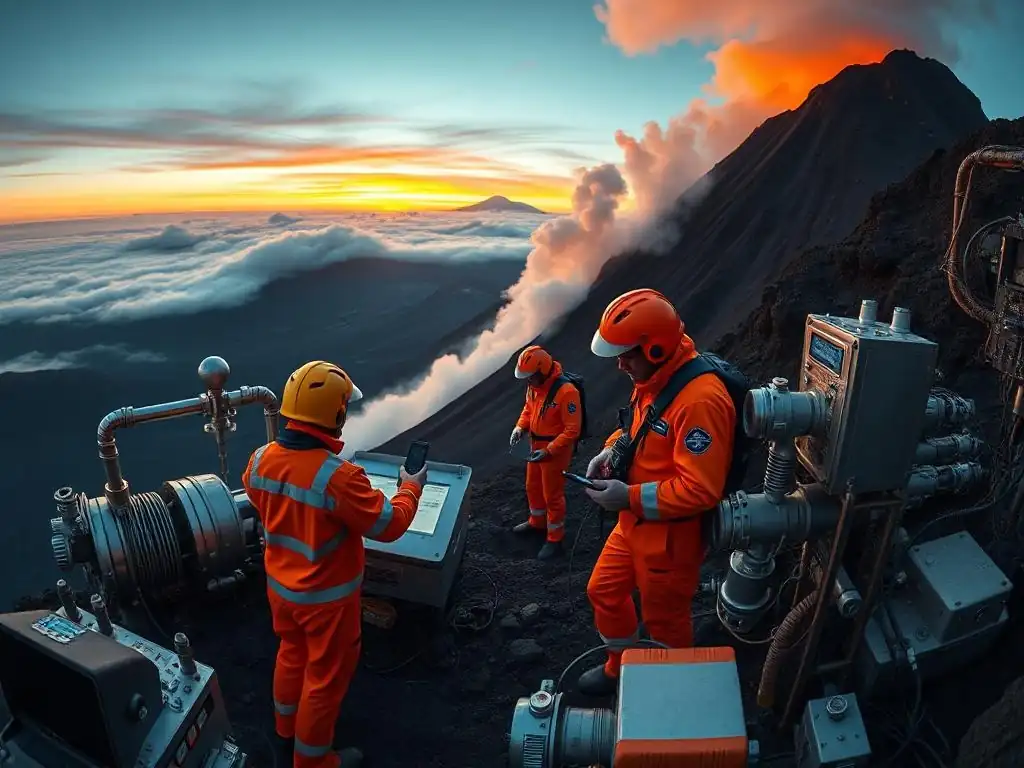
Despite the significant advancements in volcanic gas emissions analysis, several challenges remain, and the field continues to evolve with new technologies and research directions. Improving the accuracy and precision of gas measurements, developing new remote sensing techniques, and integrating gas data with other monitoring datasets are key areas of ongoing research and development. These advancements are crucial for enhancing our ability to understand and forecast volcanic eruptions.
Improving Accuracy and Precision in Gas Measurements
Improving the accuracy and precision of volcanic gas measurements is a continuous goal in volcanology. Direct sampling techniques, while providing the most accurate compositional data, are limited by accessibility and potential contamination. Remote sensing techniques, while safer and more spatially extensive, can be affected by atmospheric interference and plume opacity.
Ongoing research focuses on developing more robust calibration methods for both direct sampling and remote sensing instruments, as well as improving the analytical techniques used in the laboratory. For example, advancements in laser-based spectroscopic techniques are enhancing the sensitivity and selectivity of gas analyzers. Improved accuracy and precision in gas measurements are essential for detecting subtle changes in gas emissions that may be early indicators of volcanic unrest.
Developing New Technologies for Remote Gas Sensing
The development of new technologies for remote volcanic gas sensing is a rapidly advancing field. Unmanned Aerial Vehicles (UAVs), or drones, equipped with gas sensors are increasingly being used to sample volcanic plumes at high spatial resolution and in previously inaccessible areas. Miniaturized and more affordable spectrometers are being developed for deployment in dense networks around volcanoes, providing near real-time gas monitoring.
New satellite missions with improved spectral resolution and sensitivity are enhancing our ability to monitor volcanic gas emissions from space. Lidar (Light Detection and Ranging) techniques are being explored for mapping the three-dimensional distribution of gases within volcanic plumes. These technological advancements promise to revolutionize volcanic gas emissions analysis, providing more comprehensive and detailed data for volcanic monitoring and research.
Integrating Gas Data with Other Monitoring Datasets
Integrating volcanic gas data with other monitoring datasets, such as seismic, deformation, and thermal data, is crucial for a holistic understanding of volcanic activity and improved eruption forecasting. Multidisciplinary approaches that combine different types of monitoring data are becoming increasingly common in volcano observatories. Statistical and machine learning techniques are being applied to integrate and analyze large, multi-parameter datasets, searching for patterns and correlations that may not be apparent in individual datasets.
For example, combining gas flux data with seismic tremor data and ground deformation measurements can provide a more robust assessment of volcanic unrest. Developing sophisticated data integration and analysis methods is essential for maximizing the predictive power of volcanic monitoring networks and improving eruption forecasting capabilities.
The Importance of Long-Term Volcanic Gas Monitoring Programs
Long-term volcanic gas monitoring programs are essential for building a comprehensive understanding of volcanic systems, improving volcanic hazard assessment, and contributing to broader Earth science research. Continuous, systematic gas monitoring over years and decades provides a valuable baseline for detecting changes in volcanic behavior and for understanding the long-term evolution of volcanic systems.
Building a Comprehensive Database of Volcanic Gas Emissions
Long-term volcanic gas monitoring programs contribute to the construction of comprehensive databases of volcanic gas emissions. These databases are invaluable resources for volcanic research, allowing scientists to study global patterns in volcanic degassing, to compare gas emissions from different volcano types, and to assess the contribution of volcanoes to global atmospheric chemistry. Datasets spanning decades provide insights into the long-term variability of volcanic degassing and the response of volcanic systems to external forcing factors. Standardized data collection and archiving protocols are crucial for ensuring the quality and accessibility of these databases for the broader scientific community.
Improving Volcanic Hazard Assessment Through Gas Monitoring
Long-term volcanic gas monitoring is critical for improving volcanic hazard assessment. By establishing baseline gas emission levels and understanding the typical range of gas variability for a given volcano, observatories can more effectively identify anomalous changes that may indicate increased volcanic hazard. Long-term datasets allow for the development of volcano-specific eruption forecasting models that incorporate gas data as a key parameter. Continuous gas monitoring provides crucial information for real-time hazard assessment during periods of volcanic unrest, informing decisions about public safety and mitigation measures. The longer the gas monitoring record, the more robust and reliable the hazard assessment becomes.
Contributing to a Better Understanding of Earth's Volcanic Systems
Beyond hazard assessment, long-term volcanic gas monitoring contributes to a better fundamental understanding of Earth's volcanic systems. By studying the temporal evolution of gas emissions, scientists can gain insights into magma supply rates, magma storage processes, and the dynamics of volcanic plumbing systems over various timescales. Gas data, when combined with other geological and geophysical datasets, provides a more complete picture of how volcanoes work and how they interact with the Earth's crust and mantle. Long-term monitoring programs are essential for advancing our fundamental knowledge of volcanology and for addressing broader questions about Earth's dynamic processes.
Conclusion: The Ongoing Quest to Decipher Earth's Volcanic Breath
Volcanic gas emissions analysis stands as a vital and continually evolving field within volcanology. From the sentinel observatories diligently monitoring Earth's restless giants to the sophisticated laboratories unraveling the secrets held within gas samples, the quest to decipher Earth's volcanic breath is an ongoing endeavor.
The insights gained from analyzing these gaseous emanations are not only crucial for understanding the fundamental processes driving volcanic activity but are also paramount for mitigating the hazards posed by these powerful natural phenomena. As technology advances and our understanding deepens, volcanic gas emissions analysis will undoubtedly continue to play an increasingly critical role in our efforts to live safely and sustainably in volcanically active regions and to unlock the deeper mysteries of our planet.
Frequently Asked Questions
What are volcanic gas emissions and why are they important to analyze?
Volcanic gas emissions are gases released from volcanoes including water vapor, carbon dioxide, and sulfur dioxide. Analyzing them provides insights into magma activity and potential eruption forecasting.
How does "VolcanoExplorers.org" contribute to understanding volcanic gas emissions?
The site provides educational content on volcanic gases, their composition, and how they're analyzed. It also offers real-time updates on volcanic activity, potentially including gas emission data, from observatories worldwide.
What techniques are used in "Volcanic gas emissions analysis" as discussed on VolcanoExplorers.org?
VolcanoExplorers.org likely highlights techniques like remote sensing using satellites and aircraft to measure gas plumes, as well as ground-based monitoring using spectrometers and gas sensors near volcanoes. These methods help quantify gas flux rates.
What safety measures should individuals living near volcanoes take based on "Volcanic gas emissions analysis" updates?
Increased gas emissions, especially sulfur dioxide, can indicate an impending eruption. Residents should heed evacuation orders, monitor official warnings, and understand the potential health hazards associated with volcanic gases.
How can I learn more about the cultural significance of volcanoes and their relationship to gas emissions on VolcanoExplorers.org?
VolcanoExplorers.org explores the cultural impact of volcanoes globally, which may include how communities interpret gas emissions as omens or natural events. These narratives are often intertwined with the volcano's activity and perceived danger.
Final Reflection: Whispers from the Earth's Core
The intricate dance of volcanic gas emissions, meticulously analyzed through observatory data, is far more than just scientific curiosity; it's a vital window into the planet's inner workings. Understanding these "breathing patterns" of our Earth is now more critical than ever, as we grapple with the increasing impacts of climate change and the need for accurate hazard assessments in volcanically active regions. The insights gained from Volcanic gas emissions analysis are directly informing our ability to predict eruptions, mitigate risks, and ultimately, safeguard communities living near these powerful natural forces.
This exploration into the Earth's gaseous exhalations has profoundly shaped our understanding of the dynamic interplay between the planet's interior and its atmosphere. It's a constant reminder that we are inextricably linked to the forces that shaped our world, and that listening to the Earth's subtle cues is essential for our survival. The Earth speaks to all of us, and if we listen, we can understand.
- Chief Dan George. This quote encapsulates the essence of our endeavor: to decipher the Earth's language, spoken through the release of volcanic gases, and to use that knowledge to build a more resilient future.
As we conclude this journey into the world of volcanic gas emissions analysis, I invite you to consider your own connection to the planet. How can you, in your own life, become a more attentive listener to the Earth's whispers? What steps can you take to support scientific endeavors that seek to understand and protect our planet? Let us all strive to be responsible stewards of this Earth, ensuring that future generations can continue to marvel at its power and beauty, while living safely in its embrace.
Unearth Your Inner Volcanologist!
Thank you for exploring the fascinating world of volcanic gases and observatory analysis. We hope you've gained a new appreciation for Earth's dynamic processes. Ready to delve deeper?
- Sign up for email notifications to receive the latest updates on volcanic activity and research.
- Share this article with fellow geology enthusiasts to spark their curiosity.
- Leave a comment with questions you have about volcanic gases or monitoring techniques.
What intrigues you most about volcanic activity? Share your thoughts below!