
Unraveling Volcano Mysteries: Free Educational Downloads & Printables

Welcome to Volcano Explorers, where the Earth's fiery secrets are revealed! Dare to journey into the heart of volcanology? This is your starting point for understanding these powerful forces of nature. Below, unlock a treasure trove of free volcano educational materials, perfect for sparking curiosity and fueling your passion for these geological giants. But be warned, once you start exploring, you might just get hooked!
- Unveiling Volcanic Wonders: Free Educational Resources
- Spark Curiosity with Free Volcanic Learning Materials
- Free Volcanic Learning Resources for Diverse Age Groups
- Enhance Learning with Printable Volcanic Activities
- Free Volcanic Educational Materials: Expanding Horizons
- Teaching Volcanic Safety: Free Preparedness Guides
- Free Volcanic Educational Materials: Promoting Accessibility
-
Frequently Asked Questions
- What types of free volcano educational materials does VolcanoExplorers.org offer?
- How can these materials help me learn about volcanoes?
- Are the free volcano educational materials suitable for different age groups?
- Where can I find real-time updates on volcanic activity using VolcanoExplorers.org?
- How can I use the evacuation tips and safety guides provided?
- Final Reflection: Igniting Curiosity, Erupting Knowledge
- Ignite Your Inner Volcanologist!
Unveiling Volcanic Wonders: Free Educational Resources
Spark Curiosity with Free Volcanic Learning Materials
Volcanoes, with their breathtaking power and geological significance, are captivating subjects for learners of all ages. Understanding these natural phenomena is crucial not only for scientific literacy but also for fostering a deeper appreciation of our planet's dynamic processes. Recognizing the importance of accessible education, a wealth of free volcano educational materials is readily available, designed to ignite curiosity and facilitate comprehensive learning. These resources range from fundamental introductions to volcanology to in-depth studies of specific eruptions and monitoring techniques, catering to diverse learning styles and educational levels.
These readily available resources serve as invaluable tools for educators and students alike, offering an engaging and cost-effective way to explore the world of volcanoes. The accessibility of free volcano educational materials ensures that financial constraints do not hinder the pursuit of knowledge. By leveraging these resources, educators can enrich their curriculum, providing students with interactive and informative content that goes beyond textbooks. For students, these materials offer the opportunity for self-directed learning, allowing them to delve into the fascinating realm of volcanology at their own pace and explore areas that particularly pique their interest.
Explore Volcanology with Downloadable Resources
The digital age has ushered in an era of unprecedented access to educational resources, and volcanology is no exception. A vast collection of downloadable resources, including PDFs, worksheets, and guides, are available at no cost, providing a wealth of information at your fingertips.
These resources often encompass a wide range of topics, from the basic types of volcanoes – shield, stratovolcano, and cinder cone – to the complex processes of magma formation and eruption dynamics. Many of these downloadable materials are designed with varying age groups in mind, ensuring that educators can find appropriate content for elementary students just beginning their scientific journey, as well as for high school and university students undertaking more advanced studies.
These downloadable resources offer a significant advantage in their portability and adaptability. Educators can easily integrate PDFs into lesson plans, print worksheets for classroom activities, or distribute guides for independent study. For instance, a teacher might download a PDF guide explaining the Volcanic Explosivity Index (VEI) to illustrate the scale of different eruptions, or utilize printable worksheets to reinforce vocabulary and concepts related to plate tectonics and volcanic zones.
Students can also benefit from downloading resources for offline access, allowing them to study at their own convenience, whether at home, in the library, or even while traveling. The availability of free downloadable volcano educational materials democratizes access to high-quality learning content, empowering both educators and students to explore the captivating world of volcanoes.
Why Free Volcanic Resources Benefit Educators
Educators face the ongoing challenge of creating engaging and informative lesson plans while often working with limited budgets and time constraints. Free volcano educational materials offer a powerful solution, providing cost-effective, readily accessible, and curriculum-enriching resources that can significantly enhance the learning experience. By leveraging these free resources, teachers can allocate their budgets to other essential classroom needs, knowing they have access to a wealth of high-quality volcanology content without incurring any expenses. This financial flexibility is particularly crucial for schools in under-resourced communities, ensuring equitable access to educational materials regardless of socioeconomic factors.
Beyond cost savings, free volcano educational materials also save educators valuable time in lesson planning and resource creation. Instead of spending hours developing their own materials from scratch, teachers can readily access pre-designed worksheets, informative guides, and engaging activities that are specifically tailored to volcanology. Many of these resources are aligned with educational standards, ensuring that they complement existing curricula and learning objectives.
Furthermore, the availability of diverse formats, from printable handouts to digital PDFs, allows educators to adapt the materials to suit their teaching style and the specific needs of their students. This efficiency allows teachers to dedicate more time to direct instruction, student interaction, and personalized learning, ultimately fostering a more enriching and effective educational environment centered around free volcano educational materials.
Free Volcanic Learning Resources for Diverse Age Groups
Understanding volcanoes is a journey that can begin at a young age and continue into advanced academic pursuits. Recognizing this spectrum of learning needs, free volcano educational materials are designed to cater to diverse age groups, ensuring that there are engaging and appropriate resources for elementary students, middle schoolers, high school students, and even those pursuing advanced studies in volcanology.
The resources are often structured to build upon prior knowledge, introducing fundamental concepts in simpler terms for younger learners and progressively delving into more complex topics as students advance through their education. This age-appropriate approach ensures that learning about volcanoes is both accessible and stimulating at every stage.
The availability of differentiated resources is crucial for effective volcano education. For younger students, the focus might be on introducing basic vocabulary and concepts through hands-on activities and visually engaging materials. For middle schoolers, the curriculum can expand to include more interactive explorations of plate tectonics and different types of volcanic eruptions.
High school and advanced students can delve into the complexities of magma geochemistry, volcanic risk assessment, and in-depth case studies of significant eruptions. By providing a range of free volcano educational materials tailored to specific age groups, educators can effectively guide students through a progressive understanding of volcanology, fostering a lifelong appreciation for this dynamic field of Earth science.
Volcano Science for Elementary Students: Engaging Activities
For elementary students, learning about volcanoes should be an exciting and hands-on experience, fostering a sense of wonder and curiosity about the natural world. Free volcano educational materials designed for this age group often emphasize engaging activities that make learning fun and memorable. These activities typically involve visual aids, simple experiments, and interactive games that introduce fundamental concepts in an accessible and age-appropriate manner. The goal is to lay a solid foundation of basic volcanology knowledge while sparking a lasting interest in science and Earth processes.
Volcano Vocabulary Matching Game
Introducing new vocabulary can be challenging for young learners, but a volcano vocabulary matching game transforms this task into an enjoyable activity. Free printable matching games are readily available, featuring key terms like "magma," "lava," "crater," and "eruption" paired with their definitions or corresponding images. Students are tasked with correctly matching the term to its definition or visual representation, reinforcing their understanding of essential volcanology vocabulary in a playful format. This interactive approach not only aids in vocabulary acquisition but also enhances memory retention through visual and kinesthetic engagement.
This type of game is particularly effective for elementary students as it caters to their learning style, which often benefits from visual and tactile experiences. The game format encourages active participation and friendly competition, making vocabulary learning less daunting and more motivating.
By repeatedly engaging with the volcano vocabulary matching game, students gradually build their understanding of key terms, paving the way for more complex learning about volcanic processes and landforms. Furthermore, the free and printable nature of these games makes them easily accessible to educators and parents alike, providing a valuable tool for reinforcing volcano vocabulary both in the classroom and at home.
Illustrating Volcanic Landforms
Visual learning is particularly effective for elementary students, and illustrating volcanic landforms provides a hands-on and creative way to understand the different shapes and features associated with volcanoes. Free printable worksheets often feature outlines of various volcanic landforms, such as shield volcanoes, stratovolcanoes, and calderas. Students are encouraged to illustrate these outlines, adding details like lava flows, ash clouds, and vegetation to create their own visual representations of volcanic landscapes. This activity not only enhances their understanding of different volcano types but also develops their artistic expression and observation skills.
Through this illustrative activity, elementary students actively engage with the characteristics of different volcanic landforms. For example, when illustrating a shield volcano, they learn about its broad, gently sloping shape, contrasting it with the steep sides of a stratovolcano. By visually representing these differences, students develop a deeper understanding of how volcanic landforms are shaped by different types of eruptions and magma compositions. The free printable worksheets make this activity easily accessible in any educational setting, providing a valuable tool for reinforcing visual learning and fostering a deeper appreciation for the diverse landscapes created by volcanic activity.
Middle School Volcanic Science: Interactive Exploration
Middle school marks a transition towards more in-depth scientific exploration, and free volcano educational materials for this age group often incorporate interactive activities and investigations that encourage critical thinking and problem-solving. These resources delve into more complex concepts, such as plate tectonics, the Ring of Fire, and the different types of volcanic eruptions, while still maintaining an engaging and accessible approach. The focus shifts towards developing a more nuanced understanding of the processes that drive volcanic activity and their impact on the Earth's surface.
Tectonic Plates and Volcanic Zones
Understanding the relationship between tectonic plates and volcanic zones is fundamental to comprehending the global distribution of volcanoes. Free educational resources often include diagrams, maps, and worksheets that illustrate the Earth's tectonic plates and their boundaries. These resources highlight how volcanoes are predominantly located along plate boundaries, particularly convergent and divergent boundaries, as well as at hotspots.
Students can explore interactive maps that overlay plate boundaries with volcanic locations, visually demonstrating the strong correlation between these geological features. Worksheets may include activities where students identify different types of plate boundaries and predict the likely locations of volcanic activity based on tectonic plate movements.
By exploring these free resources on tectonic plates and volcanic zones, middle school students begin to grasp the underlying geological framework that governs volcanic activity. They learn that volcanoes are not randomly distributed across the globe but are rather concentrated in specific zones dictated by the movement and interaction of tectonic plates. This understanding lays the foundation for more advanced studies in geology and Earth science, fostering a deeper appreciation for the interconnectedness of Earth's systems. The availability of free diagrams, maps, and worksheets makes this complex topic more accessible and engaging for middle school learners.
Plate Boundary Worksheet
To reinforce the concepts of plate tectonics and their link to volcanism, a plate boundary worksheet serves as a valuable tool. These free worksheets often present diagrams of different types of plate boundaries – convergent, divergent, and transform – and ask students to identify the type of boundary and describe the geological activity associated with each, including volcanism.
Some worksheets may include maps where students are asked to identify plate boundaries in specific regions and predict the likelihood of volcanic activity based on the type of boundary present. These activities encourage active learning and critical thinking, solidifying students' understanding of plate tectonic theory and its implications for volcano formation.
Specifically, a plate boundary worksheet might present scenarios, such as "The Nazca Plate subducting under the South American Plate." Students would then be asked to identify this as a convergent boundary and explain that this is a zone of significant volcanic activity, leading to the formation of the Andes Mountains and associated volcanoes.
Another scenario might describe the Mid-Atlantic Ridge, prompting students to identify it as a divergent boundary and explain that it is characterized by seafloor spreading and volcanic activity that creates new oceanic crust. By working through these scenarios and diagrams on free plate boundary worksheets, middle school students actively apply their knowledge and solidify their understanding of the relationship between plate tectonics and volcanism.
Comparing Volcanic Eruptions
Volcanic eruptions are not all the same; they vary dramatically in intensity, style, and impact. Free volcano educational materials for middle school often include resources that facilitate the comparison of different volcanic eruptions, helping students understand the factors that contribute to these variations.
These resources may take the form of charts, tables, or comparative guides that highlight key characteristics of different eruptions, such as the Volcanic Explosivity Index (VEI), eruption type (effusive vs. explosive), lava composition, and associated hazards. By comparing and contrasting different eruptions, students develop a deeper understanding of the diverse nature of volcanic activity and the factors that influence eruption styles.
For instance, a comparative chart might juxtapose the effusive eruptions of Kilauea in Hawaii with the explosive eruption of Mount St. Helens. The chart would highlight the differences in VEI (Kilauea being lower, Mount St. Helens being higher), lava viscosity (Kilauea's lava being more fluid, Mount St. Helens' lava being more viscous), and the types of hazards associated with each (Kilauea primarily lava flows, Mount St. Helens including pyroclastic flows and ashfall).
By analyzing such comparative charts, middle school students learn to differentiate between eruption types and understand the underlying geological factors that control these variations. Free volcano educational materials offering these comparative resources are invaluable for developing a more nuanced understanding of volcanic phenomena.
Effusive vs. Explosive Eruptions Chart
To further clarify the distinctions between different eruption styles, an effusive vs. explosive eruptions chart is a particularly useful free educational tool. This type of chart typically presents a side-by-side comparison of effusive and explosive eruptions, highlighting the key differences in their characteristics. The chart would detail aspects such as magma viscosity, gas content, eruption style, lava flow characteristics, and associated volcanic hazards for both effusive and explosive eruptions. Visual aids, such as diagrams illustrating the eruption columns and lava flows associated with each type, often accompany these charts, further enhancing understanding.
An effusive vs. explosive eruptions chart would clearly outline that effusive eruptions are characterized by low viscosity magma, low gas content, and gentle lava flows, while explosive eruptions involve high viscosity magma, high gas content, and violent explosions that can produce pyroclastic flows and ash clouds. The chart might also include examples of volcanoes that typically exhibit each eruption style, such as Kilauea (effusive) and Mount Vesuvius (explosive). By studying these free charts, middle school students can readily grasp the fundamental differences between effusive and explosive eruptions and understand the magma properties that dictate these contrasting volcanic behaviors.
High School & Advanced Volcanic Studies: Comprehensive Analysis
For high school students and those pursuing advanced studies, free volcano educational materials delve into more complex and analytical aspects of volcanology. These resources often include in-depth research papers, data sets, and analytical guides that encourage critical thinking, data interpretation, and scientific inquiry. The focus shifts towards understanding the intricate geochemical processes that drive volcanic activity, assessing volcanic hazards, and exploring advanced monitoring techniques. These materials prepare students for higher-level scientific studies and potential careers in volcanology or related Earth science fields.
Geochemistry of Magma: Free Analysis Guides
Understanding the geochemistry of magma is crucial for comprehending the origin, evolution, and eruptive behavior of volcanoes. Free analysis guides on magma geochemistry are available, providing high school and advanced students with resources to explore the chemical composition of magma and its implications.
These guides may include information on the major and trace elements found in magma, the processes that control magma composition (such as partial melting and fractional crystallization), and how geochemical analysis can be used to classify different types of magma and predict eruption styles. Some resources may also include downloadable datasets of magma compositions from various volcanoes, allowing students to conduct their own analyses and draw conclusions.
These free magma geochemistry analysis guides often explain techniques like X-ray fluorescence (XRF) and inductively coupled plasma mass spectrometry (ICP-MS) used to determine the chemical composition of volcanic rocks and glasses. They might also provide diagrams illustrating the Bowen's Reaction Series, which describes the order in which minerals crystallize from cooling magma, and ternary diagrams used to classify igneous rocks based on their mineral content.
By utilizing these resources, students can delve into the complexities of magma chemistry, gaining a deeper understanding of the processes that occur beneath the Earth's surface and drive volcanic activity. The availability of free analysis guides on magma geochemistry provides invaluable support for advanced volcanology studies.
Analyzing Igneous Rock Composition
Building upon the understanding of magma geochemistry, analyzing the composition of igneous rocks is a fundamental skill in volcanology. Free educational resources, such as rock identification guides and analytical worksheets, are available to assist high school and advanced students in this process. These resources provide information on the different types of igneous rocks – extrusive (volcanic) and intrusive (plutonic) – their mineral compositions, textures, and formation environments.
Worksheets may guide students through the process of identifying minerals in hand specimens or thin sections of igneous rocks, using tools like mineral identification keys and petrographic microscopes (if available). These activities enhance observational skills and solidify understanding of the link between magma composition and the resulting igneous rocks.
Free igneous rock identification guides often include detailed descriptions and photographs of common volcanic rocks like basalt, andesite, rhyolite, and obsidian, as well as plutonic rocks like granite and gabbro. They might also provide charts illustrating the classification of igneous rocks based on their mineral composition and texture (e.g., the QAPF diagram).
Analytical worksheets could present students with descriptions or images of igneous rock samples and ask them to identify the rock type, describe its texture, infer its mineral composition, and deduce its likely formation environment based on their analysis. By engaging in these analytical exercises using free resources, students develop practical skills in igneous petrology, a core discipline within volcanology.
Volcanic Risk Assessment and Mitigation: Downloadable Data
Volcanic risk assessment and mitigation are critical aspects of volcanology, particularly for communities living near active volcanoes. Free downloadable data sets related to volcanic hazards, population density, and infrastructure are available to facilitate studies in this area. These data sets can include information on past eruptions, volcanic hazard zones (e.g., pyroclastic flow paths, ashfall distribution), population distribution around volcanoes, and the location of critical infrastructure (e.g., hospitals, schools, transportation routes). Students can use this data to conduct their own risk assessments, analyze potential impacts of volcanic eruptions on communities, and explore mitigation strategies.
For instance, a downloadable data set for a specific volcanic region might include shapefiles of volcanic hazard zones overlaid on maps showing population density and infrastructure. Students could use Geographic Information Systems (GIS) software (often free for educational purposes) to analyze this data, calculate the population at risk within different hazard zones, and identify critical infrastructure that might be vulnerable to volcanic hazards.
They could then propose mitigation strategies, such as evacuation planning, infrastructure reinforcement, or public awareness campaigns, based on their risk assessment. The availability of free downloadable data for volcanic risk assessment provides valuable opportunities for students to engage in real-world problem-solving and contribute to the field of volcanic hazard mitigation.
Case Study: The Eruption of Mount Pinatubo - Analysis & Impact
Case studies of significant volcanic eruptions provide valuable learning opportunities, allowing students to analyze real-world events and understand the complex interplay of geological, social, and environmental factors. The 1991 eruption of Mount Pinatubo in the Philippines is a particularly well-documented and impactful event, making it an excellent subject for a case study.
Free resources, such as detailed reports, scientific articles, and data sets related to the Pinatubo eruption, are readily available. Students can analyze these resources to study the eruption sequence, the volcanic hazards generated (including pyroclastic flows, lahars, and ashfall), the global climate impact of the eruption (due to sulfur dioxide injection into the stratosphere), and the societal response and recovery efforts.
A free case study resource on the Mount Pinatubo eruption might include detailed accounts of the pre-eruption unrest, the climactic eruption itself, and the long-term effects. Students could analyze data on the eruption column height, the volume of erupted material, and the distribution of ashfall. They could also explore the social and economic impacts, such as the displacement of communities, the damage to infrastructure, and the subsequent recovery efforts.
Furthermore, they could investigate the global climate impact, analyzing data on the decrease in global temperatures following the eruption due to the sulfate aerosol cloud. By conducting in-depth analyses of case studies like the Mount Pinatubo eruption using free volcano educational materials, students gain a deeper understanding of the multifaceted nature of volcanic events and their far-reaching consequences.
Enhance Learning with Printable Volcanic Activities
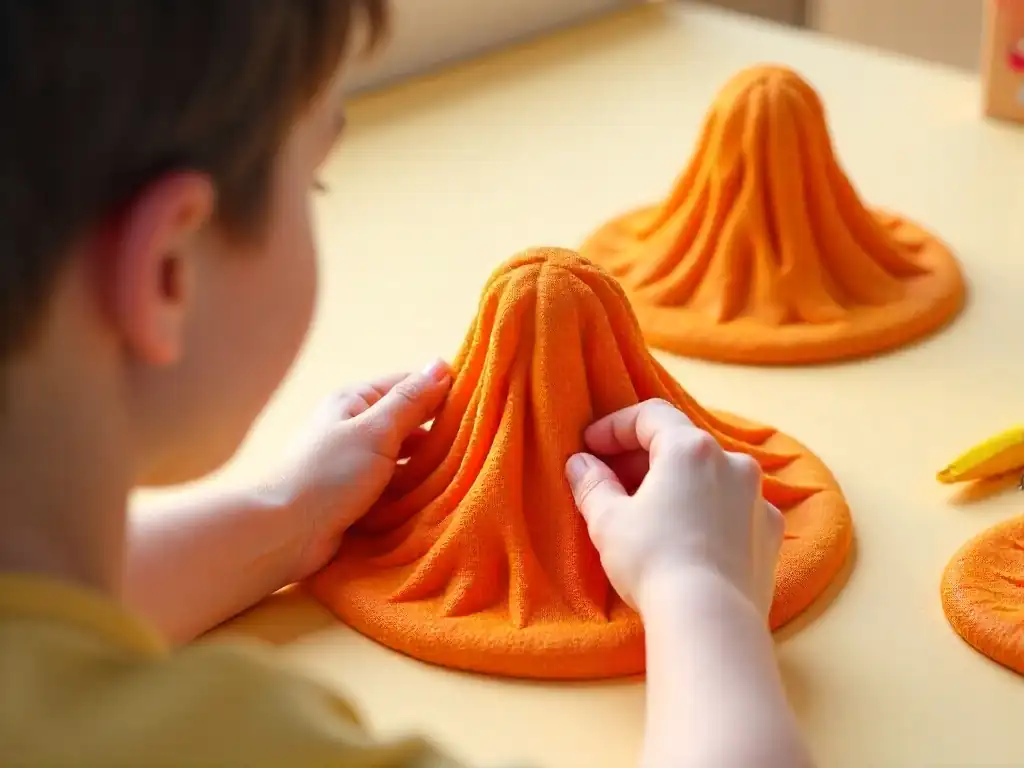
Beyond downloadable resources, printable volcanic activities offer another valuable avenue for enhancing learning, particularly through hands-on engagement. These activities range from safe at-home experiments that simulate volcanic eruptions to printable guides for building volcano models, providing tactile and interactive learning experiences. Printable activities are particularly beneficial for reinforcing concepts learned through digital resources or classroom instruction, making learning more memorable and engaging, especially for younger learners and kinesthetic learners who learn best by doing.
Safe At-Home Volcanic Experiments
Conducting safe volcanic experiments at home can bring the excitement of volcanic eruptions into a tangible and controlled setting. Free printable instructions and guides for safe at-home experiments are readily available, often utilizing readily accessible household materials. These experiments typically focus on simulating the basic principles of a volcanic eruption, such as the release of gas pressure and the flow of "lava." Safety is paramount in these experiments, and instructions emphasize the use of non-toxic materials and adult supervision, ensuring a fun and educational experience without posing any risks.
Simulating a Volcanic Eruption with Household Materials
One popular and safe at-home volcanic experiment involves simulating an eruption using baking soda and vinegar. Free printable instructions for this experiment are widely available, outlining the simple steps and materials needed. Typically, students construct a basic volcano model using materials like clay or plastic bottles. Inside the model, they place baking soda and a small amount of dish soap.
When vinegar is poured into the model, it reacts with the baking soda, producing carbon dioxide gas. The gas builds up pressure inside the model, eventually erupting through the "vent," simulating a volcanic eruption. The dish soap creates a foamy "lava" effect, making the eruption visually more engaging.
This baking soda and vinegar volcano experiment effectively demonstrates the basic principles of a volcanic eruption in a safe and accessible way. It allows students to visualize how gas pressure builds up within a volcano and how it is released during an eruption.
The use of readily available household materials makes this experiment easily replicable at home or in the classroom, providing a hands-on learning experience that reinforces the concepts of gas pressure, eruption dynamics, and volcanic processes. Free printable instructions ensure that educators and parents can easily implement this engaging and educational activity centered around free volcano educational materials.
Building a Volcano Model: Free Printable Guides
Building a volcano model is a classic hands-on activity that greatly enhances understanding of volcanic structures and landforms. Free printable guides for building volcano models are available, offering step-by-step instructions and templates to aid in construction. These guides often provide various model-building options, from simple paper or cardboard models to more elaborate clay or plaster models. Building a volcano model allows students to physically construct a three-dimensional representation of a volcano, solidifying their understanding of its different parts and shapes.
Printable Cone Volcano Template
For a simpler model-building option, free printable cone volcano templates are readily available. These templates typically consist of a pre-designed outline of a cone volcano that can be printed, cut out, and assembled. Students can decorate the template, adding details like lava flows, ash clouds, and vegetation to personalize their volcano model. This activity is particularly suitable for younger students or for situations where time and resources are limited. The printable template simplifies the model-building process, making it more accessible and efficient while still providing a valuable hands-on learning experience focused on free volcano educational materials.
Using a printable cone volcano template allows students to quickly create a recognizable representation of a stratovolcano. They can learn about the cone shape, the crater at the summit, and the flanks of the volcano as they assemble and decorate their models. This activity is a great way to reinforce vocabulary and visual understanding of volcano morphology in a fun and creative manner. The free and printable nature of these templates makes them easily accessible for classroom use or at-home learning, promoting hands-on engagement with volcano science.
Free Volcanic Educational Materials: Expanding Horizons
Beyond introductory materials and hands-on activities, free volcano educational materials also extend to resources that facilitate deeper learning and exploration of volcanology. These resources include in-depth research papers, articles from reputable scientific sources, and access to real-time volcanic monitoring data. These materials are particularly valuable for high school students, advanced learners, and anyone seeking to delve into the cutting edge of volcanological research and understanding.
In-Depth Volcanic Research Papers & Articles
For those seeking a more comprehensive and scientific understanding of volcanoes, access to in-depth research papers and articles is essential. Fortunately, a wealth of free volcano educational materials includes links and guidance on how to access reputable scientific publications and online databases. These resources provide access to peer-reviewed research on a wide range of volcanology topics, from magma genesis and eruption forecasting to volcanic hazards and mitigation strategies. Exploring these research materials allows students and enthusiasts to delve into the nuances of volcanological science and stay abreast of the latest discoveries and advancements in the field.
Exploring Current Volcanological Studies
Staying current with the latest volcanological studies is crucial for a comprehensive understanding of this dynamic field. Free volcano educational materials often guide users to resources that provide access to current volcanological research. Websites of geological surveys, universities with volcanology departments, and scientific journals often make abstracts and sometimes full articles freely available.
Furthermore, platforms like Google Scholar can be used to search for research papers on specific volcanology topics, often leading to freely accessible versions of published articles or pre-prints. Exploring these resources allows learners to engage with the forefront of volcanological research and understand the ongoing efforts to unravel volcano mysteries.
By accessing current volcanological studies, learners can explore topics such as the use of satellite data for volcano monitoring, advancements in eruption forecasting techniques, and research on the impact of volcanic eruptions on climate. They can also investigate studies focusing on specific volcanoes or volcanic regions around the world, gaining insights into the unique characteristics and hazards associated with different volcanic systems. The ability to explore current volcanological research, facilitated by free educational resources, empowers learners to engage with the scientific process and appreciate the ever-evolving nature of volcanological knowledge.
USGS Volcano Hazards Program
The United States Geological Survey (USGS) Volcano Hazards Program is a leading source of information and resources on volcanoes in the United States and around the world. Their website offers a vast collection of free volcano educational materials, including fact sheets, maps, real-time monitoring data, and publications. The USGS Volcano Hazards Program website is an invaluable resource for anyone seeking reliable and up-to-date information on volcanic activity, hazards, and research. Exploring the USGS website is an essential step for anyone delving into volcano education and research, as it provides access to authoritative data and insights from leading volcanologists.
The USGS Volcano Hazards Program website provides information on all active and potentially active volcanoes in the United States, including those in Hawaii, Alaska, and the Cascade Range. It offers real-time monitoring data, such as earthquake activity and ground deformation measurements, for many of these volcanoes. The website also hosts a wealth of educational materials, including publications on volcanic hazards, eruption history, and volcano monitoring techniques.
Furthermore, the USGS website often features interactive maps that display volcanic hazard zones and real-time volcanic activity. By utilizing the free resources available through the USGS Volcano Hazards Program, learners gain access to a wealth of authoritative information and data, enhancing their understanding of volcanoes and volcanic hazards.
Understanding Volcanic Monitoring: Free Data & Analysis
Volcanic monitoring is a crucial aspect of mitigating volcanic hazards and improving eruption forecasting. Free volcano educational materials extend to resources that help learners understand the techniques and data used in volcanic monitoring. These resources often include explanations of different monitoring methods, such as seismometry, ground deformation measurements (using GPS and InSAR), gas emission monitoring, and thermal imaging. Understanding these techniques and the data they generate is essential for appreciating the efforts made to monitor volcanoes and predict potential eruptions.
Ground Deformation and Volcano Prediction
Ground deformation monitoring is a key technique used to detect changes in a volcano's shape, which can indicate magma movement beneath the surface and potential eruptive activity. Free educational resources explain the principles of ground deformation monitoring and the instruments used, such as GPS stations and Interferometric Synthetic Aperture Radar (InSAR). These resources often describe how GPS stations precisely measure changes in ground position, while InSAR uses satellite radar images to detect subtle ground surface changes over large areas. Understanding how ground deformation data is collected and interpreted is crucial for comprehending volcano prediction efforts.
Free resources on ground deformation monitoring might explain how magma accumulating beneath a volcano can cause the ground surface to bulge or inflate. Conversely, magma withdrawal can lead to ground subsidence or deflation. By analyzing patterns of ground deformation, volcanologists can gain insights into magma chamber dynamics and assess the likelihood of an eruption. Educational materials might include examples of ground deformation data from past eruptions, illustrating how these measurements can provide valuable precursory signals of volcanic activity. Understanding ground deformation monitoring, facilitated by free volcano educational materials, is essential for appreciating the science behind volcano prediction.
Smithsonian Global Volcanism Program
The Smithsonian Institution's Global Volcanism Program (GVP) is another invaluable resource for free volcano educational materials. The GVP website provides a comprehensive database of volcanic eruptions worldwide, dating back to the Holocene epoch. It also offers information on volcano locations, eruption histories, and real-time volcanic activity reports. The Smithsonian GVP is a global authority on volcanism, and its website is an essential resource for researchers, educators, and anyone interested in learning about volcanoes on a global scale. Exploring the GVP website provides a broad perspective on volcanic activity across the planet and throughout history.
The Smithsonian GVP database allows users to search for information on specific volcanoes or volcanic regions, access eruption histories, and view maps of volcanic distribution. The website also provides weekly volcanic activity reports, summarizing recent eruptions and unrest around the world. Furthermore, the GVP website features educational resources, such as volcano profiles and explanations of volcanological concepts. By utilizing the free resources offered by the Smithsonian Global Volcanism Program, learners gain access to a vast repository of information on global volcanism, enhancing their understanding of the Earth's volcanic processes on a planetary scale.
Teaching Volcanic Safety: Free Preparedness Guides
Education about volcanoes is not complete without addressing volcanic safety and preparedness. Free volcano educational materials include vital resources for teaching communities living near volcanoes how to prepare for potential eruptions and mitigate risks. These resources encompass downloadable preparedness guides, community evacuation planning templates, and emergency communication plan templates, all designed to empower individuals and communities to enhance their safety in volcanically active regions.
Volcanic Eruption Preparedness: Downloadable Guide
A comprehensive volcanic eruption preparedness guide is an essential resource for anyone living in or visiting volcanic areas. Free downloadable guides are available, providing step-by-step instructions on how to prepare for a volcanic eruption. These guides typically cover topics such as creating a family emergency plan, assembling a disaster preparedness kit (including essential supplies like food, water, first-aid kit, and respiratory protection), understanding volcanic hazards, and knowing evacuation procedures. These preparedness guides are crucial for empowering individuals and families to take proactive steps to enhance their safety in the event of volcanic unrest.
A downloadable volcanic eruption preparedness guide might detail specific safety measures to take during different volcanic hazards, such as staying indoors during ashfall events, evacuating promptly if advised by authorities in the event of pyroclastic flows or lahars, and seeking higher ground if a tsunami is a potential risk from a volcanic eruption. The guide would emphasize the importance of staying informed about volcanic activity through official sources like geological surveys and emergency management agencies.
By providing free downloadable volcanic eruption preparedness guides, communities can readily access and disseminate vital safety information, promoting a culture of preparedness in volcanically active regions.
Community Evacuation Planning: Free Templates
For communities living near active volcanoes, having a well-defined evacuation plan is paramount. Free templates for community evacuation planning are available, providing a framework for developing comprehensive and effective evacuation strategies. These templates typically outline the key components of an evacuation plan, including identifying evacuation routes, designated assembly points, communication protocols, and roles and responsibilities for community members and emergency responders. Utilizing these free templates can significantly streamline the evacuation planning process and ensure a more coordinated and efficient response in the event of a volcanic crisis.
Emergency Communication Plan Template
Effective communication is critical during a volcanic crisis, particularly during evacuation efforts. Free emergency communication plan templates are available to assist communities in establishing clear communication protocols and channels. These templates often include sections for outlining communication pathways between emergency responders, community leaders, and residents, identifying designated communication personnel, and establishing backup communication systems in case of primary channels fail. A well-defined emergency communication plan, developed using a free template, is essential for ensuring that timely and accurate information reaches everyone who needs it during a volcanic emergency, facilitating a safer and more effective evacuation.
An emergency communication plan template might include sections for listing key contact information for emergency responders, local government officials, and community leaders. It could also outline procedures for disseminating emergency alerts and warnings through various channels, such as sirens, radio broadcasts, social media, and door-to-door notifications.
The template might also address strategies for communicating with vulnerable populations who may have limited access to communication channels or require specialized assistance during evacuation. By using free emergency communication plan templates, communities can strengthen their communication infrastructure and preparedness, ultimately enhancing their ability to respond effectively and protect lives during a volcanic emergency.
Free Volcanic Educational Materials: Promoting Accessibility
Ensuring that volcano education is accessible to everyone is a crucial goal. Free volcano educational materials play a vital role in promoting accessibility, making learning resources available to a wider audience regardless of socioeconomic background or geographic location. Furthermore, resources like printable flashcards and puzzles can cater to diverse learning styles and make learning more engaging and enjoyable for all.
Printable Volcanic Terminology Flashcards
Learning new vocabulary is often a key component of any educational endeavor, and volcanology is no exception. Free printable volcanic terminology flashcards are available to aid in vocabulary acquisition, making learning more interactive and accessible. These flashcards typically feature a volcanology term on one side and its definition or an illustrative image on the other. Flashcards are a versatile learning tool that can be used for individual study, group activities, or classroom review sessions. The printable format makes these flashcards readily accessible to anyone with a printer and paper, promoting vocabulary learning in a cost-effective and convenient manner.
Printable volcanic terminology flashcards might include terms like "lahar," "pyroclastic flow," "tephra," "vent," and "caldera." Using flashcards allows learners to actively test their knowledge and reinforce their understanding of key volcanology terms through repetition and self-assessment. Flashcards can be used in various games and activities, making vocabulary learning more engaging and less rote. The free and printable nature of these flashcards makes them a valuable resource for educators, students, and anyone interested in expanding their volcanology vocabulary.
Volcanic Crossword Puzzles & Word Searches
To further enhance engagement and make learning fun, free volcanic crossword puzzles and word searches are available. These puzzles incorporate volcanology terminology in an entertaining format, reinforcing vocabulary and concepts in a playful way. Crossword puzzles challenge learners to recall definitions and terms to fill in the grid, while word searches require them to identify volcanology-related words hidden within a letter grid. These puzzles are suitable for individual or group activities, and their printable format makes them easily accessible for classroom use or at-home learning, promoting volcano education through enjoyable activities.
Volcanic crossword puzzles might include clues related to volcano types, eruption processes, volcanic hazards, and famous eruptions. Solving the crossword puzzle requires learners to recall and apply their knowledge of volcanology vocabulary and concepts. Word searches similarly reinforce vocabulary recognition and spelling skills in a relaxed and engaging manner. The free availability of printable volcanic crossword puzzles and word searches provides educators and learners with fun and accessible tools for reinforcing volcano education and making learning more enjoyable.
Frequently Asked Questions
What types of free volcano educational materials does VolcanoExplorers.org offer?
VolcanoExplorers.org provides a variety of free volcano educational materials, including downloadable worksheets, printable diagrams, and informative articles. These resources are designed to enhance understanding of volcanic processes for all ages.
How can these materials help me learn about volcanoes?
The materials offer a comprehensive overview of volcanology, covering topics like volcano types, eruption mechanisms, and the impact of volcanic activity on the environment. They are structured to facilitate easy learning and retention of key concepts.
Are the free volcano educational materials suitable for different age groups?
Yes, the website provides resources suitable for a range of ages, from elementary school students to adults. Content is tailored to different learning levels to ensure effective and engaging education for everyone.
Where can I find real-time updates on volcanic activity using VolcanoExplorers.org?
While offering educational content, VolcanoExplorers.org also provides links and resources for accessing real-time updates on volcanic activity worldwide. This helps stay informed about current volcanic events and potential hazards.
How can I use the evacuation tips and safety guides provided?
The safety guides and evacuation tips are designed to help those living near active volcanoes prepare for potential eruptions. They provide essential information on emergency procedures and how to stay safe during a volcanic event.
Final Reflection: Igniting Curiosity, Erupting Knowledge
The journey through the fiery depths of volcano science, as presented in this collection of free educational materials, underscores the enduring power of accessible learning. In a world increasingly reliant on digital resources, providing these free downloads and printables ensures that the wonders of volcanology are within reach for every curious mind, regardless of their background or location. This commitment to democratizing knowledge is more vital now than ever before.
The impact of understanding our planet's dynamic processes, like volcanic activity, extends far beyond the classroom. It fosters a deeper appreciation for the Earth's power and fragility, shaping responsible citizens who are better equipped to address environmental challenges. The important thing is not to stop questioning. Curiosity has its own reason for existing.
- Albert Einstein. This quote perfectly encapsulates the spirit we hope to ignite with these resources, encouraging a lifelong pursuit of knowledge and understanding.
Now, we invite you to take the spark of curiosity ignited by these volcano materials and fan it into a flame. Share these resources with educators, students, and anyone with a thirst for knowledge. Explore the wonders of volcanology, not just as a subject of study, but as a gateway to understanding our planet and our place within its intricate web. Let the knowledge erupt within you and inspire action towards a more informed and sustainable future.
Ignite Your Inner Volcanologist!
Thank you for joining us on this exciting journey into the heart of volcanoes! We hope you've discovered some fascinating facts and feel inspired by the raw power of nature. Now, let's take that inspiration and turn it into action!
Ready to delve deeper?
- Download our free volcano activity pack and bring volcanic science to life for your children or students! This is your gateway to hands-on learning.
- Share your favorite volcano fact from the article on social media using #VolcanoExplorers and inspire others to join the adventure.
- Explore our online resource library at volcanoexplorers.org for even more volcano-themed articles, videos, and interactive simulations.
Which volcano will you research next? Share your choice in the comments below!