
Are You Truly Ready? The WakeUp Call of Volcano Evacuation Drills


Welcome to Volcano Explorers, where the raw power of the Earth is revealed. Ever wondered if you're truly prepared when the mountain rumbles? Our latest deep dive into volcano evacuation preparedness tips might just be the wake-up call you need. Don't wait for the ash to fall – discover crucial strategies and insights that could save lives. What if everything you thought you knew about safety was wrong? Read on to find out...
- Mount Rainier's Shadow: The Wake-Up Call of Volcano Evacuation Drills
- Understanding the Vital Role of Volcano Evacuation Drills
- Assessing Your Current Mount Rainier Evacuation Preparedness Level
- Key Elements of a Comprehensive Mount Rainier Evacuation Drill
- Simulating Real-World Scenarios in Volcano Evacuation Drills
- Evaluating and Improving Your Mount Rainier Evacuation Plan After the Drill
- Community Involvement in Volcano Evacuation Preparedness
- Real-Life Examples: Lessons Learned from Past Volcano Evacuations
- Maintaining Long-Term Mount Rainier Evacuation Preparedness
-
Frequently Asked Questions
- What is the primary purpose of volcano evacuation drills?
- Where can I find reliable information about volcano evacuation preparedness tips?
- What are some of the key things I should include in a volcano evacuation kit?
- How often should volcano evacuation drills be conducted in communities near active volcanoes?
- What should I do if a volcano erupts and I am ordered to evacuate?
- Final Reflection: Embracing Preparedness in the Shadow of Giants
- Embrace Preparedness: Your Next Volcano Action Awaits!
Mount Rainier's Shadow: The Wake-Up Call of Volcano Evacuation Drills
Understanding the Vital Role of Volcano Evacuation Drills
Why Mount Rainier Evacuation Preparedness Tips are Crucial for Safety
Mount Rainier, a majestic stratovolcano towering over the Pacific Northwest, is not just a scenic wonder; it's an active volcano posing significant risks to surrounding communities. For residents living in the shadow of this iconic peak, understanding and implementing volcano evacuation preparedness tips is not merely advisable—it’s a matter of life safety. The geological history of Mount Rainier is punctuated by periods of intense volcanic activity, including massive lahars (volcanic mudflows) that have sculpted the landscape and reached far into the Puget Sound lowlands.
Scientific studies, such as those conducted by the USGS Volcano Hazards Program, consistently highlight the potential for future eruptions and associated hazards from Mount Rainier. These hazards extend beyond immediate eruption zones, impacting areas like Orting, Puyallup, and even parts of Tacoma with lahar flows that can travel at speeds up to 50 miles per hour, leaving little time for escape if unprepared.
The urgency of volcano evacuation preparedness tips stems from the short warning times often associated with volcanic events. While scientists employ sophisticated monitoring techniques, including seismometers and GPS stations, to detect changes in volcanic activity, the transition from unrest to eruption can be rapid. For Mount Rainier, the primary concern isn't necessarily a large explosive eruption like Mount St. Helens in 1980, but rather the threat of lahars.
These mudflows, triggered by an eruption or even heavy rainfall melting glacial ice, can occur with minimal warning, often preceding any significant ashfall or explosive activity. Therefore, relying solely on official warnings during an event is insufficient. Proactive preparedness, guided by comprehensive volcano evacuation preparedness tips, is the most effective strategy for mitigating risk and ensuring community resilience.
The Importance of Regular Drills in Volcanic Hazard Zones
Regular drills are the cornerstone of effective volcano evacuation preparedness in areas vulnerable to volcanic hazards. These exercises are not just about practicing procedures; they are crucial for instilling muscle memory, identifying weaknesses in evacuation plans, and fostering a culture of preparedness within communities. Imagine a school fire drill – the practiced routine allows for swift and orderly evacuation, even in a stressful situation.
Volcano evacuation drills serve the same purpose, preparing individuals and communities to respond effectively and efficiently when time is of the essence. Without regular drills, evacuation plans remain theoretical documents, untested and potentially flawed in real-world scenarios.
The benefits of regular drills extend beyond individual preparedness. Community-wide drills, involving local emergency services, schools, businesses, and residents, are vital for testing the overall effectiveness of evacuation plans at a larger scale. These exercises can reveal bottlenecks in evacuation routes, communication breakdowns, and areas where public awareness needs improvement.
For example, a drill might highlight that a designated evacuation route becomes congested during peak traffic hours, prompting the need for alternative routes or staggered evacuation strategies. Furthermore, drills provide opportunities to educate the public about volcano hazards, warning signals, and proper evacuation procedures, reinforcing volcano evacuation preparedness tips and fostering a collective sense of responsibility for safety.
Assessing Your Current Mount Rainier Evacuation Preparedness Level
Self-Assessment: Are You Prepared for a Volcanic Emergency?
Gauging your current level of volcano evacuation preparedness is the first step towards enhancing your safety. A simple self-assessment can reveal strengths and weaknesses in your plan, highlighting areas that require immediate attention. Consider these key questions: Do you know if you live in a designated lahar hazard zone around Mount Rainier? Pierce County Emergency Management provides online resources and interactive maps that clearly delineate these zones.
Have you discussed a volcano emergency plan with your family, including designated meeting points both near your home and outside the hazard zone? Do you have an emergency kit stocked with essential supplies like food, water, medications, a first-aid kit, flashlight, and a NOAA weather radio? These are fundamental volcano evacuation preparedness tips that form the basis of any robust emergency strategy.
Furthermore, evaluate your understanding of warning signals and evacuation procedures. Are you familiar with the Pierce County ALERT system for receiving emergency notifications? Do you know the designated evacuation routes from your home and workplace? Have you practiced these routes, considering different times of day and potential traffic congestion?
A truly honest self-assessment will uncover gaps in your preparedness. For instance, you might have an emergency kit but lack a portable toilet, or you might know your evacuation route but haven't considered what to do if it becomes blocked. Addressing these gaps proactively, guided by comprehensive volcano evacuation preparedness tips, is crucial for ensuring your safety and the safety of your loved ones during a volcanic emergency.
Identifying Gaps in Your Mount Rainier Evacuation Plan
Once you've conducted a self-assessment, pinpointing specific gaps in your Mount Rainier evacuation plan becomes critical. These gaps can range from missing essential supplies to inadequate communication strategies or a lack of practiced evacuation routes. A common gap is the absence of a detailed communication plan. In a volcanic emergency, cell phone networks may become overloaded or unreliable.
Do you have alternative communication methods, such as a NOAA weather radio to receive official alerts or a pre-arranged meeting point where family members can reunite if separated? Another frequent oversight is neglecting the needs of pets or individuals with specific medical requirements. Does your emergency kit include pet food, medications, and any specialized equipment needed for family members with disabilities or chronic health conditions?
Beyond supplies and communication, procedural gaps can also undermine your evacuation effectiveness. Have you actually timed how long it takes to evacuate your home and reach your designated assembly point? This practical exercise can reveal unrealistic time estimates or unforeseen obstacles along your route.
Furthermore, consider less obvious scenarios, such as evacuating at night, during heavy rain, or with limited visibility due to ashfall. These conditions can significantly impact evacuation times and require adjustments to your plan. Identifying and addressing these gaps, guided by thorough volcano evacuation preparedness tips and practical drills, is essential to transform a basic plan into a truly effective strategy for safeguarding your well-being during a volcanic crisis.
Key Elements of a Comprehensive Mount Rainier Evacuation Drill
Planning and Preparation for Effective Evacuation Exercises
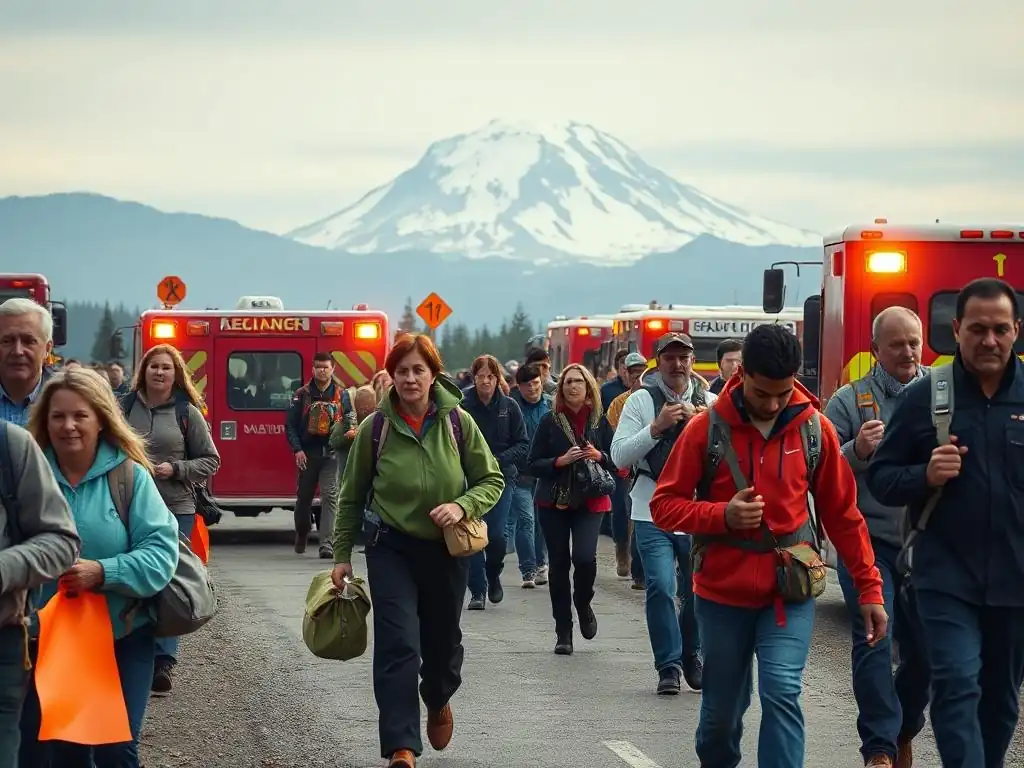
Effective volcano evacuation drills are not spontaneous events; they require meticulous planning and preparation. The foundation of a successful drill is a clearly defined set of objectives. What specific aspects of your evacuation plan do you want to test? Are you focusing on evacuation speed, communication effectiveness, route efficiency, or the adequacy of emergency supplies? Clearly stated objectives will guide the drill's design and evaluation. Next, determine the scope and scale of the drill. Will it be a family-level drill, a neighborhood exercise, or a larger community-wide event? The scale will influence the resources, personnel, and logistical considerations involved.
Crucial pre-drill preparations include selecting a realistic scenario, such as a simulated lahar warning or ashfall event. Develop clear communication protocols for initiating the drill and disseminating instructions. This might involve using a designated alert system, phone trees, or even door-to-door notification in a neighborhood drill.
Establish safety guidelines for participants and ensure first-aid personnel are available if needed. Inform participants well in advance about the drill's date, time, objectives, and expected actions. Providing clear and concise instructions, along with relevant volcano evacuation preparedness tips, will maximize participation and ensure the drill is a valuable learning experience rather than a source of confusion or anxiety.
Establishing Clear Communication Channels During Volcano Emergencies
Clear and reliable communication channels are paramount during volcano emergencies, facilitating timely warnings, coordinating evacuations, and providing crucial information to affected communities. Establishing these channels is a key element of volcano evacuation preparedness and a vital focus for evacuation drills. The primary communication pathway for official warnings is typically through emergency alert systems, such as Pierce County ALERT, which utilizes various methods like phone calls, text messages, emails, and social media notifications.
Ensuring that you are registered for these alert systems and understand how to interpret warnings is crucial. However, relying solely on electronic communication can be risky, especially during a large-scale emergency where infrastructure may be damaged or overloaded.
Therefore, establishing redundant communication methods is essential. NOAA weather radios provide a reliable source of official alerts, even when cell phone service is disrupted. Pre-arranged phone trees or neighborhood communication networks can facilitate information sharing within communities. Consider designating a family meeting point and establishing out-of-state contacts who can serve as communication hubs if local networks fail.
During evacuation drills, actively test these communication channels. Simulate scenarios where primary communication methods are unavailable and practice using backup systems. Evaluate the clarity, speed, and effectiveness of information dissemination. Identifying and addressing communication weaknesses during drills is crucial for ensuring that vital information reaches everyone who needs it during a real volcanic emergency.
Defining Evacuation Routes and Assembly Points: Critical Steps
Pre-defined evacuation routes and assembly points are not just lines on a map; they are lifelines during a volcano emergency. Clearly establishing and practicing these elements are critical steps in volcano evacuation preparedness. Evacuation routes should be carefully planned, considering factors such as lahar hazard zones, road capacity, potential traffic bottlenecks, and alternative pathways.
Pierce County Emergency Management provides pre-designated evacuation routes for areas around Mount Rainier, often utilizing state highways and major arterials that lead away from volcanic hazard zones and towards safer areas at higher elevations. Familiarize yourself with the designated routes for your home, workplace, and school, and ensure that everyone in your household knows them.
Assembly points are pre-determined safe locations where evacuees can gather after reaching safety. These points should be outside of volcanic hazard zones, easily accessible, and equipped to provide basic support, such as information, first aid, and temporary shelter if necessary. Assembly points might be schools, community centers, parks, or other designated public spaces. During evacuation drills, practice navigating your designated evacuation routes to your assembly points.
Time your travel, identify potential obstacles or congested areas, and consider alternative routes in case of road closures. Regularly review and update evacuation routes and assembly points, especially as infrastructure changes or new hazard assessments become available. Mastering your evacuation routes and knowing your assembly points are fundamental volcano evacuation preparedness tips that can significantly enhance your safety and efficiency during a volcanic emergency.
Practicing Evacuation Procedures: A Step-by-Step Guide
Practicing evacuation procedures transforms a theoretical plan into a readily executable action. A step-by-step guide to practicing evacuation procedures ensures that drills are comprehensive and cover all critical aspects of a real evacuation. Start by simulating a warning notification, either through an actual alert system test or a pre-arranged signal within your household or community. Upon receiving the simulated warning, immediately initiate your evacuation procedures.
Step one: gather your emergency kit and essential supplies. Ensure everyone knows where the kit is stored and what it contains. Step two: secure your home. This might involve turning off utilities, locking doors and windows, and moving vehicles to designated evacuation routes if possible.
Step three: evacuate promptly and calmly using your pre-determined evacuation route. Walk or drive as planned, adhering to traffic laws and directions from emergency personnel if present in a larger drill scenario. Step four: proceed to your designated assembly point. Once there, check in with drill coordinators or family members to confirm everyone has arrived safely.
Step five: participate in a brief debriefing, if part of a larger drill, to discuss what went well, what challenges were encountered, and areas for improvement. Following these step-by-step procedures during drills allows you to refine your evacuation plan, identify weaknesses, and build confidence in your ability to respond effectively when a real volcanic emergency occurs. Regular practice reinforces volcano evacuation preparedness tips and makes evacuation a more automatic and less stressful process.
Simulating Real-World Scenarios in Volcano Evacuation Drills
Incorporating Lahar Flow and Ashfall Scenarios into Drills
To truly test the robustness of your volcano evacuation plan, drills must simulate real-world volcanic hazards, particularly lahar flows and ashfall, which are significant threats from Mount Rainier. Incorporating lahar flow scenarios into drills involves understanding the characteristics of lahars – their speed, destructive power, and potential inundation areas. Simulate a lahar warning and practice evacuating from designated lahar hazard zones to higher ground outside of these areas.
Consider the limited warning time associated with lahars and emphasize the need for immediate and decisive action. Drills can simulate lahar inundation by marking designated areas as "impacted" and requiring participants to avoid these zones during evacuation exercises.
Ashfall, while less immediately life-threatening than lahars, can still pose significant challenges during evacuation. Simulate ashfall conditions by using visual or auditory cues, such as distributing simulated "ash" (e.g., sawdust or flour in a controlled environment) or playing recordings of ashfall sounds. Practice evacuating in simulated ashfall conditions, emphasizing the importance of respiratory protection (using dust masks or cloth coverings) and eye protection (wearing goggles or glasses).
Simulate reduced visibility due to ashfall and practice navigating evacuation routes under these conditions. Incorporating both lahar and ashfall scenarios into drills provides a more realistic and comprehensive test of your volcano evacuation preparedness, highlighting the unique challenges posed by different volcanic hazards and reinforcing appropriate response strategies.
Addressing Unique Challenges: [Limited Visibility, River Crossings]
Volcano evacuation drills should not shy away from incorporating unique challenges that evacuees might face in a real volcanic emergency, such as limited visibility and river crossings. Limited visibility can result from heavy ashfall, darkness, fog, or smoke. Drills can simulate limited visibility by conducting exercises at night or in low-light conditions, or by using blindfolds or dimmed lighting in a controlled environment.
Practice navigating evacuation routes with limited visibility, emphasizing the importance of using flashlights, staying together as a group, and following pre-determined routes closely. This scenario highlights the need for reliable lighting in emergency kits and practiced navigation skills.
River crossings present another unique challenge in volcanic areas, as lahars and heavy rainfall can cause rivers to swell rapidly and become dangerous to cross. If your evacuation route involves crossing a river, incorporate this element into your drill. Practice identifying safe crossing points, if possible, or simulating alternative routes that avoid river crossings altogether.
Emphasize the dangers of attempting to cross swollen rivers during a volcanic emergency and the importance of seeking alternative routes or waiting for emergency responders to provide assistance if river crossings are unavoidable. Addressing these unique challenges in drills ensures that evacuation plans are robust and adaptable to a wider range of real-world conditions, enhancing overall volcano evacuation preparedness.
Dealing with Communication Failures During Drills
A crucial aspect of realistic volcano evacuation drills is simulating communication failures. In a real volcanic emergency, communication systems can become overloaded, damaged, or simply fail. Drills should intentionally incorporate scenarios where primary communication methods are unavailable to test the effectiveness of backup systems and alternative strategies. Simulate a failure of cell phone networks or internet access during a drill. Practice using alternative communication methods, such as NOAA weather radios to receive official alerts, pre-arranged phone trees or neighborhood communication networks, or even relying on physical messengers to relay information in a neighborhood drill scenario.
Test the effectiveness of pre-arranged family meeting points and out-of-state contacts as communication hubs when local networks are down. During debriefings after drills, specifically discuss communication challenges encountered and identify strategies to improve communication resilience. This might involve investing in more reliable communication equipment, refining communication protocols, or strengthening neighborhood communication networks. By intentionally simulating communication failures in drills, you can identify vulnerabilities in your communication plan and develop more robust and resilient communication strategies, a vital component of comprehensive volcano evacuation preparedness.
Evaluating and Improving Your Mount Rainier Evacuation Plan After the Drill
Post-Drill Debriefing: Identifying Strengths and Weaknesses
The conclusion of a volcano evacuation drill is not the end but rather a crucial midpoint in the preparedness process. A post-drill debriefing is essential for systematically evaluating the drill's outcomes, identifying both strengths and weaknesses in your evacuation plan, and pinpointing areas for improvement. This debriefing should involve all participants, from individuals and families to community groups and emergency responders if a larger-scale drill was conducted. Start by reviewing the drill's objectives. Were the objectives met?
If not, why not? Gather feedback from participants about their experiences during the drill. What worked well? What challenges did they encounter? What aspects of the evacuation plan were clear, and what aspects were confusing or unclear?
Specifically analyze the performance of key elements of the evacuation plan, such as communication effectiveness, evacuation route efficiency, assembly point suitability, and the adequacy of emergency supplies. Identify any bottlenecks in evacuation routes, communication breakdowns, or gaps in emergency kits. Document both the strengths and weaknesses identified during the debriefing. Strengths should be reinforced and maintained, while weaknesses should be addressed through plan revisions and further training. A thorough and honest post-drill debriefing is the foundation for continuous improvement of your volcano evacuation preparedness, ensuring that your plan becomes more effective with each drill and refinement cycle.
Refining Your Evacuation Plan Based on Drill Results
The insights gained from post-drill debriefings are invaluable for refining your volcano evacuation plan and making it more robust and effective. Based on the identified weaknesses and areas for improvement, systematically revise your evacuation plan document. If communication breakdowns were identified, update your communication protocols. This might involve adding backup communication methods, clarifying communication responsibilities, or improving the dissemination of warning information. If evacuation routes proved to be congested or inefficient, explore alternative routes, consider staggered evacuation strategies, or work with local authorities to address route bottlenecks.
If the drill revealed gaps in emergency kits, update your checklist and replenish supplies accordingly. If assembly points were deemed inadequate, consider alternative locations or improve the resources available at existing assembly points. Document all revisions to your evacuation plan clearly and ensure that all members of your household or community are informed of the updates.
After revising your plan, schedule follow-up drills to test the effectiveness of the changes. This iterative process of drilling, debriefing, refining, and re-drilling is essential for continuous improvement and ensures that your volcano evacuation plan remains relevant, effective, and aligned with the evolving needs and challenges of volcano preparedness.
Updating Emergency Kits and Supplies: A Checklist
Maintaining an up-to-date emergency kit is a continuous process, not just a one-time task. Regularly reviewing and updating your emergency kit, especially after a volcano evacuation drill, is crucial for ensuring you have the necessary supplies when a real emergency strikes. Use a checklist to systematically review your kit's contents. Check expiration dates on food, water, medications, and batteries.
Replace expired items promptly. Replenish any items used or consumed during the drill. Consider adding items identified as missing during the post-drill debriefing. For example, if communication failures highlighted the need for a NOAA weather radio, add one to your kit.
Ensure that your kit is tailored to the specific needs of your household, including medications, dietary requirements, and items for infants, children, or individuals with disabilities. Check the functionality of essential equipment like flashlights, radios, and first-aid supplies. Organize your kit so that items are easily accessible in an emergency. Store your kit in a designated location that is readily accessible during a rapid evacuation. Regularly reviewing and updating your emergency kit checklist, at least twice a year and after each drill, ensures that you have a well-stocked and functional kit, a vital component of comprehensive volcano evacuation preparedness.
Community Involvement in Volcano Evacuation Preparedness
The Role of Pierce County Emergency Management in Evacuation Planning
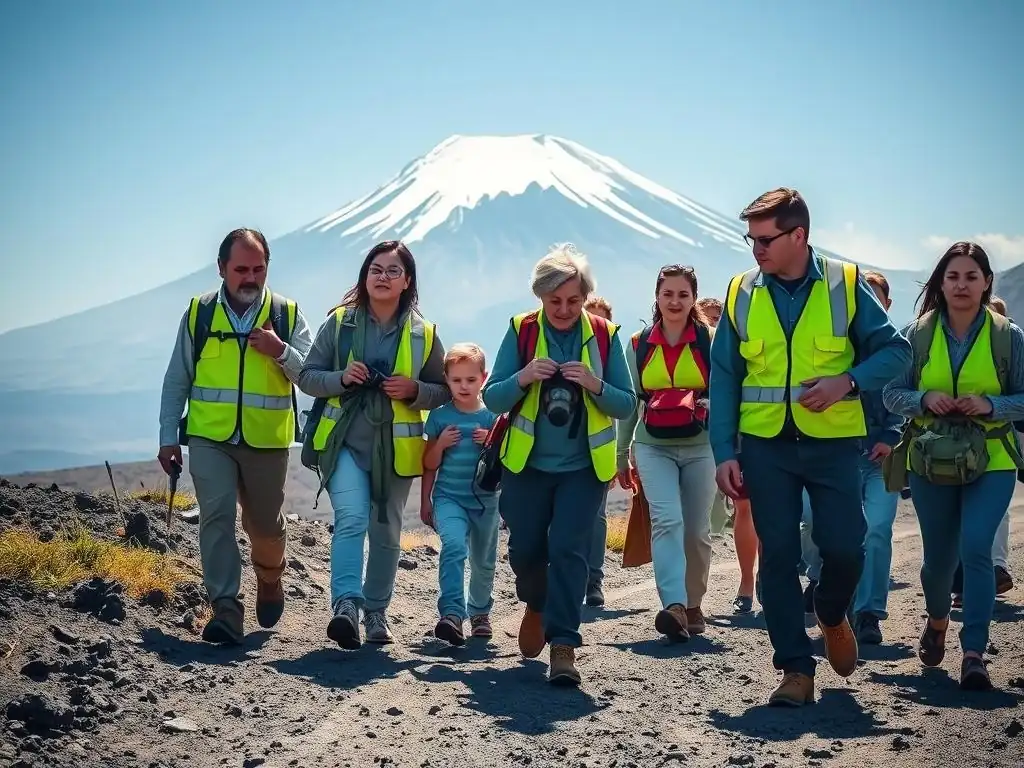
Pierce County Emergency Management (PCEM) plays a pivotal role in volcano evacuation planning for communities surrounding Mount Rainier. PCEM is the lead agency responsible for coordinating emergency preparedness and response efforts within Pierce County, including volcanic hazards. They develop and maintain comprehensive emergency plans, including volcano evacuation plans, in collaboration with various stakeholders such as local jurisdictions, emergency responders, scientists from the USGS Cascades Volcano Observatory, and community organizations. PCEM provides crucial resources and information to the public, including hazard maps, evacuation routes, warning systems (like Pierce County ALERT), and volcano evacuation preparedness tips.
PCEM conducts public outreach and education programs to raise awareness about volcano hazards and promote preparedness within communities. They organize community workshops, training sessions, and drills to educate residents about volcano safety and evacuation procedures. During a volcanic emergency, PCEM serves as the central coordinating body, disseminating official warnings, managing evacuation efforts, coordinating emergency response resources, and providing public information.
Residents living in the shadow of Mount Rainier should familiarize themselves with PCEM's resources, register for emergency alerts, participate in community preparedness initiatives, and actively engage with PCEM to enhance their volcano evacuation preparedness. PCEM's expertise and coordination are essential for building community resilience to volcanic hazards.
Community Workshops and Training Sessions on Volcano Safety
Community workshops and training sessions are vital platforms for disseminating volcano safety information and enhancing community-wide volcano evacuation preparedness. These sessions, often organized by Pierce County Emergency Management, local fire departments, or community organizations, provide opportunities for residents to learn directly from experts about volcano hazards, warning systems, evacuation procedures, and practical volcano evacuation preparedness tips. Workshops can cover topics such as Mount Rainier's volcanic history, lahar hazards, ashfall impacts, warning signals, designated evacuation routes, emergency kit essentials, and family emergency planning.
Training sessions can offer hands-on practice in skills crucial for volcano safety, such as using fire extinguishers, administering basic first aid, or assembling emergency kits. Interactive exercises and simulations can be incorporated to make learning more engaging and effective.
Community workshops and training sessions foster a sense of collective preparedness and provide a forum for residents to ask questions, share concerns, and connect with local emergency responders and preparedness experts. Actively participating in these community initiatives is a proactive step individuals and families can take to enhance their volcano safety knowledge and contribute to a more prepared and resilient community in the face of volcanic hazards.
Encouraging Neighbor-to-Neighbor Support During Evacuations
Neighbor-to-neighbor support during evacuations can significantly enhance community resilience and ensure that no one is left behind during a volcano emergency. Encouraging this spirit of mutual assistance is a crucial aspect of community-level volcano evacuation preparedness. Establish neighborhood communication networks or phone trees to facilitate information sharing and check on vulnerable neighbors during an evacuation. Identify neighbors who may require assistance, such as elderly individuals, people with disabilities, or single-parent families. Offer to help them with evacuation preparations, such as assembling emergency kits, practicing evacuation routes, or providing transportation if needed.
During an actual evacuation, check on your neighbors, especially those identified as needing assistance. Offer to share resources, such as extra space in your vehicle or supplies from your emergency kit. Coordinate evacuation efforts within your neighborhood to ensure that everyone evacuates safely and efficiently. Building strong neighborly relationships and fostering a culture of mutual support can transform a community from a collection of individuals into a cohesive and resilient unit, capable of effectively responding to and recovering from volcanic emergencies. Neighbor-to-neighbor support is not just a helpful gesture; it's a vital component of community-wide volcano evacuation preparedness.
Real-Life Examples: Lessons Learned from Past Volcano Evacuations
Case Studies: Analyzing Successful and Unsuccessful Evacuations
Analyzing case studies of past volcano evacuations, both successful and unsuccessful, provides invaluable lessons for improving current volcano evacuation preparedness strategies. The 1991 eruption of Mount Pinatubo in the Philippines offers a compelling example of a largely successful evacuation. Philippine and USGS volcanologists closely monitored the volcano, detected increasing unrest, and issued timely warnings. Extensive pre-eruption evacuations of over 200,000 people were conducted, significantly reducing casualties despite the eruption's magnitude. Key factors contributing to the success included effective volcano monitoring, clear communication of warnings, strong inter-agency coordination, and community responsiveness to evacuation orders.
Conversely, the 1985 lahar from Nevado del Ruiz volcano in Colombia tragically illustrates the consequences of unsuccessful evacuation efforts. Despite warnings of potential lahars, local authorities and residents in the town of Armero were slow to evacuate. A devastating lahar swept through Armero, killing over 25,000 people.
Factors contributing to the disaster included insufficient risk communication, lack of community preparedness, and a delayed and inadequate evacuation response. Comparing these contrasting case studies highlights the critical importance of early warning systems, effective risk communication, community education, and proactive evacuation planning in mitigating the impacts of volcanic eruptions. Analyzing these and other case studies provides concrete lessons for refining volcano evacuation preparedness tips and strategies.
Applying Lessons Learned to Improve Future Evacuation Drills
The lessons gleaned from analyzing past volcano evacuation case studies should be directly applied to improve future evacuation drills and preparedness plans around Mount Rainier. For example, the Mount Pinatubo case emphasizes the importance of clear and consistent communication of volcanic hazards and warnings. Future drills can focus on testing and refining communication protocols, ensuring that warnings are disseminated effectively through multiple channels and are easily understood by the public.
The Nevado del Ruiz disaster underscores the need for robust community education and preparedness programs. Drills should incorporate realistic scenarios that challenge community response and identify areas where public awareness and preparedness can be strengthened.
Learning from both successful and unsuccessful evacuations, drills should simulate a range of challenges, including communication failures, limited visibility, and lahar flow scenarios. Debriefings after drills should specifically analyze how well communication systems performed, how effectively evacuation routes were utilized, and how prepared participants were for different volcanic hazards. By actively applying lessons learned from past events to the design and execution of future evacuation drills, communities around Mount Rainier can continuously improve their volcano evacuation preparedness, enhancing their resilience and reducing their vulnerability to volcanic hazards.
Maintaining Long-Term Mount Rainier Evacuation Preparedness
Regular Review and Updates of Your Evacuation Plan
Volcano evacuation preparedness is not a static state; it requires ongoing maintenance and adaptation. Regular review and updates of your evacuation plan are essential to ensure its continued effectiveness and relevance. Schedule annual or bi-annual reviews of your evacuation plan document. Review contact information, evacuation routes, assembly points, and emergency kit checklists to ensure they are still accurate and up-to-date. Consider any changes in your household, such as new family members, changes in medical needs, or relocation. Adjust your plan accordingly to reflect these changes.
Review hazard maps and official guidance from Pierce County Emergency Management and the USGS Cascades Volcano Observatory to ensure your plan aligns with the latest scientific information and emergency management recommendations. Participate in community workshops and training sessions to stay informed about best practices in volcano preparedness. After each evacuation drill, incorporate lessons learned and revise your plan based on drill outcomes. Regularly reviewing and updating your evacuation plan keeps it a living document that remains effective and responsive to evolving circumstances and new information, ensuring long-term volcano evacuation preparedness.
Staying Informed About Volcanic Activity and Warnings
Staying informed about volcanic activity and warnings is a continuous responsibility for those living near Mount Rainier. Proactive monitoring and awareness are crucial components of long-term volcano evacuation preparedness. Register for Pierce County ALERT and other local emergency notification systems to receive timely warnings and updates about volcanic activity. Monitor official sources of information, such as the USGS Cascades Volcano Observatory website and social media channels, for regular updates on Mount Rainier's status and potential hazards. Pay attention to local news and weather reports for information related to volcanic activity and emergency preparedness.
Learn to recognize potential warning signs of increased volcanic activity, such as increased steam or gas emissions, changes in ground deformation, or more frequent earthquakes. Understand the difference between official warnings and rumors or misinformation. Develop a reliable system for receiving and verifying emergency information. Share accurate information with family, friends, and neighbors to promote community-wide awareness. Staying informed and vigilant is a proactive approach to volcano safety, enabling you to take timely action and protect yourself and your community when volcanic unrest occurs.
Cultivating a Culture of Volcano Safety and Preparedness
Cultivating a culture of volcano safety and preparedness within communities around Mount Rainier is the ultimate goal of long-term preparedness efforts. This culture shift involves making volcano preparedness a community norm, rather than just an individual responsibility. Promote volcano safety education in schools, workplaces, and community organizations. Encourage regular family discussions about volcano hazards, evacuation plans, and emergency procedures. Participate in community-wide evacuation drills and preparedness exercises. Share volcano preparedness tips and resources with neighbors and friends.
Support local initiatives and organizations dedicated to volcano safety and preparedness. Advocate for continued investment in volcano monitoring, warning systems, and community preparedness programs. Make volcano preparedness a regular topic of conversation and community dialogue. By fostering a culture of awareness, responsibility, and proactive preparedness, communities can collectively enhance their resilience to volcanic hazards and create a safer environment for everyone living in the shadow of Mount Rainier. This cultural shift towards volcano safety and preparedness is the most effective long-term strategy for mitigating volcanic risks and ensuring community well-being.
Frequently Asked Questions
What is the primary purpose of volcano evacuation drills?
The main purpose of volcano evacuation drills is to increase preparedness and ensure the safety of communities living near active volcanoes. These drills help people understand evacuation routes and procedures.
Where can I find reliable information about volcano evacuation preparedness tips?
You can find valuable volcano evacuation preparedness tips on websites like VolcanoExplorers.org, which offers safety guides and real-time updates on volcanic activity worldwide. Local emergency management agencies are also good resources.
What are some of the key things I should include in a volcano evacuation kit?
A volcano evacuation kit should include essential items such as water, non-perishable food, a first-aid kit, a flashlight, and a battery-powered radio to stay informed.
How often should volcano evacuation drills be conducted in communities near active volcanoes?
The frequency of volcano evacuation drills depends on the specific risk level of the volcano and the recommendations of local authorities, but generally, they should be conducted at least annually to maintain preparedness and refresh knowledge.
What should I do if a volcano erupts and I am ordered to evacuate?
Immediately follow the instructions of local authorities, gather your evacuation kit, and evacuate using the designated routes. Prioritize your safety and the safety of your family and neighbors.
Final Reflection: Embracing Preparedness in the Shadow of Giants
The insights shared throughout this article, from understanding volcanic hazards to mastering evacuation drills, are not mere theoretical exercises; they are vital tools for survival in a world increasingly vulnerable to natural disasters. The urgency of "Are You Truly Ready?" resonates deeply today, as communities worldwide grapple with the escalating impacts of climate change and geological instability. This preparedness is not just about individual safety; it's about collective resilience.
The shadow of a volcano serves as a potent reminder of nature's power and our responsibility to mitigate its potential impact. Personally, witnessing the dedication of communities practicing these drills underscores the profound human capacity for adaptation and proactive planning. By failing to prepare, you are preparing to fail.
– Benjamin Franklin. This quote, though centuries old, rings with undeniable truth in the context of volcano evacuation preparedness. It highlights the critical importance of taking proactive steps to safeguard ourselves and our communities.
Now, consider this: how can you translate the lessons learned here into tangible action? Take the time to review your own emergency plan, share these volcano evacuation preparedness tips with your loved ones, and advocate for improved disaster preparedness in your community. The time to act is not when the mountain rumbles, but now, when we can still shape our future and ensure the safety of those around us.
Alright, here's a Call to Action (CTA) designed for the end of an article titled "Are You Truly Ready? The WakeUp Call of Volcano Evacuation Drills" published on Volcano Explorers (volcanoexplorers.org):
Embrace Preparedness: Your Next Volcano Action Awaits!
Thank you for taking the time to delve into the crucial importance of volcano evacuation drills. You've now gained valuable insights into staying safe and informed in volcanic regions. It's time to translate that knowledge into action and solidify your preparedness!
Here's what you can do right now:
- Prioritize Safety: Immediately locate and review your local volcano evacuation plan online at volcanoexplorers.org/your-region. Familiarize yourself with designated routes, shelters, and communication protocols.
- Share this vital article with at least three friends or family members who live in or visit volcanic areas. Spreading awareness is a crucial community action!
- Take a surprising step: Research and assemble a unique "volcano emergency kit" item – something beyond the standard checklist (e.g., a solar-powered charger, a map printed on waterproof paper, or a comfort item for children).
What's one immediate action you will take today to enhance your or your community's volcano preparedness based on what you've learned? Share in the comments below!