
MidRange Camera Gear That Delivers Professional Volcano Photos

Welcome to Volcano Explorers!
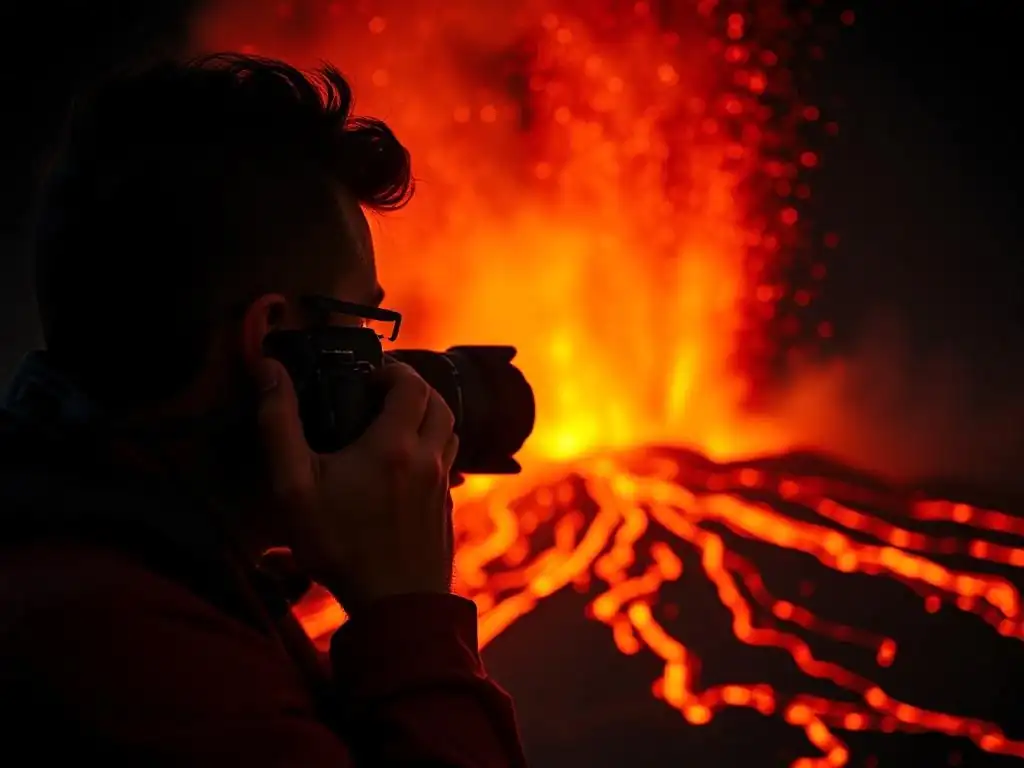
Ever wondered how photographers capture those breathtaking, fiery images of erupting volcanoes? The secrets aren't just about bravery; they're also about gear. Discover the best cameras for volcano photography – specifically, mid-range options that deliver professional-quality results without breaking the bank. Ready to elevate your volcano photography game? The adventure starts here...
- Mid-Range Camera Gear for Striking Volcano Photography
- Capturing Volcanic Beauty: Choosing the Right Cameras
- Top Mid-Range Cameras for Volcano Photography: A Comparison
- Essential Lenses for Mid-Range Volcano Photography
- Accessories to Enhance Your Experience
- Maximizing Mid-Range Gear for Professional Photos
- Conclusion: Becoming a Volcano Photographer
-
Frequently Asked Questions
- What camera specifications are most important for volcano photography?
- What type of lens is recommended for photographing volcanoes from a distance?
- Are there any essential accessories besides a camera and lens for volcano photography?
- How does the "MidRange" camera gear compare to professional-grade options for volcano photography?
- What considerations should I keep in mind regarding safety when photographing volcanoes?
- Final Reflection: Embracing the Fire Within
- Ignite Your Inner Volcano Photographer!
Mid-Range Camera Gear for Striking Volcano Photography
Capturing Volcanic Beauty: Choosing the Right Cameras
Why Mid-Range Gear is Suitable for Volcano Photography
Volcano photography presents a unique set of challenges and rewards. Capturing the raw power and ethereal beauty of volcanic landscapes doesn't necessarily require the most expensive, top-of-the-line professional equipment. Mid-range camera gear offers an excellent balance of performance, features, and affordability, making it an ideal choice for enthusiasts and serious photographers alike who are passionate about volcano photography.
These cameras often incorporate advanced features found in professional models, such as robust autofocus systems, high-resolution sensors, and weather-sealing, but at a more accessible price point. This allows photographers to invest in other crucial aspects of volcano photography, such as specialized lenses and essential accessories, without breaking the bank.
Furthermore, the often demanding and unpredictable nature of volcano environments can put gear to the test. Mid-range cameras are typically built to withstand challenging conditions, offering a good degree of durability and reliability.
The lighter weight and more compact designs of many mid-range options can also be advantageous when trekking to remote volcanic locations or navigating uneven terrain. This combination of capability, resilience, and value positions mid-range camera gear as a smart and effective choice for capturing stunning volcano photographs, allowing photographers to focus on creativity and capturing the moment rather than being hindered by overly complex or fragile equipment.
Challenges of Volcano Photography: Extreme Conditions and Budget
Volcano photography is not for the faint of heart, nor is it always easy on your equipment. Photographers venturing into volcanic regions often face a barrage of environmental challenges. Extreme temperatures, ranging from scorching heat near active lava flows to freezing conditions at higher altitudes, can affect both camera performance and battery life.
Volcanic ash and dust are pervasive and abrasive, capable of infiltrating camera bodies and lenses, potentially causing damage to sensitive components. Strong winds are common, especially at higher elevations, making it difficult to maintain stability for sharp images, particularly when using tripods or longer lenses. Exposure to corrosive volcanic gases is also a concern, potentially damaging camera coatings and electronics over time.
Budgetary constraints are another significant factor for many aspiring volcano photographers. Professional-grade camera bodies and lenses can be exceptionally expensive, often costing several thousands of dollars. For photographers starting out or those who pursue volcano photography as a passionate hobby rather than a full-time profession, investing in such high-end equipment may be financially prohibitive.
Mid-range gear offers a practical solution by providing a pathway to high-quality results without the need for an enormous upfront investment. It allows photographers to allocate their budget strategically, perhaps investing in a wider range of lenses or protective accessories, ultimately enhancing their overall volcano photography experience and creative possibilities.
Top Mid-Range Cameras for Volcano Photography: A Comparison
Sony Alpha 6400: A Versatile Camera for Volcano Shots
The Sony Alpha 6400 stands out as a highly versatile mirrorless camera, well-suited for the diverse demands of volcano photography. Its compact size and robust build make it easily portable for hiking to volcanic viewpoints, while its advanced autofocus system excels at capturing both still images and video of dynamic volcanic activity.
The 24.2MP APS-C sensor delivers excellent image quality with good dynamic range, crucial for handling the high contrast scenes often encountered in volcanic landscapes. Its real-time tracking autofocus is particularly beneficial for capturing wildlife that might be present in volcanic regions, or even for tracking plumes of volcanic smoke and ash.
Moreover, the Sony Alpha 6400's video capabilities are impressive, offering internal 4K recording, which is valuable for documenting volcanic eruptions and geothermal features in motion. The camera's intuitive interface and extensive lens selection within the Sony E-mount system further enhance its appeal for volcano photographers. Its overall blend of performance, portability, and features makes the Alpha 6400 a strong contender in the mid-range category for those seeking to capture stunning volcanic imagery.
Sony Alpha 6400 Features: Real-Time Tracking, 4K Video
The Sony Alpha 6400 boasts several key features that are particularly advantageous for volcano photography. Its Real-time Tracking autofocus is a standout, allowing photographers to lock onto subjects – whether it’s a bird flying across a volcanic crater or a detail within a lava flow – and maintain focus even if the subject moves erratically. This is crucial in dynamic and unpredictable volcanic environments.
The camera’s 4K video recording capability is another significant asset, offering oversampled 4K from a 6K sensor readout, resulting in highly detailed and sharp video footage of volcanic landscapes and eruptions. The inclusion of S-Log2 and S-Log3 picture profiles provides greater flexibility for color grading in post-production, essential for achieving a professional cinematic look in volcano documentaries or time-lapses.
Beyond autofocus and video, the Alpha 6400 features a 2.36 million-dot OLED electronic viewfinder (EVF), providing a clear and accurate preview of the scene, even in bright sunlight often encountered at volcanic sites. Its tilting LCD screen is useful for shooting from low or high angles, aiding in composition when photographing volcanic features from unique perspectives. The camera's fast continuous shooting speed of up to 11fps with autofocus and auto-exposure allows for capturing rapid sequences of volcanic events or wildlife in action, increasing the chances of getting the perfect shot amidst fleeting moments of volcanic activity.
Sony Alpha 6400: Image Examples and User Feedback
Photographers using the Sony Alpha 6400 for volcano photography frequently praise its image quality and autofocus performance. Online forums and photography communities are filled with examples of stunning volcano photos taken with this camera, showcasing its ability to capture rich colors in volcanic sunsets and detail in rugged lava fields.
Users often highlight the camera's dynamic range, noting its capacity to handle scenes with both bright highlights (like plumes of steam) and deep shadows (within volcanic craters) without losing detail. For instance, photographer John S., who documented the 2021 eruption in Iceland, remarked online about the Alpha 6400's "exceptional ability to capture the fiery reds and oranges of the lava against the dark volcanic rock," further noting its autofocus "never missed a beat, even in the swirling volcanic gases."
Feedback also consistently emphasizes the Alpha 6400's portability and ease of use in challenging environments. Volcano photography workshops and tours often recommend this camera as a solid mid-range option due to its balance of features and manageable size. User reviews on photography gear websites often cite its robust build quality as reassuring when working in dusty and potentially damp volcanic conditions. While not fully weather-sealed to the highest professional standards, the Alpha 6400 offers a level of dust and moisture resistance that provides confidence in typical volcano photography scenarios.
Limitations of the Sony Alpha 6400
Despite its strengths, the Sony Alpha 6400 does have some limitations to consider for volcano photography. While it offers dust and moisture resistance, it is not fully weather-sealed like some higher-end cameras. This means that in extremely harsh volcanic environments with heavy ashfall or prolonged exposure to moisture, extra care and protection might be necessary. The camera's battery life, while decent, is not exceptional, especially when shooting video or using the EVF extensively. Volcano photographers, particularly those on extended treks or in remote locations, would benefit from carrying extra batteries.
Another point of consideration is the APS-C sensor size. While offering excellent image quality, it is smaller than full-frame sensors found in more expensive professional cameras.
This can have implications for low-light performance and depth of field control, although for most daytime volcano photography scenarios, the Alpha 6400's sensor performs admirably. Finally, while the lens selection for the Sony E-mount system is extensive, some specialized lenses favored by professional volcano photographers, particularly very long telephoto lenses, might be more limited in native E-mount options compared to systems like Canon EF or Nikon F mount, potentially requiring adapters for certain specialized needs.
Fujifilm X-S10: Image Stabilization for Volcanic Landscapes
The Fujifilm X-S10 is another compelling mid-range mirrorless camera, particularly appealing for volcano photographers who value image stabilization and Fujifilm's renowned color science. Its in-body image stabilization (IBIS) is a significant advantage, providing up to 6 stops of shake reduction, crucial for capturing sharp images in low-light conditions often found in volcanic environments, especially during dawn or dusk shoots, or when using longer lenses handheld.
The X-S10's 26.1MP APS-C X-Trans CMOS 4 sensor is known for its excellent image quality and unique color reproduction, which Fujifilm users often praise for its film-like aesthetic, well-suited for capturing the dramatic colors of volcanic landscapes.
Furthermore, the X-S10's compact and lightweight design makes it a comfortable companion for volcano treks, while its intuitive controls and user-friendly interface make it accessible to photographers of varying experience levels. The camera's video capabilities, including 4K recording and F-Log profile, are also robust, catering to photographers who wish to capture both stills and video of volcanic activity. Overall, the Fujifilm X-S10 presents a strong option for mid-range volcano photography, especially for those prioritizing image stabilization and a distinctive visual style.
Fujifilm X-S10: Film Simulations for Volcano Photography
Fujifilm cameras are celebrated for their film simulations, and the X-S10 is no exception, offering a range of modes that emulate the look of classic Fujifilm films. These film simulations are particularly relevant for volcano photography, allowing photographers to enhance the mood and atmosphere of their images directly in-camera. For example, the Velvia simulation intensifies colors, making volcanic sunsets and lava flows appear even more vibrant and dramatic. The Provia/Standard simulation offers a balanced, natural look, suitable for documentary-style volcano photography. Astia/Soft is ideal for portraits against volcanic backdrops, producing pleasing skin tones and softer contrast.
Furthermore, the Monochrome film simulations, such as Acros and Black & White, are excellent for capturing the stark, rugged beauty of volcanic landscapes in black and white, emphasizing textures and tonal contrasts. These in-camera film simulations save post-processing time and allow photographers to visualize the final image directly on the camera's LCD or EVF. For volcano photography, where capturing the immediate atmosphere and emotion of a scene is paramount, Fujifilm's film simulations offer a powerful creative tool, allowing photographers to imbue their images with a distinct visual character right from the moment of capture.
Fujifilm X-S10: Lens Options for Volcano Photography
The Fujifilm X-mount lens system provides a diverse range of lenses suitable for volcano photography, catering to various shooting styles and perspectives. For capturing expansive volcanic landscapes, wide-angle lenses like the Fujifilm XF 10-24mm f/4 R OIS WR or the Fujifilm XF 16mm f/2.8 R WR are excellent choices. These lenses allow photographers to encompass vast volcanic vistas and dramatic foreground elements. For telephoto shots of distant volcanic peaks or details within lava flows, lenses such as the Fujifilm XF 70-300mm f/4-5.6 R LM OIS WR or the Fujifilm XF 100-400mm f/4.5-5.6 R LM OIS WR provide ample reach.
For general-purpose volcano photography, standard zoom lenses like the Fujifilm XF 18-55mm f/2.8-4 R LM OIS or the Fujifilm XF 16-80mm f/4 R OIS WR offer versatility for capturing a range of subjects and scenes. Fujifilm also offers a selection of prime lenses, such as the Fujifilm XF 23mm f/2 R WR or the Fujifilm XF 35mm f/2 R WR, which are compact, sharp, and well-suited for street photography around volcanic towns or for capturing portraits with volcanic backgrounds.
The Fujifilm X-mount system's growing lens lineup provides volcano photographers with a wealth of options to suit their specific needs and creative vision.
Fujifilm X-S10: Durability in Volcanic Environments
While not officially ruggedized to the highest professional standards, the Fujifilm X-S10 is designed with a degree of durability suitable for typical volcano photography environments. It features a magnesium alloy body, providing a robust and sturdy feel, capable of withstanding the bumps and scrapes that can occur during volcano treks.
While Fujifilm does not explicitly state weather-sealing for the X-S10 to the same extent as some of their higher-end models, many users and reviewers report that it offers a level of dust and moisture resistance adequate for handling light rain or dusty conditions. However, in extremely harsh volcanic environments with heavy ashfall or prolonged exposure to moisture, extra precautions, such as using rain covers or dust protection, are advisable.
Fujifilm's WR (Weather Resistant) designation on many of their lenses indicates a higher level of weather-sealing, and pairing the X-S10 with WR lenses further enhances the system's overall resilience in challenging conditions. Compared to some entry-level cameras, the X-S10's build quality offers a step up in durability, making it a reliable choice for volcano photographers who require a camera that can withstand the rigors of outdoor adventures without being overly delicate. For photographers who prioritize a balance of portability, performance, and reasonable durability in a mid-range camera, the Fujifilm X-S10 presents a compelling option for volcano photography.
Olympus OM-D E-M5 Mark III: Compact and Rugged for Volcano Adventures
The Olympus OM-D E-M5 Mark III is a standout choice for volcano photography due to its exceptionally compact and lightweight design combined with robust weather sealing. Its Micro Four Thirds sensor system allows for significantly smaller camera bodies and lenses compared to APS-C or full-frame systems, making it ideal for photographers who prioritize portability and minimal bulk, especially when hiking or traveling to remote volcanic locations.
Despite its small size, the E-M5 Mark III is built to withstand challenging conditions, offering extensive dustproof, splashproof, and freezeproof sealing, making it highly reliable in the unpredictable weather and harsh environments often encountered near volcanoes.
The camera's powerful in-body image stabilization (IBIS) system is another key advantage, providing up to 6.5 stops of shake reduction, crucial for sharp images in low light or when using longer lenses handheld in windy volcanic areas. The 20.4MP Micro Four Thirds sensor delivers excellent image quality, and Olympus's renowned color science produces pleasing and vibrant images, well-suited for capturing the beauty of volcanic landscapes. For volcano photographers seeking a truly compact, rugged, and capable mid-range camera system, the Olympus OM-D E-M5 Mark III is a highly attractive option.
Olympus OM-D E-M5 Mark III: Image Stabilization for Sharp Photos
The Olympus OM-D E-M5 Mark III's image stabilization system is a major asset for volcano photography, particularly in situations where tripods are impractical or impossible to use. Its 5-axis IBIS provides up to 6.5 stops of shake reduction, allowing photographers to shoot handheld at significantly slower shutter speeds than would otherwise be possible without blurring.
This is especially beneficial in low-light conditions, such as during sunrise or sunset volcano photography, or when capturing geothermal features in shaded areas. The IBIS system also works effectively with both still images and video, providing smooth and stable footage even when shooting handheld while walking or moving.
For volcano photography, where photographers might be shooting from uneven terrain or in windy conditions, the E-M5 Mark III's IBIS significantly increases the chances of capturing sharp and clear images. It allows for greater flexibility in shooting techniques, enabling photographers to react quickly to changing volcanic activity or wildlife encounters without being constrained by the need for a tripod. The effectiveness of the IBIS system also extends to telephoto lenses, making it easier to capture sharp close-up shots of volcanic details or distant peaks even when using longer focal lengths handheld.
Olympus OM-D E-M5 Mark III: Weather Sealing for Volcanic Environments
The Olympus OM-D E-M5 Mark III's exceptional weather sealing is a crucial feature for volcano photography, offering peace of mind when working in potentially harsh and unpredictable environments. It is rigorously sealed against dust, splashes, and freezing temperatures down to -10°C (14°F), making it highly resistant to the elements commonly encountered near volcanoes. This robust weather sealing protects the camera's internal components from volcanic ash, dust, rain, snow, and moisture, ensuring reliable operation even in challenging conditions.
For volcano photographers venturing into areas with geothermal activity, steam vents, or unpredictable weather patterns, the E-M5 Mark III's weather sealing provides a significant advantage. It allows photographers to focus on capturing the scene without constantly worrying about the camera's vulnerability to the elements. This level of weather protection is particularly valuable for extended volcano photography trips, where gear might be exposed to varying weather conditions over several days or weeks. The E-M5 Mark III's robust weather sealing contributes to its reputation as a reliable and durable camera system well-suited for adventurous volcano photographers.
Olympus OM-D E-M5 Mark III: Lens Options
The Micro Four Thirds lens system, shared by Olympus and Panasonic, offers a wide array of lenses that are generally smaller and lighter than comparable lenses for APS-C or full-frame systems, perfectly complementing the compact size of the OM-D E-M5 Mark III. For volcano landscape photography, wide-angle lenses like the Olympus M.Zuiko Digital ED 9-18mm f/4-5.6 or the Panasonic Lumix G Vario 7-14mm f/4 ASPH provide expansive perspectives.
For telephoto reach, lenses such as the Olympus M.Zuiko Digital ED 75-300mm f/4.8-6.7 II or the Panasonic Lumix G Vario 100-300mm f/4-5.6 II POWER O.I.S. are excellent choices, offering significant zoom capabilities in relatively compact packages.
Standard zoom lenses like the Olympus M.Zuiko Digital ED 12-45mm f/4 PRO or the Panasonic Lumix G Vario 12-60mm f/3.5-5.6 ASPH. POWER O.I.S. provide versatile focal ranges for general volcano photography. The Micro Four Thirds system also boasts a range of high-quality prime lenses, including options from Olympus and Panasonic, that are sharp, compact, and well-suited for various photographic styles. The extensive and diverse lens selection within the Micro Four Thirds system ensures that volcano photographers using the OM-D E-M5 Mark III have ample lens options to meet their creative needs and capture stunning volcanic imagery.
Essential Lenses for Mid-Range Volcano Photography
Wide-Angle Lenses for Capturing Landscapes
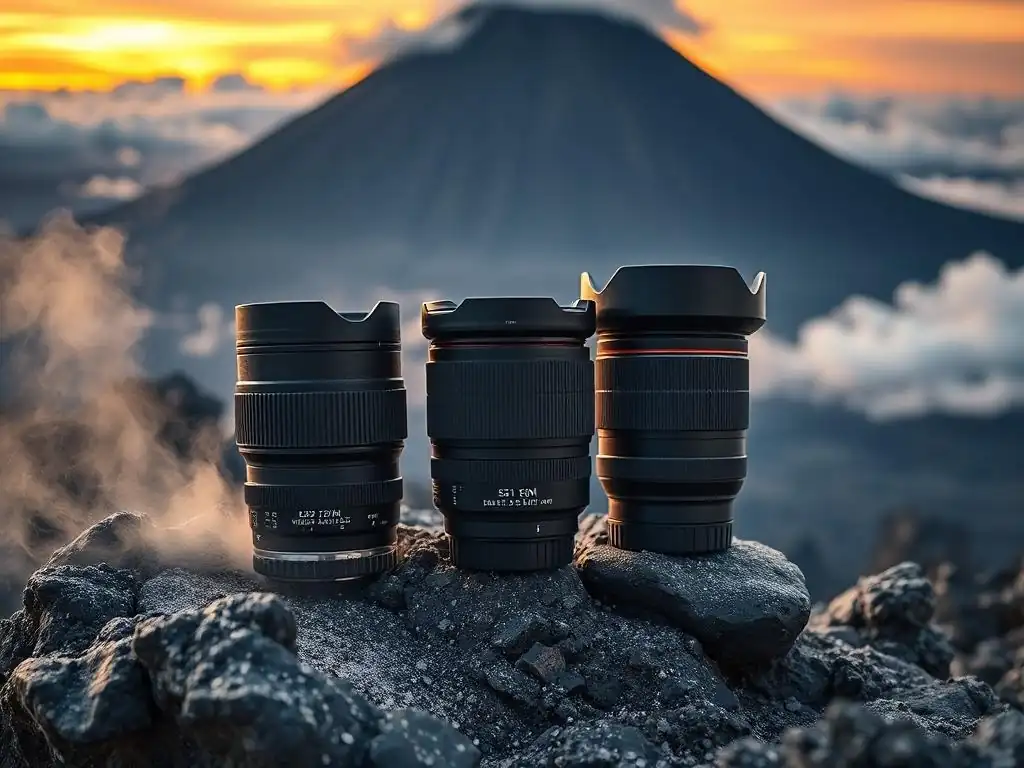
Wide-angle lenses are indispensable tools for volcano photography, particularly when aiming to capture the grandeur and scale of volcanic landscapes. These lenses, typically with focal lengths ranging from 10mm to 35mm (full-frame equivalent), allow photographers to encompass vast vistas, sweeping panoramas, and dramatic foreground elements within a single frame.
They are essential for conveying the immense scale of volcanic craters, lava fields, and surrounding terrain, making the viewer feel immersed in the volcanic environment. Wide-angle lenses also excel at emphasizing leading lines, such as paths or lava flows, drawing the viewer's eye into the scene and creating a sense of depth and perspective.
Furthermore, wide-angle lenses are beneficial in situations where photographers are close to large volcanic features, such as towering cliffs or expansive lava fields, enabling them to capture the entirety of the subject without needing to move further away. They are also valuable for astrophotography in volcanic regions, allowing for wide views of the night sky above volcanic landscapes, capturing both the celestial wonders and the terrestrial drama in a single image. For any volcano photographer seeking to convey the epic scale and breathtaking beauty of volcanic environments, a quality wide-angle lens is an absolute must-have.
Sigma 16mm f/1.4 DC DN: Capturing Volcanic Vistas
The Sigma 16mm f/1.4 DC DN Contemporary lens is an outstanding wide-angle prime lens, particularly well-suited for volcano photography on APS-C sensor cameras. Its 16mm focal length (approximately 24mm full-frame equivalent) provides a comfortably wide field of view, ideal for capturing expansive volcanic landscapes, including sweeping vistas of craters, lava flows, and surrounding terrain.
The lens's fast f/1.4 aperture is a significant advantage, allowing for excellent low-light performance, enabling photographers to capture clear images during dawn, dusk, or even nighttime volcano photography, including capturing the Milky Way above volcanic landscapes. The wide aperture also facilitates shallow depth of field effects, allowing for creative separation of foreground subjects against vast volcanic backdrops.
The Sigma 16mm f/1.4 DC DN is known for its sharpness and image quality, delivering crisp details and vibrant colors, crucial for capturing the textures and hues of volcanic landscapes. Its compact and lightweight design makes it portable and easy to carry on volcano treks. While it is a prime lens and lacks zoom versatility, its exceptional image quality, fast aperture, and ideal wide-angle focal length make it a compelling choice for photographers prioritizing capturing stunning volcanic vistas with sharpness and clarity, even in challenging lighting conditions.
Focal Length and Aperture for Landscape Photography
For wide-angle volcano landscape photography, selecting the right focal length and aperture is crucial for achieving desired results. Focal lengths in the range of 14mm to 24mm (full-frame equivalent) are generally considered optimal for capturing expansive volcanic landscapes, providing a wide field of view to encompass the grandeur of the scene.
Wider focal lengths, such as 10mm to 14mm, can create even more dramatic perspectives and emphasize foreground elements, but may introduce more distortion, which needs to be carefully managed. Slightly narrower wide-angle focal lengths, around 24mm to 35mm, are versatile for capturing landscapes while still allowing for some subject isolation and less distortion.
Aperture selection is also vital. For maximizing depth of field and ensuring sharpness throughout the volcanic landscape, smaller apertures, such as f/8 to f/11, are typically recommended. These apertures provide a greater depth of field, keeping both foreground and background elements in focus. However, in low-light conditions or when aiming for shallow depth of field effects to isolate foreground subjects against volcanic backdrops, wider apertures, such as f/2.8 to f/5.6, may be necessary. Balancing focal length and aperture is key to effectively capturing the scale, detail, and desired aesthetic in volcano landscape photography.
Telephoto Lenses for Close-Up Shots
Telephoto lenses are essential complements to wide-angle lenses in volcano photography, allowing photographers to capture close-up details of volcanic features that are inaccessible or too distant to photograph effectively with wider lenses. These lenses, typically with focal lengths starting from around 70mm (full-frame equivalent) and extending to 300mm or beyond, enable photographers to zoom in on lava flows, volcanic craters, geothermal vents, and other specific details of interest. Telephoto lenses are crucial for isolating subjects against backgrounds, creating a shallow depth of field that emphasizes the detail and texture of volcanic formations.
Furthermore, telephoto lenses are invaluable for capturing wildlife that may inhabit volcanic regions, such as birds or mammals, allowing for close-up shots without disturbing the animals from a safe distance. They also compress perspective, making distant volcanic peaks appear closer and more imposing in the frame, enhancing the dramatic impact of volcano photographs. For volcano photographers seeking to capture both expansive landscapes and intimate details of volcanic features, a telephoto lens is an indispensable addition to their gear bag.
Tamron 70-300mm f/4.5-6.3 Di III RXD: Zooming on Lava Flows
The Tamron 70-300mm f/4.5-6.3 Di III RXD lens is a versatile and affordable telephoto zoom lens, well-suited for volcano photography, especially for capturing details of lava flows and distant volcanic features. Its 70-300mm focal length range (full-frame equivalent on full-frame cameras, and even longer equivalent reach on APS-C cameras) provides ample zoom capability for bringing distant subjects closer, allowing photographers to photograph intricate patterns within lava flows, textures of volcanic rock formations, or steam rising from geothermal areas.
While its maximum aperture of f/4.5-6.3 is not exceptionally fast, it is sufficient for most daytime volcano photography scenarios, and the lens performs well in conjunction with modern cameras' high ISO capabilities for lower light situations.
The Tamron 70-300mm Di III RXD is remarkably compact and lightweight for a lens with this zoom range, making it easy to carry on volcano treks. It features Tamron's RXD (Rapid eXtra-silent stepping Drive) autofocus motor, providing fast and quiet autofocus performance, beneficial for capturing both stills and video of volcanic activity. Its combination of zoom range, portability, and affordability makes the Tamron 70-300mm f/4.5-6.3 Di III RXD a highly practical and accessible telephoto lens option for mid-range volcano photography setups.
Considerations for Telephoto Lenses: Weight and Stabilization
When choosing telephoto lenses for volcano photography, weight and image stabilization are crucial considerations. Telephoto lenses, especially those with longer focal lengths, can be significantly heavier and bulkier than wide-angle or standard lenses. This weight can become a major factor during volcano treks, especially when hiking over uneven terrain or carrying gear for extended periods. Opting for lighter telephoto lenses, such as those made with lighter materials or with more compact designs, can significantly improve portability and reduce fatigue during volcano photography expeditions.
Image stabilization (IS) or vibration compensation (VC) is another vital feature in telephoto lenses, particularly for handheld volcano photography. At longer focal lengths, even minor camera shake can be magnified, resulting in blurry images.
Image stabilization helps to counteract camera shake, allowing photographers to shoot at slower shutter speeds without blur, which is particularly beneficial in low-light conditions or when using longer lenses handheld in windy environments often found at volcanic locations. When selecting a telephoto lens for volcano photography, prioritizing models that offer a good balance of zoom range, manageable weight, and effective image stabilization is essential for capturing sharp and clear images in challenging volcanic environments.
All-in-One Zoom Lenses: A Versatile Option
All-in-one zoom lenses, also known as superzoom lenses, offer an exceptionally wide focal range in a single lens, typically covering everything from wide-angle to telephoto perspectives. These lenses can be appealing for volcano photography as they provide versatility and convenience, reducing the need to carry and switch between multiple lenses. For photographers who prioritize traveling light or want a single lens solution for various volcano photography scenarios, all-in-one zooms can be a practical option. They can capture both expansive volcanic landscapes and zoomed-in details of volcanic features or wildlife, all with a single lens.
However, it's important to acknowledge the trade-offs associated with all-in-one zoom lenses. They generally do not offer the same level of optical quality, sharpness, or maximum aperture as dedicated prime or shorter zoom lenses. Image quality may be slightly compromised, especially at the extreme ends of the zoom range. Maximum apertures are typically variable and relatively slow, which can limit low-light performance and depth of field control. Despite these limitations, all-in-one zoom lenses can still be a viable option for casual volcano photography or for photographers who prioritize convenience and versatility over ultimate image quality.
Tamron 18-400mm f/3.5-6.3 Di II VC HLD: Balancing Convenience and Quality
The Tamron 18-400mm f/3.5-6.3 Di II VC HLD lens is an example of an all-in-one zoom lens designed for APS-C sensor cameras, offering an incredibly wide 22.2x zoom range. Its 18-400mm focal length (approximately 27-600mm full-frame equivalent) covers everything from wide-angle landscapes to extreme telephoto reach, making it exceptionally versatile for various volcano photography situations. For photographers who want to minimize gear and carry just one lens, the Tamron 18-400mm offers a compelling solution, allowing them to capture expansive volcanic vistas, zoom in on lava flows, and even photograph distant wildlife without changing lenses.
The lens incorporates Tamron's VC (Vibration Compensation) image stabilization, helping to reduce camera shake, particularly at longer focal lengths. It also features Tamron's HLD (High/Low torque modulated Drive) autofocus motor for responsive and accurate autofocus. While it doesn't match the optical performance or aperture speed of dedicated prime or shorter zoom lenses, the Tamron 18-400mm Di II VC HLD strikes a balance between convenience, versatility, and reasonable image quality, making it a practical option for photographers seeking an all-in-one solution for volcano photography, especially when traveling or hiking.
Limitations of All-in-One Lenses
Despite their versatility, all-in-one zoom lenses have inherent limitations that volcano photographers should consider. Optical quality is often a trade-off; while modern all-in-one lenses have improved, they typically do not achieve the same level of sharpness, contrast, and aberration control as prime lenses or shorter zoom lenses, particularly at the extreme ends of their zoom range. Image distortion, vignetting (darkening at the corners), and chromatic aberration (color fringing) can be more pronounced in all-in-one lenses compared to lenses with narrower zoom ranges or prime lenses.
Maximum apertures are generally variable and relatively slow, typically ranging from f/3.5-5.6 or f/4-6.3. These slower apertures limit low-light performance and depth of field control, making it more challenging to achieve shallow depth of field effects or capture clear images in dimly lit volcanic environments without raising ISO or using longer shutter speeds. While all-in-one lenses offer convenience and versatility, volcano photographers who prioritize ultimate image quality, low-light performance, or shallow depth of field may find dedicated prime or shorter zoom lenses to be more suitable for their needs.
Accessories to Enhance Your Experience
Tripods: Stability in Low Light
Tripods are indispensable accessories for volcano photography, especially when shooting in low light conditions or when aiming for maximum sharpness and stability. In volcanic environments, low light situations are common during sunrise, sunset, or in shaded areas within craters or canyons. In these scenarios, using a tripod allows photographers to use slower shutter speeds without introducing camera shake, ensuring sharp and blur-free images. Tripods are also essential for long-exposure photography, such as capturing the motion of clouds above volcanic peaks or blurring water in geothermal features, requiring the camera to be perfectly still for extended periods.
Furthermore, tripods are crucial when using telephoto lenses, which magnify camera shake. Even slight movements can result in blurry images at longer focal lengths, making a stable tripod essential for capturing sharp details of distant volcanic features or wildlife. In windy conditions, often encountered at higher elevations in volcanic regions, a sturdy tripod provides stability and prevents wind-induced vibrations from blurring images. For any volcano photographer serious about capturing sharp, detailed, and stable images, a reliable tripod is a fundamental accessory.
Manfrotto Befree Advanced: Durable and Lightweight Tripod
The Manfrotto Befree Advanced tripod is a popular and highly regarded option for volcano photographers seeking a balance of durability, lightweight design, and portability. It is designed to be compact and travel-friendly, making it easy to carry on volcano treks and expeditions. Despite its lightweight construction, the Befree Advanced is surprisingly sturdy and stable, capable of supporting mid-range camera setups and lenses commonly used in volcano photography. It features a robust aluminum or carbon fiber construction, providing durability to withstand the rigors of outdoor use in volcanic environments.
The Befree Advanced incorporates a ball head, allowing for smooth and precise camera movements for composition adjustments. Its leg locks are quick and easy to operate, enabling rapid setup and breakdown, crucial when working in dynamic volcanic environments. The tripod's compact folded size and included carrying case make it convenient to transport, fitting easily into camera bags or backpacks. For volcano photographers who prioritize portability without compromising on stability and durability, the Manfrotto Befree Advanced is an excellent tripod choice.
Tripod Features: Material and Weight Capacity
When selecting a tripod for volcano photography, material and weight capacity are key features to consider. Tripods are typically made from aluminum or carbon fiber. Aluminum tripods are generally more affordable and offer good stability, but they are heavier than carbon fiber models. Carbon fiber tripods are significantly lighter, making them easier to carry on long treks, and they also tend to absorb vibrations better than aluminum, further enhancing stability. However, carbon fiber tripods are typically more expensive. The choice between aluminum and carbon fiber depends on the photographer's budget and priorities regarding weight and vibration reduction.
Weight capacity refers to the maximum weight the tripod can safely support. It's crucial to choose a tripod with a weight capacity that exceeds the combined weight of your camera body, lens, and any accessories you might mount on it. Overloading a tripod can lead to instability and potential damage to equipment.
Consider the heaviest lens you plan to use for volcano photography and ensure the tripod's weight capacity is sufficient. For mid-range camera setups used in volcano photography, a tripod with a weight capacity of at least 8-10 lbs is generally recommended, providing a safety margin and ensuring stable support.
Filters: Protecting Your Lens and Enhancing Images
Filters are valuable accessories for volcano photography, serving both protective and creative purposes. They can protect the front element of your lenses from scratches, dust, and accidental impacts, particularly important in dusty and rugged volcanic environments. Filters can also enhance image quality by reducing glare, improving color saturation, and controlling light exposure, helping photographers capture more visually compelling volcano photographs. Different types of filters serve different purposes, and selecting the right filters can significantly improve the results of your volcano photography.
For volcano photography, common and useful filters include UV haze filters, polarizing filters, and neutral density (ND) filters. UV haze filters primarily provide lens protection, but they can also reduce haze and improve clarity in certain atmospheric conditions.
Polarizing filters reduce glare and reflections, particularly useful for photographing water surfaces in volcanic lakes or geothermal areas, and they can also enhance color saturation, making skies bluer and volcanic colors more vibrant. Neutral density filters reduce the amount of light entering the lens, allowing for longer exposures in bright conditions, ideal for capturing motion blur in waterfalls, clouds, or volcanic steam plumes.
Hoya UV Haze Filter: Protecting Your Lens
The Hoya UV Haze filter is a widely used and affordable filter primarily intended for lens protection. It is a clear filter that blocks ultraviolet (UV) light, which can contribute to haze and reduce clarity, especially in high-altitude or coastal volcanic environments. While modern digital camera sensors are less sensitive to UV light than film, UV haze filters still offer a degree of haze reduction and can slightly improve contrast in certain conditions. However, their primary benefit is physical protection for the front element of your lens.
The Hoya UV Haze filter acts as a sacrificial layer, protecting the lens from scratches, dust, fingerprints, and accidental bumps. In dusty volcanic environments, a UV filter can prevent abrasive dust particles from scratching the lens coating. If the filter gets scratched or damaged, it is much less expensive and easier to replace than the front element of the lens itself. For volcano photographers seeking basic lens protection and a subtle improvement in image clarity, the Hoya UV Haze filter is a practical and cost-effective choice.
Polarizing Filter: Reducing Glare
A polarizing filter is a highly effective filter for volcano photography, particularly for reducing glare and reflections and enhancing color saturation. Polarizing filters work by selectively blocking polarized light, which is light that vibrates in a particular direction, often created by reflections from non-metallic surfaces like water, glass, or atmospheric haze.
By rotating a polarizing filter, photographers can control the amount of polarized light entering the lens, significantly reducing glare and reflections in their volcano photographs. This is especially useful for photographing volcanic lakes, geothermal pools, or wet lava rocks, allowing photographers to see beneath the surface of the water or reveal details obscured by reflections.
Polarizing filters also enhance color saturation, particularly in skies and foliage. They can make blue skies appear deeper and more vibrant and intensify the colors of volcanic vegetation or mineral deposits. By reducing atmospheric haze, polarizing filters can also improve clarity and contrast in volcano landscapes, especially in distant views. For volcano photographers aiming to capture glare-free images with enhanced colors and clarity, a polarizing filter is an essential tool.
Neutral Density Filter: Capturing Motion
Neutral density (ND) filters are specialized filters designed to reduce the amount of light entering the lens without affecting color balance. They are essential for volcano photography when photographers want to use long exposures in bright daylight to capture motion blur effects.
ND filters come in various strengths, indicated by their ND number or stop value, with higher numbers or stop values representing greater light reduction. For example, an ND filter with a stop value of 6 reduces the amount of light by 6 stops, allowing for shutter speeds that are 6 stops slower than would be possible without the filter.
In volcano photography, ND filters are commonly used to create motion blur in waterfalls, streams, or volcanic steam plumes, giving these elements a soft, ethereal appearance. They can also be used to blur clouds moving across the sky above volcanic landscapes, creating a sense of motion and dynamism.
Stronger ND filters, such as ND filters with 10 stops or more of light reduction, are often used for extremely long exposures, allowing photographers to completely smooth out water surfaces or create surreal motion effects even in bright sunlight. For volcano photographers seeking to creatively control motion blur and achieve long exposure effects, ND filters are indispensable tools.
Camera Bags: Protecting Your Gear
Camera bags are essential for volcano photography, providing protection and organization for your valuable camera gear while on location. Volcanic environments can be harsh and demanding, with dust, ash, moisture, and rugged terrain posing risks to camera equipment. A good camera bag should offer adequate padding and protection against impacts, bumps, and vibrations, safeguarding your cameras, lenses, and accessories during transport and while working in volcanic areas. It should also be weather-resistant or waterproof to protect gear from rain, snow, or volcanic steam and moisture.
Camera bags come in various styles and sizes, including backpacks, shoulder bags, and sling bags. Backpacks are generally the most comfortable and practical for volcano photography, especially for longer treks or hikes, distributing weight evenly across your back. Shoulder bags and sling bags offer quicker access to gear but may be less comfortable for carrying heavier loads over long distances. The choice of camera bag depends on the amount of gear you need to carry, the type of volcano photography you are doing, and your personal preferences for comfort and accessibility.
Peak Design Everyday Backpack: Durable and Weatherproof
The Peak Design Everyday Backpack is a highly popular and well-regarded camera bag, particularly favored by photographers who value durability, weather resistance, and intelligent design. It is known for its robust construction, using high-quality, weatherproof materials that provide excellent protection for camera gear in challenging environments, including volcanic areas. The Everyday Backpack features customizable dividers, allowing photographers to organize their gear efficiently and securely, preventing equipment from shifting or bumping against each other during transport.
It offers multiple access points, including top and side access, providing quick and easy access to cameras and lenses without having to unpack the entire bag. The bag's thoughtful design incorporates numerous pockets and compartments for organizing accessories, batteries, filters, and personal items. The Peak Design Everyday Backpack is available in various sizes and colors, catering to different gear carrying needs and personal styles. Its combination of durability, weather resistance, organization, and comfortable carry makes it a top choice for volcano photographers seeking a reliable and versatile camera bag.
Camera Bag Features: Capacity and Weather Resistance
When selecting a camera bag for volcano photography, capacity and weather resistance are crucial features to prioritize. Capacity refers to the amount of gear the bag can hold, measured in liters or by the number of camera bodies and lenses it can accommodate. Choose a camera bag with sufficient capacity to carry all the essential gear you need for your volcano photography trips, including camera bodies, lenses, filters, batteries, memory cards, and accessories. Consider your typical gear setup and select a bag size that comfortably fits everything without being overly bulky or heavy.
Weather resistance is essential for protecting your camera gear from the elements in volcanic environments. Look for camera bags made from water-resistant or waterproof materials, such as nylon or canvas with waterproof coatings. Features like sealed zippers and rain covers can further enhance weather protection.
A weather-resistant camera bag will protect your gear from rain, snow, dust, volcanic ash, and moisture, ensuring that your equipment remains dry and functional even in challenging conditions. Prioritizing capacity and weather resistance will ensure that your camera bag effectively protects and organizes your gear, allowing you to focus on capturing stunning volcano photographs without worrying about equipment damage.
Maximizing Mid-Range Gear for Professional Photos
Composition Techniques for Volcanic Landscapes
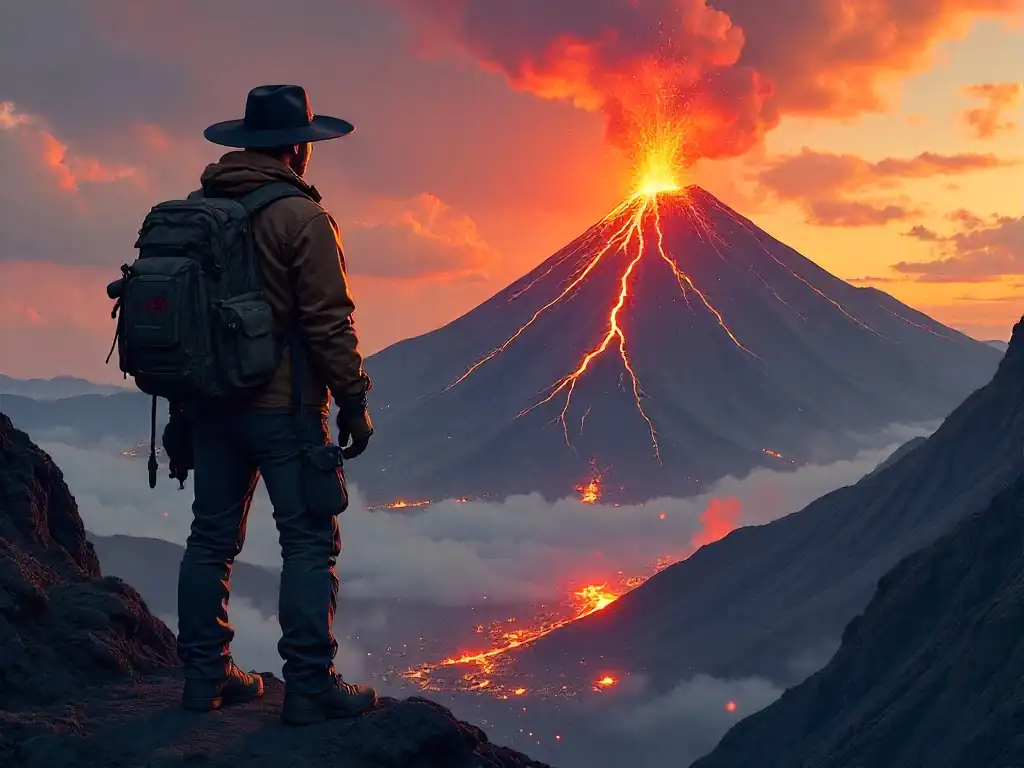
Composition is paramount in volcano photography, transforming technically sound images into visually compelling and impactful photographs. Effective composition techniques guide the viewer's eye, create a sense of depth and perspective, and convey the atmosphere and emotion of the volcanic landscape. Understanding and applying compositional principles can elevate mid-range gear photography to a professional level, allowing photographers to create images that are both technically proficient and artistically engaging. Experimenting with different compositional approaches is crucial for developing a personal style and capturing unique and captivating volcano photographs.
Key composition techniques for volcano photography include the rule of thirds, leading lines, framing, and using natural elements. The rule of thirds involves dividing the frame into a 3x3 grid and placing key elements along the grid lines or at their intersections, creating a more balanced and visually appealing composition. Leading lines, such as paths, rivers, or lava flows, draw the viewer's eye into the scene and create a sense of depth.
Framing involves using natural elements in the foreground, such as trees, rocks, or volcanic arches, to frame the main subject and add context and depth. Using natural elements, such as foreground rocks or plants, adds visual interest and scale to volcanic landscapes.
Rule of Thirds and Leading Lines
The rule of thirds and leading lines are fundamental composition techniques that are particularly effective in volcano photography. The rule of thirds provides a simple framework for creating balanced and visually engaging compositions. By dividing the frame into a 3x3 grid, photographers can strategically place key elements, such as volcanic peaks, craters, or geothermal features, along the grid lines or at their intersections.
Placing the horizon line along the upper or lower horizontal grid line, rather than directly in the center, often creates a more dynamic and interesting landscape composition. Positioning the main subject at one of the intersections of the grid lines draws the viewer's eye and creates a point of visual interest.
Leading lines are powerful compositional tools for creating depth and guiding the viewer's eye through the volcano photograph. Natural lines found in volcanic landscapes, such as lava flows, rivers, paths, or ridges, can be used as leading lines. Positioning these lines to start in the foreground and extend into the background creates a sense of depth and perspective, drawing the viewer into the scene and towards the main subject. Leading lines can be straight, curved, diagonal, or converging, and effectively utilizing them can transform a static landscape image into a dynamic and engaging composition.
Using Natural Elements to Frame Shots
Framing is a composition technique that involves using natural elements within the scene to create a frame around the main subject, adding depth, context, and visual interest to volcano photographs. In volcanic landscapes, natural framing elements can include trees, rock formations, volcanic arches, caves, or even steam plumes. Positioning these elements in the foreground or around the edges of the frame creates a visual border that draws attention to the main subject within the frame. Framing can also help to isolate the subject from its surroundings, emphasizing its importance and creating a sense of focus.
Framing adds depth to volcano photographs by creating layers and a sense of three-dimensionality. It can also provide context by placing the main subject within its natural environment, showcasing the relationship between the subject and its surroundings. Using framing elements creatively can transform ordinary landscape shots into more visually compelling and artistic volcano photographs. Experimenting with different framing elements and perspectives can lead to unique and captivating compositions that effectively capture the beauty and drama of volcanic landscapes.
Post-Processing Techniques
Post-processing is an integral part of the digital volcano photography workflow, allowing photographers to enhance their images, refine details, and achieve their desired visual style. While capturing a well-exposed and composed image in-camera is crucial, post-processing techniques can further elevate the quality and impact of volcano photographs. Software like Adobe Lightroom, Photoshop, or Capture One provides a wide range of tools for adjusting exposure, contrast, color, sharpness, and noise reduction, enabling photographers to optimize their images and bring out the best in their mid-range gear photos.
Essential post-processing techniques for volcano photography include adjusting exposure and color, sharpening, and noise reduction. Adjusting exposure and contrast helps to optimize the tonal range of the image, ensuring that details are visible in both highlights and shadows. Color adjustments can enhance the vibrancy of volcanic colors, correct color casts, or create specific moods and atmospheres. Sharpening techniques enhance detail and clarity, making volcanic textures and features appear crisper. Noise reduction reduces unwanted digital noise, particularly noticeable in images shot at higher ISO settings, improving image smoothness and detail, especially in darker areas.
Adjusting Exposure and Color with Lightroom
Adobe Lightroom is a widely used post-processing software that offers powerful tools for adjusting exposure and color in volcano photographs. Exposure adjustments in Lightroom allow photographers to fine-tune the overall brightness of the image, ensuring that it is neither too dark nor too bright. The Highlights and Shadows sliders are particularly useful for recovering detail in overexposed highlights or underexposed shadows, common in high-contrast volcanic scenes. Contrast adjustments control the tonal range of the image, increasing contrast to enhance drama or reducing it for a softer look.
Color adjustments in Lightroom provide extensive control over hue, saturation, and luminance of individual colors. The White Balance tool corrects color casts, ensuring accurate color rendition. The Vibrance and Saturation sliders enhance color intensity, making volcanic sunsets, lava flows, or mineral deposits appear more vibrant.
The HSL (Hue, Saturation, Luminance) panel allows for fine-tuning individual colors, selectively adjusting the hue, saturation, or brightness of specific color ranges. Lightroom's exposure and color adjustment tools empower volcano photographers to optimize the tonal and color characteristics of their images, bringing out the best in their raw files and achieving their desired visual style.
Sharpening and Noise Reduction Techniques
Sharpening and noise reduction are essential post-processing techniques for optimizing detail and image quality in volcano photographs, particularly when using mid-range gear or shooting in challenging conditions. Sharpening enhances the perceived sharpness and clarity of images by increasing contrast along edges, making details appear crisper and more defined. However, excessive sharpening can introduce artifacts and halos, so it's crucial to apply sharpening judiciously and selectively. Lightroom and other post-processing software offer various sharpening tools, including Amount, Radius, Detail, and Masking sliders, allowing for fine-tuned control over sharpening application.
Noise reduction techniques reduce unwanted digital noise, which can appear as graininess or color artifacts, especially in images shot at higher ISO settings or in darker areas. Noise reduction algorithms smooth out noise while attempting to preserve detail. Lightroom's Detail panel offers noise reduction sliders for Luminance and Color noise, allowing photographers to balance noise reduction with detail preservation. Applying appropriate sharpening and noise reduction techniques enhances the visual quality of volcano photographs, making them appear sharper, cleaner, and more detailed, especially when viewed at larger sizes or printed.
Safety Considerations
Safety is paramount in volcano photography, both for the photographer and their equipment. Volcanic environments can be inherently dangerous, with risks ranging from volcanic eruptions and lava flows to hazardous gases, unstable terrain, and unpredictable weather. Photographers venturing into volcanic areas must prioritize their safety and take necessary precautions to minimize risks. Thorough research, proper planning, and respecting volcanic hazards are essential for safe and responsible volcano photography. Protecting camera gear from dust, extreme temperatures, and other volcanic elements is also crucial for ensuring equipment longevity and reliable performance.
Key safety considerations for volcano photography include staying safe near volcanoes and protecting gear from dust and temperatures. Staying a safe distance from active lava flows, vents, and craters is crucial to avoid burns, heat exhaustion, and exposure to hazardous gases. Monitoring volcanic activity updates and heeding warnings from local authorities or volcanologists is essential.
Being aware of potential hazards like unstable ground, falling rocks, and sudden changes in weather conditions is also important. Protecting camera gear from volcanic dust and ash, which can be abrasive and damaging, requires using dustproof bags, lens filters, and cleaning equipment regularly. Shielding equipment from extreme temperatures, both heat and cold, is also necessary to prevent malfunctions and damage.
Staying Safe Near Volcanoes
Staying safe near volcanoes requires constant awareness, respect for volcanic hazards, and adherence to safety guidelines. Always research the volcano you plan to photograph, understanding its current activity level, potential hazards, and any access restrictions or permits required. Check for volcano monitoring updates and warnings from official sources, such as volcano observatories or local authorities, before and during your photography trip. Maintain a safe distance from active volcanic features like lava flows, vents, fumaroles, and craters. Lava flows can be extremely hot and unpredictable, and hazardous gases can be released from vents and fumaroles.
Be aware of your surroundings and potential hazards, such as unstable ground, loose rocks, steep slopes, and sudden changes in weather. Wear appropriate clothing and footwear for volcanic environments, including sturdy hiking boots, long pants, long sleeves, and a hat to protect from sun and heat. Carry essential safety gear, such as a first-aid kit, water, food, sunscreen, and a communication device.
Inform someone of your volcano photography plans, including your itinerary and expected return time. If photographing in a group, stay together and communicate effectively. Never underestimate the power and unpredictability of volcanoes, and always prioritize safety over getting a photograph.
Protecting Gear from Dust and Temperatures
Protecting camera gear from dust and extreme temperatures is crucial for ensuring its longevity and reliable performance in volcanic environments. Volcanic dust and ash are abrasive and can infiltrate camera bodies and lenses, potentially damaging sensitive components. Use dustproof camera bags and lens cases to minimize dust exposure during transport and storage.
When shooting in dusty conditions, try to minimize lens changes and keep lens mounts and camera bodies as clean as possible. Use lens filters, such as UV filters, to protect the front element of your lenses from dust and scratches. Carry lens cleaning cloths and a blower to remove dust from lenses and camera bodies regularly.
Extreme temperatures, both heat and cold, can affect camera performance and battery life. Avoid exposing camera gear to direct sunlight or extreme heat for prolonged periods, as this can cause overheating and damage. In hot volcanic areas, keep your camera gear shaded when not in use.
In cold conditions, keep batteries warm and insulated, as cold temperatures can significantly reduce battery life. Allow your camera gear to acclimatize gradually to temperature changes to prevent condensation from forming inside the camera body or lenses. Taking these precautions will help protect your mid-range camera gear from the harsh conditions of volcanic environments, ensuring its reliable operation and extending its lifespan.
Conclusion: Becoming a Volcano Photographer
Investing in Gear and Techniques
Becoming a skilled volcano photographer is a journey that involves both investing in the right gear and mastering essential photography techniques. While top-of-the-line professional equipment can offer advantages, mid-range camera gear provides an excellent entry point and a pathway to capturing stunning volcano photographs without breaking the bank.
The cameras, lenses, and accessories discussed in this article offer a compelling balance of performance, features, and affordability, making them ideal choices for aspiring volcano photographers and enthusiasts alike. Investing in quality mid-range gear allows photographers to allocate their budget strategically, focusing on essential components and accessories that directly impact image quality and creative possibilities.
However, gear alone is not sufficient for capturing exceptional volcano photographs. Mastering composition techniques, understanding exposure and color, and developing post-processing skills are equally crucial. Experimenting with different compositional approaches, learning to utilize leading lines and framing, and refining post-processing workflows will elevate your volcano photography to a professional level.
Furthermore, prioritizing safety, respecting volcanic hazards, and protecting your gear from the harsh volcanic environment are essential aspects of responsible volcano photography. By combining the right mid-range gear with dedicated practice, skill development, and a commitment to safety, anyone can embark on the rewarding journey of becoming a proficient and passionate volcano photographer, capturing the awe-inspiring beauty and power of these natural wonders.
Frequently Asked Questions
What camera specifications are most important for volcano photography?
The most important specifications are good dynamic range to capture both bright lava and dark shadows, a high ISO performance for low-light conditions, and a weather-sealed body to protect against ash and harsh elements.
What type of lens is recommended for photographing volcanoes from a distance?
A telephoto lens is highly recommended. It allows you to safely capture close-up shots of the volcanic activity from a distance, providing detailed images of eruptions and lava flows without getting too close.
Are there any essential accessories besides a camera and lens for volcano photography?
Yes, several accessories are essential. These include a sturdy tripod for sharp images in low light, extra batteries due to cold temperatures impacting battery life, and protective filters to shield your lens from ash and dust.
How does the "MidRange" camera gear compare to professional-grade options for volcano photography?
"MidRange" gear offers a good balance between price and performance. While professional-grade cameras may offer slightly better image quality or faster frame rates, "MidRange" options are often sufficient for capturing stunning volcano photos at a more accessible price point.
What considerations should I keep in mind regarding safety when photographing volcanoes?
Safety is paramount. Always maintain a safe distance from active volcanoes, be aware of wind direction to avoid ash plumes, and follow any instructions from local authorities or guides. Never risk your safety for a photograph.
Final Reflection: Embracing the Fire Within
The pursuit of capturing the raw power and beauty of volcanoes, as explored throughout this article, is more than just a technical exercise; it's a testament to our enduring fascination with nature's most dramatic displays. The ability to document these fiery landscapes with accessible, mid-range equipment democratizes the art of volcano photography, allowing more individuals to connect with and share the awe-inspiring forces that shape our planet.
The allure of volcanoes extends far beyond their visual spectacle. They represent creation and destruction, reminding us of the Earth's dynamic nature and our own fleeting existence. My own fascination with these geological giants stems from a deep respect for the untamed power they embody, a power that demands both reverence and skillful capture. The mountains are calling and I must go.
- John Muir. This quote perfectly encapsulates the irresistible pull that natural wonders, like volcanoes, exert on our adventurous spirits.
Now, armed with the knowledge of capable mid-range cameras and techniques, I urge you to embrace your own inner explorer. Don't let perceived limitations hold you back from pursuing your photographic dreams. Whether you're drawn to the fiery heart of a volcano or the serene beauty of a mountain range, let your passion be your guide, and let your camera be the tool that unlocks a world of breathtaking possibilities.
Ignite Your Inner Volcano Photographer!
Thank you for exploring the world of volcanic photography with us! We hope this guide has equipped you with the knowledge to capture stunning images without breaking the bank. Now, it's time to put that inspiration into action.
Ready to make your mark? Here's how:
- Plan Your Volcano Adventure: Identify a reachable volcano, research any necessary permits, and book your trip! The time to witness the raw power of nature is now.
- Share Your Inspiration: Post a volcano photo that inspires you on social media using #VolcanoExplorers and tag us!
- Explore Our Community Forum: Discuss the best midrange gear or ask questions about volcano photography and learn from fellow enthusiasts on our forum at volcanoexplorers.org.
What's the first breathtaking shot you're dreaming of capturing? Share your vision below!