
The Volcano's Digital Twin: Creating AIPowered Simulations for Eruption Scenarios

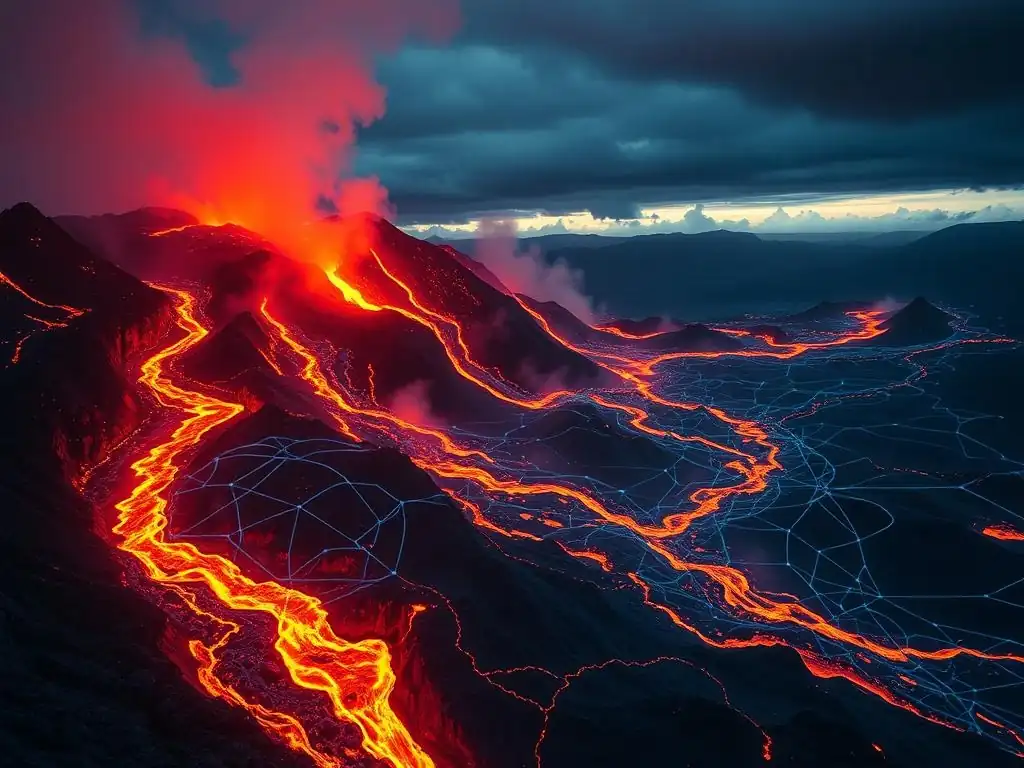
Welcome to Volcano Explorers!
Ever wondered if we could truly predict the unpredictable fury of a volcano? Prepare to be amazed. We're diving deep into the cutting-edge world of AI simulations for volcano eruptions, exploring how these digital twins are revolutionizing our understanding and potentially saving lives. But how accurate are they, and what does the future hold for this fascinating technology? Find out more below and begin your exploration.
- Introduction: Unveiling the Power of AI Simulations in Volcano Research
- Understanding Digital Twins for Volcanoes: A New Era of Volcanic Monitoring
- AI Simulations for Volcano Eruptions: How They Work
- Case Study: Applying AI Simulations to Mount St. Helens
- The Role of Machine Learning in Enhancing Volcano Eruption Prediction
- Challenges and Limitations of AI-Powered Volcano Simulations
- Future Directions: Advancing AI Simulations for Volcano Monitoring and Prediction
- Conclusion: The Future of Volcano Research with AI-Driven Digital Twins
-
Frequently Asked Questions
- How can AI simulations help us understand volcano eruptions?
- What kind of data is used to train AI models for volcano eruption simulations?
- How do AI-powered simulations improve volcanic hazard assessment?
- Are these AI simulations replacing traditional volcanology methods?
- How accessible are AI simulations for volcano eruption scenarios to the public?
- Final Reflection: Harnessing AI's Power for Volcanic Preparedness
- Ignite Your Inner Volcanologist!
Introduction: Unveiling the Power of AI Simulations in Volcano Research
The U.S. Geological Survey (USGS): Harnessing Technology to Understand Volcanic Activity
For over a century, the U.S. Geological Survey (USGS) has been at the forefront of monitoring and researching natural hazards, including volcanic activity. Recognizing the inherent dangers and the need for accurate predictions, the USGS Volcano Hazards Program actively employs cutting-edge technologies to enhance its monitoring capabilities. This commitment to innovation has led to the integration of advanced computational methods, such as Artificial Intelligence (AI) and machine learning, into their volcano research and monitoring strategies. By embracing these technologies, the USGS aims to improve the accuracy and timeliness of eruption forecasts, ultimately enhancing public safety in volcanic regions.
The USGS operates five volcano observatories across the United States, strategically located to monitor active and potentially active volcanic areas. These observatories, including the Cascades Volcano Observatory and the Hawaiian Volcano Observatory, utilize a network of sophisticated instruments to track subtle changes in volcanic behavior. These instruments range from seismometers that detect ground tremors to GPS stations that measure ground deformation and gas sensors that analyze volcanic emissions. The vast datasets collected from these monitoring networks are now being leveraged by AI algorithms to identify patterns and anomalies that might precede volcanic eruptions, pushing the boundaries of volcano science.
The Growing Need for Advanced Eruption Prediction Methods
Volcanic eruptions are complex natural phenomena, driven by intricate processes occurring deep within the Earth. Predicting these events with precision remains a significant challenge for volcanologists. Traditional methods, while valuable, often rely on statistical analysis of historical data and observation of precursory signals like increased seismicity or gas release. However, the chaotic nature of volcanic systems and the variability in eruption styles necessitate more advanced and dynamic prediction tools. The need for improved eruption prediction methods is underscored by the potential for devastating consequences, including loss of life, infrastructure damage, and disruption of air travel.
The eruption of Eyjafjallajökull in Iceland in 2010, though relatively small in volcanic explosivity index (VEI), demonstrated the far-reaching impacts of volcanic eruptions on a globalized world. The ash cloud from this eruption grounded air traffic across Europe for several days, causing billions of dollars in economic losses.
This event highlighted the urgent need for more accurate and timely eruption forecasts, not only for local communities living near volcanoes but also for global industries and infrastructure. AI-powered simulations offer a promising avenue to address this need, providing a powerful tool to analyze complex datasets and model potential eruption scenarios with greater accuracy and speed.
Understanding Digital Twins for Volcanoes: A New Era of Volcanic Monitoring
What is a Digital Twin? Applying the Concept to Volcanoes
The concept of a "digital twin" originates from engineering and manufacturing, referring to a virtual replica of a physical asset, process, or system. This digital counterpart mirrors the real-world entity, dynamically updating based on real-time data and simulations. In the context of volcanoes, a digital twin represents a comprehensive virtual model of a specific volcano, encompassing its geological structure, geophysical properties, historical eruption patterns, and current monitoring data. This sophisticated digital representation allows volcanologists to simulate various volcanic processes and eruption scenarios in a controlled, virtual environment.
Applying the digital twin concept to volcanoes involves integrating diverse datasets – seismic data, deformation measurements, gas emissions, thermal imagery, and geological surveys – into a unified computational framework. Sophisticated algorithms, including AI and machine learning models, are then used to process this data and create a dynamic, evolving model of the volcano.
This virtual volcano reacts to simulated stresses and changes, allowing researchers to observe potential eruption precursors, model lava flow paths, predict ash cloud dispersal, and assess the potential impacts of different eruption scenarios. Essentially, the digital twin becomes a virtual laboratory for studying volcanic behavior and testing eruption hypotheses without the risks associated with real-world experimentation.
Benefits of Using Digital Twins in Volcano Eruption Modeling
The implementation of digital twins in volcano eruption modeling offers a multitude of benefits for research, monitoring, and hazard mitigation. One key advantage is the ability to perform "what-if" scenarios. Volcanologists can virtually explore the potential consequences of different eruption triggers, such as variations in magma pressure, changes in gas composition, or external events like earthquakes. This allows for a more proactive approach to hazard assessment, moving beyond reactive responses to potential volcanic crises. For instance, simulating different eruption magnitudes can help emergency responders plan evacuation routes and resource allocation more effectively.
Furthermore, digital twins facilitate improved data integration and analysis. By combining diverse datasets into a single virtual environment, researchers can gain a more holistic understanding of volcanic processes. AI algorithms within the digital twin can identify subtle patterns and correlations in the data that might be missed by traditional analytical methods.
This enhanced analytical capability can lead to earlier detection of eruption precursors and more accurate forecasts of eruption timing and style. The ability to visualize complex volcanic processes in 3D within the digital twin also significantly improves communication and understanding among researchers, policymakers, and the public, fostering better preparedness and response strategies.
AI Simulations for Volcano Eruptions: How They Work
Data Acquisition: Gathering Crucial Information for AI Models
The foundation of effective AI simulations for volcano eruptions lies in the quality and quantity of data acquired from volcano monitoring systems. A wide range of data streams are crucial for building robust and reliable AI models. Seismic data, collected by networks of seismometers around volcanoes, provides information on ground vibrations caused by magma movement and tectonic stresses. Ground deformation data, measured by GPS and InSAR (Interferometric Synthetic Aperture Radar), reveals changes in the volcano's shape, indicating magma accumulation or deflation within the volcanic edifice.
Gas emission data, obtained through ground-based sensors and satellite observations, tracks the release of volcanic gases like sulfur dioxide (SO2) and carbon dioxide (CO2), which can signal changes in magma degassing and ascent. Thermal data, captured by infrared cameras and satellites, monitors temperature variations on the volcano's surface, potentially indicating magma nearing the surface or increased fumarolic activity.
Geological data, including historical eruption records, volcanic rock compositions, and structural mapping, provides crucial context for understanding a volcano's past behavior and potential future eruption styles. The integration of all these data streams into a comprehensive and well-curated database is essential for training and validating AI models for eruption prediction.
Building the AI Model: Algorithms and Techniques for Eruption Prediction
Constructing AI models for volcano eruption prediction involves selecting and training appropriate algorithms to analyze the vast datasets collected from volcano monitoring systems. Machine learning techniques, particularly deep learning, have shown significant promise in this domain. Recurrent Neural Networks (RNNs) and Long Short-Term Memory networks (LSTMs) are well-suited for analyzing time-series data like seismic signals and deformation measurements, as they can identify temporal patterns and dependencies that may precede eruptions. Convolutional Neural Networks (CNNs) can be applied to analyze spatial data, such as thermal imagery and gas plume distributions, to detect anomalies and patterns indicative of volcanic unrest.
The training process involves feeding the AI model with historical datasets of volcanic activity, including periods of quiescence and eruption. The model learns to identify correlations between precursory signals and subsequent eruptions, effectively learning the "language" of the volcano. Feature engineering plays a crucial role in model performance, involving the selection and transformation of raw data into features that are most informative for eruption prediction.
For instance, instead of directly using raw seismic data, features like seismic event frequency, magnitude, and energy release rate might be extracted and fed into the AI model. The trained AI model can then be used to analyze real-time monitoring data and provide probabilistic forecasts of eruption likelihood.
Simulating Eruption Scenarios: From Lava Flow to Ash Cloud Dispersion
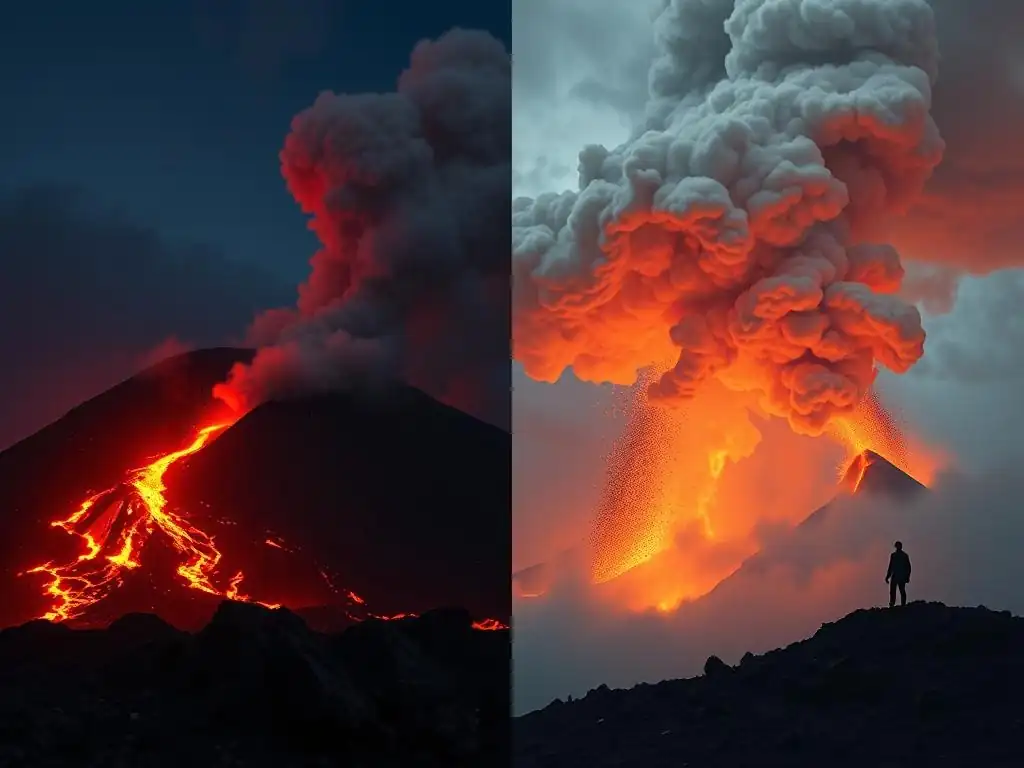
Once an AI model is trained and validated, it can be integrated into the digital twin framework to simulate various eruption scenarios. These simulations go beyond simply predicting if an eruption will occur; they aim to model the potential characteristics and impacts of an eruption. For lava flow simulations, AI algorithms can predict the path and extent of lava flows based on topography, lava viscosity, and effusion rate.
These simulations are crucial for delineating areas at risk from lava inundation and planning evacuation strategies. For example, the USGS's LAHARZ software, while not AI-based, demonstrates the principles of simulating lahar (volcanic mudflow) pathways, which AI models can further enhance.
Ash cloud dispersion simulations are equally vital, especially for volcanoes located near populated areas or air traffic routes. AI models can predict the trajectory and concentration of volcanic ash clouds based on meteorological data, eruption column height, and particle size distribution. These simulations are critical for issuing aviation warnings and mitigating the impact of ashfall on infrastructure and human health. Furthermore, AI simulations can be used to model other eruption hazards, such as pyroclastic flows and volcanic gas dispersion, providing a comprehensive assessment of potential risks and supporting informed decision-making in volcanic crisis management.
Case Study: Applying AI Simulations to Mount St. Helens
Background: Mount St. Helens' History and Risk Assessment
Mount St. Helens, located in Washington State, USA, is renowned for its catastrophic eruption in 1980, which dramatically reshaped the surrounding landscape and served as a stark reminder of the destructive power of volcanoes. Before the 1980 eruption, Mount St. Helens was considered a relatively quiet volcano, but its violent awakening underscored the unpredictable nature of volcanic activity.
The USGS Cascades Volcano Observatory closely monitors Mount St. Helens due to its proven eruptive history and proximity to populated areas. Risk assessments for Mount St. Helens consider various eruption scenarios, including lava flows, pyroclastic flows, lahars, and ashfall, each posing distinct hazards to communities and infrastructure in the region.
The 1980 eruption of Mount St. Helens, with a Volcanic Explosivity Index (VEI) of 5, ejected over 1 cubic kilometer of material and caused widespread devastation. While eruptions of this magnitude are relatively infrequent, smaller eruptions are more common for Mount St. Helens. Since 1980, Mount St. Helens has experienced several periods of unrest and dome-building eruptions, most recently between 2004 and 2008.
The ongoing monitoring and research efforts at Mount St. Helens are crucial for understanding its current state of unrest and improving eruption forecasting capabilities. Applying AI simulations to Mount St. Helens provides a valuable opportunity to enhance hazard assessment and preparedness for future eruptions.
Developing the AI Simulation for Mount St. Helens Eruptions
To develop an AI simulation for Mount St. Helens eruptions, researchers would leverage the extensive datasets collected by the USGS Cascades Volcano Observatory over decades of monitoring. This data includes seismic records dating back to the pre-1980 eruption period, deformation measurements from GPS and InSAR, gas emission data, and thermal imagery.
Historical eruption records and geological data from Mount St. Helens provide crucial context for training the AI model and defining realistic eruption scenarios. The AI model development would likely involve a combination of machine learning techniques, such as RNNs for analyzing time-series data and CNNs for processing spatial data.
The specific AI architecture and algorithms chosen would depend on the research objectives and the characteristics of the available data. For instance, if the focus is on predicting the onset of eruptions based on seismic precursors, RNNs or LSTMs might be prioritized for their ability to capture temporal dependencies in seismic signals. If the focus is on simulating lava flow paths, CNNs could be used to analyze topographic data and predict flow directions.
The AI model would be trained using historical data from Mount St. Helens and validated against independent datasets to ensure its accuracy and reliability. The development process would be iterative, involving model refinement and parameter tuning to optimize performance.
Results and Insights: Improving Eruption Forecasting with AI
While specific results from applying AI simulations to Mount St. Helens are still emerging from ongoing research, the potential benefits for improving eruption forecasting are significant. AI models can analyze vast datasets from Mount St. Helens monitoring networks with greater speed and efficiency than traditional methods. This can lead to earlier detection of subtle changes in volcanic activity that might precede eruptions, providing more lead time for warnings and evacuations. For example, AI algorithms might be able to identify complex patterns in seismic swarms or subtle deformation signals that are difficult for human analysts to discern.
AI simulations can also provide probabilistic eruption forecasts, quantifying the likelihood of an eruption within a specific timeframe. This probabilistic approach is crucial for communicating uncertainty and informing risk-based decision-making. Furthermore, AI simulations can be used to explore a wider range of eruption scenarios for Mount St. Helens, including variations in eruption magnitude, style, and location. This scenario-based approach enhances preparedness by allowing emergency responders to plan for a variety of potential eruption impacts. The insights gained from AI simulations at Mount St. Helens can contribute to a more comprehensive and data-driven approach to volcano hazard assessment and mitigation.
The Role of Machine Learning in Enhancing Volcano Eruption Prediction
Machine Learning Algorithms for Identifying Eruption Precursors
Machine learning algorithms are proving to be powerful tools for identifying subtle and complex patterns in volcano monitoring data that may serve as precursors to eruptions. Traditional statistical methods often struggle to capture the non-linear and dynamic relationships within volcanic systems. Machine learning, with its ability to learn complex patterns from large datasets, offers a significant advantage. Algorithms like Support Vector Machines (SVMs), Random Forests, and Gradient Boosting Machines can be trained to classify volcanic activity states (e.g., quiescent, unrest, erupting) based on various input features derived from monitoring data.
Clustering algorithms, such as k-means clustering and hierarchical clustering, can be used to identify groups of similar volcanic activity patterns, potentially revealing distinct pre-eruptive phases or eruption styles. Anomaly detection algorithms can automatically identify unusual deviations from normal volcanic behavior, flagging potential eruption precursors that might otherwise be missed.
Deep learning techniques, as mentioned earlier, are particularly adept at extracting features from raw time-series data and spatial data, enabling the identification of subtle precursory signals embedded within noisy monitoring data. The application of these diverse machine learning algorithms is transforming the way volcanologists analyze volcano monitoring data and identify eruption precursors.
Improving the Accuracy of Eruption Forecasts Through AI
The integration of AI and machine learning into volcano monitoring and prediction workflows is demonstrably improving the accuracy of eruption forecasts. By leveraging the pattern recognition capabilities of AI, volcanologists can move beyond simple threshold-based warning systems to more nuanced and data-driven forecasting approaches. AI models can combine multiple data streams and consider complex interactions between different monitoring parameters, leading to more robust and reliable eruption predictions. For instance, an AI model might learn that a specific combination of increased seismicity, ground deformation, and gas flux is a strong indicator of an impending eruption for a particular volcano.
The probabilistic nature of AI forecasts also enhances decision-making. Instead of providing a binary "eruption/no eruption" prediction, AI models can provide probabilities of eruption within specific timeframes, allowing for more informed risk assessments and resource allocation. For example, a forecast might indicate a 30% chance of eruption within the next week, triggering a heightened state of alert and preparedness measures.
Furthermore, AI models can be continuously updated and refined as new data becomes available, leading to progressively more accurate and reliable eruption forecasts over time. This iterative learning process is crucial for adapting to the evolving behavior of volcanic systems and improving long-term eruption prediction capabilities.
Challenges and Limitations of AI-Powered Volcano Simulations
Data Scarcity and Quality: Overcoming Limitations in Volcano Monitoring
Despite the advancements in volcano monitoring technology, data scarcity and quality remain significant challenges for AI-powered volcano simulations. Many volcanoes, particularly in remote or developing regions, lack comprehensive monitoring networks. The limited availability of high-resolution seismic, deformation, and gas emission data for these volcanoes restricts the ability to build robust and reliable AI models. Even for well-monitored volcanoes, data gaps can occur due to instrument malfunctions, harsh environmental conditions, or logistical constraints.
Data quality is another critical factor. Noise in seismic data, inaccuracies in GPS measurements, and uncertainties in gas flux estimations can affect the performance of AI models. Preprocessing and cleaning data to remove noise and artifacts is a crucial step in the AI model development pipeline.
Furthermore, the historical record of volcanic eruptions is often incomplete or biased, especially for less frequently erupting volcanoes. The lack of sufficient eruption examples for training AI models can limit their ability to generalize to future eruptions, particularly for volcanoes with diverse eruption styles. Addressing these data scarcity and quality challenges requires continued investment in volcano monitoring infrastructure, data sharing initiatives, and advanced data processing techniques.
Computational Power and Resources: Meeting the Demands of Complex Simulations
Running complex AI-powered volcano simulations, especially for high-resolution digital twins, demands significant computational power and resources. Simulating volcanic processes, such as magma flow, heat transfer, and fluid dynamics, often involves computationally intensive numerical models. Integrating these physics-based models with AI algorithms within a digital twin framework further increases the computational burden. High-performance computing (HPC) facilities and cloud computing platforms are often necessary to run these simulations efficiently and in a timely manner.
The development and maintenance of AI simulation infrastructure also require specialized expertise in computer science, data science, and volcanology. Building interdisciplinary teams with the necessary skills and resources is essential for successful implementation of AI-powered volcano simulations. Furthermore, the cost of computational resources, software licenses, and personnel can be substantial, potentially limiting the accessibility of these advanced simulation tools to resource-constrained volcano observatories or research institutions. Addressing these computational power and resource limitations requires collaborative efforts, resource sharing, and the development of more efficient AI algorithms and simulation techniques.
Interpreting and Validating AI Simulation Results
Interpreting and validating the results of AI-powered volcano simulations is a critical but often challenging aspect. AI models, especially deep learning models, can be "black boxes," meaning that their decision-making processes are not always transparent or easily interpretable. Understanding why an AI model makes a particular prediction is crucial for building trust in the simulation results and for gaining scientific insights into volcanic processes. Techniques for explainable AI (XAI) are being developed to address this challenge, aiming to provide more transparent and interpretable AI models for volcano science.
Validation of AI simulation results is equally important. Comparing simulation outputs with real-world observations and historical eruption data is essential for assessing the accuracy and reliability of the models. However, validating eruption predictions is inherently difficult, as eruptions are infrequent and unpredictable events. Rigorous validation protocols, including cross-validation, sensitivity analysis, and comparison with independent datasets, are necessary to ensure the robustness of AI simulation results. Furthermore, expert volcanological judgment and domain knowledge are crucial for interpreting simulation results in the context of the specific volcano being studied and for making informed decisions based on AI-powered forecasts.
Future Directions: Advancing AI Simulations for Volcano Monitoring and Prediction
Integrating Real-time Data Streams for Enhanced Eruption Forecasting
The future of AI-powered volcano simulations lies in the seamless integration of real-time data streams from volcano monitoring networks. Currently, AI models are often trained and validated using historical datasets, and real-time data is analyzed separately. Integrating real-time data directly into the digital twin framework will enable dynamic and adaptive simulations that respond to evolving volcanic conditions. This real-time integration will require robust data pipelines, efficient data processing algorithms, and AI models capable of handling streaming data.
Real-time data integration will allow for continuous updates of eruption forecasts as new monitoring data becomes available, providing more timely and accurate warnings. For instance, if a sudden increase in seismicity or gas emission is detected, the AI simulation can be automatically updated to reflect these changes and revise the eruption probability forecast accordingly. This dynamic forecasting capability will be particularly valuable during periods of volcanic unrest, providing emergency responders and communities with up-to-the-minute information for decision-making. The development of real-time AI simulation platforms is a crucial step towards proactive and adaptive volcano hazard mitigation.
Developing User-Friendly Interfaces for Volcanologists and Emergency Responders
To maximize the impact of AI-powered volcano simulations, user-friendly interfaces are essential for volcanologists and emergency responders. Currently, running and interpreting complex simulations often requires specialized technical skills in programming and data analysis. Developing intuitive graphical user interfaces (GUIs) will make these powerful tools accessible to a wider range of users, including volcanologists who may not be AI experts and emergency managers who need to quickly understand simulation results for decision-making.
User-friendly interfaces should allow users to easily visualize simulation outputs, interact with the digital twin, and customize simulation parameters. For volcanologists, the interface should provide tools for data exploration, model validation, and scenario analysis. For emergency responders, the interface should focus on displaying key information, such as eruption probability forecasts, hazard maps, and evacuation routes, in a clear and concise manner. Developing tailored interfaces for different user groups will ensure that AI-powered volcano simulations are effectively utilized for both scientific research and hazard mitigation purposes.
Expanding the Application of AI Simulations to Other Volcanoes Worldwide
While initial applications of AI simulations for volcanoes have focused on well-monitored volcanoes like Mount St. Helens, the future direction lies in expanding the application of these techniques to other volcanoes worldwide. Many volcanoes around the globe, particularly in developing countries, pose significant hazards but lack adequate monitoring and prediction capabilities. Adapting and transferring AI simulation technologies to these under-resourced volcanoes is a crucial step towards global volcano hazard mitigation. This will require addressing data scarcity challenges, developing robust AI models that can generalize across different volcano types, and providing training and capacity building to local volcano observatories.
Collaborative efforts between international volcano research institutions and developing countries are essential for expanding the reach of AI-powered volcano simulations. Sharing data, models, and expertise will accelerate the adoption of these technologies globally. Furthermore, focusing on open-source software and cloud-based platforms can reduce the cost and complexity of implementing AI simulations in resource-constrained settings. By expanding the application of AI simulations to a wider range of volcanoes, we can significantly enhance global volcano monitoring and prediction capabilities, ultimately reducing the risks posed by volcanic eruptions to communities worldwide.
Conclusion: The Future of Volcano Research with AI-Driven Digital Twins
Summarizing the Benefits of AI Simulations for Eruption Preparedness
AI-driven digital twins represent a transformative advancement in volcano research and eruption preparedness. These virtual volcano models, powered by AI simulations, offer a multitude of benefits. They enhance our understanding of complex volcanic processes, enabling researchers to explore "what-if" scenarios and gain insights into eruption triggers and dynamics.
AI simulations improve the accuracy and timeliness of eruption forecasts, providing probabilistic predictions and early warnings. They facilitate better hazard assessment by simulating lava flows, ash cloud dispersion, and other eruption hazards, allowing for more effective mitigation strategies. Digital twins also improve communication and collaboration among scientists, policymakers, and the public, fostering better preparedness and response to volcanic crises.
The integration of AI into volcano research is not just about technological advancement; it is about enhancing public safety and building more resilient communities in volcanic regions. By providing more accurate and timely eruption forecasts, AI simulations can save lives, reduce economic losses, and minimize the disruption caused by volcanic eruptions. The development and implementation of AI-driven digital twins are a testament to the power of interdisciplinary collaboration and the potential of technology to address complex natural hazards.
The USGS: Staying at the Forefront of Volcanic Research and Safety
The U.S. Geological Survey (USGS) continues to play a leading role in advancing volcanic research and ensuring public safety through the innovative application of technologies like AI-driven digital twins. The USGS Volcano Hazards Program’s commitment to cutting-edge research and monitoring is crucial for mitigating volcanic risks in the United States and globally. By embracing AI and machine learning, the USGS is staying at the forefront of volcano science, pushing the boundaries of eruption prediction and hazard assessment.
The ongoing efforts to develop and implement AI-powered digital twins for volcanoes exemplify the USGS's dedication to utilizing the best available tools and technologies to protect communities and infrastructure from volcanic hazards. The future of volcano research is undoubtedly intertwined with the continued advancement and application of AI-driven digital twins, and the USGS remains a vital force in shaping this future.
Frequently Asked Questions
How can AI simulations help us understand volcano eruptions?
AI simulations use machine learning to analyze vast datasets of past eruptions, predicting future eruption behavior and identifying potential hazards with greater accuracy than traditional methods. This helps in understanding complex eruption dynamics.
What kind of data is used to train AI models for volcano eruption simulations?
These models are trained using various data sources, including seismic activity, gas emissions, satellite imagery, and historical eruption records. This diverse data allows for a more comprehensive and accurate simulation.
How do AI-powered simulations improve volcanic hazard assessment?
AI simulations can rapidly generate numerous eruption scenarios, allowing for a more thorough hazard assessment and the identification of areas at high risk. This enables better preparation and mitigation strategies.
Are these AI simulations replacing traditional volcanology methods?
No, AI simulations are not meant to replace traditional methods, but rather to augment them. They provide a powerful tool for volcanologists to enhance their understanding and improve forecasting capabilities, working in tandem with established techniques.
How accessible are AI simulations for volcano eruption scenarios to the public?
While the complex algorithms behind the simulations are technical, the results are often presented in accessible formats, such as hazard maps and interactive visualizations, enabling communities to better understand potential risks and prepare accordingly.
Final Reflection: Harnessing AI's Power for Volcanic Preparedness
The advancements detailed throughout this article underscore the profound impact AI simulations for volcano eruptions are poised to have on disaster preparedness. No longer are we limited to reactive measures; instead, we can proactively anticipate and mitigate the devastating effects of volcanic activity through the power of predictive modeling. This shift represents a monumental leap forward in our ability to safeguard communities and infrastructure in volcanically active regions.
The development and refinement of these AI-powered simulations are not merely technological achievements; they represent a commitment to protecting human lives and livelihoods. Witnessing the potential of AI to transform our understanding of complex natural phenomena fills me with a sense of hope and responsibility. The only way to do great work is to love what you do.
- Steve Jobs. This quote resonates deeply, as the dedication required to build these simulations stems from a genuine desire to make a tangible difference in the world.
As you reflect on the potential of AI simulations for volcano eruptions, consider how you can contribute to a future where technology empowers us to face the challenges posed by our planet. Let us embrace innovation, foster collaboration, and work together to ensure that communities around the world are better prepared for the inevitable forces of nature. The future of volcanic hazard mitigation lies in our collective ability to harness the power of AI and translate knowledge into action.
Ignite Your Inner Volcanologist!
Thank you for exploring the fascinating world of volcano simulations and AI! We hope you've gained a new appreciation for the power of these digital models in predicting and preparing for future eruptions. Now, it's time to take your passion further!
Here's how you can get involved:
- Explore Simulation Parameters: Experiment with different eruption parameters, such as magma viscosity and vent diameter, using a free online simulation platform like Unity or Unreal Engine—plenty of tutorials are available online. This is a direct way to engage with the article's core concepts.
- Share your knowledge! Discuss your insights on social media, using the hashtag #VolcanoSimulations, and tag us @VolcanoExplorers to join the conversation about the future of volcanic hazard assessment.
- Dive deeper into research! Explore open-source datasets from past eruptions and consider building a simple AI model to forecast potential volcanic activity.
What fascinating eruption scenario will you simulate first? Share your ideas in the comments below!