
Can Shared Secrets Stop Supervolcanoes? The Ultimate Test of Global Volcano Science

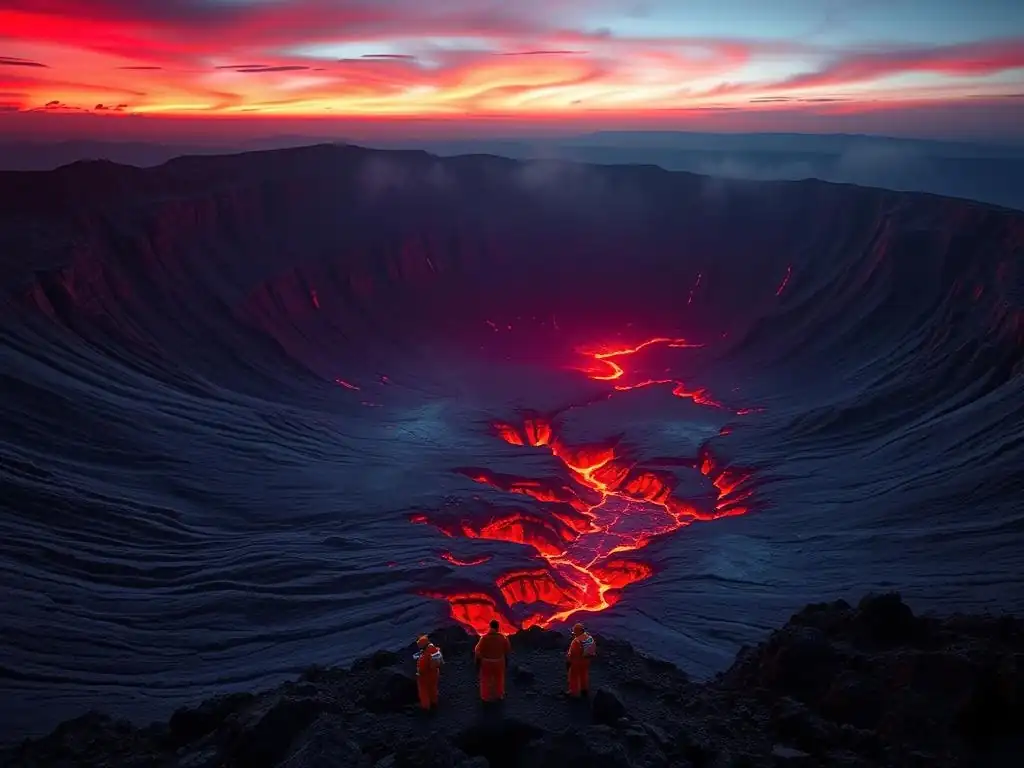
Welcome to Volcano Explorers!
Prepare to journey into the heart of Earth's fiery giants. Ever wondered if we could actually predict, or even prevent, a catastrophic eruption? This isn't science fiction. Dive into " supervolcanoes global science insights" and discover the cutting-edge research and international collaboration that could hold the key to averting a global disaster. The secrets hidden within these colossal formations are being unlocked, but will it be enough? Read on to find out...
- Understanding Supervolcanoes: A Global Threat
- International Collaboration in Volcano Monitoring: A Necessity for Supervolcano Prediction
- Shared Secrets: Data Sharing Initiatives and Supervolcano Research
- Global Science Insights: What We've Learned About Supervolcanoes Through Collaboration
- The Ultimate Test: Can Global Collaboration Prevent a Supervolcano Disaster?
- The Human Element: Communities and Supervolcanoes
- Conclusion: The Future Depends on Shared Secrets and Global Volcano Science
-
Frequently Asked Questions
- What are supervolcanoes, and why are they a global concern?
- How does VolcanoExplorers.org provide global science insights into supervolcanoes?
- What kind of "shared secrets" are researchers trying to uncover about supervolcanoes?
- Does VolcanoExplorers.org offer information on supervolcanoes near me?
- What safety and evacuation tips does VolcanoExplorers.org offer for people living near active volcanoes, including supervolcanoes?
- Final Reflection: Unearthing Truths Beneath the Surface
- Ignite Your Inner Volcanologist!
Understanding Supervolcanoes: A Global Threat
What Defines a Supervolcano? Size, Scope, and Potential Impact
Supervolcanoes are geological behemoths, differentiated from typical volcanoes not just by their immense size but primarily by the scale of their eruptions. The Volcanic Explosivity Index (VEI) is used to quantify eruption magnitude, ranging from 0 to 8. While a VEI 7 eruption is considered "super," supervolcanoes are generally associated with VEI 8 eruptions, the largest and most catastrophic type known.
These events expel over 1,000 cubic kilometers of material – ash, rock, and pyroclastic flows – dwarfing even the most significant historical volcanic eruptions. For context, the 1980 Mount St. Helens eruption, a significant event in its own right, was a VEI 5, ejecting roughly 1 cubic kilometer of material. A supervolcano eruption is thus a thousand times more powerful, capable of reshaping continents and altering global climate patterns.
The scope of a supervolcano's impact extends far beyond the immediate vicinity. A VEI 8 eruption can blanket entire regions in thick ash, collapsing infrastructure, disrupting agriculture, and causing widespread respiratory problems. Pyroclastic flows, searing hot avalanches of gas and volcanic debris, can incinerate everything in their path for tens of kilometers.
Furthermore, the injection of massive amounts of sulfur dioxide and other gases into the stratosphere can trigger a volcanic winter, leading to global cooling, crop failures, and mass starvation. The long-term effects can last for decades, potentially causing societal upheaval and mass migrations. The sheer scale and potential global consequences are what elevate supervolcanoes to a category of their own, demanding focused scientific attention and international cooperation.
The Science Behind Supervolcanic Eruptions: Magma, Pressure, and Cataclysm
Supervolcanic eruptions are driven by the accumulation of vast quantities of magma beneath the Earth's surface. Unlike typical volcanoes that often have smaller, more frequent eruptions, supervolcanoes are characterized by massive magma chambers that can be tens of kilometers in diameter and extend deep into the crust. This magma, rich in silica and dissolved gases, builds up over immense timescales, sometimes hundreds of thousands of years. The crucial factor is the increasing pressure within the magma chamber. As more magma accumulates, the pressure exerted on the surrounding rocks increases dramatically.
Eventually, the pressure overcomes the strength of the overlying crust. This can be triggered by various events, such as tectonic shifts, magma injection from deeper sources, or even changes in crustal stress. When the breaking point is reached, the dissolved gases in the magma rapidly decompress and expand, leading to an explosive eruption of unimaginable force.
The eruption process is incredibly complex, involving intricate interactions between magma composition, gas content, crustal structure, and trigger mechanisms. Scientists are still working to fully understand the dynamics that lead to these colossal events, relying on geophysical monitoring, geological studies, and advanced computational modeling to unravel the secrets of supervolcanoes and their potential for cataclysmic eruptions.
Why Study Supervolcanoes? Mitigating Global Risks
The study of supervolcanoes is not merely an academic exercise; it is a critical endeavor with profound implications for global safety and societal resilience. While supervolcano eruptions are infrequent on human timescales, occurring on average every 100,000 years, the potential consequences are so devastating that proactive research and mitigation strategies are essential.
The last VEI 8 eruption, the Toba supereruption in Indonesia approximately 74,000 years ago, is believed by some scientists to have contributed to a global volcanic winter that may have significantly impacted human populations. Understanding the mechanisms, precursors, and potential impacts of future supereruptions is paramount to reducing the global risk they pose.
Studying supervolcanoes allows us to develop better hazard assessments, improve eruption forecasting, and devise effective mitigation strategies. By monitoring active supervolcanic systems like Yellowstone in the United States or Campi Flegrei in Italy, scientists can detect subtle changes in ground deformation, gas emissions, and seismic activity that might signal an impending eruption.
This knowledge is crucial for developing early warning systems that could provide crucial time for evacuation and preparedness measures, potentially saving millions of lives and minimizing the global disruption caused by a supereruption. Furthermore, understanding the long-term environmental and climatic impacts of supereruptions allows for better planning and resource management in the aftermath of such events.
International Collaboration in Volcano Monitoring: A Necessity for Supervolcano Prediction
The Challenges of Monitoring Supervolcanoes: Scale, Complexity, and Data Acquisition
Monitoring supervolcanoes presents unique challenges due to their immense scale, complex geological systems, and the sheer amount of data required for comprehensive analysis. Supervolcanic systems often span vast areas, encompassing hundreds or even thousands of square kilometers. Yellowstone, for example, is a massive volcanic caldera covering parts of Wyoming, Montana, and Idaho. Monitoring such a large area requires a dense network of instruments, including seismometers, GPS stations, gas sensors, and thermal monitors, to capture the subtle signals that may precede an eruption. The logistical difficulties of deploying and maintaining these networks in often remote and challenging terrains are considerable.
Moreover, the subsurface processes within supervolcanoes are incredibly complex and not fully understood. Magma chambers can be located several kilometers beneath the surface, making direct observation impossible. Scientists rely on indirect methods, such as analyzing seismic waves and ground deformation patterns, to infer the dynamics of these hidden systems. The sheer volume of data generated by monitoring networks requires sophisticated data processing and analysis techniques, often involving high-performance computing and advanced statistical methods. International collaboration becomes crucial in addressing these challenges by pooling resources, expertise, and data to gain a more comprehensive understanding of these globally significant volcanic systems.
Global Networks for Volcano Observation: Sharing Data and Expertise
Recognizing the global threat posed by supervolcanoes, international collaboration in volcano observation and data sharing has become increasingly vital. Global networks of volcano observatories, such as the Global Volcano Model (GVM) and the Worldwide Volcano Observatory (WVO), facilitate the exchange of data, expertise, and best practices among volcanologists worldwide.
These networks promote standardized monitoring protocols, data formats, and analysis techniques, ensuring that data collected in different regions can be readily integrated and compared. Sharing seismic data, deformation measurements, gas emission data, and geological observations from various volcano observatories around the world creates a more complete picture of global volcanic activity, including supervolcanoes.
International workshops, conferences, and training programs further enhance collaboration by bringing together volcanologists from diverse backgrounds and institutions. These platforms facilitate the exchange of research findings, the development of new monitoring technologies, and the coordination of international research projects focused on supervolcanoes. The sharing of expertise in areas such as advanced seismic analysis, geodetic modeling, and geochemical analysis strengthens the global volcanological community's capacity to monitor and understand these complex systems. By working together, scientists can leverage their collective knowledge and resources to improve supervolcano monitoring and prediction capabilities, benefiting all nations.
The Role of Satellite Technology in Supervolcano Monitoring
Satellite technology has revolutionized volcano monitoring, particularly for remote and inaccessible supervolcanic regions. Satellites equipped with various sensors provide a synoptic and continuous view of volcanic areas, enabling the detection of subtle changes that might be missed by ground-based instruments alone. Synthetic Aperture Radar (SAR) interferometry, for example, is a powerful satellite technique that measures ground deformation with millimeter-level precision over large areas. This is particularly useful for monitoring the slow inflation and deflation of supervolcano calderas, which can be an indicator of magma movement beneath the surface.
Thermal infrared sensors on satellites can detect changes in surface temperatures, identifying areas of increased heat flow that may be associated with volcanic activity. Spectrometers can measure the concentration of volcanic gases, such as sulfur dioxide, in the atmosphere, providing valuable information about magma degassing and potential eruptive activity. Satellite data complements ground-based monitoring networks by providing a broader spatial coverage and continuous temporal record.
Furthermore, satellite data is freely available or readily accessible from various space agencies, making it a valuable resource for volcano observatories worldwide, particularly in developing countries with limited resources for ground-based monitoring. The integration of satellite data into global volcano monitoring efforts significantly enhances our ability to track and understand supervolcanoes.
The Importance of Open-Source Data in Volcano Science
Open-source data is paramount in advancing volcano science, especially in the context of supervolcano research, which requires a global perspective and collaborative effort. Making volcanic data freely and publicly available accelerates scientific progress by enabling researchers worldwide to access, analyze, and interpret information from diverse volcanic systems. This transparency fosters collaboration, reduces data duplication, and promotes the validation and refinement of scientific models and theories. Open-source data initiatives also enhance the reproducibility of research findings, a cornerstone of scientific rigor.
Furthermore, open-source data empowers scientists in developing countries and smaller institutions who may lack the resources to establish extensive monitoring networks or acquire proprietary datasets. Access to global volcanic data allows them to contribute meaningfully to supervolcano research and hazard assessment in their regions. Various initiatives are promoting open-source data in volcano science, including online databases, data repositories, and data sharing platforms.
These initiatives are crucial for building a global community of volcano scientists working together to understand and mitigate the risks posed by supervolcanoes. The free flow of information is essential for unlocking the "shared secrets" of these complex systems.
International Research Projects Focused on Supervolcanoes: Deep Carbon Observatory, Earth Observatory of Singapore
Several large-scale international research projects are specifically focused on unraveling the mysteries of supervolcanoes through collaborative science. The Deep Carbon Observatory (DCO), for instance, is a global research program investigating the quantities, movements, forms, and origins of carbon in Earth. Volcanoes, including supervolcanoes, play a crucial role in the carbon cycle, releasing vast amounts of carbon dioxide into the atmosphere. DCO research on volcanic degassing and magma chamber processes provides valuable insights into the dynamics of supervolcanic systems and their impact on global climate.
The Earth Observatory of Singapore (EOS) is another example of a major international research institution conducting cutting-edge research on volcanoes in Southeast Asia, a region with significant supervolcanic activity, including Toba and Tambora. EOS researchers are involved in multidisciplinary studies of supervolcanoes, using seismology, geodesy, geochemistry, and numerical modeling to understand magma generation, storage, and eruption processes. These international research projects, often involving scientists from multiple countries and institutions, are essential for tackling the complex challenges of supervolcano research and fostering global scientific collaboration. They exemplify how "shared secrets" are uncovered through joint efforts.
Overcoming Political and Logistical Barriers to Global Scientific Collaboration
While the scientific imperative for global collaboration in supervolcano research is clear, political and logistical barriers can sometimes hinder these efforts. Political tensions between nations, differing data sharing policies, and bureaucratic hurdles can impede the free flow of information and the coordination of international research projects. Language barriers and cultural differences can also pose challenges to effective communication and collaboration among scientists from diverse backgrounds. Logistical challenges, such as funding constraints, visa restrictions, and the complexities of conducting research in remote and politically sensitive volcanic regions, can also impede international collaboration.
Overcoming these barriers requires proactive efforts to build trust, foster open communication, and establish clear data sharing agreements between nations. International scientific organizations, such as the International Association of Volcanology and Chemistry of the Earth's Interior (IAVCEI), play a crucial role in promoting diplomacy and facilitating collaboration across political boundaries.
Streamlining research permit processes, simplifying visa procedures for scientists, and establishing international funding mechanisms for collaborative research projects can help to overcome logistical barriers. By actively addressing these political and logistical challenges, the global volcanological community can strengthen its collective capacity to study and mitigate the risks posed by supervolcanoes.
Global Science Insights: What We've Learned About Supervolcanoes Through Collaboration
New Discoveries in Magma Chamber Dynamics: Implications for Eruption Forecasting
International collaboration has been instrumental in advancing our understanding of magma chamber dynamics within supervolcanoes, leading to improved eruption forecasting capabilities. Through the combined analysis of seismic data from global networks, scientists have gained new insights into the structure and evolution of magma chambers beneath supervolcanoes like Yellowstone and Campi Flegrei.
For example, studies using seismic tomography, a technique akin to medical CT scans for the Earth, have revealed complex magma plumbing systems beneath Yellowstone, showing multiple interconnected magma bodies at different depths. These findings challenge earlier models of simple, single magma chambers and highlight the complexity of supervolcanic systems.
Furthermore, collaborative research involving geochemical analysis of volcanic rocks and numerical modeling of magma flow has shed light on the processes of magma accumulation, differentiation, and mobilization within supervolcanoes. Scientists are now better able to estimate the volume and composition of magma stored beneath these systems, which are crucial parameters for assessing eruption potential. These advancements in understanding magma chamber dynamics, achieved through global science insights and data sharing, are directly contributing to the development of more sophisticated eruption forecasting models and improved hazard assessments for supervolcanoes.
Advancements in Modeling Supervolcano Behavior: Predicting Future Eruptions
Predicting supervolcano eruptions remains a formidable scientific challenge, but international collaboration has significantly advanced the development of sophisticated models that can simulate supervolcano behavior and forecast potential future eruptions. These models incorporate a wide range of data, including seismic activity, ground deformation, gas emissions, and geological history, to simulate the complex physical processes within supervolcanoes. International teams of scientists are working together to refine these models, incorporating new data and improving the representation of key processes, such as magma chamber pressurization, crustal deformation, and fault mechanics.
Advanced computational techniques, including machine learning and artificial intelligence, are increasingly being applied to supervolcano modeling, enhancing the ability to analyze large datasets and identify subtle patterns that may precede eruptions. International model intercomparison projects, where different research groups test their models against real-world data and compare their predictions, are crucial for validating model accuracy and identifying areas for improvement. While accurate prediction of supervolcano eruptions remains a long-term goal, these collaborative modeling efforts are steadily improving our understanding of supervolcano behavior and moving us closer to more reliable eruption forecasts.
Case Studies: Successful Collaborations in Monitoring Yellowstone and Toba
Case studies of successful international collaborations in monitoring specific supervolcanoes, such as Yellowstone and Toba, illustrate the tangible benefits of shared secrets and global science insights. Yellowstone, a well-monitored supervolcano in the United States, has been the subject of extensive international research collaborations involving scientists from the US Geological Survey (USGS), universities worldwide, and international volcano observatories. Data from the Yellowstone Volcano Observatory is shared openly, and international researchers contribute expertise in areas such as seismic monitoring, geodetic analysis, and hydrothermal system studies. This collaborative approach has significantly enhanced our understanding of Yellowstone's volcanic system and improved hazard assessments.
Similarly, the Toba supervolcano in Indonesia, responsible for the largest known eruption in recent geological history, has been the focus of international research efforts, particularly through the Earth Observatory of Singapore. Collaborations involving scientists from Indonesia, Singapore, and other countries have focused on studying the geological history of Toba, its magma chamber structure, and its potential for future eruptions. These case studies demonstrate that international collaboration is not just a theoretical concept but a practical and effective approach to monitoring and understanding complex supervolcanic systems, leading to more robust scientific insights and improved hazard mitigation strategies.
The Ultimate Test: Can Global Collaboration Prevent a Supervolcano Disaster?
Improving Early Warning Systems for Supervolcanoes: A Global Effort
The ultimate test of global volcano science and international collaboration is whether it can contribute to preventing a supervolcano disaster. Improving early warning systems for supervolcanoes is a crucial step in this direction, and it requires a concerted global effort. This involves enhancing monitoring networks in and around known supervolcanic systems, developing more sophisticated eruption forecasting models, and establishing effective communication protocols for disseminating warnings to at-risk populations and international agencies. International collaboration is essential for sharing best practices in early warning system design, data analysis, and communication strategies.
Global initiatives, such as the establishment of a global supervolcano early warning network, could significantly enhance our preparedness for a potential supereruption. This network would involve the integration of data from volcano observatories worldwide, satellite monitoring systems, and international research projects. Real-time data sharing platforms and rapid alert systems would be crucial components of such a network.
International workshops and training programs focused on early warning system development and crisis communication would further strengthen global capacity in this area. A globally coordinated early warning system, built upon shared secrets and international collaboration, represents our best chance of mitigating the impact of a future supervolcano eruption.
Developing Effective Mitigation Strategies: Preparedness and Response
Beyond early warning systems, developing effective mitigation strategies for supervolcanoes requires international collaboration in preparedness and response planning. A supereruption would have global consequences, necessitating a coordinated international response to address the humanitarian, economic, and environmental impacts. This includes pre-eruption preparedness measures, such as developing evacuation plans for at-risk regions, stockpiling essential supplies, and strengthening critical infrastructure. International cooperation is crucial for sharing expertise in disaster preparedness, emergency management, and logistical support.
In the event of a supereruption, a globally coordinated response would be essential to provide humanitarian aid to affected populations, manage ashfall dispersal and its impacts on aviation and agriculture, and address the long-term environmental consequences, such as volcanic winter and climate change. International disaster relief organizations, national governments, and scientific institutions would need to work together seamlessly to ensure an effective and timely response. Developing pre-agreed protocols for international cooperation in supervolcano disaster response is a critical step in mitigating the potential global catastrophe.
The Future of Supervolcano Research: Continued Collaboration and Innovation
The future of supervolcano research hinges on continued international collaboration and sustained innovation in monitoring technologies, modeling techniques, and mitigation strategies. As our understanding of supervolcanoes evolves, new research questions and challenges will emerge. Continued investment in global volcano science, fostering open data sharing, and promoting international research partnerships are essential for addressing these challenges. Innovation in areas such as advanced seismic sensors, drone-based monitoring, and AI-powered eruption forecasting models will further enhance our ability to study and understand supervolcanoes.
The development of new mitigation technologies, such as ash dispersal control measures or geoengineering approaches to counteract volcanic winter, may also be explored through international collaborative research. Sustained funding for global volcano science initiatives, coupled with a commitment to international collaboration, will be crucial for ensuring that we are adequately prepared for the potential threat of supervolcanoes and can effectively mitigate their global risks. The future of planetary safety depends on our collective commitment to shared secrets and global volcano science.
The Human Element: Communities and Supervolcanoes
Educating the Public: Raising Awareness About Supervolcano Risks
Educating the public about supervolcano risks is a critical component of global preparedness and mitigation efforts. While supereruptions are rare, the potential consequences are so severe that raising public awareness is essential, especially in regions near known supervolcanoes. Public education campaigns should focus on explaining what supervolcanoes are, the potential hazards they pose, and the importance of scientific monitoring and research. Clear and accessible information, disseminated through various channels, including websites, social media, and community outreach programs, is crucial for informing and empowering the public.
Addressing misconceptions and anxieties about supervolcanoes is also important. While the potential for a supereruption is a serious concern, it is also important to emphasize that these events are infrequent and that scientists are actively monitoring known supervolcanoes to detect any signs of increased activity. Public education should promote a balanced and informed understanding of supervolcano risks, avoiding sensationalism while conveying the importance of preparedness and scientific vigilance. International collaboration in developing and sharing public education materials can ensure that consistent and accurate information reaches communities worldwide.
Empowering Local Communities: Building Resilience and Preparedness
Empowering local communities living near supervolcanoes is essential for building resilience and preparedness at the grassroots level. Community-based preparedness programs should involve local residents in the development of evacuation plans, emergency response protocols, and community education initiatives. Providing training and resources to local communities, such as emergency supplies, communication equipment, and first aid training, can enhance their capacity to respond effectively in the event of a volcanic crisis. Engaging local communities in volcano monitoring efforts, such as through citizen science initiatives, can also foster a sense of ownership and responsibility for preparedness.
Cultural sensitivity and local knowledge are crucial considerations in community-based preparedness programs. Tailoring education materials and preparedness strategies to the specific needs and cultural contexts of local communities ensures that they are relevant and effective. International collaboration in community-based preparedness can involve sharing best practices, providing technical assistance, and supporting local initiatives in regions at risk from supervolcanoes. Empowering local communities is a vital step in building global resilience to supervolcano hazards.
The Ethical Considerations of Supervolcano Research and Prediction
Supervolcano research and prediction raise significant ethical considerations that must be carefully addressed by the global scientific community. The potential societal and economic impacts of a supereruption are immense, and the responsibility for communicating risks and warnings is profound. Ethical guidelines are needed for data sharing, research conduct, and the communication of scientific findings to the public and policymakers. Transparency, accountability, and responsible communication are paramount in supervolcano science.
The potential for misinterpretation or misuse of scientific information about supervolcanoes also raises ethical concerns. Sensationalizing or exaggerating risks can lead to unnecessary panic and social disruption, while downplaying risks can lead to complacency and inadequate preparedness. Scientists have a responsibility to communicate scientific findings accurately, objectively, and in a way that is understandable to non-experts. International ethical frameworks for supervolcano research and risk communication can help guide responsible scientific practice and ensure that the benefits of scientific knowledge are maximized while minimizing potential harms.
The Ongoing Quest to Understand and Mitigate Supervolcano Risks
The quest to fully understand and mitigate the risks posed by supervolcanoes is an ongoing scientific endeavor. Despite significant progress in recent decades, many fundamental questions about supervolcano processes, eruption triggers, and long-term impacts remain unanswered. Continued research, sustained monitoring efforts, and international collaboration are essential for advancing our knowledge and improving our preparedness. Supervolcanoes are complex and dynamic systems, and our understanding of them is constantly evolving as new data and insights emerge.
The scientific community remains committed to unraveling the "shared secrets" of supervolcanoes, using cutting-edge technologies and collaborative approaches to push the boundaries of knowledge. This ongoing quest is driven by the recognition that supervolcanoes represent a significant global hazard and that scientific understanding is our best tool for mitigating the potential risks. The future of supervolcano research is bright, with continued innovation and international collaboration promising to yield further breakthroughs in our understanding and predictive capabilities.
The Power of International Collaboration in Protecting Our Planet
International collaboration is not just a desirable aspect of supervolcano research; it is the cornerstone of effective global protection against these planetary-scale hazards. Supervolcanoes are a global problem that requires a global solution. No single nation can effectively monitor, understand, or mitigate the risks posed by supervolcanoes on its own. The power of international collaboration lies in the pooling of resources, expertise, and data, creating a synergistic effect that is far greater than the sum of its parts.
Shared data, shared knowledge, and shared efforts are essential for building a robust global defense against supervolcano disasters. International collaboration fosters trust, builds capacity, and promotes a sense of shared responsibility for planetary safety. By working together, scientists, policymakers, and communities worldwide can enhance our collective resilience to supervolcano hazards and protect our planet from these potentially catastrophic events. The power of "shared secrets" is the power to safeguard our future.
Call to Action: Supporting Global Volcano Science Initiatives
Supporting global volcano science initiatives is a call to action for governments, funding agencies, scientific institutions, and individuals worldwide. Increased investment in volcano monitoring networks, research projects, and international collaborative programs is essential for advancing our understanding of supervolcanoes and improving our preparedness. Promoting open data sharing policies, facilitating international scientific exchanges, and supporting capacity building in developing countries are crucial steps in strengthening global volcano science.
Individuals can also play a role by supporting scientific organizations involved in volcano research, advocating for increased funding for volcano science, and staying informed about volcanic hazards. Raising awareness about the importance of global volcano science and international collaboration is essential for building public and political support for these critical initiatives. The time to act is now. By supporting global volcano science, we invest in a safer future for all, harnessing the power of "shared secrets" to protect our planet from the ultimate volcanic threat.
Frequently Asked Questions
What are supervolcanoes, and why are they a global concern?
Supervolcanoes are volcanoes capable of eruptions of unimaginable magnitude, significantly larger than typical volcanic eruptions. They pose a global threat due to their potential to disrupt the climate and economy worldwide.
How does VolcanoExplorers.org provide global science insights into supervolcanoes?
VolcanoExplorers.org offers educational content on the science behind supervolcanoes, including magma formation and eruption dynamics. It also provides updates on global volcanic activity and how volcanologists study these systems.
Researchers are seeking a better understanding of the magma systems beneath supervolcanoes, including their size, composition, and how they evolve over time. This knowledge is crucial for predicting future eruptions.
Does VolcanoExplorers.org offer information on supervolcanoes near me?
While it doesn't pinpoint specific locations, VolcanoExplorers.org provides general information on the location of known supervolcanoes around the world. It also offers real-time updates on volcanic activity, which may include updates on supervolcanoes.
What safety and evacuation tips does VolcanoExplorers.org offer for people living near active volcanoes, including supervolcanoes?
The site provides safety guides and evacuation tips for those living near active volcanoes, although specific advice for supervolcanoes may be limited. General preparedness strategies for volcanic hazards are covered.
Final Reflection: Unearthing Truths Beneath the Surface
The exploration of supervolcanoes, as we've seen, is not merely an academic exercise; it's a critical endeavor with profound implications for our shared future. Understanding the potential for catastrophic eruptions and developing strategies for mitigation is paramount in an increasingly interconnected world. The science may be complex, the challenges daunting, but the stakes are undeniably high.
The very idea of shared secrets, of global collaboration in the face of such a monumental threat, speaks to the best of humanity. It underscores our collective responsibility to safeguard our planet and future generations. The pursuit of knowledge, particularly when it concerns existential risks, transcends national boundaries and political ideologies. Science knows no country, because knowledge belongs to humanity, and is the torch which illuminates the world.
- Louis Pasteur
As we conclude this journey into the heart of supervolcano science, I invite you to reflect on the power of collaboration and the importance of proactive engagement. Consider how you can contribute to a world where scientific understanding informs responsible action. Let us embrace the challenge of understanding these geological giants, not with fear, but with a spirit of curiosity, determination, and a shared commitment to protecting our planet.
Ignite Your Inner Volcanologist!
Thanks for diving into the fascinating world of supervolcanoes! Hopefully, you've gained a deeper understanding of the incredible science and global collaboration needed to unravel their mysteries. Now, it's time to take action and become a part of the solution!
Here are a few ways you can contribute to the ongoing exploration and understanding of these colossal forces of nature:
- Share this article with your friends and family to spread awareness about the importance of supervolcano research. Let's get more people talking!
- Explore citizen science projects related to volcanology. Your observations and data could contribute to crucial research efforts!
- Commit to learning more about the geology of your local area. Understanding the history of our planet is the first step toward protecting its future.
What small step will you take today to better understand the fiery heart beneath our feet?