
Can Geothermal Energy Power Volcanic Agriculture? A Sustainable Synergy

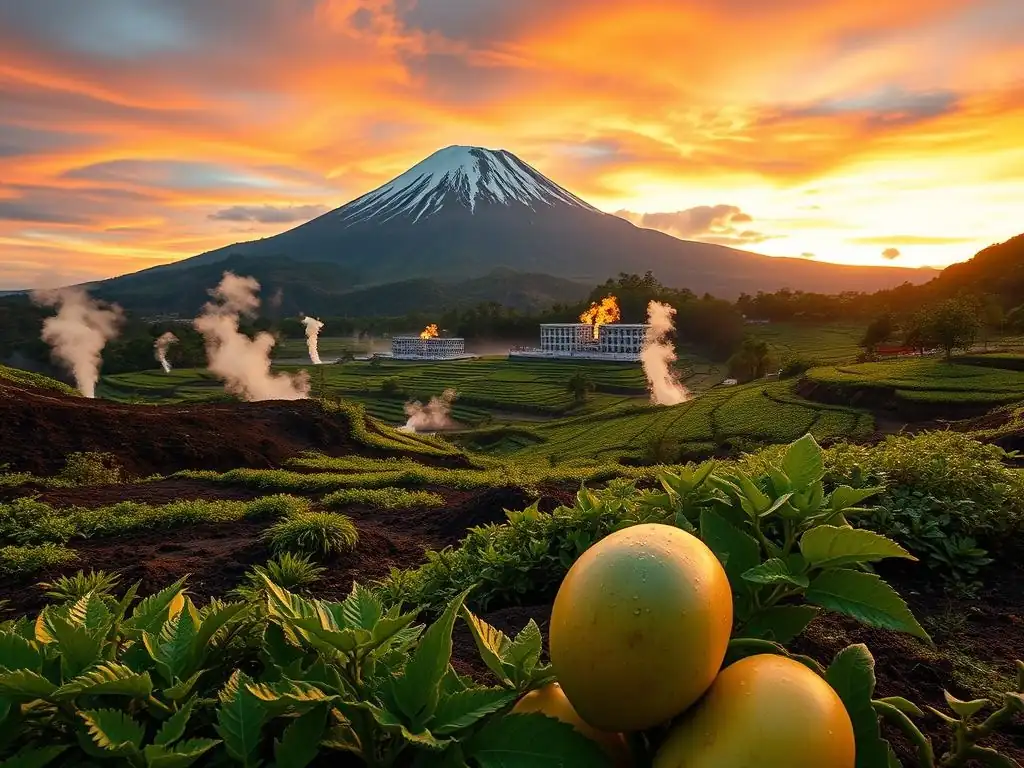
Welcome to Volcano Explorers, where the Earth breathes fire!
Ever wondered if the raw power of a volcano could not only reshape landscapes but also feed communities? Dive into our latest exploration of the surprising synergy between volcanic activity and sustainable living. Our feature article, "Can Geothermal Energy Power Volcanic Agriculture? A Sustainable Synergy," unearths the potential of harnessing the Earth's fiery heart to cultivate life. Intrigued? Discover how geothermal energy is revolutionizing volcanic agriculture and what this means for a sustainable future. Read on to unlock the secrets beneath the surface...
- Introduction: Harnessing Volcanic Energy for Sustainable Agriculture
- Understanding Volcanic Agriculture: A Unique Ecosystem
- Geothermal Energy: A Renewable Power Source from the Earth
- Geothermal Energy for Volcanic Agriculture: A Detailed Look
- Benefits of Integrating Geothermal Energy and Volcanic Agriculture
- Challenges and Considerations for Geothermal-Powered Volcanic Agriculture
- Case Studies: Successful Examples of Geothermal-Powered Agriculture Near Volcanoes
- The Future of Geothermal Energy in Volcanic Agriculture
- Conclusion: A Sustainable Path Forward for Volcanic Regions
-
Frequently Asked Questions
- How does geothermal energy relate to volcanic activity?
- What is "volcanic agriculture" and how does geothermal energy benefit it?
- What are some examples of crops that thrive in volcanic agriculture enhanced by geothermal energy?
- Is using geothermal energy for volcanic agriculture a sustainable practice?
- What are some potential challenges or drawbacks of integrating geothermal energy and volcanic agriculture?
- Final Reflection: Harnessing Earth's Power for Sustainable Growth
- Unleash the Power of Volcanic Innovation!
Introduction: Harnessing Volcanic Energy for Sustainable Agriculture
Exploring the Potential of Geothermal Resources in Volcanic Regions
Volcanic regions, often perceived as zones of destruction and hazard, also harbor immense potential for sustainable energy and agriculture. Beneath the dramatic landscapes sculpted by eruptions lies a readily available source of heat – geothermal energy. This energy, emanating from the Earth's interior, is particularly abundant in volcanic areas due to shallower magma chambers and fractured crust allowing heat to reach closer to the surface.
Exploiting this resource can transform the perception of volcanic regions, turning them into centers of innovation for sustainable food production. Imagine a future where the very forces that shape volcanic landscapes also power thriving agricultural communities, creating a harmonious coexistence between nature's power and human needs.
The Synergy Between Geothermal Energy and Volcanic Soil Agriculture
The combination of geothermal energy and volcanic soil agriculture presents a compelling synergy. Volcanic soils, rich in essential minerals and nutrients, are renowned for their fertility and ability to support diverse crops. However, agriculture in these regions can be challenging due to factors like altitude, climate, and sometimes, the very volcanic activity itself.
Geothermal energy offers a solution to mitigate these challenges. By harnessing geothermal heat, we can create controlled environments like greenhouses, extend growing seasons, and enhance soil conditions, optimizing the inherent fertility of volcanic soils. This integrated approach not only boosts agricultural productivity but also minimizes reliance on fossil fuels, paving the way for a truly sustainable agricultural model in volcanic regions.
Understanding Volcanic Agriculture: A Unique Ecosystem
The Benefits of Volcanic Soils for Crop Production
Volcanic soils, scientifically known as Andisols, are formed from volcanic ash and lava flows. These soils possess unique characteristics that are highly beneficial for agriculture. They are typically rich in phosphorus, potassium, calcium, magnesium, and micronutrients like iron, copper, and zinc – all essential for plant growth.
Furthermore, their porous structure, resulting from volcanic glass and mineral complexes, ensures excellent drainage and aeration, preventing waterlogging and promoting healthy root development. Studies in regions like the Canary Islands and Japan, which are characterized by volcanic soils, have demonstrated higher yields for crops such as potatoes, grapes, and tea compared to similar crops grown in non-volcanic soils, highlighting the inherent fertility advantage.
Challenges of Farming in Volcanic Environments
Despite the rich nutrient profile, farming in volcanic environments presents unique challenges. The terrain is often rugged and steep, making mechanization difficult and increasing the risk of soil erosion. Volcanic ash, while beneficial in the long term, can be disruptive in the short term, burying crops and damaging infrastructure during eruptions.
Furthermore, volcanic regions are often associated with specific climatic conditions, such as high altitudes, which can lead to shorter growing seasons and temperature extremes. Soil acidity can also be a concern in some volcanic soils, requiring careful management and soil amendments. Addressing these challenges requires innovative agricultural techniques and technologies, making the integration of geothermal energy even more relevant and impactful.
Geothermal Energy: A Renewable Power Source from the Earth
How Geothermal Energy Works: Tapping into Earth's Heat
Geothermal energy is the heat from the Earth's interior. This heat is continuously generated by the slow decay of radioactive particles in the Earth's core. In volcanic regions, this heat is particularly accessible because magma, molten rock from the Earth's mantle, rises closer to the surface. Geothermal power plants tap into reservoirs of hot water and steam found beneath the Earth's surface.
Wells are drilled into these reservoirs, and the hot water or steam is brought to the surface. This steam is then used to turn turbines connected to generators, producing electricity. The cooled water is then often reinjected back into the reservoir, making geothermal energy a relatively sustainable and renewable resource.
Types of Geothermal Energy Applications
Geothermal energy is not limited to electricity generation. It offers a wide range of applications, categorized into power generation and direct use. For power generation, geothermal plants can be broadly classified into dry steam, flash steam, and binary cycle plants, each suited to different temperature ranges of geothermal resources.
Direct use applications, on the other hand, involve utilizing geothermal heat directly without converting it to electricity. These applications include district heating for homes and businesses, industrial processes, and, crucially, agricultural uses such as greenhouse heating, soil warming, and aquaculture. The versatility of geothermal energy makes it an ideal solution for diverse energy needs, especially in resource-rich volcanic regions.
Geothermal Energy for Volcanic Agriculture: A Detailed Look
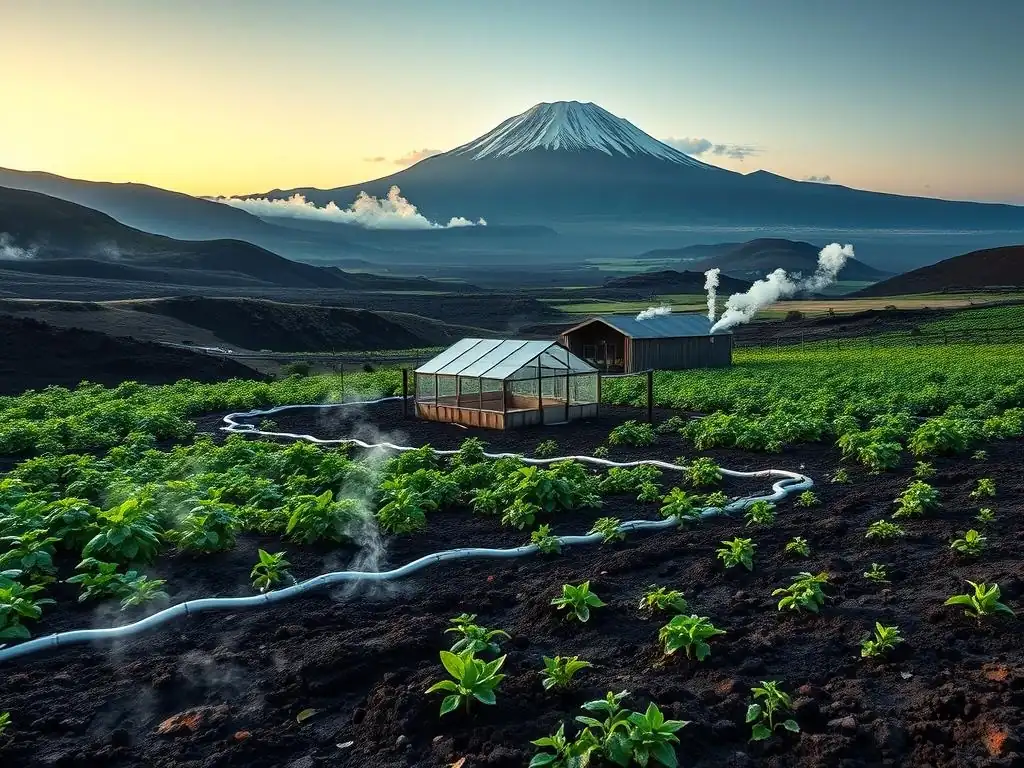
Direct Use of Geothermal Heat in Agriculture: Heating Greenhouses and Soil
Direct use of geothermal energy in agriculture is a highly efficient and sustainable approach. One of the most prominent applications is greenhouse heating. In cold climates or high-altitude volcanic regions, geothermal heat can maintain optimal temperatures within greenhouses, extending the growing season and allowing for the cultivation of crops that would otherwise be impossible.
Hot water from geothermal wells can be circulated through pipes within greenhouses, providing consistent and cost-effective heating. Another direct use application is soil warming. By circulating geothermal hot water through underground pipes, the soil temperature can be elevated, promoting faster plant growth, improving nutrient uptake, and even preventing frost damage in open-field agriculture, especially beneficial in volcanic areas prone to temperature fluctuations.
Geothermal Power Generation for Agricultural Operations
Beyond direct heating, geothermal energy can also power various agricultural operations through electricity generation. Geothermal power plants can provide a reliable and clean source of electricity to run irrigation systems, powering pumps and distribution networks. Electricity generated from geothermal sources can also be used for lighting in greenhouses and indoor farming facilities, extending daylight hours and optimizing plant growth.
Furthermore, post-harvest processes such as cooling, storage, and processing of agricultural products can be powered by geothermal electricity, creating a fully integrated and sustainable agricultural ecosystem. This self-sufficiency in energy significantly reduces the carbon footprint of agricultural activities in volcanic regions.
Reykjanes Geothermal Plant and its Agricultural Applications in Iceland
Iceland stands as a prime example of leveraging geothermal energy for agriculture, particularly in volcanic regions. The Reykjanes Geothermal Plant, located on the Reykjanes Peninsula, a highly volcanic area, exemplifies this synergy. While primarily a power plant, it also provides hot water for district heating and, importantly, supports nearby agricultural activities.
Greenhouses heated by geothermal energy are prevalent in the Reykjanes area, allowing for the cultivation of tomatoes, cucumbers, peppers, and even bananas in Iceland's subarctic climate. These geothermal-heated greenhouses contribute significantly to Iceland's food security, reducing reliance on imported produce and demonstrating the practical application of geothermal energy for volcanic agriculture.
Benefits of Integrating Geothermal Energy and Volcanic Agriculture
Reduced Carbon Footprint in Agricultural Practices
Integrating geothermal energy into volcanic agriculture offers a significant reduction in the carbon footprint of food production. Traditional agriculture heavily relies on fossil fuels for heating, electricity, and transportation, contributing substantially to greenhouse gas emissions. By replacing fossil fuel-based energy sources with geothermal energy, agricultural operations can drastically minimize their environmental impact. Geothermal energy is a renewable and virtually emissions-free energy source, making it a key component in sustainable agriculture. Studies comparing geothermal-powered greenhouses to conventionally heated greenhouses have shown significant reductions in carbon emissions, highlighting the environmental benefits of this integrated approach.
Enhanced Crop Yields and Quality
The controlled environment provided by geothermal energy can lead to enhanced crop yields and improved quality. Consistent greenhouse heating ensures optimal growing temperatures, regardless of external weather conditions, leading to faster plant growth and increased productivity per unit area. Soil warming through geothermal energy can extend growing seasons, allowing for multiple harvests per year.
Furthermore, the stable conditions in geothermal-powered agricultural systems can reduce plant stress, leading to healthier crops with improved nutritional value and taste. Farmers in geothermal areas have reported increased yields and higher quality produce compared to conventional farming methods, demonstrating the positive impact of geothermal energy on agricultural output.
Economic Opportunities for Volcanic Communities
The integration of geothermal energy and volcanic agriculture creates new economic opportunities for communities living near volcanoes. Developing geothermal resources for agriculture can generate employment in drilling, plant operation, greenhouse construction, and agricultural production. Local farmers can benefit from reduced energy costs and increased crop yields, improving their profitability and livelihoods. Furthermore, geothermal-powered agriculture can attract investment in rural volcanic areas, stimulating economic diversification and reducing reliance on traditional, sometimes volatile, industries. The development of geothermal agriculture can transform volcanic regions from areas perceived as hazardous to centers of sustainable economic growth and innovation.
Challenges and Considerations for Geothermal-Powered Volcanic Agriculture
Initial Investment Costs and Infrastructure Development
One of the main challenges in implementing geothermal-powered volcanic agriculture is the high initial investment cost. Developing geothermal resources requires significant upfront capital for exploration, drilling, and power plant or direct-use system construction. Infrastructure development, including pipelines for hot water distribution and greenhouse construction, also adds to the initial expenses.
However, it is crucial to consider the long-term economic benefits. While the initial investment is substantial, geothermal energy offers stable and low-cost energy in the long run, reducing operational expenses and providing a predictable energy source compared to fluctuating fossil fuel prices. Government incentives, private investment, and phased development approaches can help mitigate the initial financial burden.
Environmental Impacts and Sustainability Concerns
While geothermal energy is considered renewable, it is not entirely without environmental impacts. Geothermal power plants can release small amounts of greenhouse gases, such as carbon dioxide and hydrogen sulfide, that are naturally present in geothermal reservoirs. However, these emissions are significantly lower than those from fossil fuel power plants.
Water usage is another concern, as geothermal power plants require water for steam production and cooling. Sustainable water management practices, such as reinjection of cooled geothermal water back into the reservoir, are crucial to minimize water consumption and ensure the long-term viability of geothermal resources. Careful site selection, environmental monitoring, and adherence to best practices are essential to mitigate potential environmental impacts and ensure the sustainability of geothermal energy development for volcanic agriculture.
Geothermal Resource Management and Long-Term Viability
Effective geothermal resource management is critical for the long-term viability of geothermal-powered volcanic agriculture. Geothermal reservoirs are not inexhaustible, and over-exploitation can lead to reservoir depletion and reduced energy output. Sustainable extraction rates must be determined based on reservoir characteristics and recharge rates.
Regular monitoring of reservoir pressure, temperature, and fluid composition is essential to detect any signs of depletion and adjust extraction rates accordingly. Implementing reinjection strategies, where cooled geothermal water is returned to the reservoir, can help maintain reservoir pressure and extend the lifespan of geothermal resources. Long-term planning and responsible resource management are crucial for ensuring the sustained benefits of geothermal energy for volcanic agriculture in the future.
Case Studies: Successful Examples of Geothermal-Powered Agriculture Near Volcanoes
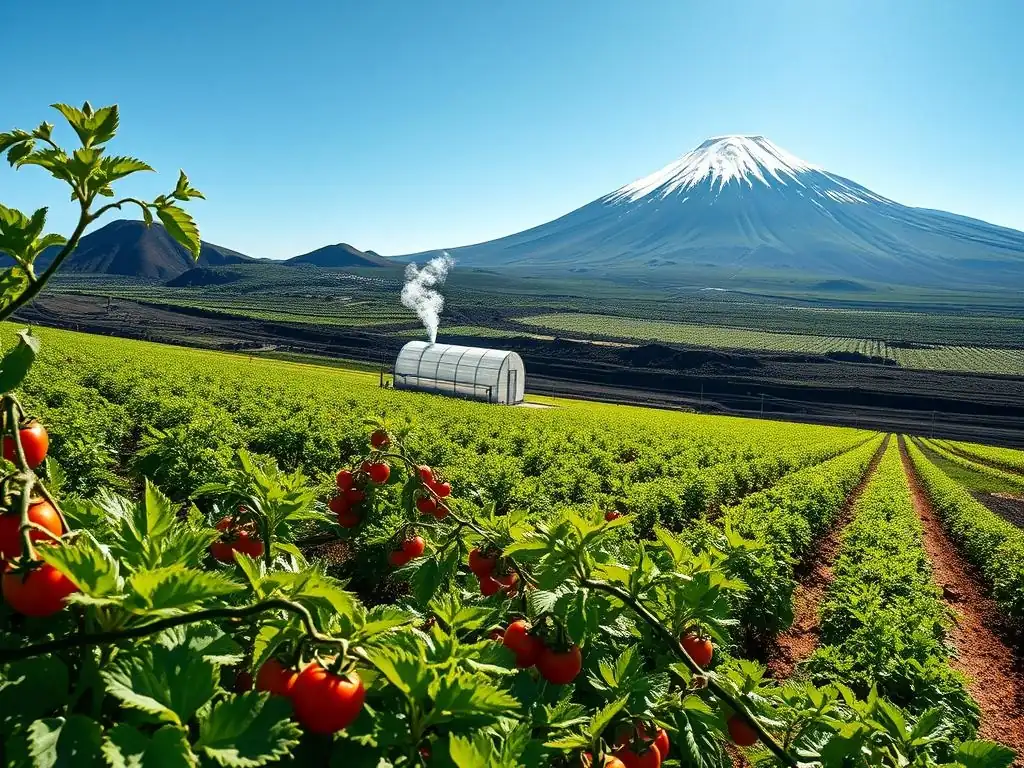
Geothermal Greenhouse Heating in Iceland's Hellisheidi Geothermal Park
Iceland's Hellisheidi Geothermal Park, one of the largest geothermal power plants in the world, provides a compelling case study of successful geothermal-powered agriculture. Located near Reykjavík in a volcanically active area, the park not only generates substantial electricity and heat for district heating but also supports thriving greenhouse agriculture. Adjacent to the power plant, large-scale greenhouses are heated with geothermal energy, producing a significant portion of Iceland's tomatoes, cucumbers, and peppers year-round.
This integrated approach demonstrates the feasibility of co-locating geothermal power generation and agricultural activities, maximizing resource utilization and contributing to local food security in a challenging climate. The Hellisheidi example highlights the potential for replicating similar models in other volcanic regions globally.
Geothermal Aquaculture and Agriculture in New Zealand's Taupo Volcanic Zone
New Zealand's Taupo Volcanic Zone offers another compelling example of geothermal energy powering diverse agricultural applications. This region, characterized by active volcanism and abundant geothermal resources, has successfully integrated geothermal energy into both aquaculture and traditional agriculture. Geothermal heat is used to warm fish farms, promoting faster fish growth and enabling the cultivation of species that would not thrive in New Zealand's natural water temperatures.
Furthermore, geothermal greenhouses are used for horticulture, growing a variety of fruits and vegetables. The Taupo Volcanic Zone showcases the versatility of geothermal energy in supporting a range of agricultural activities, contributing to both food production and economic diversification in a volcanic region.
The Future of Geothermal Energy in Volcanic Agriculture
Innovations in Geothermal Technology for Agricultural Applications
The future of geothermal energy in volcanic agriculture is bright, with ongoing innovations in geothermal technology further enhancing its potential. Advanced geothermal drilling techniques are making it possible to access deeper and hotter geothermal resources, expanding the geographical reach of geothermal energy. Enhanced Geothermal Systems (EGS), which create artificial geothermal reservoirs in hot dry rocks, are opening up geothermal potential in areas without naturally occurring hydrothermal resources.
Furthermore, research into closed-loop geothermal systems, which minimize water usage and environmental impact, is advancing the sustainability of geothermal energy. These technological advancements will make geothermal energy even more accessible and efficient for agricultural applications in volcanic regions worldwide.
Policy and Investment Opportunities for Sustainable Development
Realizing the full potential of geothermal-powered volcanic agriculture requires supportive policies and strategic investments. Governments can play a crucial role by providing incentives for geothermal development, such as feed-in tariffs, tax credits, and streamlined permitting processes. Public-private partnerships can leverage private sector expertise and capital to accelerate geothermal projects.
International development organizations can provide financial and technical assistance to developing countries with volcanic regions, promoting sustainable agriculture and energy access. Investing in research and development of geothermal technologies specifically tailored for agricultural applications is also essential. Creating a conducive policy and investment environment will be key to scaling up geothermal-powered volcanic agriculture globally.
Scaling Up Geothermal-Powered Volcanic Agriculture Globally
Scaling up geothermal-powered volcanic agriculture globally holds immense potential for enhancing food security and promoting sustainable development. Many volcanic regions around the world, including parts of Africa, Latin America, and Asia, possess significant geothermal resources and fertile volcanic soils. Adapting successful models from Iceland and New Zealand to these regions, while considering local contexts and needs, can unlock substantial agricultural potential.
International collaboration, knowledge sharing, and technology transfer are crucial for facilitating this global scaling up. By embracing geothermal energy for volcanic agriculture, we can transform these regions into sustainable food production hubs, contributing to global food security and climate change mitigation.
Conclusion: A Sustainable Path Forward for Volcanic Regions
Realizing the Potential of Geothermal Energy for Sustainable Food Production
Geothermal energy offers a transformative pathway for sustainable food production in volcanic regions. By harnessing the Earth's heat, we can overcome the challenges of agriculture in these environments and unlock the inherent fertility of volcanic soils. Geothermal-powered greenhouses, soil warming, and electricity generation can enhance crop yields, improve quality, and reduce the carbon footprint of agricultural practices. This integrated approach not only addresses food security concerns but also promotes environmental sustainability and economic resilience in volcanic communities. Realizing the full potential of geothermal energy for sustainable food production requires continued innovation, supportive policies, and strategic investments.
Fostering Resilience in Volcanic Communities Through Innovation
Embracing geothermal energy for volcanic agriculture fosters resilience in communities living near volcanoes. By diversifying their economies and creating new opportunities in sustainable agriculture and energy, these communities can reduce their vulnerability to volcanic hazards and climate change impacts. Geothermal energy provides a reliable and locally available energy source, enhancing energy security and independence. The development of geothermal-powered agriculture can create jobs, stimulate local economies, and improve livelihoods. Innovation in geothermal technology and agricultural practices, coupled with community engagement and participation, is key to building resilient and thriving communities in volcanic regions around the world.
Frequently Asked Questions
How does geothermal energy relate to volcanic activity?
Geothermal energy is heat from the Earth's interior, often found in areas with volcanic activity due to the presence of magma close to the surface. This heat can be harnessed to generate electricity or for direct use.
What is "volcanic agriculture" and how does geothermal energy benefit it?
"Volcanic agriculture" refers to farming practices that leverage the nutrient-rich volcanic soil. Geothermal energy can enhance it by providing sustainable heating for greenhouses, extending growing seasons, and reducing reliance on fossil fuels.
What are some examples of crops that thrive in volcanic agriculture enhanced by geothermal energy?
Many crops can benefit, including fruits, vegetables, and flowers. The consistent heat and access to resources enable cultivation of temperature-sensitive plants even in colder climates, extending the growing season.
Is using geothermal energy for volcanic agriculture a sustainable practice?
Yes, it is considered a sustainable practice because geothermal energy is a renewable resource. It reduces the carbon footprint of agriculture and utilizes the unique resources of volcanic regions effectively.
What are some potential challenges or drawbacks of integrating geothermal energy and volcanic agriculture?
Challenges include the high initial investment costs for geothermal infrastructure, the potential for environmental impacts if geothermal resources are not managed carefully, and the need for specialized expertise to manage both geothermal energy and agricultural processes.
Final Reflection: Harnessing Earth's Power for Sustainable Growth
The exploration of geothermal energy's potential to power volcanic agriculture reveals a compelling vision for the future, where sustainable practices and natural resources converge to create a thriving ecosystem. This synergy, once a theoretical concept, is now a tangible possibility, offering a pathway to food security and environmental responsibility in regions often overlooked.
The promise of geothermal energy in volcanic agriculture extends beyond mere energy provision; it represents a fundamental shift in how we interact with our planet. This exploration has profoundly impacted my understanding of the interconnectedness of energy, agriculture, and environmental sustainability, highlighting the potential for innovative solutions to address pressing global challenges. We are called to be architects of the future, not its victims.
- Buckminster Fuller. This quote resonates deeply, urging us to embrace innovative approaches like this to shape a more sustainable world.
As we conclude this journey into the heart of geothermal energy and volcanic agriculture, I invite you to consider the transformative power of innovative thinking. How can you apply the principles of sustainable synergy in your own life, whether through conscious consumption, supporting eco-friendly initiatives, or advocating for policies that prioritize environmental stewardship? Let us all strive to be catalysts for change, harnessing the Earth's power not just for sustenance, but for the enduring well-being of our planet and future generations.
Okay, I'm ready to craft a compelling Call to Action for your article, "Can Geothermal Energy Power Volcanic Agriculture? A Sustainable Synergy," on Volcano Explorers (volcanoexplorers.org). Here it is:
Unleash the Power of Volcanic Innovation!
Thank you for exploring the exciting potential of geothermal energy and volcanic agriculture! We hope you've discovered a new appreciation for this powerful synergy and its potential for a sustainable future. Now, let's put this knowledge into action:
- Dive deeper! Research local geothermal projects near volcanic regions and explore opportunities for sustainable agriculture in your area. (Primary Action)
- Share this article with friends and colleagues interested in renewable energy and innovative farming practices. Spark a conversation!
- Brainstorm ways your community could benefit from similar sustainable initiatives, and present your ideas to local leaders. Let your voice be heard!
What innovative solutions can you envision that harness the raw power of volcanic landscapes for a sustainable future? Share your thoughts in the comments below!