
Can Hawaii Grow Bigger? The Ongoing Expansion of Volcanic Islands


Welcome to Volcano Explorers!
Ever wondered if paradise can get even bigger? Delve into the fascinating world of volcanic island formation and ask yourself, Can Hawaii Grow Bigger? Uncover the secrets behind the ongoing expansion of these breathtaking landscapes, and prepare to be amazed by the powerful forces at play. The story of Hawaii's growth is a story of fire, earth, and relentless geological power – and it's just getting started. Explore the forces shaping these islands and discover what the future holds for these volcanic wonders.
- Introduction: The Ever-Evolving Hawaiian Islands
- The Geological Foundation: Hawaii's Volcanic Hotspot
- The Growth of Hawaiian Volcanic Islands: A Detailed Look
- New Islands in the Making: The Future of Hawaiian Growth
- The Impact of Volcanic Activity on Hawaii's Ecosystems
- The Human Element: Living Alongside Active Volcanoes
- The Long-Term Geological Perspective: Hawaii's Fate
- Conclusion: The Dynamic Nature of Hawaii's Volcanic Landscape
-
Frequently Asked Questions
- How are the Hawaiian Islands formed?
- Is the island of Hawaii still growing?
- What is a "hotspot" and how does it relate to Hawaiian volcanic islands?
- What are the potential hazards associated with the ongoing growth of Hawaiian volcanic islands?
- Will the Hawaiian Islands eventually merge into one large landmass?
- Final Reflection: The Enduring Power of Creation
- Ignite Your Inner Explorer: Witness Hawaii's Volcanic Majesty!
Introduction: The Ever-Evolving Hawaiian Islands
The Hawaiian Islands, a globally recognized paradise, are not static landmasses but rather a constantly evolving volcanic archipelago. Their iconic landscapes, from black sand beaches to verdant rainforests, are sculpted by the continuous activity of volcanoes. Far from being fixed in size, the Big Island of Hawaii, the youngest and southeasternmost island in the chain, is actively growing, expanding its territory into the Pacific Ocean.
This ongoing process of land creation is a testament to the powerful geological forces at play beneath the Earth's surface and highlights the dynamic nature of the Hawaiian Islands. Understanding the growth of Hawaiian volcanic islands provides insights into the fundamental processes shaping our planet.
The allure of Hawaii extends beyond its beauty; it's a living laboratory for studying volcanism and geological evolution. Scientists closely monitor the volcanic activity, observing firsthand how new land is formed through lava flows. This continuous growth, however, is not without its complexities. While volcanoes build up the islands, erosion and subsidence work to wear them down, creating a constant interplay between creation and destruction. The story of Hawaii is a story of geological time, where the islands are in a perpetual state of formation and reshaping, a dramatic demonstration of the Earth's internal energy expressed on its surface.
The Geological Foundation: Hawaii's Volcanic Hotspot
Understanding the Pacific Plate and Hotspot Activity
The Hawaiian Islands owe their existence to a phenomenon known as a "hotspot," a plume of exceptionally hot mantle material rising from deep within the Earth. Unlike most volcanic activity that occurs at plate boundaries, hotspots are stationary relative to the moving tectonic plates above them. In the case of Hawaii, the Pacific Plate is drifting northwestward over this stationary hotspot.
Imagine holding a lit candle under a conveyor belt; as the belt moves, it will be marked sequentially by burns. Similarly, as the Pacific Plate moves over the Hawaiian hotspot, a chain of volcanoes is formed, each island representing a stage in the plate's journey over the plume.
This process explains why the Hawaiian Islands are arranged in a linear chain, with the oldest islands to the northwest and the youngest, most volcanically active islands to the southeast. Geological evidence suggests that the Hawaiian hotspot has been active for at least 80 million years, leaving a trail of submerged seamounts and islands stretching thousands of kilometers across the Pacific floor.
The movement of the Pacific Plate, at a rate of approximately 7 to 9 centimeters per year, dictates the sequence of island formation. This steady motion ensures a continuous supply of new volcanic material to build upon the existing islands and create new ones in the future.
The Birth of Hawaiian Islands: From Submarine Volcanoes to Land
The journey of a Hawaiian island begins deep beneath the ocean surface, as magma generated by the hotspot rises and erupts on the seafloor. Initially, these eruptions are submarine, meaning they occur underwater. As molten lava interacts with the cold ocean water, it solidifies rapidly, forming pillow lava – characteristic rounded shapes of basalt rock. Over countless eruptions, these pillow lavas accumulate, gradually building up the volcanic edifice from the ocean floor. This process can take hundreds of thousands to millions of years, depending on the intensity and duration of volcanic activity.
Eventually, after countless eruptions and the accumulation of vast amounts of volcanic material, the submarine volcano grows tall enough to breach the ocean surface, giving birth to a new island. The emergent island is initially barren volcanic rock, stark and devoid of life. However, over geological timescales, processes of weathering, erosion, and biological colonization begin to transform the landscape. The islands we see today, with their lush vegetation and diverse ecosystems, are the result of millions of years of volcanic construction followed by ecological succession, all originating from these underwater volcanic beginnings.
The Growth of Hawaiian Volcanic Islands: A Detailed Look
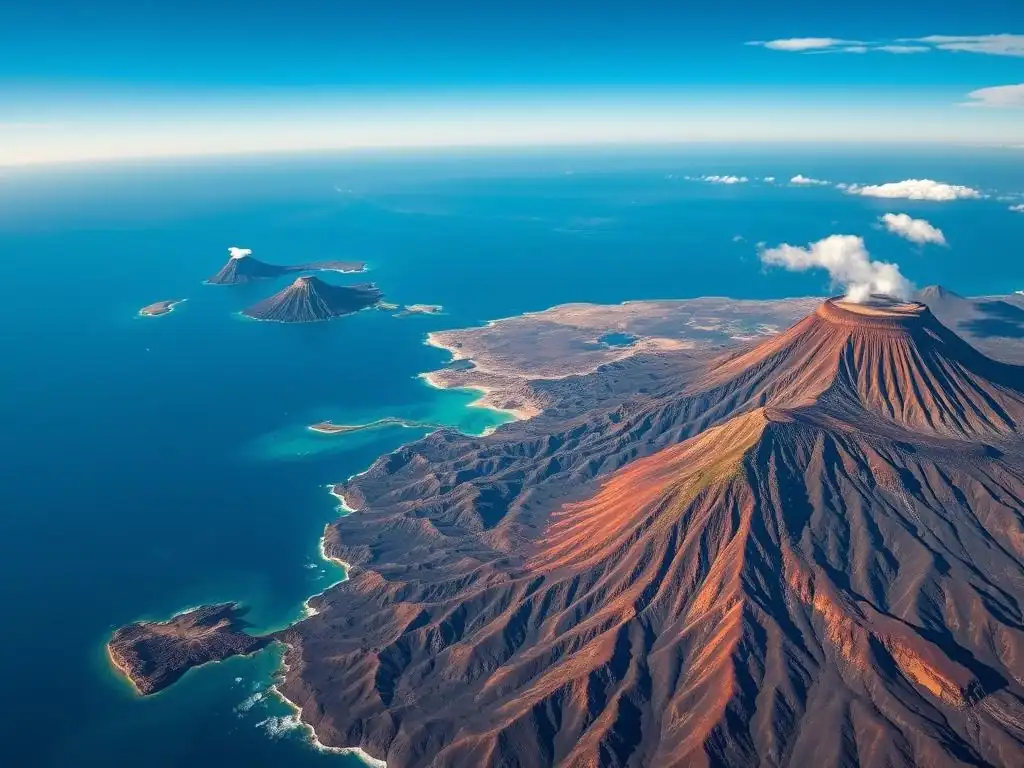
Kilauea: A Prime Example of Ongoing Volcanic Growth
Kilauea, located on the southeastern flank of the Big Island of Hawaii, stands as a remarkable example of ongoing volcanic growth and land expansion. Considered one of the most active volcanoes on Earth, Kilauea has been in a near-continuous state of eruption for decades, most notably during the 1983-2018 Puʻuʻōʻō eruption and the 2018 Lower East Rift Zone eruption. These eruptions have dramatically reshaped the landscape, adding significant new land to the island's coastline. For instance, the 2018 eruption alone added over 875 acres (3.5 square kilometers) of new land to Hawaii Island, extending the coastline seaward.
The persistent volcanic activity of Kilauea provides scientists with an unparalleled opportunity to study the processes of volcanic growth in real-time. Detailed monitoring, including satellite imagery, ground-based measurements, and geochemical analysis, allows volcanologists to track lava flows, measure land deformation, and assess the rate of land accretion. The ongoing eruptions demonstrate that the growth of Hawaiian volcanic islands is not a process confined to the distant past but is a dynamic and continuous phenomenon actively shaping the islands in the present day. Kilauea's activity serves as a potent reminder that Hawaii is still very much in the making.
Lava Flows and Land Expansion: How Hawaii Gains Territory
The primary mechanism for the growth of Hawaiian volcanic islands is through lava flows. When volcanoes erupt, molten rock, or lava, flows down their flanks and into the ocean. As this lava cools and solidifies, it adds new land to the coastline. The type of lava flow significantly influences the shape and rate of land expansion. Pāhoehoe lava, characterized by its smooth, ropy texture, tends to flow relatively quickly and can travel long distances, creating broad, gently sloping land extensions. ‘A‘ā lava, in contrast, is blocky and rough, flowing more slowly and often building up steeper, more rugged terrain.
The volume of lava erupted during an eruption directly correlates with the amount of new land created. Large eruptions, like those witnessed at Kilauea, can produce massive lava flows that extend kilometers into the ocean, adding substantial acreage to the island. The newly formed land is initially black volcanic rock, but over time, weathering processes break it down, and vegetation gradually colonizes it, transforming it into habitable land. This process of lava flow and solidification is the fundamental building block in the ongoing territorial expansion of the Hawaiian Islands.
Coastal Erosion vs. Volcanic Accretion: A Constant Battle
While volcanic eruptions are constantly adding new land to Hawaii, coastal erosion is simultaneously working to wear it away. The relentless forces of waves, wind, and rain constantly erode the volcanic rock coastline. Erosion is particularly effective in Hawaii due to the island's exposure to strong Pacific waves and frequent storms. Cliffs are undercut by wave action, beaches are eroded by currents, and rainwater gradually dissolves and transports volcanic material. This erosional process is a natural and ongoing part of the island's lifecycle.
The net growth of Hawaiian islands is a result of the balance between volcanic accretion and coastal erosion. In areas with frequent and voluminous lava flows, like Kilauea's active zones, volcanic accretion often outpaces erosion, leading to overall land growth.
However, in older parts of the islands, or during periods of volcanic quiescence, erosion can become the dominant force, leading to coastline retreat and a gradual reduction in island size. This ongoing interplay between building up and wearing down ensures that the Hawaiian Islands are in a perpetual state of change, their shorelines constantly being reshaped by these opposing geological forces.
New Islands in the Making: The Future of Hawaiian Growth
Loihi Seamount: Hawaii's Next Island in Formation
Southeast of the Big Island of Hawaii, beneath the ocean surface, lies Loihi Seamount, an active submarine volcano and the youngest volcano in the Hawaiian-Emperor seamount chain. Loihi represents the next stage in the hotspot's volcanic activity and is destined to become Hawaii's newest island, albeit in the distant future. Currently, Loihi's summit is approximately 3,000 feet (914 meters) below sea level, but it is actively growing through ongoing submarine eruptions. Scientists estimate that Loihi will likely emerge above sea level in tens of thousands of years, potentially adding a ninth major island to the Hawaiian archipelago.
Loihi's volcanic activity provides a glimpse into the early stages of Hawaiian island formation. Submarine eruptions at Loihi release lava that builds upon the seamount, gradually increasing its height. Hydrothermal vents, known as Pele's Vents, are also active at Loihi, releasing hot, mineral-rich fluids into the ocean. These vents support unique ecosystems adapted to the deep-sea volcanic environment. Studying Loihi provides valuable insights into the processes that shaped the existing Hawaiian Islands and offers a preview of the continuing growth of the island chain.
Predicting Future Eruptions and Land Formation
Predicting the exact timing and location of future volcanic eruptions in Hawaii is a complex scientific endeavor, but volcanologists employ a range of monitoring techniques to assess volcanic activity and hazard potential. The Hawaiian Volcano Observatory (HVO), part of the U.S. Geological Survey, continuously monitors volcanoes using seismometers to detect earthquakes, GPS instruments to measure ground deformation, gas sensors to track volcanic gas emissions, and satellite imagery to observe thermal changes and lava flows. These data streams provide crucial information about magma movement and pressure buildup beneath the surface, helping scientists to forecast potential eruptions.
While precise predictions remain challenging, monitoring data allows volcanologists to identify periods of increased volcanic unrest, issue warnings, and assess potential eruption scenarios. By studying past eruption patterns and analyzing current activity, scientists can estimate the likelihood of future eruptions and the areas most likely to be affected by lava flows. This information is vital for land-use planning, infrastructure development, and emergency preparedness in volcanic regions. Understanding the patterns of volcanic growth and predicting future eruptions are crucial for mitigating risks and ensuring the safety of communities living alongside active volcanoes.
Challenges and Opportunities of a Growing Island Chain
The ongoing growth of the Hawaiian Islands presents both challenges and opportunities for the region. The most immediate challenge is the potential hazard posed by volcanic eruptions and lava flows. Eruptions can destroy infrastructure, displace communities, and alter landscapes dramatically, as witnessed during the 2018 Kilauea eruption. Managing volcanic risks, developing effective evacuation plans, and ensuring community resilience are essential for living safely in a volcanically active environment.
However, volcanic growth also presents unique opportunities. New land created by lava flows can potentially be used for various purposes, although careful consideration must be given to ecological impacts and long-term stability. Furthermore, volcanic landscapes attract tourism, a significant economic driver for Hawaii.
The dramatic scenery, volcanic parks, and opportunities to witness active volcanism draw visitors from around the world. The geothermal energy associated with volcanic activity also represents a potential source of renewable energy for the islands. Balancing the challenges and opportunities of a growing island chain requires careful planning, sustainable development practices, and a deep understanding of the dynamic volcanic environment.
The Impact of Volcanic Activity on Hawaii's Ecosystems
Colonization of New Land by Plants and Animals
Newly formed volcanic land in Hawaii is initially barren and devoid of life. However, over time, a fascinating process of ecological succession begins as plants and animals gradually colonize these new landscapes. The first colonizers are often hardy pioneer species, such as ferns and mosses, whose spores can be carried by wind and birds to even the most remote volcanic terrains. These pioneer plants begin to break down the volcanic rock, creating the first thin layers of soil and initiating the development of an ecosystem.
As soil develops, more complex plant species, including shrubs and trees, can establish themselves. Birds play a crucial role in seed dispersal, bringing seeds from older, established ecosystems to the new volcanic land. Insects, spiders, and other invertebrates also arrive, often carried by wind or ocean currents. Over centuries and millennia, a rich and diverse ecosystem can develop on volcanic landscapes, transforming barren rock into thriving habitats. This process of ecological colonization showcases the resilience of life and its ability to adapt and thrive in even the most challenging environments.
Adapting to Volcanic Landscapes: Unique Hawaiian Species
The unique volcanic landscapes of Hawaii have fostered the evolution of many endemic species – plants and animals found nowhere else on Earth. These species have adapted to the specific conditions of volcanic environments, including nutrient-poor soils, volcanic gases, and frequent disturbances from eruptions and lava flows. For example, some Hawaiian plants have evolved to tolerate high levels of sulfur dioxide in volcanic fumes, while others have developed specialized root systems to thrive in thin, rocky soils.
Hawaiian birds, insects, and other animals also exhibit remarkable adaptations to volcanic environments. The Hawaiian honeycreepers, a diverse group of birds, have evolved a wide array of beak shapes, allowing them to exploit different food sources in volcanic forests. Insects living in lava tubes have adapted to the dark, cave-like environment.
The isolation of the Hawaiian Islands and the unique challenges of volcanic landscapes have driven a remarkable evolutionary radiation, resulting in a biodiversity hotspot with a high degree of endemism. However, these unique ecosystems are also particularly vulnerable to invasive species and habitat destruction, highlighting the importance of conservation efforts in these dynamic volcanic environments.
The Human Element: Living Alongside Active Volcanoes
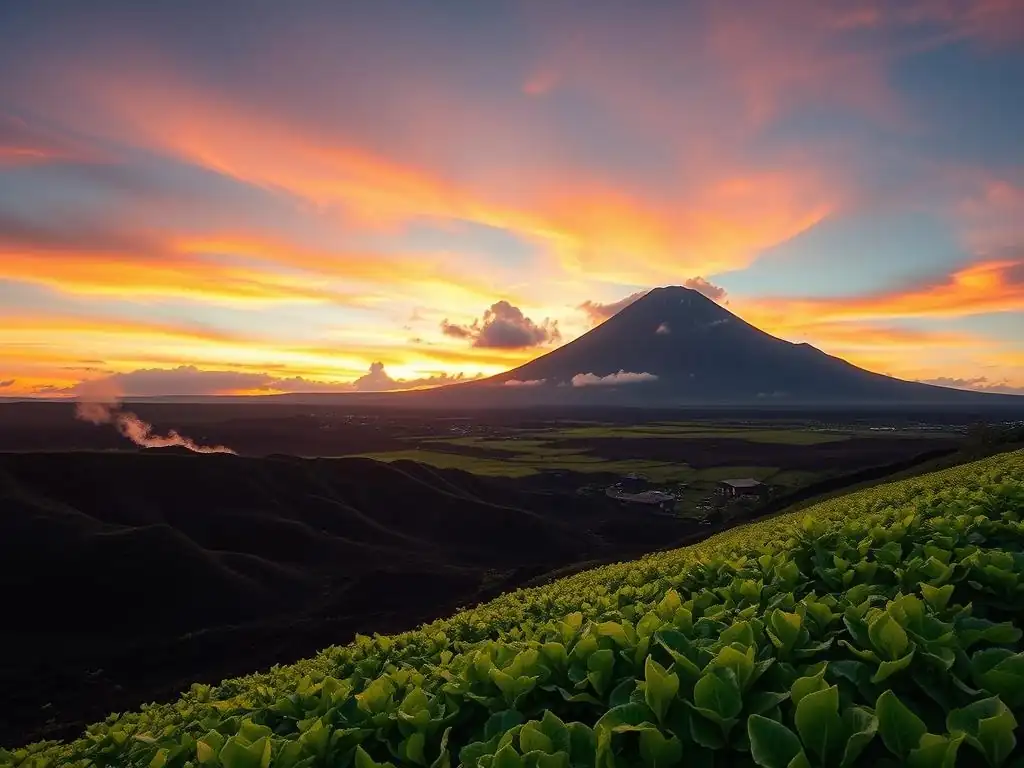
Monitoring Volcanic Activity for Safety
Living alongside active volcanoes, as communities in Hawaii do, requires a proactive approach to safety and risk management. Continuous monitoring of volcanic activity is paramount for providing early warnings and mitigating potential hazards. The Hawaiian Volcano Observatory (HVO) plays a crucial role in this effort, operating a sophisticated network of monitoring instruments across the islands. Seismometers detect earthquakes, a key indicator of magma movement; GPS stations measure ground deformation, signaling changes in volcanic pressure; and gas sensors track volcanic gas emissions, providing insights into magma degassing.
Data from these monitoring networks are analyzed in real-time, allowing HVO scientists to track volcanic unrest, assess eruption probabilities, and issue timely warnings to the public and emergency management agencies. These warnings enable communities to prepare for potential eruptions, evacuate if necessary, and take steps to minimize risks. Public education and community preparedness programs are also essential components of volcanic risk management, ensuring that residents understand volcanic hazards, know how to respond to warnings, and are equipped to cope with volcanic events. Effective monitoring and communication are vital for fostering resilient communities living in volcanically active regions.
Sustainable Development in Volcanic Regions
Sustainable development in volcanic regions like Hawaii requires balancing economic growth, environmental protection, and community well-being in the context of ongoing volcanic activity. Tourism, a major industry in Hawaii, must be managed responsibly to minimize environmental impacts and respect local communities. Sustainable tourism practices, such as eco-tourism and cultural tourism, can promote economic benefits while preserving the natural and cultural heritage of volcanic landscapes.
Infrastructure development in volcanic areas needs to consider volcanic hazards and be designed to withstand or adapt to potential eruptions. Land-use planning should restrict development in high-risk zones and prioritize resilient infrastructure in areas prone to volcanic impacts. Renewable energy sources, such as geothermal energy, offer opportunities for sustainable energy production in volcanic regions, reducing reliance on fossil fuels. Sustainable development in Hawaii requires a holistic approach that integrates volcanic risk management, environmental conservation, and community engagement to ensure a prosperous and resilient future in this dynamic volcanic environment.
The Long-Term Geological Perspective: Hawaii's Fate
Island Subsidence and the Cycle of Erosion
While volcanism builds up the Hawaiian Islands, in the long-term geological perspective, they are destined to subside and erode. As the Pacific Plate moves away from the hotspot, the lithosphere cools and becomes denser, causing the islands to gradually sink or subside. This process, known as thermal subsidence, is a natural consequence of the plate tectonic cycle. Furthermore, erosion, as discussed earlier, continuously wears down the islands, carving valleys, shaping coastlines, and reducing overall landmass over millions of years.
The older islands in the Hawaiian chain, located further northwest, provide evidence of this long-term cycle of subsidence and erosion. Islands like Kauai and Oahu are significantly smaller and more eroded than the younger Big Island, and they are surrounded by extensive coral reefs that grew as the islands subsided. Eventually, millions of years in the future, the Hawaiian Islands will be eroded down to sea level and become seamounts, submerged beneath the ocean surface, continuing their journey northwestward with the Pacific Plate.
The Future of the Hawaiian Hotspot
The Hawaiian hotspot is expected to remain active for millions of years to come, continuing to generate new volcanoes and shape the Pacific seafloor. While the existing Hawaiian Islands will eventually subside and erode, the hotspot will continue to create new volcanic centers to the northwest. The Emperor Seamounts, a chain of submerged volcanoes extending northwest of the Hawaiian Islands, represent the older track of the hotspot, demonstrating its long-term activity over tens of millions of years.
Scientists speculate about the future evolution of the Hawaiian hotspot, considering factors such as changes in magma supply, plate motion, and mantle dynamics. While the precise details of future volcanic activity are uncertain, it is clear that the Hawaiian hotspot will continue to be a major geological force, shaping the Pacific Ocean and creating new volcanic landscapes for eons to come. The ongoing growth of Hawaiian volcanic islands is just one chapter in a much longer geological story, a story of continuous creation and destruction driven by the Earth's internal heat and plate tectonics.
Conclusion: The Dynamic Nature of Hawaii's Volcanic Landscape
The Hawaiian Islands are a living testament to the dynamic nature of our planet. Their ongoing growth, primarily driven by the persistent volcanic activity of Kilauea and the potential emergence of Loihi Seamount, demonstrates that these islands are not static entities but rather constantly evolving landscapes. The growth of Hawaiian volcanic islands is a complex interplay between volcanic accretion, building new land through lava flows, and coastal erosion, which continuously reshapes the shorelines. This constant battle between creation and destruction defines the ever-changing character of the archipelago.
Understanding the geological processes shaping Hawaii provides valuable insights into the Earth's internal dynamics and the long-term evolution of volcanic islands. The unique ecosystems that have developed on these volcanic landscapes, and the human communities that have learned to live alongside active volcanoes, further highlight the interconnectedness of geological, biological, and human systems.
The story of Hawaii is a reminder of the powerful forces that mold our planet and the dynamic and ever-evolving nature of the world we inhabit. The growth of Hawaiian volcanic islands is not just a geological phenomenon; it's a continuous narrative of creation, adaptation, and resilience in a landscape perpetually under construction.
Frequently Asked Questions
How are the Hawaiian Islands formed?
The Hawaiian Islands are formed by a hotspot in the Earth's mantle. This hotspot is a plume of magma that rises to the surface, creating volcanoes. As the Pacific Plate moves over the hotspot, new volcanoes are formed, leading to the growth of the island chain.
Is the island of Hawaii still growing?
Yes, the island of Hawaii, also known as the Big Island, is still actively growing. The Kilauea volcano is continuously erupting, adding new lava flows to the island's coastline.
What is a "hotspot" and how does it relate to Hawaiian volcanic islands?
A hotspot is an area in the Earth's mantle where magma rises to the surface. As the Pacific Plate moves over this stationary hotspot, it creates a chain of volcanoes like the Hawaiian islands. The current active volcanoes mark the present location of the hotspot.
What are the potential hazards associated with the ongoing growth of Hawaiian volcanic islands?
The growth of Hawaiian volcanic islands can lead to hazards such as lava flows, volcanic smog (vog), and explosive eruptions. These events can damage property, disrupt lives, and pose health risks to nearby residents.
Will the Hawaiian Islands eventually merge into one large landmass?
While the islands are growing, it is unlikely they will merge into a single landmass in the foreseeable future. The rate of growth and the distance between the islands make a complete merger extremely unlikely within human timescales.
Final Reflection: The Enduring Power of Creation
The story of Hawaii's volcanic growth is far more than just a geological phenomenon; it's a powerful reminder of the Earth's dynamic nature and the relentless forces shaping our world. The ongoing expansion of these islands, a testament to the Earth's inner fire, mirrors the potential for growth and transformation within ourselves and our communities. It challenges us to consider the long view, to appreciate the slow, steady processes that ultimately lead to profound change.
This constant creation, this slow but sure addition to the Hawaiian archipelago, resonates deeply. It reminds us that even in the face of apparent stability, the world is in perpetual motion, constantly evolving. This understanding fosters a sense of humility and wonder. The sea, once it casts its spell, holds one in its net of wonder forever.
- Jacques Cousteau. Just as the ocean holds the secrets of Hawaii's formation, so too do our lives hold the potential for continuous growth and discovery.
Let the story of Hawaii's volcanic expansion inspire you to embrace your own potential for growth. Consider the small, incremental steps you can take each day to build something lasting, something meaningful. Just as the lava flows slowly but surely add to the land, so too can your efforts, however small, contribute to a brighter future. Embrace the power of creation within you, and watch as your own "island" expands.
Ignite Your Inner Explorer: Witness Hawaii's Volcanic Majesty!
Thank you for exploring the fascinating world of Hawaiian volcanism and its ongoing creation of new land. We hope you gained a deeper appreciation for the powerful forces shaping our planet. Now, let's take that knowledge further.
Here's how you can continue your volcanic journey:
- Explore the USGS Hawaiian Volcano Observatory website: Track current volcanic activity and view stunning imagery of Kilauea's eruptions. Witness the formation of new land in real-time.
- Share your newfound knowledge: Share this article with friends and family who are interested in volcanoes or the ever-changing landscape of the Hawaiian Islands.
- Imagine the future: What name would you give to the next landmass formed by Kilauea? Share your ideas in the comments below!