
The Magma Chamber's Role: Fueling the Explosive Power of Stratovolcanoes

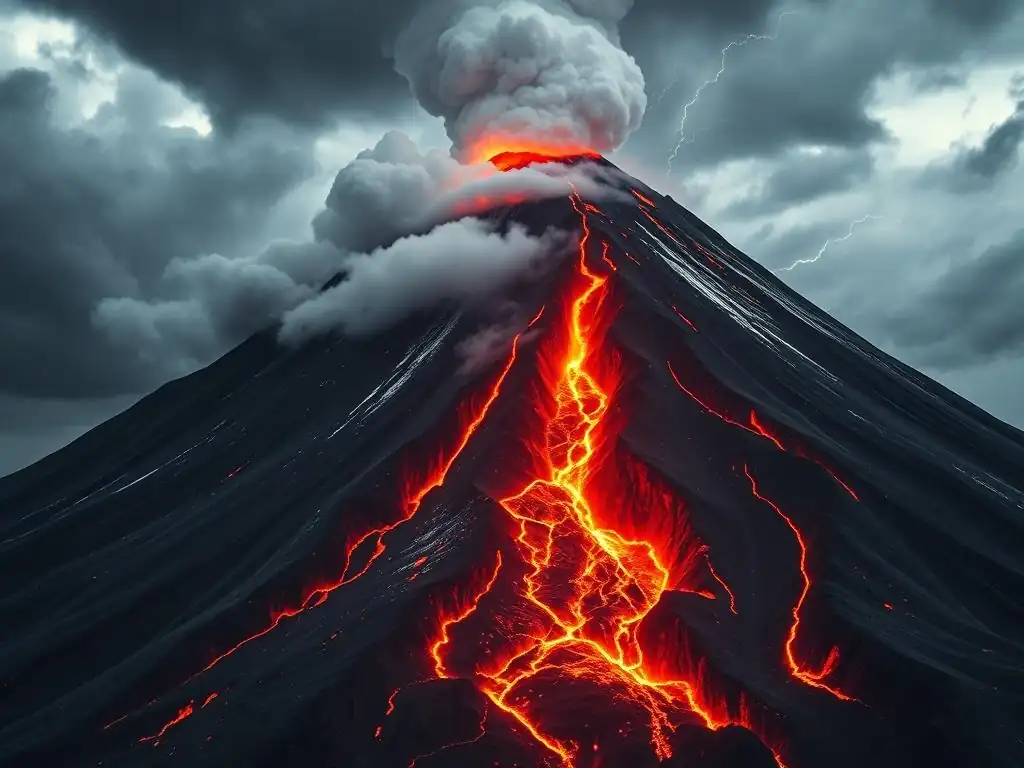
Welcome to Volcano Explorers! Ever wondered what truly ignites the explosive fury of a stratovolcano? Prepare to journey deep beneath the Earth's surface, where molten rock brews in colossal magma chambers. Uncover the secrets behind these volatile reservoirs and how they dictate the life cycle of these iconic, cone-shaped giants. Your exploration of magma chamber stratovolcanoes explained starts now... and you might be surprised by what you discover.
- Understanding Stratovolcanoes and Their Explosive Potential
- The Magma Chamber: The Heart of a Stratovolcano
- How the Magma Chamber Fuels Stratovolcano Eruptions
- The Relationship Between Magma Chamber Size and Eruption Intensity
- Monitoring Magma Chambers to Predict Stratovolcano Eruptions
- Case Studies: Magma Chamber Dynamics in Famous Stratovolcanoes
- The Future of Stratovolcano Research: Understanding Magma Chambers in Greater Detail
- Living with Stratovolcanoes: Understanding the Risks and Mitigation Strategies
-
Frequently Asked Questions
- What is a magma chamber and why is it important for stratovolcanoes?
- How does the magma chamber contribute to the explosive nature of stratovolcanoes?
- What are stratovolcanoes, and how are they different from other types of volcanoes?
- What factors influence the size and shape of a magma chamber beneath a stratovolcano?
- Can scientists predict volcanic eruptions by studying magma chambers?
- Final Reflection: Understanding Earth's Fiery Heart
- Unearth Your Inner Volcanologist: Take Action Now!
Understanding Stratovolcanoes and Their Explosive Potential
What Defines a Stratovolcano?
Stratovolcanoes, also known as composite volcanoes, are arguably the most iconic and often the most dangerous type of volcano. They are characterized by their steep, conical shape, built up from many layers (strata) of hardened lava, tephra, pumice, and volcanic ash. These majestic geological formations are typically found at subduction zones, where one tectonic plate slides beneath another.
This tectonic setting is crucial as it introduces water into the mantle, lowering the melting point of the rock and generating magma. The Pacific Ring of Fire, for example, is densely populated with stratovolcanoes, including iconic peaks like Mount Fuji in Japan and the Cascade Range volcanoes in North America.
The defining feature of stratovolcanoes lies in their eruptive style, which is predominantly explosive. Unlike shield volcanoes known for their effusive, lava-flow dominated eruptions, stratovolcanoes are notorious for violent eruptions that can eject ash clouds kilometers into the atmosphere, generate pyroclastic flows that race down their slopes, and trigger lahars – volcanic mudflows.
This explosive behavior is directly linked to the type of magma they produce and the internal plumbing system that feeds them, particularly the magma chamber. The combination of steep slopes, explosive potential, and often proximity to populated areas makes understanding stratovolcanoes and their magma chambers critically important for hazard assessment and mitigation.
The Source of the Fury: Exploring the Magma Chamber System
The explosive power of stratovolcanoes isn't generated at the surface; it originates deep within the Earth's crust, in a complex system centered around the magma chamber. This subsurface reservoir acts as a holding tank for molten rock, accumulating magma generated in the Earth's mantle. The journey of magma from its source region in the mantle to the magma chamber is a complex process involving partial melting, ascent through conduits, and differentiation. As magma rises, it undergoes changes in pressure and temperature, which can alter its composition and gas content.
The magma chamber is not a simple, empty cavity, but rather a dynamic and intricate system. It can be visualized as a mushy zone, a crystal-rich melt residing within the Earth's crust, often several kilometers beneath the volcano's summit. The size, shape, and depth of a magma chamber vary greatly from volcano to volcano and can even change over time. Understanding the characteristics of this magma chamber system – its location, size, magma composition, and the processes occurring within it – is fundamental to deciphering the eruptive behavior of stratovolcanoes and predicting future eruptions.
The Magma Chamber: The Heart of a Stratovolcano
What is a Magma Chamber and Where is it Located?
A magma chamber is essentially a large pool of molten rock located beneath the surface of the Earth. Think of it as the volcano's engine room, the place where magma accumulates and is stored before an eruption. These chambers are not cavernous voids but rather regions within the Earth's crust where molten and semi-molten rock, known as magma, is concentrated.
They can range dramatically in size, from a few cubic kilometers to hundreds or even thousands of cubic kilometers in volume. For instance, the magma chamber beneath Yellowstone caldera is estimated to be massive, potentially holding thousands of cubic kilometers of magma.
The location of a magma chamber beneath a stratovolcano is typically in the upper to middle crust, often between 2 to 10 kilometers below the surface. However, some volcanoes may have multiple magma chambers at different depths, forming a complex plumbing system. The depth and shape of the magma chamber are influenced by the surrounding geology, including the density and strength of the crustal rocks. Seismic studies and geophysical surveys play a crucial role in mapping the location and geometry of these hidden reservoirs, providing valuable insights into the inner workings of stratovolcanoes.
Magma Composition and its Influence on Eruptions
The composition of the magma stored within a magma chamber is a primary determinant of a stratovolcano's eruptive style. Stratovolcanoes are typically associated with viscous, silica-rich magmas, specifically andesitic and dacitic compositions. These magmas are significantly different from the basaltic magmas that feed shield volcanoes like those in Hawaii. The higher silica content of stratovolcano magma leads to greater viscosity, meaning it is stickier and resists flow more readily.
This high viscosity has profound implications for eruptions. Viscous magma traps gases more effectively than low-viscosity magma. As magma rises towards the surface, the pressure decreases, and dissolved gases begin to exsolve, forming bubbles. In low-viscosity basaltic magma, these gas bubbles can easily escape, leading to relatively gentle effusive eruptions. However, in viscous, silica-rich magma, gas bubbles struggle to escape. This build-up of pressure due to trapped gases is the key ingredient for the explosive eruptions characteristic of stratovolcanoes.
Silica Content and Viscosity: Key Factors in Explosivity
Silica (silicon dioxide, SiO2) content is paramount in determining magma viscosity. Magmas with higher silica content, such as those found in stratovolcanoes, are significantly more viscous than low-silica magmas like basalt. Andesitic magma, common in stratovolcanoes, typically contains around 60% silica, while basaltic magma has closer to 50%. This seemingly small difference in silica content translates to a dramatic increase in viscosity. Think of honey versus water; honey, being more viscous, resists flow much more than water. Similarly, silica-rich magma flows sluggishly compared to basaltic magma.
The high viscosity of stratovolcano magma is due to the complex structure of silica molecules. In silica-rich melts, silica tetrahedra (SiO4 units) link together to form long chains and networks. These interconnected structures increase the internal friction within the magma, making it resistant to flow. This increased viscosity not only impedes magma flow but also plays a crucial role in trapping gases within the magma chamber, setting the stage for explosive eruptions.
Gas Content: The Driving Force Behind Explosive Eruptions
While viscosity sets the stage, the gas content of magma is the primary driving force behind the explosive eruptions of stratovolcanoes. Magma contains dissolved gases, mainly water vapor (H2O), carbon dioxide (CO2), and sulfur dioxide (SO2), among others. These gases are dissolved under high pressure deep within the Earth. As magma ascends towards the surface and pressure decreases, these dissolved gases begin to exsolve, forming bubbles, much like carbon dioxide bubbles forming when you open a soda bottle.
In viscous, silica-rich magma, these gas bubbles cannot easily escape due to the magma's high viscosity. Instead, they accumulate and grow, increasing the pressure within the magma chamber. If the pressure build-up exceeds the strength of the surrounding rocks, a violent eruption occurs.
The rapid expansion of these trapped gases propels magma, ash, and rock fragments explosively into the atmosphere, creating the spectacular and hazardous eruptions characteristic of stratovolcanoes. The eruption of Mount Pinatubo in 1991 is a stark reminder of the power of gas-rich magma; the eruption column reached over 40 kilometers into the atmosphere, driven by the rapid expansion of volcanic gases.
How the Magma Chamber Fuels Stratovolcano Eruptions
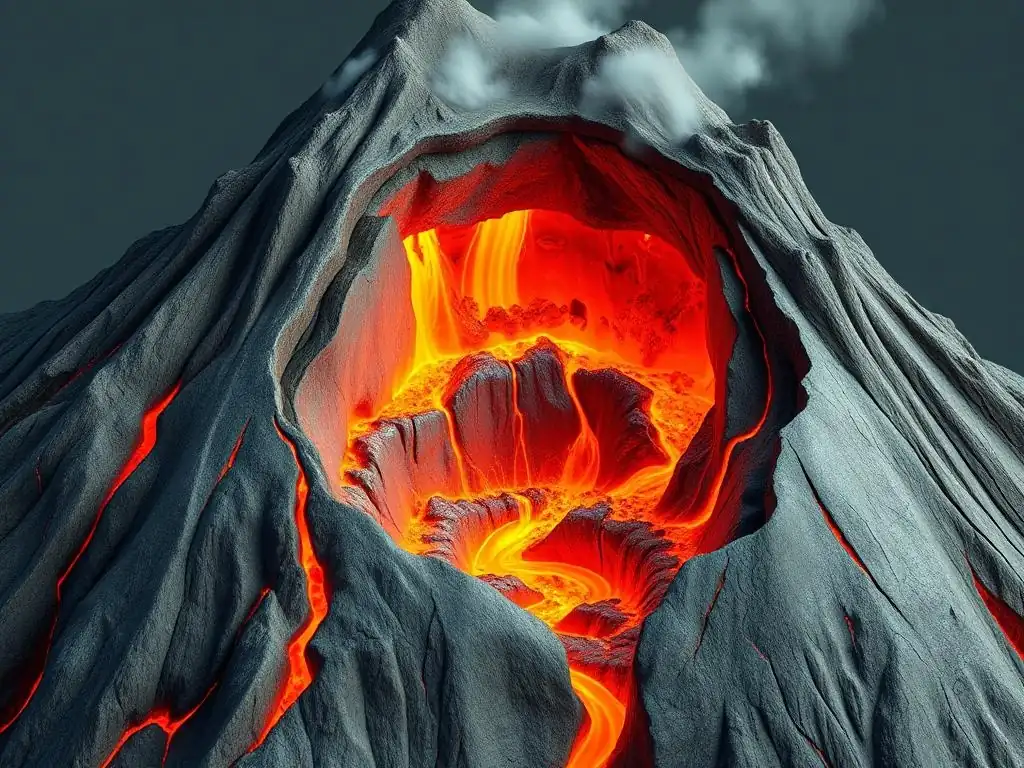
Magma Accumulation and Pressure Build-up within the Chamber
The journey to a stratovolcano eruption begins with the slow accumulation of magma within the magma chamber. Magma is generated in the Earth's mantle and rises through the crust due to its lower density compared to surrounding solid rock. As magma ascends, it can stall and accumulate in a magma chamber. The rate of magma supply into the chamber is a critical factor in determining the frequency and intensity of eruptions. If magma supply is rapid, pressure within the chamber builds up more quickly.
This accumulation of magma leads to a gradual increase in pressure within the magma chamber. The pressure is exerted on the surrounding rocks and is also contained within the magma itself due to the dissolved gases. Imagine inflating a balloon – as you pump more air in, the pressure inside increases.
Similarly, as more magma enters the chamber, the pressure inside increases. This pressure build-up is not a linear process; it can fluctuate depending on magma influx, gas exsolution, and the strength of the surrounding crustal rocks. Eventually, if the pressure exceeds the confining strength of the rocks, or if some trigger mechanism occurs, an eruption can be initiated.
The Process of Magma Ascent: From Chamber to Vent
Once the pressure within the magma chamber is sufficient to overcome the surrounding rock strength, or an external trigger initiates instability, the process of magma ascent to the surface begins. Magma, now charged with dissolved gases and under immense pressure, starts to force its way upwards through fractures and conduits in the Earth's crust. This ascent is not always a smooth and continuous process; it can be episodic and influenced by the geometry of the conduit system and the properties of the magma itself.
As magma ascends, the pressure surrounding it decreases. This decompression causes the dissolved gases to exsolve more readily, forming bubbles and further increasing the pressure within the magma. The viscosity of the magma also plays a crucial role in this ascent process. Highly viscous magma may ascend more slowly and erratically compared to less viscous magma. The final stage of ascent occurs through the volcanic vent, the conduit that connects the magma chamber to the surface. The vent acts as the nozzle through which magma is erupted, and its shape and size can influence the style of eruption.
Eruption Styles of Stratovolcanoes: A Direct Result of Magma Chamber Dynamics
The eruptive style of a stratovolcano, whether it's violently explosive or relatively effusive, is directly linked to the dynamics within its magma chamber, particularly the magma composition, gas content, and pressure build-up. Stratovolcanoes are known for exhibiting a spectrum of eruptive styles, ranging from highly explosive Plinian eruptions to less energetic lava flows. These variations are not random but are a consequence of the complex interplay of factors within the magma chamber system.
The key factor determining the eruption style is the ability of gases to escape from the magma. In situations where gas escape is hindered due to high magma viscosity and rapid pressure build-up, explosive eruptions are favored. Conversely, if gas can escape more readily, or if the magma is less viscous, effusive eruptions are more likely. Often, stratovolcano eruptions are not purely one style or the other but may involve a combination of both explosive and effusive phases, reflecting the evolving conditions within the magma chamber during the eruption sequence.
Explosive Eruptions: Pyroclastic Flows and Ash Plumes
Explosive eruptions are the hallmark of stratovolcanoes and are among the most devastating natural hazards. They are driven by the rapid decompression and expansion of volcanic gases within viscous, silica-rich magma. When the pressure build-up within the magma chamber overcomes the strength of the surrounding rocks, or an external trigger initiates eruption, the result can be a violent explosion that fragments magma into ash, pumice, and rock debris.
These explosive eruptions can generate several hazardous phenomena. Pyroclastic flows are one of the most lethal. These are hot, fast-moving currents of gas and volcanic debris that surge down the flanks of a volcano at speeds of hundreds of kilometers per hour. The temperatures within pyroclastic flows can reach hundreds of degrees Celsius, incinerating everything in their path.
Ash plumes are another significant hazard. Explosive eruptions can eject ash clouds high into the atmosphere, reaching tens of kilometers in height. These ash clouds can disrupt air travel, cause respiratory problems, and collapse buildings if the ash accumulation is heavy enough. The 79 AD eruption of Mount Vesuvius, which buried Pompeii and Herculaneum, is a classic example of a Plinian eruption, characterized by a towering ash plume and devastating pyroclastic flows.
Effusive Eruptions: Lava Flows and Domes
While stratovolcanoes are primarily known for their explosive eruptions, they can also produce effusive eruptions, characterized by the relatively slow outpouring of lava. Effusive eruptions in stratovolcanoes typically involve more viscous lava compared to the fluid basaltic lava flows of shield volcanoes. This viscous lava tends to flow slowly and solidify quickly, often forming thick lava flows that travel shorter distances down the volcano's flanks.
Another common feature of effusive activity in stratovolcanoes is the formation of lava domes. These are steep-sided, bulbous masses of viscous lava that are extruded onto the volcano's summit or flanks. Lava domes can grow over time as more lava is slowly pushed out from the vent. While effusive eruptions are generally less hazardous than explosive eruptions, they can still pose risks. Lava flows can destroy infrastructure and alter landscapes. Furthermore, lava domes can become unstable and collapse, potentially triggering pyroclastic flows, as witnessed in the 1980 eruption of Mount St. Helens.
The Relationship Between Magma Chamber Size and Eruption Intensity
Large Magma Chambers: Potential for Catastrophic Eruptions
The size of a magma chamber is a crucial factor influencing the potential intensity and magnitude of stratovolcano eruptions. Larger magma chambers, capable of storing vast volumes of magma, have the potential to fuel exceptionally large and catastrophic eruptions. These "super-eruptions," though rare, can have global consequences, injecting massive amounts of ash and gases into the stratosphere, impacting climate, and causing widespread disruption.
Volcanoes with large magma chambers, like those associated with caldera systems, such as Yellowstone or Toba, are capable of producing Volcanic Explosivity Index (VEI) 7 or 8 eruptions. These eruptions can eject hundreds to thousands of cubic kilometers of volcanic material. The sheer volume of magma involved in such eruptions means that the duration of the eruption can be prolonged, and the area affected can be immense.
While large magma chambers don't guarantee catastrophic eruptions, they significantly increase the potential for such events if the conditions for eruption are met. The Long Valley Caldera in California, with its large magma reservoir, is constantly monitored due to its potential for large-scale eruptions in the distant future.
Smaller Magma Chambers: Frequent, Less Intense Activity
In contrast to volcanoes with massive magma chambers, stratovolcanoes with smaller magma chambers tend to exhibit more frequent but less intense eruptive activity. Smaller chambers fill up and reach overpressure more quickly, leading to more frequent eruptions, but the volume of magma erupted in each event is typically smaller. These volcanoes may experience Strombolian or Vulcanian type eruptions, which are characterized by moderate explosions and ash plumes, and may also produce lava flows or domes.
Many stratovolcanoes around the world fall into this category of frequent, less intense activity. Volcanoes like Stromboli in Italy, which is known for its persistent Strombolian eruptions, or Popocatépetl in Mexico, which frequently exhibits Vulcanian eruptions and dome growth, are examples of volcanoes with smaller, more frequently active magma systems. While individual eruptions from these volcanoes may be less globally impactful than super-eruptions, their frequent activity can still pose significant local hazards and require continuous monitoring and preparedness efforts for nearby communities.
Monitoring Magma Chambers to Predict Stratovolcano Eruptions
Seismic Activity: A Window into Magma Movement
Monitoring seismic activity is a cornerstone of volcano monitoring and eruption forecasting, providing a crucial window into magma chamber dynamics. The movement of magma within the Earth's crust, both as it ascends from the mantle and as it moves within the magma chamber and conduit system, generates detectable seismic signals. Volcanologists deploy networks of seismometers around volcanoes to record these signals, providing real-time data on volcanic unrest.
Different types of seismic signals are associated with magma movement. Volcano-tectonic earthquakes are caused by the fracturing of solid rock as magma pushes its way through. Harmonic tremor is a continuous, rhythmic seismic signal often associated with the sustained movement of magma and fluids within the volcanic system.
Changes in the frequency, intensity, and location of seismic events can indicate changes in magma pressure, volume, and pathways, potentially signaling an impending eruption. For example, an increase in the frequency and intensity of volcano-tectonic earthquakes, coupled with the upward migration of earthquake hypocenters, can be a strong indication of magma ascent and increased eruption probability.
Ground Deformation: Detecting Changes in Magma Chamber Pressure
Ground deformation monitoring is another vital technique for tracking magma chamber activity and predicting eruptions. As magma accumulates in a magma chamber, it causes the surrounding ground to deform, much like inflating a balloon causes it to expand. This deformation can be subtle but measurable using sophisticated instruments like GPS (Global Positioning System) receivers and InSAR (Interferometric Synthetic Aperture Radar).
GPS stations placed on the flanks of a volcano can detect horizontal and vertical ground movements with millimeter precision. InSAR uses satellite radar images to measure ground deformation over a wider area, providing a spatial view of how the volcano's surface is changing. Inflation, or uplift, of the ground is typically associated with magma accumulation and increasing pressure within the magma chamber.
Conversely, deflation, or subsidence, can occur after an eruption or as magma moves deeper within the system. Monitoring patterns of ground deformation, in conjunction with seismic data, provides valuable insights into magma chamber processes and eruption potential. The United States Geological Survey (USGS) utilizes both GPS and InSAR extensively to monitor volcanoes in the Cascade Range and Hawaii.
Gas Emissions: Analyzing Volcanic Gases for Eruption Forecasting
Analyzing volcanic gas emissions provides a direct chemical fingerprint of magma chamber processes and can be a powerful tool for eruption forecasting. Volcanic gases, such as sulfur dioxide (SO2), carbon dioxide (CO2), and water vapor (H2O), are released from magma both passively and during eruptions. Changes in the composition and flux of these gases can reflect changes in magma degassing, magma ascent, and the overall state of the volcanic system.
Volcanologists use various techniques to measure volcanic gas emissions, including ground-based spectrometers and satellite remote sensing. An increase in SO2 flux, for instance, can indicate an increase in magma degassing and potential magma ascent towards the surface. Changes in the ratio of different gases, such as CO2/SO2, can also provide information about the depth and source of magma and the potential for explosive eruptions.
Real-time monitoring of volcanic gas emissions, combined with seismic and deformation data, enhances the ability to detect pre-eruptive signals and improve eruption forecasts. The continuous monitoring of gas emissions at volcanoes like Mount Etna in Italy has significantly improved eruption prediction capabilities.
Case Studies: Magma Chamber Dynamics in Famous Stratovolcanoes
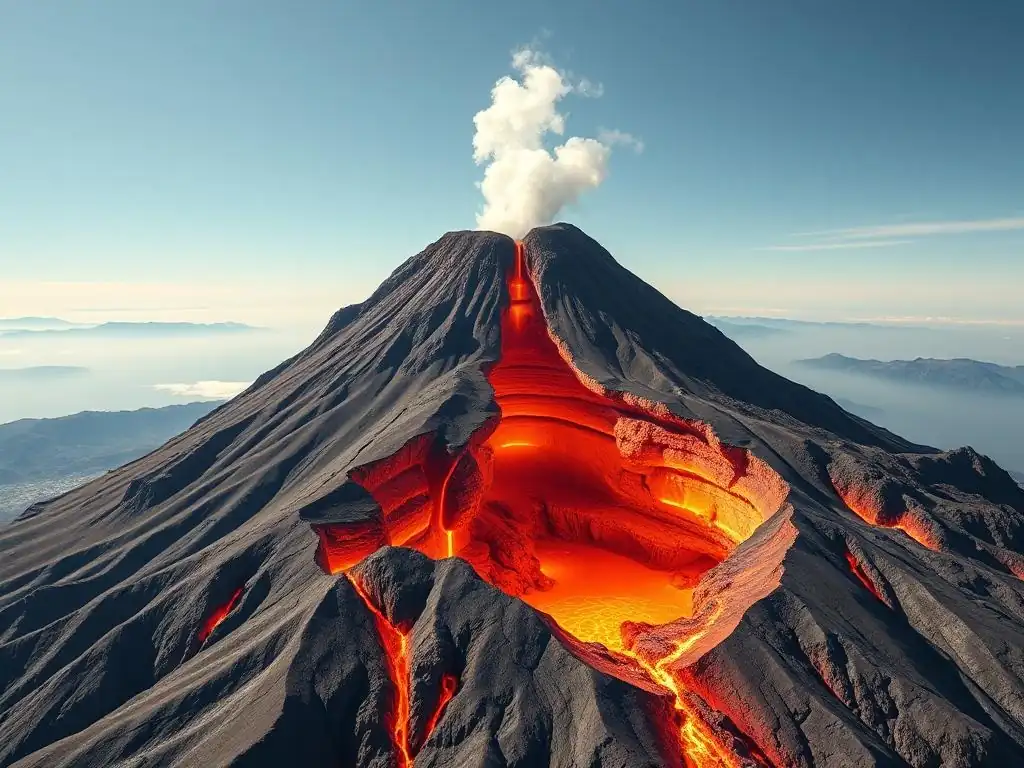
Mount St. Helens: A Classic Example of Magma Chamber Induced Eruption
The 1980 eruption of Mount St. Helens in Washington State is a well-studied example of a stratovolcano eruption driven by magma chamber dynamics. Prior to the eruption, seismic activity and ground deformation indicated magma movement and pressurization beneath the volcano. A bulge developed on the north flank, signifying magma intrusion into the shallow crust. The eruption was triggered by a magnitude 5.1 earthquake, which destabilized the oversteepened north flank, leading to a massive landslide.
This landslide depressurized the underlying magma chamber, causing a powerful lateral blast eruption followed by a vertical eruption column. The eruption demonstrated the crucial role of magma chamber pressurization and destabilization in triggering explosive eruptions. Studies following the eruption revealed a complex magma system beneath Mount St. Helens, with multiple magma bodies at different depths. The eruption also highlighted the importance of monitoring ground deformation and seismic activity for eruption forecasting. The USGS's monitoring efforts at Mount St. Helens since 1980 have made it one of the best-monitored volcanoes in the world, providing valuable insights into stratovolcano behavior.
Mount Vesuvius: Unveiling the Secrets of its Magma Reservoir
Mount Vesuvius, overlooking the city of Naples in Italy, is infamous for its 79 AD eruption that buried Pompeii and Herculaneum. Recent research has shed light on the magma chamber dynamics of Vesuvius, revealing a complex and evolving magma reservoir. Seismic studies and geochemical analyses of erupted materials indicate a deep magma chamber located at around 8 kilometers depth, as well as a shallower storage region.
The magma chamber beneath Vesuvius is thought to be characterized by periods of magma accumulation and stagnation, punctuated by episodic eruptions. The long repose period since its last eruption in 1944 raises concerns about potential future large eruptions. Scientists are actively studying the magma system beneath Vesuvius to better understand its current state and assess future eruption hazards. Monitoring efforts include seismic networks, ground deformation measurements, and gas emission monitoring, all aimed at unraveling the secrets of Vesuvius's magma reservoir and improving eruption forecasting capabilities for this densely populated volcanic region.
Mount Pinatubo: Illustrating Magma Chamber Behavior
The 1991 eruption of Mount Pinatubo in the Philippines was one of the largest volcanic eruptions of the 20th century. It provides another compelling case study of magma chamber behavior and its role in driving explosive eruptions. Prior to the eruption, increased seismic activity and SO2 emissions signaled magma unrest. Ground deformation measurements also indicated inflation of the volcano, suggesting magma accumulation at depth.
The eruption itself was triggered by the injection of hotter, basaltic magma into the cooler, dacitic magma chamber beneath Pinatubo. This magma mixing process increased the pressure and volatile content of the magma, leading to a massive Plinian eruption.
The eruption ejected approximately 10 cubic kilometers of volcanic material and had significant global climate impacts due to the injection of sulfur dioxide into the stratosphere. The Pinatubo eruption underscored the importance of magma mixing and magma chamber processes in driving large explosive eruptions, and it also demonstrated the effectiveness of volcano monitoring in providing timely warnings and mitigating the impact of volcanic hazards.
The Future of Stratovolcano Research: Understanding Magma Chambers in Greater Detail
Advanced Imaging Techniques for Mapping Magma Chambers
Advancements in geophysical imaging techniques are revolutionizing our understanding of magma chambers. Traditional seismic methods provide valuable information, but newer techniques like seismic tomography, magnetotellurics, and gravity surveys are offering increasingly detailed images of magma reservoirs beneath stratovolcanoes. Seismic tomography uses seismic waves to create 3D images of the Earth's interior, revealing variations in seismic velocity that can indicate the presence of magma chambers.
Magnetotellurics measures variations in electrical conductivity in the Earth, and magma, being more conductive than solid rock, can be identified as zones of high conductivity. Gravity surveys measure subtle variations in the Earth's gravitational field, which can be influenced by density contrasts associated with magma chambers.
Combining these advanced imaging techniques provides a more comprehensive and higher-resolution picture of magma chamber geometry, depth, and size, enhancing our ability to characterize and monitor these critical volcanic features. Future research will likely focus on integrating these techniques and developing even more sophisticated imaging methods to further refine our understanding of magma chamber structure.
Modeling Magma Chamber Processes to Improve Eruption Predictions
Numerical modeling is becoming increasingly important in volcano research, particularly in understanding magma chamber processes and improving eruption predictions. Complex computer models are being developed to simulate magma generation, ascent, accumulation, and eruption. These models incorporate various physical parameters, such as magma viscosity, gas content, pressure, temperature, and the mechanical properties of the surrounding rocks.
By simulating magma chamber dynamics, researchers can gain insights into the conditions that lead to eruptions, the style of eruptions that are likely to occur, and the potential timing of future events. Models can be used to test different scenarios and explore the sensitivity of eruption behavior to various parameters. Furthermore, models can be integrated with real-time monitoring data to provide more robust eruption forecasts. As computational power increases and our understanding of magma chamber processes improves, numerical modeling will play an increasingly crucial role in mitigating volcanic hazards and improving our ability to live safely near stratovolcanoes.
Living with Stratovolcanoes: Understanding the Risks and Mitigation Strategies
Volcanic Hazards Associated with Stratovolcano Eruptions
Living near stratovolcanoes comes with inherent risks due to the diverse and often devastating hazards associated with their eruptions. Explosive eruptions can generate pyroclastic flows, ash plumes, and volcanic bombs, posing immediate and lethal threats to life and property. Pyroclastic flows are particularly dangerous due to their high speed and temperature. Ash plumes can disrupt air travel, contaminate water supplies, and cause respiratory problems. Volcanic bombs, large fragments of ejected rock, can cause significant damage upon impact.
Effusive eruptions, while generally less immediately hazardous, can still produce lava flows that destroy infrastructure and alter landscapes. Lahars, volcanic mudflows composed of ash, rock debris, and water, are another major hazard, particularly in areas with steep slopes and abundant rainfall or snowmelt. Lahars can travel long distances and inundate valleys and populated areas. Furthermore, volcanic gas emissions can pose health hazards and contribute to acid rain. Understanding the specific volcanic hazards associated with a particular stratovolcano is crucial for effective risk assessment and mitigation planning.
Community Preparedness and Evacuation Plans
Community preparedness and well-defined evacuation plans are essential for mitigating the risks associated with living near stratovolcanoes. Education and public awareness campaigns are crucial to inform communities about volcanic hazards, warning signs of eruptions, and appropriate safety measures. Emergency management agencies play a vital role in developing and implementing evacuation plans, establishing communication protocols, and coordinating emergency response efforts.
Evacuation plans should be tailored to the specific hazards of each volcano and should consider factors such as population density, infrastructure, and evacuation routes. Regular drills and exercises can help ensure that communities are prepared and that evacuation plans are effective. Early warning systems, based on volcano monitoring data, are critical for providing timely alerts and allowing sufficient time for evacuation.
Community involvement in planning and preparedness efforts is essential for building resilience and minimizing the impact of volcanic eruptions. The successful evacuation of communities around Mount Pinatubo in 1991, based on early warnings from volcano monitoring, is a testament to the effectiveness of preparedness and evacuation strategies.
The Role of Volcanologists in Monitoring and Assessing Risk
Volcanologists play a critical role in monitoring stratovolcanoes, assessing volcanic hazards, and providing scientific information to inform risk mitigation strategies. They use a variety of techniques, including seismology, geodesy, gas geochemistry, and remote sensing, to monitor volcanic activity and detect pre-eruptive signals. Volcanologists interpret monitoring data, develop eruption scenarios, and assess the potential impacts of volcanic hazards.
They work closely with emergency management agencies, government officials, and communities to communicate volcanic risk and provide scientific advice for decision-making. Volcanologists contribute to hazard zonation maps, which delineate areas at different levels of volcanic risk, and help develop long-term strategies for living safely with volcanoes.
Continuous research and monitoring efforts by volcanologists are essential for improving our understanding of stratovolcanoes, enhancing eruption forecasting capabilities, and ultimately reducing the risks to communities living in volcanic regions. The dedication and expertise of volcanologists are crucial for ensuring the safety and well-being of populations living near these powerful and dynamic natural wonders.
Frequently Asked Questions
What is a magma chamber and why is it important for stratovolcanoes?
A magma chamber is a reservoir of molten rock located beneath the Earth's surface. It's crucial for stratovolcanoes because it acts as the fuel source for eruptions, storing and supplying magma. The size and composition of the magma chamber influence the explosivity of eruptions.
How does the magma chamber contribute to the explosive nature of stratovolcanoes?
The magma chamber allows magma to differentiate and accumulate gases, increasing pressure. This pressure, combined with the magma's high viscosity (often due to high silica content), leads to powerful, explosive eruptions that are characteristic of stratovolcanoes. The trapped gases are released violently.
What are stratovolcanoes, and how are they different from other types of volcanoes?
Stratovolcanoes are cone-shaped volcanoes built up from many layers (strata) of hardened lava, tephra, pumice, and volcanic ash. Unlike shield volcanoes, they are known for their steep slopes and explosive eruptions, fueled by their magma chambers.
What factors influence the size and shape of a magma chamber beneath a stratovolcano?
The size and shape are influenced by factors such as the rate of magma supply, the properties of the surrounding rock, and the tectonic setting. Pre-existing faults and fractures can also guide magma flow and chamber development.
Can scientists predict volcanic eruptions by studying magma chambers?
Yes, monitoring magma chamber activity, such as changes in ground deformation, gas emissions, and seismic activity, can provide valuable clues about potential eruptions. However, predicting eruptions with complete accuracy remains a challenge, requiring continuous research and monitoring.
Final Reflection: Understanding Earth's Fiery Heart
The intricate dance between magma chambers and stratovolcanoes, as explored in this article, is not merely a geological curiosity, but a vital piece in understanding the dynamic and sometimes devastating forces shaping our planet. The study of these subterranean reservoirs is more critical than ever, as increasing populations encroach upon volcanic regions, demanding a deeper comprehension of eruption triggers and potential hazards.
This exploration into the magma chamber's role has underscored the profound interconnectedness of Earth's systems. It reminds us that even seemingly distant geological processes directly impact human lives and the environment. The Earth will not continue to offer its harvest, except with faithful stewardship. We cannot say we love the land and then take steps to destroy it for use by future generations.
- John Paul II. This quote resonates deeply, urging us to approach our understanding and interaction with these powerful natural forces with respect and responsibility.
Now, armed with a greater understanding of magma chamber stratovolcanoes explained, consider your own relationship with the natural world. How can you contribute to a more informed and responsible approach to living alongside these geological giants? Reflect on the power and fragility of our planet, and let that reflection inspire you to advocate for sustainable practices and informed decision-making in the face of Earth's enduring power.
Unearth Your Inner Volcanologist: Take Action Now!
Thank you for diving deep into the fascinating world of stratovolcanoes and their powerful magma chambers. We hope you've gained a newfound appreciation for the dynamic forces shaping our planet. Ready to continue your exploration?
Here's how you can turn your knowledge into action:
- Dive deeper by exploring interactive 3D models of different magma chamber types and share your observations. This is your chance to really see what you've been reading about and contribute to a community of volcano enthusiasts.
- Follow us on our social channels for daily volcanic updates, stunning imagery, and live Q&A sessions with leading volcanologists.
- Consider supporting Volcano Explorers by making a donation. Your contribution helps us continue providing accessible and engaging educational resources.
What surprising fact about magma chambers did you discover today, and how will that change the way you view volcanic eruptions? Share your thoughts in the comments below!