
The Prepper's Paradox: Stockpiling Secrets for VolcanoProof Sustenance

Welcome to Volcano Explorers!
Ever wondered how to truly outsmart a volcano? Beyond the rumble and the ash, lies a critical need for volcano preparedness, and it all starts with what's on your plate. Dive into "The Prepper's Paradox" and unlock the secrets of volcano preparedness food stockpiling. What if the key to survival isn't just about what you store, but how you think about it? Let the exploration begin...
- Understanding the Volcano Preparedness Food Stockpiling Paradox
-
Frequently Asked Questions
- What are the most essential food items to include in a volcano preparedness food stockpile?
- How does volcanic ash impact the safety of food and water supplies?
- Beyond food, what other essential supplies are critical for volcano preparedness?
- How often should I rotate my food stockpile to ensure freshness and prevent spoilage?
- Where is the safest place to store a volcano preparedness food stockpile in my home?
- Final Reflection: Embracing Resilience in the Face of Uncertainty
- Fortify Your Future: Build Your Volcano-Ready Stockpile!
Understanding the Volcano Preparedness Food Stockpiling Paradox
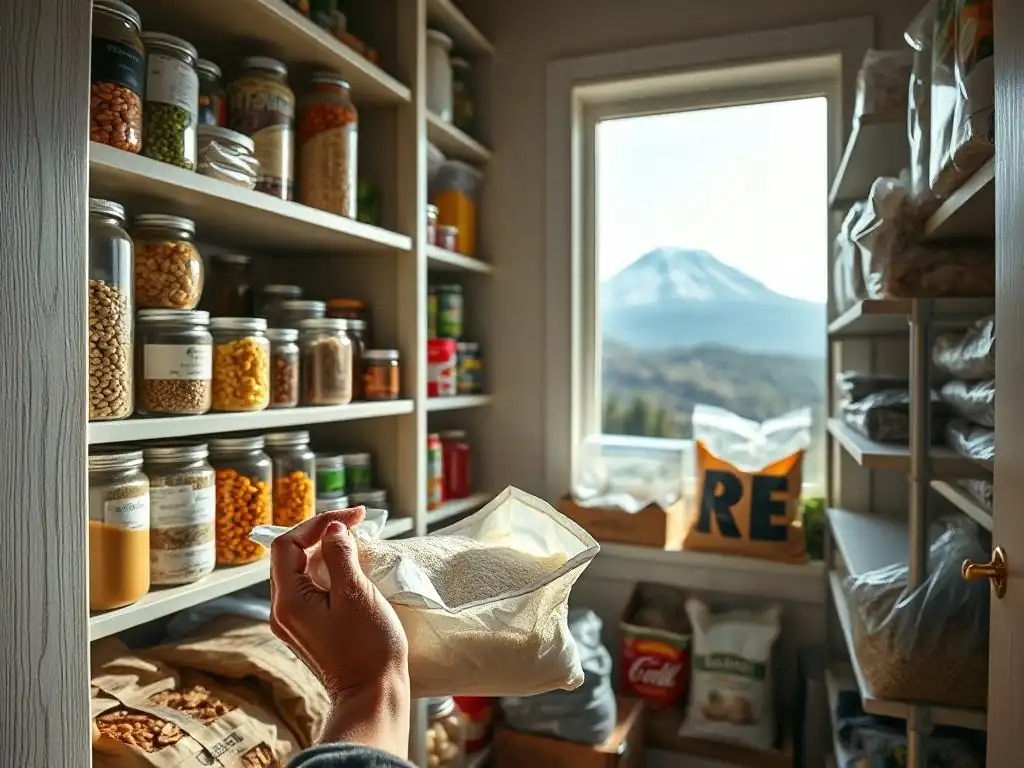
The Challenge: Balancing Shelf Life, Nutrition, and Space in Volcanic Emergency Food Supplies
Volcano preparedness food stockpiling presents a unique paradox. On one hand, you need to store enough food to sustain yourself and your family through a potentially prolonged volcanic event, which could range from ashfall disrupting supply chains to full-scale evacuations. This necessitates a substantial quantity of food. On the other hand, you're often constrained by space, especially if living in an area prone to earthquakes or lahars where structures might be compromised and storage areas become limited or inaccessible.
Furthermore, the very nature of emergency food stockpiling requires prioritizing shelf life. Foods must remain edible and nutritious for extended periods, sometimes years, without refrigeration or specialized storage conditions. This balance between quantity, longevity, and space efficiency is the core challenge of volcano preparedness food stockpiling.
Consider the average family of four preparing for a potential two-week disruption due to volcanic activity. Based on FEMA guidelines, this family would need approximately 84 gallons of water and a substantial amount of food. If relying solely on canned goods, the weight and volume can quickly become overwhelming, especially if evacuation is necessary.
Moreover, simply stocking up on calorie-dense but nutritionally poor foods might sustain life but not health, potentially weakening the body's ability to cope with the stress and physical demands of a volcanic emergency. Therefore, a strategic approach is required, one that carefully weighs shelf life, nutritional content, and spatial footprint to create a truly effective volcano preparedness food stockpile.
Why Traditional Food Storage Fails Near Active Volcanoes: Ashfall, Evacuation, and Accessibility
Traditional food storage methods, often geared towards general emergencies like power outages, can fall short when facing the specific threats posed by active volcanoes. One of the most significant challenges is volcanic ashfall. Ash is not merely an inconvenience; it's a pervasive, abrasive substance that can contaminate everything it touches, including stored food. Even food stored indoors can be vulnerable if buildings are not properly sealed, as ash can infiltrate through vents, cracks, and open windows. Unprotected food supplies, even if shelf-stable, can become unusable due to ash contamination, rendering traditional pantry storage insufficient.
Furthermore, the threat of rapid evacuation is a defining characteristic of volcanic emergencies. Unlike slow-onset disasters like droughts, volcanic eruptions can escalate quickly, necessitating immediate evacuation orders. Traditional food storage, often located in basements or fixed pantries within the home, becomes inaccessible if evacuation is mandated. Imagine a scenario where Mount Rainier in Washington State shows signs of imminent eruption.
Residents in surrounding areas might have to evacuate with very little notice. A pantry full of canned goods in a house left behind is of no use during evacuation. Therefore, volcano preparedness food stockpiling must prioritize portability and accessibility, ensuring that emergency food supplies can be quickly and easily transported during evacuation, a crucial element often overlooked in generic food storage plans.
Frequently Asked Questions
What are the most essential food items to include in a volcano preparedness food stockpile?
Focus on non-perishable foods with a long shelf life, such as canned goods, dried fruits, and grains. Ensure you have enough for at least three days per person, ideally more.
How does volcanic ash impact the safety of food and water supplies?
Volcanic ash can contaminate both food and water, making them unsafe to consume. It's crucial to store supplies in airtight containers to prevent contamination.
Beyond food, what other essential supplies are critical for volcano preparedness?
Water is paramount; aim for at least one gallon per person per day. Also, include a first-aid kit, dust masks, and a battery-powered radio for emergency updates.
How often should I rotate my food stockpile to ensure freshness and prevent spoilage?
Check your stockpile every six months and replace items nearing their expiration date. Implement a "first in, first out" system to minimize waste.
Where is the safest place to store a volcano preparedness food stockpile in my home?
Choose a cool, dry, and dark location away from potential hazards like flooding or seismic activity. A basement or pantry is often suitable.
Final Reflection: Embracing Resilience in the Face of Uncertainty
The lessons learned in navigating the "Prepper's Paradox" – balancing practicality with preparedness in volcano-prone regions – are not merely academic exercises; they are essential life skills for an increasingly unpredictable world. While we've focused on volcano preparedness food stockpiling, the underlying principles of resourcefulness, planning, and community support resonate far beyond the shadow of a volcanic peak. The ability to anticipate, adapt, and sustain ourselves is a fundamental human need, now more crucial than ever.
This journey into the world of volcano preparedness food stockpiling has profoundly underscored the importance of proactive thinking. It's not just about surviving a disaster; it's about thriving in its aftermath, and fostering a sense of security and self-reliance in the face of the unknown. The best time to plant a tree was 20 years ago. The second best time is now.
This ancient proverb perfectly encapsulates the spirit of preparedness – the time to act is always now, before the need arises.
Ultimately, the "Prepper's Paradox" invites us to examine our relationship with risk, resilience, and responsibility. It challenges us to move beyond fear and embrace proactive planning. So, take the knowledge you've gained, assess your own vulnerabilities, and begin building your own foundation of preparedness. Let's transform anxiety into action, and together, cultivate a future where we are all better equipped to weather any storm, volcanic or otherwise.
Fortify Your Future: Build Your Volcano-Ready Stockpile!
Thanks for exploring the art of volcano-proof preparedness! We hope you've gained valuable insights into creating a resilient stockpile. Now, it's time to act and ensure you're ready for any challenge Mother Nature presents.
Here's how to get started:
- Immediately assess your food and water supplies, focusing on long-lasting, non-perishable items suitable for volcanic ash conditions. Create a "Volcano Emergency Kit" with a 72-hour supply. This is your first step!
- Research and practice alternative cooking methods that don't rely on electricity or gas, such as solar ovens or rocket stoves.
- Share this article with friends and family in volcanically active areas. Encourage them to begin their own preparedness journey and foster community resilience.
What's the first step you'll take today to strengthen your volcano-proof stockpile and safeguard your family? Share your plans in the comments below!