
Stratovolcanoes and Water: How Snow and Ice Amplify Volcanic Hazards

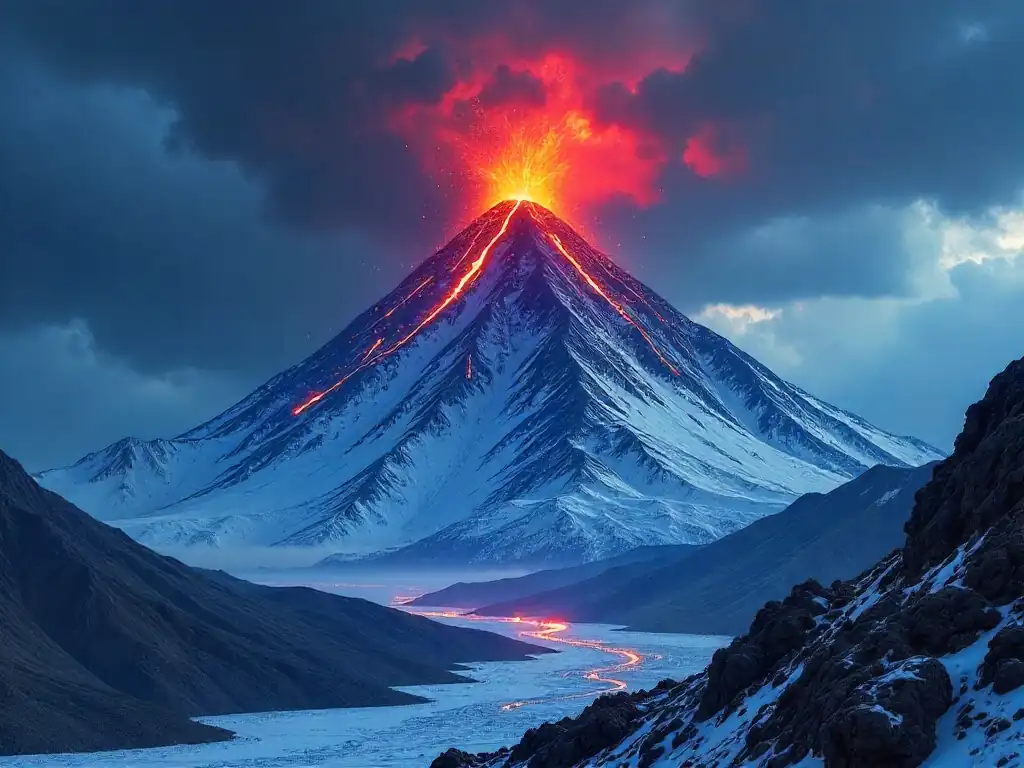
Welcome to Volcano Explorers, where the Earth's fiery heart meets the sky! But what happens when fire encounters ice? Prepare to journey into the fascinating and perilous world of stratovolcanoes where snow and ice aren't just scenic backdrops, but critical factors amplifying volcanic hazards. This isn't your average volcano lesson; discover how the delicate dance between molten rock and frozen water creates some of the most explosive and unpredictable events on our planet. Intrigued? Let's dive in...
- Introduction: The Deadly Combination of Stratovolcanoes, Snow, and Ice
- Understanding Stratovolcanoes: A Foundation for Hazard Assessment
- The Role of Snow and Ice on Stratovolcanoes: A Recipe for Disaster
- Amplified Volcanic Hazards: Snow and Ice as Catalysts
- Monitoring and Mitigation Strategies: Reducing the Risks
- The Future of Stratovolcano Hazards: Climate Change and Increasing Risks
- Conclusion: Addressing the Challenges of Stratovolcanoes, Snow, and Ice
-
Frequently Asked Questions
- What makes stratovolcanoes particularly hazardous when covered in snow and ice?
- How does snow and ice contribute to the formation of lahars on stratovolcanoes?
- What are some of the specific hazards posed by ice interacting with lava during a stratovolcano eruption?
- How do volcanologists monitor stratovolcanoes with snow and ice cover to assess potential hazards?
- What safety precautions should people living near stratovolcanoes with snow and ice take?
- Final Reflection: Embracing the Volcanic Dance of Fire and Ice
- Ignite Your Inner Volcanologist: Explore Further!
Introduction: The Deadly Combination of Stratovolcanoes, Snow, and Ice
Stratovolcanoes, also known as composite volcanoes, are renowned for their majestic, cone-shaped profiles and their capacity for explosive and devastating eruptions. These geological titans are responsible for some of the most dramatic and hazardous volcanic events in recorded history.
However, the danger posed by stratovolcanoes is significantly amplified when they are capped with snow and ice, a common feature in many of the world's major volcanic regions. This combination of intense volcanic activity and abundant water from snow and ice creates a uniquely perilous environment, leading to a cascade of amplified hazards that can extend far beyond the immediate vicinity of an eruption.
The presence of snow and ice on stratovolcanoes is not merely a picturesque detail; it is a critical factor that dramatically alters the nature and scale of volcanic hazards. From triggering catastrophic mudflows known as lahars to generating powerful glacial outburst floods called jökulhlaups, and even influencing the behavior of pyroclastic flows and ash clouds, water in its frozen forms plays a crucial role in exacerbating the destructive potential of these volcanoes. Understanding this interplay between stratovolcanoes, snow, and ice is paramount for effective hazard assessment, mitigation, and ultimately, for protecting communities living in their shadow.
Understanding Stratovolcanoes: A Foundation for Hazard Assessment
What are Stratovolcanoes? Defining Composite Volcanoes
Stratovolcanoes, often referred to as composite volcanoes, are characterized by their steep, conical shape built up from many layers (strata) of hardened lava, tephra, pumice, volcanic ash, and pyroclastic flows. They are typically associated with subduction zones, where one tectonic plate slides beneath another.
This geological setting leads to the formation of magma that is rich in silica and gas, contributing to their explosive eruption style. Mount Fuji in Japan, Mount Rainier in the United States, and Mount Vesuvius in Italy are iconic examples of stratovolcanoes, each demonstrating the imposing stature and potential hazards associated with this type of volcano.
The term "composite" aptly describes their structure. Stratovolcanoes are not formed from a single type of eruption or material, but rather through a sequence of different volcanic events over long periods. Effusive eruptions contribute viscous lava flows that solidify and form resistant layers, while explosive eruptions deposit ash, pumice, and pyroclastic debris. This layering process results in a strong but complex internal structure that influences the volcano's stability and eruption dynamics. The combination of steep slopes and potentially unstable layers also makes stratovolcanoes susceptible to landslides and collapses, further adding to the range of hazards they pose.
The Formation of Stratovolcanoes: Layered Eruptions and Volcanic Debris
The formation of a stratovolcano is a gradual process, often spanning hundreds of thousands to millions of years, driven by repeated cycles of volcanic activity. It begins with the accumulation of volcanic materials around a central vent. During periods of effusive eruptions, viscous lava flows slowly down the flanks of the developing volcano, solidifying and adding to its bulk. These lava flows, while slow-moving, contribute to the volcano's structural strength and define its characteristic conical shape.
Interspersed with lava flows are explosive eruptions that eject vast quantities of tephra, including ash, pumice, and volcanic bombs. Pyroclastic flows, fast-moving currents of hot gas and volcanic debris, also play a significant role in building the stratovolcano. These flows can travel at high speeds down the volcano's slopes, depositing layers of ash and rock that solidify and become integral parts of the volcano's structure.
Over time, the accumulation of these diverse volcanic materials – lava flows, ash deposits, and pyroclastic flow deposits – in alternating layers gives stratovolcanoes their distinct 'stratified' or 'composite' nature. This layering process is crucial to understanding their complex internal structure and the variety of hazards they can generate.
Key Characteristics of Stratovolcanoes: Steep Slopes and Explosive Potential
Stratovolcanoes are distinguished by several key characteristics that contribute to their hazardous nature. One of the most visually striking features is their steep slope. The viscous, silica-rich lava that characterizes stratovolcano eruptions solidifies relatively quickly, preventing it from flowing far and contributing to the steepening of the volcano's flanks. This steep topography, while visually impressive, also increases the potential for landslides and rapid downslope movement of volcanic materials, especially when combined with the destabilizing effects of snow and ice.
Another defining characteristic of stratovolcanoes is their explosive eruption potential. The high silica content of their magma makes it viscous and traps gases effectively. As magma rises towards the surface, pressure decreases, and dissolved gases expand rapidly.
If this pressure buildup exceeds the strength of the surrounding rock, it can lead to powerful explosive eruptions that eject ash, gas, and rock fragments high into the atmosphere. These explosive eruptions are responsible for generating pyroclastic flows, volcanic ash clouds, and other hazardous phenomena that pose significant risks to surrounding areas. The combination of steep slopes and explosive potential makes stratovolcanoes among the most dangerous and closely monitored volcanic landforms on Earth.
The Role of Snow and Ice on Stratovolcanoes: A Recipe for Disaster
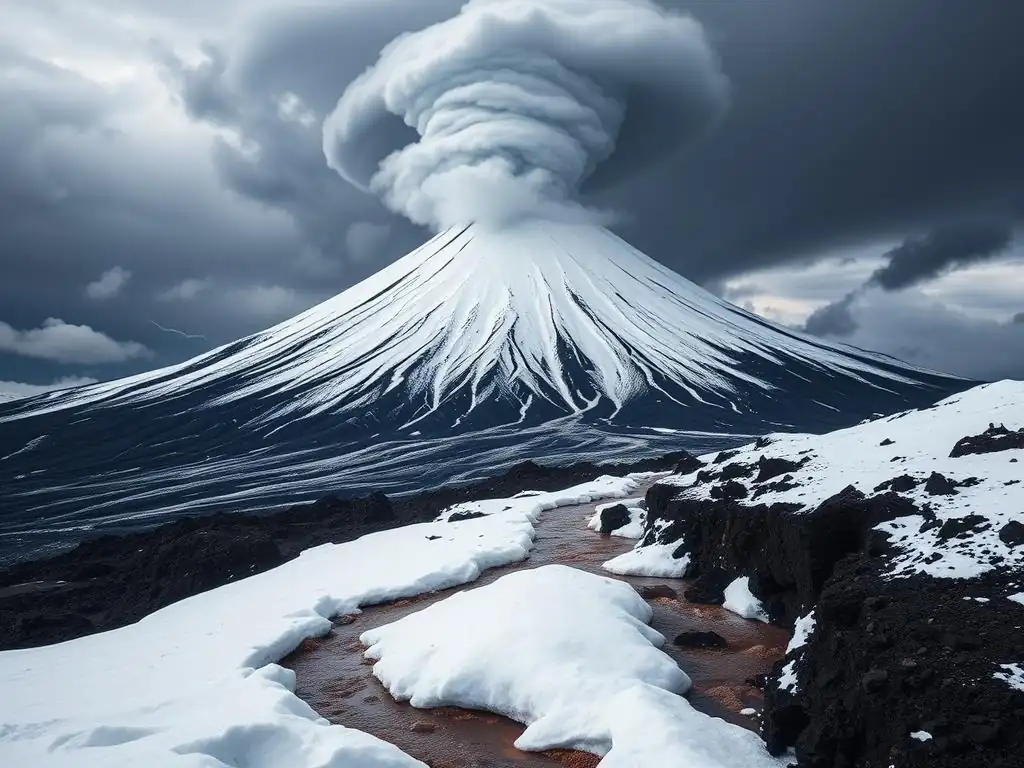
Glacial Ice and Snowpack: A Common Feature on Many Stratovolcanoes
Many of the world's most prominent stratovolcanoes are located in regions with significant snowfall and glacial ice. The Pacific Ring of Fire, home to a vast majority of stratovolcanoes, includes regions like the Andes Mountains, the Cascade Range in North America, and the volcanic arcs of Japan and Iceland – all areas known for substantial snow accumulation and glacier formation.
For instance, Mount Rainier in Washington State, USA, is one of the most heavily glaciated peaks in the contiguous United States, with approximately 26 named glaciers covering its slopes. Similarly, many Andean stratovolcanoes in South America are capped with glaciers, and Icelandic volcanoes are renowned for their interactions with ice caps.
The presence of glaciers and snowpack on stratovolcanoes is not merely coincidental; it's a consequence of their high elevation and location in latitudes where precipitation falls predominantly as snow. These ice and snow accumulations are dynamic systems, constantly influenced by seasonal temperature variations and long-term climate trends. They represent a significant reservoir of water in solid form, poised to interact with volcanic activity. This interaction is not benign; it fundamentally alters the nature and magnitude of volcanic hazards, creating a complex and often more dangerous situation than that posed by volcanoes in ice-free environments.
How Snow and Ice Interact with Volcanic Activity: Initial Considerations
The interaction between snow and ice and volcanic activity is multifaceted and begins with the fundamental process of heat transfer. Volcanic eruptions release immense amounts of thermal energy, both through lava flows and pyroclastic flows, and through the emission of hot gases. When this heat encounters snow and ice, melting is an immediate and inevitable consequence. Even relatively small eruptions can generate enough heat to melt substantial volumes of ice and snow in a short period, creating significant quantities of meltwater.
This meltwater, generated by volcanic heat interacting with snow and ice, becomes a crucial ingredient in amplifying volcanic hazards. It can mix with volcanic ash and debris to form lahars, destabilize volcanic slopes, and contribute to the formation of jökulhlaups. Furthermore, the presence of water can influence the style of volcanic eruptions themselves.
For example, water interacting with magma can lead to more explosive phreatomagmatic eruptions. The initial consideration is simply that the introduction of large volumes of water, sourced from melting snow and ice, fundamentally changes the hazard landscape around a stratovolcano, creating a more dynamic and potentially more dangerous environment.
Amplified Volcanic Hazards: Snow and Ice as Catalysts
Lahars: The Devastating Mudflows Triggered by Melting Ice and Snow
Lahars are arguably the most significant and devastating hazard amplified by the presence of snow and ice on stratovolcanoes. These are violent mudflows or debris flows composed of a mixture of volcanic ash, rock debris, and water.
The water component in lahars originating from snow and ice melt is crucial, as it provides the necessary fluid medium to mobilize vast quantities of volcanic material and transform them into rapidly flowing, highly destructive masses. Lahars can travel at speeds exceeding 50 kilometers per hour (30 mph) and extend for tens of kilometers downstream from a volcano, inundating valleys and causing widespread devastation.
The destructive power of lahars stems from their density and momentum. They are much denser than water floods, capable of carrying enormous boulders, trees, and even buildings. Their high velocity and volume enable them to erode channels, scour landscapes, and bury everything in their path under thick layers of mud and debris. The presence of snow and ice on stratovolcanoes dramatically increases the likelihood and magnitude of lahar events during volcanic eruptions, making them a primary concern for communities living near these ice-clad volcanoes.
Formation of Lahars on Stratovolcanoes: A Step-by-Step Explanation
The formation of lahars on stratovolcanoes with snow and ice cover typically follows a sequence of events triggered by volcanic activity. Firstly, a volcanic eruption, whether explosive or effusive, releases significant thermal energy. This heat melts snow and ice on the volcano's flanks, generating a substantial volume of meltwater. This meltwater then mixes with loose volcanic materials, such as ash, pumice, and rock fragments, that have been deposited on the volcano's slopes by previous or ongoing eruptions or are already present as unstable volcanic debris.
The mixture of meltwater and volcanic debris becomes a slurry, initially starting as a relatively fluid mudflow. As this slurry flows downhill, gravity accelerates its movement, and it can incorporate more loose material from the volcano's slopes and surrounding valleys. This process of incorporation and bulking up increases the lahar's volume, density, and destructive potential as it moves further downstream. The resulting lahar can be a massive, fast-moving flow capable of traveling great distances and causing widespread devastation in valleys and low-lying areas far from the volcano itself.
Case Studies of Lahar Events: Nevado del Ruiz, Colombia
The 1985 eruption of Nevado del Ruiz in Colombia serves as a stark and tragic example of the devastating power of lahars triggered by snow and ice melt. Nevado del Ruiz is a stratovolcano capped with a glacier, and the eruption, although relatively small in volcanic explosivity index (VEI), generated catastrophic lahars that caused immense destruction and loss of life. On November 13, 1985, a relatively minor eruption produced pyroclastic flows and surges that melted ice and snow near the summit of the volcano.
This meltwater rapidly mixed with volcanic debris, forming several lahars that descended the volcano's flanks. The most devastating lahar flowed down the Lagunilla River valley and engulfed the town of Armero, located approximately 48 kilometers (30 miles) from the summit. The lahar struck Armero at night, catching residents unaware. It buried the town under meters of mud and debris, resulting in an estimated 25,000 fatalities out of a population of 29,000. The Nevado del Ruiz disaster highlighted the extreme hazard posed by lahars from ice-clad stratovolcanoes and the importance of effective early warning systems and evacuation planning.
Case Studies of Lahar Events: Mount Rainier, USA
Mount Rainier, a towering stratovolcano in Washington State, USA, is considered one of the most hazardous volcanoes in North America, largely due to the threat of lahars. It is heavily glaciated, with substantial ice and snow cover, and situated in close proximity to densely populated areas, including the Seattle-Tacoma metropolitan region. While Mount Rainier has not experienced a major eruption in recent centuries, its geological history is punctuated by large lahar events, many of which occurred thousands of years ago but serve as critical reminders of the potential hazards.
One well-studied example is the Osceola Mudflow, a massive prehistoric lahar that occurred approximately 5,600 years ago. This lahar originated from a sector collapse of Mount Rainier, which triggered the melting of a significant volume of glacial ice. The Osceola Mudflow traveled down the White River valley and reached Puget Sound, covering an area of over 300 square kilometers (115 square miles).
More recently, smaller but still significant lahars, such as the Electron Mudflow, have occurred in the past few hundred years, demonstrating that Mount Rainier remains an active lahar hazard. The potential for future, large-scale lahars from Mount Rainier is a major concern, prompting ongoing monitoring and hazard mitigation efforts in the region.
Jökulhlaups: Glacial Outburst Floods from Subglacial Eruptions
Jökulhlaups, Icelandic for "glacial outburst floods," are another significant hazard associated with stratovolcanoes covered by glaciers or ice caps. These are sudden, large-scale releases of meltwater from beneath or alongside a glacier. While jökulhlaups can occur due to various mechanisms, volcanic activity, particularly subglacial eruptions, is a primary trigger on stratovolcanoes. Unlike lahars, which are mixtures of water and volcanic debris, jökulhlaups are primarily water floods, though they can still carry significant amounts of sediment and ice and cause substantial erosion and flooding downstream.
Jökulhlaups are characterized by their rapid onset and immense discharge rates. Water that has accumulated beneath a glacier, often in subglacial lakes or cavities, is suddenly released, resulting in a powerful and often unpredictable flood event. The volume of water released in a jökulhlaup can be enormous, ranging from cubic meters to cubic kilometers, and the peak discharge rates can exceed those of even the world's largest rivers during normal flow conditions. The sudden and forceful nature of jökulhlaups makes them a considerable hazard to infrastructure, communities, and ecosystems downstream from glaciated stratovolcanoes.
How Subglacial Eruptions Create Jökulhlaups
Subglacial eruptions, eruptions that occur beneath a glacier or ice cap, are a particularly effective mechanism for generating jökulhlaups on stratovolcanoes. When magma erupts beneath ice, the intense heat from the eruption rapidly melts vast quantities of ice. This meltwater accumulates in subglacial cavities or lakes, often trapped by the surrounding ice and geological features. As more meltwater is produced, the pressure within these subglacial reservoirs increases.
Eventually, the pressure of the accumulated meltwater can overcome the confining strength of the ice or surrounding rock, leading to a sudden and catastrophic release. This release can occur through various pathways, such as the flotation of an ice dam, the opening of a subglacial channel, or the breaching of a moraine dam. The resulting jökulhlaup is a rapid and powerful flood surge, carrying a large volume of water and potentially debris downstream. The unpredictability of the timing and magnitude of jökulhlaups from subglacial eruptions makes them a challenging hazard to manage.
The Impact of Jökulhlaups: Flooding and Infrastructure Damage
The impact of jökulhlaups can be widespread and devastating, primarily due to flooding and the erosive power of the floodwaters. Jökulhlaups can inundate large areas downstream, causing extensive damage to infrastructure, including roads, bridges, buildings, and power lines. The sheer force of the floodwaters can erode riverbanks, scour channels, and transport large volumes of sediment and debris, altering landscapes and river systems. Agricultural land can be inundated and destroyed, and communities can be isolated or displaced.
Beyond direct physical damage, jökulhlaups can also pose significant risks to human life. The sudden onset and rapid flow of jökulhlaups can catch people unaware, especially in areas close to rivers and floodplains downstream from glaciated volcanoes. The economic costs of jökulhlaups can be substantial, encompassing damage to infrastructure, disruption of transportation and commerce, and the need for emergency response and recovery efforts. In regions prone to jökulhlaups, careful planning and mitigation strategies are essential to minimize their impact.
Jökulhlaups on Stratovolcanoes: Grímsvötn, Iceland
Grímsvötn volcano in Iceland, situated beneath the Vatnajökull ice cap, is a prime example of a stratovolcano that frequently generates jökulhlaups. Grímsvötn is one of Iceland's most active volcanoes, and its eruptions often occur subglacially. These subglacial eruptions melt ice and accumulate meltwater in a subglacial lake within the Grímsvötn caldera. As the water level in this lake rises, it eventually reaches a point where it can overflow or breach its ice dam, triggering a jökulhlaup.
Grímsvötn jökulhlaups, known as Grímsvötn outburst floods, are among the largest and most predictable in Iceland. They typically occur every few years, often following eruptions, but can also occur due to geothermal heating or other subglacial processes. These jökulhlaups flow down the Skeiðarársandur outwash plain, a vast sandy area south of Vatnajökull. While the Skeiðarársandur is largely uninhabited, the jökulhlaups have historically caused significant damage to infrastructure, including the Ring Road, Iceland's main highway. The predictable nature of Grímsvötn jökulhlaups allows for monitoring and forecasting, helping to mitigate risks, but they remain a significant volcanic hazard in Iceland.
Enhanced Pyroclastic Flows: The Impact of Water on Explosive Eruptions
Pyroclastic flows are among the most lethal volcanic hazards, consisting of hot, fast-moving mixtures of gas and volcanic debris that can sweep down the flanks of a volcano at speeds exceeding hundreds of kilometers per hour. While pyroclastic flows are inherently dangerous, their behavior and impact can be significantly altered by the presence of snow and ice on stratovolcanoes. The interaction between pyroclastic flows and water from melted snow and ice can lead to increased mobility, greater reach, and potentially more widespread devastation.
The key mechanism through which water enhances pyroclastic flow hazards is through the generation of steam and changes in flow dynamics. When a hot pyroclastic flow encounters snow or ice, rapid melting occurs, and a significant amount of steam is produced. This steam can alter the density and buoyancy of the pyroclastic flow, affecting its flow characteristics. In some cases, steam generation can increase the mobility and runout distance of pyroclastic flows, allowing them to travel further and impact areas that might otherwise be considered outside the primary hazard zone.
The Interaction of Pyroclastic Flows with Snow and Ice
The interaction of pyroclastic flows with snow and ice is a complex process involving rapid heat transfer and phase changes. When a pyroclastic flow, with temperatures ranging from hundreds to over a thousand degrees Celsius, encounters snow or ice, the heat energy is rapidly transferred to the ice and snow, causing them to melt and vaporize. This process is incredibly fast due to the large temperature difference and the efficient heat transfer mechanisms involved.
The immediate consequence is the generation of large volumes of steam. This steam becomes incorporated into the pyroclastic flow, altering its composition and dynamics. The presence of steam can affect the flow's density, buoyancy, and internal pressure. It can also influence the flow's interaction with the surrounding terrain and atmosphere. The specific effects of this interaction depend on various factors, including the volume and temperature of the pyroclastic flow, the amount and distribution of snow and ice, and the topography of the volcano.
Increased Mobility and Reach of Pyroclastic Flows Due to Water
One of the most significant consequences of pyroclastic flow interaction with snow and ice is the potential for increased mobility and reach. The generation of steam within a pyroclastic flow can have several effects that contribute to this increased mobility. Steam can reduce the overall density of the flow, making it more buoyant and less prone to settling or decelerating due to friction with the ground. It can also increase the internal pressure within the flow, potentially enhancing its ability to overcome topographic obstacles and maintain momentum.
Furthermore, the steam generated can act as a lubricant, reducing friction between the pyroclastic flow and the ground surface. This reduced friction can allow the flow to travel further and faster, extending its runout distance. In some cases, the interaction with water can even transform a pyroclastic flow into a more fluid and mobile pyroclastic surge, which is a less dense and more widespread type of pyroclastic density current. The increased mobility and reach of pyroclastic flows due to interaction with snow and ice significantly expands the area at risk from these already highly dangerous volcanic hazards.
Volcanic Ash Clouds: Enhanced by Ice Crystal Formation
Volcanic ash clouds, plumes of fine volcanic particles erupted high into the atmosphere, are a widespread hazard from explosive volcanic eruptions. While volcanic ash itself poses numerous risks, including respiratory problems, disruption of air travel, and damage to infrastructure, the presence of ice crystals within ash clouds, particularly those originating from stratovolcanoes with snow and ice cover, can further enhance their hazards. The formation of ice crystals in volcanic ash clouds is influenced by a process known as ice nucleation.
Ice nucleation occurs when water vapor in the atmosphere freezes to form ice crystals. This process can be initiated by certain types of particles, known as ice nuclei, that facilitate ice crystal formation. Volcanic ash particles, especially those rich in certain minerals, can act as effective ice nuclei. When volcanic ash is erupted into the atmosphere, particularly in cold, moist environments often associated with snow-capped stratovolcanoes, it can promote the formation of ice crystals within the ash cloud.
Ice Nucleation and Ash Cloud Behavior
The presence of ice crystals within volcanic ash clouds can significantly alter their behavior and properties. Ice crystals increase the mass and size of particles within the ash cloud, making them heavier and more likely to fall out of the atmosphere more rapidly. This can lead to increased ashfall deposition closer to the volcano, potentially impacting areas that might otherwise have been spared from significant ashfall. Heavier ashfall can cause greater structural damage to buildings and infrastructure.
Furthermore, ice crystals within ash clouds can affect their electrical properties. Ice particles are known to play a role in thunderstorm electrification. Volcanic ash clouds containing ice crystals can therefore become electrically charged, leading to increased lightning activity. Volcanic lightning is a significant hazard in itself, posing risks to aircraft and ground infrastructure. The presence of ice crystals in volcanic ash clouds, facilitated by ice nucleation on ash particles, can thus amplify both ashfall hazards and electrical hazards associated with volcanic eruptions.
Increased Atmospheric Hazards from Ice-Laden Ash Clouds
Ice-laden volcanic ash clouds pose increased atmospheric hazards, particularly to aviation. Volcanic ash is already a serious threat to aircraft, as it can damage jet engines, abrade aircraft surfaces, and impair visibility. The presence of ice crystals within ash clouds exacerbates these risks. Ice crystals can accrete onto aircraft surfaces, potentially leading to icing conditions, which can affect aircraft performance and control.
Moreover, the increased mass and density of ice-laden ash particles can make them more damaging to jet engines. When ingested into jet engines, volcanic ash can melt and solidify on turbine blades, causing engine damage or failure. Ice crystals within the ash can potentially enhance this engine damage mechanism. The combination of ice crystals and volcanic ash in eruption clouds from snow- and ice-covered stratovolcanoes presents a heightened hazard to aviation, requiring careful monitoring and airspace management to mitigate risks to air traffic.
Monitoring and Mitigation Strategies: Reducing the Risks
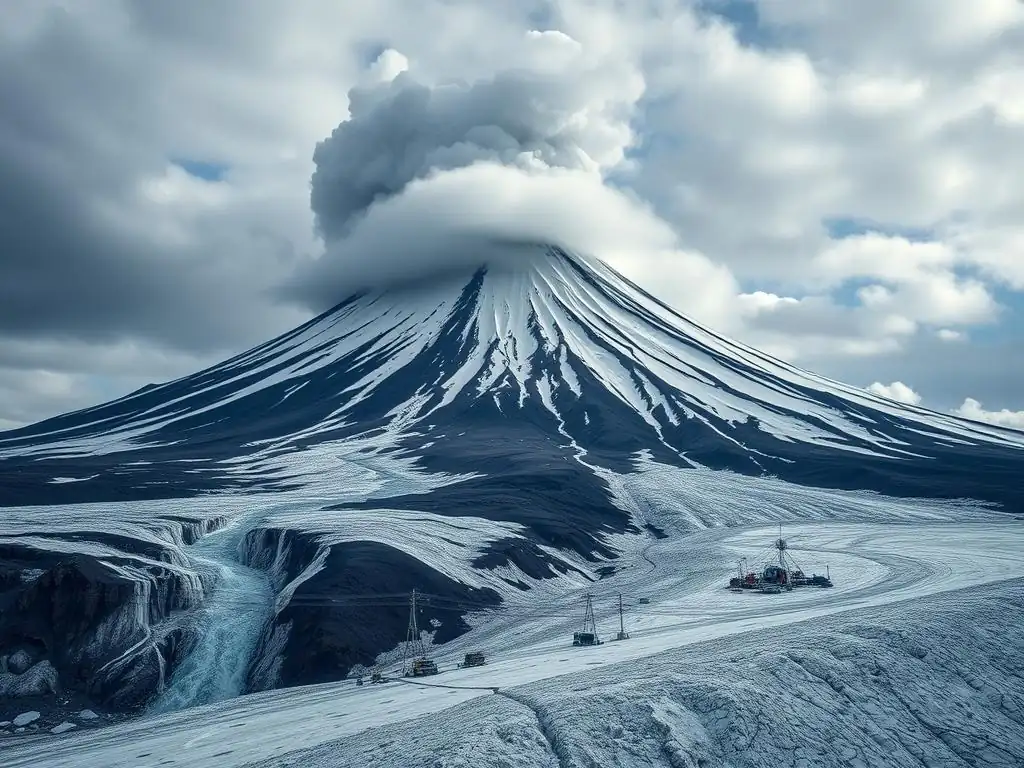
Volcano Monitoring Techniques: Detecting Changes in Volcanic Activity
Effective monitoring of stratovolcanoes is crucial for detecting changes in volcanic activity that could precede hazardous events. A range of sophisticated techniques are employed to monitor volcanoes, providing valuable data on their state and potential for eruption. Seismic monitoring is a cornerstone of volcano monitoring, using networks of seismometers to detect and analyze earthquakes associated with magma movement and volcanic unrest. Changes in the frequency, intensity, and location of earthquakes can indicate an increasing likelihood of eruption.
Ground deformation monitoring is another essential technique, using instruments like GPS and InSAR (Interferometric Synthetic Aperture Radar) to measure subtle changes in the volcano's shape. Inflation, or swelling, of the volcano can indicate magma accumulating beneath the surface, while deflation, or shrinking, may signal magma withdrawal. Gas monitoring involves measuring the composition and flux of volcanic gases, such as sulfur dioxide (SO2) and carbon dioxide (CO2).
Increases in gas emissions or changes in gas ratios can be precursors to eruptions. Thermal monitoring, using satellite-based and ground-based infrared sensors, detects changes in heat output from the volcano, which can indicate magma rising closer to the surface. These diverse monitoring techniques, when used in combination, provide a comprehensive picture of a volcano's behavior and help to assess its hazard potential.
Early Warning Systems: Providing Timely Alerts for Potential Hazards
Early warning systems (EWS) are critical for mitigating the risks associated with stratovolcanoes, particularly those prone to rapid-onset hazards like lahars and jökulhlaups. An effective EWS relies on robust volcano monitoring networks to detect precursory activity and trigger alerts in a timely manner. For lahar hazards, real-time lahar detection systems, such as acoustic flow monitors and seismic sensors placed in river channels downstream from volcanoes, can detect the onset of lahars and provide immediate warnings to communities at risk.
For jökulhlaup hazards, monitoring of subglacial water pressure, ice deformation, and river discharge can help to forecast potential outburst floods. EWS also involve clear communication protocols to disseminate warnings to the public and emergency responders. This includes using multiple communication channels, such as sirens, radio broadcasts, mobile alerts, and social media, to reach as many people as possible.
Public education and preparedness campaigns are integral to EWS, ensuring that communities understand the warnings and know how to respond appropriately, including evacuation routes and procedures. The success of an EWS hinges on accurate monitoring, timely warnings, effective communication, and community preparedness.
Hazard Mapping: Identifying High-Risk Areas for Lahars and Floods
Volcanic hazard mapping is a fundamental tool for land-use planning and risk mitigation around stratovolcanoes. Hazard maps delineate areas at risk from various volcanic hazards, including lahars, pyroclastic flows, ashfall, and jökulhlaups. For lahars and jökulhlaups, hazard maps are typically based on topographic analysis, geological mapping of past flow deposits, and numerical modeling of potential flow paths and inundation areas. These maps identify valleys and low-lying areas downstream from volcanoes that are most vulnerable to these water-related hazards.
Hazard maps are used to inform land-use planning decisions, guiding development away from high-risk zones. They are also essential for emergency planning, helping to define evacuation routes and shelter locations. Hazard maps are communicated to communities, emergency managers, and government agencies to raise awareness of volcanic risks and support preparedness efforts. Regular updates of hazard maps are necessary to incorporate new data, refined models, and changes in volcanic activity or land use. The accuracy and accessibility of hazard maps are crucial for effective risk reduction and community resilience.
Community Preparedness and Evacuation Planning: Saving Lives in the Face of Volcanic Hazards
Community preparedness and evacuation planning are paramount for reducing fatalities and injuries from volcanic hazards associated with stratovolcanoes. Preparedness involves educating communities about volcanic risks, developing emergency plans, and conducting drills and exercises to practice response procedures. Evacuation planning focuses on establishing safe evacuation routes, identifying shelter locations, and developing procedures for orderly and timely evacuation when warnings are issued.
Effective community preparedness programs involve collaboration between scientists, emergency managers, local authorities, and community leaders. Public education campaigns use various media to disseminate information about volcanic hazards, warning signals, evacuation routes, and emergency supplies. Community drills and exercises help to familiarize residents with evacuation procedures and identify areas for improvement in emergency response. Evacuation plans should be tailored to the specific hazards and vulnerabilities of each community, considering factors such as population density, infrastructure, and topography. Regular review and updates of evacuation plans are essential to ensure their effectiveness in saving lives during volcanic crises.
The Future of Stratovolcano Hazards: Climate Change and Increasing Risks
The Impact of Climate Change on Glaciers and Snowpack
Climate change is significantly impacting glaciers and snowpack worldwide, and these changes have profound implications for stratovolcano hazards. Rising global temperatures are causing glaciers to melt at accelerated rates and snowpack to diminish in many mountain regions. For stratovolcanoes with ice cover, this means a reduction in glacial ice volume and a decrease in the extent and duration of seasonal snowpack. While seemingly counterintuitive, this reduction in ice and snow can paradoxically increase certain volcanic hazards in the short to medium term.
Initially, increased meltwater from glaciers and snowpack due to warming can enhance the potential for lahars and jökulhlaups during volcanic eruptions. As glaciers thin and retreat, they can also destabilize volcanic slopes, increasing the risk of landslides and sector collapses, which can further trigger lahars. In the longer term, as glaciers disappear entirely from some stratovolcanoes, the specific hazards associated with ice melt may diminish, but other volcanic hazards will persist, and the overall risk landscape will likely shift and evolve in complex ways.
Increasing Frequency and Intensity of Volcanic Hazards
While climate change may not directly influence the frequency of volcanic eruptions themselves, it can indirectly increase the frequency and intensity of certain volcanic hazards, particularly those related to water. The accelerated melting of glaciers and snowpack due to climate change can lead to more frequent and larger lahar events, especially in the short to medium term. Changes in precipitation patterns, also linked to climate change, can further influence lahar hazards, with increased rainfall intensity potentially exacerbating mudflow events.
For jökulhlaups, the dynamics are more complex, but changes in subglacial hydrology and glacier stability due to climate change could potentially alter the frequency and magnitude of these outburst floods. Furthermore, the destabilization of volcanic slopes due to glacial retreat can increase the likelihood of landslides and sector collapses, which can trigger a cascade of other hazards, including lahars and pyroclastic flows. The combined effects of climate change on glaciers, snowpack, and precipitation patterns are likely to lead to a more dynamic and potentially more hazardous volcanic environment in many regions with ice-covered stratovolcanoes.
The Need for Proactive Mitigation Strategies
The increasing risks associated with stratovolcanoes, amplified by climate change impacts on glaciers and snowpack, underscore the urgent need for proactive mitigation strategies. Enhanced volcano monitoring networks are essential to detect subtle changes in volcanic activity and provide early warnings of potential hazards. Improved hazard mapping, incorporating the evolving influence of climate change, is crucial for land-use planning and emergency preparedness. Robust early warning systems and effective communication protocols are vital for disseminating timely alerts to at-risk communities.
Community preparedness and evacuation planning must be strengthened, with a focus on educating populations about the changing nature of volcanic hazards in a warming climate. Infrastructure planning should consider the long-term risks and uncertainties associated with climate change and volcanic activity. International collaboration and knowledge sharing are essential to address the global challenges posed by stratovolcanoes and climate change. A proactive and integrated approach to mitigation, combining scientific monitoring, hazard assessment, early warning systems, community preparedness, and climate change adaptation, is necessary to reduce the risks and build resilience in communities living near these formidable and increasingly threatened volcanoes.
Conclusion: Addressing the Challenges of Stratovolcanoes, Snow, and Ice
Stratovolcanoes, with their inherent explosive potential and often imposing ice caps, present a complex and significant set of volcanic hazards. The interaction of volcanic activity with snow and ice dramatically amplifies these hazards, leading to devastating lahars, jökulhlaups, enhanced pyroclastic flows, and ice-laden ash clouds. The tragic example of Nevado del Ruiz and the ever-present threat of Mount Rainier underscore the real and present danger posed by these ice-clad giants.
Climate change is further exacerbating these risks by accelerating glacial melt and altering precipitation patterns, potentially increasing the frequency and intensity of water-related volcanic hazards. Addressing these challenges requires a multi-faceted approach, encompassing robust volcano monitoring, effective early warning systems, comprehensive hazard mapping, proactive community preparedness, and climate-informed mitigation strategies. By understanding the intricate interplay between stratovolcanoes, snow, ice, and climate, and by implementing proactive measures, we can strive to reduce the risks and build more resilient communities in the shadow of these magnificent but potentially perilous volcanoes.
Frequently Asked Questions
What makes stratovolcanoes particularly hazardous when covered in snow and ice?
Stratovolcanoes are steep-sided and prone to explosive eruptions and debris flows. The presence of snow and ice amplifies these hazards by creating meltwater that can trigger lahars (mudflows) and increase the scale of explosions.
How does snow and ice contribute to the formation of lahars on stratovolcanoes?
The rapid melting of snow and ice during an eruption or even due to geothermal activity creates a large volume of water. This water mixes with volcanic ash and debris, forming destructive lahars that can travel far downstream.
What are some of the specific hazards posed by ice interacting with lava during a stratovolcano eruption?
Ice interacting with lava can cause violent steam explosions known as phreatomagmatic eruptions. These explosions can eject large rocks and ash over a wide area and can destabilize the volcano's structure.
How do volcanologists monitor stratovolcanoes with snow and ice cover to assess potential hazards?
Volcanologists use a combination of techniques, including satellite imagery to monitor snow and ice cover, seismic monitoring to detect magma movement, and gas monitoring to track volcanic activity. These methods help assess the risk of eruptions and lahars.
What safety precautions should people living near stratovolcanoes with snow and ice take?
Residents should be aware of evacuation routes and emergency plans. It's vital to monitor official alerts and be prepared to evacuate quickly if an eruption or lahar is imminent. Knowing the risks and planning ahead is crucial for safety.
Final Reflection: Embracing the Volcanic Dance of Fire and Ice
The intricate relationship between stratovolcanoes and water, as we've explored, is not merely an academic curiosity; it's a critical understanding for communities living in the shadow of these majestic, yet perilous, mountains. Ignoring the amplifying effect of snow and ice on volcanic hazards is akin to dancing blindfolded on unstable ground. The potential for catastrophic lahars and explosive eruptions, intensified by the presence of frozen water, demands a proactive and informed approach to risk management and disaster preparedness.
The enduring power of stratovolcanoes, sculpted by both fire and ice, continues to shape not only the physical landscape but also the cultural narratives of those who live nearby. My own fascination with these geological giants stems from a deep respect for the raw power of nature and the delicate balance that sustains life on our planet. We cannot conquer nature, but we can only obey it.
- Francis Bacon. This quote underscores the necessity of understanding and adapting to the unique challenges posed by stratovolcanoes, especially in a world grappling with climate change and its impact on glacial melt.
Now, as you reflect on the information presented, consider your own connection to the natural world and the communities vulnerable to these hazards. What steps can you take, whether through personal awareness, advocacy, or support for scientific research, to contribute to a safer and more resilient future? Let us all strive to be informed stewards of our planet, recognizing the profound influence of stratovolcanoes and the urgent need to mitigate the risks they pose.
Ignite Your Inner Volcanologist: Explore Further!
Thank you for diving into the fascinating world of stratovolcanoes and water! We hope you've gained a new appreciation for the complex interplay between snow, ice, and volcanic activity, and a better understanding of the hazards these combinations can create. Now, let's put that knowledge into action!
Here are a few ways you can continue your volcano exploration:
- Become a Citizen Scientist! Report any unusual volcanic activity in your area to your local geological survey or Volcano Explorers (at volcanoexplorers.org). Your observations can contribute to a better understanding of these dynamic landscapes.
- Delve deeper into specific stratovolcanoes. Research a volcano in your region or one that interests you – learn about its history, its current activity level, and the surrounding communities.
- Share this article with someone who would find it interesting. Spark a conversation about the importance of understanding volcanic hazards and how water plays a critical role.
What are you most curious about learning next when it comes to the world's fiery peaks? Let us know in the comments!