
Uncharted Territories: The Mysteries of Unexplored Submarine Volcanoes

Welcome to Volcano Explorers!
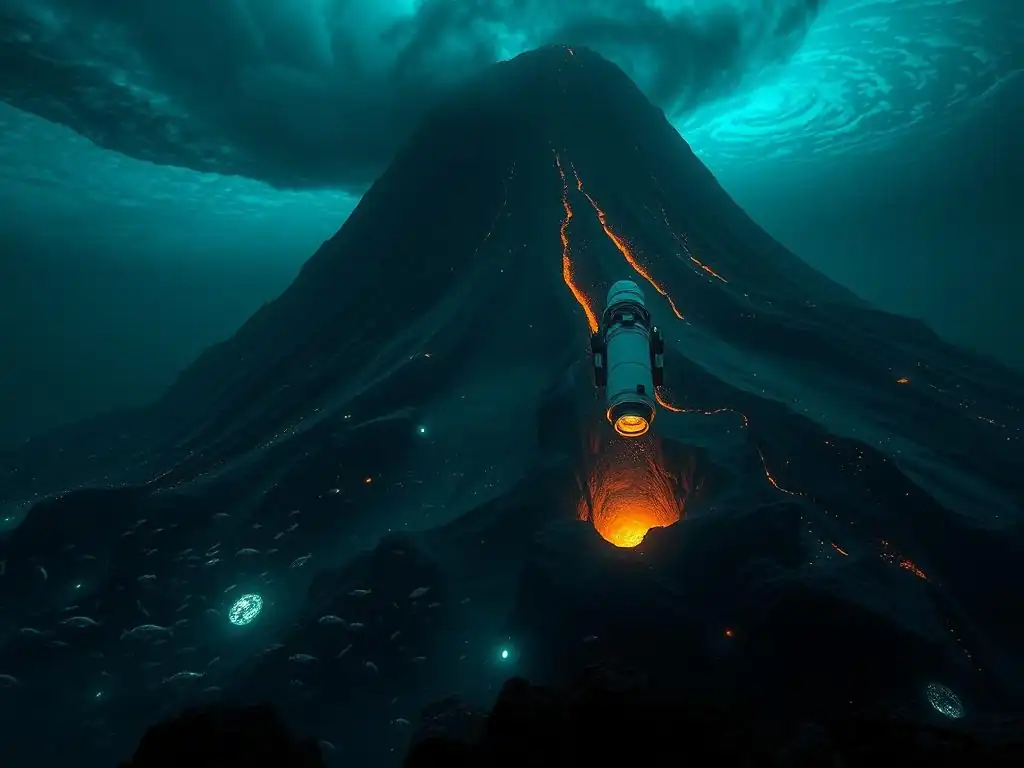
Prepare to plunge into the fiery depths! Beyond the familiar peaks we see on land, a hidden world of volcanic activity thrives beneath the waves. Are you ready to uncover the unexplored submarine volcano mysteries that lie hidden beneath the ocean's surface? Dare to journey with us as we explore these uncharted territories, revealing the secrets and wonders of these submerged behemoths, and leaving you questioning everything you thought you knew about our planet's fiery heart.
- Uncharted Depths: The Mysteries of Unexplored Submarine Volcanoes
- Delving into the Depths: Unexplored Submarine Volcanoes
- Unveiling the Enigmas: Key Questions Surrounding Undiscovered Submarine Volcanoes
- Challenges in Exploring the Depths: Technological Hurdles and Solutions
- The Geological Significance of Unexplored Submarine Volcanoes
- Discoveries Waiting to Happen: Potential Findings in Uncharted Submarine Volcanic Regions
- Case Studies: Known Submarine Volcanoes and Their Significance
- The Future of Submarine Volcano Exploration: A Call to Action
- Conclusion: Embracing the Unknown in the Realm of Submarine Volcanism
-
Frequently Asked Questions
- What makes unexplored submarine volcanoes so mysterious?
- Why is it important to study unexplored submarine volcanoes?
- What are some of the challenges in exploring submarine volcanoes?
- How do unexplored submarine volcanoes contribute to marine life?
- What technological advancements are helping us explore these uncharted territories?
- Final Reflection: Echoes of the Deep
- Dive Deeper: Explore the Mysteries of Submarine Volcanoes!
Uncharted Depths: The Mysteries of Unexplored Submarine Volcanoes
Delving into the Depths: Unexplored Submarine Volcanoes
Introduction: The Allure of Undersea Volcanic Mysteries
The deep ocean, a realm shrouded in perpetual darkness and immense pressure, holds secrets that continue to captivate and challenge scientists. Among these enigmas, unexplored submarine volcano mysteries stand out as particularly compelling. Imagine a world where volcanic eruptions, as powerful and dramatic as their terrestrial counterparts, occur unseen beneath miles of water. These underwater giants, scattered across the ocean floor, represent a vast frontier of geological and biological discovery. Their potential impact on our planet, from shaping ocean chemistry to fostering unique ecosystems, remains largely uncharted, fueling a scientific quest to unveil their hidden wonders.
The allure of unexplored submarine volcanoes lies in their inaccessibility and the sheer scale of the unknown. While we have mapped a significant portion of the Earth's land surface, the ocean floor, particularly the deep ocean, remains less explored than the surface of Mars. This vast underwater landscape is dotted with an estimated million volcanoes, the majority of which are submarine.
Of these, only a small fraction have been studied in detail, leaving countless submarine volcano mysteries waiting to be deciphered. Exploring these hidden volcanic realms is not just about geological curiosity; it's about understanding fundamental Earth processes and potentially uncovering new forms of life adapted to extreme environments.
Why Submarine Volcanoes Remain Largely Unexplored
The primary reason submarine volcanoes remain largely unexplored boils down to accessibility and the extreme conditions of the deep ocean. The immense pressure at depth is a significant hurdle. For every 10 meters (approximately 33 feet) descended, pressure increases by one atmosphere. In the abyssal plains, where many submarine volcanoes are located, pressures can exceed 500 atmospheres. This crushing pressure necessitates specialized equipment and submersibles capable of withstanding these forces, making exploration technically challenging and expensive.
Furthermore, the vastness of the ocean itself presents a logistical challenge. Covering over 70% of the Earth's surface, the oceans are immense, and pinpointing and reaching specific submarine volcanoes, especially those far from coastlines, requires significant resources and time. Traditional research vessels are limited in their ability to explore the deep ocean directly. While remotely operated vehicles (ROVs) and autonomous underwater vehicles (AUVs) offer greater reach, their deployment and operation are still complex and costly endeavors. The sheer scale of the underwater volcanic landscape, combined with the technical and financial hurdles, explains why so many submarine volcano mysteries persist.
Unveiling the Enigmas: Key Questions Surrounding Undiscovered Submarine Volcanoes
The Frequency of Submarine Volcanic Eruptions: Estimating the Unknown
One of the most fundamental submarine volcano mysteries revolves around the frequency of their eruptions. Estimating how often submarine volcanoes erupt is significantly more challenging than for their terrestrial counterparts. Terrestrial eruptions are often visually observed, monitored by seismic and gas sensors, and leave readily detectable ash deposits. Submarine eruptions, on the other hand, often occur unnoticed, deep beneath the waves. Evidence of submarine eruptions comes from indirect sources, such as hydroacoustic signals, changes in water temperature or chemistry, and seafloor deformation detected by satellite altimetry or pressure sensors.
Current estimates suggest that there may be several submarine volcanic eruptions occurring each year, perhaps even more frequently than on land. However, the vast majority of these likely go undetected, especially those in remote ocean basins. Scientists rely on global networks of hydrophones, underwater microphones, to listen for the characteristic sounds of volcanic explosions and submarine earthquakes associated with eruptions. Analysis of historical hydroacoustic data has revealed previously unknown eruptions, highlighting the underestimation of submarine volcanic activity. Accurately assessing the frequency of these eruptions is crucial for understanding their global impact on ocean systems and potential hazards.
The Impact of Uncharted Submarine Volcanoes on Ocean Chemistry
Unexplored submarine volcanoes likely play a far more significant role in shaping ocean chemistry than currently understood. When submarine volcanoes erupt, they release vast quantities of heat, gases, and minerals into the surrounding seawater. These volcanic emissions can alter the local and even global ocean chemistry in several ways. Hydrothermal vents, common features around submarine volcanoes, discharge chemically enriched fluids that interact with seawater, creating plumes rich in dissolved metals, sulfides, and other compounds.
These hydrothermal plumes can influence the distribution of nutrients in the ocean, impacting marine productivity. Volcanic gases, such as carbon dioxide and sulfur dioxide, released during eruptions can contribute to ocean acidification and alter the sulfur cycle. Studies of well-studied hydrothermal vent systems, like those along the Mid-Atlantic Ridge, have shown significant impacts on local ecosystems and biogeochemical cycles. However, the cumulative effect of countless uncharted submarine volcanoes on global ocean chemistry remains a major submarine volcano mystery. Understanding these impacts is vital for predicting future ocean conditions in a changing climate.
The Potential for New Life Forms Around Undersea Volcanic Vents
Perhaps one of the most exciting aspects of unexplored submarine volcano mysteries is the potential for discovering new and unique life forms thriving in these extreme environments. Hydrothermal vents associated with submarine volcanoes are oases of life in the deep ocean, supporting chemosynthetic ecosystems that are independent of sunlight. These ecosystems are fueled by chemical energy released from the Earth's interior, rather than solar energy. Microorganisms, archaea and bacteria, form the base of these food webs, utilizing chemicals like hydrogen sulfide, methane, and hydrogen to produce energy through chemosynthesis.
These chemosynthetic microbes support a diverse array of larger organisms, including tube worms, clams, mussels, shrimps, and crabs, many of which are found nowhere else on Earth. Each newly explored hydrothermal vent field often reveals novel species adapted to the unique chemical and thermal conditions. Given that the vast majority of submarine volcanoes and their associated vent systems remain unexplored, the potential for discovering entirely new branches of the tree of life around uncharted submarine volcanoes is immense. These discoveries could revolutionize our understanding of life's adaptability and origins.
Challenges in Exploring the Depths: Technological Hurdles and Solutions
Mapping the Ocean Floor: Advances in Sonar and Remote Sensing
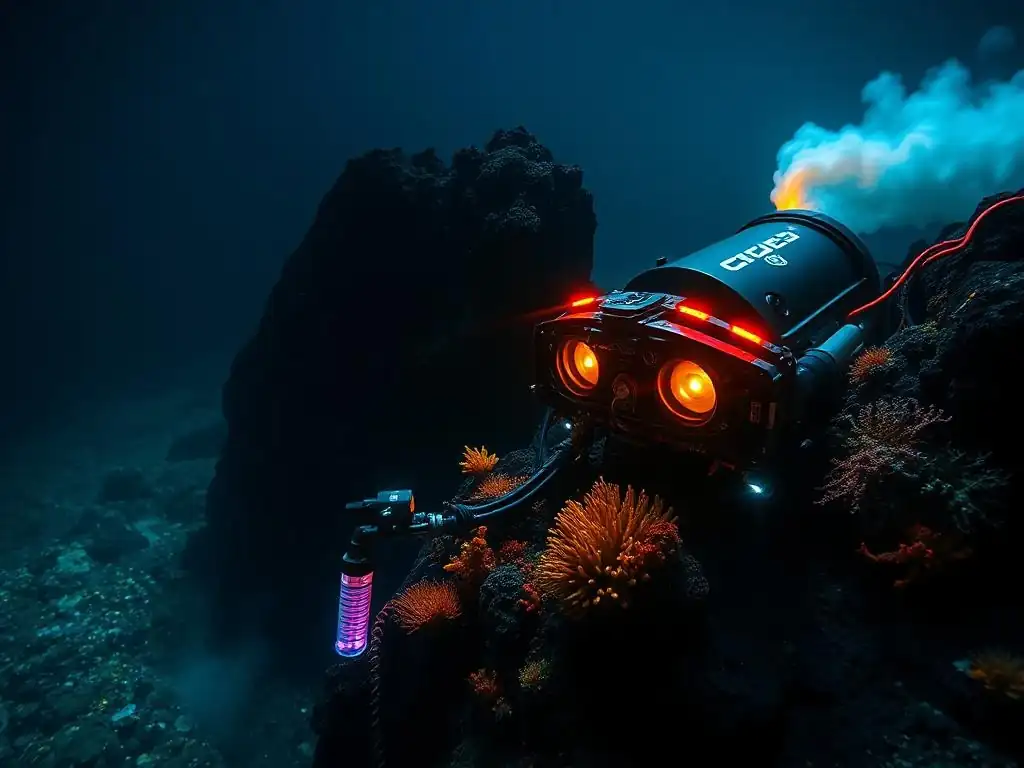
Mapping the vast ocean floor, especially to locate and characterize submarine volcanoes, presents a significant technological challenge. Traditional ship-based surveys using multibeam sonar are effective but time-consuming and costly for large areas. However, advancements in sonar technology and remote sensing are providing new tools to address this challenge. Modern multibeam sonar systems can map wider swaths of the seafloor with higher resolution, improving the efficiency of mapping expeditions. Furthermore, the development of autonomous underwater vehicles (AUVs) equipped with sonar allows for more detailed surveys of specific areas of interest, including submarine volcanoes.
Satellite altimetry, a remote sensing technique, provides a global overview of seafloor topography by measuring subtle variations in sea surface height caused by gravity. While satellite altimetry has lower resolution than sonar, it can identify large features like seamounts and ridges, guiding targeted sonar surveys. Combining satellite data with ship-based sonar and AUV surveys offers a multi-scale approach to mapping the ocean floor and locating uncharted submarine volcanoes. These technological advances are gradually unveiling the hidden topography of the deep ocean, reducing the number of submarine volcano mysteries related to their location and distribution.
Deploying Autonomous Underwater Vehicles (AUVs) for Submarine Volcano Exploration
Autonomous Underwater Vehicles (AUVs) are revolutionizing the exploration of submarine volcanoes. These robotic submarines can operate independently of a research vessel, allowing for extended surveys in remote and challenging environments. AUVs can be equipped with a variety of sensors, including sonar, cameras, chemical sensors, and magnetometers, to collect detailed data about submarine volcanoes. They can map the seafloor topography, measure water temperature and chemistry, detect hydrothermal plumes, and even collect samples.
AUVs are particularly well-suited for exploring uncharted submarine volcanoes because they can operate at great depths and for long durations, overcoming the limitations of human-occupied submersibles and remotely operated vehicles (ROVs) in terms of range and endurance. AUVs can be pre-programmed to follow complex survey patterns, allowing for systematic and efficient data collection. The increasing availability and sophistication of AUV technology are making it possible to explore previously inaccessible submarine volcano mysteries, opening up new frontiers in oceanographic research.
Overcoming Extreme Pressure and Temperature: Designing Durable Equipment
Operating in the extreme conditions around submarine volcanoes requires highly specialized and durable equipment. The crushing pressure of the deep ocean necessitates pressure housings made of strong materials like titanium or specialized ceramics to protect sensitive instruments and electronics. Equipment must also be designed to withstand extreme temperature gradients, ranging from near-freezing ambient seawater to the scorching temperatures of hydrothermal vent fluids, which can exceed 400 degrees Celsius (750 degrees Fahrenheit).
Materials used in deep-sea equipment must be corrosion-resistant to withstand prolonged exposure to seawater and chemically aggressive hydrothermal fluids. Developing robust and reliable sensors that can function under these extreme conditions is a continuous engineering challenge. Advancements in materials science, sensor technology, and underwater robotics are crucial for pushing the boundaries of submarine volcano exploration. Ongoing research and development efforts are focused on creating equipment that is not only durable but also more compact, energy-efficient, and capable of collecting a wider range of data, further reducing the barriers to unraveling submarine volcano mysteries.
The Geological Significance of Unexplored Submarine Volcanoes
Understanding Plate Tectonics: Insights from Undersea Volcanic Activity
Unexplored submarine volcanoes hold vital clues for understanding plate tectonics, the fundamental theory explaining the Earth's dynamic surface. The majority of volcanic activity on Earth occurs underwater, along mid-ocean ridges where tectonic plates are spreading apart. These ridges are essentially vast chains of submarine volcanoes that continuously create new oceanic crust. Studying these volcanoes provides direct insights into the processes driving plate movements and the Earth's internal heat engine.
By analyzing the composition of volcanic rocks erupted at submarine volcanoes, scientists can learn about the mantle, the Earth's layer beneath the crust, and the processes of magma generation. The distribution and characteristics of submarine volcanoes also help refine models of plate boundaries and mantle convection. Furthermore, understanding the patterns of submarine volcanic activity, including eruption frequency and intensity, can shed light on the dynamics of seafloor spreading and the evolution of ocean basins. Exploring uncharted submarine volcanoes is therefore essential for advancing our understanding of the fundamental geological processes shaping our planet.
Formation of New Oceanic Crust: The Role of Submarine Volcanoes
Submarine volcanoes are the primary builders of new oceanic crust. At mid-ocean ridges, magma from the Earth's mantle rises to the surface and erupts, solidifying to form basalt, the rock that makes up the oceanic crust. This process of seafloor spreading and crustal generation is driven by submarine volcanic activity. The volume of magma erupted at mid-ocean ridges is immense, estimated to be around 20 cubic kilometers (approximately 5 cubic miles) per year globally. This continuous volcanic activity constantly renews the ocean floor, making it geologically young compared to the continents.
Unexplored submarine volcanoes, particularly those located away from well-studied mid-ocean ridges, may represent different modes of crustal formation or unique geological settings. Studying these volcanoes can reveal variations in magma composition, eruption styles, and the architecture of the oceanic crust. Understanding the full spectrum of submarine volcanic processes is crucial for comprehending the global cycle of crustal creation and destruction, and the long-term evolution of the Earth's lithosphere.
The Link Between Submarine Volcanoes and Hydrothermal Vent Systems
Submarine volcanoes are inextricably linked to hydrothermal vent systems, which are critical features of the deep ocean environment. Hydrothermal vents are formed when seawater percolates down through the fractured volcanic crust, is heated by the underlying magma, and reacts with the surrounding rocks. This heated, chemically altered water then rises back to the seafloor, often venting at submarine volcanoes or along volcanic fissures. These vents discharge hot, mineral-rich fluids that support unique chemosynthetic ecosystems.
The location and characteristics of hydrothermal vents are directly influenced by submarine volcanic activity. Volcanic eruptions can create new vent sites, alter existing vent fields, and influence the chemical composition of vent fluids. Understanding the interplay between submarine volcanoes and hydrothermal vents is essential for studying both geological and biological processes in the deep ocean. Exploring uncharted submarine volcanoes is thus crucial for discovering new hydrothermal vent systems and unraveling the complex interactions between volcanism, fluid flow, and life in these extreme environments.
Discoveries Waiting to Happen: Potential Findings in Uncharted Submarine Volcanic Regions
New Species of Marine Life: Adapting to Volcanic Environments
The exploration of uncharted submarine volcanic regions holds immense potential for the discovery of new species of marine life. As mentioned earlier, hydrothermal vent ecosystems associated with submarine volcanoes are biodiversity hotspots, harboring unique organisms adapted to extreme conditions. Each new vent field explored often reveals previously unknown species of microbes, invertebrates, and even fish. Given that the vast majority of submarine volcanoes remain unexplored, the number of undiscovered species in these environments is likely vast.
These new species may exhibit novel adaptations to high temperatures, high pressures, toxic chemicals, and the absence of sunlight. Studying these extremophiles can provide insights into the limits of life and the evolutionary processes that drive adaptation to extreme environments. Furthermore, some of these organisms may possess unique biochemical pathways or compounds with potential applications in biotechnology or medicine. The search for new life forms around uncharted submarine volcanoes is a compelling driver for continued exploration.
Unique Mineral Deposits: Exploring the Potential for Resource Extraction [Ethical Considerations]
Submarine volcanoes, particularly hydrothermal vent systems, are known to be sites of significant mineral deposits. The hot, chemically enriched fluids venting from these systems precipitate various minerals as they mix with cold seawater, forming massive sulfide deposits on the seafloor. These deposits can be rich in valuable metals, including copper, zinc, gold, and silver. The potential for resource extraction from these submarine volcano-related mineral deposits is attracting increasing commercial interest.
However, the prospect of deep-sea mining raises significant ethical and environmental considerations. Hydrothermal vent ecosystems are fragile and slow-growing, and mining activities could cause significant and long-lasting damage. The potential impacts on deep-sea biodiversity, ecosystem functioning, and the wider ocean environment need to be carefully assessed and mitigated. Responsible exploration and potential resource extraction in uncharted submarine volcanic regions must prioritize environmental sustainability and the protection of these unique and vulnerable ecosystems. The ethical dimensions of exploiting these resources are a crucial aspect of addressing submarine volcano mysteries.
Insights into Earth's Early Atmosphere and Oceans: Clues from Submarine Volcanic Activity
Submarine volcanic activity may hold crucial clues to understanding the evolution of Earth's early atmosphere and oceans. The early Earth was intensely volcanic, and submarine volcanoes were likely the dominant form of volcanism. The gases released from these early volcanoes played a major role in shaping the composition of the atmosphere and oceans. Studying the gases and rocks erupted from modern submarine volcanoes can provide insights into the composition of the Earth's mantle and the processes of degassing that occurred in the early Earth.
Furthermore, hydrothermal vent systems, which are closely linked to submarine volcanoes, are considered by some scientists to be potential sites for the origin of life. The chemical-rich environment and energy gradients at hydrothermal vents may have provided the conditions necessary for the emergence of life on Earth. Exploring uncharted submarine volcanoes and their associated vent systems could therefore offer valuable insights into the prebiotic chemistry and early life forms that shaped our planet's history and the submarine volcano mysteries related to Earth's origins.
Case Studies: Known Submarine Volcanoes and Their Significance
Axial Seamount: A Well-Studied Example of Submarine Volcanism
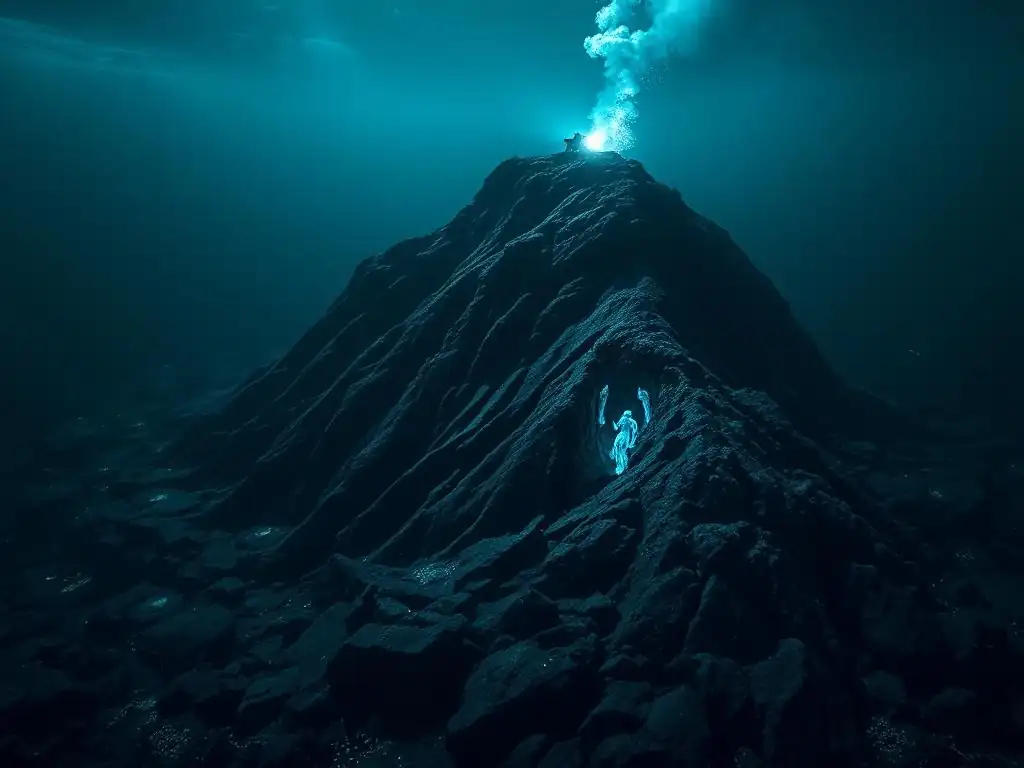
Axial Seamount, located on the Juan de Fuca Ridge off the coast of the Pacific Northwest of North America, is one of the most well-studied submarine volcanoes in the world. Its relatively shallow depth (summit around 1500 meters, or 5000 feet) and frequent eruptions have made it a prime location for long-term monitoring and research. Axial Seamount has erupted several times in recent decades, with eruptions observed in 1998, 2011, and 2015, and again in 2024, providing valuable data on eruption processes, magma dynamics, and hydrothermal vent activity.
The volcano is extensively instrumented with seafloor observatories, including sensors for seismicity, pressure, temperature, and water chemistry. These observatories provide real-time data on volcanic activity and hydrothermal vent processes. Studies at Axial Seamount have significantly advanced our understanding of submarine volcanism, hydrothermal vent ecosystems, and the interactions between geological and biological processes in the deep ocean. Axial Seamount serves as a benchmark for studying other submarine volcanoes and addressing submarine volcano mysteries.
Havre Seamount: Lessons Learned from the Largest Recorded Submarine Eruption
Havre Seamount, located in the Kermadec Arc north of New Zealand, was the site of the largest recorded submarine eruption in history in 2012. This eruption, while unseen at the surface, was detected by satellite observations of a vast pumice raft covering an area of approximately 400 square kilometers (150 square miles). Subsequent research expeditions to Havre Seamount revealed the scale and impact of this massive eruption, which involved the eruption of a large volume of pumice and the formation of a new volcanic cone on the seamount's flank.
The Havre Seamount eruption provided unprecedented insights into the dynamics of large submarine eruptions and their potential hazards. The pumice raft, which drifted across the Pacific Ocean, demonstrated the long-range dispersal of volcanic material from submarine eruptions. Studies of the eruption deposits and the newly formed volcanic cone have helped to refine models of submarine volcanic processes and the evolution of submarine volcanic edifices. Havre Seamount underscores the potential for large and impactful eruptions from submarine volcanoes, highlighting the importance of monitoring and understanding these events.
Kick-'em-Jenny: Ongoing Research and Monitoring Efforts
Kick-'em-Jenny, a submarine volcano located in the Caribbean Sea near Grenada, is another example of a well-studied and actively monitored underwater volcano. Kick-'em-Jenny is known for its frequent, although typically small, eruptions and its potential to generate tsunamis. Its proximity to populated islands makes it a significant hazard. The volcano is monitored by a network of seismic stations and hydrophones, providing early warning of potential eruptions.
Research at Kick-'em-Jenny focuses on understanding its eruption dynamics, magma supply system, and the potential for larger, more hazardous eruptions. Studies have revealed that Kick-'em-Jenny is a complex volcanic system with a history of both explosive and effusive eruptions. Ongoing monitoring and research efforts are crucial for assessing the volcanic hazards posed by Kick-'em-Jenny and mitigating risks to nearby communities. Kick-'em-Jenny highlights the importance of studying and monitoring even relatively smaller submarine volcanoes in volcanically active regions and addressing the submarine volcano mysteries related to their behavior and potential hazards.
The Future of Submarine Volcano Exploration: A Call to Action
Investing in Research and Technology: Prioritizing Submarine Volcano Studies
Unraveling submarine volcano mysteries requires a significant investment in research and technology. Increased funding is needed to support oceanographic expeditions, the development of advanced underwater technologies, and the training of the next generation of marine volcanologists and oceanographers. Prioritizing submarine volcano studies is crucial for advancing our understanding of fundamental Earth processes, ocean chemistry, marine ecosystems, and potential hazards.
Investment should focus on developing more capable and cost-effective AUVs and ROVs, improving sonar and remote sensing technologies, and establishing long-term seafloor observatories at key submarine volcanoes. Furthermore, supporting interdisciplinary research that integrates geology, biology, chemistry, and oceanography is essential for a holistic understanding of these complex systems. Recognizing the global significance of submarine volcanoes and their impact on our planet should drive increased investment in their exploration and study.
International Collaboration: Sharing Data and Expertise
International collaboration is essential for advancing submarine volcano exploration on a global scale. The vastness of the oceans and the complexity of submarine volcano mysteries necessitate the pooling of resources, expertise, and data from researchers and institutions around the world. International partnerships can facilitate access to research vessels, shared use of advanced technologies, and the exchange of scientific knowledge.
Data sharing is crucial for building a comprehensive global database of submarine volcano locations, characteristics, and activity. Standardized data collection protocols and open access data repositories can enhance the efficiency and effectiveness of research efforts. International collaborative projects, such as global ocean observing systems, can provide a framework for sustained monitoring and research of submarine volcanoes worldwide. Addressing submarine volcano mysteries effectively requires a coordinated and collaborative global effort.
Protecting Vulnerable Ecosystems: Responsible Exploration Practices
As we venture into uncharted submarine volcanic regions, it is imperative to adopt responsible exploration practices that prioritize the protection of vulnerable ecosystems. Hydrothermal vent ecosystems are fragile and slow to recover from disturbance. Exploration activities should be conducted in a way that minimizes environmental impact, avoiding unnecessary damage to vent sites and surrounding habitats. Developing and implementing best practices for deep-sea exploration is crucial.
Environmental impact assessments should be conducted prior to any exploration activities in sensitive areas. Mitigation measures, such as minimizing seafloor disturbance and preventing the introduction of invasive species, should be implemented. Furthermore, the potential for future resource extraction from submarine volcano-related mineral deposits should be approached with caution and guided by strong environmental safeguards. Responsible exploration and stewardship of these unique deep-sea environments are essential for ensuring their long-term health and preserving the submarine volcano mysteries for future generations to study and appreciate.
Conclusion: Embracing the Unknown in the Realm of Submarine Volcanism
The world of unexplored submarine volcanism represents a vast frontier of scientific discovery. The submarine volcano mysteries that remain are not just geological puzzles, but gateways to understanding fundamental Earth processes, the limits of life, and the interconnectedness of our planet. Embracing the unknown in this realm requires a commitment to sustained exploration, technological innovation, international collaboration, and responsible environmental stewardship.
As we continue to delve into the depths, utilizing advanced tools and fostering global partnerships, we are poised to unlock the secrets of uncharted submarine volcanoes. The discoveries awaiting us in these hidden volcanic realms promise to revolutionize our understanding of our planet and our place within it. The journey to unravel submarine volcano mysteries is a call to adventure, a testament to human curiosity, and a vital endeavor for the future of Earth science.
Frequently Asked Questions
What makes unexplored submarine volcanoes so mysterious?
Unexplored submarine volcanoes are mysterious due to their difficult accessibility and the challenges of studying them in deep ocean environments. This lack of direct observation leads to many unknowns about their activity and characteristics.
Why is it important to study unexplored submarine volcanoes?
Studying them is vital for understanding global geological processes, potential tsunami hazards, and the unique ecosystems they support. They also offer insights into the Earth's mantle and the formation of new crust.
What are some of the challenges in exploring submarine volcanoes?
Challenges include the extreme pressure at depth, the high cost of deep-sea exploration, and the limitations of remote sensing technology. Collecting data requires specialized equipment and expertise.
How do unexplored submarine volcanoes contribute to marine life?
They create hydrothermal vents that support unique chemosynthetic ecosystems. These vents provide energy and nutrients for specialized organisms that thrive in the absence of sunlight, forming isolated biological communities.
What technological advancements are helping us explore these uncharted territories?
Advances in autonomous underwater vehicles (AUVs), remotely operated vehicles (ROVs), and sonar technology are enabling scientists to map and study these volcanoes in greater detail. These tools allow for real-time data collection and sample retrieval.
Final Reflection: Echoes of the Deep
The exploration of uncharted submarine volcanoes, as we've discussed, isn't just a scientific endeavor; it's a profound confrontation with the unknown. The mysteries of these underwater giants resonate deeply with our innate human curiosity and the enduring quest to understand our planet's hidden forces. The secrets they hold, from unique ecosystems to potential geological hazards, demand our attention and inspire further investigation.
The impact of understanding these unexplored realms extends far beyond scientific journals. It touches upon our understanding of Earth's history, the potential for new resources, and the very future of our oceans. The sheer scale and power of these volcanoes, hidden beneath the waves, serve as a constant reminder of the forces that shape our world. The sea, once it casts its spell, holds one in its net of wonder forever.
- Jacques Cousteau. This quote perfectly encapsulates the allure and importance of exploring these submerged landscapes.
Now, consider the implications of these discoveries. What new perspectives do they offer on the interconnectedness of our planet? How can we, as individuals, support the continued exploration and protection of these vital, yet vulnerable, ecosystems? Let the mysteries of unexplored submarine volcanoes ignite your own sense of wonder and inspire you to become a steward of our planet's hidden depths.
Dive Deeper: Explore the Mysteries of Submarine Volcanoes!
Thank you for joining us on this exploration of unexplored submarine volcanoes. We hope you've gained a new appreciation for these hidden wonders of the deep ocean. Now, let's turn this newfound knowledge into action!
Here's how you can continue your exploration:
- Become a citizen scientist! Visit our "Volunteer with Us" section to learn how you can contribute to ongoing research and data collection, directly supporting real-world volcano exploration.
- Share your passion! Spread the word about the fascinating world of submarine volcanoes. Increased awareness leads to greater support for future research and exploration.
- Challenge yourself! Choose a specific submarine volcano from the article and create a presentation about it. Share your findings with our community on the discussion forum.
What was the most surprising fact you learned about submarine volcanoes today, and how will you help further our understanding of these remarkable geological features?