
From Rumblings to Rupture: AI's Journey to Anticipate Volcanic Explosions

Welcome to Volcano Explorers, where the earth breathes fire and molten rock shapes our world. Ever wondered if we could truly predict the fury of a volcano before it unleashes its power? Dive into our latest article, "From Rumblings to Rupture: AI's Journey to Anticipate Volcanic Explosions," and uncover how cutting-edge technology is revolutionizing our understanding – and potentially saving lives – by predicting volcanic eruption patterns. What secrets are hidden within the earth's tremors? Let's find out...
- Understanding the Challenges of Predicting Volcanic Eruptions
- Machine Learning and AI: A New Era in Volcano Forecasting
- AI-Powered Analysis of Volcanic Data: A Multi-Faceted Approach
- Case Studies: AI Successes in Predicting Volcanic Activity
- The Future of AI in Volcano Prediction: Advancements and Potential
- Ethical Considerations and Responsible Implementation of AI in Volcanology
- Conclusion: AI as a Vital Tool for Mitigating Volcanic Risk
-
Frequently Asked Questions
- How is AI being used to improve our understanding of predicting volcanic eruption patterns?
- What are some of the biggest challenges in accurately predicting volcanic eruption patterns?
- Can AI completely eliminate the uncertainty associated with predicting volcanic eruption patterns?
- What types of data are crucial for AI models to effectively predict volcanic eruption patterns?
- How can the improved prediction of volcanic eruption patterns benefit communities living near active volcanoes?
- Final Reflection: Embracing the Power of Predictive Insight
- Unleash Your Inner Volcanologist: The Earth Awaits!
Understanding the Challenges of Predicting Volcanic Eruptions
The Inherent Complexity of Volcanic Systems
Volcanoes are incredibly complex natural systems, making them notoriously difficult to predict. The processes leading to an eruption occur deep within the Earth, often kilometers below the surface, hidden from direct observation. Magma generation, ascent, and accumulation are influenced by a multitude of factors including tectonic stress, crustal structure, volatile content, and the intricate dynamics of magma chambers.
These factors interact in non-linear ways, meaning small changes in one parameter can lead to significant and unpredictable shifts in volcanic behavior. This inherent complexity means that even with advanced monitoring technologies, deciphering the subtle signals that precede an eruption remains a formidable challenge.
Adding to the complexity is the variability in volcanic activity across different volcanoes and even within the same volcano over time. Each volcano possesses a unique plumbing system, geological history, and eruptive style. Some volcanoes exhibit relatively predictable patterns of activity, while others are characterized by long periods of quiescence punctuated by sudden, explosive eruptions with little to no warning.
For example, Strombolian volcanoes like Stromboli in Italy are known for their frequent, mild eruptions, contrasting sharply with the devastating explosive potential of caldera-forming volcanoes like Yellowstone in the United States. This diversity requires tailored monitoring approaches and makes it difficult to generalize prediction methods from one volcano to another.
Traditional Volcano Monitoring Techniques: Limitations and Advancements
For decades, volcanologists have relied on a suite of traditional monitoring techniques to track volcanic activity. These methods include seismometry, which detects ground vibrations caused by magma movement and volcanic earthquakes; geodetic measurements, which monitor ground deformation like swelling or subsidence using GPS and satellite radar; and gas geochemistry, which analyzes the composition and flux of volcanic gases released from vents and fumaroles. Thermal monitoring, using infrared cameras and satellite imagery, helps track changes in surface temperatures that can indicate magma ascent or lava flow activity.
While these traditional methods have been instrumental in understanding volcanic processes and providing valuable warnings, they also have limitations. Seismic signals can be ambiguous and difficult to interpret, especially in noisy environments. Geodetic changes can be subtle and require precise instruments and long-term data sets to discern meaningful trends.
Gas measurements are often localized and may not capture the full picture of degassing processes occurring deeper within the volcanic system. Furthermore, integrating and interpreting the vast amounts of data generated by these diverse monitoring networks is a labor-intensive and time-consuming task, often relying on manual analysis by expert volcanologists. Advancements in sensor technology, data transmission, and analytical techniques are continuously improving these methods, but the inherent complexity of volcanic data still presents a significant hurdle for accurate and timely eruption prediction.
The Need for Enhanced Prediction Methods: Protecting Communities Near Volcanoes
The consequences of volcanic eruptions can be devastating, posing significant risks to communities living near active volcanoes. Explosive eruptions can generate pyroclastic flows, lahars (volcanic mudflows), ashfall, and volcanic bombs, causing widespread destruction, infrastructure damage, and loss of life. Even effusive eruptions, characterized by lava flows, can inundate communities and disrupt livelihoods. The 1985 eruption of Nevado del Ruiz in Colombia, triggered by a relatively small eruption that melted glacial ice and generated massive lahars, tragically killed over 25,000 people in the town of Armero, highlighting the deadly potential of even moderate volcanic events.
Therefore, the development of more accurate and reliable eruption prediction methods is crucial for mitigating volcanic risk and protecting vulnerable populations. Improved forecasting can enable timely evacuations, infrastructure protection measures, and effective resource allocation during volcanic crises. The economic and social costs associated with volcanic eruptions are substantial, impacting agriculture, tourism, and regional development. Investing in enhanced prediction capabilities not only saves lives but also reduces economic losses and promotes community resilience in volcanically active regions around the globe. As populations continue to grow near volcanoes, the need for advanced warning systems becomes increasingly critical.
Machine Learning and AI: A New Era in Volcano Forecasting
How AI is Transforming Volcanic Eruption Prediction
Artificial Intelligence (AI) and machine learning (ML) are revolutionizing numerous fields, and volcanology is no exception. AI's ability to process and analyze vast datasets, identify subtle patterns, and learn from complex relationships offers a powerful new approach to volcanic eruption prediction. Traditional methods often struggle to cope with the sheer volume and complexity of volcanic monitoring data. AI algorithms, on the other hand, can efficiently sift through massive datasets from seismic networks, geodetic instruments, gas sensors, and satellite observations to extract meaningful signals that might be missed by human analysts.
Furthermore, AI can learn to recognize precursory patterns that are indicative of an impending eruption. Machine learning models can be trained on historical datasets of volcanic activity, learning to identify subtle anomalies and precursors that precede eruptions. These models can then be applied to real-time monitoring data to detect similar patterns and provide early warnings.
Unlike traditional statistical methods that often rely on linear relationships, AI can capture non-linear dynamics and complex interactions within volcanic systems, leading to more nuanced and potentially more accurate predictions. This transformative potential of AI is paving the way for a new era in volcano forecasting, moving beyond simple threshold-based warnings to probabilistic eruption forecasts that can better inform decision-making.
Leveraging Machine Learning for Early Detection of Volcanic Unrest
Early detection of volcanic unrest is paramount for effective eruption prediction. Machine learning algorithms are particularly well-suited for this task due to their ability to detect subtle changes in monitoring data that might indicate a volcano is awakening. For instance, ML models can be trained to identify subtle changes in seismic activity, such as variations in earthquake frequency, magnitude, and location, that precede periods of heightened volcanic activity. These models can learn to distinguish between background seismicity and signals that are truly indicative of magma movement or pressure build-up within the volcanic system.
Similarly, AI can be applied to analyze geodetic data for early signs of ground deformation. Subtle inflation or changes in strain patterns, which might be difficult to discern visually in raw GPS or InSAR data, can be detected by ML algorithms trained to recognize pre-unrest deformation patterns. By continuously monitoring and analyzing these diverse data streams, AI systems can provide volcanologists with an early warning system, signaling when a volcano is showing signs of reawakening or transitioning from a quiescent state to a period of unrest, allowing for more intensive monitoring and preparedness measures to be implemented.
AI's Role in Analyzing Seismic Data for Eruption Forecasting
Seismic data is a cornerstone of volcano monitoring, and AI is proving to be an invaluable tool for extracting eruption-relevant information from complex seismic signals. Machine learning can be used to improve the accuracy and speed of earthquake detection and characterization, allowing for real-time analysis of seismic swarms and volcanic tremor.
Traditional methods for earthquake analysis often rely on manual processing and can be time-consuming, especially when dealing with large volumes of data from dense seismic networks. AI algorithms, particularly deep learning models, can automate and accelerate this process, enabling faster identification of seismic patterns associated with magma movement and eruption processes.
Furthermore, AI can go beyond simply detecting earthquakes and delve into the nuanced characteristics of seismic signals to infer subsurface processes. For example, machine learning can be used to classify different types of volcanic earthquakes, such as volcano-tectonic earthquakes, long-period earthquakes, and tremor, which are often associated with different stages of volcanic unrest.
AI can also be trained to identify subtle changes in seismic wave attributes, such as frequency content and amplitude, that can provide insights into magma ascent pathways, pressure changes within the volcanic conduit, and the likelihood of an impending eruption. By extracting more information from seismic data, AI is enhancing our ability to understand the inner workings of volcanoes and improve eruption forecasts.
AI-Powered Analysis of Volcanic Data: A Multi-Faceted Approach

Seismic Activity Analysis: Identifying Patterns Preceding Eruptions
AI excels at identifying complex patterns in seismic data that might be imperceptible to human analysts. Machine learning algorithms can be trained to recognize subtle changes in seismic parameters, such as the rate of earthquake occurrence, the energy released by earthquakes (magnitude), and the location of earthquake clusters, that often precede volcanic eruptions.
For example, a study at the Sierra Negra volcano in Galapagos Islands utilized machine learning to analyze seismic data and successfully identified accelerating seismic moment release as a precursor to eruptions in 2005 and 2018. This approach demonstrated the potential of AI in detecting subtle pre-eruptive seismic patterns that might be missed by traditional monitoring methods.
Beyond simple earthquake counts and magnitudes, AI can analyze the waveforms of seismic signals to extract more detailed information. Techniques like deep learning can be used to classify different types of volcanic seismic events automatically and with high accuracy. This is crucial because different types of earthquakes (e.g., volcano-tectonic, long-period, tremor) can indicate different processes occurring within the volcano.
For instance, an increase in long-period earthquakes is often associated with magma movement, while volcanic tremor can indicate fluid flow within the volcanic conduit. AI's ability to rapidly and accurately classify these events in real-time provides volcanologists with a more nuanced understanding of the evolving volcanic state.
Gas Emission Monitoring: AI for Detecting Changes in Volcanic Gases
Volcanic gases provide valuable insights into magma processes occurring beneath the surface. Changes in the composition and flux of gases like sulfur dioxide (SO2), carbon dioxide (CO2), and water vapor (H2O) can signal changes in magma degassing and ascent, potentially indicating an impending eruption.
AI can be applied to analyze time-series data from gas sensors and satellite-based measurements to detect subtle anomalies and trends in gas emissions that might be precursory to volcanic activity. For example, machine learning algorithms can be trained to identify patterns in SO2 flux that are statistically significant departures from background levels and have historically preceded eruptions at a particular volcano.
Furthermore, AI can be used to analyze the ratios of different volcanic gases, which can provide information about the depth and source of magma. Changes in gas ratios, such as the CO2/SO2 ratio, can reflect changes in magma composition or degassing conditions. AI models can learn to identify specific gas ratio signatures that are associated with different eruptive phases or volcanic states. Real-time analysis of gas data using AI can therefore provide an early warning system based on changes in volcanic degassing behavior, complementing seismic and deformation monitoring data.
Ground Deformation Analysis: Using AI to Interpret Volcanic Swelling and Subsidence
Ground deformation, the swelling and subsidence of the Earth's surface around a volcano, is a direct manifestation of magma movement and pressure changes within the volcanic system. Geodetic techniques like GPS and InSAR (Interferometric Synthetic Aperture Radar) provide precise measurements of ground deformation. However, interpreting these deformation signals can be complex, as they can be influenced by various factors including tectonic processes, hydrological changes, and magma dynamics. AI can assist in disentangling these complex signals and extracting deformation patterns specifically related to volcanic activity.
Machine learning algorithms can be trained to model the expected background deformation patterns at a volcano, accounting for tectonic and hydrological influences. By comparing real-time deformation data to these background models, AI can identify anomalous deformation signals that are likely related to magma movement. Furthermore, AI can be used to invert deformation data to estimate the location, shape, and volume changes of magma reservoirs beneath the surface.
This allows volcanologists to track magma accumulation and migration in near real-time, improving their ability to assess eruption potential. For example, studies using AI and geodetic data at volcanoes like Campi Flegrei in Italy have shown promise in identifying subtle pre-eruptive deformation signals.
Integrating Multiple Data Streams: AI for Comprehensive Volcano Monitoring
The true power of AI in volcano prediction lies in its ability to integrate and analyze multiple data streams simultaneously. Volcano monitoring generates vast amounts of data from various sources: seismic networks, geodetic instruments, gas sensors, thermal cameras, and satellite observations. Traditional volcano monitoring often involves analyzing these datasets in isolation, limiting the ability to capture the complex interplay between different volcanic processes. AI provides a framework for fusing these diverse data streams into a unified picture of volcanic activity.
Machine learning algorithms can be designed to learn the complex relationships and correlations between different monitoring parameters. For instance, AI can learn how changes in seismic activity, ground deformation, and gas emissions are related and how these relationships evolve over time as a volcano approaches eruption. By analyzing these multi-parameter datasets, AI can identify more robust and reliable precursory signals than would be possible by analyzing each data stream individually. This integrated approach, leveraging the ability of AI to process and learn from complex, multi-dimensional data, is significantly enhancing the accuracy and reliability of volcanic eruption forecasts.
Case Studies: AI Successes in Predicting Volcanic Activity
Kilauea: AI Analysis of Lava Flow Dynamics and Hazard Assessment
Kilauea volcano in Hawaii, known for its frequent effusive eruptions, provides a compelling case study for AI application in lava flow hazard assessment. Researchers have used machine learning to analyze historical data of lava flow paths, topography, and eruption parameters at Kilauea to develop models that can predict the likely paths of future lava flows.
These models are trained on datasets that include pre-eruption topography, vent locations, and eruption rates from past events. Once trained, the AI model can be used to simulate lava flow inundation areas for potential future eruptions, providing valuable information for hazard mapping and mitigation planning.
For example, during the 2018 Lower East Rift Zone eruption of Kilauea, AI-powered lava flow simulations were used to forecast the progression of lava flows and assess the areas at risk. While predicting the exact path of lava flows remains challenging due to the complex interplay of factors like topography and lava rheology, these AI models provided valuable guidance for emergency responders and helped inform evacuation decisions. This case study demonstrates the practical utility of AI in improving our ability to anticipate lava flow hazards and mitigate their impact on communities.
Mount St. Helens: Using Machine Learning to Analyze Pre-Eruption Seismic Swarms
Mount St. Helens, famous for its catastrophic 1980 eruption, has been the subject of AI-driven research focused on analyzing pre-eruption seismic swarms. Prior to the 1980 eruption, Mount St. Helens experienced intense seismic activity, including thousands of earthquakes, which provided crucial warning signs. Researchers have applied machine learning techniques to re-analyze the seismic data from this period, aiming to identify specific patterns within the seismic swarms that could have provided even earlier or more precise warnings.
Studies have used algorithms like Support Vector Machines (SVMs) and Random Forests to classify different types of seismic events and identify subtle changes in earthquake characteristics that preceded the eruption. The goal is to develop AI models that can automatically detect and interpret pre-eruptive seismic swarms in real-time, improving the ability to recognize and respond to volcanic unrest. These analyses of Mount St. Helens data highlight the potential of AI to extract valuable information from historical datasets and refine our understanding of pre-eruptive processes, ultimately leading to better eruption forecasting capabilities for similar volcanoes.
Popocatépetl: AI-Driven Monitoring of Gas Plume Composition for Early Warning
Popocatépetl volcano in Mexico, located near densely populated areas, is actively monitored using a variety of techniques, including gas plume analysis. Researchers are exploring the use of AI to enhance the monitoring of Popocatépetl's gas plume composition for early eruption warning. Changes in the ratios of different gases in the volcanic plume, particularly increases in SO2 and HCl, can be indicative of magma ascent and increased eruption potential. However, analyzing gas plume data can be challenging due to atmospheric variability and instrument noise.
AI algorithms, particularly time-series analysis techniques and machine learning classification models, are being applied to analyze spectroscopic measurements of Popocatépetl's gas plume. These models are trained to identify subtle but significant changes in gas ratios and fluxes that are statistically correlated with increased volcanic activity. Real-time AI-driven analysis of gas plume data offers the potential to provide an early warning system based on changes in volcanic degassing behavior, complementing other monitoring data and enhancing the overall eruption forecasting capability at Popocatépetl and similar volcanoes worldwide.
The Future of AI in Volcano Prediction: Advancements and Potential
Improving the Accuracy of Volcanic Eruption Forecasts with AI
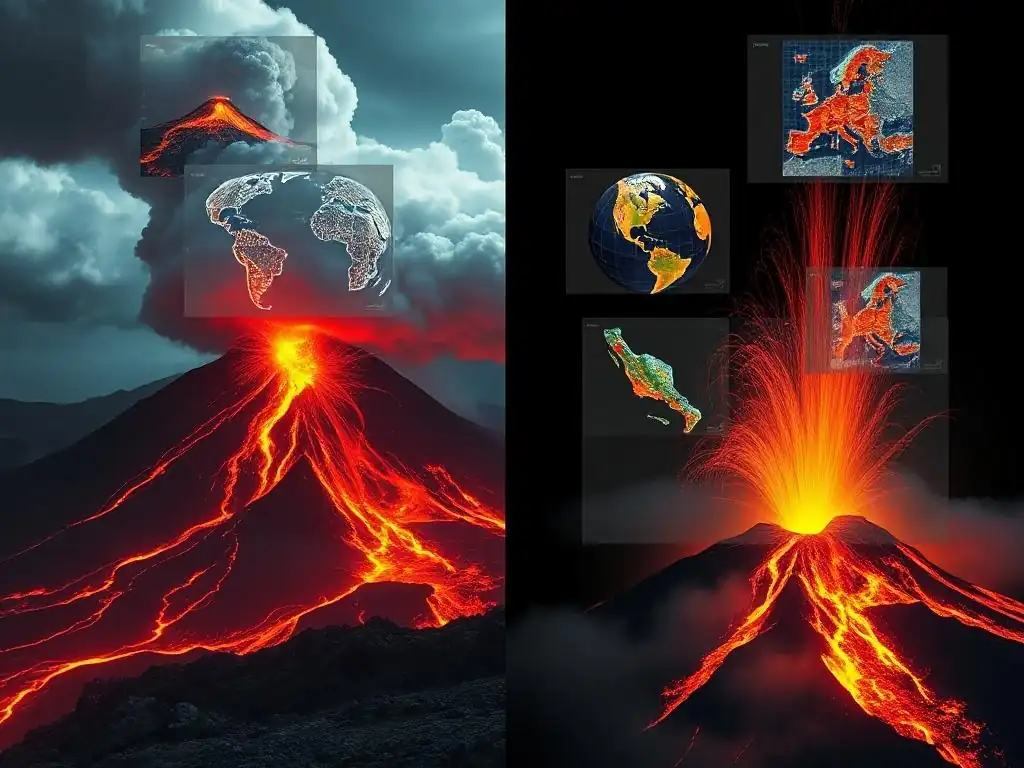
The future of volcanic eruption prediction is inextricably linked to the continued advancement and application of AI. As AI algorithms become more sophisticated and our datasets grow larger and more comprehensive, we can expect to see significant improvements in the accuracy and reliability of eruption forecasts. One key area of advancement is in the development of more complex and nuanced machine learning models that can capture the non-linear dynamics and intricate interactions within volcanic systems. Deep learning techniques, in particular, hold immense promise for learning complex patterns from massive datasets and providing more accurate probabilistic eruption forecasts.
Furthermore, the integration of diverse data streams using AI will become increasingly sophisticated. Future AI systems will be able to seamlessly fuse data from seismic, geodetic, gas, thermal, and even infrasound monitoring networks, creating a holistic and dynamic picture of volcanic activity. This multi-sensor data fusion, coupled with advanced AI algorithms, will enable volcanologists to move beyond simple threshold-based warnings to more probabilistic and nuanced eruption forecasts that can better inform decision-making and risk mitigation strategies.
Developing Real-Time AI Systems for Immediate Eruption Alerts
The development of real-time AI systems capable of providing immediate eruption alerts is a critical goal for the future of volcano monitoring. Current volcano monitoring systems often rely on human analysis and interpretation of data, which can introduce delays in issuing warnings, particularly during rapidly evolving volcanic crises. AI offers the potential to automate the entire process, from data acquisition and analysis to alert dissemination, significantly reducing response times.
Real-time AI systems will continuously monitor incoming data streams from volcano monitoring networks, automatically analyze the data using pre-trained machine learning models, and issue alerts when pre-defined thresholds or patterns indicative of an impending eruption are detected. These alerts can be disseminated directly to emergency responders, civil protection agencies, and at-risk communities, providing crucial early warning time for evacuation and other protective measures. The development of robust and reliable real-time AI alert systems is essential for enhancing community safety and mitigating the impact of volcanic eruptions in the future.
Challenges and Opportunities in AI-Driven Volcanic Hazard Assessment
While AI offers tremendous potential for revolutionizing volcano prediction, there are also challenges and opportunities that need to be addressed to fully realize its benefits. One challenge is the availability of high-quality, labeled datasets for training machine learning models. Volcanic eruptions are relatively infrequent events, and historical datasets are often limited in size and completeness. Developing methods to train AI models effectively with limited data, such as transfer learning and data augmentation techniques, is crucial.
Another challenge is the interpretability of AI models. Complex machine learning models, particularly deep learning networks, can be "black boxes," making it difficult to understand why they make certain predictions. In volcanology, it is essential to understand the physical basis for AI predictions to build trust and confidence in these systems.
Developing explainable AI (XAI) techniques that can provide insights into the decision-making process of AI models is a critical area of research. Despite these challenges, the opportunities for AI to transform volcanic hazard assessment are immense. Continued research and development in AI, coupled with close collaboration between volcanologists, computer scientists, and stakeholders, will pave the way for a safer and more resilient future for communities living near volcanoes.
Ethical Considerations and Responsible Implementation of AI in Volcanology
Data Privacy and Security in Volcano Monitoring
As AI systems become more integrated into volcano monitoring, ethical considerations regarding data privacy and security become increasingly important. Volcano monitoring networks collect vast amounts of data, some of which may include sensitive information about communities living near volcanoes, such as population density, infrastructure locations, and evacuation routes. It is crucial to ensure that this data is handled responsibly and securely, protecting the privacy of individuals and communities.
Data anonymization techniques should be implemented to protect personal information, and robust cybersecurity measures should be put in place to prevent unauthorized access to sensitive data. Transparency about data collection and usage practices is also essential to build public trust. Ethical guidelines and protocols should be developed to govern the collection, storage, and use of data in AI-driven volcano monitoring, ensuring that data privacy and security are prioritized.
Ensuring Fairness and Transparency in AI-Based Eruption Warnings
Fairness and transparency are paramount in the development and deployment of AI-based eruption warning systems. Eruption warnings have significant societal implications, triggering evacuations and potentially disrupting livelihoods. It is crucial to ensure that AI-based warning systems are fair, unbiased, and transparent in their operation. Bias in training data or algorithmic design could lead to unfair or discriminatory warnings, potentially disproportionately impacting certain communities.
Transparency in how AI systems make predictions is also essential for building public trust and enabling informed decision-making. Communities need to understand the basis for eruption warnings and have confidence in the reliability and accuracy of the system. Explainable AI techniques can play a crucial role in enhancing the transparency of AI-based warning systems, providing insights into the factors driving eruption predictions and fostering greater public understanding and acceptance.
Collaborating with Communities for Effective Eruption Preparedness
Effective eruption preparedness requires close collaboration between volcanologists, civil protection agencies, and at-risk communities. AI-driven eruption prediction systems are powerful tools, but they are most effective when integrated into a broader framework of community-based preparedness. Volcanologists need to engage with communities to understand their needs, concerns, and local knowledge, tailoring AI-based warning systems to specific community contexts.
Community participation in the design and implementation of warning systems is crucial for building trust and ensuring that warnings are effectively communicated and understood. Educational programs and outreach initiatives are essential to raise public awareness about volcanic hazards and promote preparedness measures. Collaboration between scientists, emergency managers, and communities is key to translating AI-driven eruption predictions into effective risk mitigation strategies and building resilient communities in volcanically active regions.
Conclusion: AI as a Vital Tool for Mitigating Volcanic Risk
The Promise of AI for Enhanced Volcanic Eruption Prediction Patterns
Artificial intelligence holds immense promise as a vital tool for enhancing our ability to predict volcanic eruption patterns. AI's capacity to analyze vast datasets, identify subtle precursory signals, and integrate diverse monitoring information is revolutionizing volcano forecasting. From improving the accuracy of eruption forecasts to enabling real-time alert systems, AI is empowering volcanologists with unprecedented capabilities to understand and anticipate volcanic activity. As AI technology continues to advance, we can expect even more sophisticated and reliable eruption prediction tools that will significantly improve our ability to mitigate volcanic risk.
Empowering Volcanologists with AI-Driven Insights
Ultimately, AI serves to empower volcanologists with new insights and capabilities, augmenting their expertise and enhancing their ability to protect communities from volcanic hazards. AI is not intended to replace volcanologists but rather to serve as a powerful assistant, processing and analyzing data at speeds and scales beyond human capacity, and revealing subtle patterns that might otherwise be missed.
By leveraging AI-driven insights, volcanologists can make more informed decisions, issue more timely and accurate warnings, and ultimately contribute to building safer and more resilient communities in the face of volcanic threats. The future of volcanology is undoubtedly intertwined with the continued development and responsible implementation of artificial intelligence.
Frequently Asked Questions
How is AI being used to improve our understanding of predicting volcanic eruption patterns?
AI algorithms analyze vast datasets of seismic activity, gas emissions, and ground deformation to identify subtle patterns that may precede an eruption. This allows for potentially more accurate and timely warnings.
What are some of the biggest challenges in accurately predicting volcanic eruption patterns?
Volcanoes are complex and unpredictable systems. Data can be incomplete or noisy, and each volcano has its own unique characteristics, making it difficult to generalize predictions.
Can AI completely eliminate the uncertainty associated with predicting volcanic eruption patterns?
No, AI is a powerful tool, but it's not a crystal ball. It can improve accuracy and lead time, but volcanoes remain fundamentally complex and unpredictable systems.
What types of data are crucial for AI models to effectively predict volcanic eruption patterns?
Key data sources include seismic data from seismometers, gas emission measurements (e.g., sulfur dioxide), ground deformation data from GPS and satellite imagery, and historical eruption records.
How can the improved prediction of volcanic eruption patterns benefit communities living near active volcanoes?
More accurate and timely warnings allow for better evacuation planning, resource allocation, and overall preparedness, potentially saving lives and minimizing the impact of eruptions.
Okay, here's a final reflection designed to conclude your article "From Rumblings to Rupture: AI's Journey to Anticipate Volcanic Explosions," optimized for the keyword "predicting volcanic eruption patterns" and following the requested structure:
Final Reflection: Embracing the Power of Predictive Insight
The journey from deciphering subtle seismic rumblings to accurately predicting volcanic eruption patterns represents a monumental leap in our ability to safeguard communities living in the shadow of these powerful forces of nature. This shift, driven by the innovative application of AI, is not merely a technological advancement; it's a testament to human ingenuity and our unwavering commitment to mitigating risk in the face of unpredictable natural disasters.
The ongoing development and refinement of AI-driven predictive models profoundly impacts the cultural landscape of volcanically active regions. Knowing that scientists are tirelessly working to improve eruption forecasting fosters a sense of security and preparedness, transforming fear into informed resilience. The only way to do great work is to love what you do.
- Steve Jobs. This quote resonates deeply with the dedication of researchers who are passionately pursuing advancements in predicting volcanic eruptions, driven by a genuine desire to protect lives and livelihoods.
Now, consider the implications of this progress beyond the immediate threat of volcanic eruptions. How can we apply the lessons learned from "predicting volcanic eruption patterns" to other areas where early warning systems are crucial, such as predicting earthquakes, tsunamis, or even climate change impacts? Let us embrace the spirit of innovation and collaboration, ensuring that the power of predictive insight is harnessed to build a safer and more resilient future for all.
Unleash Your Inner Volcanologist: The Earth Awaits!
Thanks for joining us on this thrilling exploration of how AI is revolutionizing volcano monitoring. We hope you've gained a newfound appreciation for the incredible power of technology in understanding our planet's most dynamic forces. Now, it's your turn to get involved!
Here are a few ways you can take action:
- Explore live seismic data streams from active volcanoes around the world! Many geological surveys provide public access, offering a real-time glimpse into the earth's activity.
- Share this article with friends and family who share your fascination with volcanology, or anyone curious about the power of AI. Help spread awareness of these groundbreaking advancements!
- Discover local geological societies or citizen science initiatives focused on earthquake and volcano monitoring. You might be surprised by the opportunities in your own area!
What new insights did you gain from this article that you plan to share with others?