
Beyond Basalt Columns: Exploring Other Astonishing Volcanic Rock Formations

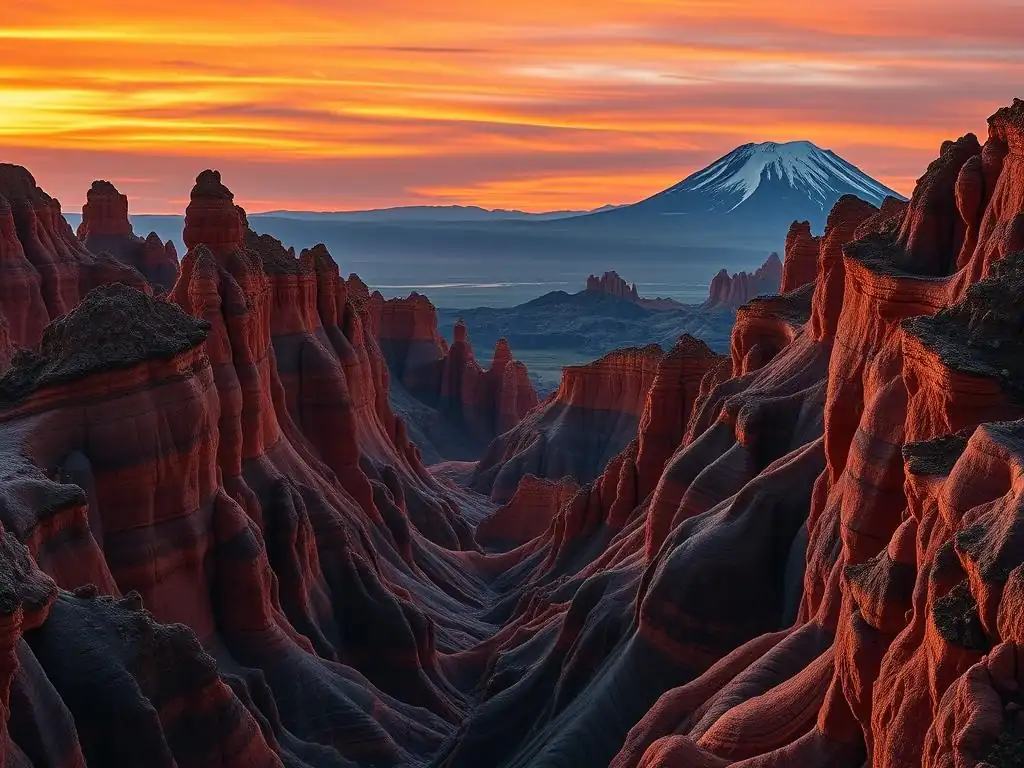
Welcome to Volcano Explorers, where the Earth's fiery heart meets curious minds. Ever wondered what secrets lie hidden beneath the smoke and ash? Prepare to be amazed, as we journey beyond the familiar basalt columns and uncover the world's most unique volcanic rock formations. Prepare to be captivated by the stunning landscapes forged by unimaginable power. What incredible shapes await? Let's explore!
- Introduction: Unveiling the Diversity of Unique Volcanic Rock Formations
- Columnar Jointing: More Than Just Basalt
- Volcanic Plugs and Necks: Remnants of Ancient Volcanoes
- Lava Tubes: Subterranean Wonders of Volcanic Activity
- Volcanic Domes: The Result of Viscous Lava Flows
- Pillow Lava: Underwater Volcanic Formations
- Pumice Rafts: Floating Evidence of Explosive Eruptions
- Spheroidal Weathering in Volcanic Rocks
- Tuff and Ignimbrite: Formations from Volcanic Ash
- Conclusion: Appreciating the Variety of Volcanic Rock Formations
-
Frequently Asked Questions
- What are some examples of unique volcanic rock formations beyond the typical basalt columns?
- How do unique volcanic rock formations contribute to our understanding of past volcanic activity?
- What role does erosion play in shaping unique volcanic rock formations over time?
- Where can I find examples of unique volcanic rock formations that are accessible to the public?
- How do scientists study and analyze unique volcanic rock formations to learn more about volcanoes?
- Final Reflection: Echoes of Earth's Fiery Heart
- Unearth Your Next Volcanic Adventure!
Introduction: Unveiling the Diversity of Unique Volcanic Rock Formations
Stepping Beyond the Familiar: A World of Volcanic Geology
When we think of volcanic landscapes, striking images of basalt columns often come to mind – the Giant's Causeway in Northern Ireland or Devils Postpile in California stand as testaments to nature's geometric artistry. However, the realm of volcanic geology extends far beyond these iconic formations.
The Earth's volcanic processes, driven by immense heat and pressure, sculpt a breathtaking array of rock formations, each with its own unique story of creation. From towering volcanic plugs to sprawling subterranean lava tubes, and even buoyant rafts of pumice floating on the ocean, the diversity of volcanic rock formations is truly astonishing, offering a rich field of study for geologists and a source of wonder for all who witness them.
The Allure of Unusual Volcanic Landscapes
These unusual volcanic landscapes hold an undeniable allure. They speak of powerful geological forces at play, shaping and reshaping our planet over millennia. These formations are not merely static rocks; they are dynamic records of volcanic events, each layer and texture whispering tales of eruptions, lava flows, and the slow, relentless processes of cooling and erosion.
Exploring these landscapes allows us to connect with the Earth's fiery heart, to understand the processes that have formed continents and oceans, and to appreciate the raw power and profound beauty inherent in the natural world. From the rugged terrains of volcanic necks that pierce the skyline to the otherworldly interiors of lava tubes, these unique formations invite exploration and ignite our curiosity about the planet beneath our feet.
Columnar Jointing: More Than Just Basalt
Understanding Columnar Jointing in Different Volcanic Rocks
While basalt columns are perhaps the most famous examples of columnar jointing, this fascinating phenomenon isn't exclusive to basalt. Columnar joints, characterized by polygonal columns that form as igneous rocks cool and contract, can occur in a variety of volcanic rock types. Andesite, dacite, and even some types of rhyolite can also exhibit columnar jointing.
The key factor is the cooling rate and the homogeneity of the cooling process. The size and shape of the columns can vary depending on the rock type and cooling conditions. For instance, while basalt columns are typically hexagonal and can be quite large, columnar jointing in rhyolite might produce columns with more irregular shapes and smaller dimensions.
The Geological Processes Behind Column Formation
The formation of columnar joints is a result of thermal contraction. As molten rock cools, it shrinks in volume. If the cooling is relatively uniform and slow, tensile stresses build up within the solidifying rock. These stresses eventually exceed the rock's tensile strength, causing it to fracture.
The fractures propagate in a polygonal pattern, typically hexagonal, as this is the most efficient way to relieve stress over a plane. Imagine mud drying in the sun and cracking into polygonal shapes – the principle is similar, but on a much grander scale and involving molten rock. The speed of cooling, the viscosity of the lava, and the presence of nucleation points for fractures all influence the final column size and regularity. Faster cooling generally results in smaller columns, while slower cooling allows for the development of larger, more well-defined columns.
Volcanic Plugs and Necks: Remnants of Ancient Volcanoes
Exploring the Formation of Volcanic Plugs
Volcanic plugs, also known as volcanic necks, are striking geological features that represent the solidified remains of magma conduits within extinct volcanoes. They form when magma solidifies within the vent of a volcano and the surrounding, softer volcanic cone erodes away over time. Because the plug is composed of denser, more resistant rock, it remains standing as a prominent landmark.
The magma that forms plugs is often viscous and silica-rich, meaning it doesn't flow easily and tends to solidify in place. These plugs can be composed of various volcanic rocks, including basalt, trachyte, or phonolite, depending on the volcano's magmatic composition.
Notable Examples of Volcanic Necks Worldwide
Several iconic volcanic necks punctuate landscapes across the globe, serving as dramatic reminders of past volcanic activity. Devil's Tower in Wyoming, USA, is a spectacular example, rising dramatically from the surrounding plains and showcasing columnar jointing on a massive scale. Another famous example is Shiprock in New Mexico, USA, a towering neck of dark volcanic breccia that dominates the desert landscape.
In Scotland, Edinburgh Castle is famously built atop Castle Rock, a volcanic plug that offered a strategic defensive position. These examples highlight the varied geological history and geographical distribution of volcanic necks, each telling a unique story of volcanic processes and landscape evolution.
Lava Tubes: Subterranean Wonders of Volcanic Activity
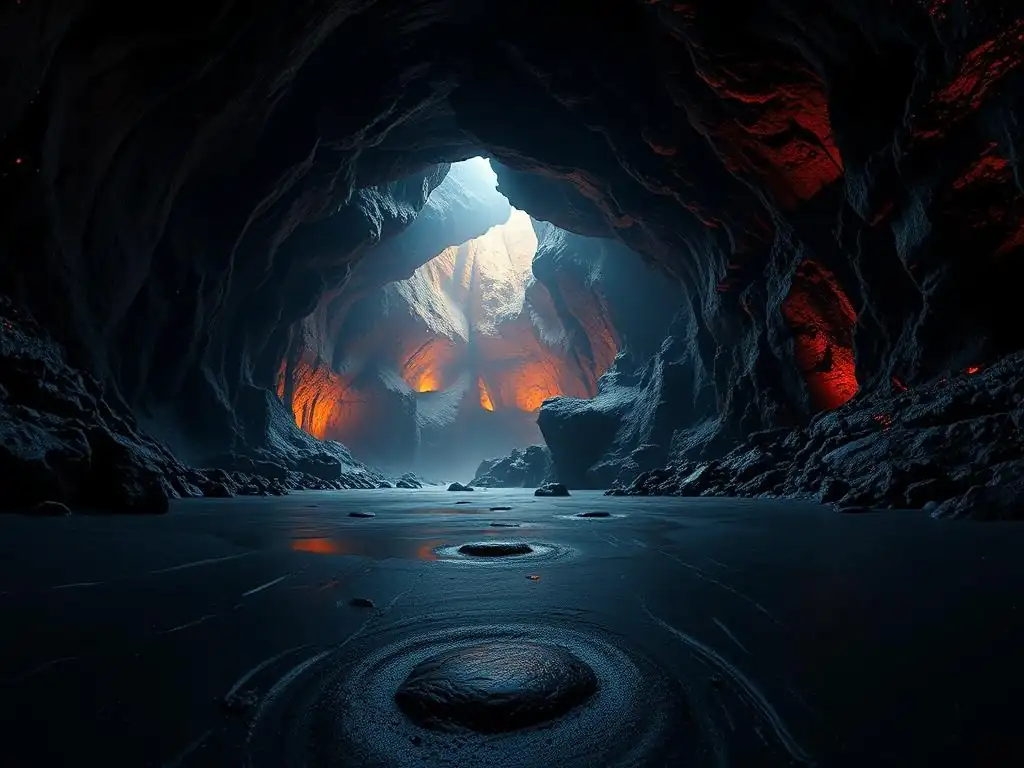
The Formation and Exploration of Lava Tubes
Lava tubes are natural tunnels formed within lava flows during volcanic eruptions. They develop in pahoehoe flows, a type of basaltic lava characterized by its smooth, ropy surface. As the surface of a lava flow cools and solidifies, it insulates the molten lava flowing beneath.
This molten interior continues to flow and drain away, eventually leaving behind a hollow tube. Lava tubes can range in size from a few meters to tens of kilometers in length and can be remarkably complex systems with multiple levels and branching passages. Exploration of lava tubes, known as speleovolcanology, is a challenging but rewarding pursuit, offering insights into volcanic processes and sometimes revealing unique cave ecosystems.
Cave Systems Formed by Volcanic Lava
These subterranean cave systems formed by volcanic lava are not just geological curiosities; they are also unique environments that can harbor specialized ecosystems. The stable temperature and humidity within lava tubes can create conditions suitable for certain types of cave-adapted organisms, including invertebrates like insects and spiders.
Some lava tubes also contain ice formations, creating ice caves that persist even in relatively warm climates. Furthermore, lava tubes on other planets and moons, like Mars and the Moon, are considered potential sites for future human habitats and may also be locations where evidence of past or present life could be found, protected from harsh surface conditions.
Volcanic Domes: The Result of Viscous Lava Flows
Understanding the Characteristics of Volcanic Domes
Volcanic domes are steep-sided, bulbous mounds that form from the slow extrusion of highly viscous lava from a volcanic vent. Unlike the fluid lava flows that create shield volcanoes, the thick, sticky lava that forms domes is too viscous to flow far. Instead, it piles up around the vent, creating a dome-shaped structure. Volcanic domes are typically composed of silica-rich rocks like dacite or rhyolite, which contribute to their high viscosity. They can grow rapidly, sometimes increasing in height by meters per day, and are often associated with explosive eruptions as pressure builds up beneath the solidified dome.
Famous Volcanic Domes and Their Eruptive History
Several volcanic domes around the world are known for their dramatic formation and sometimes explosive behavior. Lassen Peak in California, USA, is a prominent example of a dacitic lava dome, formed about 27,000 years ago. Mount Unzen in Japan experienced dome growth and collapse in the early 1990s, resulting in devastating pyroclastic flows.
The Chaitén volcano in Chile erupted in 2008 after thousands of years of dormancy, producing a rhyolitic lava dome that dramatically altered the surrounding landscape. These examples illustrate the dynamic nature of volcanic domes and the hazards they can pose, highlighting the importance of monitoring dome growth and stability at active volcanoes.
Pillow Lava: Underwater Volcanic Formations
How Pillow Lava Forms Beneath the Sea
Pillow lava is a distinctive type of volcanic rock formation that occurs when lava erupts underwater. The rapid cooling of lava upon contact with water causes the molten rock to solidify quickly into pillow-shaped lobes. These pillow-like structures are typically a meter or less in diameter and have a glassy outer crust formed by the rapid quenching. As more lava is extruded, it buds out from the existing pillows, creating a characteristic stacked or overlapping arrangement. Pillow lava is predominantly basaltic in composition, as basaltic magma is the most common type erupted at mid-ocean ridges and submarine volcanoes.
The Significance of Pillow Lava in Understanding Ocean Floor Volcanism
Pillow lava is incredibly important for understanding ocean floor volcanism and the geology of the deep sea. It is the most abundant volcanic rock type on Earth, forming the vast majority of the oceanic crust. The shape and structure of pillow lava provide valuable information about the conditions under which it formed, including the water depth and eruption rate.
Studying pillow lava also helps geologists reconstruct plate tectonic processes and understand the formation of mid-ocean ridges, where new oceanic crust is constantly being created through submarine volcanic eruptions. Furthermore, pillow lava can host unique hydrothermal vent ecosystems, which thrive on chemical energy released from volcanic activity.
Pumice Rafts: Floating Evidence of Explosive Eruptions
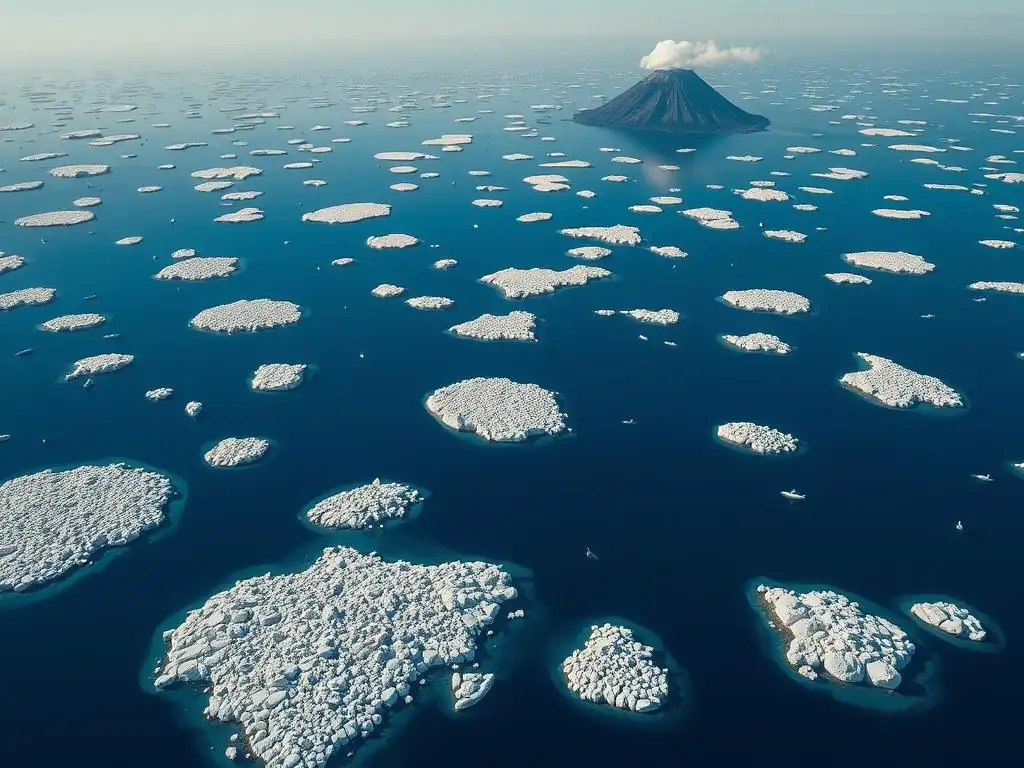
The Formation and Composition of Pumice Rafts
Pumice rafts are fascinating, buoyant aggregations of pumice that can form after large, explosive volcanic eruptions, particularly submarine eruptions or eruptions that occur near bodies of water. Pumice is a very lightweight volcanic rock, highly vesicular due to the rapid expansion of gas bubbles during its formation. This high vesicularity makes pumice less dense than water, allowing it to float.
During an explosive eruption, vast quantities of pumice can be ejected and accumulate on the water's surface, forming rafts that can drift for thousands of kilometers across oceans. The composition of pumice is typically rhyolitic or dacitic, reflecting the silica-rich nature of magmas involved in explosive eruptions.
The Journey and Impact of Pumice on Marine Ecosystems
These pumice rafts can embark on remarkable journeys across oceans, sometimes traveling thousands of kilometers and persisting for months or even years. They are not just geological curiosities; they also play a role in marine ecosystems. Pumice rafts can act as floating islands, providing surfaces for marine organisms to colonize and disperse.
They can transport marine life across vast distances, potentially contributing to the spread of species and the mixing of populations. However, very large pumice rafts can also have negative impacts, such as disrupting shipping lanes or smothering coastal ecosystems upon landfall. The 2012 Havre volcano eruption in the Kermadec Islands produced a massive pumice raft that was one of the largest ever recorded, highlighting the scale and impact of these floating volcanic phenomena.
Spheroidal Weathering in Volcanic Rocks
The Process of Spheroidal Weathering Explained
Spheroidal weathering is a type of chemical weathering that results in the rounded, boulder-like shapes often seen in volcanic rocks and other jointed rock formations. It occurs when chemical weathering attacks the corners and edges of fractured rock blocks more rapidly than the flat faces. Water and weathering agents penetrate along joints and fractures, leading to accelerated weathering at these points of increased surface area and exposure.
As the corners and edges weather away faster, the rock block gradually takes on a rounded, spheroidal shape. This process is particularly effective in rocks with well-developed joint patterns, like many volcanic rocks, and in environments with warm, humid climates that promote chemical weathering.
Examples of Spheroidal Weathering in Volcanic Landscapes
Spheroidal weathering is a common feature in many volcanic landscapes around the world, contributing to their distinctive and often picturesque scenery. Joshua Tree National Park in California is famous for its piles of rounded granite boulders formed by spheroidal weathering, although this occurs in granitic rocks, the process is analogous in volcanic terrains.
In volcanic regions, basalt outcrops and lava flows frequently exhibit spheroidal weathering, creating fields of rounded boulders that resemble piles of cannonballs. These weathered volcanic landscapes demonstrate the slow but persistent power of chemical weathering to reshape even the hardest rocks over geological timescales, creating unique and aesthetically appealing landforms.
Tuff and Ignimbrite: Formations from Volcanic Ash
Understanding Tuff and Ignimbrite Deposition
Tuff and ignimbrite are both volcanic rock formations composed primarily of volcanic ash and other pyroclastic materials ejected during explosive volcanic eruptions. Tuff is a general term for consolidated volcanic ash, while ignimbrite is a specific type of tuff formed from pyroclastic flows. Pyroclastic flows are fast-moving, hot mixtures of gas and volcanic debris that rush down the flanks of volcanoes during explosive eruptions.
When these flows come to rest, the hot ash and pumice fragments can weld together to form a dense, massive rock called ignimbrite. Tuff, on the other hand, can form from air-fall ash deposits or from less energetic pyroclastic flows and may be less densely consolidated than ignimbrite.
The Role of Pyroclastic Flows in Creating These Formations
Pyroclastic flows are the key process in the formation of ignimbrites and play a significant role in the deposition of many types of tuff. These flows are incredibly destructive and can travel at speeds of hundreds of kilometers per hour, carrying vast amounts of hot ash, gas, and rock fragments.
The heat from pyroclastic flows can be intense enough to cause the ash particles to sinter or weld together upon deposition, creating the characteristic massive and welded texture of ignimbrites. The composition of tuff and ignimbrite reflects the type of volcanic eruption and the magma involved, and these formations provide valuable records of past explosive volcanic activity, allowing geologists to reconstruct eruption histories and assess volcanic hazards.
Conclusion: Appreciating the Variety of Volcanic Rock Formations
The Importance of Studying Volcanic Geology
The study of volcanic geology, and particularly the diverse array of unique volcanic rock formations, is crucial for understanding Earth's dynamic processes and mitigating volcanic hazards. By examining these formations, we gain insights into magma generation, eruption mechanisms, and the long-term evolution of volcanic landscapes. Understanding the formation processes of features like lava tubes, volcanic domes, and ignimbrites helps us to better predict volcanic behavior and assess the risks associated with active volcanoes. Furthermore, volcanic rock formations provide valuable resources, including geothermal energy, mineral deposits, and fertile soils, making their study economically and socially relevant.
Further Exploration of Iceland's Volcanic Landscapes
For those eager to witness the astonishing variety of volcanic rock formations firsthand, Iceland stands as a premier destination. Known as the "Land of Fire and Ice," Iceland boasts a remarkable concentration of volcanic features, from basalt columns at Reynisfjara beach to lava tubes in Víðgelmir cave, volcanic plugs like Kirkjufell mountain, and extensive fields of pillow lava along its coastlines. Exploring Iceland's volcanic landscapes offers an unparalleled opportunity to appreciate the diverse and dramatic expressions of volcanic geology, and to witness the power and beauty of these unique natural wonders.
Frequently Asked Questions
What are some examples of unique volcanic rock formations beyond the typical basalt columns?
Beyond basalt columns, you can find remarkable formations like pillow lavas, formed underwater, and lava tubes, which are hollow channels created by flowing lava. Another example is spatter cones, small, steep-sided cones built from ejected molten rock.
How do unique volcanic rock formations contribute to our understanding of past volcanic activity?
These formations provide valuable clues about the style and intensity of past eruptions. The shapes and sizes of formations like lava flows reveal information about the viscosity and volume of magma involved.
What role does erosion play in shaping unique volcanic rock formations over time?
Erosion is crucial in revealing and modifying volcanic landscapes. Wind, water, and ice can sculpt existing formations, highlighting layers of different eruptions and creating distinctive landforms over long periods.
Where can I find examples of unique volcanic rock formations that are accessible to the public?
Many national parks and volcanic areas offer opportunities to see these formations. Examples include Devils Tower in Wyoming and Giant's Causeway in Northern Ireland, though these are not the only examples.
How do scientists study and analyze unique volcanic rock formations to learn more about volcanoes?
Volcanologists use techniques like geological mapping and rock dating to understand the age and composition of these formations. They also analyze crystal structures and gas inclusions to learn more about the magma source.
Final Reflection: Echoes of Earth's Fiery Heart
The journey through the world of unique volcanic rock formations, as we've explored, is more than just a geological survey; it's a testament to the Earth's raw power and artistic flair. These formations, sculpted by fire and time, stand as silent witnesses to our planet's dynamic history, reminding us that even in apparent stillness, profound forces are at play shaping the landscape around us, and ultimately, our understanding of the world.
The sheer diversity of these formations – from the delicate beauty of volcanic glass to the imposing grandeur of columnar jointing in less common rock types – underscores the boundless creativity of nature. This exploration has deepened my appreciation for the intricate processes that sculpt our world, and it highlights the importance of preserving these natural wonders for future generations. The earth has music for those who listen.
- William Shakespeare, a sentiment that resonates deeply when contemplating the symphony of geological forces that create such breathtaking formations.
As we conclude our exploration, I invite you to look beyond the familiar and seek out the extraordinary in the landscapes around you. Let the unique volcanic rock formations we've discussed inspire you to appreciate the hidden wonders of our planet and to consider the powerful forces that continue to shape our world. Embrace the opportunity to learn, explore, and protect these geological marvels, ensuring that their stories continue to resonate for generations to come.
Unearth Your Next Volcanic Adventure!
Thanks for exploring the fascinating world of volcanic rock formations with us! We hope you've gained a new appreciation for nature's fiery artistry. Now, it's time to take your exploration further!
Here are a few ways to continue your adventure:
- Plan a trip to a lesser-known volcanic region and photograph its unique rock formations. Venture beyond the well-trodden tourist paths—hidden gems await discovery!
- Share your favorite volcanic rock formation photos with our community on social media using #VolcanoExplorers, inspiring others to appreciate these natural wonders.
- Research the local myths and legends surrounding different volcanic rock formations—discover the human stories interwoven with the landscape.
What volcanic rock formation are you most eager to explore now, and what intrigues you about it? Share your thoughts in the comments below!