
The Crystal Ball of Volcanology: Can We See into a Volcano's Eruption Future?

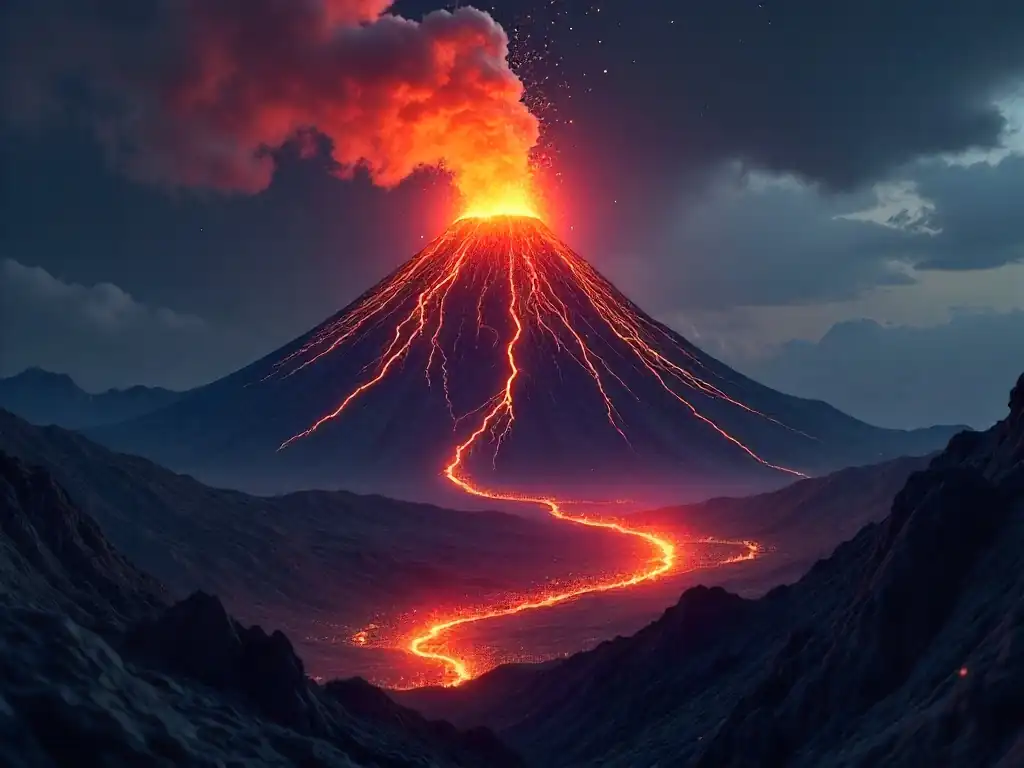
Welcome to Volcano Explorers!
Prepare to be captivated by Earth's fiery giants. Have you ever wondered if we could truly predict when a volcano will unleash its fury? The Crystal Ball of Volcanology beckons, offering a glimpse into the fascinating science of predicting volcanic eruption activity. Uncover the secrets volcanologists use to decipher the Earth's rumblings and learn if we can truly see into a volcano's future. Your journey into the heart of volcanic science starts now...
Statistical Models: Analyzing Historical Eruption Data
Statistical models are a cornerstone in the toolkit for predicting volcanic eruption activity, leveraging the power of historical data to discern patterns and probabilities. These models operate on the fundamental principle that past volcanic behavior can offer valuable insights into future eruptions. By meticulously analyzing records of previous eruptions—including eruption frequency, magnitude, repose periods, and even precursory signals—statisticians and volcanologists can develop probabilistic forecasts of future volcanic events. These models are particularly useful for volcanoes with well-documented eruptive histories, where patterns in activity may be more readily discernible.
One common statistical approach involves analyzing the distribution of repose periods – the time intervals between eruptions. For volcanoes exhibiting relatively regular eruption cycles, statistical methods can estimate the likelihood of an eruption within a specific timeframe. For example, if a volcano has historically erupted every 50 to 100 years, with an average repose period of 75 years, statistical models can quantify the increasing probability of an eruption as time since the last event approaches or exceeds this average.
Furthermore, by examining the magnitudes and types of past eruptions, statistical models can also contribute to assessing the potential scale and style of future events, aiding in hazard assessment and risk mitigation strategies for communities living near volcanoes. These models, while not deterministic predictors, provide crucial probabilistic information that informs decision-making in volcanic risk management.
- How accurately can volcanologists predict volcanic eruptions?
- What are the main techniques used for predicting volcanic eruptions?
- What role does historical data play in predicting volcanic eruptions?
- Why is it so difficult to accurately predict volcanic eruptions?
- What should people living near volcanoes do to prepare for potential eruptions, regardless of prediction accuracy?
Frequently Asked Questions
How accurately can volcanologists predict volcanic eruptions?
While perfect accuracy remains elusive, volcanologists are making significant strides. Predicting volcanic eruption activity is improving through monitoring techniques and historical data analysis, but it's still more about assessing eruption probability than guaranteeing precise timing.
What are the main techniques used for predicting volcanic eruptions?
Volcanologists employ a range of tools, including seismic monitoring, gas emission analysis, and ground deformation measurements. These methods help detect changes that might indicate magma movement and increased volcanic activity.
What role does historical data play in predicting volcanic eruptions?
Past eruption patterns provide valuable insights. By studying a volcano's eruption history, scientists can identify recurring patterns and estimate the likelihood of future eruptions based on previous behavior.
Why is it so difficult to accurately predict volcanic eruptions?
Volcanoes are complex systems with many interacting variables. Magma plumbing systems are often poorly understood, and the triggers for eruptions can be subtle and difficult to detect definitively, making precise prediction challenging.
What should people living near volcanoes do to prepare for potential eruptions, regardless of prediction accuracy?
Regardless of prediction accuracy, it's crucial to have an evacuation plan, understand local alert levels, and stay informed about official warnings from authorities. Preparation is key to minimizing risk in volcanic regions.
Final Reflection: Unveiling the Earth's Fiery Secrets
The quest to understand and predict volcanic eruptions is not merely an academic exercise; it's a matter of life and death for communities living in the shadow of these geological giants. The ability to accurately forecast volcanic activity represents a profound shift from reactive crisis management to proactive risk mitigation. The insights gleaned from monitoring, modeling, and historical analysis, as discussed throughout this article, are crucial steps towards minimizing the devastating impact of these natural disasters.
The ongoing effort to refine our predictive capabilities has deeply impacted how we perceive our relationship with the natural world. It underscores the humbling power of the Earth and our responsibility to understand and respect its forces. This pursuit is not just about scientific advancement; it's about safeguarding lives and livelihoods. The only way to predict the future is to have power to shape the future.
- Eric Hoffer. This quote resonates profoundly with the field of volcanology, where knowledge empowers us to potentially influence the outcome for vulnerable populations.
Now, consider the implications of this knowledge in your own life. How can you apply the principles of observation, analysis, and preparedness, learned from the study of volcanoes, to other areas where uncertainty reigns? Let us all strive to be more vigilant, more informed, and more proactive in facing the unpredictable challenges that life throws our way, drawing inspiration from the dedicated scientists who tirelessly work to decipher the Earth's fiery secrets and protect us from its potential wrath.
Unearth the Volcano's Secrets: Become an Eruption Forecaster!
Thank you for delving into the fascinating world of volcanology and exploring how scientists are working to predict eruptions. We hope you've gained a new appreciation for the complexities and challenges involved in understanding these powerful forces of nature. Now it's your turn to get involved!
Here are a few ways you can continue your exploration:
- Become a citizen scientist! Report any unusual volcanic activity you observe in your area to your local geological survey or through online platforms dedicated to volcano monitoring. Your observations could be vital!
- Dig deeper! Research the history of eruptions in your region. Learning from the past is key to understanding future potential.
- Share your newfound knowledge! Educate your friends and family about the importance of volcano monitoring and preparedness.
What specific volcanic area are you most curious about understanding, and what questions do you think scientists should prioritize in their research? Let us know in the comments below!