
Forces of Nature: The Powerful Processes Shaping Basalt Columns and Landscapes

Welcome!
Dare to peer into the heart of the Earth? At Volcano Explorers, we unveil the secrets of these fiery giants. But have you ever paused to consider the mesmerizing formations left in their wake? Prepare to be captivated as we explore the geological forces that sculpt the very ground beneath our feet, focusing on the intriguing question of how basalt columns form. Uncover the science behind these stunning structures and prepare for a journey into the dramatic world of volcanic landscapes… the adventure begins now.
- Introduction: Exploring the Geological Wonders of Basalt Columns
- The Key Ingredient: Understanding Basalt Lava Composition and Flow
- How Basalt Columns Form: The Step-by-Step Process
- Factors Influencing Basalt Column Size and Shape
-
Notable Examples of Basalt Column Formations Around the World
- Giant's Causeway, Northern Ireland: A UNESCO World Heritage Site
- Devil's Postpile National Monument, California: A Unique Geological Formation
- Fingal's Cave, Scotland: A Sea Cave Carved in Basalt Columns
- Svartifoss Waterfall, Iceland: Basalt Columns Framing a Waterfall
- Columbia River Basalt Group, USA: Extensive Flood Basalt Province
- The Role of Erosion in Shaping Basalt Column Landscapes
- Basalt Columns and Their Significance in Understanding Volcanic History
- The Future of Basalt Column Landscapes: Conservation and Preservation
- Conclusion: Appreciating the Forces That Shape Basalt Column Landscapes
-
Frequently Asked Questions
- How do basalt columns typically form?
- What factors influence the size and shape of basalt columns?
- Are basalt columns found only in specific geological locations?
- Can volcanic eruptions create structures other than basalt columns?
- What role do volcanologists play in understanding basalt column formation?
- Final Reflection: Echoes of Ancient Fire
- Unleash Your Inner Geologist!
Introduction: Exploring the Geological Wonders of Basalt Columns
Unveiling the Beauty and Formation of Basalt Columnar Jointing
Basalt columns are nature's striking architectural marvels, showcasing perfectly geometric shapes sculpted from solidified lava. These formations, characterized by their polygonal columns, primarily hexagonal but also featuring four, five, or even seven sides, stand as testaments to the powerful forces at play within volcanic landscapes.
Columnar jointing, the geological term for this phenomenon, arises from the fascinating physics of cooling and contraction in basalt lava flows. From the dramatic cliffs of the Giant's Causeway in Northern Ireland to the towering formations of Devil's Postpile in California, these natural structures captivate geologists and nature enthusiasts alike, offering a glimpse into the dynamic processes that shape our planet.
The visual appeal of basalt columns lies not only in their geometric precision but also in the sheer scale and variety they exhibit. Columns can range from mere centimeters to several meters in diameter and extend to impressive heights, sometimes dozens of meters tall. The color palette is equally diverse, varying from dark grays and blacks to reddish-brown hues, depending on the mineral composition and oxidation state of the basalt.
Beyond aesthetics, understanding how basalt columns form is crucial for deciphering volcanic history, interpreting past lava flow dynamics, and appreciating the geological evolution of landscapes across the globe. These formations are not just beautiful rocks; they are geological archives holding clues to Earth's fiery past.
Basalt Columns as a Window into Volcanic Landscapes and Processes
Basalt columns are more than just visually stunning geological features; they are invaluable tools for understanding the broader context of volcanic landscapes and the processes that sculpted them. The presence of columnar jointing in a region often indicates extensive volcanic activity in its geological history, particularly flood basalt eruptions, which are among the largest and most impactful volcanic events on Earth. Studying the orientation, size, and distribution of basalt columns provides geologists with vital information about the direction of lava flow, the rate of cooling, and the overall thermal history of a volcanic region.
Furthermore, the landscapes surrounding basalt columns often bear the marks of other volcanic processes. We can observe associated features like volcanic vents, lava tubes, and different types of lava flows in areas exhibiting columnar basalt. Analyzing the relationship between basalt columns and these surrounding geological features allows for a more comprehensive reconstruction of past volcanic events.
For instance, the presence of pillow basalts alongside columnar basalts might indicate a transition from submarine to subaerial lava flows. In essence, basalt columns act as a key to unlocking the secrets of volcanic landscapes, offering insights into the Earth's dynamic and ever-changing surface.
The Key Ingredient: Understanding Basalt Lava Composition and Flow
The Role of Magma Composition in Basalt Formation
The formation of basalt columns is intrinsically linked to the specific composition of basaltic magma. Basalt is an extrusive igneous rock, meaning it solidifies from lava erupted onto the Earth's surface. Its chemical makeup is characterized by relatively low silica content (around 45-52%) and high concentrations of iron and magnesium.
This composition dictates key physical properties of basalt lava, such as its viscosity and melting point, which are crucial factors in the development of columnar jointing. Magmas with higher silica content, like rhyolitic magmas, tend to be much more viscous and less likely to form extensive, fluid flows that are conducive to column formation.
The mineralogy of basalt also plays a significant role. Basalt is primarily composed of plagioclase feldspar and pyroxene minerals, with smaller amounts of olivine and sometimes quartz. These minerals crystallize out of the cooling lava at different temperatures, influencing the overall solidification process and the development of stress within the cooling rock.
The specific proportions of these minerals can vary depending on the source magma and the differentiation processes it undergoes before eruption. Variations in basalt composition can lead to subtle differences in the size, shape, and regularity of basalt columns observed in different locations around the world, highlighting the fundamental control of magma chemistry on these spectacular formations.
Basalt Lava Flow Characteristics: Viscosity, Temperature, and Cooling Rates
Basalt lava flows, the precursors to basalt columns, possess distinct characteristics that directly influence the process of columnar jointing. Compared to other types of lava, basalt lava typically has a relatively low viscosity. This lower viscosity, a measure of a fluid's resistance to flow, allows basalt lava to flow over long distances and spread out into broad, thin sheets.
The fluidity of basalt lava is a direct consequence of its lower silica content, which reduces the degree of polymerization within the molten rock. This fluidity is essential for the formation of large, uniform lava flows necessary for extensive columnar jointing.
The temperature of basalt lava at eruption is also a critical factor, generally ranging between 1000 to 1200 degrees Celsius (1832 to 2192 degrees Fahrenheit). This high initial temperature ensures that the lava remains fluid for a significant period, allowing it to spread and cool gradually. The rate at which basalt lava cools is perhaps the most crucial factor in how basalt columns form.
Slow and relatively uniform cooling is essential for the development of well-defined columnar joints. Rapid cooling, often due to contact with water or air, can lead to more chaotic fracturing and less distinct column formation. The interplay between viscosity, temperature, and cooling rate of basalt lava flows is therefore paramount in understanding the genesis of these striking geological structures.
How Basalt Columns Form: The Step-by-Step Process
Stage 1: Initial Cooling and Contraction of Basalt Lava Flows
The journey of basalt columns begins with the cooling of extensive basalt lava flows. As molten basalt lava erupts and spreads across the landscape, it starts to lose heat to the surrounding environment – the air above and the ground below. This initial cooling process is crucial as it triggers the contraction of the solidified rock.
Basalt, like most materials, contracts in volume as it cools. Imagine a vast sheet of cooling basalt; as the temperature decreases, the rock attempts to shrink in all directions. This uniform contraction sets the stage for the development of tensile stresses within the solidifying lava flow.
The cooling process is not instantaneous; it occurs gradually from the surface downwards and inwards. The outer surfaces of the lava flow, exposed to the atmosphere, cool more rapidly than the interior. This differential cooling creates temperature gradients within the lava flow, leading to variations in contraction rates throughout the rock mass. It is this uneven contraction that initiates the buildup of internal stresses, ultimately leading to the fracturing that defines the characteristic polygonal patterns of basalt columns. This initial phase of cooling and contraction is the fundamental starting point for the remarkable process of columnar jointing.
Stage 2: Tensile Stress and the Development of Fracture Points
As the basalt lava continues to cool and contract, tensile stresses build up within the solidifying rock. Tensile stress is a type of stress that pulls or stretches a material. In the case of cooling basalt, the contraction is restrained by the surrounding solidified rock, leading to a build-up of tension. This tensile stress is distributed relatively uniformly throughout the cooling lava flow. However, rocks are not perfectly homogeneous; they contain microscopic flaws and weaknesses. These imperfections act as stress concentrators, meaning that the tensile stress is amplified at these points of weakness.
When the tensile stress at these weak points exceeds the tensile strength of the basalt, fractures begin to form. These initial fractures typically initiate at the cooling surface and propagate inwards. The distribution of these initial fracture points is somewhat random, but they tend to be roughly equidistant from each other due to the relatively uniform nature of the tensile stress field.
These fracture initiation points are critical as they dictate the centers around which the polygonal columns will eventually develop. The process is akin to cracking mud as it dries; the initial cracks are somewhat evenly spaced and form due to tensile stresses induced by drying and contraction.
Stage 3: Propagation of Cracks: The Formation of Polygonal Patterns
Once initial fractures have formed, they begin to propagate and extend through the cooling basalt lava flow. The way these cracks propagate is not random; they tend to extend in a direction perpendicular to the direction of the tensile stress. Because the tensile stress is roughly uniform and acts in all horizontal directions, the cracks tend to propagate vertically downwards, forming a network of intersecting fractures.
A key aspect of this propagation is the tendency for cracks to intersect at approximately 120-degree angles. This is a consequence of physics, as this angle minimizes the overall strain energy in the system, leading to the formation of hexagonal patterns.
While hexagons are the most energetically favorable shape, variations can occur. Imperfections in the lava, variations in cooling rates, and pre-existing weaknesses can lead to the formation of columns with five, four, or even seven sides. The propagation of these cracks is a dynamic process, with new cracks forming and existing cracks extending as the lava continues to cool and contract. This interconnected network of propagating fractures progressively dissects the lava flow into polygonal areas, prefiguring the outlines of the basalt columns. The emergent polygonal pattern is a beautiful example of self-organization in nature, driven by fundamental physical principles.
Stage 4: Columnar Jointing: Vertical Extension of Basalt Columns
The final stage in the formation of basalt columns is the vertical extension of the polygonal fracture patterns throughout the entire thickness of the lava flow. As cooling and contraction proceed deeper into the lava flow, the cracks that initiated at the surface continue to propagate downwards. These cracks, following the paths of least resistance, extend vertically, guided by the temperature gradients and the ongoing tensile stress.
The polygonal patterns established in the earlier stages are now essentially "drawn" down through the entire lava flow, creating elongated, prismatic columns. This process of vertical crack propagation is what gives basalt columns their characteristic long, pillar-like appearance.
The result is a magnificent array of columns, stacked tightly together, often resembling a neatly organized stack of pencils or a honeycomb structure viewed from above. The columns are separated by the fractures that developed and propagated during the cooling process, known as joints. These joints are typically narrow and may be filled with secondary minerals precipitated from groundwater over time.
The extent of vertical jointing can vary depending on the thickness of the lava flow and the uniformity of cooling. In thicker flows, columns can be exceptionally long, extending dozens of meters in height, creating truly awe-inspiring geological monuments. The final form of basalt columns is a testament to the powerful and predictable forces of nature, transforming molten rock into geometric masterpieces.
Factors Influencing Basalt Column Size and Shape
Cooling Rate Variations and Column Diameter
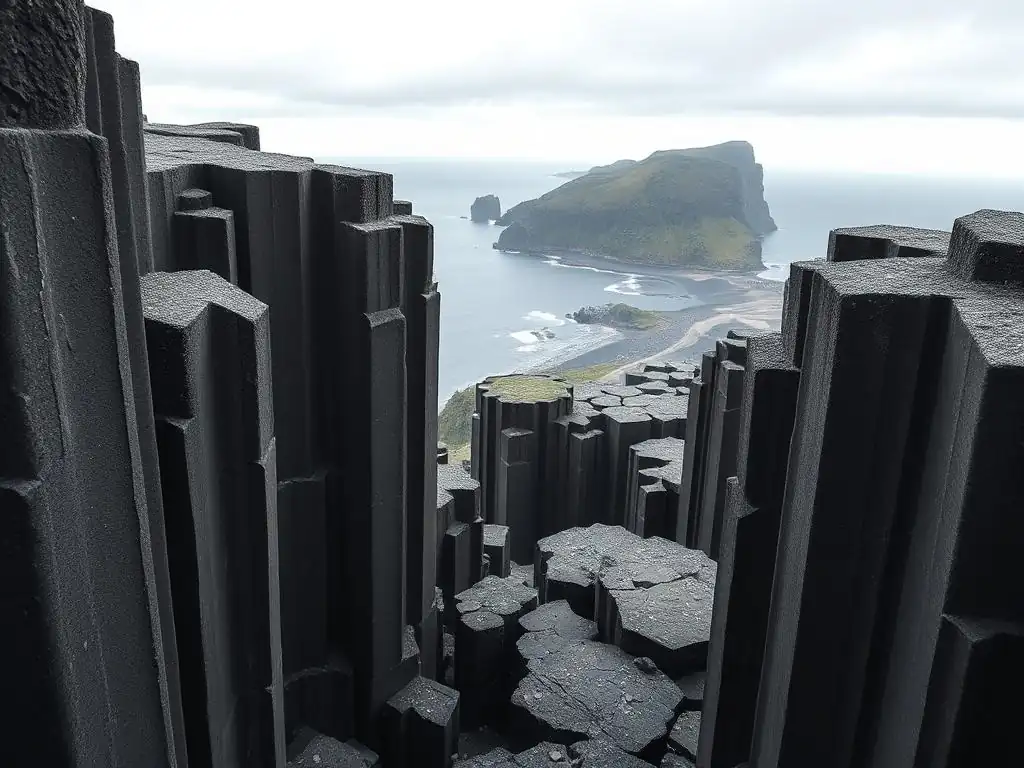
The rate at which basalt lava cools is a primary control on the diameter of the resulting columns. Faster cooling rates generally lead to smaller diameter columns, while slower cooling rates result in larger columns. This relationship arises because the spacing of fracture initiation points is influenced by the rate of heat dissipation. Rapid cooling creates more closely spaced fracture points, leading to a higher density of fractures and thus smaller polygonal areas that define the column diameters. Conversely, slow cooling allows for wider spacing of fracture points, resulting in larger polygonal areas and consequently wider columns.
For example, in a relatively thin lava flow exposed to the atmosphere on both sides, cooling will be faster, leading to the formation of smaller columns. In contrast, a thick lava flow, particularly one buried beneath subsequent flows or sediments, will cool much more slowly, allowing for the development of larger diameter columns. Geologists can often infer the cooling history of a basalt flow by analyzing the average diameter of the columns.
Areas with predominantly small diameter columns suggest rapid cooling conditions, while regions dominated by large diameter columns indicate a slower, more gradual cooling process. This relationship between cooling rate and column diameter provides valuable insights into the thermal history of volcanic eruptions.
Lava Flow Thickness and Column Height
The thickness of a basalt lava flow is a major determinant of the height or length of the basalt columns. Thicker lava flows have a greater volume of rock to cool, which takes a longer time and allows for the vertical propagation of fractures over a greater distance. Therefore, thicker flows tend to produce taller columns.
Conversely, thinner lava flows, which cool more quickly throughout their thickness, will typically result in shorter columns. The relationship is not strictly linear, as other factors like cooling rate and lava composition also play a role, but flow thickness is a significant controlling factor.
Consider two contrasting scenarios: a thin, sheet-like lava flow only a few meters thick might produce columns that are also only a few meters tall. However, a massive flood basalt flow, hundreds of meters thick, can give rise to columns that extend for tens or even hundreds of meters in height. The Giant's Causeway in Northern Ireland, for instance, is part of a much larger basalt plateau, and while the columns themselves are not exceptionally tall, their presence indicates a substantial volume of erupted lava.
The Devil's Postpile in California, with its remarkably tall and slender columns, also likely formed from a relatively thick lava flow that experienced slow, uniform cooling. Lava flow thickness, therefore, sets the potential vertical dimension for the development of columnar jointing.
The Influence of Impurities and Gas Content on Column Formation
While the primary factors controlling basalt column formation are cooling rate and lava flow thickness, other factors like impurities and gas content can also exert a secondary influence on the process. Impurities, such as minor amounts of different minerals or foreign materials incorporated into the lava flow, can act as nucleation sites for fractures or alter the mechanical properties of the basalt, potentially affecting column size and regularity. For example, the presence of clay minerals or zeolites within the basalt matrix might weaken the rock locally, influencing fracture patterns.
Gas content in the lava also plays a role. Basalt lava typically contains dissolved gases, primarily water vapor, carbon dioxide, and sulfur dioxide. As the lava cools and solidifies, these gases can exsolve and form vesicles (gas bubbles) within the rock. The presence of vesicles can affect the cooling rate and create heterogeneities in the rock's structure.
In some cases, high gas content might lead to less regular column formation or even disrupt columnar jointing altogether. However, in other instances, the presence of vesicles might not significantly impede the development of well-formed columns. The precise influence of impurities and gas content is complex and can vary depending on the specific composition and eruption conditions of the basalt lava.
Notable Examples of Basalt Column Formations Around the World
Giant's Causeway, Northern Ireland: A UNESCO World Heritage Site
The Giant's Causeway, located on the coast of County Antrim in Northern Ireland, is arguably the most famous basalt column formation globally and a UNESCO World Heritage Site. Comprising approximately 40,000 interlocking basalt columns, it is a spectacular example of columnar jointing on a grand scale. The majority of the columns are hexagonal, but there are also examples of columns with four, five, seven, and even eight sides.
The columns are remarkably uniform in size and shape, creating a paved causeway that extends into the sea. Geological studies indicate that the Giant's Causeway formed during the Paleogene period, around 50 to 60 million years ago, as part of the Thulean Plateau volcanic province.
The columns at the Giant's Causeway are exposed in cliffs and along the shoreline, offering stunning views and a unique geological experience. The site's fame is further enhanced by local legends, particularly the myth of the giant Finn McCool, who is said to have built the causeway to reach Scotland.
Scientific explanations attribute the formation to the slow cooling and contraction of a thick basalt lava flow. The Giant's Causeway stands as a testament to the power of volcanic processes and the beauty of geological formations, attracting hundreds of thousands of visitors each year and serving as a vital location for geological research and education.
Devil's Postpile National Monument, California: A Unique Geological Formation
Devil's Postpile National Monument, situated in the Sierra Nevada mountains of California, is another remarkable example of basalt columns, distinguished by its exceptional height and pristine condition. The formation is composed of dark, bluish-gray basalt columns that are remarkably straight and tightly packed, resembling a neatly stacked pile of posts – hence the name "Devil's Postpile." Many of the columns are hexagonal, but pentagonal and heptagonal shapes are also present. What makes Devil's Postpile particularly unique is its elevation, situated at around 7,500 feet (2,300 meters) above sea level, and its exposure in a relatively pristine alpine environment.
The columns at Devil's Postpile are estimated to be around 100,000 years old, formed from a basalt lava flow that filled a valley and subsequently cooled slowly. During the Ice Ages, glacial action played a role in shaping the formation, polishing the tops of the columns and creating a distinctive striated surface.
The monument also features the "Devil's Postpile Talus Slope," a jumbled pile of fallen columns at the base, providing a cross-section view of the columnar structure. Devil's Postpile offers a striking contrast to the coastal setting of the Giant's Causeway, showcasing basalt column formation in a different geological and environmental context.
Fingal's Cave, Scotland: A Sea Cave Carved in Basalt Columns
Fingal's Cave, located on the uninhabited island of Staffa in the Inner Hebrides of Scotland, is a sea cave renowned for its stunning natural acoustics and its formation within basalt columns. The cave is entirely formed within hexagonal basalt columns, creating a cathedral-like interior with naturally arched roof and geometrically precise walls. The rhythmic crashing of waves against the basalt columns and the cave's unique shape create remarkable echoes and resonant sounds, inspiring its Gaelic name "Uamh-Binn," meaning "melodious cave." Fingal's Cave is geologically related to the Giant's Causeway, formed from the same Paleogene volcanic province.
The basalt columns of Fingal's Cave are exposed both inside the cave and on the exterior cliffs of Staffa. The cave itself has been carved out by wave erosion along a zone of weaker or more fractured basalt, exploiting the natural jointing patterns. The columns inside the cave are particularly well-formed and visually striking, giving the impression of a natural colonnade.
Fingal's Cave has inspired artists, writers, and composers for centuries, most notably Felix Mendelssohn, whose overture "Fingal's Cave" (also known as "The Hebrides Overture") was inspired by the cave's atmosphere and acoustics. It represents a unique intersection of geological beauty and cultural inspiration.
Svartifoss Waterfall, Iceland: Basalt Columns Framing a Waterfall
Svartifoss, meaning "Black Falls," is a picturesque waterfall in Vatnajökull National Park in Iceland, famous for its dramatic setting where water cascades over a cliff framed by dark basalt columns. The waterfall is relatively small, but its visual impact is amplified by the backdrop of perfectly formed hexagonal basalt columns that flank both sides of the cascading water.
The columns here are darker and more intensely black than in some other locations, contributing to the waterfall's evocative name. Svartifoss is a popular tourist destination in Iceland, showcasing the dramatic interplay of water and volcanic rock formations in the Icelandic landscape.
The basalt columns at Svartifoss are part of a larger basalt flow sequence that characterizes much of Iceland's volcanic terrain. The waterfall has eroded into a cliff face, exposing the columnar jointing and creating a natural amphitheater-like setting. The contrast between the white, rushing water of the waterfall and the dark, geometric basalt columns is particularly striking, making it a favorite subject for photographers and nature enthusiasts. Svartifoss exemplifies how basalt columns can enhance and frame natural features, adding a unique geological dimension to scenic landscapes and demonstrating the diverse ways in which these formations manifest in different environments.
Columbia River Basalt Group, USA: Extensive Flood Basalt Province
The Columbia River Basalt Group (CRBG) in the northwestern United States is not a single location but a vast geological province characterized by extensive flood basalt flows and widespread columnar jointing. Spanning parts of Washington, Oregon, and Idaho, the CRBG represents one of the largest flood basalt provinces on Earth, covering an area of approximately 163,700 square kilometers (63,200 square miles).
These basalt flows erupted during the Miocene epoch, around 17 to 6 million years ago, in a series of massive volcanic events. The sheer scale of the CRBG and the widespread occurrence of basalt columns within it make it a globally significant example of flood basalt volcanism.
Within the CRBG, columnar jointing is observed in numerous locations, from river canyons like the Columbia River Gorge to high plateaus and cliffs. The basalt columns vary in size and shape across the province, reflecting variations in cooling rates and lava flow characteristics. The CRBG has been extensively studied by geologists to understand the processes of flood basalt eruptions, magma generation, and the evolution of volcanic landscapes.
The province also has significant economic importance, with basalt rock used for construction materials and the fertile volcanic soils supporting agriculture. The Columbia River Basalt Group serves as a prime example of how basalt columns are not just isolated geological features but can be integral components of vast volcanic landscapes, shaping entire regions.
The Role of Erosion in Shaping Basalt Column Landscapes
Weathering Processes and the Degradation of Basalt Columns
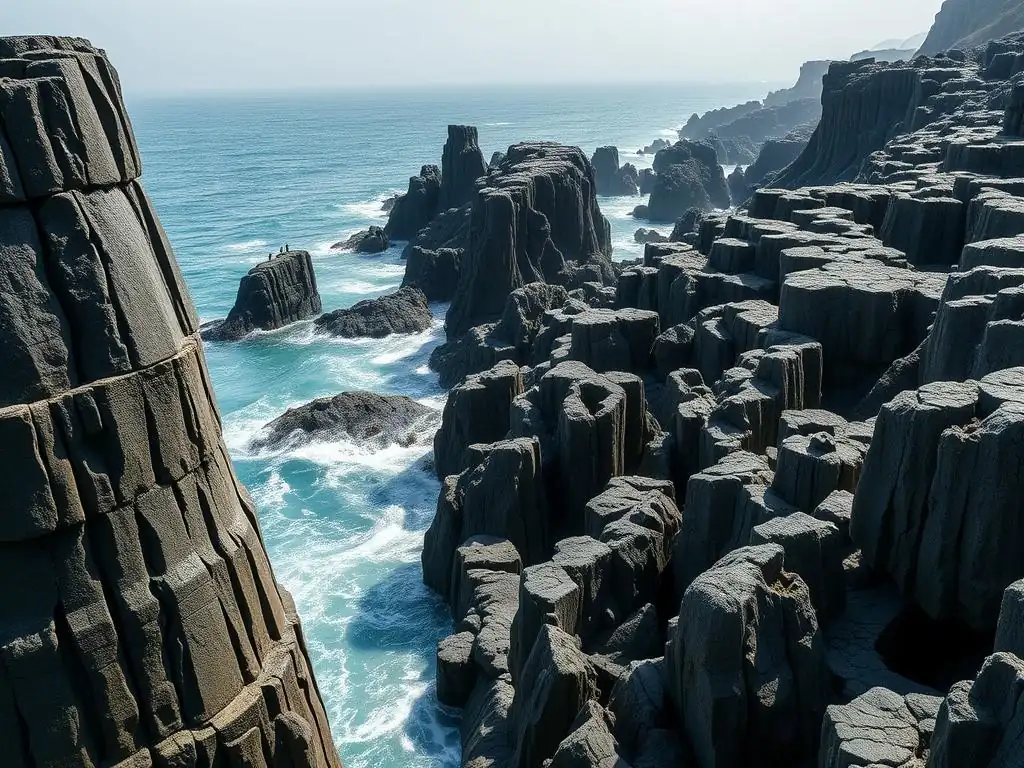
Erosion plays a crucial role in shaping basalt column landscapes over geological time scales. Weathering, the breakdown of rocks, is a primary agent of erosion acting on basalt columns. Both physical and chemical weathering processes contribute to the degradation of these formations. Physical weathering, such as freeze-thaw cycles in colder climates, can exploit the joints between columns. Water seeps into the joints, freezes and expands, exerting pressure that widens the cracks and can eventually lead to the fracturing and detachment of column sections. Thermal stress, caused by daily temperature fluctuations, can also induce cracking in the basalt.
Chemical weathering is equally important. Basalt is susceptible to chemical alteration, particularly through hydrolysis and oxidation. Water reacts with the minerals in basalt, breaking them down and forming clay minerals and other alteration products.
Oxidation of iron-rich minerals in basalt can lead to the characteristic reddish-brown staining often seen on weathered basalt surfaces. Over long periods, weathering processes can gradually erode the edges of columns, round off their sharp polygonal shapes, and eventually lead to the complete breakdown of the columnar structure. The rate of weathering depends on factors like climate, rock composition, and the exposure of the columns to weathering agents.
The Impact of Water and Ice on Columnar Jointing
Water and ice are particularly potent erosional forces that significantly impact basalt column landscapes. Water erosion, through rainfall and stream flow, can wear away the softer weathered material between columns, further accentuating the columnar structure. In areas with significant rainfall, runoff can carve channels and gullies along the lines of weakness defined by the joints, creating intricate drainage patterns within basalt column formations. Wave action, as seen at Fingal's Cave and the Giant's Causeway, is a powerful agent of erosion along coastlines, directly impacting basalt columns exposed to the sea.
Glacial ice has also played a major role in shaping basalt column landscapes in regions that have experienced glaciation. Glaciers can erode and polish the tops of basalt columns, as observed at Devil's Postpile. They can also pluck and remove entire sections of columns, especially along pre-existing fractures and weaknesses. Meltwater from glaciers can further contribute to erosion, carrying away debris and carving channels. The combined action of water and ice over millennia sculpts and modifies basalt column formations, transforming their appearance and contributing to the diverse landscapes we see today.
Landslides and Mass Wasting Events in Basalt Column Regions
Basalt column regions, particularly those in steep terrain, are susceptible to landslides and other mass wasting events. The columnar jointing itself can create planes of weakness within the rock mass, making it prone to slope failure. Water infiltration into the joints can further reduce the stability of basalt column cliffs and slopes. Earthquakes and heavy rainfall events can trigger landslides in these areas, leading to the collapse of sections of basalt columns and the downslope movement of rock debris.
Landslides in basalt column regions can dramatically reshape landscapes, creating large scarps and debris fields. The fallen columns and rock fragments accumulate at the base of cliffs, forming talus slopes or scree slopes. These mass wasting events are a natural part of the erosional cycle in basalt column landscapes, constantly modifying and reshaping the terrain.
While landslides can be destructive, they also contribute to the geological dynamism of these regions, exposing fresh rock surfaces and creating new landforms over time. Understanding the factors that contribute to landslides in basalt column areas is important for hazard assessment and land management in these regions.
Basalt Columns and Their Significance in Understanding Volcanic History
Interpreting Past Volcanic Activity Through Basalt Column Analysis
Basalt columns are not just scenic geological features; they are valuable archives of past volcanic activity. By studying the characteristics of basalt columns, geologists can glean insights into the nature of the lava flows that formed them and, by extension, the volcanic eruptions that produced those flows. The size and shape of columns, as discussed earlier, provide clues about cooling rates and lava flow thickness. The orientation of columns can sometimes indicate the direction of lava flow or the slope of the terrain at the time of eruption.
Furthermore, the mineral composition and texture of the basalt itself, when analyzed in conjunction with the columnar jointing, can reveal information about the source magma, the depth of magma generation, and the processes of magma ascent and eruption. The presence of vesicles, phenocrysts (larger crystals within a finer-grained matrix), or xenoliths (fragments of foreign rock incorporated into the lava) can all provide valuable clues about the volcanic system. By carefully studying basalt columns and the surrounding geological context, geologists can reconstruct detailed narratives of past volcanic events, including eruption styles, lava flow dynamics, and the broader tectonic setting.
Using Basalt Columns to Reconstruct Lava Flow Patterns
The study of basalt columns is instrumental in reconstructing the flow patterns of ancient lava flows, particularly in vast flood basalt provinces like the Columbia River Basalt Group. By mapping the distribution of columnar jointing across a region and analyzing the orientation and morphology of the columns, geologists can infer the direction and extent of lava flows. For example, consistent column orientation over a large area may suggest a dominant flow direction. Variations in column size and shape across a lava flow can indicate changes in cooling rates or flow thickness along the flow path.
Detailed analysis of basalt columns, combined with geochemical and paleomagnetic data, allows for the correlation of different lava flows and the reconstruction of complex eruption sequences. Geologists can piece together the history of volcanic activity in a region, identifying individual lava flow units, their sources, and their relationships to each other. This understanding of lava flow patterns is crucial for comprehending the scale and impact of past volcanic eruptions and for assessing potential volcanic hazards in active volcanic regions. Basalt columns, therefore, serve as vital markers in the geological record, enabling the mapping and interpretation of ancient volcanic landscapes.
Basalt Columns as Indicators of Regional Tectonic Activity
The formation and distribution of basalt columns are often linked to regional tectonic activity. Flood basalt eruptions, which are responsible for many extensive basalt column formations, are frequently associated with continental rifting or mantle plume activity. Rifting, the process of continents splitting apart, creates pathways for magma to rise to the surface, leading to voluminous eruptions of basalt lava.
Mantle plumes, upwellings of hot material from deep within the Earth's mantle, can also trigger large-scale basalt volcanism. The presence of extensive basalt column provinces, like the Deccan Traps in India or the Siberian Traps in Russia, is often indicative of major tectonic events in Earth's history.
Furthermore, the orientation of fractures and joints in basalt columns can sometimes reflect regional stress fields related to tectonic activity. Faulting and folding of basalt layers, which can be observed in some basalt column regions, provide direct evidence of post-eruption tectonic deformation. Studying the structural geology of basalt column formations can help geologists understand the tectonic history of a region, including the timing and magnitude of tectonic events. Basalt columns, therefore, are not only products of volcanic processes but also valuable indicators of the broader tectonic forces that shape the Earth's crust.
The Future of Basalt Column Landscapes: Conservation and Preservation
Threats to Basalt Column Formations: Quarrying, Tourism, Climate Change
Basalt column formations, despite their robustness, face various threats in the modern era. Quarrying for basalt rock, used extensively in construction and road building, poses a direct threat to these geological sites. Unregulated quarrying can destroy entire basalt column formations, removing them permanently from the landscape. Tourism, while often beneficial for local economies, can also have negative impacts if not managed sustainably. Increased foot traffic, vandalism, and infrastructure development associated with tourism can lead to erosion, damage to columns, and habitat disruption in surrounding areas.
Climate change presents a more insidious, long-term threat. Changes in temperature and precipitation patterns can accelerate weathering processes, potentially leading to faster degradation of basalt columns. Increased frequency of extreme weather events, such as heavy rainfall and storms, can exacerbate erosion and trigger landslides in basalt column regions. Sea-level rise, driven by climate change, poses a particular threat to coastal basalt column formations like the Giant's Causeway and Fingal's Cave, potentially increasing erosion rates and inundating low-lying areas. These threats highlight the need for proactive conservation and preservation efforts to protect these geological treasures for future generations.
Conservation Efforts and Sustainable Management Practices
Conserving basalt column formations requires a multi-faceted approach, involving legal protection, sustainable management practices, and public education. Designating basalt column sites as protected areas, such as national parks, national monuments, or UNESCO World Heritage Sites, provides a legal framework for conservation and restricts activities that could damage these formations. Effective management plans are crucial for balancing tourism and conservation. This includes implementing measures to control visitor access, minimize erosion, manage waste, and protect surrounding ecosystems. Sustainable tourism practices, such as promoting responsible visitor behavior and investing tourism revenue in conservation efforts, are essential.
Restoration and rehabilitation efforts may be necessary in areas already damaged by quarrying or other human activities. This can involve stabilizing slopes, removing invasive species, and restoring natural vegetation cover. Long-term monitoring of basalt column formations is important to track changes over time and assess the effectiveness of conservation measures. Collaborative efforts involving government agencies, local communities, scientists, and tourism operators are crucial for successful conservation and sustainable management of basalt column landscapes.
Educating the Public About the Importance of Protecting Basalt Columns
Public education plays a vital role in the long-term protection of basalt column formations. Raising awareness about the geological significance, beauty, and fragility of these natural wonders is essential for fostering a sense of stewardship and responsibility. Educational programs, interpretive centers, and guided tours at basalt column sites can effectively communicate the science behind their formation, the threats they face, and the importance of conservation. Using online resources, documentaries, and popular media can reach a wider audience and promote appreciation for basalt column landscapes globally.
Engaging local communities in conservation efforts is particularly important. Involving local people in monitoring, management, and tourism initiatives can create a sense of ownership and ensure the long-term sustainability of conservation efforts. Education should emphasize the economic benefits of sustainable tourism and the cultural value of preserving natural heritage for future generations. By fostering a well-informed and engaged public, we can collectively work towards ensuring the protection and preservation of basalt column landscapes for the enjoyment and scientific study of generations to come.
Conclusion: Appreciating the Forces That Shape Basalt Column Landscapes
The Enduring Legacy of Volcanic Activity: Basalt Columns as Geological Treasures
Basalt columns stand as enduring monuments to the powerful forces of volcanic activity that have shaped our planet for billions of years. These geometrically striking formations are not merely collections of rocks; they are tangible records of Earth's dynamic geological history, encapsulating the processes of magma generation, lava flow, cooling, and contraction.
From the iconic Giant's Causeway to the remote landscapes of the Columbia River Basalt Group, basalt columns around the world showcase the beauty and precision that can arise from natural geological processes. They are geological treasures, offering invaluable insights into the inner workings of our planet and the evolution of volcanic landscapes.
The scientific study of basalt columns continues to advance our understanding of volcanism, rock mechanics, and landscape evolution. These formations serve as natural laboratories for investigating the physics of cooling and fracture, the geochemistry of basalt magmas, and the erosional forces that sculpt landscapes over geological time. Beyond their scientific significance, basalt columns hold cultural and aesthetic value, inspiring awe and wonder in those who behold them. They are a reminder of the raw power and creative artistry of nature, inviting us to appreciate the intricate processes that shape the world around us.
Further Exploration: Resources for Learning More About Basalt Columns and Volcanoes
For those eager to delve deeper into the fascinating world of basalt columns and volcanoes, a wealth of resources is available. Numerous books, scientific articles, and documentaries explore the geology of basalt columns and volcanic processes in detail. Websites of geological surveys, national parks, and UNESCO World Heritage Sites often provide comprehensive information and virtual tours of basalt column locations. Educational institutions and museums frequently offer exhibits and programs on volcanology and geological formations, including basalt columns.
Online databases and academic journals, such as the Journal of Volcanology and Geothermal Research and the Bulletin of Volcanology, contain a vast amount of scientific research on basalt columns and related topics. Field guides and geological maps are invaluable resources for exploring basalt column formations in person.
By engaging with these resources, individuals can expand their knowledge, deepen their appreciation for basalt columns, and contribute to the ongoing effort to understand and protect these remarkable geological wonders. The exploration of basalt columns is a journey into the heart of Earth's fiery past and a testament to the enduring power of natural forces.
Frequently Asked Questions
How do basalt columns typically form?
Basalt columns form through the cooling and contraction of thick basalt lava flows. As the lava cools, it shrinks and fractures into polygonal shapes, most commonly hexagonal, due to the even distribution of stress. This process results in the characteristic columnar jointing.
What factors influence the size and shape of basalt columns?
The cooling rate is a primary factor; slower cooling generally leads to larger columns. Also important are the composition of the basalt and the presence of impurities, which can affect fracture patterns and column shape.
Are basalt columns found only in specific geological locations?
No, basalt columns are found globally in areas with extensive basalt lava flows. Notable examples exist in places like the Giant's Causeway in Northern Ireland, Devils Postpile National Monument in California, and Svartifoss waterfall in Iceland, showcasing the widespread nature of these geological formations.
Can volcanic eruptions create structures other than basalt columns?
Yes, volcanic eruptions can create diverse structures including shield volcanoes, stratovolcanoes, calderas, and lava tubes. The specific structure depends on factors such as the lava's viscosity, the eruption style, and the geological environment.
What role do volcanologists play in understanding basalt column formation?
Volcanologists study basalt columns to understand past volcanic activity, including the cooling rates of lava flows and the composition of the magma. This helps them to better predict future eruptions and assess volcanic hazards in basalt-rich regions.
Final Reflection: Echoes of Ancient Fire
The journey through the formation of basalt columns, as detailed in this article, reveals more than just geological processes; it highlights the enduring power of nature's artistry. The very landscapes we admire today are testaments to the immense forces that have shaped our planet over millennia, a constant reminder of the dynamic and ever-evolving world we inhabit.
The intricate patterns etched in basalt columns serve as a silent narrative, a geological poem written by fire and ice. This exploration has deepened my appreciation for the interconnectedness of Earth's systems, and how seemingly disparate elements like volcanic activity and erosion collaborate to create breathtaking formations. The best view comes after the hardest climb.
This quote resonates deeply, mirroring the long and arduous processes that sculpt these natural wonders, rewarding us with their majestic presence.
Now, as you gaze upon images of basalt columns, or perhaps even stand before them in person, I invite you to reflect on the profound timescale of geological time. Consider the forces that have been at play, shaping not only these formations but also the very ground beneath your feet. Let this understanding inspire a deeper respect for our planet and a renewed commitment to preserving its natural wonders for generations to come.
Unleash Your Inner Geologist!
Thanks for exploring the fascinating world of basalt columns and the powerful forces that shape our landscapes! Now that you've learned about these geological wonders, it's time to delve deeper.
Here are a few ways to continue your exploration and share your passion for geology:
- Visit a nearby basalt column formation! Use online resources to find locations and experience these magnificent structures firsthand. Take photos and appreciate their scale.
- Share this article with friends and family who might be interested in geology. Spreading knowledge helps us better understand our planet.
- Research the geological history of your area. You might discover surprising volcanic activity or other natural forces that shaped your local landscape!
What surprising geological formation have you recently discovered, and what did you learn from it? Share your discoveries in the comments below!