
Caldera Collapse Catastrophe: When Volcanoes Sink and Tsunamis Rise

Welcome!
Prepare to be captivated by the raw power and hidden dangers lurking beneath the Earth's surface. At Volcano Explorers, we unveil the mysteries of these fiery giants. Ever wondered what happens when a volcano doesn't erupt, but implodes? Dive in and discover the terrifying truth about caldera collapse and tsunami risk. This isn't just about eruptions; it's about the earth swallowing itself and the devastating waves that follow. Are you ready to explore the potential for catastrophe?
What is a Caldera? Exploring the Formation of Volcanic Depressions
A caldera is a large, basin-shaped volcanic depression formed by the evacuation of a magma chamber beneath a volcano. Often mistaken for craters, which are typically smaller and formed by explosive eruptions or meteorite impacts, calderas are significantly larger features, sometimes spanning dozens of kilometers in diameter. They represent some of the most dramatic and potentially hazardous volcanic landforms on Earth. The term "caldera" itself comes from the Spanish word for cauldron, aptly describing the bowl-like shape of these depressions.
The formation of a caldera is intrinsically linked to the volcano's magma system. As magma rises from deep within the Earth and accumulates in a magma chamber beneath the surface, pressure builds. When this pressure exceeds the strength of the surrounding rocks, an eruption occurs. In cases where exceptionally large volumes of magma are erupted rapidly, or when magma drains away laterally, the support for the overlying volcanic edifice is removed. This removal of support leads to the roof of the magma chamber collapsing inwards, creating the vast depression we recognize as a caldera.
Caldera Formation Mechanisms: Violent Eruptions vs. Gradual Subsidence
Calderas can form through two primary mechanisms: violent explosive eruptions and gradual subsidence. Explosive caldera formation is typically associated with highly viscous, gas-rich magmas, such as rhyolites. These magmas can generate colossal eruptions, often termed "super-eruptions," that eject vast quantities of ash, pumice, and gas into the atmosphere. The sheer volume of material erupted in a short period leads to rapid emptying of the magma chamber and subsequent roof collapse. Examples of calderas formed by explosive eruptions include Yellowstone Caldera in the United States and Toba Caldera in Indonesia.
In contrast, subsidence calderas form more gradually and often involve less explosive eruptions. These calderas can develop as magma drains laterally from the magma chamber, perhaps feeding flank eruptions or migrating along subsurface pathways. As magma is withdrawn, the pressure within the chamber decreases, and the overlying crust slowly subsides into the void.
This process can occur over extended periods, potentially spanning thousands of years, and may be accompanied by numerous smaller eruptions within the caldera. The summit caldera of Kilauea volcano in Hawaii is an example of a caldera that has formed and evolved through a combination of subsidence and eruptive activity.
The Role of Magma Chambers in Caldera Development
Magma chambers are the heart of caldera formation. These subsurface reservoirs of molten rock act as the engine driving volcanic activity and, ultimately, caldera collapse. The size, depth, and geometry of a magma chamber, along with the properties of the magma it contains, significantly influence the type and scale of caldera development. Large magma chambers, capable of storing immense volumes of magma, are prerequisites for the formation of the largest calderas.
The dynamics within the magma chamber also play a crucial role. Processes such as magma replenishment, mixing, and differentiation can alter the composition and pressure of the magma, triggering eruptions and influencing the style of caldera collapse. For example, the influx of hotter, more buoyant magma into a cooler, more viscous magma chamber can destabilize the system and initiate a large-scale eruption leading to caldera formation. Understanding the complex interplay between magma chamber processes and the surrounding crustal environment is essential for assessing caldera collapse and tsunami risk.
How Caldera Collapse Generates Tsunamis: Displacement and Wave Formation
Caldera collapses, particularly those occurring in coastal or island volcanoes, pose a significant threat of generating tsunamis. The mechanism behind caldera-generated tsunamis is fundamentally linked to the sudden displacement of a large volume of water. When a massive section of a volcano's edifice or the seafloor collapses into the ocean, it creates a void that the surrounding water rushes in to fill. This rapid influx of water generates a series of powerful waves that radiate outwards from the collapse site – a tsunami.
The scale of a caldera collapse tsunami is directly related to the volume of material that collapses and the speed of the collapse. Large-volume collapses, involving cubic kilometers of rock and volcanic debris plunging into the sea, can displace enormous amounts of water, creating tsunamis with devastating potential. The energy released during such events is transferred to the water, propagating outwards as long-wavelength waves capable of traveling across entire ocean basins.
Factors Influencing Tsunami Size and Impact from Volcanic Collapse
Several factors determine the size and impact of tsunamis generated by caldera collapse. The volume of the collapsing material is paramount; larger collapses naturally displace more water, leading to larger tsunamis. The depth of water at the collapse site also plays a role. Collapses occurring in deeper water tend to generate more efficient tsunamis, as the energy is less dissipated in shallow coastal areas during the initial wave generation.
The geometry of the collapse is also important. A coherent, large block collapse is likely to generate a more focused and powerful tsunami compared to a more fragmented or distributed collapse of the same total volume. Furthermore, the location of the caldera relative to coastlines is crucial. Calderas situated closer to densely populated coastal areas pose a more immediate and greater risk than those located further offshore or in less populated regions. Understanding these factors is critical for accurately assessing caldera collapse and tsunami risk.
The Link Between Caldera Size and Potential Tsunami Magnitude
There is a clear correlation between the size of a caldera and the potential magnitude of a tsunami generated by its collapse. Larger calderas, by their very nature, imply the potential for larger-volume collapses. The dimensions of a caldera provide an indication of the scale of past eruptive events and the potential instability of the volcanic edifice. While not every caldera is equally prone to collapse, the sheer size of these features suggests a capacity for massive displacements and consequently, large tsunamis.
Studies of past caldera collapses, such as Krakatoa in 1883, demonstrate the devastating tsunami potential associated with these volcanic features. The Krakatoa caldera collapse, although not a complete caldera formation event in itself, involved a significant sector collapse that generated a catastrophic tsunami. Similarly, geological evidence from other large calderas around the world suggests a history of significant collapses and associated tsunamis. Therefore, recognizing and monitoring large calderas is crucial for mitigating caldera collapse and tsunami risk.
Krakatoa 1883: A Devastating Example of Volcanic Tsunami
The 1883 eruption of Krakatoa in Indonesia serves as a stark reminder of the destructive power of volcanic tsunamis. While technically a complex event involving both explosive eruptions and sector collapse, the Krakatoa eruption culminated in a significant caldera-forming event that triggered a devastating tsunami. The eruption itself was one of the most violent in recorded history, but it was the ensuing tsunami that caused the majority of the estimated 36,000 fatalities.
The Krakatoa tsunami was generated by a combination of factors, including pyroclastic flows entering the sea and the subsequent collapse of the volcano's edifice into the newly emptied magma chamber, essentially a nascent caldera collapse. The tsunami waves reached heights of over 40 meters in nearby coastal areas of Java and Sumatra, inundating coastal towns and villages with devastating force. The event highlighted the far-reaching and lethal consequences of tsunamis generated by volcanic activity, particularly in densely populated regions.
Unzen 1792: The Devastating Collapse of Mayuyama and Associated Tsunami
The 1792 Unzen volcanic eruption in Japan, specifically the collapse of the Mayuyama lava dome, provides another tragic example of a volcanic collapse tsunami. While the eruption itself was relatively small, the subsequent collapse of a portion of the unstable Mayuyama dome into the Ariake Bay generated a significant tsunami. This event, known as the Shimabara earthquake and tsunami, resulted in an estimated 15,000 fatalities, making it Japan's deadliest volcanic disaster.
The Mayuyama collapse was triggered by seismic activity associated with the ongoing eruption of Mount Unzen. The unstable lava dome, weakened by hydrothermal alteration and volcanic activity, succumbed to gravity and collapsed rapidly into the bay. The resulting tsunami, though generated by a relatively small volume collapse compared to Krakatoa, was amplified by the shallow and enclosed nature of Ariake Bay, leading to significant wave heights and devastating inundation along the surrounding coastlines. This case underscores that even relatively small volcanic collapses can generate deadly tsunamis, especially in enclosed or shallow water bodies.
Santorini ~1625 BC: The Minoan Eruption and Potential Tsunami Impact
The Minoan eruption of Santorini (Thera) around 1625 BC is one of the largest volcanic eruptions of the Holocene epoch and is often cited as a potential example of a caldera collapse tsunami event. The eruption, which devastated the Minoan civilization on Crete and surrounding islands, involved a massive explosive eruption that led to the formation of the Santorini caldera. While direct eyewitness accounts are absent, geological and archaeological evidence suggests a powerful tsunami was generated.
The magnitude of the Minoan eruption and the scale of the caldera collapse imply a substantial displacement of water. While the precise characteristics of the tsunami are still debated, geological deposits attributed to the Minoan tsunami have been found across the Aegean Sea and even further afield. Some researchers believe this tsunami played a significant role in the decline of the Minoan civilization, highlighting the long-term societal impacts that caldera collapse and tsunami risk can pose. Further research continues to refine our understanding of the Minoan eruption and its associated tsunami.
Identifying Calderas Prone to Collapse: Monitoring Techniques
Identifying calderas that are prone to collapse and pose a tsunami risk is a complex but crucial task for volcanologists. Monitoring techniques play a vital role in assessing caldera stability and detecting precursory signs of potential collapse. Geodetic monitoring, using instruments like GPS and satellite radar interferometry (InSAR), measures ground deformation, such as inflation or subsidence, which can indicate changes in magma chamber pressure and potential instability of the caldera floor or walls.
Seismic monitoring is another essential tool. Changes in seismicity, including increased frequency or intensity of earthquakes, or changes in the types of seismic signals, can signal magma movement, fault activation, or structural weakening within the caldera. Gas monitoring, measuring the composition and flux of volcanic gases, can also provide insights into magma degassing and potential changes in volcanic activity that could precede a collapse. Combining data from multiple monitoring techniques provides a more comprehensive picture of caldera dynamics and collapse potential.
Modeling Tsunami Propagation from Potential Caldera Events
Once a potential caldera collapse event is identified, modeling tsunami propagation is crucial for assessing the potential impact on coastal communities. Numerical models are used to simulate tsunami generation, propagation, and inundation. These models take into account factors such as the volume and geometry of the collapse, the bathymetry of the surrounding ocean, and coastal topography. By simulating different collapse scenarios, scientists can estimate tsunami wave heights, arrival times, and inundation areas for various coastal locations.
Advanced tsunami models can incorporate complex factors, such as dispersive wave behavior, non-linear wave dynamics in shallow water, and the interaction of tsunami waves with coastal structures. These models are continuously refined and validated using data from past tsunami events and laboratory experiments. The outputs of tsunami modeling are essential for developing hazard maps, designing evacuation plans, and informing coastal land-use planning in areas at risk from caldera collapse tsunamis.
Challenges in Predicting and Mitigating Caldera-Generated Tsunamis
Predicting and mitigating caldera-generated tsunamis presents significant challenges. Caldera collapses are relatively infrequent events compared to earthquakes or smaller volcanic eruptions, making it difficult to gather sufficient data to fully understand their precursory signals and collapse mechanisms. The timescales involved in caldera development and potential collapse can also be very long, making short-term prediction challenging.
Furthermore, the complex interplay of factors influencing caldera stability, including magma chamber dynamics, hydrothermal systems, and tectonic stresses, makes it difficult to pinpoint the exact triggers and timing of a collapse. While monitoring techniques are continuously improving, detecting subtle precursory signals that definitively indicate an imminent caldera collapse remains a major scientific challenge. Mitigation strategies, therefore, often rely on a combination of long-term monitoring, hazard assessment, and community preparedness, rather than precise short-term prediction.
The Importance of Early Warning for Volcanic Tsunamis
Early warning systems are paramount for mitigating the devastating impacts of volcanic tsunamis. Due to the rapid onset and destructive power of tsunamis, providing timely warnings to coastal communities is critical for saving lives. Early warning systems rely on a network of sensors, communication infrastructure, and alert protocols to detect tsunamis quickly and disseminate warnings to at-risk populations. For volcanic tsunamis, the challenge lies in detecting the event rapidly and differentiating it from other types of tsunamis, particularly those generated by earthquakes.
Effective early warning systems require robust monitoring networks capable of detecting volcanic activity and potential collapse events. Real-time data from seismic, geodetic, and other monitoring instruments are crucial for assessing the situation and issuing timely warnings. Clear communication channels and well-defined alert protocols are essential to ensure that warnings reach the public quickly and are understood and acted upon effectively.
Current Tsunami Warning Infrastructure: Gaps and Improvements Needed
While significant progress has been made in tsunami warning infrastructure, gaps and improvements are still needed, particularly for volcanic tsunamis. Current tsunami warning systems are primarily designed to detect and respond to tsunamis generated by earthquakes. While these systems can often detect large volcanic tsunamis, their detection capabilities for smaller or more localized volcanic tsunami sources may be limited.
Improvements are needed in integrating volcanic monitoring data more effectively into tsunami warning systems. This includes enhancing seismic networks around active volcanoes, deploying near-source tsunami sensors, and developing algorithms that can better discriminate between earthquake-generated and volcanically-generated tsunamis. Furthermore, community-level preparedness and education are crucial components of effective tsunami warning systems. Ensuring that coastal communities are aware of tsunami risks, understand warning signals, and know evacuation routes is essential for maximizing the effectiveness of early warnings.
Differentiating Volcanic Tsunamis from Seismic Tsunamis: Challenges in Detection
Differentiating volcanic tsunamis from seismic tsunamis presents challenges for detection and warning systems. Earthquake-generated tsunamis are typically triggered by large, shallow earthquakes along subduction zones, and their characteristics are relatively well-understood. Volcanic tsunamis, on the other hand, can be generated by a variety of volcanic processes, including caldera collapse, flank collapse, pyroclastic flows entering the sea, and submarine eruptions. These different mechanisms can produce tsunamis with varying characteristics, making detection and rapid assessment more complex.
Seismic signals associated with volcanic tsunamis may be less distinct than those of large earthquakes, particularly for caldera collapses which may occur relatively slowly compared to instantaneous fault rupture. Furthermore, the near-source region of volcanic tsunamis may be characterized by complex wave patterns and shorter wavelengths compared to earthquake tsunamis. Developing detection algorithms and sensor networks that can effectively discriminate between these different types of tsunamis is an ongoing area of research and development.
Community Education and Awareness Programs
Community education and awareness programs are fundamental for reducing vulnerability to caldera collapse and tsunami risk. Many communities living near active calderas may be unaware of the specific hazards posed by these volcanic features, including the potential for tsunamis. Educational programs can raise awareness of caldera collapse and tsunami risk, explain the science behind these hazards, and provide guidance on preparedness and evacuation procedures.
These programs can utilize various communication channels, including public meetings, school workshops, online resources, and community outreach events. Tailoring the information to the specific needs and cultural context of the community is crucial for effective communication. Educational materials should be clear, concise, and accessible to a wide audience, avoiding overly technical jargon. Regular drills and exercises can also help reinforce awareness and preparedness measures within the community.
Evacuation Planning and Infrastructure Considerations
Effective evacuation planning is a critical component of mitigating caldera collapse and tsunami risk in coastal communities. Evacuation plans should be based on realistic hazard assessments and tsunami modeling, identifying safe evacuation routes, assembly points, and shelter locations. Plans should consider the specific vulnerabilities of different communities, including elderly populations, people with disabilities, and those living in low-lying coastal areas.
Infrastructure considerations are also vital for effective evacuation. Well-maintained roads, bridges, and evacuation signage are essential for facilitating rapid and orderly evacuations. Communication infrastructure, including reliable warning sirens and public address systems, is necessary to disseminate evacuation orders effectively. Coastal communities at risk from caldera collapse tsunamis should prioritize investments in evacuation infrastructure and regularly review and update evacuation plans based on new hazard assessments and community needs.
Reducing Vulnerability: Coastal Zoning and Building Codes near Unstable Calderas
Coastal zoning and building codes play a crucial role in reducing long-term vulnerability to caldera collapse and tsunami risk. Zoning regulations can restrict development in high-hazard areas, such as low-lying coastal zones prone to tsunami inundation. Building codes can be implemented to ensure that new construction in at-risk areas is designed to withstand tsunami forces. This includes incorporating features such as elevated foundations, reinforced structures, and tsunami-resistant materials.
These measures can significantly reduce the potential for damage and loss of life in the event of a caldera collapse tsunami. However, implementing and enforcing coastal zoning and building codes can be challenging, particularly in areas with existing development or competing land-use pressures. Effective land-use planning requires a long-term perspective, considering future tsunami risks and balancing development needs with community safety. Collaboration between scientists, policymakers, and community stakeholders is essential for successful implementation of these mitigation strategies.
Advancements in Monitoring Technology and Modeling Techniques
The future of caldera research and tsunami risk reduction relies heavily on advancements in monitoring technology and modeling techniques. New generations of sensors, including improved seismic instruments, high-precision GPS, and satellite-based remote sensing, are providing increasingly detailed data on caldera dynamics and deformation. Developments in fiber optic sensing and underwater acoustic monitoring are also expanding our ability to observe volcanic activity and potential collapse events.
Computational modeling techniques are also advancing rapidly. More sophisticated tsunami models are incorporating complex physical processes and utilizing high-performance computing to simulate tsunami generation, propagation, and inundation with greater accuracy and resolution. Machine learning and artificial intelligence are being applied to analyze large datasets from monitoring networks and improve the detection of precursory signals of caldera collapse and tsunami generation. These advancements hold promise for enhancing our ability to predict and mitigate caldera-generated tsunamis in the future.
International Collaboration in Volcanic Hazard Assessment
International collaboration is essential for advancing volcanic hazard assessment and reducing the global risk from caldera collapse and tsunamis. Volcanic hazards are transboundary issues, and large caldera eruptions and tsunamis can have far-reaching impacts across national borders. Sharing data, expertise, and resources among scientists and hazard management agencies from different countries is crucial for improving our understanding of caldera processes and developing effective mitigation strategies.
International research initiatives, data sharing agreements, and collaborative monitoring programs can enhance global capacity for volcanic hazard assessment and tsunami early warning. Sharing best practices in community preparedness, evacuation planning, and land-use zoning can also benefit at-risk communities worldwide. International organizations, such as UNESCO and the International Association of Volcanology and Chemistry of the Earth's Interior (IAVCEI), play a key role in fostering collaboration and coordinating international efforts in volcanic hazard reduction.
Future Research: Investigating Caldera Dynamics and Tsunami Generation Mechanisms
Future research is critical for further elucidating caldera dynamics and tsunami generation mechanisms. Many fundamental questions remain unanswered about the processes leading to caldera collapse, the triggers of large eruptions, and the characteristics of tsunamis generated by different types of volcanic events. Multidisciplinary research, integrating geological field studies, geophysical monitoring, laboratory experiments, and numerical modeling, is needed to address these knowledge gaps.
Specific research areas include investigating the role of magma chamber processes in caldera instability, studying the influence of hydrothermal systems on caldera structure, and improving our understanding of the dynamics of large-volume collapses. Further research is also needed to refine tsunami generation models for volcanic sources, to better characterize near-source tsunami wave fields, and to develop improved methods for discriminating volcanic tsunamis from other types of tsunamis. Continued research efforts are essential for reducing the threat of caldera collapse and volcanic tsunamis in the future.
- What is a Caldera? Exploring the Formation of Volcanic Depressions
- Caldera Formation Mechanisms: Violent Eruptions vs. Gradual Subsidence
- The Role of Magma Chambers in Caldera Development
- How Caldera Collapse Generates Tsunamis: Displacement and Wave Formation
- Factors Influencing Tsunami Size and Impact from Volcanic Collapse
- The Link Between Caldera Size and Potential Tsunami Magnitude
- Krakatoa 1883: A Devastating Example of Volcanic Tsunami
- Unzen 1792: The Devastating Collapse of Mayuyama and Associated Tsunami
- Santorini ~1625 BC: The Minoan Eruption and Potential Tsunami Impact
- Identifying Calderas Prone to Collapse: Monitoring Techniques
- Modeling Tsunami Propagation from Potential Caldera Events
- Challenges in Predicting and Mitigating Caldera-Generated Tsunamis
- The Importance of Early Warning for Volcanic Tsunamis
- Current Tsunami Warning Infrastructure: Gaps and Improvements Needed
- Differentiating Volcanic Tsunamis from Seismic Tsunamis: Challenges in Detection
- Community Education and Awareness Programs
- Evacuation Planning and Infrastructure Considerations
- Reducing Vulnerability: Coastal Zoning and Building Codes near Unstable Calderas
- Advancements in Monitoring Technology and Modeling Techniques
- International Collaboration in Volcanic Hazard Assessment
- Future Research: Investigating Caldera Dynamics and Tsunami Generation Mechanisms
- What is a caldera collapse, and why is it a concern?
- How does a caldera collapse cause a tsunami?
- Are all caldera collapses equally likely to cause tsunamis?
- Where are some regions particularly vulnerable to caldera collapse-induced tsunamis?
- What measures can be taken to mitigate the risk of caldera collapse-related tsunamis?
Conclusion: Recognizing and Responding to Caldera Collapse and Tsunami Risk
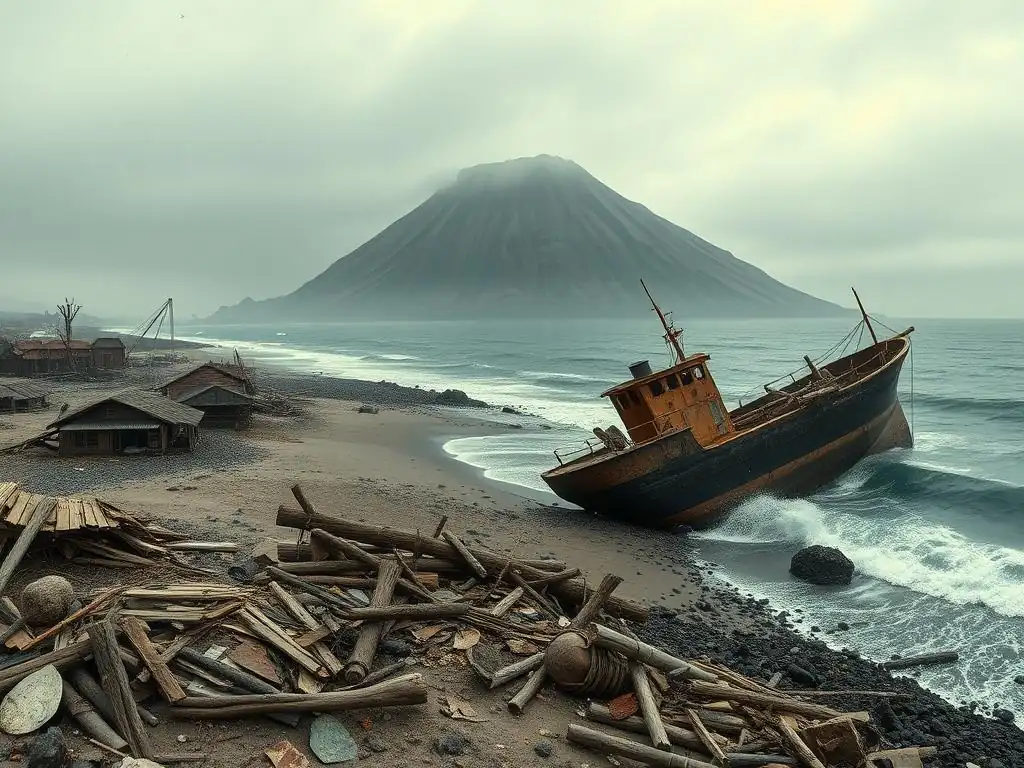
Caldera collapses represent a significant, albeit less frequent, source of tsunamis, posing a considerable hazard to coastal communities worldwide. Understanding the formation mechanisms of calderas, the processes that trigger collapses, and the dynamics of caldera-generated tsunamis is crucial for effective risk assessment and mitigation. Historical events like Krakatoa and Unzen serve as stark reminders of the destructive potential of these events, while the Minoan eruption highlights the long-term societal impacts.
Ongoing research, advancements in monitoring technology, and international collaboration are vital for improving our ability to predict and respond to caldera collapse and tsunami risk. Community education, effective evacuation planning, and appropriate coastal zoning and building codes are essential components of a comprehensive risk reduction strategy. By recognizing the unique challenges posed by caldera-generated tsunamis and investing in research, monitoring, and preparedness, we can work towards building more resilient coastal communities and reducing the devastating consequences of these volcanic catastrophes.
Frequently Asked Questions
What is a caldera collapse, and why is it a concern?
A caldera collapse is a major volcanic event where the ground above a magma chamber collapses, creating a large depression. This is a concern because the sudden displacement of land can trigger massive tsunamis.
How does a caldera collapse cause a tsunami?
The sudden downward movement of land into the ocean, or a large lake, displaces a huge volume of water. This displacement creates a wave that radiates outwards, forming a destructive tsunami.
Are all caldera collapses equally likely to cause tsunamis?
No. The likelihood and size of a tsunami depend on factors like the size of the caldera, the speed of the collapse, and the location relative to large bodies of water.
Where are some regions particularly vulnerable to caldera collapse-induced tsunamis?
Regions near coastal volcanoes or volcanoes located within or near large lakes are most vulnerable. Examples include some areas in the Pacific Ring of Fire and certain volcanic islands.
Monitoring volcanic activity for signs of potential collapse, developing early warning systems based on seismic and deformation data, and implementing effective evacuation plans are crucial.
Final Reflection: The Unfolding Legacy of Caldera Collapse
The exploration of caldera collapse and its associated tsunami risk, as detailed throughout this article, resonates with a profound urgency in our increasingly interconnected world. Understanding these geological behemoths and their potential for catastrophic failure is no longer a purely academic exercise, but a critical imperative for safeguarding coastal communities and mitigating future disasters. The lessons gleaned from past events, coupled with advancements in monitoring and modeling, offer a pathway towards preparedness and resilience in the face of these formidable natural hazards.
The enduring impact of caldera collapses, both geologically and culturally, is undeniable. The sheer scale of these events reshapes landscapes and leaves an indelible mark on the Earth's surface, while the tsunamis they generate can devastate coastal regions and alter the course of human history. The threat, though infrequent, demands our continued vigilance and proactive engagement. The only constant is change,
Heraclitus famously stated, and this holds especially true for our planet. We must adapt our understanding and preparedness to the ever-evolving dynamics of Earth's powerful forces.
As we conclude this exploration of caldera collapse and tsunami risk, I invite you to consider your own role in fostering a more resilient future. Reflect on the knowledge you've gained and how it can inform your understanding of natural hazards. Let us all strive to be informed citizens, advocating for responsible coastal development, supporting scientific research, and promoting preparedness within our communities. The power to mitigate the impact of these events lies not just in scientific understanding, but in our collective commitment to safeguarding lives and protecting our planet.
Unearth Your Inner Volcano Explorer!
Thanks for exploring the fascinating and sometimes frightening world of caldera collapses! We hope you've gained a deeper understanding of these dramatic geological events and their potential impact. Now, it's time to put that knowledge into action and become a true volcano enthusiast.
Here's how:
- Become a Caldera Detective: Use Google Earth to identify three calderas worldwide. Share your findings and any historical collapse information you uncover in the comments below!
- Join the Conversation: Share this article to spread awareness about the risks and wonders of volcanic activity. Let's get more people talking about volcano preparedness!
- Plan a Virtual Volcano Visit: Research a caldera that fascinates you. Learn about the surrounding communities and any volcanic monitoring efforts. Consider donating to a reputable volcano research organization.
What specific region of the world do you think is most at risk from a future caldera collapse, and why? Share your thoughts!