
Underwater Volcano Eruption Prediction: Forecasting Fury from the Deep Ocean

Welcome to Volcano Explorers!
Dive into the unknown and prepare to be amazed. What if we could predict the unpredictable? In this article, we tackle a fascinating and critical area of volcanology: underwater volcano eruption prediction. Can we truly forecast the fury brewing beneath the waves? Join us as we explore the science, the challenges, and the potential breakthroughs in understanding these hidden giants of the deep. Your journey into the fiery heart of our planet starts here...
- Introduction: Unveiling the Challenges of Predicting Underwater Volcanic Eruptions
- Understanding Underwater Volcanoes: A Primer
-
Current Methods for Underwater Volcano Eruption Prediction
- Seismic Monitoring of Submarine Volcanoes: Detecting Underwater Earthquakes and Tremors
- Hydroacoustic Monitoring: Listening for Underwater Explosions and Activity
- Chemical Monitoring: Detecting Changes in Seawater Composition Near Volcanoes
- Deformation Monitoring: Measuring Changes in the Volcano's Shape
- Advanced Technologies for Forecasting Underwater Volcanic Activity
- Case Studies: Successful (and Unsuccessful) Predictions of Underwater Volcanic Eruptions
- The Future of Underwater Volcano Eruption Prediction
- Mitigating Risks Associated with Underwater Volcanic Eruptions
- Conclusion: Advancing Our Ability to Forecast Underwater Volcanic Fury
-
Frequently Asked Questions
- How do scientists currently monitor underwater volcanoes for potential eruptions?
- What are the main challenges in predicting underwater volcano eruptions compared to land-based volcanoes?
- What role does water pressure play in underwater volcanic eruptions?
- What types of data are most crucial for improving underwater volcano eruption prediction accuracy?
- Can machine learning or AI be used to help predict underwater volcano eruptions?
- Final Reflection: Navigating the Unseen Depths
- Uncover the Mysteries: Join the Deep-Sea Volcano Watch!
Introduction: Unveiling the Challenges of Predicting Underwater Volcanic Eruptions
The Importance of Monitoring Submarine Volcanoes
Submarine volcanoes, while hidden beneath the ocean's surface, represent a significant geological force with global implications. They are far more numerous than terrestrial volcanoes, estimated to account for approximately 80% of Earth's volcanic activity. This constant volcanism plays a crucial role in ocean chemistry, heat flow, and the formation of new seafloor crust at mid-ocean ridges.
Understanding and monitoring these underwater giants is vital for several reasons, including assessing their contribution to global geochemical cycles and, importantly, mitigating potential hazards. Eruptions from submarine volcanoes can trigger tsunamis, disrupt shipping lanes, and release vast quantities of volcanic gases into the ocean and atmosphere, potentially impacting marine ecosystems and even global climate patterns. Therefore, effective underwater volcano eruption prediction is not just an academic exercise; it is a critical endeavor for global safety and environmental stewardship.
The study of submarine volcanoes is also essential for understanding the broader context of Earth's geological processes. These underwater systems offer unique insights into magma generation, volcanic eruption dynamics under extreme pressure conditions, and the interaction between volcanism and the hydrosphere. Data gathered from monitoring submarine volcanoes can help refine our general models of volcanic behavior, benefiting eruption forecasting efforts for both subaerial and submarine volcanoes.
Furthermore, the ecosystems that thrive around hydrothermal vents associated with submarine volcanoes are of immense scientific interest, harboring unique life forms adapted to extreme conditions. Predicting eruptions helps protect these fragile ecosystems from catastrophic volcanic events and allows for better long-term monitoring of their response to volcanic activity.
Unique Challenges in Predicting Underwater Eruptions Compared to Land Volcanoes
Predicting eruptions from underwater volcanoes presents a unique set of challenges that are significantly different from those encountered with terrestrial volcanoes. The most fundamental challenge is accessibility. Submarine volcanoes are, by definition, submerged, often at considerable depths, making direct observation and instrument deployment significantly more complex and costly. Unlike land-based volcanoes where scientists can readily deploy a network of sensors, accessing underwater volcanoes requires specialized equipment like remotely operated vehicles (ROVs), autonomous underwater vehicles (AUVs), and ocean-bottom seismometers (OBS). These tools are expensive to operate and maintain, and their deployment is heavily influenced by weather conditions and ocean currents.
Another key challenge lies in the attenuation of many precursory signals as they travel through water. For instance, seismic signals from underwater volcanoes can be distorted and weakened by the water column, making it harder to detect subtle changes that might indicate an impending eruption. Similarly, gas emissions, a crucial indicator of volcanic activity on land, are quickly diluted and dispersed in seawater, making their detection and analysis far more difficult.
Visual observation, often a valuable tool for monitoring land volcanoes, is severely limited underwater due to light attenuation and water turbidity. Therefore, underwater volcano eruption prediction relies heavily on indirect methods and sophisticated sensor technologies capable of detecting faint signals amidst a noisy oceanic environment. The remoteness and harsh conditions of the deep ocean necessitate innovative approaches and robust technologies to effectively monitor and forecast eruptions from these enigmatic underwater giants.
Understanding Underwater Volcanoes: A Primer
Types of Underwater Volcanoes and Their Eruptive Styles
Underwater volcanoes, like their terrestrial counterparts, exhibit a variety of types and eruptive styles, largely influenced by magma composition, depth, and tectonic setting. Seamounts, perhaps the most common type of underwater volcano, are isolated volcanic peaks rising from the seafloor. They can range in size from small hills to massive structures kilometers high. Mid-ocean ridge volcanoes, found along the divergent plate boundaries, are responsible for the vast majority of submarine volcanism, creating new oceanic crust.
These are typically fissure eruptions, characterized by the effusive release of basaltic lava, forming pillow lavas and sheet flows. Arc volcanoes, associated with subduction zones, are also found underwater, often forming island arcs. These volcanoes tend to be more explosive due to higher gas content and more viscous magmas, similar to stratovolcanoes on land.
The eruptive styles of underwater volcanoes are also diverse, ranging from effusive to explosive. Effusive eruptions, common at mid-ocean ridges and some seamounts, involve the slow outpouring of lava, often forming pillow lavas due to rapid cooling by seawater. Explosive eruptions, while less frequent in deep water due to the suppressing effect of pressure, can occur, especially in shallower submarine volcanoes or during powerful events.
These explosive eruptions can generate pyroclastic flows, though their behavior underwater is still being studied. Phreatomagmatic eruptions, resulting from the interaction of magma and seawater, can also occur, creating unique volcanic features and dispersing ash and debris into the water column. Understanding these different types and eruptive styles is crucial for developing targeted monitoring strategies and improving underwater volcano eruption prediction capabilities.
The Role of Seawater Pressure on Underwater Eruptions
Seawater pressure plays a dominant role in shaping the characteristics of underwater volcanic eruptions, significantly influencing everything from eruption style to the dispersal of volcanic products. The immense pressure at depth, increasing by approximately 1 atmosphere for every 10 meters of depth, has a profound effect on the behavior of volcanic gases. At great depths, the high pressure suppresses the formation of gas bubbles in magma, making explosive eruptions less likely compared to subaerial volcanoes.
This is because the pressure counteracts the expansion of gases, keeping them dissolved within the magma until it reaches shallower depths. As a result, deep-sea eruptions are often dominated by effusive lava flows, forming characteristic pillow lavas.
However, pressure is not the only factor. While deep-sea pressure generally inhibits explosivity, it can also enhance it in certain scenarios. For instance, if magma with a high volatile content encounters seawater at shallower depths, the rapid decompression can lead to violent phreatomagmatic explosions. Furthermore, the pressure influences the fragmentation of magma and the dispersal of volcanic material.
While large-scale ash plumes, typical of explosive subaerial eruptions, are less common in deep water due to pressure suppressing fragmentation and buoyancy issues, smaller, more localized plumes and turbulent jets of hot water and volcanic particles can still be generated. Understanding the complex interplay between magma properties, volatile content, and seawater pressure is paramount for accurately interpreting pre-eruption signals and improving underwater volcano eruption prediction models. The depth of a submarine volcano is, therefore, a critical parameter in assessing its potential eruptive behavior.
Formation and Evolution of Submarine Volcanic Systems
Submarine volcanic systems form and evolve through a variety of geological processes, primarily driven by plate tectonics and mantle dynamics. The vast majority of submarine volcanism occurs at mid-ocean ridges, where tectonic plates diverge, allowing magma from the Earth's mantle to rise and create new oceanic crust. This process, known as seafloor spreading, is responsible for the formation of extensive underwater mountain ranges and volcanic plateaus.
Hotspots, plumes of hot mantle material rising independently of plate boundaries, are another significant source of submarine volcanism. As tectonic plates move over these stationary hotspots, they create chains of volcanic islands and seamounts, such as the Hawaiian-Emperor seamount chain, with older, extinct volcanoes further away from the hotspot source.
The evolution of submarine volcanic systems is a complex interplay of magma supply, crustal structure, and hydrothermal activity. Over time, repeated eruptions build up volcanic edifices, which can range from small cones to massive seamounts. Hydrothermal vents, common features of submarine volcanic systems, play a crucial role in altering the volcanic rocks and influencing the surrounding ocean chemistry. These vents release hot, chemically enriched fluids into the seawater, supporting unique chemosynthetic ecosystems.
The lifespan of a submarine volcano can vary greatly, from relatively short-lived eruptions to systems that remain active for millions of years. Understanding the formation and evolutionary history of a specific submarine volcanic system is essential for assessing its current state and forecasting future eruptive activity. This involves studying the geological setting, the volcano's morphology, and the history of past eruptions, often through geophysical surveys, rock sampling, and dating techniques.
Current Methods for Underwater Volcano Eruption Prediction
Seismic Monitoring of Submarine Volcanoes: Detecting Underwater Earthquakes and Tremors
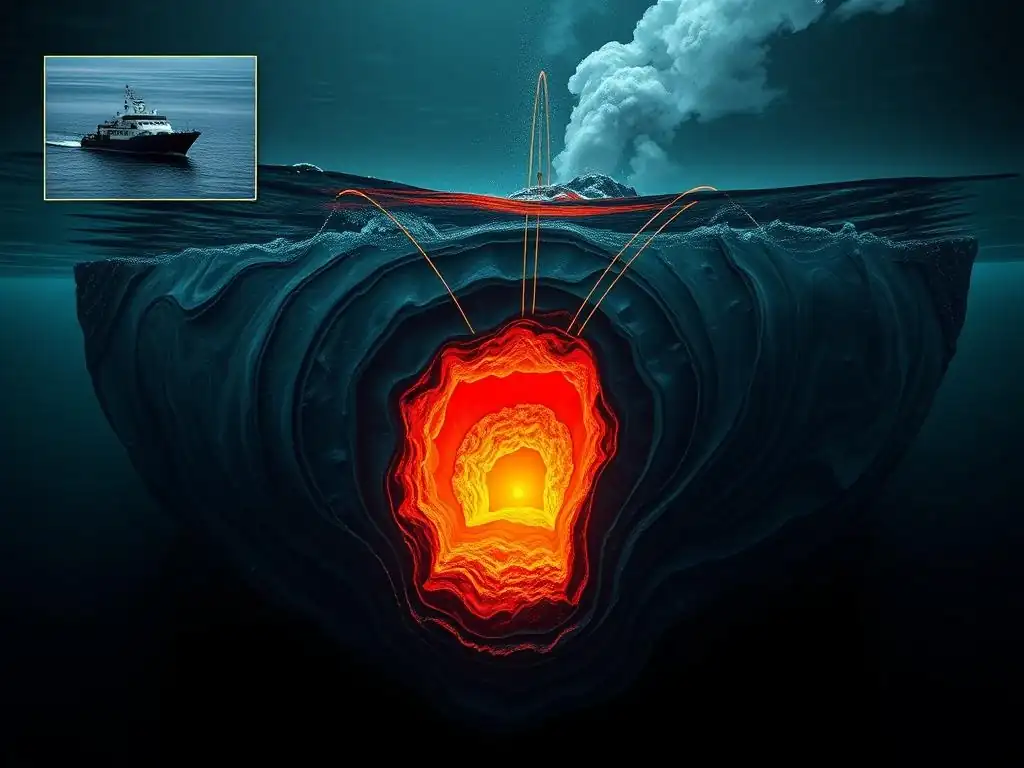
Seismic monitoring is a cornerstone of underwater volcano eruption prediction, adapted from methods successfully employed for terrestrial volcanoes. Underwater earthquakes and volcanic tremors are often precursors to eruptions, as magma movement and pressure changes within the volcanic system generate detectable seismic waves. To monitor these signals in the submarine environment, scientists deploy ocean-bottom seismometers (OBS). These specialized instruments are designed to withstand the immense pressure of the deep ocean and record ground motions with high precision. OBS networks are strategically placed around known or suspected active submarine volcanoes to capture a comprehensive picture of seismic activity.
Analyzing the characteristics of underwater earthquakes and tremors is crucial for eruption forecasting. Changes in earthquake frequency, magnitude, and location can indicate magma migration towards the surface. Volcanic tremor, a continuous seismic signal, often signifies fluid movement within the volcano and can intensify in the lead-up to an eruption.
However, distinguishing between tectonic earthquakes and volcano-related earthquakes in the underwater environment can be challenging. Researchers use sophisticated signal processing techniques and analyze waveform characteristics to differentiate these signals and isolate volcanic seismic activity. While seismic monitoring provides valuable insights, it is often used in conjunction with other methods for a more robust underwater volcano eruption prediction strategy, as seismic signals alone may not always provide a complete picture of impending volcanic activity.
Hydroacoustic Monitoring: Listening for Underwater Explosions and Activity
Hydroacoustic monitoring provides a unique and powerful tool for detecting underwater volcanic activity, particularly explosive eruptions and submarine landslides, by "listening" for sound waves propagating through the ocean. Underwater explosions, magma-water interactions, and even the cracking of rocks generate distinct acoustic signals that can travel vast distances in seawater, far further than seismic waves in the solid Earth. Hydrophones, underwater microphones, are deployed to detect these acoustic signals. These can be stand-alone instruments or integrated into OBS systems and cabled observatories.
Analyzing hydroacoustic data allows scientists to detect and locate underwater volcanic events, even in remote and poorly monitored regions. The characteristics of the acoustic signals, such as frequency, amplitude, and duration, can provide information about the type and intensity of the volcanic activity. For instance, impulsive signals might indicate explosive eruptions, while continuous signals could be related to degassing or hydrothermal venting.
Global networks of hydrophones, originally designed for monitoring nuclear tests, are now also used to detect large underwater volcanic eruptions and tsunamigenic events. Hydroacoustic monitoring is particularly valuable for detecting events that might be missed by seismic networks alone, especially in areas with sparse OBS coverage. Combining hydroacoustic and seismic data provides a more comprehensive understanding of underwater volcanic processes and enhances the accuracy of underwater volcano eruption prediction.
Chemical Monitoring: Detecting Changes in Seawater Composition Near Volcanoes
Chemical monitoring of seawater near submarine volcanoes offers another crucial approach to underwater volcano eruption prediction. Volcanic eruptions release gases and hydrothermal fluids into the surrounding seawater, altering its chemical composition. Detecting changes in the concentrations of specific chemical species can provide early warning signs of increased volcanic activity. Key parameters monitored include the levels of dissolved gases like carbon dioxide (CO2), sulfur dioxide (SO2), and helium (He), as well as changes in pH, temperature, and trace metals. Increases in these volcanic tracers can indicate magma degassing and the potential for an impending eruption.
Chemical sensors, deployed on moorings, autonomous underwater vehicles (AUVs), and remotely operated vehicles (ROVs), are used to measure these parameters in situ. Continuous monitoring provides valuable time-series data, allowing scientists to track changes in seawater chemistry over time. However, interpreting chemical signals requires careful consideration of background variability and other factors that can influence seawater composition, such as ocean currents and biological activity.
Therefore, chemical monitoring is most effective when combined with other geophysical methods, such as seismic and hydroacoustic monitoring. For example, a simultaneous increase in seismic activity and volcanic gas emissions would provide stronger evidence of an impending eruption than either signal alone. Analyzing the ratios of different volcanic gases can also offer insights into the magma source and the stage of volcanic activity, further refining underwater volcano eruption prediction capabilities.
Deformation Monitoring: Measuring Changes in the Volcano's Shape
Deformation monitoring, a well-established technique for terrestrial volcanoes, is increasingly being adapted for underwater volcano eruption prediction. Changes in a volcano's shape, such as swelling or inflation, can indicate magma accumulation beneath the surface and are often precursors to eruptions. However, measuring these subtle changes underwater presents significant technical challenges. Traditional land-based methods like GPS and tiltmeters are not directly applicable in the deep ocean. Instead, scientists employ specialized techniques, including seafloor geodesy and pressure sensors, to detect deformation of submarine volcanoes.
Seafloor geodesy involves using acoustic ranging techniques to precisely measure distances between benchmarks installed on the seafloor around a volcano. Changes in these distances over time reveal deformation. Pressure sensors, deployed on the seafloor, can also detect vertical movements of the seafloor associated with volcanic inflation or deflation.
These instruments need to be highly precise and stable in the harsh underwater environment. Satellites can also play a role in deformation monitoring. For shallower submarine volcanoes, satellite radar interferometry (InSAR) can sometimes detect surface deformation if the volcano's summit is close to or breaks the sea surface.
However, InSAR's effectiveness is limited by water depth and atmospheric effects. Combining seafloor geodesy, pressure sensor data, and satellite observations provides a multi-faceted approach to deformation monitoring of underwater volcanoes. While still in development compared to seismic and hydroacoustic methods, deformation monitoring holds significant promise for enhancing underwater volcano eruption prediction, particularly for volcanoes that exhibit slow, gradual inflation prior to eruption.
Advanced Technologies for Forecasting Underwater Volcanic Activity
Using Autonomous Underwater Vehicles (AUVs) for Real-Time Monitoring
Autonomous Underwater Vehicles (AUVs) are revolutionizing underwater volcano eruption prediction by providing a platform for real-time, mobile monitoring of these dynamic systems. AUVs are robotic submarines that can operate independently, without direct human control, allowing for extended deployments in hazardous and remote volcanic regions. Equipped with a suite of sensors, AUVs can collect a wide range of data, including bathymetry, water chemistry, temperature, and acoustic signals, directly within the volcanic environment. Their mobility allows them to survey large areas and access locations that are difficult or dangerous for traditional research vessels or ROVs.
AUVs can be programmed to follow pre-defined paths or adaptively sample based on real-time data. For example, an AUV can be deployed to investigate an area of increased seismic activity or follow a plume of volcanic gases detected by satellite. Real-time data transmission via satellite communication links allows scientists to monitor conditions remotely and adjust AUV missions as needed.
The ability of AUVs to conduct repeated surveys over time enables the detection of subtle changes in volcanic activity that might be missed by infrequent ship-based surveys. Furthermore, AUVs can be equipped with sensors to detect and track hydrothermal plumes, providing valuable insights into degassing processes and potential pre-eruptive activity. The use of AUVs for underwater volcano monitoring is rapidly expanding, offering a cost-effective and efficient way to gather crucial data for improved underwater volcano eruption prediction.
Satellite-Based Monitoring Techniques: Detecting Thermal Anomalies and Plume Dispersal
Satellite-based monitoring techniques offer a synoptic and cost-effective approach to observing underwater volcanic activity, particularly for detecting thermal anomalies and tracking plume dispersal. Satellites equipped with infrared (IR) sensors can detect changes in sea surface temperature, which can be indicative of submarine volcanic eruptions releasing heat into the water column. While seawater effectively absorbs much of the thermal signal, large eruptions or shallow submarine volcanoes can produce detectable thermal anomalies at the sea surface. These thermal anomalies can be used to identify potentially active submarine volcanoes and trigger more focused investigations using in-situ methods.
Satellite imagery is also valuable for tracking the dispersal of volcanic plumes and ash clouds from underwater eruptions, especially in shallower waters. Visible and multispectral satellite sensors can detect changes in water color and turbidity associated with volcanic plumes. This information is crucial for assessing the spatial extent and direction of plume dispersal, which is important for understanding the potential impact on marine ecosystems and air traffic (if the plume reaches the atmosphere).
Furthermore, satellite altimetry can detect changes in sea surface height that might be associated with large underwater eruptions or volcanic deformation. While satellite-based methods have limitations in terms of spatial resolution and penetration depth in seawater, they provide a valuable first-pass screening tool for identifying potential underwater volcanic activity and complementing in-situ monitoring efforts, particularly for remote and poorly instrumented regions.
Machine Learning and AI in Predicting Underwater Eruptions
Machine learning (ML) and Artificial Intelligence (AI) are emerging as powerful tools to enhance underwater volcano eruption prediction by analyzing the vast and complex datasets generated by monitoring systems. Underwater volcanic systems produce a multitude of signals, including seismic, hydroacoustic, chemical, and deformation data. ML and AI algorithms can be trained to identify patterns and anomalies within these datasets that may be indicative of pre-eruptive activity, patterns that might be too subtle or complex for human analysts to discern. These techniques can process large volumes of data in real-time, enabling faster and more efficient analysis of monitoring data.
For example, ML algorithms can be trained to classify different types of seismic signals, distinguishing between tectonic earthquakes, volcanic earthquakes, and tremor, improving the accuracy of seismic-based eruption forecasts. AI can also be used to develop predictive models that integrate data from multiple monitoring sources to assess eruption probability. By learning from past eruptions and non-eruption periods, these models can identify critical thresholds and combinations of parameters that are most indicative of impending eruptions.
Furthermore, AI can assist in optimizing monitoring network design and sensor placement, improving the overall effectiveness of underwater volcano monitoring systems. While still in the early stages of application in underwater volcanology, machine learning and AI hold great promise for revolutionizing underwater volcano eruption prediction, leading to more accurate and timely warnings of volcanic hazards.
Case Studies: Successful (and Unsuccessful) Predictions of Underwater Volcanic Eruptions
Case Study 1: Axial Seamount - Lessons Learned
Axial Seamount, located on the Juan de Fuca Ridge in the Northeast Pacific Ocean, is one of the most well-studied and actively monitored submarine volcanoes globally. This volcano has erupted multiple times in recent decades, providing valuable opportunities for studying underwater eruption processes and testing prediction methods. In 2015, scientists successfully predicted an eruption at Axial Seamount based on a combination of seismic and deformation monitoring.
Prior to the eruption, the Ocean Observatories Initiative (OOI) cabled observatory, deployed on Axial Seamount, detected an increase in seismic activity and seafloor inflation. These precursory signals were interpreted as magma accumulating beneath the volcano, indicating an impending eruption.
Based on this analysis, scientists issued an eruption advisory, and indeed, an eruption occurred shortly after. The eruption was well-documented by the cabled observatory, providing unprecedented real-time data on the eruption process. The successful prediction of the 2015 Axial Seamount eruption demonstrated the effectiveness of integrated monitoring systems and the value of combining seismic and deformation data for underwater volcano eruption prediction.
Key lessons learned from Axial Seamount include the importance of continuous, real-time monitoring, the effectiveness of cabled observatories for sustained data collection, and the critical role of deformation monitoring in detecting magma accumulation. Axial Seamount serves as a benchmark for underwater volcano monitoring and prediction efforts, highlighting the potential for accurate forecasting in well-instrumented submarine volcanic systems.
Case Study 2: Hunga Tonga-Hunga Ha'apai - A Prediction Failure Analysis
The 2022 eruption of Hunga Tonga-Hunga Ha'apai, a submarine volcano in Tonga, was one of the largest and most impactful volcanic eruptions of the 21st century. Despite its significant impact, including generating a Pacific-wide tsunami and injecting unprecedented amounts of water vapor into the stratosphere, the eruption was not successfully predicted in advance.
This case study serves as a stark reminder of the limitations in our current underwater volcano eruption prediction capabilities, particularly for poorly monitored and complex volcanic systems. While there were some precursory signals detected, such as increased seismic activity in the weeks leading up to the major eruption, these were not unequivocally interpreted as indicating an imminent, large-scale explosive event.
Several factors contributed to the prediction failure at Hunga Tonga-Hunga Ha'apai. The volcano is located in a remote region with limited real-time monitoring infrastructure. While satellite data did detect thermal anomalies and plume activity prior to the eruption, the interpretation of these signals was challenging.
Furthermore, the complex interaction between magma and seawater at Hunga Tonga-Hunga Ha'apai, leading to highly explosive phreatomagmatic eruptions, made it difficult to anticipate the scale and intensity of the event. The Hunga Tonga-Hunga Ha'apai eruption highlights the need for improved monitoring capabilities in remote submarine volcanic regions, enhanced understanding of explosive underwater eruption dynamics, and the development of more robust prediction models that can account for complex volcano behavior. It underscores the fact that underwater volcano eruption prediction remains a significant scientific challenge, and much research is still needed to improve our forecasting abilities, especially for highly explosive submarine volcanoes.
Analyzing Prediction Accuracy and Identifying Areas for Improvement
Analyzing the accuracy of past underwater volcano eruption predictions, both successes and failures, is crucial for identifying areas for improvement and advancing the field. While the successful prediction at Axial Seamount demonstrates the potential of current methods, the failure at Hunga Tonga-Hunga Ha'apai underscores the limitations and challenges that remain. A comprehensive analysis of prediction accuracy requires evaluating various aspects, including the lead time of predictions, the rate of false alarms, and the ability to accurately forecast eruption magnitude and style.
Currently, underwater volcano eruption prediction is still in its early stages compared to terrestrial volcano forecasting. Prediction accuracy varies significantly depending on the volcano, the monitoring infrastructure in place, and the complexity of the volcanic system.
Areas for improvement in underwater volcano eruption prediction are numerous. Enhanced monitoring capabilities are paramount, particularly in remote and poorly instrumented regions. This includes expanding OBS networks, deploying more AUVs for mobile monitoring, and improving satellite-based observation techniques. Further research is needed to better understand the pre-eruptive signals specific to underwater volcanoes and to develop more sophisticated prediction models that incorporate diverse datasets and account for the unique challenges of the submarine environment.
Improving our understanding of magma dynamics, eruption triggers, and the complex interplay between magma and seawater is also critical. International collaboration and data sharing are essential for advancing the field, pooling resources, and leveraging expertise to improve global underwater volcano monitoring and prediction capabilities. By systematically analyzing prediction accuracy and addressing identified areas for improvement, we can steadily enhance our ability to forecast underwater volcanic eruptions and mitigate the associated hazards.
The Future of Underwater Volcano Eruption Prediction
Developing Integrated Monitoring Systems for Enhanced Prediction Accuracy
The future of underwater volcano eruption prediction hinges on the development and deployment of integrated monitoring systems that combine multiple data streams for a more comprehensive and robust assessment of volcanic activity. Relying on a single monitoring technique, such as seismic monitoring alone, can be insufficient for accurate forecasting. Integrated systems will incorporate seismic, hydroacoustic, chemical, and deformation monitoring data, providing a multi-faceted view of volcanic processes. These systems will leverage the strengths of each technique to overcome individual limitations and provide a more holistic understanding of pre-eruptive signals.
Cabled observatories, like the OOI observatory at Axial Seamount, represent a key component of integrated monitoring systems. These observatories provide sustained power and data communication to seafloor instruments, enabling real-time, continuous monitoring over extended periods. Expanding the deployment of cabled observatories to other key submarine volcanic regions would significantly enhance global monitoring capabilities.
Complementary mobile monitoring platforms, such as AUVs and gliders, will play an increasingly important role in integrated systems, providing flexible and targeted data collection in response to evolving volcanic activity. Furthermore, satellite-based monitoring will continue to provide a valuable synoptic view, complementing in-situ measurements. The integration of data from these diverse sources, facilitated by advanced data processing and analysis techniques, including machine learning and AI, will be crucial for achieving significant improvements in underwater volcano eruption prediction accuracy and lead time.
Improving Understanding of Magma Dynamics and Eruption Triggers
A deeper understanding of magma dynamics and eruption triggers is fundamental to advancing underwater volcano eruption prediction capabilities. While monitoring systems provide valuable data on pre-eruptive signals, interpreting these signals and translating them into accurate eruption forecasts requires a robust understanding of the underlying volcanic processes. Research efforts need to focus on improving our knowledge of magma generation, storage, and transport beneath submarine volcanoes. This includes studying the composition, volatile content, and physical properties of submarine magmas, as well as the processes that control magma ascent and eruption.
Numerical modeling plays a crucial role in simulating magma dynamics and eruption scenarios. Developing more sophisticated models that incorporate the unique conditions of the submarine environment, such as seawater pressure and magma-water interaction, is essential. These models can help us understand the relationships between pre-eruptive signals and eruption parameters, such as eruption magnitude and style.
Laboratory experiments simulating underwater eruption processes also provide valuable insights into eruption dynamics and the generation of precursory signals. Furthermore, studying the geological record of past submarine eruptions, through the analysis of volcanic deposits and seafloor morphology, provides crucial information about long-term volcanic behavior and eruption recurrence intervals. By combining observational data, numerical modeling, laboratory experiments, and geological studies, we can build a more comprehensive understanding of magma dynamics and eruption triggers, leading to more physically based and accurate underwater volcano eruption prediction models.
International Collaboration and Data Sharing for Better Global Monitoring
International collaboration and data sharing are essential for achieving better global monitoring and prediction of underwater volcanic eruptions. Submarine volcanoes are distributed across the globe, often in remote and international waters. Effective monitoring and prediction require a coordinated international effort, pooling resources, expertise, and data. Sharing data from national monitoring networks, research expeditions, and cabled observatories is crucial for building a global picture of underwater volcanic activity. International collaborations can also facilitate the deployment of monitoring infrastructure in poorly instrumented regions and the development of standardized data formats and analysis protocols.
Global initiatives, such as the Global Ocean Observing System (GOOS) and the International Ocean Discovery Program (IODP), play a vital role in promoting international collaboration in oceanographic and geological research, including submarine volcanology. Joint research projects, workshops, and data repositories facilitate the exchange of knowledge and best practices. Furthermore, international agreements and frameworks are needed to ensure timely and effective communication of eruption warnings and hazard information across national boundaries.
The Hunga Tonga-Hunga Ha'apai eruption highlighted the global impact of submarine volcanic eruptions and the need for enhanced international cooperation in monitoring, prediction, and hazard mitigation. By working together, the international scientific community can significantly advance our ability to forecast underwater volcanic fury and protect coastal communities and global infrastructure from volcanic hazards.
Mitigating Risks Associated with Underwater Volcanic Eruptions
Tsunami Early Warning Systems and Underwater Volcanoes
Tsunamis are a primary hazard associated with underwater volcanic eruptions, particularly explosive eruptions and submarine landslides triggered by volcanic activity. Improving tsunami early warning systems (TEWS) to effectively detect and respond to volcano-genic tsunamis is crucial for mitigating risks to coastal communities. Traditional TEWS are primarily designed to detect tsunamis generated by earthquakes. However, volcano-genic tsunamis can exhibit different characteristics and may not be as readily detected by earthquake-centric systems. For example, volcano-genic tsunamis can be more localized and may have shorter wavelengths than earthquake-generated tsunamis.
Enhancing TEWS for underwater volcanoes requires integrating volcano monitoring data into tsunami warning protocols. Real-time data from OBS networks, hydroacoustic arrays, and seafloor pressure sensors can provide early indications of volcanic eruptions and submarine landslides that could generate tsunamis. Developing specific algorithms and models to rapidly assess tsunami potential from volcanic sources is essential.
This includes improving our understanding of tsunami generation mechanisms from underwater eruptions and landslides, as well as refining tsunami propagation models to accurately forecast wave arrival times and inundation areas. Furthermore, community education and preparedness programs need to be tailored to address the specific risks of volcano-genic tsunamis, ensuring that coastal populations are aware of the potential hazards and know how to respond effectively to tsunami warnings triggered by underwater volcanic activity.
Protecting Submarine Cables and Infrastructure
Submarine cables, vital for global communication and internet connectivity, and other underwater infrastructure, such as pipelines, are vulnerable to the impacts of underwater volcanic eruptions. Lava flows, pyroclastic flows, and debris flows from submarine volcanoes can directly damage or sever cables and infrastructure. Furthermore, volcanic ash and hydrothermal fluids can corrode and degrade materials over time. Protecting this critical infrastructure requires proactive risk assessment and mitigation strategies.
Mapping and monitoring submarine volcanoes near cable routes and infrastructure corridors is essential for identifying potential hazards. Routing cables and infrastructure away from known active volcanic zones or areas prone to volcanic hazards is a primary mitigation strategy. Developing more robust cable designs and burial techniques can enhance resilience to volcanic impacts.
Real-time monitoring of submarine volcanoes along cable routes can provide early warning of impending eruptions, allowing for precautionary measures, such as rerouting data traffic or temporarily shutting down infrastructure. International collaboration between cable operators, infrastructure developers, and volcanological monitoring agencies is crucial for sharing data, developing best practices, and coordinating risk mitigation efforts. Protecting submarine cables and infrastructure from underwater volcanic hazards is essential for maintaining global connectivity and minimizing economic and societal disruptions.
Educating Coastal Communities About Underwater Volcano Hazards
Educating coastal communities about the hazards posed by underwater volcanoes is a critical component of risk mitigation. Many coastal populations are unaware of the potential for tsunamis and other hazards originating from submarine volcanic eruptions, particularly if these volcanoes are located far offshore or are not visibly active.
Public education campaigns are needed to raise awareness about underwater volcano hazards, explain the potential risks, and inform communities about appropriate preparedness and response measures. This education should be tailored to the specific vulnerabilities and needs of each coastal community, taking into account local languages, cultural contexts, and existing disaster preparedness frameworks.
Educational materials, including brochures, websites, and public service announcements, can be used to disseminate information about underwater volcanoes, tsunami risks, and evacuation procedures. Community workshops and drills can provide hands-on training and reinforce preparedness messages. Engaging local leaders, community organizations, and schools in education efforts is crucial for building community resilience.
Furthermore, incorporating underwater volcano hazards into school curricula can ensure that future generations are aware of these risks and are equipped to respond effectively. Effective community education is essential for empowering coastal populations to protect themselves from the often-underestimated hazards of underwater volcanic eruptions and for building more resilient coastal communities.
Conclusion: Advancing Our Ability to Forecast Underwater Volcanic Fury
The Ongoing Quest to Understand and Predict Underwater Eruptions
The quest to understand and predict underwater volcanic eruptions is an ongoing scientific endeavor, driven by the recognition of their significant geological, environmental, and societal impacts. While significant progress has been made in recent decades in developing monitoring technologies and eruption prediction methods, underwater volcano forecasting remains a complex and challenging field. The remoteness, inaccessibility, and harsh conditions of the deep ocean present unique obstacles to monitoring and studying these enigmatic volcanic systems. Furthermore, the diverse types of underwater volcanoes and their complex eruptive styles require a multifaceted approach to prediction.
Despite the challenges, the scientific community is committed to advancing our understanding and prediction capabilities. Ongoing research efforts are focused on improving monitoring technologies, developing more sophisticated prediction models, and enhancing our knowledge of magma dynamics and eruption triggers in the submarine environment.
The successful prediction at Axial Seamount demonstrates the potential for accurate forecasting in well-instrumented volcanic systems, while the Hunga Tonga-Hunga Ha'apai eruption serves as a reminder of the limitations and the need for continued progress. The ongoing quest to forecast underwater volcanic fury is not only a scientific imperative but also a crucial endeavor for mitigating volcanic hazards and protecting coastal communities and global infrastructure from the potentially devastating impacts of underwater eruptions.
The Importance of Continued Research and Technological Development
Continued research and technological development are paramount for advancing underwater volcano eruption prediction and mitigating associated risks. Sustained investment in research is needed to improve our fundamental understanding of underwater volcanic processes, from magma generation and ascent to eruption dynamics and tsunami generation. This includes supporting basic research in marine geology, geophysics, geochemistry, and oceanography, as well as interdisciplinary studies that integrate these fields. Technological development is equally crucial for enhancing monitoring capabilities and data analysis techniques. This includes developing more robust and cost-effective OBS, AUVs, and chemical sensors, as well as improving satellite-based monitoring methods.
Furthermore, advancements in data processing, machine learning, and AI are essential for extracting meaningful information from the vast datasets generated by monitoring systems and for developing more accurate and timely eruption forecasts. International collaboration and data sharing are also critical for accelerating progress and maximizing the impact of research and technological development efforts.
By prioritizing continued research and technological innovation, we can steadily improve our ability to forecast underwater volcanic fury, reduce the uncertainties associated with underwater volcano eruption prediction, and ultimately enhance the safety and resilience of coastal communities and global infrastructure in the face of these powerful natural hazards.
Frequently Asked Questions
How do scientists currently monitor underwater volcanoes for potential eruptions?
Scientists primarily use hydrophones to listen for underwater sounds, seafloor deformation measurements, and satellite data to detect changes in water temperature or chemical composition that might indicate increased volcanic activity. These tools help provide early warning signs.
What are the main challenges in predicting underwater volcano eruptions compared to land-based volcanoes?
Predicting underwater eruptions is more difficult due to the inaccessibility of the volcanoes, the obscuring effect of water pressure, and the challenges in deploying and maintaining monitoring equipment in the deep ocean environment.
What role does water pressure play in underwater volcanic eruptions?
Water pressure can significantly influence the explosivity of an eruption. Higher pressure may suppress explosive activity, leading to effusive lava flows rather than violent explosions, although powerful explosions can still occur.
What types of data are most crucial for improving underwater volcano eruption prediction accuracy?
Collecting data on seismic activity, gas emissions, and seafloor deformation is vital. Improved sensor technology and real-time data transmission systems are necessary for more accurate predictions.
Can machine learning or AI be used to help predict underwater volcano eruptions?
Yes, AI and machine learning can analyze vast datasets from various sensors to identify patterns and anomalies that might indicate an impending eruption. This technology is a promising tool for improving prediction accuracy.
The exploration of underwater volcano eruption prediction is not merely an academic exercise; it's a critical endeavor with profound implications for coastal communities and global climate patterns. The ability to forecast these hidden eruptions, as we've discussed, represents a significant step towards mitigating potential disasters and understanding the complex interplay between the Earth's interior and its oceans. The urgency of this research is amplified by the increasing frequency and intensity of extreme weather events, making proactive measures more vital than ever.
The ongoing quest to decipher the signals preceding underwater volcanic eruptions has deeply influenced our understanding of the planet's dynamic processes. This pursuit highlights the interconnectedness of seemingly disparate fields, from seismology and oceanography to geochemistry and computer modeling. It reminds us that the Earth is a single, integrated system where events in the deep ocean can have far-reaching consequences. The sea, once it casts its spell, holds one in its net of wonder forever.
- Jacques Cousteau. This quote encapsulates the fascination and responsibility we hold towards understanding and protecting our oceans, including the volcanic forces that shape them.
As we conclude this exploration of underwater volcano eruption prediction, I invite you to consider the power of knowledge and the importance of continuous learning. Let us all strive to be informed citizens, advocating for research and policies that prioritize the safety and well-being of our planet and its inhabitants. The future of our oceans, and indeed our world, depends on our collective commitment to understanding and mitigating the risks lurking beneath the waves.
Uncover the Mysteries: Join the Deep-Sea Volcano Watch!
Thanks for exploring the fascinating world of underwater volcano eruption prediction with us! We hope you found these insights valuable in understanding the science behind forecasting these powerful events. Now, let's put that knowledge to work!
Here are a few ways you can further explore this incredible field:
- Immediately report any unusual underwater activity to your local geological survey or relevant authorities. Your observations could be vital to real-time monitoring efforts.
- Dive deeper into publicly available seismic and hydroacoustic datasets to identify potential eruption precursors and improve your data interpretation skills.
- Share this article with your network and spark a conversation about the importance of oceanographic research in disaster preparedness.
What skills or knowledge would you like to develop to contribute to underwater volcano monitoring efforts? Share your thoughts in the comments below!