
Listening to the Atmosphere: Interpreting the Signals from Hunga Tonga's Blast.

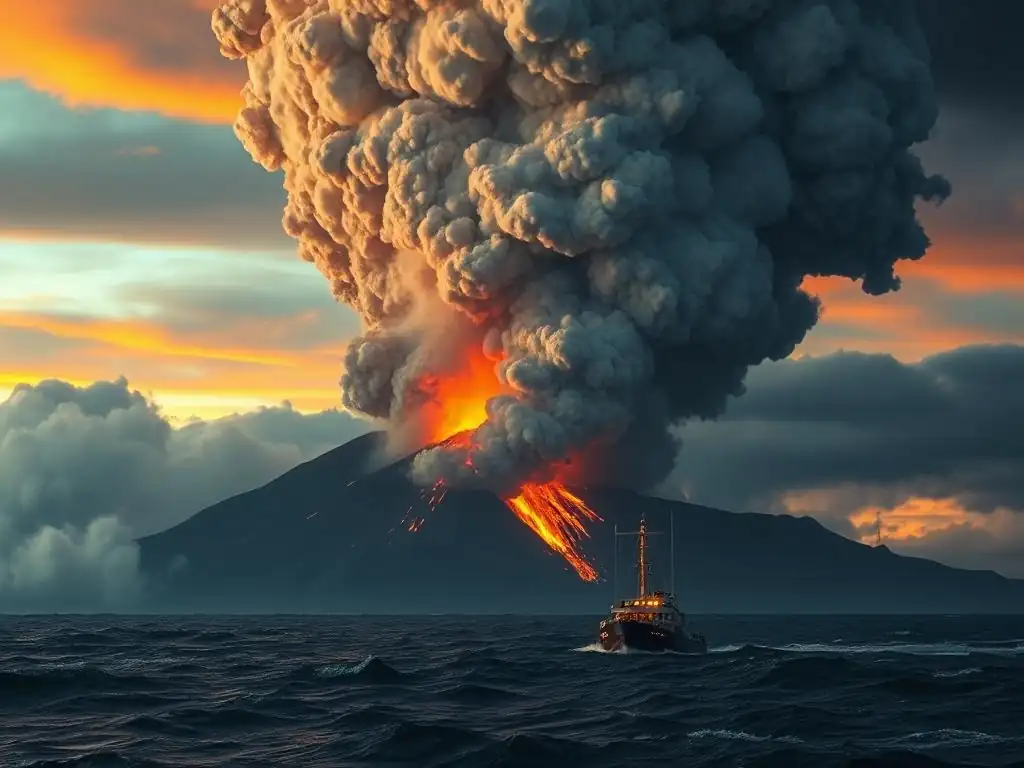
Welcome to Volcano Explorers!
Imagine the earth sighing... then roaring. We invite you to journey into the heart of volcanic power, where science meets spectacle. Here, we dissect the raw energy that shapes our planet. Dive deep now, and begin your exploration with a groundbreaking analysis of the Hunga Tonga volcanic eruption, a cataclysmic event that sent ripples far beyond the Pacific. What secrets did this eruption reveal about our atmosphere? Uncover the answers and ignite your curiosity within the world of volcanoes.
- Listening to the Atmosphere: Interpreting the Signals from Hunga Tonga-Hunga Ha'apai Eruption
- Introduction: The Unprecedented Atmospheric Impact of the Hunga Tonga-Hunga Ha'apai Eruption
-
Frequently Asked Questions
- What made the Hunga Tonga-Hunga Ha'apai eruption so significant from an atmospheric perspective?
- How did scientists use atmospheric signals to analyze the Hunga Tonga volcanic eruption?
- What type of atmospheric waves were generated by the Hunga Tonga eruption, and why are they important?
- What challenges did researchers face in interpreting the atmospheric signals from the Hunga Tonga eruption?
- What were some of the key findings from the analysis of the atmospheric signals related to the Hunga Tonga eruption?
- Final Reflection: Echoes of a Volcanic Awakening
- Unleash Your Inner Volcano Scientist!
Listening to the Atmosphere: Interpreting the Signals from Hunga Tonga-Hunga Ha'apai Eruption
Introduction: The Unprecedented Atmospheric Impact of the Hunga Tonga-Hunga Ha'apai Eruption
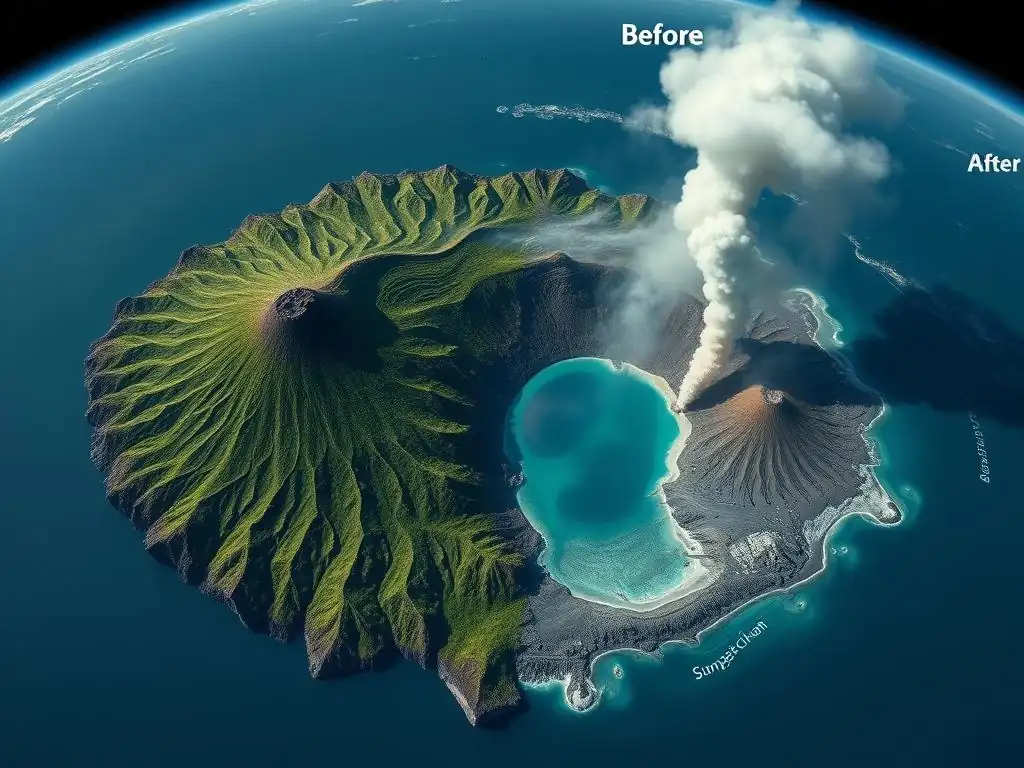
Volcanoes and Atmospheric Science: A Synergistic Exploration
Volcanoes, often perceived as purely geological phenomena, are intrinsically linked to the Earth's atmosphere. Eruptions, especially powerful ones, act as massive natural experiments, injecting vast quantities of gases, particles, and energy into the atmosphere. This interaction is not one-way; the atmosphere, in turn, influences volcanic processes, affecting weather patterns and even potentially triggering eruptions under certain conditions.
Studying this dynamic relationship is crucial for a comprehensive understanding of both volcanic activity and atmospheric dynamics. The synergy between volcanology and atmospheric science allows researchers to unravel complex processes, from the dispersion of volcanic plumes and their impact on climate to the propagation of atmospheric waves generated by explosive eruptions.
The exploration of this synergy is not merely academic; it has profound implications for hazard assessment and mitigation. Understanding how atmospheric signals propagate from volcanic eruptions allows for the development of advanced monitoring techniques and early warning systems. By "listening" to the atmosphere, scientists can gain valuable insights into the intensity and characteristics of eruptions, even those occurring in remote or poorly monitored regions. This interdisciplinary approach is essential for improving our ability to predict volcanic events and protect vulnerable populations from their potentially devastating consequences.
Hunga Tonga Eruption (2022): A Case Study in Atmospheric Dynamics
The Hunga Tonga-Hunga Ha'apai eruption of January 15, 2022, stands out as a pivotal event in the study of volcanic-atmospheric interactions. Its explosive force, coupled with its unique underwater setting, resulted in an unprecedented atmospheric disturbance that reverberated around the globe multiple times.
This eruption wasn't just remarkable for its visible plume and devastating tsunami; it was extraordinary for the scale and variety of atmospheric waves it generated, providing a rich dataset for scientists to analyze. The event served as a real-world laboratory, offering an unparalleled opportunity to study atmospheric wave propagation, energy transfer, and the complex interplay between the solid Earth, the ocean, and the atmosphere.
The sheer magnitude of the Hunga Tonga eruption's atmospheric impact has prompted a surge in research efforts worldwide. Scientists from various disciplines, including volcanology, meteorology, and space physics, are collaborating to analyze the wealth of data collected from ground-based instruments, satellites, and even space-based observatories.
The Hunga Tonga volcanic eruption analysis is proving to be a watershed moment, pushing the boundaries of our understanding of atmospheric dynamics and highlighting the crucial role of volcanoes in shaping our planet's atmospheric environment. This event serves as a stark reminder of the interconnectedness of Earth systems and the far-reaching consequences of powerful natural phenomena.
Frequently Asked Questions
What made the Hunga Tonga-Hunga Ha'apai eruption so significant from an atmospheric perspective?
The Hunga Tonga eruption was significant due to the sheer scale of the atmospheric waves it generated. These waves, including Lamb waves and pressure waves, circled the globe multiple times and were detectable even in distant locations. The unprecedented height of the ash plume also played a role.
How did scientists use atmospheric signals to analyze the Hunga Tonga volcanic eruption?
Scientists analyzed the arrival times and amplitudes of the pressure waves recorded by barometers and other instruments around the world. This data allowed them to estimate the eruption's energy release and the speed and direction of the atmospheric disturbances.
What type of atmospheric waves were generated by the Hunga Tonga eruption, and why are they important?
The eruption generated various atmospheric waves, including Lamb waves, gravity waves, and infrasound. These waves are important because they provide insights into the eruption's intensity, duration, and the atmospheric conditions at the time. They also helped scientists understand the connection between the ocean, atmosphere, and solid Earth.
What challenges did researchers face in interpreting the atmospheric signals from the Hunga Tonga eruption?
One challenge was distinguishing the volcanic signals from other atmospheric disturbances. The sheer size of the eruption meant signals propagated globally making it difficult to isolate. Another challenge was accounting for the complex atmospheric conditions that affected wave propagation.
Key findings included a more accurate estimate of the eruption's energy, comparable to a large nuclear explosion. The analysis also revealed the speed and reach of the atmospheric waves, confirming their global impact. Furthermore, the study highlighted the importance of global monitoring networks for understanding volcanic hazards.
Final Reflection: Echoes of a Volcanic Awakening
The analysis presented here, a Hunga Tonga volcanic eruption analysis, underscores the profound interconnectedness of our planet. The atmospheric ripples generated by that cataclysmic event served as a stark reminder of nature's raw power and humanity's increasing ability to decipher its complex signals. The eruption's impact, felt globally, highlights the urgency of improving our understanding of such events and their potential consequences.
This event has undeniably reshaped our perception of atmospheric monitoring and disaster preparedness. It's a humbling experience to witness how a single event can reverberate across the globe, forcing us to reconsider the scale of potential natural disasters and the importance of international collaboration in scientific research. The Earth speaks to all of us, and if we listen, we can understand.
- Carl Sagan. This eruption served as a powerful, albeit devastating, lesson in listening to the Earth's whispers before they become roars.
Let us not forget the lessons learned from Hunga Tonga. Take a moment to consider how you can contribute to a more informed and resilient future. Whether it's supporting scientific research, advocating for improved disaster preparedness, or simply staying informed about the world around you, your awareness and action can help us better understand and navigate the challenges that lie ahead. Listen to the echoes, learn from the past, and prepare for the future.
Unleash Your Inner Volcano Scientist!
Thanks for exploring the fascinating atmospheric ripples from the Hunga Tonga eruption! You've learned how scientists use these signals to understand volcanic eruptions. Now, let's build on that knowledge.
Here are some ways to continue exploring volcano science:
- Monitor atmospheric pressure changes in your area! Download a weather app showing barometric pressure and look for unusual fluctuations. Even subtle changes can reveal interesting patterns.
- Explore our interactive map of global volcano activity, comparing current eruption patterns with historical data to identify potential correlations.
- Share this article with friends or colleagues interested in volcanology, meteorology, or the power of nature! Let's spread the word about this incredible event.
What interesting atmospheric phenomena have you observed recently? Share your observations in the comments below!