
Packing Your Camera Bag for a Volcano Photography Expedition: Essentials Only

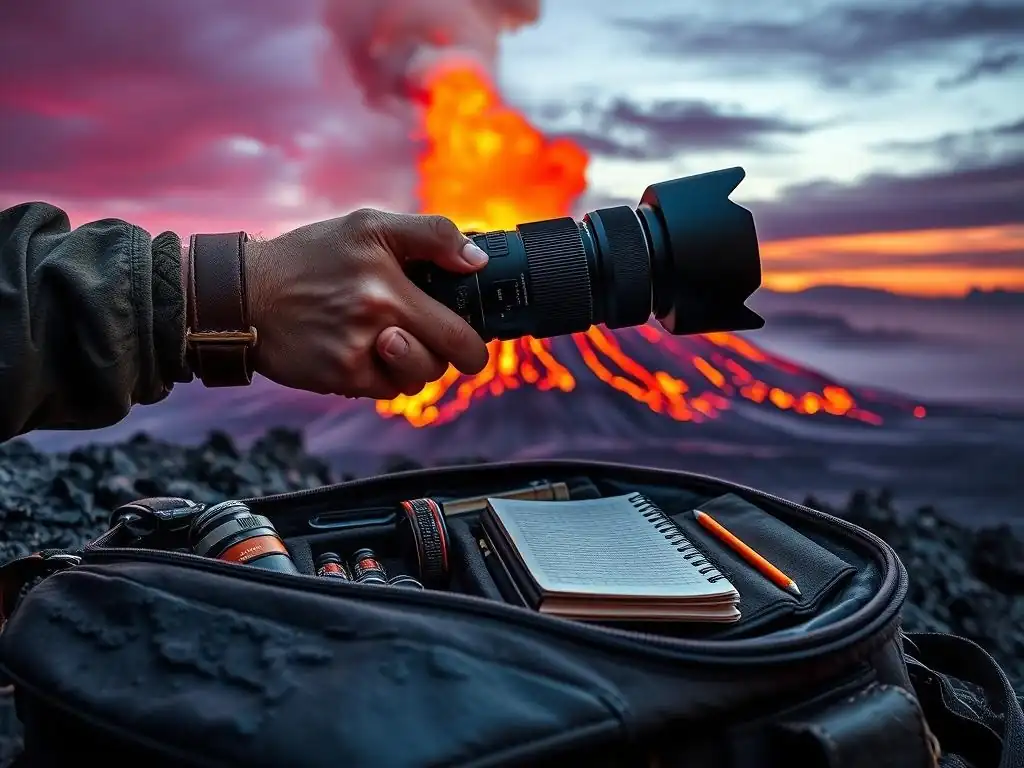
Welcome to Volcano Explorers, where the Earth's raw power meets human curiosity. Ever wondered what it really takes to capture the fiery heart of a volcano? Prepare for an unforgettable journey as we unpack the secrets to stunning imagery in our latest article, " Packing Your Camera Bag for a Volcano Photography Expedition: Essentials Only." Discover the essential gear that separates breathtaking shots from blurry memories, and unlock the secrets to capturing the volatile beauty of these geological giants. What crucial piece of equipment are you missing? Let's find out...
- Volcano Photography Gear Essentials: Prioritizing Light & Functionality
- Essential Camera Bodies for Volcano Photography
- Must-Have Lenses for Capturing Volcanic Majesty
- Tripods and Support Systems for Sharp Volcano Images
- Filters: Essential Protection and Creative Control for Volcano Photography
- Camera Bag Essentials: Carrying and Protecting Your Gear
- Batteries and Power: Keeping Your Camera Running in Remote Locations
- Memory Cards: Capturing Every Volcanic Moment
- Cleaning Supplies: Protecting Your Gear from Volcanic Ash and Dust
- Additional Essential Gear for Volcano Photography
-
Frequently Asked Questions
- What are the essential lenses I should pack for volcano photography?
- What kind of camera protection is necessary when shooting near volcanoes?
- Is a drone a must-have for volcano photography?
- What are the most important safety precautions to take when photographing volcanoes?
- Besides a camera, what other accessories are crucial for volcano photography?
- Final Reflection: Embracing the Fiery Heart of Photography
- Unleash Your Inner Volcano Photographer!
Volcano Photography Gear Essentials: Prioritizing Light & Functionality
Why a Minimalist Approach to Volcano Photography Gear is Crucial
Venturing into volcanic landscapes demands a unique approach to packing your camera gear. Unlike studio or urban photography, volcano expeditions often involve strenuous hikes across uneven terrain, unpredictable weather conditions, and the ever-present threat of volcanic activity. Carrying excessive equipment can quickly become a burden, hindering your mobility, slowing you down, and increasing the risk of accidents.
Imagine trekking up the slopes of Pacaya Volcano in Guatemala, its loose volcanic rock shifting underfoot, while burdened by a heavy, cumbersome backpack. A minimalist approach, focusing on only the essential gear, is not just about convenience; it’s about safety, agility, and ultimately, maximizing your photographic opportunities in these challenging environments.
Furthermore, airline baggage restrictions and the logistics of remote travel often favor lighter, more compact setups. Domestic flights within countries known for volcanic activity, such as Indonesia or Iceland, frequently have stricter weight limits for carry-on and checked baggage. Opting for a streamlined kit allows for easier navigation through airports, less worry about lost or damaged luggage, and quicker transitions between locations.
By carefully selecting each piece of equipment for its versatility and necessity, you ensure you're prepared for the photographic challenges ahead without being weighed down by unnecessary bulk. This focused approach allows you to concentrate on capturing the raw power and beauty of volcanoes, rather than wrestling with your gear.
Understanding the Unique Challenges of Volcano Photography
Volcano photography presents a distinct set of environmental challenges that necessitate specialized gear considerations. Volcanic ash, a pervasive and abrasive substance composed of fine glass and rock particles, poses a significant threat to camera equipment. It can infiltrate every crevice, scratch lens coatings, and damage sensitive sensor surfaces. For instance, after the 2010 eruption of Eyjafjallajökull in Iceland, photographers reported cameras malfunctioning due to ash ingress, even with weather sealing. This fine ash can also irritate the respiratory system and eyes, highlighting the need for personal protective gear alongside camera protection.
Extreme temperature variations are another factor. While approaching active lava flows exposes equipment to intense radiant heat, higher altitudes on volcanic peaks can bring freezing temperatures and rapid weather changes. On the slopes of Mount Etna in Sicily, photographers might experience scorching heat near fumaroles and icy winds just a few hundred meters higher.
Condensation becomes a concern when moving between these temperature extremes, potentially damaging electronic components and lens elements. Moreover, volcanic gases, such as sulfur dioxide, can be corrosive to metal and electronic parts over prolonged exposure. Therefore, gear must be robust, weather-sealed, and capable of withstanding these demanding conditions to ensure reliable performance and longevity in the field.
Essential Camera Bodies for Volcano Photography
Full-Frame vs. Crop Sensor for Volcano Landscapes
The choice between a full-frame and crop sensor camera body for volcano photography hinges on balancing image quality, field of view, and portability. Full-frame sensors, with their larger surface area, generally offer superior low-light performance and dynamic range, crucial for capturing the subtle nuances of volcanic landscapes, especially in dawn or dusk light. A full-frame sensor, approximately 36mm x 24mm, captures a wider field of view compared to a crop sensor, typically around 22.2mm x 14.8mm for APS-C, using the same lens.
This wider perspective is advantageous for capturing the expansive scale of volcanic calderas and surrounding terrains. Imagine photographing the vast Ngorongoro Crater in Tanzania, a collapsed caldera, where a full-frame sensor would excel at encompassing its immense scale.
Crop sensor cameras, on the other hand, offer a "crop factor," effectively increasing the reach of telephoto lenses. For example, a 200mm lens on an APS-C sensor camera behaves like a 300mm lens (with a 1.5x crop factor), which can be beneficial for isolating distant volcanic details or wildlife within volcanic regions. Crop sensor bodies are often more compact and lightweight, making them attractive for photographers prioritizing portability on long hikes or when weight is a significant concern.
Furthermore, they tend to be more budget-friendly, allowing for investment in higher-quality lenses. However, they may not match the dynamic range and low-light capabilities of full-frame sensors, potentially requiring more careful exposure management in challenging lighting scenarios common in volcanic environments.
Recommended Camera Body: Sony Alpha 7R V - High Resolution for Extreme Detail
For capturing the intricate details of volcanic landscapes, from the textures of solidified lava flows to the wispy plumes of volcanic gases, the Sony Alpha 7R V stands out as an exceptional full-frame camera body. Its 61-megapixel sensor delivers an extraordinary level of resolution, allowing for significant cropping and printing at large sizes without sacrificing detail.
This is particularly beneficial when photographing expansive volcanic landscapes, enabling photographers to capture sweeping vistas while retaining the ability to zoom in on specific points of interest in post-processing. For instance, the fine cracks and fissures in the basalt columns of the Giant's Causeway in Northern Ireland could be rendered with remarkable clarity.
Beyond resolution, the Alpha 7R V boasts impressive dynamic range, crucial for handling the high contrast often found in volcanic environments, where bright lava flows contrast sharply with dark volcanic rock. Its advanced autofocus system ensures sharp focus even in challenging conditions, and its robust weather sealing provides protection against dust and moisture, essential for the harsh conditions often encountered near volcanoes.
While its price point is at the higher end, the investment is justified by its exceptional image quality and reliability in demanding photographic situations. Professional landscape photographers frequently rely on the Alpha 7R series for its ability to capture the most minute details in the most challenging environments.
Backup Camera Body: Sony Alpha 6600 - Smaller Form Factor, Excellent Image Quality
Having a reliable backup camera body is paramount in remote volcanic locations, where equipment failures can derail an entire expedition. The Sony Alpha 6600, a crop-sensor mirrorless camera, serves as an excellent secondary body, offering a compelling blend of image quality, portability, and robustness.
While not matching the resolution of the Alpha 7R V, its 24.2-megapixel sensor still delivers excellent image quality suitable for a wide range of photographic applications, including landscape and wildlife photography. The APS-C sensor also provides a 1.5x crop factor, effectively extending the reach of lenses, which can be advantageous for capturing distant volcanic features or wildlife encounters.
The Alpha 6600 distinguishes itself with its compact and lightweight design, making it significantly easier to carry as a backup without adding substantial bulk to your kit. Its in-body image stabilization (IBIS) is a valuable feature, allowing for sharper handheld shots, particularly useful in situations where setting up a tripod is impractical. Furthermore, it shares the same battery system (Sony NP-FZ100) as the Alpha 7R V, simplifying power management.
Its weather sealing provides a degree of protection against dust and moisture, although not as extensive as higher-end models. The Alpha 6600 provides peace of mind knowing you have a capable and dependable backup ready to step in should your primary camera encounter any issues in the field.
Must-Have Lenses for Capturing Volcanic Majesty
Wide-Angle Lenses: Capturing the Scale of Volcanoes
Wide-angle lenses are indispensable tools for volcano photography, allowing you to capture the immense scale and grandeur of volcanic landscapes. These lenses, typically with focal lengths ranging from 14mm to 35mm on a full-frame sensor, encompass a broad field of view, enabling you to include foreground elements, the vast volcanic terrain, and the sky within a single frame. Imagine standing at the rim of a volcanic crater like Kilauea in Hawaii, a wide-angle lens would be essential to capture the entirety of the caldera, including the steaming vents and lava flows, in context with the surrounding landscape.
The expansive perspective offered by wide-angle lenses enhances the sense of depth and scale, making viewers feel immersed in the volcanic environment. They are particularly effective for photographing large volcanic features like calderas, lava fields, and volcanic peaks, as well as for capturing dramatic skies and weather patterns that often accompany volcanic activity.
Furthermore, their ability to exaggerate perspective can be used creatively to emphasize foreground details against a vast volcanic backdrop, adding visual interest and storytelling to your images. For night photography in volcanic regions, wide-angle lenses are crucial for capturing both the starry sky and the volcanic landscape in the same frame, creating stunning astrophotography compositions.
Recommended Wide-Angle Lens: Sony FE 16-35mm f/2.8 GM - Versatile and Sharp
The Sony FE 16-35mm f/2.8 GM lens stands out as an exceptional wide-angle zoom lens for volcano photography, offering a versatile focal range and outstanding image quality. Its 16-35mm zoom range covers the essential wide-angle focal lengths, allowing you to adapt to various volcanic scenes, from sweeping panoramic vistas at 16mm to slightly tighter compositions at 35mm.
The constant f/2.8 maximum aperture is particularly valuable, providing excellent low-light performance for dawn, dusk, and night photography, common shooting times for capturing dramatic volcanic light. This wider aperture also facilitates shallow depth of field effects when desired, although typically landscape photography favors deeper depth of field.
The "GM" designation signifies "G Master," Sony's highest tier of lenses, indicating exceptional sharpness, contrast, and build quality. This lens delivers edge-to-edge sharpness, crucial for landscape photography where detail across the entire frame is paramount. Its robust weather sealing provides added protection against dust and moisture, essential for the often-harsh conditions encountered in volcanic environments.
While it is a relatively large and expensive lens, its optical performance and versatility make it a worthwhile investment for serious volcano photographers seeking the highest image quality in their wide-angle shots. Many professional landscape photographers consider the 16-35mm f/2.8 lens a cornerstone of their kit.
Telephoto Lenses: Zooming in on Volcanic Details
While wide-angle lenses capture the grand scale of volcanoes, telephoto lenses are essential for isolating and emphasizing specific details within the volcanic landscape. These lenses, typically with focal lengths ranging from 70mm to 400mm or beyond on a full-frame sensor, allow you to zoom in on distant volcanic features, such as lava flows, steaming fumaroles, volcanic plumes, and unique geological formations. Imagine observing the Pu'u 'Ō'ō vent on Kilauea from a safe distance; a telephoto lens would be crucial to capture the detail of the erupting lava and the textures of the volcanic cone.
Telephoto lenses compress perspective, making distant elements appear closer and larger, which can be used creatively to emphasize the scale and power of volcanic activity. They are also invaluable for photographing wildlife that may inhabit volcanic regions, such as birds of prey circling volcanic peaks or mammals grazing on volcanic slopes.
Furthermore, telephoto lenses are essential for capturing details that might be missed with wider lenses, such as the intricate patterns of lava flows or the textures of volcanic rock formations. They allow photographers to create a diverse portfolio of volcano images, ranging from sweeping landscapes to intimate close-ups of volcanic details.
Recommended Telephoto Lens: Sony FE 100-400mm f/4.5-5.6 GM OSS - Reach and Image Stabilization
The Sony FE 100-400mm f/4.5-5.6 GM OSS lens offers an excellent combination of reach, image quality, and portability for volcano photography, making it a highly versatile telephoto zoom. Its 100-400mm focal range provides substantial telephoto reach, enabling you to photograph distant volcanic features and wildlife with ease. The "OSS" designation indicates Optical SteadyShot (image stabilization), which is crucial for achieving sharp images at longer focal lengths, especially when shooting handheld or in windy conditions often encountered in volcanic areas. Image stabilization can provide up to 4-5 stops of shake reduction, allowing for slower shutter speeds in lower light.
Like the 16-35mm GM, this lens also carries the "G Master" designation, ensuring exceptional optical performance, including sharpness, contrast, and fast autofocus. Its build quality is robust, with weather sealing to protect against dust and moisture. While it is not a small lens, it is relatively lightweight for its focal range and aperture, making it manageable for carrying on volcano expeditions.
The versatility of the 100-400mm range makes it suitable for a wide array of volcano photography subjects, from distant landscapes to detailed close-ups and wildlife, making it a valuable addition to a volcano photographer's gear bag. Its combination of reach and image quality is often praised by wildlife and landscape photographers alike.
Mid-Range Zoom: Sony FE 24-70mm f/2.8 GM - All-Purpose Volcanic Scenery
A mid-range zoom lens, such as the Sony FE 24-70mm f/2.8 GM, serves as a highly versatile and practical option for volcano photography, bridging the gap between wide-angle and telephoto lenses. This focal range is often considered the "workhorse" range for many photographers, covering a useful spectrum from a moderate wide-angle at 24mm to a short telephoto at 70mm.
It is well-suited for capturing general volcanic scenery, portraits within volcanic landscapes, and documentary-style photography of volcano expeditions. Imagine photographing a group of volcanologists examining a lava flow; a 24-70mm lens would be ideal for capturing both the overall scene and closer portraits of the individuals.
The 24-70mm range is highly adaptable to various shooting situations, making it a valuable lens to have when you want to minimize lens changes in potentially dusty or challenging volcanic environments. The constant f/2.8 maximum aperture provides good low-light performance and allows for shallow depth of field effects when desired, although for landscapes, typically narrower apertures are preferred for greater depth of field. Like other "GM" lenses, it delivers excellent image quality, sharpness, and robust build quality with weather sealing.
While not as specialized as wide-angle or telephoto lenses for specific volcanic subjects, the 24-70mm f/2.8 GM is a reliable and versatile all-around lens that can handle a wide range of photographic situations encountered during volcano explorations. It's often the first lens many photographers reach for due to its adaptability.
Tripods and Support Systems for Sharp Volcano Images
The Importance of a Stable Tripod in Volcanic Environments
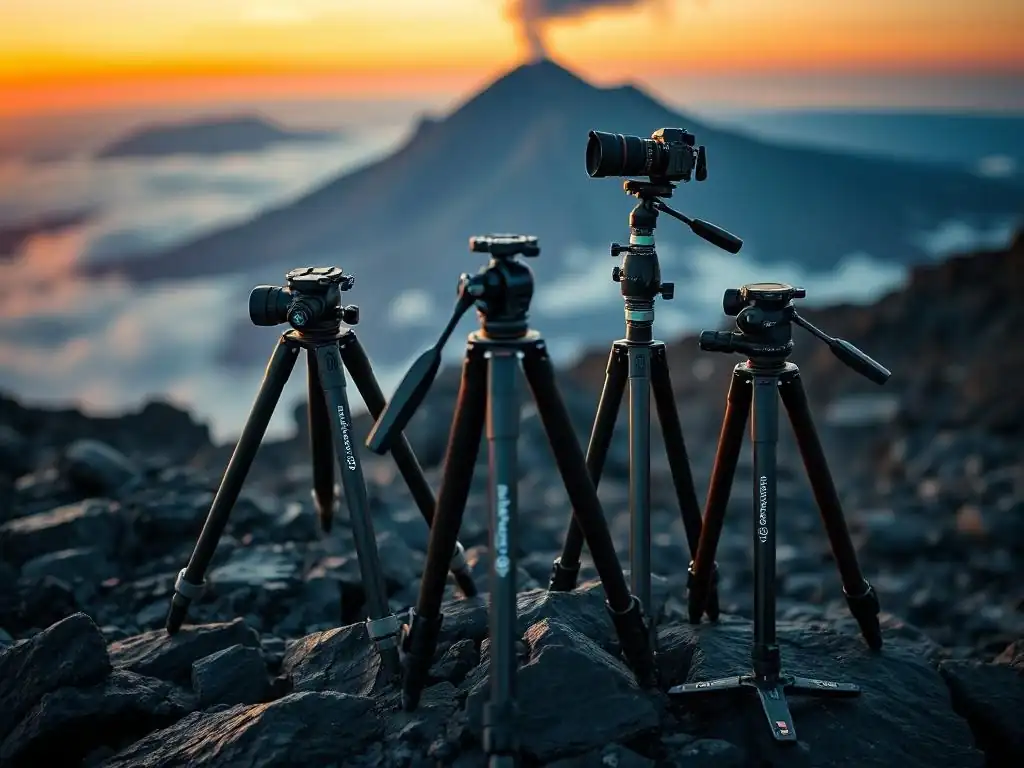
A stable tripod is an indispensable tool for achieving sharp and high-quality images in volcano photography, especially in challenging conditions. Volcanic landscapes often involve low-light situations, such as dawn, dusk, or night photography, requiring longer shutter speeds to capture sufficient light. Without a tripod, these longer exposures would result in blurry images due to camera shake. Furthermore, capturing sharp landscape images, even in daylight, often benefits from using lower ISO settings for optimal image quality, which may still necessitate slower shutter speeds, particularly when using narrower apertures for greater depth of field.
Volcanic environments can also be windy, especially at higher altitudes or near coastal volcanic regions. Wind can easily cause camera shake, even at faster shutter speeds, especially when using longer lenses. A sturdy tripod provides a stable platform, minimizing camera shake and ensuring sharp images, even in windy conditions.
For techniques like long-exposure photography, used to blur lava flows or clouds, a tripod is absolutely essential. Moreover, when composing landscape shots, a tripod allows for precise framing and composition adjustments, enabling you to fine-tune your image before capturing it. Investing in a reliable tripod is an investment in image sharpness and overall image quality in volcano photography.
Recommended Tripod: Peak Design Travel Tripod - Lightweight and Durable
For volcano photography expeditions where portability is paramount, the Peak Design Travel Tripod strikes an excellent balance between lightweight design, compact packability, and robust stability. Weighing approximately 3.4 lbs (1.56 kg) for the aluminum version and folding down to a remarkably compact size, it is designed for travel and hiking, making it ideal for volcano treks. Despite its lightweight and compact nature, it offers surprising stability, capable of supporting a full-frame camera and lens setup. Its innovative design eliminates wasted space, resulting in a tripod that is significantly smaller when collapsed compared to traditional tripods of similar stability.
Constructed from high-quality aluminum or carbon fiber, the Peak Design Travel Tripod is built to withstand the rigors of outdoor use. Its legs are easily extendable and lockable, allowing for quick setup and adjustments in the field. The integrated ball head is smooth and precise, enabling fine-tuning of camera angles.
While it may not be as rock-solid as heavier, professional-grade tripods, its portability and stability make it an excellent choice for photographers who prioritize travel and need a reliable tripod that won't weigh them down on volcano expeditions. Its innovative design and ease of use have made it a popular choice among travel and outdoor photographers.
Ball Head Considerations: Really Right Stuff BH-40 - Smooth and Precise Movement
While the tripod legs provide the foundation for stability, the ball head is crucial for smooth and precise camera movement and secure locking. A high-quality ball head allows for fluid adjustments of camera angles, enabling you to quickly and accurately frame your shots. The Really Right Stuff BH-40 is a highly regarded ball head known for its exceptional smoothness, precision, and robust construction. While it is a premium option, its performance and durability justify the investment for serious photographers seeking the best possible support system.
The BH-40 offers smooth and consistent movement across all axes, allowing for effortless adjustments to composition. Its locking mechanism is exceptionally secure, preventing camera creep even with heavier camera and lens combinations. The precisely calibrated tension control allows you to fine-tune the resistance to your liking.
Constructed from aircraft-grade aluminum, the BH-40 is built to withstand demanding conditions and provide years of reliable service. While there are more affordable ball head options available, the Really Right Stuff BH-40 is considered by many professionals to be among the best in its class, offering unparalleled performance and durability for demanding photography applications like volcano photography. Its reputation for quality and precision is well-established in the photography community.
Filters: Essential Protection and Creative Control for Volcano Photography
UV Filters: Protecting Your Lenses from Volcanic Ash
UV filters, often considered a basic accessory, play a crucial role in volcano photography by providing essential physical protection for your valuable lenses. Volcanic ash, composed of fine, abrasive particles, can easily scratch the front element of your lenses, degrading image quality and potentially requiring costly repairs.
A UV filter, acting as a sacrificial layer of glass, absorbs the brunt of scratches and abrasion from ash, dust, and even accidental bumps, preserving the integrity of your lens's front element. Imagine a gust of wind blowing volcanic ash directly onto your lens; a UV filter would be the first line of defense against potential damage.
While modern lenses have UV coatings, these coatings are primarily designed to reduce UV light and improve image clarity, not to provide physical protection. A dedicated UV filter adds an extra layer of robust protection specifically against physical damage. High-quality UV filters are optically neutral, meaning they do not degrade image quality or introduce unwanted color casts.
They are relatively inexpensive compared to lenses, making them a cost-effective way to safeguard your investment. In the abrasive and dusty environments often encountered near volcanoes, a UV filter is not just an optional accessory, but a vital protective measure for your lenses. Many photographers keep UV filters permanently attached to their lenses for constant protection.
Polarizing Filters: Reducing Glare and Enhancing Colors in Volcanic Landscapes
Polarizing filters are invaluable tools for enhancing your volcano photography, particularly in bright daylight conditions. They work by reducing glare and reflections from non-metallic surfaces, such as water, foliage, and rocks, which are prevalent in many volcanic landscapes. By cutting down on glare, polarizing filters increase color saturation, making skies appear deeper blue, foliage richer green, and volcanic rocks more textured and vibrant. Imagine photographing a volcanic lake like Crater Lake in Oregon; a polarizing filter would dramatically reduce surface reflections, revealing the deep blue water and enhancing the surrounding volcanic rim.
Polarizing filters also improve contrast, making clouds stand out more against the sky and adding depth to landscape scenes. They can also help to reduce atmospheric haze, particularly in distant landscapes, resulting in clearer and sharper images. The effect of a polarizing filter is most pronounced when the filter is rotated to the optimal angle, typically when the sun is at a roughly 90-degree angle to the subject.
While polarizing filters reduce the amount of light entering the lens by approximately 1-2 stops, this is often manageable in bright daylight conditions and can even be beneficial in preventing overexposure. For capturing the full vibrancy and detail of volcanic landscapes, a polarizing filter is an essential addition to your filter kit.
Neutral Density (ND) Filters: Capturing Long Exposures of Lava Flows
Neutral Density (ND) filters are specialized filters that reduce the amount of light entering the lens without affecting color. They are crucial for volcano photography when you want to capture long exposures in bright daylight, particularly for blurring motion in lava flows, water, or clouds. For instance, to create silky smooth lava flow effects during daytime eruptions, you would need to use a long shutter speed, often several seconds or even minutes. Without an ND filter, the image would be severely overexposed in daylight at such long shutter speeds.
ND filters come in various strengths, typically measured in "stops," with each stop reducing the light by half. A 6-stop ND filter, for example, reduces the light by 6 stops, allowing you to use shutter speeds 6 stops slower than you could without the filter. Stronger ND filters, such as 10-stop or even 16-stop ND filters, are used for extreme long exposures, creating surreal motion blur effects.
When photographing volcanoes with flowing lava, an ND filter allows you to transform the molten rock into a smooth, ethereal flow, contrasting beautifully with the static volcanic landscape. They are also useful for blurring clouds to create a sense of motion in the sky above volcanic peaks or for smoothing water surfaces in volcanic lakes or streams. For creative long-exposure volcano photography, ND filters are indispensable.
Camera Bag Essentials: Carrying and Protecting Your Gear
Choosing the Right Camera Bag for Volcano Exploration
Selecting the right camera bag for volcano exploration is crucial for ensuring both the safety and accessibility of your gear while navigating challenging terrains. The ideal volcano photography bag should prioritize durability, weather resistance, comfort, and efficient organization. Durability is paramount, as the bag will be subjected to abrasion, impacts, and potentially harsh weather conditions. Weather resistance, including water and dust resistance, is essential to protect your equipment from rain, snow, and pervasive volcanic ash. Comfort is critical, especially for long hikes, so look for bags with padded shoulder straps, a supportive waist belt, and a breathable back panel.
The size and capacity of the bag should be carefully considered based on the amount of gear you plan to carry. For a minimalist approach, a smaller backpack or even a sling bag might suffice, while more extensive setups may require a larger backpack with modular internal dividers. Quick access to your camera and lenses is also important in dynamic volcanic environments, so consider bags with side or top access points that allow you to retrieve your gear without fully unpacking.
Features like tripod attachment points, water bottle holders, and external pockets for accessories enhance the bag's functionality. Ultimately, the best camera bag for volcano exploration is one that balances protection, comfort, and accessibility to meet your specific needs and shooting style.
Recommended Camera Bag: F-Stop Tilopa BC - Rugged and Weatherproof
The F-Stop Tilopa BC (Backcountry) backpack is widely recognized as an excellent choice for adventure and outdoor photography, including volcano expeditions, due to its rugged construction, weatherproof design, and modular internal system. Constructed from durable, water-resistant materials, the Tilopa BC is designed to withstand harsh conditions and protect your gear from the elements. Its robust build quality and reinforced stitching ensure it can handle the rigors of trekking and outdoor use. Many photographers have used F-Stop bags in extreme environments, from polar regions to tropical rainforests, attesting to their durability.
The Tilopa BC features a modular Internal Camera Unit (ICU) system, allowing you to customize the bag's interior to fit your specific gear setup. ICUs come in various sizes and configurations, providing padded protection and organization for your camera bodies, lenses, and accessories. This modularity allows you to adapt the bag to different shooting scenarios and gear requirements.
The bag also offers comfortable carrying with padded shoulder straps, a supportive waist belt, and a breathable back panel, making it suitable for long hikes. Its weatherproof features, rugged construction, and customizable interior make the F-Stop Tilopa BC a highly capable and reliable camera bag for demanding volcano photography adventures.
Organizing Your Bag for Quick Access
Efficiently organizing your camera bag is crucial for volcano photography, enabling you to quickly access your gear in dynamic and potentially time-sensitive situations. Start by strategically placing your most frequently used items in easily accessible compartments. For example, keep your primary camera body and lens in a top or side access compartment for rapid deployment. Memory cards, batteries, and cleaning cloths should be stored in readily reachable pockets. Use dividers and pouches within your bag to separate and organize lenses, filters, and accessories, preventing them from bumping against each other and making it easier to find what you need.
Consider using color-coded pouches or labels to quickly identify different types of gear. Develop a consistent packing system so you know exactly where each item is located within your bag, even in low light or stressful situations. Before heading out, practice packing and unpacking your bag to familiarize yourself with the layout and ensure you can access your gear smoothly.
Regularly check your bag organization and make adjustments as needed based on your shooting needs and preferences. A well-organized bag not only saves time and frustration in the field but also minimizes the risk of dropping or damaging equipment while searching for items.
Batteries and Power: Keeping Your Camera Running in Remote Locations
Calculating Your Power Needs for a Volcano Photography Trip
Accurately estimating your power needs is essential for volcano photography expeditions, particularly when venturing into remote locations with limited or no access to electricity. Start by understanding your camera's battery life. Most camera manufacturers provide estimates of shots per charge based on CIPA (Camera & Imaging Products Association) standards.
However, real-world battery performance can vary depending on factors like shooting style, temperature, use of features like image stabilization and live view, and reviewing images on the LCD screen. As a general guideline, a typical DSLR or mirrorless camera battery might provide between 300 to 500 shots per charge under normal conditions.
Consider your shooting intensity. If you plan to shoot extensively throughout the day, capturing both stills and videos, you will consume battery power more quickly. Cold temperatures, common at higher altitudes and in certain volcanic regions, can significantly reduce battery performance.
For every day of shooting, estimate the number of batteries you will likely use based on your shooting habits and the expected conditions. It's always prudent to overestimate your power needs and bring extra batteries as a safety margin. For a multi-day volcano expedition, consider doubling or even tripling your estimated battery consumption to account for unexpected situations and ensure you don't run out of power at critical moments.
Recommended Batteries: Sony NP-FZ100 - Long-Lasting and Reliable
For Sony Alpha cameras like the a7R V and a6600, the Sony NP-FZ100 battery is a reliable and high-capacity power source, making it an excellent choice for volcano photography. This lithium-ion battery offers a significantly improved capacity compared to previous Sony battery generations, typically providing around 500-700 shots per charge, depending on the camera model and usage. Its robust performance and consistent power delivery make it a dependable choice for demanding photographic situations.
The NP-FZ100 battery is known for its relatively long lifespan and consistent performance over multiple charge cycles. Its reliability is crucial in remote locations where battery failures can be a significant setback. While it is more expensive than third-party batteries, the peace of mind and consistent performance offered by genuine Sony batteries are often worth the investment, especially for critical photography expeditions.
Carrying multiple NP-FZ100 batteries ensures you have ample power to capture your volcano photography throughout your trip, minimizing the risk of missed shots due to battery depletion. Its widespread compatibility across various Sony Alpha models also simplifies battery management if using multiple Sony cameras.
Power Banks and Charging Solutions for Extended Expeditions
For extended volcano photography expeditions lasting several days or longer, particularly in locations without access to mains electricity, power banks and portable charging solutions become essential. High-capacity power banks, also known as portable chargers, can provide multiple charges for your camera batteries, extending your shooting time significantly. Look for power banks with USB Power Delivery (PD) capability, which allows for faster charging of compatible camera batteries and devices. Power banks with capacities of 20,000mAh or higher are recommended for multi-day trips, capable of charging camera batteries and other USB-powered devices like smartphones and headlamps.
Solar chargers are another valuable option for remote volcano expeditions, especially in sunny environments. Portable solar panels can be used to recharge power banks or directly charge USB devices, providing a renewable power source in off-grid locations. The efficiency of solar chargers depends on sunlight intensity, so consider models with larger panels and higher wattage for faster charging.
For trips involving vehicle access, car chargers can be used to recharge camera batteries or power banks while traveling between locations. Combining power banks with solar charging or car charging solutions provides a comprehensive power strategy for extended volcano photography expeditions, ensuring you can keep your cameras running even in the most remote and challenging environments.
Memory Cards: Capturing Every Volcanic Moment
Choosing the Right Memory Card Speed and Capacity
Selecting the appropriate memory cards is crucial for ensuring you can capture every volcanic moment without encountering performance bottlenecks or running out of storage space. Memory card speed, measured by read and write speeds, determines how quickly data can be transferred to and from the card. For volcano photography, especially if you plan to shoot in continuous burst mode or record 4K video, fast write speeds are essential to prevent buffer slowdowns and ensure smooth recording.
Look for memory cards with a Video Speed Class rating of V30 or higher for reliable 4K video recording and fast burst shooting. UHS Speed Class U3 or higher is also recommended for high-performance photography.
Memory card capacity determines how many photos and videos you can store on the card. For high-resolution cameras like the Sony a7R V, which produces large file sizes (around 60-80MB per RAW image), larger capacity cards are recommended. Consider using memory cards with capacities of 64GB, 128GB, or even 256GB to accommodate a full day's shooting or a multi-day expedition.
It's generally advisable to use multiple smaller capacity cards rather than relying on a single large card. This reduces the risk of losing all your images if a card fails or is lost. Having spare memory cards also allows you to swap cards quickly in the field without interrupting your shooting workflow.
Recommended Memory Cards: SanDisk Extreme PRO SD Cards - Fast and Dependable
SanDisk Extreme PRO SD cards are widely recognized as high-performance and reliable memory cards, making them an excellent choice for demanding volcano photography. These cards offer fast read and write speeds, typically up to 170MB/s read and 90MB/s write for UHS-I cards, and even faster speeds for UHS-II cards, ensuring smooth burst shooting and 4K video recording. Their V30 Video Speed Class rating guarantees a minimum sustained write speed of 30MB/s, essential for reliable 4K video capture. The U3 UHS Speed Class rating further confirms their high-performance capabilities.
SanDisk Extreme PRO cards are known for their durability and resistance to harsh conditions, including temperature extremes, water, shock, and X-rays, making them well-suited for the challenging environments often encountered in volcano photography. They are available in various capacities, ranging from 32GB to 1TB, allowing you to choose the right capacity for your shooting needs.
While slightly more expensive than some other brands, the SanDisk Extreme PRO series is a trusted choice among professional photographers and videographers due to their consistent performance and reliability. Their reputation for speed and dependability makes them a worthwhile investment for ensuring you capture every critical moment during your volcano photography expeditions.
Backing Up Your Images in the Field
Backing up your images in the field is a critical step in volcano photography to prevent data loss due to memory card failures, loss, or theft. Losing images from a once-in-a-lifetime volcano expedition can be devastating, making in-field backups an essential part of your workflow. The simplest method for backing up images in the field is to carry a portable hard drive or Solid State Drive (SSD).
Portable SSDs are generally faster, more durable, and more compact than traditional hard drives, making them well-suited for travel. Choose a portable drive with sufficient capacity to back up all your images for the duration of your trip.
After each shooting day, or even during breaks in shooting, transfer your images from your memory cards to the portable drive. Verify that the transfer is successful before formatting or reusing your memory cards. Consider carrying two portable drives and backing up your images to both for redundancy.
Store your portable drives separately from your camera bag when traveling to minimize the risk of losing both your gear and backups simultaneously. Cloud backup services can be an option if you have reliable internet access in your location, but this is often not the case in remote volcanic areas. Prioritizing in-field backups using portable drives is the most reliable way to protect your valuable volcano photography images.
Cleaning Supplies: Protecting Your Gear from Volcanic Ash and Dust
Essential Cleaning Tools for Camera Lenses and Sensors
Protecting your camera gear from volcanic ash and dust requires having essential cleaning tools readily available in your camera bag. A lens pen is a must-have tool for cleaning lens surfaces. It typically features a soft brush on one end for removing loose dust and particles, and a cleaning tip on the other end for removing fingerprints and smudges. An air blower is crucial for removing dust and ash from lenses, sensors, and camera bodies without physically touching the surfaces. Use short bursts of air to dislodge particles.
Microfiber cloths are essential for gently wiping lens surfaces and camera bodies. Choose high-quality, lint-free microfiber cloths specifically designed for cleaning optics. Sensor cleaning swabs are specialized tools for cleaning camera sensors. Sensor cleaning should be performed carefully and only when necessary, as improper cleaning can damage the sensor.
Sensor cleaning kits typically include pre-moistened swabs and a cleaning solution. Consider bringing a small headlamp or flashlight to illuminate your gear when cleaning in low-light conditions. Having these cleaning tools readily accessible allows you to maintain your gear in the field and minimize the damaging effects of volcanic ash and dust.
Recommended Cleaning Kit: LensPen SensorKlear Loupe Kit - Complete and Portable
The LensPen SensorKlear Loupe Kit is a comprehensive and portable cleaning kit that provides essential tools for cleaning both lenses and camera sensors, making it a valuable addition to your volcano photography gear. The kit includes the LensPen Original lens cleaner, which effectively removes fingerprints and smudges from lens surfaces. It also includes the SensorKlear Loupe, which combines a sensor cleaning swab with a built-in magnifying loupe and LED light, allowing for precise and illuminated sensor cleaning.
The kit also typically includes a Hurricane Blower for removing loose dust and particles, and a microfiber cloth for general cleaning. The SensorKlear Loupe's integrated loupe and LED light are particularly helpful for inspecting the sensor for dust and ensuring thorough cleaning.
The compact and portable nature of the kit makes it easy to carry in your camera bag and access whenever needed. While sensor cleaning should be approached with caution, the LensPen SensorKlear Loupe Kit provides the necessary tools for safe and effective sensor cleaning when required, along with reliable lens cleaning tools, making it a well-rounded and convenient cleaning solution for volcano photographers.
Preventing Damage from Volcanic Ash
Preventing damage from volcanic ash is paramount for extending the lifespan of your camera gear during volcano photography expeditions. The most crucial preventative measure is to minimize exposure to ash whenever possible. When not actively shooting, keep your camera and lenses stored in a sealed camera bag or waterproof case. Use lens hoods on your lenses to provide some physical protection to the front element and reduce direct ashfall. Consider using camera rain covers or protective wraps to shield your camera body from ash and moisture, even in dry conditions, as ash can be very fine and pervasive.
Avoid changing lenses in dusty or ashy environments. If lens changes are necessary, do so in a sheltered location, such as inside a vehicle or tent, and point the camera body downwards to minimize dust entry. Regularly clean your camera and lenses throughout the day, using an air blower and lens pen to remove ash and dust before it accumulates and causes scratches.
After each day of shooting, perform a more thorough cleaning of your gear, paying particular attention to crevices and moving parts where ash can accumulate. Prompt and consistent cleaning is key to preventing long-term damage from abrasive volcanic ash.
Additional Essential Gear for Volcano Photography
Headlamps are indispensable for volcano photography, particularly when shooting during pre-dawn or post-sunset hours, which often provide the most dramatic lighting conditions. Volcanic terrain can be uneven, rocky, and potentially hazardous, especially in low light. A headlamp provides hands-free illumination, allowing you to safely navigate trails, set up your tripod, and adjust camera settings in the dark. Imagine hiking to a volcanic viewpoint before sunrise; a headlamp is essential for safely traversing the terrain and finding your shooting location.
Choose a headlamp with adjustable brightness levels, allowing you to conserve battery power when less illumination is needed and increase brightness when navigating more challenging sections of terrain. Look for headlamps with a red light mode, which preserves your night vision and is less disruptive to wildlife or other photographers. Water resistance is also a desirable feature, as weather conditions in volcanic regions can be unpredictable. Carry spare batteries for your headlamp, especially on longer expeditions. A reliable headlamp is not just a convenience; it's a safety essential for volcano photographers working in low-light conditions.
Rain Covers: Protecting Your Gear from the Elements
Rain covers are essential for protecting your camera gear from rain, snow, and even volcanic ash during volcano photography expeditions. Weather conditions in volcanic regions can change rapidly, and unexpected rain showers are common, even in seemingly dry areas. A rain cover provides a waterproof barrier, shielding your camera body, lens, and accessories from moisture damage. Volcanic ash, while seemingly dry, can become abrasive and corrosive when wet, making rain protection even more important in volcanic environments.
Rain covers come in various sizes and designs, ranging from simple plastic covers to more robust and form-fitting models. Choose a rain cover that is specifically designed for your camera and lens setup and allows for access to camera controls and viewfinder. Look for rain covers made from durable and waterproof materials. Even if rain is not anticipated, carrying a rain cover provides peace of mind and can also offer protection from dust, snow, and accidental splashes. A rain cover is a lightweight and inexpensive insurance policy for protecting your valuable camera gear from the elements.
Dust Mask: Protecting Yourself from Volcanic Gases and Ash
Protecting yourself from volcanic gases and ash is just as important as protecting your camera gear during volcano photography expeditions. Volcanic gases, such as sulfur dioxide, and fine volcanic ash particles can be harmful to your respiratory system and eyes. A dust mask, specifically an N95 or N99 respirator mask, provides effective protection against inhaling volcanic ash and larger gas particles. These masks filter out at least 95% or 99% of airborne particles, respectively. Imagine being near an active volcanic vent emitting plumes of gas and ash; a dust mask is crucial for protecting your respiratory health.
Volcanic ash can cause respiratory irritation, coughing, and breathing difficulties, especially for individuals with pre-existing respiratory conditions. Sulfur dioxide gas can irritate the eyes, nose, and throat, and in higher concentrations, can be harmful. A dust mask, combined with eye protection such as goggles or wraparound sunglasses, significantly reduces your exposure to these hazards.
Choose a dust mask that fits snugly and comfortably over your nose and mouth, creating a good seal. Carry extra masks, as they can become clogged with ash over time. Prioritizing your personal safety by wearing a dust mask is essential when photographing in volcanic environments, particularly near active vents or during ashfall events.
Frequently Asked Questions
What are the essential lenses I should pack for volcano photography?
You'll want a versatile zoom lens, like a 24-70mm, for general landscapes and close-ups. A telephoto lens, such as a 70-200mm or longer, is crucial for capturing distant eruptions and details.
What kind of camera protection is necessary when shooting near volcanoes?
Protect your gear with a waterproof and dustproof camera bag. Also consider using rain covers or silica gel packs to shield your camera and lenses from ash, moisture, and volcanic gases.
Is a drone a must-have for volcano photography?
While not essential, a drone can offer unique aerial perspectives of volcanic landscapes. However, always check local regulations and prioritize safety when flying near active volcanoes.
What are the most important safety precautions to take when photographing volcanoes?
Always maintain a safe distance from active vents and lava flows. Monitor wind direction to avoid inhaling volcanic gases and be aware of potential hazards like rockfalls and landslides.
Besides a camera, what other accessories are crucial for volcano photography?
Bring plenty of extra batteries and memory cards, as you may not have access to power. A sturdy tripod is essential for sharp images in low light, and a headlamp or flashlight is vital for shooting at dawn or dusk.
Final Reflection: Embracing the Fiery Heart of Photography
The allure of capturing volcanic landscapes, with their raw power and ethereal beauty, remains a potent draw for photographers. Understanding the 'volcano photography gear essentials' is more than just a checklist; it's a gateway to experiencing and documenting the Earth's most dramatic displays. This knowledge empowers photographers to safely and effectively capture these fleeting moments of geological wonder, ensuring their stories are told with clarity and impact.
The pursuit of volcano photography is not merely a technical exercise; it's a deeply personal journey that connects us to the planet's primal forces. The images we create become a testament to our resilience, our respect for nature, and our ability to find beauty amidst chaos. The best camera is the one that's with you,
but in the realm of volcano photography, the right camera, paired with essential gear, is the one that allows you to safely and effectively capture the raw power and beauty before you.
Now, armed with this knowledge of volcano photography gear essentials, I invite you to reflect on your own photographic journey. What landscapes call to you? What stories are waiting to be told through your lens? Embrace the challenge, prepare diligently, and venture forth to capture the extraordinary moments that await. Let your passion ignite, and let your images speak volumes about the power and beauty of our world.
Unleash Your Inner Volcano Photographer!
Thanks for diving into our guide to packing the perfect camera bag for your volcano adventure! We hope you’ve gained valuable insights into what gear is truly essential to capture stunning images in extreme environments. Now, it's time to translate that knowledge into action and prepare for your own explosive photo journey!
Here are a few next steps to fuel your passion:
- Plan Your Dream Volcano Shoot: Identify a volcano destination that speaks to you, research permit requirements, and create a preliminary shot list that will guide your journey. This is your moment to start turning that dream into a reality.
- Share your top volcano photography tips with fellow explorers on our community forum. What's one trick you've learned that drastically improved your shots?
- Consider signing up for our "Volcano Photography Pro" newsletter and exclusive content. Be the first to know about deals, equipment, and destinations.
What's the one piece of gear you'd never leave behind on a volcano expedition, and why is it your absolute must-have? Let us know in the comments below!