
Unseen, Until Now: AI Revealing Hidden Volcanic Processes

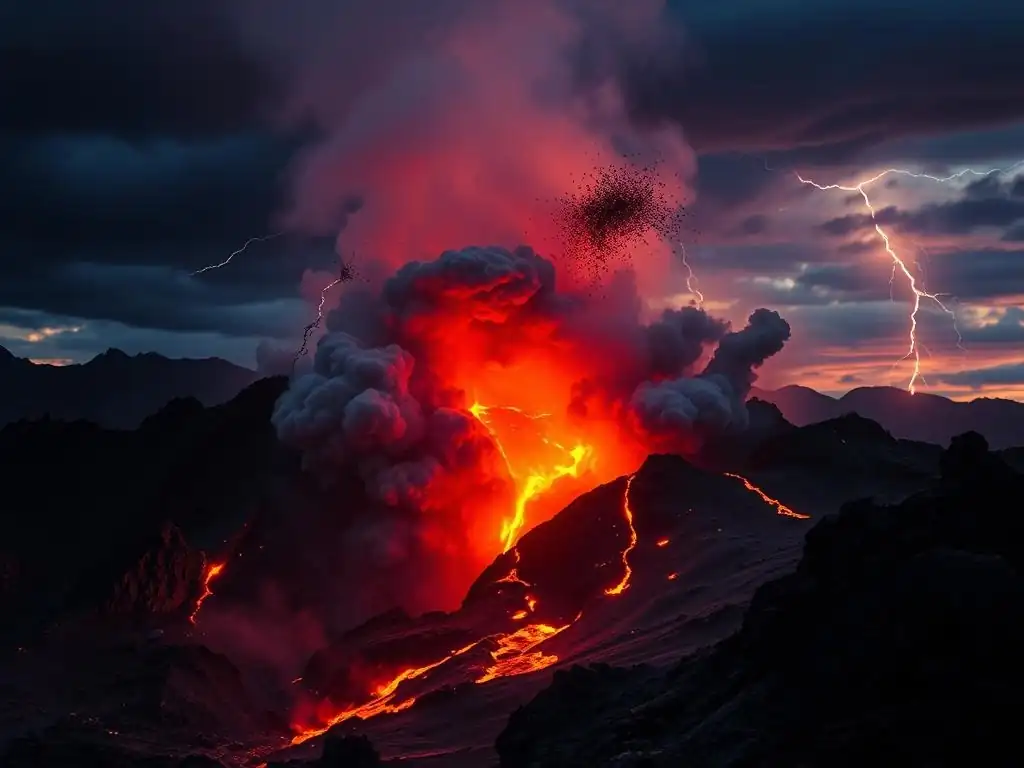
Welcome to Volcano Explorers, where the Earth's fiery secrets simmer just beneath the surface! Ever wondered what truly happens inside a volcano before it erupts? Prepare to have your perceptions shaken. Today, we're pulling back the curtain on hidden volcanic processes revealed using groundbreaking AI technology. What if we could anticipate eruptions with unprecedented accuracy? The answer might be closer than you think... Dive in to discover how.
- Volcano Monitoring & Prediction Enhanced by Artificial Intelligence
- Unveiling Hidden Volcanic Processes Revealed by AI
- Case Studies: AI Applications in Volcano Monitoring
- How AI Deciphers Complex Volcanic Signals
- The Future of Volcano Prediction: Integrating AI and Traditional Methods
- Benefits of Using AI to Study Hidden Volcanic Processes
- Challenges and Limitations of AI in Volcanology
- The Evolution of Volcanic Understanding: From Observation to AI-Driven Discovery
-
Frequently Asked Questions
- What are "hidden volcanic processes" and why are they important to understand?
- How does AI help reveal these hidden volcanic processes?
- What kind of data is used to train AI models for volcano monitoring?
- Can AI accurately predict volcanic eruptions, and what are the limitations?
- How can people living near volcanoes benefit from AI-driven volcano monitoring?
- Final Reflection: Unearthing Earth's Secrets
- Unearth the Secrets: Become a Volcano Explorer!
Volcano Monitoring & Prediction Enhanced by Artificial Intelligence
Understanding the Role of AI in Volcano Research
Artificial intelligence (AI) is rapidly transforming numerous scientific fields, and volcanology is no exception. The sheer volume of data generated by modern volcano monitoring systems, including seismic networks, gas sensors, and satellite imagery, has become overwhelming for traditional analysis methods. AI, particularly machine learning, offers powerful tools to sift through this data deluge, identify subtle patterns, and extract meaningful insights that would otherwise remain hidden.
By automating complex analytical tasks and uncovering previously imperceptible signals, AI is becoming indispensable in enhancing our understanding of volcanic systems and the intricate processes that lead to eruptions. This marks a significant shift towards proactive and data-driven volcanic hazard assessment.
The integration of AI into volcanology is not about replacing human expertise, but rather augmenting it. Volcanologists bring crucial domain knowledge and interpretative skills, while AI provides the computational power and pattern recognition capabilities needed to analyze vast datasets. This synergistic approach allows researchers to delve deeper into the complexities of volcanic activity, exploring nuances that were previously inaccessible.
For instance, machine learning algorithms can be trained to recognize subtle changes in seismic wave patterns that precede eruptions, or to detect minute variations in ground deformation indicative of magma movement. This enhanced analytical capability is crucial for advancing our ability to forecast volcanic events and mitigate their risks.
The Limitations of Traditional Volcanic Monitoring Techniques
Traditional volcano monitoring relies heavily on established techniques such as seismometry, ground deformation measurements using GPS and InSAR, gas emission monitoring, and visual observations. While these methods have been instrumental in advancing our understanding of volcanoes and providing valuable eruption warnings, they also have inherent limitations.
Seismic monitoring, for example, is excellent at detecting earthquakes associated with magma movement, but distinguishing between different types of seismic signals and identifying subtle precursory changes can be challenging and time-consuming using manual analysis. Similarly, ground deformation measurements can indicate magma inflation, but interpreting the complex patterns and linking them directly to eruption potential requires sophisticated modeling and expert judgment.
Moreover, traditional methods often struggle to process the massive datasets generated by modern monitoring networks in real-time. The sheer volume of seismic data, GPS measurements, and satellite imagery can overwhelm analysts, delaying the identification of critical signals that might indicate an impending eruption. Furthermore, traditional techniques may be less effective at detecting hidden volcanic processes revealed through subtle, multi-parameter changes that are not readily apparent through individual monitoring streams.
The intricate interplay between different monitoring datasets, which could hold crucial clues about volcanic behavior, is often difficult to fully capture with conventional analytical approaches. This is where the power of AI to integrate and analyze complex, multi-faceted data becomes particularly valuable.
Identifying Subtle Precursors to Eruptions with Machine Learning
Machine learning algorithms are proving to be exceptionally adept at identifying subtle precursors to volcanic eruptions that might be missed by traditional monitoring methods. These algorithms can be trained on historical datasets of volcanic activity, learning to recognize complex patterns and anomalies in various monitoring streams, including seismic, deformation, and gas data.
For example, subtle changes in the frequency content of seismic signals, which might be overlooked by human analysts, can be detected by machine learning models as indicators of magma ascent or changes in volcanic plumbing systems. Similarly, minute variations in ground deformation patterns, too small to be considered significant individually, can be identified by AI as part of a larger, eruption-preceding trend when analyzed in conjunction with other data.
The ability of AI to detect these hidden volcanic processes revealed through subtle changes stems from its capacity to process and integrate vast amounts of data from multiple sources simultaneously. Machine learning models can analyze the complex interplay between different monitoring parameters, identifying correlations and dependencies that are not easily discernible through traditional univariate analysis. This holistic approach allows for a more comprehensive understanding of the volcanic system's state and its trajectory towards eruption. By recognizing these subtle precursors early on, AI can provide valuable lead time for issuing warnings and mitigating the impact of volcanic eruptions.
AI-Powered Analysis of Seismic Data for Early Warning
Seismic data is a cornerstone of volcano monitoring, providing crucial insights into subsurface processes. However, analyzing the vast streams of seismic data generated by volcano networks is a computationally intensive and time-consuming task. AI, particularly machine learning, is revolutionizing seismic data analysis for volcano early warning systems. AI algorithms can be trained to automatically classify different types of volcanic earthquakes, such as volcano-tectonic earthquakes, long-period events, and tremor, with remarkable accuracy and speed. This automated classification allows volcanologists to rapidly assess the state of a volcano and identify potential escalation in activity.
Furthermore, AI is enabling the detection of hidden volcanic processes revealed within the seismic data itself. Machine learning models can identify subtle changes in seismic velocity, attenuation, and scattering properties that are indicative of magma movement, fluid pressure changes, and fracturing within the volcanic edifice.
These subtle changes, often buried within the noise of seismic records, can be extracted by AI algorithms, providing early warning signals that would be difficult to detect using traditional methods. For example, AI has been used to identify pre-eruptive changes in seismic anisotropy, which can reveal the orientation of cracks and magma pathways within the volcano, providing valuable information for eruption forecasting.
Case Studies: AI Applications in Volcano Monitoring
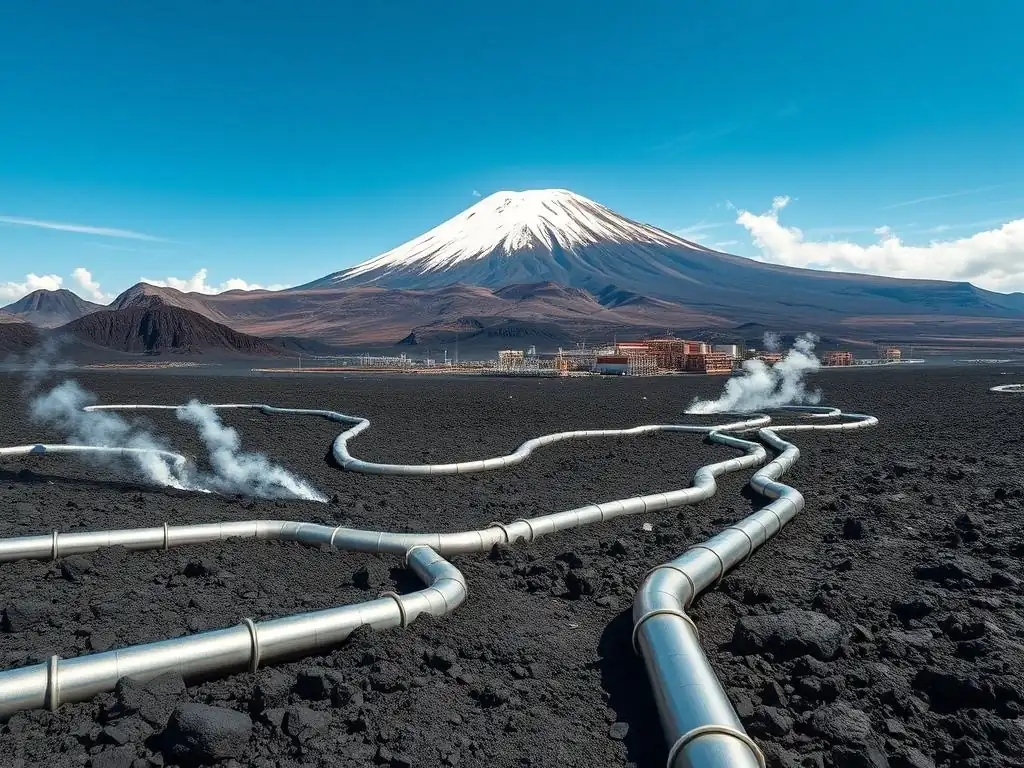
Case Study 1: Mount St. Helens - Predicting Lahar Events Using AI Models
Mount St. Helens, a volcano with a history of devastating eruptions including the cataclysmic 1980 event, is a prime location for testing and implementing advanced monitoring techniques. Lahars, volcanic mudflows, pose a significant hazard at Mount St. Helens and other volcanoes with ice or snow cover. Predicting lahar events is crucial for protecting downstream communities. Researchers have explored the use of AI models, specifically machine learning algorithms, to improve lahar prediction at Mount St. Helens. These models are trained on historical data including rainfall intensity, snowmelt rates, seismic activity, and past lahar occurrences.
By analyzing these complex datasets, AI models can identify patterns and thresholds that indicate an increased risk of lahar generation. For instance, AI can learn to recognize specific combinations of rainfall intensity and seismic activity that historically have preceded lahar events at Mount St. Helens. This allows for a more nuanced and data-driven approach to lahar forecasting compared to traditional methods that might rely solely on rainfall thresholds.
The application of AI in this context is helping to reveal hidden volcanic processes revealed related to lahar initiation, leading to more accurate and timely warnings for downstream communities. While still under development, these AI-powered lahar prediction systems hold significant promise for enhancing public safety at Mount St. Helens and other lahar-prone volcanoes.
Case Study 2: Kilauea - Analyzing Lava Flow Patterns with Machine Learning
Kilauea volcano in Hawaii, known for its frequent and often effusive eruptions, provides a natural laboratory for studying lava flow dynamics. The 2018 eruption of Kilauea, which involved significant lava flows that destroyed hundreds of homes, highlighted the need for improved lava flow forecasting capabilities. Researchers are employing machine learning to analyze vast datasets of satellite imagery, topographic data, and lava flow maps from past Kilauea eruptions to better understand and predict lava flow paths.
AI algorithms, particularly convolutional neural networks, can be trained to recognize patterns in terrain, vegetation, and past lava flow routes to predict the likely pathways of future flows. These models can identify areas of lower elevation, pre-existing drainage channels, and other topographic features that influence lava flow direction. By analyzing the spatial characteristics of past lava flows, AI can learn to predict the probability of lava inundation in different areas surrounding Kilauea.
This AI-powered analysis is revealing hidden volcanic processes revealed related to lava flow propagation, offering valuable insights for hazard assessment and land-use planning around Kilauea and similar volcanoes. The goal is to develop real-time lava flow forecasting tools that can help mitigate the impact of future eruptions.
How AI Deciphers Complex Volcanic Signals
AI Algorithms for Processing Volcanic Data
The effectiveness of AI in volcanology hinges on the sophisticated algorithms used to process and analyze volcanic data. Several types of AI algorithms are particularly well-suited for this task, including machine learning techniques like supervised and unsupervised learning, and deep learning architectures like convolutional neural networks (CNNs) and recurrent neural networks (RNNs).
Supervised learning algorithms, such as support vector machines and random forests, are used for classification and regression tasks, such as classifying seismic events or predicting eruption intensity. Unsupervised learning methods, like clustering algorithms, can identify patterns and anomalies in volcanic data without prior labels, helping to discover hidden volcanic processes revealed that were previously unknown.
Deep learning, with its ability to learn complex hierarchical features from raw data, is proving particularly powerful in volcanology. CNNs are effective for analyzing spatial data like satellite imagery and topographic maps, while RNNs are well-suited for processing temporal data streams like seismic records and gas emission time series.
These algorithms can automatically extract relevant features from the data, reducing the need for manual feature engineering and enabling the detection of subtle signals that might be missed by traditional methods. The ongoing development and refinement of these AI algorithms are crucial for unlocking the full potential of AI in volcano monitoring and prediction.
Machine Learning for Identifying Patterns in Magma Movement
Magma movement beneath the surface is the driving force behind volcanic eruptions. Understanding the dynamics of magma ascent, storage, and migration is crucial for eruption forecasting. Machine learning is providing new tools to identify patterns in magma movement that were previously hidden volcanic processes revealed. By analyzing seismic data, ground deformation measurements, and gravity changes, machine learning models can infer the location, volume, and rate of magma movement within the volcanic plumbing system. For example, changes in the characteristics of volcanic tremor, detected and analyzed by AI, can indicate the ascent of magma towards the surface.
Furthermore, machine learning can be used to model the complex interactions between magma, surrounding rocks, and volatile phases within the volcano. These models can incorporate various datasets, including petrological data, geochemical analyses of volcanic gases, and geophysical observations, to create a more comprehensive picture of magma dynamics. By identifying patterns in these multi-parameter datasets, AI can help to unravel the intricate processes of magma accumulation, differentiation, and eruption triggering. This enhanced understanding of magma movement, facilitated by AI, is critical for improving eruption forecasting capabilities and mitigating volcanic hazards.
The Future of Volcano Prediction: Integrating AI and Traditional Methods
Combining AI Insights with Field Observations
The future of volcano prediction lies in the synergistic integration of AI-driven insights with traditional volcanological methods, particularly field observations and expert knowledge. While AI provides powerful analytical tools for processing large datasets and identifying subtle patterns, it is essential to ground these findings in the real-world context of volcanic systems. Field observations, including geological mapping, gas sampling, and visual monitoring of volcanic activity, provide crucial ground truth data that complements AI analyses. Volcanologists' expertise in interpreting volcanic phenomena and understanding the specific characteristics of individual volcanoes remains indispensable.
The most effective approach is to use AI as a tool to augment, rather than replace, human expertise. AI can help volcanologists to process data more efficiently, identify potential anomalies, and generate hypotheses. However, the interpretation of these AI-driven findings and their integration into a comprehensive understanding of volcanic behavior requires the judgment and experience of volcanologists.
For example, AI might identify a subtle change in seismic activity, but volcanologists are needed to assess the geological significance of this change in the context of the volcano's history and current state. This collaborative approach, combining the strengths of AI with human expertise, is crucial for advancing volcano prediction capabilities and effectively mitigating volcanic risks.
The Potential for AI to Improve Volcanic Hazard Assessments
AI has immense potential to improve volcanic hazard assessments by providing more accurate, timely, and comprehensive information about volcanic activity. By revealing hidden volcanic processes revealed and enhancing eruption forecasting capabilities, AI can contribute to more effective hazard mitigation strategies. Improved eruption predictions, facilitated by AI, can enable timely evacuations, reduce infrastructure damage, and minimize economic losses. AI-powered hazard assessments can also be used to create more realistic and detailed volcanic hazard maps, which are essential for land-use planning and infrastructure development in volcanic regions.
Furthermore, AI can contribute to real-time hazard assessments during volcanic crises. By continuously analyzing monitoring data and updating eruption probabilities, AI can provide dynamic hazard information to emergency responders and decision-makers. This real-time capability is particularly valuable during rapidly evolving volcanic events, allowing for adaptive and informed responses. The integration of AI into volcanic hazard assessment frameworks represents a significant step forward in our ability to live safely with volcanoes and mitigate the risks they pose. As AI technology continues to advance, its role in volcanic hazard assessment will only become more prominent.
Enhanced Accuracy and Speed in Volcanic Activity Analysis
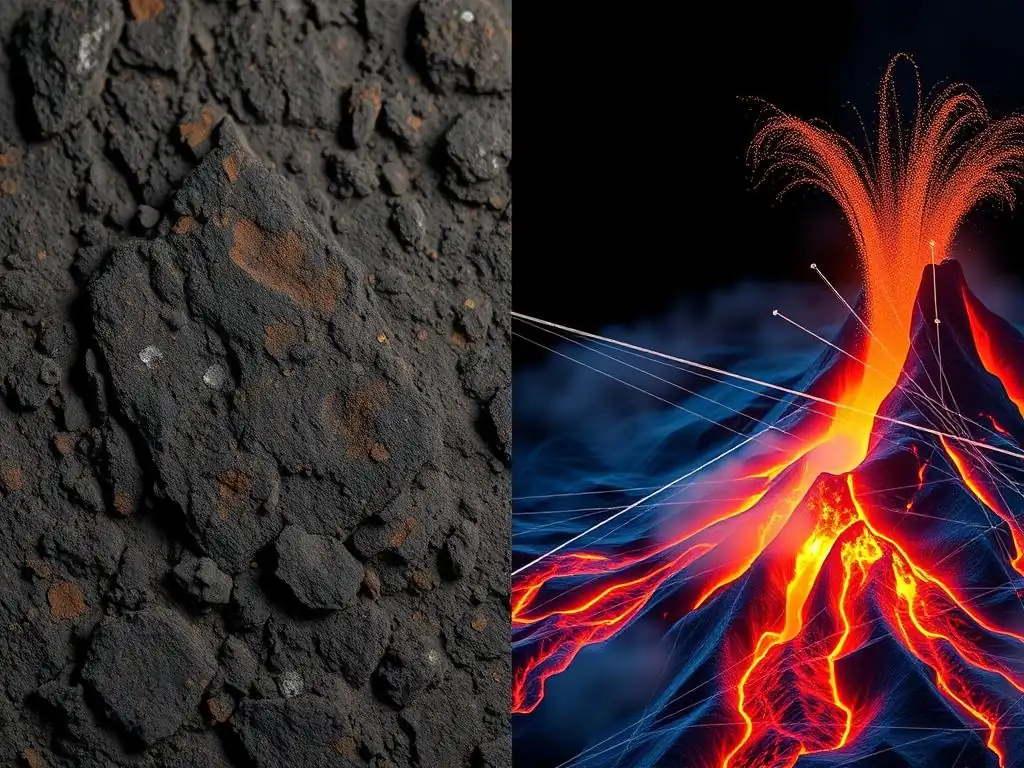
One of the primary benefits of using AI in volcanology is the enhanced accuracy and speed in analyzing volcanic activity. AI algorithms can process vast datasets much faster than traditional manual methods, enabling near real-time analysis of monitoring data. This speed is crucial for early warning systems, where timely detection of precursory signals is essential. Moreover, AI can improve the accuracy of volcanic activity analysis by reducing human error and bias in data interpretation. Machine learning models, once trained, can consistently apply the same criteria for event classification and pattern recognition, leading to more objective and reliable results.
The enhanced accuracy and speed of AI-driven analysis translate directly into improved volcano monitoring and prediction capabilities. Faster and more accurate identification of precursory signals can lead to earlier warnings, providing more time for evacuations and other mitigation measures. Furthermore, the ability of AI to process large datasets rapidly allows for the integration of more monitoring streams and the detection of subtle, multi-parameter changes that might be missed by slower, traditional methods. This leads to a more comprehensive and nuanced understanding of volcanic activity and the hidden volcanic processes revealed by AI analysis.
Discovering Previously Unknown Volcanic Behavior
AI is not only enhancing our ability to analyze known volcanic processes but also enabling the discovery of previously unknown volcanic behavior. By sifting through massive datasets and identifying subtle patterns, AI can reveal hidden volcanic processes revealed that were not apparent using traditional analytical approaches. Unsupervised learning algorithms, in particular, are valuable for exploratory data analysis, helping to uncover unexpected relationships and anomalies in volcanic data. These discoveries can lead to new scientific insights into the complex workings of volcanic systems and improve our fundamental understanding of volcanism.
For example, AI might reveal a previously unrecognized type of seismic signal associated with a specific stage of magma ascent, or identify a subtle pattern in gas emission data that correlates with changes in eruption style. These discoveries can challenge existing paradigms and lead to the development of new models of volcanic behavior.
The ability of AI to uncover hidden patterns and anomalies in volcanic data is pushing the boundaries of volcanological knowledge and opening up new avenues of research. This exploration of the unknown, facilitated by AI, is crucial for advancing our understanding of volcanoes and improving our ability to predict their future behavior.
Challenges and Limitations of AI in Volcanology
Data Availability and Quality for AI Training
Despite the immense potential of AI in volcanology, there are challenges and limitations that need to be addressed. One significant challenge is data availability and quality for AI training. Machine learning models, particularly deep learning algorithms, require large, high-quality datasets for effective training. In volcanology, while monitoring networks generate vast amounts of data, the quality and completeness of these datasets can vary significantly depending on the volcano, monitoring infrastructure, and data processing procedures. Gaps in data coverage, noisy measurements, and inconsistencies in data formats can hinder the training of robust and reliable AI models.
Furthermore, labeled datasets, where volcanic events are categorized and annotated, are often limited. Supervised learning algorithms require labeled data for training, but creating comprehensive and accurate labels for volcanic events can be challenging and time-consuming. The lack of sufficient labeled data can limit the applicability of supervised learning methods in some volcanological contexts. Addressing these data availability and quality issues is crucial for realizing the full potential of AI in volcanology. Efforts to improve data collection, standardization, and curation are essential for enabling the development and deployment of effective AI-powered volcano monitoring and prediction systems.
Addressing Uncertainty and Validation in AI Models
Another important challenge is addressing uncertainty and validation in AI models applied to volcanology. AI models, particularly complex deep learning architectures, can be "black boxes," making it difficult to understand the reasoning behind their predictions. This lack of interpretability can be a concern in critical applications like volcano early warning, where it is essential to understand the basis for predictions and assess their reliability. Furthermore, AI models are trained on historical data, and their performance on future events, particularly those that deviate significantly from past patterns, needs to be carefully validated.
Uncertainty quantification is also crucial for AI-driven volcano predictions. Volcanic processes are inherently complex and uncertain, and AI models need to be able to capture and communicate this uncertainty effectively. Providing probabilistic eruption forecasts, rather than deterministic predictions, is essential for informed decision-making in volcanic hazard mitigation.
Developing methods for quantifying uncertainty in AI models and rigorously validating their performance on real-world volcanic events are critical steps towards building trust and confidence in AI-powered volcanology. Transparency and interpretability in AI models are also important for fostering collaboration between AI researchers and volcanologists, ensuring that AI tools are effectively integrated into volcanological workflows.
The Evolution of Volcanic Understanding: From Observation to AI-Driven Discovery
A New Era of Volcano Exploration with Artificial Intelligence
The integration of artificial intelligence into volcanology marks the beginning of a new era of volcano exploration. For centuries, volcanology has relied primarily on direct observation and traditional scientific methods to understand these powerful natural phenomena. While these approaches have yielded significant advances, they are limited by the scale and complexity of volcanic systems and the sheer volume of data generated by modern monitoring networks. AI offers a transformative tool to overcome these limitations, enabling volcanologists to delve deeper into the hidden volcanic processes revealed and gain unprecedented insights into volcanic behavior.
This new era is characterized by a shift from observation-driven to data-driven discovery. AI algorithms are empowering volcanologists to analyze vast datasets, identify subtle patterns, and test hypotheses in ways that were previously impossible. This is leading to a more quantitative, predictive, and data-informed approach to volcanology. AI is not just a tool for data analysis; it is a catalyst for scientific discovery, opening up new avenues of research and pushing the boundaries of our understanding of volcanoes. The collaboration between AI and volcanology is fostering a dynamic and exciting period of innovation in the field.
The Impact of AI on Future Volcanic Research and Safety
The impact of AI on future volcanic research and safety is poised to be profound. In research, AI will accelerate the pace of discovery, enabling volcanologists to address fundamental questions about volcanic processes with greater efficiency and depth. AI will facilitate the development of more sophisticated models of volcanic behavior, leading to a more comprehensive and predictive understanding of eruptions. This enhanced understanding will, in turn, contribute to improved volcanic hazard assessments and mitigation strategies, directly benefiting communities living near active volcanoes.
In terms of safety, AI-powered volcano monitoring and prediction systems will provide earlier and more accurate warnings, giving communities more time to prepare for eruptions and evacuate if necessary. Real-time hazard assessments, facilitated by AI, will enable more effective emergency response during volcanic crises.
The integration of AI into volcanic hazard management frameworks will lead to safer and more resilient communities in volcanic regions around the world. As AI technology continues to evolve and mature, its role in advancing both volcanic research and public safety will only become more significant, paving the way for a future where we can coexist more safely with these awe-inspiring forces of nature.
Frequently Asked Questions
Hidden volcanic processes refer to the subsurface activities within a volcano, such as magma movement and gas buildup. Understanding them is crucial for predicting eruptions and mitigating risks.
AI algorithms can analyze large datasets of seismic data, gas emissions, and ground deformation to identify patterns and anomalies. These patterns help scientists infer what's happening deep inside the volcano.
What kind of data is used to train AI models for volcano monitoring?
AI models are typically trained using data from various sources, including seismic sensors, gas monitoring stations, and satellite imagery that measures ground deformation. This data captures different aspects of volcanic activity.
Can AI accurately predict volcanic eruptions, and what are the limitations?
While AI can improve eruption forecasting, it's not foolproof. Limitations include the complexity of volcanic systems and the availability of sufficient, high-quality data for training the AI.
How can people living near volcanoes benefit from AI-driven volcano monitoring?
AI-driven monitoring can provide earlier and more accurate warnings of potential eruptions. This gives communities more time to prepare and evacuate, potentially saving lives and reducing property damage.
Final Reflection: Unearthing Earth's Secrets
The insights gleaned from AI's ability to decipher complex data sets and reveal hidden volcanic processes are not just academic curiosities; they are vital tools for safeguarding communities and understanding the very pulse of our planet. The ability to predict eruptions with greater accuracy, as highlighted throughout this article, transforms abstract scientific knowledge into tangible benefits for those living in the shadow of these powerful forces.
The ongoing exploration of these hidden processes has profoundly influenced our understanding of Earth's dynamic systems. It reminds us that even in the age of advanced technology, the natural world holds countless secrets waiting to be unveiled, and that our pursuit of knowledge is a continuous journey of discovery. The important thing is to never stop questioning.
- Albert Einstein. This quote encapsulates the spirit of scientific inquiry that drives us to constantly seek deeper understanding of the world around us, especially when it comes to potentially catastrophic natural events.
Now, consider the implications of this newfound knowledge. How can you, in your own life, embrace a similar spirit of inquiry and innovation? What hidden processes, in your own field or community, might benefit from a fresh perspective and the application of new technologies? Let the revelations about hidden volcanic processes inspire you to look beyond the surface, to question assumptions, and to contribute to a world where knowledge empowers us to live more safely and sustainably.
Unearth the Secrets: Become a Volcano Explorer!
Thank you for exploring the fascinating world of AI-powered volcano research! We hope you found these insights valuable in understanding the hidden processes shaping our planet. Now, it's time to take your exploration further.
Here are a few ways you can continue your journey:
- Become a Citizen Scientist: Contribute to our data collection efforts by sharing your own volcanic observations and photos – your insights could help improve our AI models.
- Explore our interactive map of global volcanoes, and learn about the unique geological signatures AI is uncovering.
- Share this article with fellow science enthusiasts and spark a conversation about the future of volcano monitoring.
What unexpected volcanic insights have sparked your curiosity? Share your thoughts and questions in the comments below!