
Can We Stop a Volcano? The Limits of Intervention Despite Advanced Monitoring

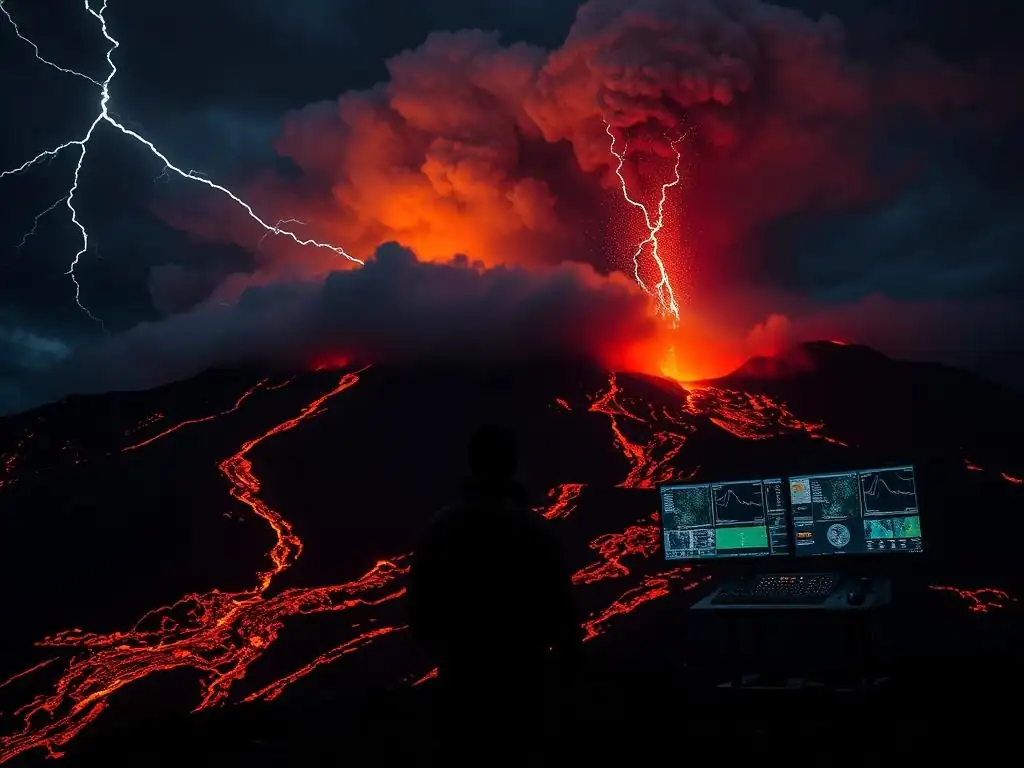
Welcome to Volcano Explorers, where the Earth breathes fire! Ever wondered if humanity could ever truly tame a volcano's fury? Our latest exploration delves into the tantalizing, yet treacherous, question: Can We Stop Volcanic Eruptions Intervention? From advanced monitoring techniques to the audacious dreams of intervention, discover the surprising limits of our power against nature's most spectacular force. Prepare to be amazed... and perhaps a little humbled.
Lava Flow Diversion: Building Barriers and Channels
The Challenges of Constructing Barriers Against Lava Flows
The concept of diverting lava flows using physical barriers is intuitively appealing – building walls to redirect the molten rock away from populated areas or valuable infrastructure. However, the reality of constructing effective barriers against the immense power and volume of lava flows presents significant engineering and logistical challenges. Lava, often basaltic in composition, can reach temperatures exceeding 1000°C (1832°F) and possess a density roughly three times that of water.
The sheer force of a fast-moving, voluminous lava flow can easily overwhelm hastily constructed barriers. For example, during the 1983 eruption of Mount Etna in Italy, earth barriers were built to protect the town of Nicolosi. While these barriers had some localized success in diverting smaller lobes of lava, they required constant reinforcement and were ultimately vulnerable to breaches as the eruption continued and the lava volume increased.
Furthermore, the terrain itself often poses a significant obstacle. Constructing large-scale barriers on steep volcanic slopes or in densely vegetated areas is exceptionally difficult and time-consuming, especially when time is of the essence during an eruption.
Case Studies of Successful and Unsuccessful Lava Diversion Attempts
History provides a mixed bag of results regarding lava diversion efforts. One of the most frequently cited examples of successful lava diversion occurred during the 1973 eruption on Heimaey Island, Iceland. While water cooling played a crucial role in solidifying the advancing lava front, extensive earthworks were also constructed to guide the lava away from the harbor entrance, the island's economic lifeline.
Bulldozers and other heavy machinery were used to build barriers and channels, effectively redirecting a significant portion of the lava flow and ultimately saving the harbor. However, it’s important to note that this operation was conducted over several months, requiring massive resource mobilization and favorable ground conditions. In contrast, attempts to divert lava flows on Mount Etna, as mentioned earlier, have often met with limited success.
While barriers might offer temporary protection to specific areas, they are often breached or outflanked by the persistent and voluminous lava flows characteristic of shield volcanoes like Etna. Moreover, constructing barriers can sometimes inadvertently worsen the situation in adjacent areas by concentrating the lava flow and increasing its destructive power in unintended directions. This highlights the complex and often unpredictable nature of lava flow dynamics and the limitations of relying solely on physical barriers as a volcano intervention strategy.
- Can We Actually Stop a Volcano From Erupting?
- What Kind of Interventions Are Possible With Current Technology?
- How Accurate is Volcanic Eruption Prediction?
- What are the Ethical Considerations of Attempting to Intervene in Volcanic Eruptions?
- What is the Role of Monitoring in "Stopping" Volcanic Disasters?
Frequently Asked Questions
Can We Actually Stop a Volcano From Erupting?
No, currently complete prevention of a volcanic eruption is not possible with existing technology. We can monitor and predict eruptions, but stopping the underlying geological processes remains beyond our capabilities.
What Kind of Interventions Are Possible With Current Technology?
While we can't stop an eruption entirely, we can sometimes implement strategies to mitigate the impact of an eruption. These interventions might include diverting lava flows with barriers or controlled explosions, or cooling lava flows with water.
How Accurate is Volcanic Eruption Prediction?
Prediction accuracy varies. We can often identify signs of increased activity like changes in gas emissions, ground deformation, and seismic activity, providing early warnings. However, pinpointing the exact timing and intensity of an eruption remains challenging.
What are the Ethical Considerations of Attempting to Intervene in Volcanic Eruptions?
Intervention carries significant ethical weight. Potential risks include unintended consequences, such as altering the eruption in unpredictable ways, and resource allocation concerns, as intervention efforts can be costly and may not always succeed.
What is the Role of Monitoring in "Stopping" Volcanic Disasters?
While we can't stop the volcano itself, effective monitoring is crucial for reducing the impact of volcanic disasters. By providing timely warnings, monitoring allows for evacuations and other protective measures, saving lives and minimizing property damage.
Final Reflection: Embracing Uncertainty in the Face of Nature's Power
The preceding exploration of volcanic eruption intervention, while highlighting the advancements in monitoring technology, ultimately underscores a profound truth: our control over nature remains limited, especially when confronting forces as immense as volcanoes. Despite our best efforts to understand and potentially mitigate volcanic hazards, the sheer scale and unpredictability of these events present formidable challenges, reminding us of our place within the Earth's dynamic systems.
The ongoing debate surrounding intervention strategies reflects a deeper societal tension: our desire to control our environment versus the acceptance of natural processes. This tension resonates deeply, forcing us to confront the ethical and practical implications of attempting to manipulate forces far beyond our complete comprehension. We cannot command nature except by obeying her.
- Francis Bacon. This quote encapsulates the essence of our relationship with volcanoes; true understanding and respect must precede any attempt at intervention.
Ultimately, the question isn't just can we stop a volcano, but should we? Let us, therefore, shift our focus from conquering nature to coexisting with it. Let us invest in robust early warning systems, comprehensive evacuation plans, and resilient communities, empowering ourselves to navigate the inevitable eruptions with knowledge, preparedness, and a profound respect for the Earth's raw power. Reflect on your own relationship with the natural world, and consider how you can contribute to a future where humanity and nature thrive in harmony, even in the shadow of a volcano.
Dare to Delve Deeper: Ignite Your Volcanic Curiosity!
Thank you for exploring the complex challenges of volcano intervention with us. We hope you now have a clearer understanding of the incredible power of nature and the limitations of our ability to control it. Ready to take your fascination further?
Here are a few ways to continue your journey:
- Share this article with fellow Earth enthusiasts to spark a discussion about responsible science and our relationship with natural disasters.
- Explore our interactive map of active volcanoes around the world. Discover eruption histories and real-time monitoring data.
- Consider the ethical implications of potential volcanic intervention. What factors should guide decisions about such interventions?
What will you do today to better understand the powerful forces shaping our planet? Share your thoughts in the comments below!