
The Power of Plate Boundaries: Online Courses on Tectonics and Volcanism

Welcome to Volcano Explorers, where the Earth's raw power unfolds! Are you ready to ignite your understanding of the forces that shape our planet? Dive into the heart of our latest exploration, "The Power of Plate Boundaries," and discover how tectonics and volcanism online courses can unlock the secrets simmering beneath your feet. What fiery insights await you? Let's explore!
- Unveiling Earth's Secrets: Top Online Courses in Tectonics and Volcanism
- Best Overall: "Understanding Plate Tectonics" by Caltech via edX
- For the Aspiring Volcanologist: "Volcanoes: A Regional Perspective" by Oregon State University via Coursera
- The Practical Choice: "GIS for Environmental Management" - University of Twente via Coursera
- Tectonics and Volcanism for Beginners: "Dynamic Earth: A Course for Educators" - American Museum of Natural History via Coursera
- Advanced Studies: "Geochemistry" - MIT OpenCourseware
- Choosing the Right Tectonics and Volcanism Online Course for You
-
Frequently Asked Questions
- What are tectonics and volcanism, and why are they studied together?
- What types of online courses does VolcanoExplorers.org offer on tectonics and volcanism?
- How do plate boundaries influence the location and type of volcanic activity?
- Are there any prerequisites for enrolling in the tectonics and volcanism online courses?
- Does VolcanoExplorers.org provide real-time updates on volcanic activity, and how is this information related to the courses?
- Final Reflection: Unearthing Earth's Dynamic Future
- Ignite Your Inner Geologist: Dive Deeper into Earth's Secrets!
Unveiling Earth's Secrets: Top Online Courses in Tectonics and Volcanism
Volcanoes, earthquakes, and the majestic mountain ranges that sculpt our planet are all expressions of a fundamental geological process: plate tectonics. Understanding this process is crucial for anyone seeking to comprehend the dynamic Earth, especially those fascinated by volcanism. Fortunately, the digital age has democratized access to world-class education, offering a plethora of online courses in tectonics and volcanism.
Whether you are a seasoned geologist looking to deepen your knowledge or a curious enthusiast just beginning your journey, there's an online course designed to illuminate the powerful forces shaping our world. These courses provide a flexible and accessible way to explore the intricate relationship between plate boundaries, tectonic movements, and the fiery phenomena of volcanism.
Best Overall: "Understanding Plate Tectonics" by Caltech via edX
Course Overview: A Comprehensive Introduction to Plate Tectonics
Caltech, a world leader in geological sciences, offers "Understanding Plate Tectonics" through edX, providing an exceptional entry point into this fascinating field. This course meticulously unpacks the theory of plate tectonics, starting with its historical development and moving through the fundamental concepts that underpin our understanding of Earth's lithosphere.
Students will explore the different types of plate boundaries – divergent, convergent, and transform – and learn how these boundaries are responsible for a vast array of geological phenomena, including earthquakes, mountain building, and, crucially, volcanic activity. The course emphasizes the scientific method and encourages critical thinking, making it suitable for learners with varying levels of prior knowledge.
The curriculum delves into the driving forces behind plate motion, examining mantle convection, ridge push, and slab pull. It meticulously details the evidence supporting plate tectonics, from seafloor spreading and paleomagnetism to GPS measurements of plate movement. Furthermore, the course connects plate tectonics to broader Earth system processes, highlighting its influence on climate, ocean circulation, and the distribution of natural resources. Through engaging lectures, interactive simulations, and real-world case studies, learners gain a solid foundation in the principles of plate tectonics and its profound implications for understanding our planet.
Key Features:
- Taught by renowned Caltech professors.
- Comprehensive coverage of plate tectonics theory and evidence.
- Interactive simulations and visualizations to enhance understanding.
- Real-world case studies illustrating tectonic processes.
- Suitable for beginners and those with some prior science background.
Price and Access:
- Free to audit, allowing access to most course materials.
- Verified certificate available for a fee (approximately \$149 USD as of late 2023), which includes graded assignments and a certificate of completion.
- Self-paced learning, allowing flexibility to study at your own schedule.
For the Aspiring Volcanologist: "Volcanoes: A Regional Perspective" by Oregon State University via Coursera
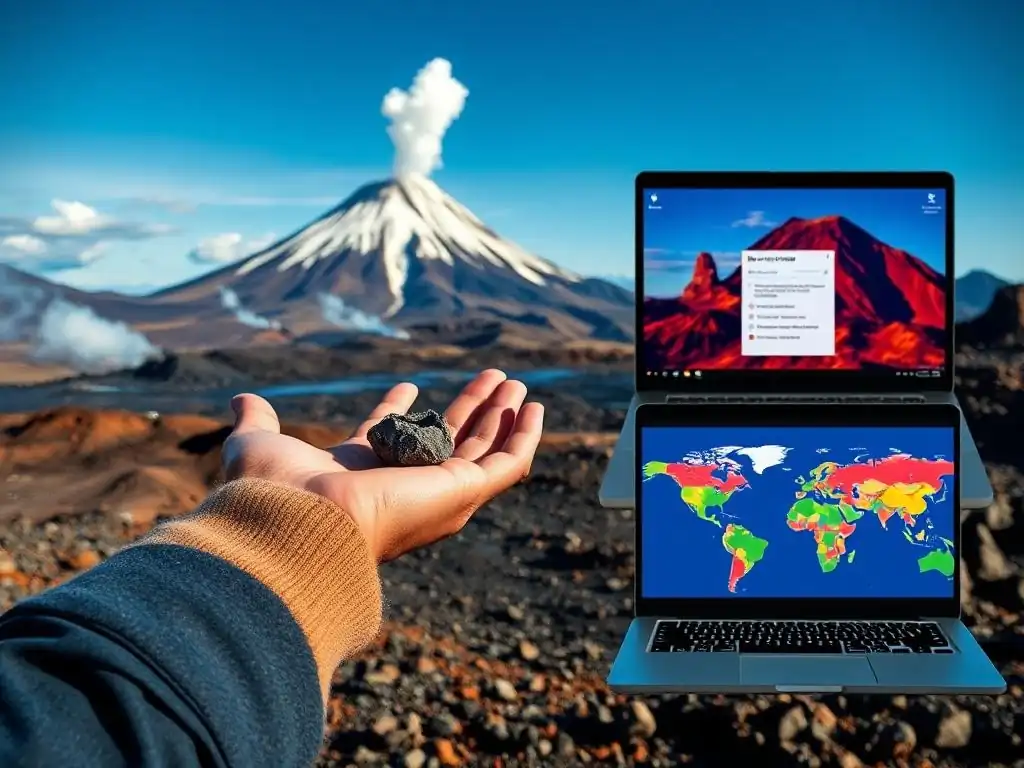
A Deep Dive into Volcanic Eruptions, Formation, and Risk Assessment.
Oregon State University, known for its strong volcanology program and proximity to the Cascade volcanic arc, presents "Volcanoes: A Regional Perspective" on Coursera. This course takes a focused approach, examining volcanism through the lens of specific volcanic regions around the globe, including the Pacific Northwest, Iceland, and Hawaii.
It goes beyond basic volcano definitions, exploring the diverse types of volcanic eruptions, from effusive lava flows to explosive pyroclastic events, and the geological settings that control them. A significant portion of the course is dedicated to understanding volcanic hazards and risk assessment, crucial knowledge for those interested in the practical applications of volcanology.
The course meticulously examines the processes of magma generation, ascent, and eruption, linking these processes to the tectonic settings in which volcanoes occur. Students will learn about different types of volcanoes, such as stratovolcanoes, shield volcanoes, and cinder cones, and the characteristic eruption styles associated with each. Furthermore, the curriculum delves into monitoring techniques used by volcanologists to predict eruptions and mitigate volcanic risks, including seismology, gas monitoring, and deformation studies. By focusing on regional examples, the course provides a concrete and engaging way to understand the complexities of volcanism and its impact on human societies.
Key Features:
- Focus on real-world volcanic regions and case studies.
- In-depth exploration of eruption styles and volcanic hazards.
- Emphasis on volcanic monitoring and risk assessment.
- Taught by experts from Oregon State University's volcanology program.
- Includes discussions of the societal impacts of volcanism.
Price and Access:
- Part of the Coursera platform, offering flexible subscription options.
- Coursera Plus subscription provides access to this and many other courses for a monthly or annual fee (prices vary, check Coursera website for current pricing).
- Individual course enrollment may also be available for a separate fee, or auditing options may exist for limited access.
The Practical Choice: "GIS for Environmental Management" - University of Twente via Coursera
Learn Geospatial Analysis for Volcanic Risk Management
While not solely focused on volcanism or tectonics, "GIS for Environmental Management" from the University of Twente on Coursera offers invaluable practical skills directly applicable to volcanology, particularly in the realm of volcanic risk management and hazard mapping. Geographic Information Systems (GIS) are essential tools for volcanologists, allowing them to visualize, analyze, and manage spatial data related to volcanoes, such as eruption histories, lava flow paths, ashfall distribution, and population density around volcanic areas. This course provides a strong foundation in GIS principles and techniques, using industry-standard software.
The curriculum covers a wide range of GIS functionalities, from data acquisition and management to spatial analysis and map production. Students learn how to use GIS software to create thematic maps, perform spatial queries, analyze spatial relationships, and model environmental phenomena. Specifically relevant to volcanology, the course teaches techniques for creating hazard maps, assessing vulnerability, and planning evacuation routes. The skills learned in this course are highly sought after in various environmental and geological fields, making it a practical choice for those seeking careers in volcanology, particularly in risk assessment and mitigation.
Key Features:
- Focus on practical GIS skills using industry-standard software (e.g., QGIS).
- Covers data acquisition, spatial analysis, and map creation.
- Applicable to a wide range of environmental and geological fields, including volcanology.
- Emphasis on using GIS for environmental management and risk assessment.
- University of Twente is renowned for its expertise in geoinformation science.
Price and Access:
- Offered on Coursera, with similar access options as "Volcanoes: A Regional Perspective."
- Coursera Plus subscription or individual course enrollment fees apply (check Coursera website for current pricing).
- May offer auditing options for limited access to course materials.
Tectonics and Volcanism for Beginners: "Dynamic Earth: A Course for Educators" - American Museum of Natural History via Coursera
Introductory Exploration of Earth's Processes for Non-Scientists
For those seeking a more accessible and introductory approach to tectonics and volcanism, "Dynamic Earth: A Course for Educators" from the American Museum of Natural History, also available on Coursera, is an excellent option. While designed for educators, its engaging and clear explanations make it ideal for anyone new to Earth science and wanting to understand the basics of plate tectonics and volcanic activity. The course avoids overly technical jargon and focuses on conveying fundamental concepts in an engaging and visually rich manner, drawing upon the museum's extensive resources and expertise in science communication.
The curriculum explores the Earth's internal structure, the theory of plate tectonics, and the different types of geological processes driven by plate movements, including volcanism and earthquakes. It emphasizes the interconnectedness of Earth systems and the dynamic nature of our planet. The course uses a variety of multimedia resources, including videos, animations, and virtual field trips, to bring geological concepts to life. While it may not delve into the advanced scientific details of other courses, it provides a solid foundation and sparks curiosity for further exploration of tectonics and volcanism.
Key Features:
- Designed for educators but accessible to anyone interested in Earth science.
- Clear and engaging explanations of fundamental concepts.
- Rich multimedia resources, including videos and virtual field trips.
- Focus on Earth's dynamic processes and interconnected systems.
- Developed by the American Museum of Natural History, a trusted source of science education.
Price and Access:
- Available on Coursera, with standard Coursera access options.
- Subscription or individual course enrollment fees apply (check Coursera website).
- Auditing options may be available for limited access.
Advanced Studies: "Geochemistry" - MIT OpenCourseware
For Advanced Students: Understanding Magma Genesis and Evolution
For learners with a strong science background seeking a more advanced and in-depth understanding of the chemical processes underlying volcanism, MIT OpenCourseware offers "Geochemistry." While not exclusively focused on volcanism, this course provides the essential geochemical foundation needed to comprehend magma genesis, evolution, and eruption. MIT OpenCourseware provides free access to course materials from MIT courses, making world-class education accessible to a global audience. This particular course is suitable for advanced undergraduates or graduate students in geology or related fields.
The curriculum delves into the principles of thermodynamics, kinetics, and isotope geochemistry as applied to geological systems. It explores the chemical composition of the Earth, the processes of mantle melting and magma formation, and the differentiation of magmas as they ascend through the crust. Students will learn to use geochemical data to interpret volcanic rocks and understand the processes that control volcanic eruptions. While this course requires a solid foundation in chemistry and physics, it provides an unparalleled opportunity to delve into the advanced scientific principles that underpin the study of volcanism.
Key Features:
- Advanced level course from MIT OpenCourseware.
- In-depth coverage of geochemistry principles relevant to volcanism.
- Focus on magma genesis, evolution, and eruption processes.
- Utilizes thermodynamics, kinetics, and isotope geochemistry.
- Free access to course materials through MIT OpenCourseware.
Price and Access:
- Completely free access to all course materials through MIT OpenCourseware.
- Does not include instructor support, grading, or a certificate of completion.
- Self-directed learning, requiring a high degree of motivation and self-discipline.
Choosing the Right Tectonics and Volcanism Online Course for You
Selecting the ideal online course in tectonics and volcanism depends on your current knowledge level, learning goals, and available time commitment. For beginners seeking a comprehensive introduction, Caltech's "Understanding Plate Tectonics" offers a strong foundation. Aspiring volcanologists will benefit greatly from Oregon State University's regional perspective course and the practical GIS skills gained from the University of Twente course.
Educators and those new to Earth science can find an engaging entry point with the American Museum of Natural History's "Dynamic Earth." Finally, advanced learners seeking a deep dive into the geochemistry of volcanism should explore MIT's "Geochemistry" course materials on OpenCourseware. Regardless of your choice, these online resources provide powerful tools to unlock the secrets of our dynamic planet and the awe-inspiring power of tectonics and volcanism.
Frequently Asked Questions
What are tectonics and volcanism, and why are they studied together?
Tectonics refers to the study of the Earth's lithosphere and its movement, while volcanism focuses on volcanic activity and magma processes. They are studied together because plate tectonics directly influences where volcanoes form and how they erupt.
What types of online courses does VolcanoExplorers.org offer on tectonics and volcanism?
VolcanoExplorers.org provides various courses, including introductory courses covering basic geological principles, advanced courses focusing on specific volcanic regions, and specialized courses on modeling volcanic eruptions.
How do plate boundaries influence the location and type of volcanic activity?
Plate boundaries are often sites of intense geological activity, including volcanism. Divergent boundaries create new crust and allow magma to rise, while convergent boundaries can lead to subduction zone volcanoes due to melting in the mantle.
Are there any prerequisites for enrolling in the tectonics and volcanism online courses?
Some introductory courses may not require prior geological knowledge, but advanced courses often require a background in geology or related scientific field. Check each course description for specific requirements.
Yes, VolcanoExplorers.org offers real-time updates on volcanic activity worldwide. This information complements the online courses by providing current examples of tectonic and volcanic processes in action, enhancing the learning experience.
Final Reflection: Unearthing Earth's Dynamic Future
The exploration of plate boundaries, as illuminated through tectonics and volcanism online courses, isn't just an academic exercise; it's a crucial understanding of the forces shaping our planet and influencing our lives. From predicting seismic events to understanding the formation of vital resources, the knowledge gleaned from these courses empowers us to navigate a world constantly in flux.
The study of tectonics and volcanism has profoundly shaped our understanding of Earth's history and continues to influence our approach to environmental challenges. My own fascination with this subject stems from the realization that the ground beneath our feet is anything but static, a constant reminder of the immense power contained within. The Earth is a dynamic planet, constantly changing and evolving. Understanding these changes is crucial for our survival and well-being.
- USGS
Now, armed with a deeper understanding of the Earth's dynamic processes, I urge you to consider your own connection to this planet. What role will you play in mitigating the risks and harnessing the opportunities presented by tectonics and volcanism? Embrace the knowledge, share the insights, and become a steward of our ever-changing world.
Ignite Your Inner Geologist: Dive Deeper into Earth's Secrets!
Thanks for exploring the dynamic world of plate tectonics and volcanism with us! We hope you've gained a new appreciation for the powerful forces shaping our planet. Now, let's take that curiosity a step further.
Ready to put that knowledge into action? Here are a few ways to continue your exploration:
- Enroll in one of our comprehensive online courses at volcanoexplorers.org and unlock a deeper understanding of plate boundaries and volcanic processes. This is your primary action – don't miss out!
- Share this article with a friend who shares your passion for geology and inspire them to join the adventure.
- Visit your local natural history museum and look for exhibits on plate tectonics – observing real-world examples can bring the concepts to life!
What unexpected geological fact did you discover today that you're eager to share?