
Divergent Boundaries: Magma's Creation Zones at Spreading Plates

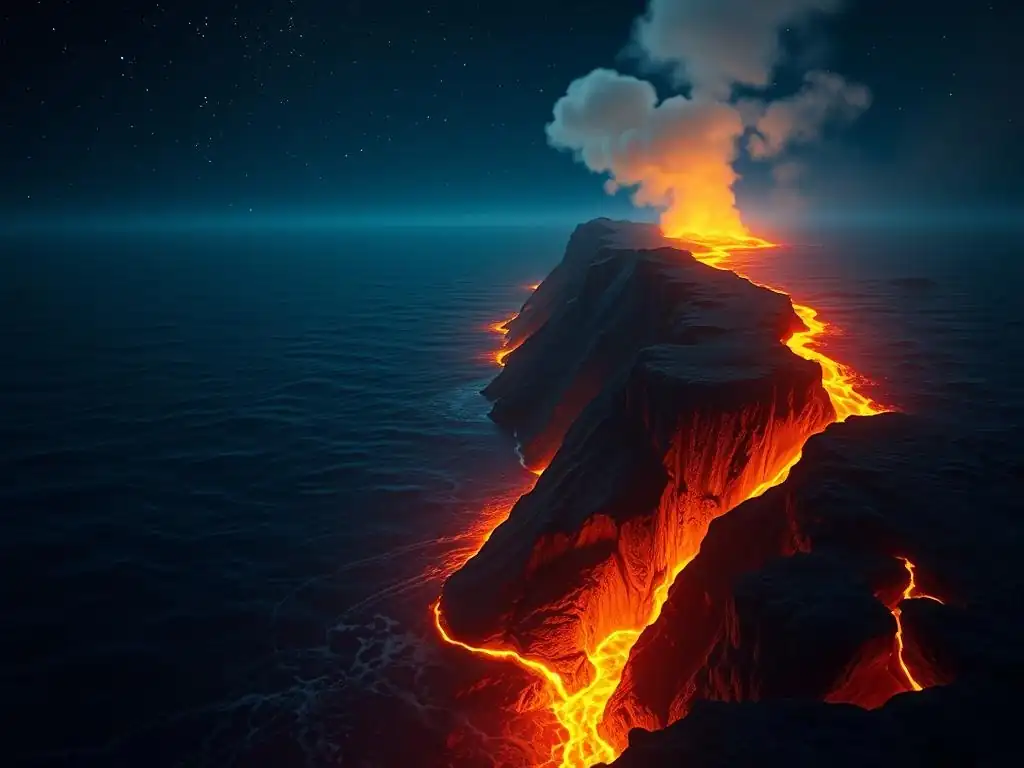
Welcome to Volcano Explorers, where the Earth's fiery heart beats on display! Ever wondered how the lifeblood of volcanoes – magma – comes to be? Prepare to journey deep beneath the surface and unravel the mysteries of its creation, starting with a fascinating look at magma creation at divergent boundaries. What secrets do these spreading plates hold, and how do they fuel some of the most awe-inspiring geological events on our planet? Dive in and let the exploration begin!
- Seafloor Spreading and Magma Genesis: Constructing Oceanic Crust
- Understanding Magma Genesis at Divergent Plate Boundaries
- The Science Behind Magma Formation at Divergent Zones
- The Magma Composition at Divergent Boundaries: A Detailed Look
- Divergent Boundaries and Volcanic Activity: An Intimate Relationship
- Case Studies: Exploring Magma Genesis at Specific Divergent Zones
- The Impact of Water Content on Magma Generation at Divergent Boundaries
- Exploring the Depths: Mantle Plumes and Divergent Boundary Interactions
- Future Research: Unraveling the Mysteries of Magma Creation
-
Frequently Asked Questions
- What role do divergent boundaries play in magma creation?
- How does the process of decompression melting work at divergent boundaries?
- What type of magma is typically formed at divergent boundaries?
- Are there any specific geological features associated with magma creation at divergent boundaries?
- How do volcanologists monitor magma creation at divergent boundaries?
- Final Reflection: The Earth's Fiery Breath
- Unleash Your Inner Volcanologist!
Seafloor Spreading and Magma Genesis: Constructing Oceanic Crust
Understanding Magma Genesis at Divergent Plate Boundaries
The Role of Plate Tectonics in Magma Generation
Plate tectonics is the fundamental theory that explains the large-scale motions of Earth's lithosphere. This theory posits that the Earth's outer shell is divided into several plates that move and interact with each other. Magma generation is intricately linked to these plate movements, particularly at divergent plate boundaries, where plates move apart.
The movement of these plates is driven by convection currents within the Earth's mantle, causing them to spread, collide, or slide past one another. Divergent boundaries are locations where tectonic plates are pulling away from each other, creating space that is subsequently filled by upwelling material from the Earth's mantle, which under the right conditions, melts to form magma.
The dynamic processes of plate tectonics dictate not only where volcanoes are likely to form but also the very mechanisms by which magma is created. At divergent boundaries, the pulling apart of plates thins the lithosphere and reduces the pressure on the underlying mantle. This reduction in pressure is a critical factor in triggering magma genesis.
Without the large-scale movements described by plate tectonics, the specific conditions necessary for the widespread magma generation observed at divergent boundaries would not exist. Therefore, understanding plate tectonics is paramount to comprehending the processes of magma formation and the distribution of volcanic activity across our planet.
Defining Divergent Boundaries: A Foundation for Magma Formation
Divergent boundaries, also known as spreading centers or constructive margins, are linear features where two tectonic plates move apart. This separation is not a passive process; it is an active rifting driven by forces within the Earth. As plates diverge, the lithosphere, which comprises the crust and the uppermost part of the mantle, thins. This thinning is most pronounced at the rift valley in continental settings or along the axis of mid-ocean ridges in oceanic settings. The geological consequences of this divergence are profound, leading to significant volcanic activity and the creation of new crustal material.
These boundaries are fundamental to the Earth's geological cycle. The most prominent examples of divergent boundaries are the mid-ocean ridges, a global system of underwater mountain ranges that encircle the planet. These ridges are where new oceanic crust is continuously formed through volcanic activity. Continental rifting, such as seen in the East African Rift Valley, also represents a divergent boundary setting, albeit in a continental context. In both oceanic and continental settings, the process of plates moving apart sets the stage for the mantle to upwell and undergo decompression melting, the primary mechanism for magma creation at these zones.
Key Characteristics of Spreading Ridges and Magma Sources
Spreading ridges, particularly mid-ocean ridges, are characterized by several distinct geological features that directly relate to magma genesis. These underwater mountain ranges are not simply passive cracks in the Earth's crust; they are dynamic zones of intense geological activity. Along the axis of these ridges, there is often a central rift valley, a depression created by the pulling apart of the plates.
This is where the most active volcanism and magma extrusion occur. The topography is rugged and varied, marked by transform faults that offset segments of the ridge, and hydrothermal vents that release chemically enriched fluids into the ocean.
The source of magma at spreading ridges is the asthenosphere, the upper layer of the Earth's mantle below the lithosphere. This region is characterized by partially molten rock, although it is mostly solid. As plates diverge, the asthenosphere material rises upwards to fill the void.
This upwelling mantle is not inherently molten, but the crucial factor is the reduction in pressure as it ascends. The lower pressure at shallower depths allows the mantle rock to partially melt, generating magma. This magma then rises further, accumulating in magma chambers beneath the ridge axis before erupting onto the seafloor or intruding into the newly forming crust.
The Science Behind Magma Formation at Divergent Zones
Decompression Melting: The Primary Process of Magma Generation
Decompression melting is the dominant mechanism responsible for magma creation at divergent plate boundaries. This process is elegantly simple in concept yet profoundly impactful in its geological consequences. It hinges on the principle that the melting point of rocks is dependent on pressure. At high pressures, deep within the Earth, rocks remain solid even at high temperatures. However, as pressure decreases, the melting point of these rocks also decreases. This is precisely what happens beneath divergent boundaries.
As the tectonic plates pull apart, the underlying mantle material, primarily composed of peridotite, rises upwards towards the surface. During this ascent, the pressure exerted on the mantle decreases significantly. Although the temperature of the mantle may remain relatively constant, the reduction in pressure causes the solid mantle rock to cross its solidus – the point at which melting begins. This pressure release, or decompression, initiates partial melting of the mantle, generating magma without requiring a significant increase in temperature. This process is far more efficient at producing large volumes of magma than simply adding heat.
How Decreased Pressure Leads to Magma Creation
To understand how decreased pressure leads to magma creation, consider the composition of the upper mantle. It's primarily made of peridotite, a rock rich in minerals like olivine and pyroxene. These minerals, under the immense pressure of the deep mantle, are stable in a solid state at temperatures that would cause melting at shallower depths. Imagine the mantle material as a sponge saturated with potential melt, but held solid by the squeeze of pressure. As this "sponge" rises at a divergent boundary, the squeeze is released.
The reduction in pressure allows the bonds within the mineral structures of peridotite to weaken and break. Minerals with lower melting points, which are present in small amounts in peridotite, begin to melt first. This initial melt is typically rich in silica and incompatible elements. As melting progresses, more and more of the mantle rock transforms into liquid magma. The degree of partial melting at divergent boundaries is typically between 5% and 20%. This percentage is enough to generate substantial volumes of magma that drive seafloor spreading and construct new oceanic crust.
The Influence of Mantle Composition on Magma Type
The composition of the Earth's mantle plays a crucial role in determining the type of magma generated at divergent boundaries. While the upper mantle is generally considered to be relatively homogenous in large-scale composition, subtle variations exist regionally and at different depths. These variations, combined with the specific conditions of decompression melting, influence the chemical characteristics of the resulting magma. For instance, the presence of hydrous minerals or enriched components in certain mantle regions can alter the melting process and the magma composition.
The dominant rock type of the upper mantle is peridotite, which is an ultramafic rock. When peridotite undergoes partial melting at divergent boundaries through decompression, the resulting magma is typically basaltic in composition. Basalt is a mafic rock, meaning it is relatively rich in magnesium and iron and low in silica compared to more felsic rocks like granite.
This is because the initial melts derived from peridotite are enriched in these mafic components. However, the exact composition of basalt can vary depending on the degree of partial melting, the source mantle composition, and subsequent processes like fractional crystallization, which can further modify the magma's chemistry.
The Magma Composition at Divergent Boundaries: A Detailed Look
Basaltic Magma: The Predominant Type at Spreading Centers
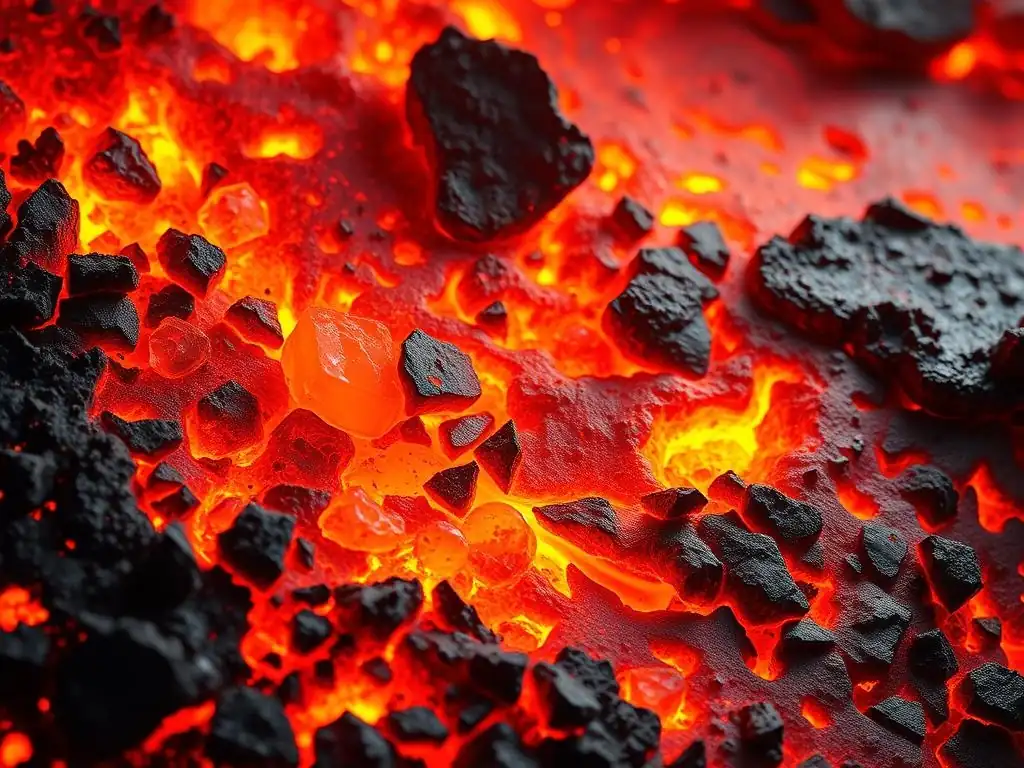
Basaltic magma is overwhelmingly the most common type of magma erupted at divergent plate boundaries, particularly at mid-ocean ridges. This is a direct consequence of the decompression melting of the upper mantle peridotite. Basaltic magma is characterized by its relatively low silica content (around 45-52 wt%) and high iron and magnesium content. This composition gives basaltic lavas a relatively low viscosity compared to more silica-rich magmas, allowing them to flow more easily and spread over larger areas.
The prevalence of basaltic magma at spreading centers is fundamental to the creation of oceanic crust. As basaltic lava erupts onto the seafloor at mid-ocean ridges, it cools and solidifies rapidly in contact with the cold seawater, forming the oceanic crust. The entire oceanic crust is essentially composed of basalt and its intrusive equivalent, gabbro, which crystallizes from magma at depth. The consistent production of basaltic magma at divergent boundaries is therefore responsible for the ongoing renewal and expansion of the Earth's ocean basins.
The Chemical Composition of Mid-Ocean Ridge Basalts (MORB)
Mid-Ocean Ridge Basalts, or MORB, are a specific type of basalt that erupts at mid-ocean ridges and are incredibly important in understanding magma creation at divergent boundaries. MORB has a remarkably consistent chemical composition globally, reflecting the relatively uniform nature of the upper mantle source from which they are derived. This consistency is a key observation in geochemistry and provides valuable insights into mantle processes.
MORB is characterized by its low concentrations of incompatible elements – elements that are preferentially partitioned into the melt phase during partial melting. This depletion in incompatible elements suggests that the mantle source region for MORB has undergone previous episodes of melt extraction. MORB is also relatively enriched in iron and magnesium and has a distinctive isotopic signature that distinguishes it from basalts erupted in other tectonic settings, such as ocean islands or continental arcs. The study of MORB chemistry provides critical constraints on models of mantle convection, melting processes, and the evolution of the Earth's crust and mantle.
Fractional Crystallization and Magma Differentiation at Divergent Plates
While basaltic magma is the primary product of magma creation at divergent boundaries, the composition of erupted lavas can be further modified through processes like fractional crystallization and magma differentiation. As basaltic magma rises from the mantle and resides in magma chambers beneath the spreading ridge, it begins to cool and crystallize. Minerals with higher melting points, such as olivine and pyroxene, start to crystallize out of the melt first.
This process, known as fractional crystallization, changes the composition of the remaining liquid magma. As these early-formed crystals are removed (either by settling to the bottom of the magma chamber or being separated in some other way), the residual magma becomes enriched in elements that are not incorporated into these minerals, such as silica, aluminum, and alkalis.
Over time, and with continued crystallization, this differentiation process can lead to the formation of more evolved magma compositions, although at divergent boundaries, the dominant erupted product remains basaltic. However, even subtle variations in MORB chemistry can be attributed to varying degrees of fractional crystallization and provide further information about magma chamber processes beneath spreading ridges.
Divergent Boundaries and Volcanic Activity: An Intimate Relationship
Types of Volcanic Eruptions at Divergent Plate Margins
Volcanic eruptions at divergent plate margins, particularly at mid-ocean ridges, are distinct from those found at convergent boundaries or hotspots. The type of eruption is largely dictated by the basaltic magma composition, its relatively low viscosity, and the underwater setting of most spreading centers. Eruptions are typically effusive, meaning they are characterized by the outpouring of lava flows rather than violent explosions. However, the interaction of magma with seawater can introduce some explosive elements, particularly in shallower ridge segments.
While large-scale explosive eruptions are rare at mid-ocean ridges due to the low gas content and low viscosity of basaltic magma, smaller-scale explosive activity can occur when magma interacts rapidly with seawater, causing steam explosions. These are generally localized and less hazardous than the Plinian or Vulcanian eruptions associated with more viscous, gas-rich magmas at subduction zones. The majority of volcanic activity at divergent boundaries is focused on the continuous, steady effusion of basaltic lava, building up the oceanic crust and creating the characteristic features of the seafloor.
Effusive Eruptions: A Common Feature of Spreading Centers
Effusive eruptions are the hallmark of volcanic activity at spreading centers. These eruptions are characterized by the relatively gentle outpouring of lava from vents and fissures. The low viscosity of basaltic magma allows it to flow readily, often forming lava flows that can extend for kilometers across the seafloor. These flows are responsible for constructing the majority of the oceanic crust and shaping the topography of mid-ocean ridges.
The style of effusive eruptions at divergent boundaries is further influenced by the underwater environment. As lava erupts onto the seafloor, it encounters the cold seawater, causing rapid cooling and solidification at the surface. This rapid cooling forms a solid crust around the molten lava, which then continues to flow and inflate beneath this crust, creating characteristic pillow-like shapes known as pillow lavas. These pillow lavas are ubiquitous features of the oceanic crust and a direct result of the effusive eruptions at spreading centers.
The Formation of Pillow Lavas and Oceanic Crust
Pillow lavas are the defining volcanic feature of the oceanic crust and are almost exclusively formed at underwater effusive eruptions, such as those prevalent at divergent boundaries. When basaltic lava erupts into water, the rapid cooling at the surface creates a glassy skin. As more lava pushes from behind, the skin inflates like a balloon, eventually bursting and forming another lobe or "pillow." This process repeats continuously, building up stacks of interconnected pillow-shaped lava bodies.
The formation of pillow lavas is crucial for understanding the structure and properties of the oceanic crust. They are not only a visual marker of underwater volcanism but also contribute significantly to the texture and permeability of the newly formed crust. The spaces between pillows are often filled with volcanic breccia (fragmented volcanic rock) and sediments, creating a complex network of pathways for seawater circulation within the oceanic crust. This circulation is fundamental to hydrothermal vent systems, which are another key feature of divergent boundary volcanism and play a crucial role in ocean chemistry and supporting unique ecosystems.
Case Studies: Exploring Magma Genesis at Specific Divergent Zones
The Mid-Atlantic Ridge: A Classic Example of Magma Creation
The Mid-Atlantic Ridge (MAR) is perhaps the most iconic example of a slow-spreading mid-ocean ridge and a prime location for studying magma creation at divergent boundaries. This vast underwater mountain range stretches down the center of the Atlantic Ocean, separating the North and South American plates from the Eurasian and African plates. The MAR is characterized by its rugged topography, a deep central rift valley, and relatively slow spreading rates (around 2-5 cm per year).
Magma generation at the MAR is driven by decompression melting of the underlying asthenosphere as the plates pull apart. Studies of MORB erupted along the MAR have provided fundamental insights into the composition and processes of the upper mantle. The slow spreading rate allows for more focused and long-lived magma chambers to develop beneath the ridge axis, leading to thicker crustal accretion compared to faster-spreading ridges. Hydrothermal vent systems are also abundant along the MAR, further highlighting the active volcanic and magmatic processes at this divergent boundary.
Iceland: A Plume-Influenced Spreading Center
Iceland is a unique and exceptionally volcanically active island located on the Mid-Atlantic Ridge. What sets Iceland apart from typical mid-ocean ridges is the presence of a mantle plume beneath it. This Iceland plume is a column of hot, upwelling mantle material that originates deep within the Earth. The interaction of the Iceland plume with the Mid-Atlantic Ridge significantly enhances magma production and alters the characteristics of volcanism in this region.
The plume provides an additional source of heat and potentially different mantle composition to the melting process at the divergent boundary. As a result, Iceland experiences significantly higher rates of volcanism and crustal production compared to other sections of the Mid-Atlantic Ridge. The magmas erupted in Iceland are also chemically distinct in some respects, showing influences from both the MORB-source mantle and the plume material. Iceland serves as a compelling example of how mantle plumes can interact with and modify the magma genesis processes at divergent plate boundaries, leading to enhanced volcanic activity and unique geological features.
East African Rift Valley: Continental Rifting and Magma Evolution
The East African Rift Valley (EARV) is a spectacular example of continental rifting, a divergent boundary forming within a continental plate. Stretching for thousands of kilometers across eastern Africa, the EARV is a complex system of rift valleys, volcanoes, and fault systems. Unlike mid-ocean ridges that create oceanic crust, the EARV is in the early stages of continental breakup, eventually potentially leading to the formation of a new ocean basin.
Magma generation in the EARV is also driven by decompression melting, but in a continental setting. As the African continent stretches and thins, the underlying mantle rises and melts. However, the magma in the EARV is often more diverse in composition compared to MORB.
This is because the continental lithosphere is thicker and more compositionally complex than oceanic lithosphere. Magmas in the EARV can range from basaltic to more evolved compositions, reflecting interactions with the continental crust during their ascent and differentiation processes within the crustal magma chambers. The EARV provides insights into the early stages of divergent boundary development and the influence of continental crust on magma evolution.
The Impact of Water Content on Magma Generation at Divergent Boundaries
Hydrous Melting: The Role of Water in Lowering Melting Temperatures
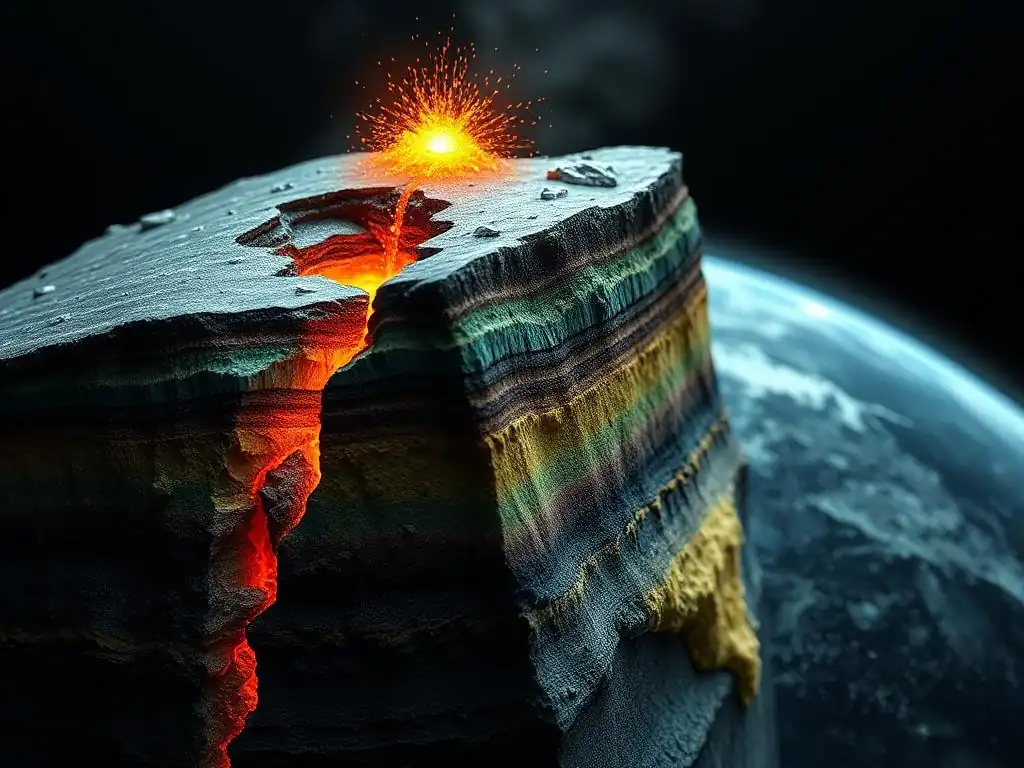
Water, even in relatively small amounts, has a profound effect on magma generation, particularly at divergent boundaries. The presence of water in the mantle lowers the solidus temperature of peridotite, meaning that mantle rocks will begin to melt at lower temperatures when water is present. This process, known as hydrous melting, is crucial for understanding the details of magma creation and composition at spreading centers.
Water is introduced into the mantle primarily through subduction zones, where water-rich oceanic crust is recycled back into the Earth. While divergent boundaries are not directly associated with subduction, the global mantle convection system can transport water-bearing components from subduction zones to other regions, including the mantle source regions for mid-ocean ridges. Even small amounts of water in the mantle peridotite can significantly enhance the degree of partial melting at a given pressure and temperature, leading to increased magma production.
Water Sources and their Contribution to Magma Composition
The sources of water in the mantle beneath divergent boundaries are complex and not fully understood. One primary source is likely the recycling of hydrous minerals from subducted oceanic crust over geological timescales. These minerals, such as amphibole and serpentine, can carry water deep into the mantle. During mantle convection, some of this water may be transported to the upper mantle and incorporated into the source regions for MORB.
The presence of water in the mantle not only lowers the melting temperature but also affects the composition of the resulting magma. Hydrous melting tends to produce magmas that are enriched in certain trace elements and have different isotopic signatures compared to anhydrous melting. While MORB is generally considered to be relatively "dry" compared to magmas erupted at subduction zones, even small variations in water content can influence the magma's properties and its subsequent eruptive behavior.
The Effects of Water on Eruption Style and Volcanic Hazards
Although divergent boundary volcanism is predominantly effusive, water content can still influence eruption styles and potentially contribute to volcanic hazards, particularly in shallower submarine or subaerial settings. The presence of dissolved water in magma increases its volatile content. While basaltic magma is generally low in volatiles compared to more silica-rich magmas, even small increases in water can affect the explosivity of eruptions, especially when magma interacts with seawater.
In shallow submarine eruptions or in subaerial settings like Iceland or rift valleys, the interaction of water-bearing magma with external water sources (seawater, groundwater) can lead to phreatomagmatic eruptions. These eruptions are driven by the rapid vaporization of water into steam, causing explosive fragmentation of the magma. While large-scale explosive eruptions are still less common at divergent boundaries compared to subduction zones, understanding the role of water in modifying eruption styles and potential hazards is an important aspect of volcanic risk assessment, especially in populated regions near rift zones.
Exploring the Depths: Mantle Plumes and Divergent Boundary Interactions
Mantle Plumes: Their Influence on Magma Volume and Composition
Mantle plumes are upwellings of abnormally hot rock from deep within the Earth's mantle. These plumes are considered to be relatively stationary features rooted in the lower mantle, and their interaction with the overlying lithosphere can have significant geological consequences. When a mantle plume impinges on a divergent plate boundary, it can dramatically influence magma volume and composition.
The presence of a plume beneath a spreading ridge provides an additional source of heat and potentially enriched mantle material to the melting process. The increased heat flux from the plume can lead to higher degrees of partial melting and therefore greater volumes of magma production at the divergent boundary. Furthermore, plume material may have a different chemical and isotopic composition compared to the ambient upper mantle source for MORB, leading to magmas with distinct geochemical signatures in plume-influenced spreading centers.
Hotspot Volcanism in Conjunction with Divergent Boundaries
Hotspot volcanism, often associated with mantle plumes, can occur in conjunction with divergent plate boundaries, creating complex and highly volcanic regions. Iceland, as previously discussed, is a prime example where the Iceland plume interacts with the Mid-Atlantic Ridge. This interaction results in significantly enhanced volcanism, thicker crust, and a subaerial island setting, which is unusual for mid-ocean ridges that are typically submerged.
Other examples of plume-ridge interaction exist globally, although Iceland is perhaps the most prominent. These interactions can lead to localized regions of increased crustal thickness, elevated topography, and variations in magma composition along the divergent boundary. Understanding the interplay between mantle plumes and spreading ridges is crucial for comprehending the full spectrum of volcanic and tectonic processes at divergent plate margins and the heterogeneity of the Earth's mantle.
The Geochemical Signatures of Plume-Influenced Magma
Magmas generated at plume-influenced divergent boundaries often exhibit distinct geochemical signatures that reflect the contribution of plume material. These signatures can be identified through the analysis of trace element abundances and isotopic ratios in erupted lavas. Plume-derived magmas are often enriched in incompatible elements and have different isotopic ratios of elements like strontium, neodymium, and lead compared to typical MORB.
These geochemical differences provide valuable tools for geochemists to distinguish between magma sources and to quantify the relative contributions of plume and MORB-source mantle to volcanism in regions like Iceland and other plume-ridge interaction zones. By studying these geochemical signatures, scientists can gain insights into the composition and dynamics of mantle plumes, the heterogeneity of the Earth's mantle, and the complex processes of magma mixing and melting at divergent plate boundaries.
Future Research: Unraveling the Mysteries of Magma Creation
Advanced Geophysical Techniques for Studying Magma Chambers
Future research into magma creation at divergent boundaries will increasingly rely on advanced geophysical techniques to probe the subsurface and image magma chambers beneath spreading ridges. Seismic reflection and refraction surveys, as well as magnetotelluric studies, are becoming increasingly sophisticated and capable of providing high-resolution images of crustal structure and magma distribution.
These techniques can help to delineate the size, shape, and depth of magma chambers, as well as the pathways through which magma ascends from the mantle to the surface. Ocean-bottom seismometers and other advanced instrumentation are allowing for more detailed monitoring of seismic activity and crustal deformation associated with magma movement and eruptions at mid-ocean ridges. Improved geophysical imaging will be crucial for understanding the processes of magma storage, transport, and eruption dynamics at divergent boundaries in greater detail.
Modeling Magma Flow and Eruption Dynamics at Spreading Ridges
Numerical modeling is playing an increasingly important role in advancing our understanding of magma flow and eruption dynamics at spreading ridges. Sophisticated computer models can simulate the complex physical processes involved in magma generation, ascent, and eruption, taking into account factors such as mantle convection, decompression melting, magma viscosity, and crustal stress.
These models can be used to test different hypotheses about magma chamber processes, eruption triggering mechanisms, and the factors controlling eruption styles at divergent boundaries. By comparing model predictions with geological and geophysical observations, researchers can refine our understanding of the complex interplay of factors that govern magma creation and volcanic activity at spreading ridges. Future modeling efforts will likely focus on incorporating more complex physics and chemistry into the simulations, as well as integrating data from diverse sources to create more realistic and predictive models of divergent boundary volcanism.
Investigating the Role of Volatiles in Magma Evolution
The role of volatiles, particularly water and carbon dioxide, in magma evolution at divergent boundaries remains an area of active research. While MORB is generally considered to be relatively volatile-poor, even small amounts of volatiles can have significant effects on magma melting, viscosity, and eruption style. Future research will focus on improving our understanding of the sources, transport, and degassing of volatiles in mantle melts at spreading ridges.
This includes analyzing the volatile content of erupted lavas and melt inclusions (small pockets of melt trapped within crystals) to constrain the volatile budget of the mantle source and magma chambers. Experimental studies are also crucial for determining the effects of volatiles on magma properties and melting behavior at relevant pressures and temperatures. A better understanding of the role of volatiles will be essential for a more complete picture of magma creation and volcanic processes at divergent boundaries and their broader implications for Earth's geochemical cycles.
Frequently Asked Questions
What role do divergent boundaries play in magma creation?
Divergent boundaries are where tectonic plates separate, creating space for asthenosphere (Earth's upper mantle) to rise. This reduced pressure allows the mantle rock to melt, forming magma.
How does the process of decompression melting work at divergent boundaries?
As the mantle rock rises at a divergent boundary, the pressure decreases. This lower pressure reduces the rock's melting point, causing it to partially melt and generate magma, without necessarily increasing the temperature.
What type of magma is typically formed at divergent boundaries?
The magma created at divergent boundaries is usually basaltic in composition. This is because the melting mantle rock is rich in mafic minerals, leading to a magma with lower silica content and lower viscosity.
Are there any specific geological features associated with magma creation at divergent boundaries?
Yes, divergent boundaries are often associated with mid-ocean ridges and rift valleys. These features are formed by the upwelling magma that cools and solidifies, creating new oceanic crust or continental crust that is spreading apart.
How do volcanologists monitor magma creation at divergent boundaries?
Volcanologists use various methods, including seismic monitoring, gas emissions analysis, and ground deformation measurements, to track magma movement and potential eruptions at divergent boundaries. These tools help them understand the dynamics of magma creation and assess volcanic hazards.
Okay, here's a final reflection crafted to fit your article "Divergent Boundaries: Magma's Creation Zones at Spreading Plates," targeting the keyword "magma creation at divergent boundaries," and adhering to the structure you provided:
Final Reflection: The Earth's Fiery Breath
The exploration of magma creation at divergent boundaries, as we've seen, isn't just an academic exercise in plate tectonics; it's a window into the very engine that shapes our planet. Understanding these processes is crucial for predicting volcanic activity and comprehending the fundamental forces that drive continental drift and ocean basin formation. The constant creation of new crust at these boundaries reminds us of the Earth's dynamic and ever-evolving nature.
The sheer power and beauty of magma rising from the Earth's mantle continue to fascinate and humble us. Witnessing the creation of new land, even indirectly through scientific understanding, fosters a deeper appreciation for the planet's resilience and the interconnectedness of its systems. The Earth is a living organism and magma is its lifeblood, constantly renewing and reshaping the surface we inhabit.
This quote encapsulates the profound impact these processes have on the geological and, ultimately, the biological landscape.
As you consider the implications of magma creation at divergent boundaries, I invite you to reflect on the broader forces at play in your own life. Just as the Earth constantly remakes itself, so too can you embrace change, adapt to new environments, and find strength in the face of adversity. Let the fiery breath of the Earth inspire you to create, to innovate, and to contribute to the ongoing evolution of our world.
Unleash Your Inner Volcanologist!
Thank you for diving into the fascinating world of divergent boundaries and magma creation! We hope you've gained a deeper understanding of how these geological powerhouses shape our planet. Now, let's put that knowledge into action!
Here are a few ways you can continue your volcanic exploration:
- Boldly Explore: Use an online geological map to locate divergent boundaries, identify related volcanic features, and describe their formations.
- Share your insights: Join our community forum at VolcanoExplorers.org to discuss your findings and see what other users have discovered.
- Dig Deeper: Research active divergent boundaries, like the Mid-Atlantic Ridge, and present them in a short article to be uploaded to the community section of the website.
Ready to become a Volcano Explorer member and continue learning?